
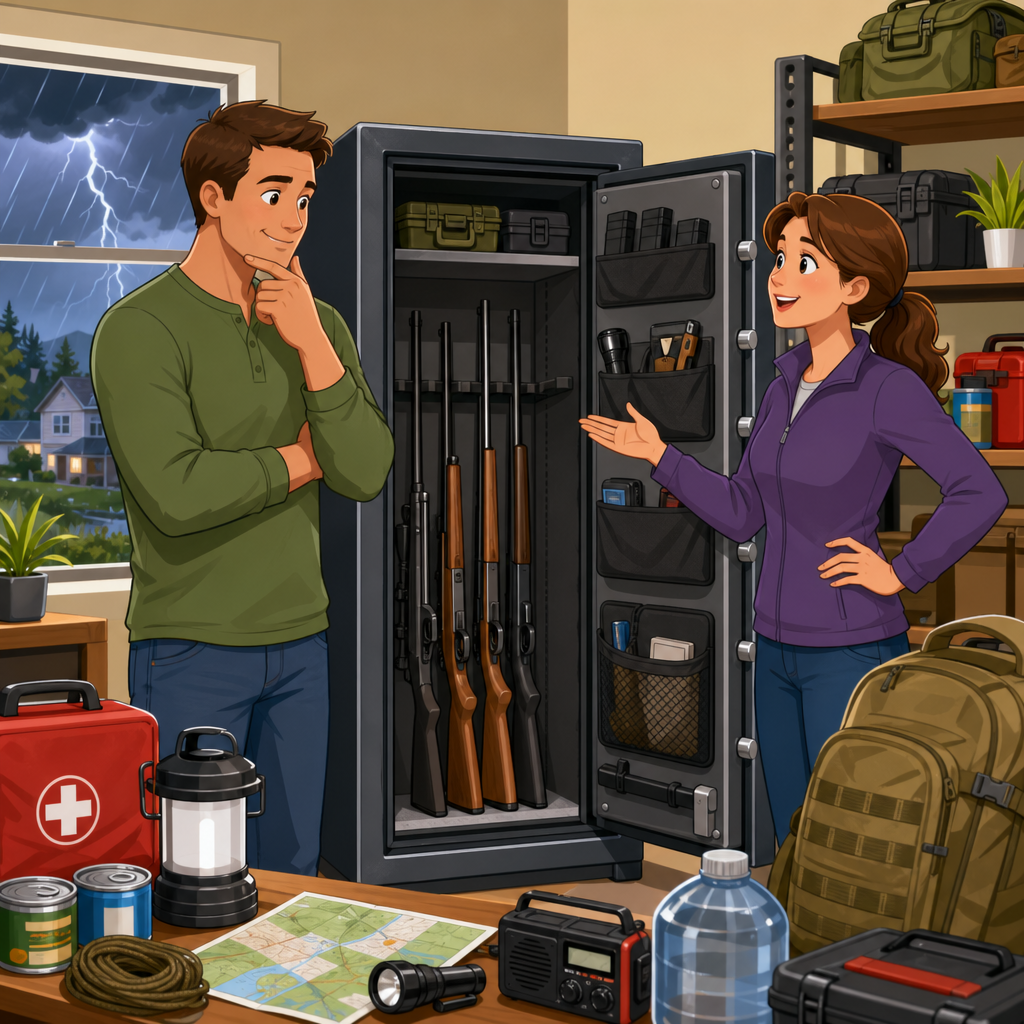
Selecting a gun safe for emergency preparedness is not just a shopping decision; it is a risk-management choice that affects security, access speed, legal compliance, and your family’s safety during high-stress events. In this buying guide, a gun safe means a locked storage container designed to prevent unauthorized access, theft, fire damage, and environmental harm to firearms, ammunition, and related documents. Emergency preparedness adds another layer: the safe must protect weapons and supplies during burglary attempts, storms, house fires, evacuations, and temporary disruptions to power or normal routines. That combination changes what buyers should prioritize.
I have helped households compare safes after break-ins, moves, wildfire warnings, and new-child safety concerns, and the same pattern appears every time: people buy either too small, too light, or too difficult to access under pressure. A preparedness-focused gun safe should balance burglary resistance, fire protection, anchoring strength, interior organization, and practical access. It should also fit your home layout, your defensive plan, and the firearms you actually own, not an idealized future collection.
This hub article covers the full buying process, from defining your threat model to understanding steel thickness, lock types, fire ratings, installation, maintenance, and budget tradeoffs. If you are building a broader gun safes and safety plan, this page should guide your next steps and help you evaluate deeper topics such as biometric safes, long-gun storage, humidity control, safe placement, and child access prevention. The goal is simple: choose a gun safe that remains dependable when conditions are chaotic and decisions must be made fast.
Start With Your Emergency Preparedness Threat Model
The best gun safe for emergency preparedness is the one matched to your real risks. Start by listing the events you are preparing for: forced entry, smash-and-grab theft, wildfire, tornado, hurricane, flood, earthquake, civil unrest, or a rushed evacuation. Each threat changes your buying criteria. A family in a wildfire zone may care most about sustained interior temperature protection and document storage. Someone in an apartment may need a compact, pry-resistant safe that can be anchored to concrete and accessed quietly at night. A rural homeowner may prioritize high-capacity long-gun storage and backup mechanical access if power fails.
Also define who must be kept out and who must get in. Unauthorized users usually include children, visitors, contractors, and burglars. Authorized users may include a spouse or another trained adult. If only one person can open the safe, that is a weakness during an injury or absence. Preparedness buying guides often skip this operational detail, but it matters in real emergencies.
Finally, separate primary defensive access from bulk storage. In many homes, one quick-access handgun safe handles immediate response while a larger long-gun safe secures the collection, ammunition, optics, and important records. Combining both functions into one purchase can work, but it often creates compromise: the safe is either fast but lightly built, or secure but too slow for a nighttime emergency.
Understand the Core Features That Actually Matter
Gun safe marketing often highlights glossy finishes and oversized capacity claims, but emergency preparedness depends on a smaller set of measurable features. Steel thickness is central. Lower gauge numbers mean thicker steel; 12-gauge steel is stronger than 14-gauge, and 10-gauge is stronger still. Many big-box residential security containers use thinner sheet steel than buyers expect. Thicker steel improves resistance to prying, punching, and body deformation, especially around the door frame.
Door construction matters as much as body steel. Look for reinforced door edges, robust locking bolts, hard plates that protect the lock, and relockers that engage if the lock is attacked. Continuous welds are generally better than minimal stitch welding. Interior hinges can reduce tampering points, while external hinges may allow a wider door opening; either design can be secure if the dead bar and boltwork are properly engineered.
Fire ratings require careful reading. A label such as thirty minutes at 1200 degrees Fahrenheit is not equivalent to an independently verified one-hour rating with tested internal temperature thresholds. Many manufacturers use proprietary testing protocols. For preparedness, compare not just duration and external temperature, but whether the interior stays below about 350 degrees Fahrenheit for paper protection. If you plan to store optics, electronics, passports, cash, or digital media, their heat tolerance may be lower than paper’s.
Interior configuration is another overlooked factor. Adjustable shelving, barrel rests, door organizers, and modular racks can dramatically improve usable space. Most “24-gun” safes do not comfortably hold 24 scoped rifles. In practice, many buyers should assume real capacity is closer to half or two-thirds of the headline number if they own modern sporting rifles, pistol grips, slings, or large optics.
Choose the Right Lock Type for Stress, Speed, and Reliability
A lock is not just a convenience feature; it determines whether the safe can be opened under adrenaline, darkness, injury, or power disruption. Mechanical dial locks have a long service record and do not rely on batteries. They are often slower and require practice, but they remain a dependable choice for long-term storage. Electronic keypad locks allow faster entry and simple code changes. Quality matters greatly here. Cheap electronic locks fail more often from battery neglect, low-grade keypads, or poor internal components.
Biometric locks promise the fastest access, but fingerprint readers vary widely in consistency. Dry skin, dirt, sweat, cuts, and poor finger placement can reduce recognition. In testing and in household use, premium biometric units can work well, especially when they allow multiple enrolled prints and a backup keypad or key. Budget biometric safes are more unpredictable. For true emergency preparedness, redundancy matters more than novelty.
The most practical rule is straightforward: choose a lock you can open correctly, in the dark, half awake, several times in a row. Practice from realistic positions, including kneeling beside the bed or standing in a closet with one hand occupied. Replace batteries on schedule, store override keys securely but separately, and confirm whether the manufacturer uses a UL-listed lock. That standard does not guarantee perfection, but it is a meaningful quality signal.
| Feature | Mechanical Dial | Electronic Keypad | Biometric |
|---|---|---|---|
| Access speed | Slowest | Fast | Fastest when reliable |
| Power required | No | Battery | Battery |
| Code changes | Requires locksmith or procedure | Easy | Easy for users, plus print enrollment |
| Failure risks | User dialing error, wear over time | Dead battery, electronics quality | Sensor inconsistency, battery, electronics quality |
| Best use case | Long-term secure storage | Balanced security and speed | Quick-access with backup method |
Match Safe Size, Weight, and Placement to Your Home
Preparedness buyers often focus on interior capacity and ignore logistics. A safe that cannot be moved into the house safely or anchored where needed is the wrong safe. Before buying, measure doorways, hallways, stairs, corners, and floor load limits. Upper-floor placement may be possible, but concentrated weight should be checked against building structure, especially for large safes exceeding 700 pounds before contents.
Weight is a security feature because heavier safes are harder to remove, but weight alone is not enough. Thieves routinely attack smaller safes after carrying them away. Anchor bolts into concrete or substantial structural framing are essential. Most theft losses involving residential gun safes happen because the unit was lightweight, unanchored, poorly hidden, or all three. In my experience, anchoring does more for real-world theft prevention than many buyers realize.
Placement should support both concealment and emergency access. A master bedroom closet is common because it is private and close at night, but closets can trap heat during fire and may be a first search area for burglars. Garages provide space but expose safes to humidity, temperature swings, and easier attack time if the garage door is breached. Basements can be excellent for weight and concealment, but flood risk is a serious concern. Elevating the safe on a sealed platform can reduce minor water exposure, though not full flooding.
If fast defensive access is part of your plan, consider how the door swings, whether long guns can be removed without obstruction, and whether lighting helps or reveals your position. A preparedness hub article must emphasize this point: buying a safe without planning its exact location often leads to a poor installation and weaker overall security.
Evaluate Fire, Water, and Environmental Protection Realistically
Emergency preparedness is broader than burglary resistance. Fire remains one of the most destructive home threats, and gun owners often store irreplaceable documents with firearms. Look for fireboard construction, expanding door seals, and clear testing details. Independent certifications from organizations such as UL carry more weight than vague claims, though many residential gun safes are not fully certified. That does not make them useless, but it means you should compare specifications conservatively.
Water protection is usually limited. Most gun safes are not waterproof in the true sense. They may resist sprinkler spray or brief shallow exposure, but they are rarely designed for submersion. If you live in a flood-prone area, a safe on the first floor or basement may protect against theft while increasing water vulnerability. In that case, elevation, dehumidification, and storing critical paperwork in sealed internal containers can help.
Humidity control is nonnegotiable for long-term firearm storage. Rust can develop even in a locked safe if moisture is trapped inside. Use a rechargeable desiccant, an electric dehumidifier rod, or both, depending on climate. Monitor with a small hygrometer and aim for stable humidity rather than extreme dryness. Wood stocks can also be affected by environmental swings, so consistency matters.
Ammunition storage raises a separate issue. Large quantities are often better stored in a dedicated locking cabinet rather than densely packed inside the same safe as firearms and documents. This improves organization, reduces clutter, and can simplify access during an evacuation. Always follow local fire code guidance and manufacturer recommendations.
Set a Budget Based on Security Level, Not Marketing Tier
Budgeting for a gun safe should start with replacement value and consequence, not arbitrary price brackets. Calculate the value of your firearms, optics, suppressors where legal, documents, and accessories. Then consider the nonfinancial cost of unauthorized access or loss during a disaster. A household with $6,000 in firearms and important records should not be trying to secure everything in a bargain cabinet with thin metal and a weak key lock.
At the lower end, security cabinets can organize firearms and deter casual access, but they are not true burglary-resistant safes. Mid-range residential security containers usually offer better steel, better lock options, fire lining, and anchoring hardware. Higher-end safes add thicker bodies, improved boltwork, stronger doors, and better-tested fire performance. Commercial burglary ratings such as TL-15 or TL-30 represent a different category entirely and are often beyond what most homes need or can accommodate, but they illustrate the gap between consumer marketing and tested security.
Do not forget total cost. Delivery, stair carries, professional installation, anchoring, humidity control, power access for lighting or dehumidifiers, and insurance riders all add to the real purchase price. The good news is that a well-chosen safe lasts many years. Buying once, correctly sized and properly installed, is usually cheaper than replacing an undersized first purchase after two years.
Use This Hub to Guide Your Next Buying Decisions
The right gun safe for emergency preparedness protects more than firearms. It supports a broader household safety plan by limiting unauthorized access, preserving equipment during disasters, and keeping essential items organized when time is short. The best buying guides all reach the same conclusion: start with your threat model, choose meaningful construction features, pick a lock you can operate under stress, install the safe where it can be anchored properly, and control fire, water, and humidity risks with realistic expectations.
As the hub for buying guides within gun safes and safety, this page should help you evaluate every related decision with clearer standards. Use it to compare safe sizes, lock technologies, fire ratings, placement strategies, and accessory needs before you spend money. If you are narrowing your options now, write down your firearms count, home risks, preferred location, and access requirements, then compare two or three reputable models side by side. A prepared purchase today is far better than a rushed compromise after an emergency exposes the gaps in your storage plan.
Frequently Asked Questions
What should I prioritize first when selecting a gun safe for emergency preparedness?
The first priority is balancing security with reliable access under stress. In an emergency, a gun safe should do more than simply lock up firearms. It should prevent unauthorized access, resist theft, protect against fire and moisture, and still allow you to retrieve what you need quickly and safely. That means the best choice is rarely the cheapest or the largest safe on the showroom floor. Instead, focus on how the safe will perform during realistic scenarios such as a home break-in, wildfire evacuation, severe storm, or a power outage that affects your usual routines.
Start by thinking through your actual risks. If you have children or frequent visitors in the home, unauthorized access prevention should be non-negotiable. If you live in an area prone to wildfires, structure fires, flooding, or high humidity, environmental protection becomes just as important as theft resistance. If your preparedness plan includes fast access to a defensive firearm, then lock type, interior organization, and placement matter a great deal. A safe that is extremely secure but too slow to open under pressure may not fit your needs, while a quick-access option that offers little burglary resistance may be insufficient for long-gun storage or valuables.
It is also wise to think in layers. Many prepared households use one primary safe for long-term, high-security storage and a separate quick-access safe for a defensive firearm. This approach helps solve the common tradeoff between access speed and overall protection. In addition, evaluate construction quality carefully. Look at steel thickness, door design, locking bolts, pry resistance, and whether the safe can be anchored securely to the floor or wall structure. A safe that is not bolted down can be removed and attacked later, which undermines many of its advertised protections.
Finally, prioritize a safe that supports safe habits, not just emergency plans. It should store firearms, ammunition, magazines, and important documents in a way that is organized, legal for your jurisdiction, and easy to manage during a stressful event. If the layout is cluttered or the opening method is unreliable, preparedness can break down when seconds count. In short, begin with your most likely risks, then choose the safe that best integrates security, speed, fire and environmental protection, and responsible household safety.
Which lock type is best for a gun safe when quick access matters during an emergency?
The best lock type depends on how you define emergency access, who needs access, and how much redundancy you want if something fails. The three most common lock styles are mechanical dial locks, electronic keypad locks, and biometric locks, and each has strengths and weaknesses in a preparedness context. There is no universal winner for every household, but there is usually a best fit for a specific use case.
Mechanical dial locks are valued for their long-term reliability because they do not depend on batteries or electronics. Many people trust them for a main safe that holds multiple firearms, documents, and supplies intended for secure storage over time. The downside is slower access. Under stress, in poor lighting, or while managing family members during an emergency, a dial lock may feel too slow or less forgiving. For a primary preparedness safe, it is dependable, but for immediate defensive access, many users find it less practical.
Electronic keypad locks are popular because they offer a strong middle ground. They are generally faster to open than dial locks, easy to use in darkness with some practice, and simple to reprogram if access needs change. However, they depend on batteries and internal electronics, so maintenance matters. If you choose an electronic lock, make battery replacement part of your routine preparedness checklist, and confirm whether the keypad has low-battery alerts and external power options. A quality electronic lock from a reputable manufacturer can be a strong choice for emergency readiness, especially when paired with a backup entry method or redundant safe strategy.
Biometric locks can be very fast, which is appealing during high-stress situations, but quality varies widely. A well-made biometric safe can work effectively, especially for a bedside or rapid-access unit. Still, fingerprints may not read consistently if your hands are wet, dirty, injured, gloved, or shaking. That is why biometric-only access can be risky unless the safe also includes a keypad or key override. In preparedness planning, redundancy is essential. You want the fastest system that still works when conditions are less than ideal.
For many households, the most practical setup is a quick-access handgun safe with a quality electronic or biometric-plus-keypad lock for immediate defensive needs, combined with a larger mechanical or electronic gun safe for broader storage. Whatever you choose, test it regularly. Practice opening it in darkness, after waking up, and under mild time pressure. A lock that looks good in marketing material but fails during realistic drills is not truly preparedness-ready.
How important are fire ratings, water resistance, and humidity control in a preparedness gun safe?
They are extremely important because emergency preparedness is not limited to theft prevention. A gun safe in a preparedness plan may also need to protect firearms, ammunition, optics, passports, insurance records, medical information, cash, and other critical items from environmental damage. Fire, water, and humidity are all common threats, and each can damage contents differently. If you overlook these factors, you may end up with a safe that performs well against unauthorized access but fails when a disaster affects the structure itself.
Fire ratings deserve close scrutiny, but they should be interpreted carefully. Manufacturers often list ratings such as a certain number of minutes at a given temperature, but not all ratings are tested under identical standards. In general, a higher-quality fire rating can provide more time before internal temperatures rise enough to damage contents. That matters not just for firearms, but also for paper records, electronics, and heat-sensitive accessories. If your area has elevated wildfire risk or you store irreplaceable documents in the safe, stronger fire protection may be worth the additional cost and weight.
Water resistance is another major factor, especially if your emergency scenarios include burst pipes, fire-suppression water, hurricanes, basement seepage, or flooding. Some safes include door seals that expand during heat and also help limit water intrusion, but a gun safe is not automatically waterproof just because it has a fire seal. If flood risk is part of your preparedness planning, ask specific questions about water resistance, and consider placement above ground level if possible. A basement may seem convenient, but it can become a liability in a water event.
Humidity control is vital for long-term firearm preservation. Moisture can lead to rust, corrosion, mold, and damage to wood stocks, optics, and paper items. Even in homes without obvious dampness, the interior of a safe can trap moisture if left unmanaged. A preparedness-minded setup often includes a dehumidifier rod, desiccant packs, and regular monitoring with a hygrometer. This is especially important in humid climates, coastal areas, or places with seasonal temperature swings that create condensation risk.
In practical terms, a preparedness gun safe should be viewed as part security device and part protective environment. Choose one with fire protection that meets your risk profile, reasonable resistance to incidental water exposure, and a plan for active humidity management. If the safe is protecting the tools and records you may need after a disaster, environmental safeguards are not optional extras. They are core features.
What size and placement work best for a gun safe in an emergency preparedness setup?
Size and placement matter more than many buyers expect because they directly affect security, access, organization, and how useful the safe will be during a real emergency. One of the most common mistakes is buying a safe based only on the number of firearms currently owned. In practice, manufacturers often overstate capacity, especially if rifles have optics, slings, bipods, or other accessories. A preparedness-oriented buyer should choose a safe with extra room for future needs, better spacing, and storage of magazines, ammunition, documents, backup lights, and other critical gear.
Think in terms of function rather than just capacity. A cramped safe becomes disorganized quickly, and disorganization is a problem during emergencies. You do not want to be sorting through stacked items in the dark or shifting equipment to reach a specific firearm. Adjustable shelving, door organizers, labeled storage sections, and separation between firearms and sensitive paperwork can make a major difference. A well-laid-out interior supports both safety and speed, which is exactly what preparedness demands.
Placement should support three goals at once: concealment, structural security, and practical access. A safe placed in an obvious, easy-to-reach area may be more vulnerable to theft attempts. A safe placed in a remote corner of the house may be secure but not useful when time matters. The ideal location is usually one that is discreet, anchored to a solid structure, and accessible enough that authorized adults can reach it without delay. Bedrooms, closets, offices, and reinforced utility spaces are common choices, but the best location depends on your floor plan and your emergency response strategy.
Also consider the structure beneath the safe. Large gun safes are very heavy, especially once filled. Verify that the floor can support the load, particularly on upper levels. Bolting the safe down is strongly recommended because even a heavy safe can sometimes be tipped, pried, or removed with equipment. Anchoring improves both theft resistance and stability, which is important in households with children and in regions prone to earthquakes or severe storms.
Finally, placement should