
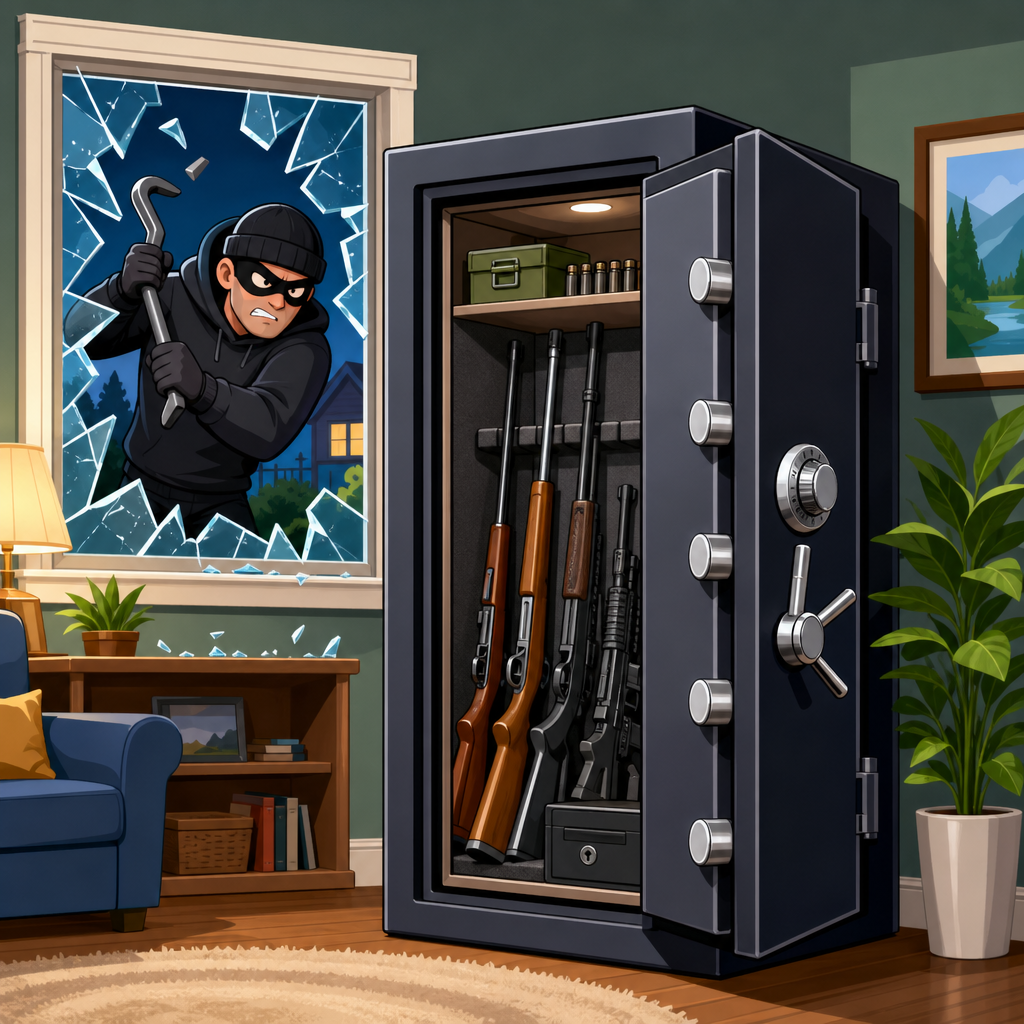
Smash-and-grab burglaries happen fast, often in under ten minutes, which makes choosing the best gun safes that protect against smash-and-grab burglaries less about glossy features and more about delay, anchoring, and access control. In practical terms, a smash-and-grab burglary is a forced-entry theft where intruders target valuables they can find, open, or remove quickly. A gun safe meant to stop that threat must do three things well: resist prying and cutting long enough to frustrate the attack, stay anchored so it cannot be tipped or carried away, and keep firearms inaccessible to unauthorized users during the chaos of a break-in. That combination matters for safety, liability, and peace of mind.
In my experience evaluating residential security products, many buyers focus first on size, brand, or fire ratings, then assume every locking cabinet labeled as a safe offers meaningful burglary protection. That is a costly mistake. Thin steel cabinets can organize rifles and keep children out, but they are not built to resist determined pry attacks with common hand tools. By contrast, a true residential security container or heavier-bodied safe uses thicker steel, reinforced door construction, better locking bolt engagement, hard plates, relockers, and pre-drilled anchor points. Those details are not marketing trivia. They directly affect how much noise, time, and effort a thief must invest.
This buying guide serves as a hub for gun safe shopping decisions within the broader Gun Safes & Safety category. It explains which specifications matter most, which tradeoffs are worth making, and which safe types fit different homes, firearm collections, and risk levels. If you are comparing quick-access pistol safes, full-size rifle safes, modular safe rooms, or fire-rated home safes that also store documents, the same burglary principles apply. The best choice is the model that matches your threat profile, installation constraints, and daily access needs without sacrificing real physical security.
What Actually Stops a Smash-and-Grab Burglary
The core defense against a smash-and-grab burglary is delay. Most residential burglars do not arrive with industrial tools or unlimited time. They rely on speed, surprise, and weak storage. A gun safe defeats that pattern by forcing a noisy, tool-intensive attack that takes longer than the burglar wants to spend inside an occupied or monitored home. The critical variables are steel thickness, door fit, locking system integrity, hinge protection, internal boltwork, and anchoring. If one of those is weak, the safe becomes easier to pry open or remove entirely.
Body steel is the first filter. Many entry-level gun “safes” use 14-gauge to 16-gauge steel bodies, which may be acceptable for basic access control but offer limited pry resistance. Better anti-theft performance starts around 12-gauge and improves materially at 10-gauge or thicker. Door steel matters even more because the door is the primary attack point. Composite or plate-steel doors with reinforced frames can absorb prying forces much better than thin formed sheet metal. On models I trust for realistic burglary resistance, the door gap is tight, the frame is robust, and the locking bolts engage deeply on multiple sides.
Anchoring is equally important. Even a heavy safe can be defeated if thieves tip it onto its back and attack the door with body weight and pry bars, or haul it into a truck for later opening. Concrete anchoring through factory bolt-down holes is one of the highest-value upgrades any buyer can make. On wood subfloors, reinforcement below the safe is often necessary. Placement also matters. A closet corner, alcove, or tight utility room can limit pry-bar angles and reduce exposed attack surfaces. Security is not just the safe itself; it is the installation environment around it.
Key Buying Criteria for Gun Safes
When shoppers ask what to compare first, I recommend seven factors: body steel, door construction, lock quality, anchor capability, interior fit, fire performance, and warranty support. Capacity claims should be treated skeptically. A “36-gun safe” may hold far fewer scoped rifles in real use. If burglary resistance is the priority, buy more space than you currently need so firearms are not jammed together and so you are not pushed toward a larger, lighter safe later. Interior adaptability, including shelving and barrel rests, matters because a poorly configured safe encourages unsafe or inconsistent storage habits.
Lock choice deserves careful thought. Electronic keypad locks are convenient and are often faster for defensive access, but quality varies sharply. Reputable lock manufacturers such as SecuRam, Sargent and Greenleaf, and La Gard have stronger track records than generic imports. Mechanical dial locks are slower but proven, and they avoid battery concerns. Biometric locks can work well for bedside pistol vaults, yet fingerprint readers remain sensitive to finger condition, placement, and sensor quality. For long-gun safes primarily intended for burglary protection, a reliable electronic or mechanical lock from a known maker is usually the safest recommendation.
Fire rating should not overshadow theft resistance. Some manufacturers emphasize 60-, 75-, or 120-minute fire claims, but testing methods are not uniform across the industry. Independent certifications carry more weight than brand-specific statements. Added insulation can improve fire protection but also increases weight and may reduce interior room. For many households, a balanced safe with solid steel, credible lockwork, and moderate fire performance is a better anti-burglary choice than a heavily insulated model with lighter steel. Burglars are common; catastrophic house fires are less frequent, and no fire rating compensates for weak steel.
Types of Gun Safes and Which Homes They Fit
Not every buyer needs the same safe. Quick-access handgun safes are best for one or two defensive pistols near a bed, desk, or vehicle staging area. Their main job is unauthorized access prevention with rapid retrieval, not long-duration burglary resistance. Full-size rifle safes are the most common option for mixed collections and can provide meaningful smash-and-grab protection when they use heavier steel and proper anchoring. Modular gun safes are useful where stair access, apartments, or upper floors make one-piece delivery impractical. They can be strong, but buyers should inspect how panels join and whether seams introduce pry weaknesses.
For collectors or owners with higher risk exposure, a true burglary-rated safe or a vault room may make more sense than a standard big-box gun safe. The classification matters because some products sold as safes are technically residential security containers, a distinction tied to construction and testing. A UL RSC rating is not invincible, but it indicates the unit has passed a recognized attack standard using common hand tools for a defined period. For many households, that is a meaningful baseline. If you own high-value firearms, suppressors, optics, documents, and precious metals, stepping above entry-level construction is justified.
Apartment dwellers face a different problem: weight, access, and lease restrictions. A compact rifle safe with discreet placement, lower visual profile, and reinforced anchoring to structural members may be more realistic than a massive 1,000-pound unit that cannot be delivered or secured properly. In suburban single-family homes with garages, owners often place safes in garages for convenience, but that usually increases visibility, humidity exposure, and attack opportunity. An interior location on a slab, behind a locking door, remains the stronger option for burglary resistance and environmental control.
Features That Matter Most in Real-World Break-Ins
The strongest anti-burglary features are often the least glamorous. Continuous welds, reinforced door jambs, hard plates protecting the lock, spring-loaded relockers, internal hinges or dead bars, and anti-pry tabs all improve resistance. Multi-point locking bolts are useful, but bolt count alone is not a reliable quality signal. A safe with many small bolts can still be weak if the door skin and frame flex under prying. I pay more attention to how rigid the door assembly feels, how well the boltwork is shielded, and whether the lock area is protected from drilling and punch attacks.
Here is a practical comparison of the features that most influence smash-and-grab resistance when buyers evaluate options:
| Feature | What to Look For | Why It Matters in a Fast Burglary |
|---|---|---|
| Body steel | 12-gauge minimum, preferably 10-gauge or thicker | Thicker steel slows prying, punching, and cutting with hand tools |
| Door construction | Reinforced frame, plate or composite door, tight gaps | Most attacks target the door first, so rigidity is critical |
| Lock protection | Hard plate and relocker from known lock manufacturers | Prevents simple drill attacks from disabling the lockwork quickly |
| Anchoring | Factory bolt holes secured to concrete or reinforced structure | Stops thieves from tipping or removing the safe for later attack |
| Placement | Closet corner or alcove with limited pry access | Reduces leverage and buys time during forced entry |
| Certification | Recognized test standard such as UL RSC when possible | Shows minimum verified resistance rather than pure marketing claims |
Examples from the market illustrate the difference. Brands such as AMSEC, Fort Knox, Liberty, Browning, Rhino Metals, and Vaultek cover different tiers and use cases. AMSEC’s BF series is widely respected because it pairs substantial body construction with a robust door and practical residential sizing. Fort Knox is known for heavier customization and strong build options. Vaultek focuses more on modern quick-access handgun storage, where app features and biometric access can be useful, though these should complement, not replace, basic mechanical security. Brand reputation matters, but model-specific construction matters more.
Installation, Placement, and Layered Security
A gun safe is only one layer in a burglary plan. The best outcomes come when the safe is integrated with an alarm, cameras, exterior lighting, solid-core interior doors, and disciplined key and code management. If a burglar has no privacy and little time, even a mid-tier safe becomes dramatically more effective. Monitored alarms and visible cameras shorten the attack window. Door contact sensors, glass-break detectors, and smart notifications improve response speed. These measures do not replace the safe; they amplify its ability to delay until the intruder gives up or leaves.
Placement strategy deserves more attention than it gets in most buying guides. Install the safe where it is difficult to view from windows, difficult to access with large pry bars, and difficult to move with a dolly. Ground-floor slab installations are ideal because concrete anchoring is straightforward and load capacity is rarely an issue. On upper floors, verify structural support before delivery. Humidity control is also essential, especially in basements and garages. Use a dehumidifier rod or desiccant packs, and check seals periodically. Corrosion protection is part of safe ownership, particularly for blued steel firearms and stored ammunition.
I also recommend limiting who knows the safe exists, where it sits, and what it contains. Many residential burglaries are informed by casual visitors, contractors, social media posts, or visible delivery packaging. Discretion is a real security feature. Schedule delivery carefully, break down boxes immediately, and avoid placing firearm-related branding at the curb. If children are in the home, combine physical locking with clear household rules and routine checks. The best gun safe is the one that stays locked, stays anchored, and fits daily life well enough that owners use it consistently.
Common Buying Mistakes and How to Avoid Them
The most common mistake is buying by advertised gun count and sale price instead of steel, lock, and anchoring. Another is assuming weight alone means security. Weight helps, but a bulky safe with thin walls can still fail quickly under prying, especially if unanchored. Buyers also underestimate delivery and installation costs, then place the safe in a less secure location because it is easier. Measure hallways, stairs, and floor load limits before purchase. Confirm who handles delivery, whether stair climbs are included, and whether the installer will anchor the safe correctly.
A second major mistake is chasing every feature at the expense of the threat that is most likely. If your main concern is smash-and-grab burglary, prioritize burglary resistance and installation over decorative interiors, extra door organizers, or oversized fire claims. Likewise, do not treat a bedside pistol box and a long-gun collection safe as interchangeable products. Different use cases require different compromises. For most households, the smart approach is two-tier storage: a quick-access handgun safe for defensive readiness and a larger anchored rifle safe for bulk storage. Review your setup, compare models carefully, and buy the strongest safe your space and budget realistically support.
The best gun safes that protect against smash-and-grab burglaries are not defined by branding alone. They are defined by heavy enough steel to resist common pry attacks, reinforced door construction, dependable lockwork, verified testing where possible, and professional anchoring in a location that limits leverage and visibility. Those are the fundamentals that consistently matter in real residential break-ins. Everything else, from interior layout to app connectivity, should be judged after those basics are satisfied.
For buyers using this page as a hub for gun safe buying guides, the next step is to narrow your use case. Decide whether you need a quick-access handgun safe, a full-size rifle safe, a modular option for difficult installation, or a higher-security model for valuable collections. Then compare body gauge, door design, lock brand, certification, and anchor plan before you compare cosmetic upgrades. That process leads to better security decisions and fewer regrets after delivery.
A well-chosen gun safe protects firearms, reduces theft risk, supports responsible ownership, and makes your home harder to exploit in the short window burglars depend on. Assess your space, your collection, and your realistic threat level, then invest in the strongest properly installed safe you can maintain and use every day. Start with construction and anchoring, and the rest of your buying decision becomes much clearer.
Frequently Asked Questions
What matters most in a gun safe for stopping a smash-and-grab burglary?
The most important factor is not flashy branding or a long feature list. For a smash-and-grab scenario, the safe must create enough delay to make a thief give up, move on, or get caught. These burglaries often happen very quickly, so the best gun safes that protect against smash-and-grab burglaries are built around three practical priorities: physical resistance, secure anchoring, and controlled access.
Physical resistance means the safe body, door, locking bolts, and hinge area must stand up to pry bars, screwdrivers, hammers, and basic cutting attempts. A heavier steel body, reinforced door edges, anti-pry construction, and a solid locking system matter far more than cosmetic finishes. Secure anchoring is just as critical because even a decent safe can fail if burglars can tip it over, drag it out, or load it into a vehicle to attack later. A safe that is properly bolted into concrete or a structurally sound floor becomes dramatically harder to remove in the short window most burglars have.
Controlled access refers to how the safe opens for you while staying difficult for everyone else. A reliable lock, whether mechanical, electronic, or biometric, should allow fast authorized access but resist tampering and unauthorized entry. In short, the best safe for smash-and-grab protection is one that stays put, slows tools down, and denies quick access long enough to defeat the burglary’s main advantage: speed.
Is a heavy gun safe enough on its own, or does it still need to be bolted down?
Weight helps, but it is not enough by itself. One of the biggest misconceptions in safe buying is that a heavy safe is automatically secure. In reality, even a very heavy safe can become vulnerable if intruders can tip it onto its back, exploit weaker door seams with leverage, or use dollies, straps, and multiple people to move it. Smash-and-grab burglars are looking for easy wins, and an unanchored safe can turn into a portable target if they think they can remove it quickly.
Bolting the safe down is one of the most effective upgrades you can make. Anchoring prevents thieves from carrying it off, makes prying attacks harder because they cannot reposition the safe for better leverage, and reduces the chance of the unit being pushed over to expose weaker points. Ideally, the safe should be anchored to concrete whenever possible. If it must be installed on wood framing, use the strongest mounting method recommended by the manufacturer and make sure the subfloor and joists can actually support both the weight and the stress of a forced-entry attempt.
Placement also matters. A safe tucked into a closet corner, alcove, or other tight space can be much harder to attack because burglars have less room to swing tools or apply leverage. So while weight is valuable, true smash-and-grab protection comes from the combination of weight, anchoring, and strategic installation. If a safe is not bolted down, it is rarely performing at its full protective potential.
What steel thickness and construction features should I look for in an anti-burglary gun safe?
For smash-and-grab protection, steel thickness and overall construction are central to how long the safe can resist attack. In general, thicker steel provides better resistance to prying, punching, and cutting than thinner sheet metal. Many entry-level gun cabinets and budget safes use relatively thin steel that may look substantial but can be defeated faster than buyers expect. A better-built gun safe will usually have a stronger body, a reinforced door, and anti-pry details that slow down common burglary tools.
Beyond steel gauge, pay attention to how the safe is engineered. Look for a recessed or tightly fitted door, reinforced door frames, robust locking bolts, hard plates that protect the lock area from drilling, and hinge-side security features that prevent the door from being peeled open even if external hinges are attacked. Composite door construction and layered barriers can also improve resistance. The point is not just thickness in one area, but a design that avoids easy weak spots.
It is also wise to view manufacturer claims with some skepticism unless they are backed by meaningful testing or clear construction specifications. Terms like “premium,” “tactical,” or “security grade” do not always translate into real burglary resistance. The best approach is to compare actual body steel thickness, door build, bolt design, lock protection, and anchoring capability. For stopping a fast burglary, a well-designed safe with honest construction details is far more valuable than a model that relies mostly on marketing language.
Which lock type is best for a gun safe: mechanical, electronic, or biometric?
The best lock type depends on how you balance speed, reliability, and user preference, but for smash-and-grab protection, reliability under real-world conditions matters most. Mechanical dial locks are known for durability and do not depend on batteries or electronics, which makes them attractive for long-term dependability. Their main downside is slower access. If you need very fast entry, especially for a defensive firearm, a traditional dial may feel too slow in daily use even though it can be highly dependable.
Electronic keypad locks are popular because they offer quicker access and straightforward operation. A quality electronic lock from a reputable manufacturer can be an excellent middle ground, but buyers should pay attention to battery maintenance, lock reputation, and available override or service procedures. Not all electronic locks are created equal, and bargain-grade components can create frustration or failure points over time.
Biometric locks offer the fastest access in many cases, but they are also the most dependent on environmental conditions, proper finger placement, and sensor quality. High-end biometric systems can work very well, but lower-end versions may be inconsistent. For a primary gun safe that must resist burglary and still provide dependable access, many owners prefer either a proven electronic keypad or a reputable mechanical lock. If speed is essential, an electronic lock often offers the best balance. If ultimate simplicity and long-term mechanical reliability are your priority, a dial lock remains a strong choice. The key is to choose a lock with a strong track record, not just the one with the most attractive feature sheet.
Can a gun safe really stop burglars, or is it mainly about slowing them down?
In practical security terms, a gun safe is primarily about delay, deterrence, and denial of quick access, not absolute invincibility. Given enough time, privacy, and tools, many containers can eventually be breached. But that is not the right standard for evaluating the best gun safes that protect against smash-and-grab burglaries. The real question is whether the safe can resist attack long enough to make the burglary fail within the narrow time window intruders usually have.
A good gun safe changes the equation in several ways. First, it conceals and protects firearms from immediate access. Second, it forces burglars to spend precious time using noisy, awkward tools. Third, if it is anchored and well-placed, it prevents quick removal. These delays matter because burglars typically want to get in and out quickly with minimal attention. The harder the safe is to pry open, tip over, or carry away, the more likely thieves are to abandon the attempt.
That said, a safe works best as part of a layered security plan. Alarm systems, cameras, reinforced doors, exterior lighting, monitored entry points, and discreet placement all improve the odds that a burglary is interrupted before the safe is seriously attacked. So yes, a gun safe can absolutely stop many smash-and-grab burglaries in the real world, but it does so by buying time, increasing effort, and eliminating easy opportunities. That is exactly what effective residential security is supposed to do.