
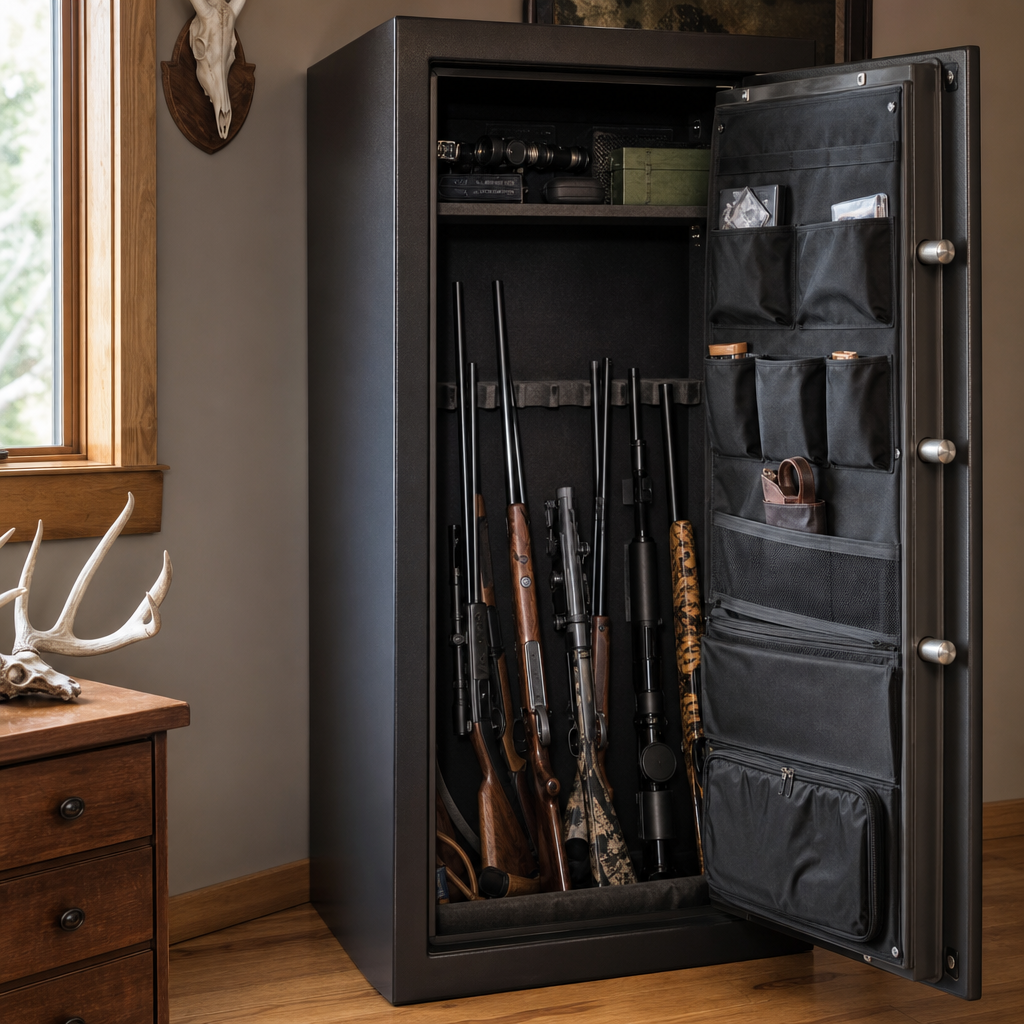
Choosing a gun safe with a true long-term storage mode is not just about buying a heavy steel box; it is about creating a controlled environment that protects firearms, documents, optics, and ammunition for years with minimal handling. In practical terms, long-term storage mode means the safe can maintain security, stable humidity, organized placement, and low-risk access over extended periods, whether you are storing seasonal hunting rifles, inherited handguns, or a preparedness collection. Many buyers focus first on gauge thickness, lock type, or sticker ratings, but the safer long-term decision comes from evaluating how the safe performs after the purchase: how it manages moisture, how it supports maintenance intervals, and how well it prevents both unauthorized access and gradual damage.
I have helped buyers compare entry-level cabinets, mid-tier residential safes, and heavier composite models, and the biggest mistake I see is assuming every gun safe is equally suitable for multi-year storage. It is not. A safe that works fine for daily-use firearms may be poor for long-term storage if it has weak door seals, limited power access for dehumidifiers, poor interior airflow, or cramped shelving that encourages guns to lean against each other. Long-term storage introduces a different standard. You are no longer only preventing theft; you are controlling corrosion, preserving finishes, protecting stocks from humidity swings, and making sure the safe remains functional even if the contents are not touched for months at a time.
This matters because firearms are durable but not immune to neglect. Blued steel can rust, wood can swell or crack, optics can suffer from moisture, and soft cases can trap condensation. In coastal regions, basements, and garages, relative humidity can shift enough to damage metal surprisingly fast. At the same time, the wrong safe setup can create hidden risks: electronic locks with neglected batteries, overcrowded racks that nick scopes, or interior carpeting that holds moisture after a flood event. For a buying guide that serves as a hub page, the right approach is to identify the features that directly affect long-term storage, explain how to compare safe types, and give buyers a framework they can use before moving deeper into specific lock, sizing, fire-rating, and installation topics.
When people ask what to buy, the best answer starts with a definition: a gun safe that offers a long-term storage mode is one designed or configured to support secure, low-disturbance, climate-conscious storage over extended periods. That mode may not appear as a labeled switch on the door panel. Instead, it is the combination of sealed construction, interior flexibility, humidity control support, sensible capacity, quality lock management, and placement strategy. If you choose with those criteria in mind, you will buy once, store correctly, and avoid the expensive lesson of replacing rusted firearms or outgrowing a marginal safe in two years.
Start With the Long-Term Storage Requirements
The first buying decision is understanding what long-term storage requires beyond basic burglary protection. A safe intended for years of storage should provide three things at the same time: physical security, environmental stability, and low-contact organization. Physical security means the body, door, hinges, relocker system, and anchoring points can resist common residential attacks. Environmental stability means the safe can support humidity control and reduce sharp temperature changes. Low-contact organization means each firearm sits securely without constant reshuffling, bumping, or stacking. If one of these is missing, the safe may still be useful, but it is not optimized for long-term storage.
In the field, I advise buyers to inventory what they plan to store for at least five years, not what they own today. That list should include scoped rifles, shotguns, handguns in sleeves or racks, suppressors where legal, passports, hard drives, tax records, and heirloom items. Long-term storage often expands beyond guns because the safe becomes the most secure and environmentally managed space in the home. This is why interior layout matters more than many people expect. A “24-gun safe” may realistically hold 12 to 14 long guns with optics if you want spacing that prevents contact wear and allows airflow.
Humidity control is the nonnegotiable element. The National Shooting Sports Foundation and major manufacturers consistently recommend storing firearms in a cool, dry environment, and that means active or passive moisture management inside the safe. A long-term storage-friendly safe should either include a factory power pass-through for an electric dehumidifier rod or have enough interior space and sealing quality to make desiccants effective. In humid climates, relying only on silica packs inside a large safe is usually inadequate. A GoldenRod-style heater, rechargeable desiccant, and a digital hygrometer provide a much more reliable setup.
Fire protection also deserves a more specific reading than marketing often provides. Fire ratings vary by testing method, duration, and temperature, and many residential gun safes use manufacturer-defined standards rather than an independent burglary and fire certification. For long-term storage, the practical question is not whether the safe survived a brochure test, but whether it offers enough insulation, door sealing, and structural integrity for the fire risk in your location. A safe on a concrete slab in a low-wildfire area faces a different threat profile than one installed in a second-floor closet in a wood-frame house.
Compare Safe Construction, Lock Types, and Interior Design
Once the storage requirements are clear, compare the safe’s construction in concrete terms. Steel thickness is one of the easiest numbers to market and one of the easiest for buyers to misunderstand. Lower gauge means thicker steel. A 12-gauge body is more substantial than 14-gauge, but body steel alone does not tell the whole story. Door plate thickness, frame design, anti-pry features, internal hard plates, and boltwork geometry matter just as much. For long-term storage, a heavier body also helps with stability and anchoring, reducing the risk of movement that can affect seals or create tipping hazards during years of use.
Lock choice influences long-term reliability. Mechanical dial locks remain the benchmark for durability because they do not rely on batteries or circuit boards. They are slower to open, but for firearms intended to sit undisturbed for long intervals, that slower access is often a reasonable tradeoff. Electronic locks are convenient and common, yet they require battery maintenance and can be vulnerable to neglect if the safe is opened only a few times per year. Higher-end redundant locks, combining electronic and mechanical access paths, are excellent for buyers who want convenience without giving up a backup method.
Interior design separates a safe that technically stores guns from one that preserves them well. Adjustable shelving, barrel rests sized for scoped rifles, and door organizers all improve long-term storage because they reduce crowding. Soft-lined interiors are useful, but fabric alone does not prevent contact damage if spacing is poor. Buyers should also look for channeling at the back or bottom that allows warm air from a dehumidifier rod to circulate. In several installations I have evaluated, the owners had quality safes but placed too many long guns muzzle-up with optics touching. The result was finish wear and constant reshuffling whenever one gun was removed.
| Feature | Why It Matters for Long-Term Storage | What to Look For |
|---|---|---|
| Body and door steel | Resists pry attacks and improves structural rigidity over years | At least 12-gauge body in residential safes, thicker if budget allows |
| Lock system | Determines reliability during low-frequency access | Mechanical dial, quality electronic lock, or redundant lock |
| Power pass-through | Supports electric dehumidifiers and lighting | Factory hole with grommet and protected routing |
| Interior adjustability | Prevents crowding and contact damage | Movable shelves, scope clearance, handgun racks |
| Fire sealing | Helps block smoke and heat transfer | Expanding door seal and credible fire-rating details |
| Anchoring options | Prevents tipping and theft by removal | Pre-drilled anchor holes sized for concrete or wood mounting |
Choose the Right Size, Location, and Humidity Strategy
Size is where most buyers undershoot. For long-term storage, buy a safe at least one size class larger than your current collection suggests. Manufacturer capacity counts are almost always based on slim, unscoped long guns placed tightly together. Real collections include bipods, slings, large scopes, chassis rifles, and documents stored in boxes. If you intend to avoid constant movement and preserve finishes, every item needs breathing room. A safe that feels half empty on day one often becomes correctly sized within eighteen months.
Placement determines whether the safe can actually function in a long-term storage role. Interior rooms on a ground floor are generally better than garages, sheds, or damp basements. Concrete floors are ideal for weight support and anchoring, but concrete can also transmit moisture, so use a barrier or riser if recommended by the manufacturer. Avoid exterior walls when possible because they experience greater temperature swings. In hurricane, flood, or wildfire-prone regions, placement should account for those hazards specifically. A great safe installed in a bad location loses much of its advantage.
Your humidity plan should be intentional, measurable, and simple enough to maintain. The target often cited by collectors and conservators is roughly 45 to 50 percent relative humidity, though local conditions and stored materials may shift the ideal slightly. The key is consistency. Use a digital hygrometer with min/max tracking so you can see whether the interior drifts over time. In very dry climates, excess dryness can also affect wood stocks, so avoid extreme overcorrection. For most owners, the most effective combination is a low-watt dehumidifier rod to warm the air slightly and a desiccant unit to capture residual moisture peaks.
Do not assume the safe itself creates a dry environment. Safes are not refrigerators or laboratory cabinets. They slow change, and good ones provide a controlled envelope, but they still need support from the surrounding room and from maintenance habits. Before any firearm goes into long-term storage, clean it thoroughly, apply a suitable rust preventive, avoid foam-lined hard cases inside the safe, and inspect magazines and ammunition separately. In my experience, the owners who have the best results are not the ones who buy the most expensive safe; they are the ones who build a repeatable system around it.
Evaluate Brands, Certifications, and Total Cost of Ownership
Brand reputation matters, but buyers should examine what reputation is based on. Some companies are known for stronger steel and simpler designs, while others emphasize fire lining, interior finish, or dealer support. Read specification sheets closely. Ask whether the fire rating is independently tested, whether the lock is UL listed, whether the safe includes a hard plate and relocker, and what the warranty covers after attempted break-in or fire. A long-term storage purchase should also account for delivery, stair carries, anchoring, electrical access, and future accessories. Those costs can materially change the best-value choice.
It is also smart to distinguish between a residential security container, a true burglary-rated safe, and a lightweight locking cabinet. For many households, a residential model from a reputable manufacturer is sufficient when properly anchored and paired with alarms and layered home security. But buyers storing high-value collections, NFA-regulated items where lawful, or heirloom firearms may benefit from stepping into heavier composite or commercial-grade options. The upgrade is expensive, yet the gain is not only theft resistance. Heavier safes often deliver better door fit, stronger interiors, and more stable long-term environmental performance.
The total cost of ownership should include maintenance. Electronic lock batteries need scheduled replacement. Desiccants need recharging. Door hinges and bolts may require inspection. Interior fabrics should be checked for trapped moisture after any water incident. If the safe will remain mostly closed, set a calendar reminder to inspect the contents at least quarterly in humid regions and semiannually in drier climates. Long-term storage is never purely passive. The safe creates the conditions for success, but a light maintenance schedule preserves that advantage.
As the hub page for gun safe buying guides, this topic connects naturally to deeper decisions buyers often research next: mechanical versus electronic lock guides, realistic capacity planning, fire rating comparisons, dehumidifier setup, safe room placement, and anchoring methods. If you evaluate a safe through the lens of long-term storage mode, those subtopics become easier because the priorities are already clear. You are not shopping for features in isolation. You are building a complete storage system that protects value, function, and safety over the long run.
The best gun safe for long-term storage is the one that balances security, humidity control, interior space, reliable access, and proper installation in your specific environment. Buyers who focus only on headline specs often miss the features that preserve firearms over time: power access for dehumidifiers, realistic capacity, adjustable organization, solid door sealing, and a lock system they can maintain confidently. Long-term storage mode is not a gimmick. It is the practical outcome of choosing a safe that supports stable conditions and low-disturbance storage year after year.
If you remember one rule, make it this: buy for the environment and the collection you will have in five years, not the one you have today. That means sizing up, anchoring correctly, placing the safe in the driest reasonable location, and monitoring interior humidity with real data. It also means accepting tradeoffs honestly. A faster electronic lock may require more upkeep. A smaller safe may save money now but force crowding later. A garage installation may be convenient but demand stronger moisture control. Good buying decisions come from matching the safe to those realities instead of ignoring them.
For anyone building out a complete Gun Safes & Safety plan, this guide is the starting point for the Buying Guides section because it frames the purchase around long-term protection rather than impulse features. Use it as your checklist before comparing brands, lock styles, fire ratings, and installation options. When you choose a safe that truly supports long-term storage, you protect more than firearms; you protect readiness, family safety, and property that may be impossible to replace. Review your inventory, measure your space, and start with the safest long-term choice now.
Frequently Asked Questions
1. What does “long-term storage mode” actually mean in a gun safe?
Long-term storage mode means the safe is set up to protect firearms and related valuables for extended periods with as little disturbance and risk as possible. It goes beyond basic theft resistance. A true long-term storage setup helps control humidity, reduce corrosion, prevent damage from gun-to-gun contact, and keep contents organized so items can be stored for months or years without constant handling. In other words, the safe is not just a locked container; it functions more like a controlled storage environment.
In practical use, this matters because firearms stored for long periods face very different risks than firearms accessed every few days. Moisture can cause rust, poor interior layouts can stress optics or stocks, and frequent rearranging can nick finishes or create unsafe stacking conditions. A safe suited for long-term storage should have room for spacing, support for scoped rifles, adjustable shelving, and the ability to accommodate documents, magazines, and ammunition in an orderly way. The less you have to move things around to get to one item, the better the system works for preservation.
It also means the safe supports low-risk access when needed. If you open it occasionally for inspection, cleaning, or seasonal rotation, the interior should make it easy to check inventory and remove one item without disrupting the rest. That combination of security, environmental stability, and organized storage is what separates a genuine long-term storage mode from simply locking firearms in a heavy steel box.
2. Which features should I prioritize when choosing a gun safe for long-term firearm storage?
The most important features are consistent humidity control, adequate size, secure construction, and a flexible interior. Start with environmental control. A safe intended for long-term storage should allow you to use a dehumidifier rod, desiccant system, or both. Many buyers focus first on steel thickness and lock type, which do matter, but long-term preservation depends just as heavily on keeping internal moisture stable. If the safe cannot support humidity management easily, it is already at a disadvantage for extended storage.
Size is another major consideration, and this is where many people underestimate their needs. A safe rated for a certain number of guns is usually counting tightly packed long guns without optics, slings, or accessories. For long-term storage, that kind of crowding is a mistake. You want extra room so rifles are not pressed together and handguns, documents, and valuables have dedicated space. Buying larger than your current collection requires is usually the smarter decision, especially if you expect to add firearms, family heirlooms, or preparedness supplies over time.
Interior adjustability is equally important. Look for shelving that can be reconfigured, barrel rests that support scoped rifles, and compartments that let you separate metal items from paperwork, optics, and accessories. Fire rating also deserves attention if you are storing documents, legal records, or irreplaceable valuables alongside firearms. Finally, choose a lock you trust and will maintain properly, whether mechanical or electronic. The best long-term storage safe is one that combines reliable security with enough internal control and organization to preserve your collection, not just contain it.
3. How important is humidity control inside a gun safe, and what is the best way to manage it?
Humidity control is one of the most important parts of long-term firearm storage because moisture is the enemy of blued steel, internal components, optics mounts, and even paper records stored in the safe. Without humidity management, a safe can become a sealed environment that traps moisture rather than preventing it. That is why buyers who care about years of storage should treat dehumidification as essential, not optional. Even a high-quality safe can fail at preservation if the air inside remains damp or swings too much with seasonal weather.
The best setup usually combines good preparation with active moisture control. Firearms should be cleaned, lightly protected with appropriate rust-preventive products, and stored dry before they ever go into the safe. Then the safe should use either an electric dehumidifier rod, rechargeable desiccants, canister desiccants, or a layered approach using more than one method. A dehumidifier rod helps keep the interior air slightly warmer and less prone to condensation, while desiccants help absorb residual moisture. In many climates, using both gives better long-term stability than relying on one system alone.
It is also wise to monitor conditions instead of guessing. A small hygrometer lets you check relative humidity and see whether your system is working. Many owners aim for a moderate range that avoids excess dampness without creating issues for wood stocks or stored documents. The exact number matters less than maintaining stable, safe conditions over time. If you live in a humid region, basement, or area with strong seasonal swings, your humidity strategy becomes even more important. A gun safe designed for long-term storage should make it easy to route power, place dehumidifiers, and inspect conditions regularly.
4. Should ammunition, documents, optics, and valuables be stored in the same safe as firearms for long-term storage?
They can be, but the safe needs enough space and organization to keep everything protected properly. One of the biggest mistakes in long-term storage is treating the interior like a catch-all space where firearms, paperwork, ammunition, passports, jewelry, and optics are all stacked together. That approach increases the chance of scratches, pressure damage, poor airflow, and difficult access. If you plan to store multiple categories of valuables in one safe, you need a model with shelving, compartments, and enough capacity to separate items logically.
Documents benefit from fire protection and stable conditions, but they should not be jammed behind rifles or placed where oil, solvents, or metal edges can damage them. Optics should be stored where they are not bearing weight or rubbing against neighboring firearms. Ammunition should be organized and kept dry, but not packed in a way that blocks airflow or forces you to disturb other contents every time you need a box. A well-designed interior lets each category have a designated place, which is exactly what long-term storage mode is supposed to accomplish.
In some cases, a separate lockable container inside the safe can help with small valuables or important documents. For larger collections, some owners prefer one safe for firearms and another for documents and non-firearm valuables. That is often the ideal arrangement, but if you want one safe to do it all, choose a larger model with flexible shelving and leave room for airflow and easy inspection. Long-term storage works best when contents are protected as a system, not forced to compete for limited space.
5. What common mistakes should I avoid when picking a gun safe for long-term storage?
The most common mistake is buying too small. A safe that seems big on the showroom floor can become cramped quickly once you add scoped rifles, handguns, documents, magazines, and accessories. Overcrowding leads to poor organization, more handling, and a higher chance of scratches, bumped optics, and unstable storage conditions. For long-term use, extra capacity is not a luxury; it is part of preservation. A safe that is only just large enough today usually will not serve well for years.
Another mistake is focusing only on burglary ratings or exterior appearance while ignoring environmental control. Heavy steel and a strong lock are important, but they do not prevent rust on their own. If a safe lacks an easy way to support dehumidifiers, monitor humidity, and maintain internal airflow, it may underperform where long-term storage matters most. Buyers also sometimes overlook interior flexibility. Fixed layouts can make it difficult to store a mix of long guns, pistols, optics, and important papers without stacking or crowding.
A final mistake is assuming that once the safe is installed, the job is done. Long-term storage still requires proper prep and occasional review. Firearms should be cleaned before storage, protected with appropriate products, and positioned so they are not pressing against each other. The safe should be placed in a sensible location, ideally anchored, away from obvious moisture problems, and checked periodically for humidity and condition. The right safe reduces risk dramatically, but it works best as part of a complete storage plan. When you choose a safe with enough capacity, real humidity support, smart organization, and reliable security, you are far more likely to protect your collection for the long haul.