
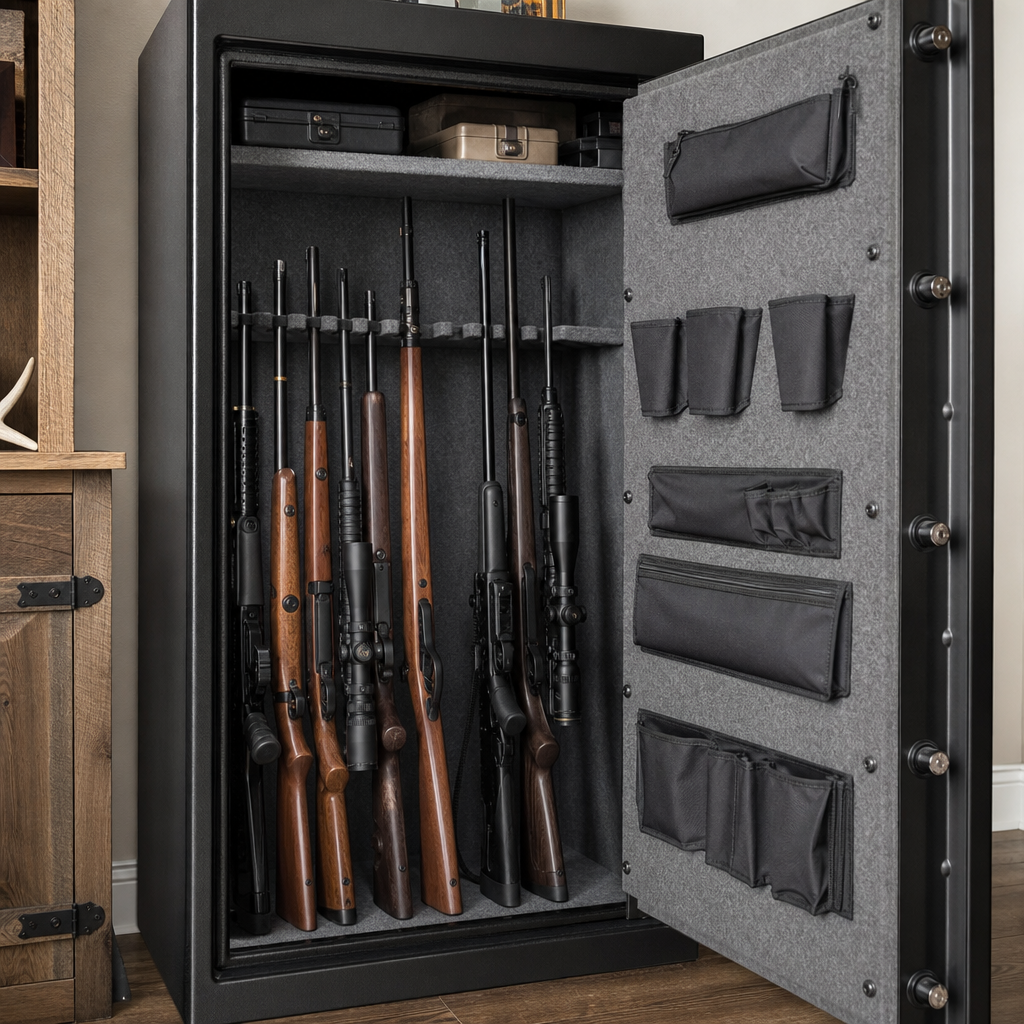
Interior carpet lining is one of the most overlooked features in a gun safe, yet it directly affects how well the safe protects valuable firearms from cosmetic damage, finish wear, and metal-to-metal contact over years of storage. In a buying guide focused on the best gun safes that offer interior carpet lining for scratch prevention, the central question is not simply which safe is strongest, heaviest, or cheapest. It is which models combine security, interior protection, usable layout, and long-term durability in a way that matches how gun owners actually store rifles, shotguns, pistols, optics, and documents.
When I evaluate gun safes for buyers, I treat interior lining as part of the protection system, not as decorative trim. A soft interior liner, typically carpet, velour, or felt-style fabric over composite paneling, reduces abrasion when firearms shift slightly during placement or removal. It also helps protect wood stocks, Cerakote finishes, bluing, and mounted optics from rubbing against hard steel walls or bare shelving. Scratch prevention matters because many owners store multiple long guns in close proximity, often with slings, bipods, turrets, and magazines creating extra contact points.
A quality carpet-lined gun safe also improves organization. Shelves hold accessories more securely, barrel rests create gentler touch points, and door panels can support handguns and documents without harsh surfaces. For collectors, hunters, competitive shooters, and homeowners using a safe for both firearms and valuables, that softer interior is often the difference between careful storage and avoidable wear. This is especially important in households where guns are accessed regularly rather than sealed away for years.
This buying guide covers the best gun safes with carpet lining for scratch prevention, the features that separate premium interiors from basic ones, and the tradeoffs buyers should understand before purchasing. It also serves as a hub for the broader buying-guides category within gun safes and safety, helping readers compare capacity claims, lock types, fire ratings, steel thickness, humidity control, modular shelving, and installation considerations. By the end, you should know what carpet lining does, what it does not do, and which safe designs deliver real protection for both firearms and finishes.
What Interior Carpet Lining Does and Why It Matters
Interior carpet lining in a gun safe is a soft material layer attached to shelves, side walls, barrel supports, and floor panels to prevent scratches, finish scuffs, and impact wear during storage. In practical use, it protects firearms in three ways. First, it cushions contact between the gun and the safe. Second, it reduces friction when moving firearms in and out. Third, it lowers the chance that vibrations or minor shifts cause metal parts to scrape hard surfaces.
Not all carpet lining is equal. Entry-level safes may use thin glued fabric over particle board inserts, while better models use thicker automotive-style carpet, velour panels, reinforced shelf coverings, and finished barrel notches. Some premium interiors feel more like upholstered cabinetry than industrial storage. In my experience, the difference becomes obvious within months: thinner liners pill, peel, or flatten under rifle weight, while better materials keep their texture and continue protecting stocks and finishes.
Buyers should also understand the limitation. Carpet lining does not stop rust by itself, does not replace a silicone sock, and does not compensate for overcrowding. If ten scoped rifles are forced into a “24-gun” safe that realistically fits twelve, scratches can still happen because guns contact each other. Interior lining works best when paired with realistic capacity planning, proper spacing, dehumidification, and a layout that matches the firearm mix being stored.
How to Judge a Carpet-Lined Gun Safe Before You Buy
The best buying decision comes from evaluating the interior and exterior as one system. Start with steel body thickness and door construction. A soft interior is valuable, but it should sit inside a safe that also delivers burglary resistance. Many mass-market safes use 14-gauge steel bodies, while more protective models move to 12-gauge, 11-gauge, or heavier plate. Thicker steel generally improves rigidity and resistance to pry attacks, and it also supports heavier shelving and better door organizers.
Next, inspect fire protection. Manufacturers often advertise 30-, 60-, or 90-minute ratings at temperatures such as 1200°F or 1400°F, but test methods vary widely. Independent certification from organizations such as UL is more meaningful than an unverified factory claim. Fireboard layers, expanding door seals, and solid door fit all affect performance. For many buyers, a safe that protects finishes from scratches but fails under heat is not a balanced purchase.
Lock type matters too. Electronic keypad locks offer speed and user-code flexibility. Mechanical dial locks have a long history of reliability. Higher-end safes may include SecuRam, Sargent and Greenleaf, or La Gard systems, all recognizable names in secure storage hardware. Biometric locks are common on quick-access handgun safes, but on large rifle safes I still advise buyers to prioritize proven electronic or mechanical options over convenience-first designs.
Finally, focus on the interior specifics that directly affect scratch prevention and usability.
| Feature | What to Look For | Why It Helps Prevent Scratches |
|---|---|---|
| Wall and shelf lining | Thick carpet or velour securely bonded to panels | Reduces hard contact and friction against finishes |
| Barrel rests | Covered notches with even spacing | Keeps long guns separated and stable |
| Adjustable shelving | Carpeted shelves with firm support pins | Prevents accessories and handguns from sliding |
| Door organizer | Padded handgun pockets and document holders | Avoids loose items resting against firearms |
| Floor protection | Padded or carpeted base with rigid underlayer | Protects buttstocks and prevents wear at contact points |
Best Types of Gun Safes With Carpeted Interiors
For most homeowners, the best overall choice is a full-size residential security container from established brands such as Liberty Safe, Browning, Rhino Metals, Sports Afield, Winchester Safes, or Cannon Safe. These products usually include carpet-lined interiors, long-gun barrel racks, adjustable shelves, and enough height for scoped rifles. Among them, Liberty and Browning often stand out for cleaner interior fit and finish. Browning’s Axis shelving system, for example, is especially practical for mixed storage because it allows flexible shelf placement while keeping firearms separated.
If finish protection is the top priority, premium safes from Liberty’s higher lines, Rhino Metals’ Ironworks or Kodiak series, and select Fort Knox builds often offer more refined interiors with thicker fabric coverage and better shelf rigidity. These are useful for owners with walnut stocks, collectible lever actions, high-gloss shotguns, or precision rifles wearing expensive optics. In side-by-side inspections, these interiors generally show tighter fabric wrapping, fewer exposed edges, and more stable supports than bargain big-box models.
Modular safes are another category worth considering. Brands such as SnapSafe offer safes that assemble in place, making them practical for upstairs rooms, closets, or homes with narrow stair access. Their interiors are usually carpet lined and gentler than bare metal cabinets. Security is not always equal to a welded heavy-body safe, but for buyers balancing installation constraints and finish protection, they fill an important role.
Gun cabinets should be treated separately. Many lower-cost cabinets have painted interiors or minimal lining, and they are not true safes in burglary-resistance terms. Some owners add aftermarket carpet or foam, but that is a compromise, not a replacement for a properly lined gun safe. If preventing scratches is a priority, and especially if storing optics-ready rifles or heirloom firearms, skip bare-interior cabinets unless budget leaves no alternative.
Recommended Buying Criteria for Different Gun Owners
A hunter storing six to ten common-use rifles and shotguns usually needs a 60- to 90-minute fire rating, an electronic lock, anchored installation, and a carpet-lined interior with realistic spacing for scopes. In practice, that means shopping in the 18- to 30-gun advertised range, because capacity numbers assume slim rifles without optics. A safe in the 24-gun class often holds around ten to fourteen long guns comfortably if scratch prevention matters.
Collectors should prioritize interior quality, shelf flexibility, and true space per firearm over headline capacity. Safe walls lined with thicker fabric, wider barrel spacing, and stronger shelves matter more than one extra locking bolt. Collectible finishes scratch easily, and wood stocks can dent when crowded. For these buyers, a larger safe than currently needed is almost always the correct move.
Handgun-focused owners need a different layout. A rifle safe with a premium door organizer can store many pistols without stacking them on shelves, reducing the chance of finish rub between slides, sights, and optics. Look for padded handgun pouches, zip pockets, and dedicated shelves for ammunition and documents. If the collection is mostly pistols for defensive use, pairing a carpet-lined long-gun safe with a separate quick-access bedside safe is often the most sensible setup.
Families should think about installation and access patterns. The safest interior means little if the unit is not bolted down or if children can observe the code. Carpet lining helps preserve firearms, but family safety depends on controlled access, secure anchoring, and routine lock maintenance. In homes with humidity swings, add a dehumidifier rod or desiccant system to protect both metal and interior materials.
Common Buying Mistakes and How to Avoid Them
The first mistake is assuming all soft interiors are premium. Marketing photos often make thin fabric look luxurious. Read specifications, inspect in person when possible, and check whether shelf boards flex under weight. If the liner feels thin and the substrate beneath it is weak, scratch prevention will be limited once the safe is fully loaded.
The second mistake is buying to the published gun count. Manufacturers often measure capacity with unrealistic assumptions: no optics, no slings, no pistol grips, and no spacing for easy retrieval. Overcrowding is the fastest way to defeat a carpet-lined interior. When buyers ask me how to avoid scratches, my answer starts with buying bigger than the collection requires today.
The third mistake is ignoring moisture management. Carpet can trap humidity if the safe is placed in a damp basement without climate control. Use a GoldenRod-style heater, rechargeable desiccants, or a monitored hygrometer to keep relative humidity in a safe range. Most gun owners target roughly 45 to 50 percent humidity, though local conditions and stock materials can justify some adjustment.
The fourth mistake is treating appearance as proof of quality. Decorative external hinges, glossy paint, and plush interiors can distract from weak steel, poor boltwork, or vague fire claims. A good gun safe protects against scratches and against forced entry. Buyers should verify construction details, warranty support, and lock quality before being impressed by upholstery alone.
How This Hub Supports Smarter Gun Safe Buying Decisions
As a buying-guides hub within the broader gun safes and safety category, this page should help readers move from one feature question to the next. Carpet lining is connected to safe sizing, shelf adjustability, door storage, humidity control, fire rating, and lock selection. A buyer researching scratch prevention is usually also asking how large the safe should be, whether an electronic lock is reliable, what fire rating is credible, and whether a modular model is secure enough for the intended room.
The most useful approach is to evaluate safes by use case, not by marketing tier alone. A homeowner protecting hunting rifles in a climate-controlled bedroom closet may do very well with a mid-range carpet-lined safe from a recognized brand. A collector with engraved shotguns, suppressor-ready rifles, and archived documents should move toward heavier steel, upgraded interiors, and more spacious layouts. Someone in an apartment may need a modular safe and a strict dehumidification routine. The right answer depends on the firearms, the home, and the daily access pattern.
The best gun safes that offer interior carpet lining for scratch prevention are the ones that protect both the firearm and the investment behind it. Choose a safe with genuine interior quality, realistic capacity, dependable lock hardware, credible fire protection, and enough room to avoid crowding. If you are comparing models now, start by sizing up one category, then shortlist safes with thicker interior lining, adjustable shelving, and trusted lock brands. That single decision will improve both security and firearm preservation for years.
Frequently Asked Questions
Why does interior carpet lining matter so much in a gun safe?
Interior carpet lining plays a much bigger role than many buyers realize. While locking strength, steel thickness, fire resistance, and capacity usually get the most attention, the lining is what directly touches your firearms every day. If the interior surfaces are bare metal, rough composite, thin paint, or poorly finished shelving, even routine storage can lead to cosmetic wear over time. Small points of contact on stocks, barrels, optics, and receivers can gradually create scratches, scuffs, finish rub, and pressure marks, especially when guns are removed and reinserted often.
A properly carpet-lined interior adds a protective buffer between your firearms and the safe itself. That soft layer helps reduce abrasion, prevents metal-to-metal contact, and makes it much less likely that movement inside the safe will damage bluing, Cerakote, wood finishes, or scope housings. This is particularly important for collectors, hunters with expensive rifles, owners of heirloom firearms, and anyone storing multiple long guns close together. Even if a scratch does not affect function, it can absolutely reduce resale value and detract from the condition of a prized firearm.
Good carpet lining also improves the overall usability of the safe. It makes shelves and barrel rests feel less harsh, reduces slipping on support surfaces, and contributes to a more premium interior setup. In short, the best gun safes with interior carpet lining do more than secure firearms from theft. They protect them from the quieter, slower kind of damage that happens over months and years of storage.
Does carpet lining alone prevent scratches, or do other interior features matter too?
Carpet lining is important, but it is only one part of a truly protective interior. A soft lining helps reduce friction and surface wear, but scratch prevention also depends heavily on the safe’s layout, spacing, shelf design, barrel support system, and how the firearms are actually stored. If long guns are crammed tightly together with little separation, they can still knock into each other when one is removed. If shelves are poorly positioned, optics and accessories may press against neighboring firearms and create wear points.
The safest interiors combine carpet lining with practical organization. Look for adjustable shelving, supportive barrel notches, padded barrel rests, and enough depth to accommodate scoped rifles without forcing awkward angles. A wider safe with fewer advertised “maximum capacity” claims often protects firearms better than a packed interior that technically holds more guns. Many manufacturers list capacities based on slim, unscoped firearms placed shoulder to shoulder, which is rarely how modern owners actually store rifles.
Door organizers, pistol pockets, and dedicated accessory storage can also make a real difference. When handguns, magazines, documents, and tools have their own place, they are less likely to be stacked on shelves next to long guns where they can slide and create contact damage. So yes, carpet lining matters a great deal, but the best scratch-prevention safes are the ones that pair soft interior materials with a realistic, user-friendly storage design.
What should I look for when comparing gun safes with carpet-lined interiors?
Start by examining the quality and coverage of the lining itself. Not all carpet-lined interiors are equal. Some safes use a thin, low-grade fabric only on select panels, while better models line shelves, sidewalls, floor surfaces, and partitions more completely. You want a lining that feels durable, securely attached, and consistent throughout the interior rather than decorative in just a few visible areas. Loose or thin material may not provide lasting protection, especially in areas where firearms rest regularly.
Next, pay close attention to interior dimensions and the way the storage space is configured. A safe may have a soft interior, but if it is too shallow for scoped rifles or too narrow for practical spacing, scratch prevention suffers. Adjustable shelving is one of the best features to prioritize because it allows you to create separation between firearms, accessories, handguns, and valuables. This reduces crowding and lowers the chance of contact-related wear. If you own AR-style rifles, precision rifles, large optics, or laminated or high-gloss wood stocks, interior flexibility becomes even more important.
You should also weigh the carpet-lined interior against the safe’s core security features. Protective lining is valuable, but it should not come at the expense of steel construction, lock quality, fire rating, or bolt work. The best buys balance both. In practical terms, that means looking for a reputable manufacturer, solid body and door construction, dependable locking options, and an interior that is truly built for firearm preservation. If possible, review close-up photos or showroom examples to see how the shelves, barrel rests, and floor areas are finished. A premium-looking exterior does not always guarantee a carefully designed interior.
Are carpet-lined gun safes better for storing high-end, collectible, or wood-stock firearms?
Yes, they are especially beneficial for firearms with delicate finishes or collector value. High-end rifles and shotguns often have polished bluing, fine engraving, glossy wood stocks, custom coatings, or hand-finished components that can show wear more easily than basic utility firearms. Even minor abrasion can be frustrating on a premium gun, and for collectible pieces, originality and condition matter a great deal. A carpet-lined interior provides a gentler environment that helps preserve both appearance and long-term value.
Wood-stock firearms benefit because softer contact surfaces reduce the chance of finish marks, dents from hard shelf edges, or rubbing at repeated contact points. Firearms with optics also benefit because carpet-lined shelving and walls lessen the chance that scope tubes, turrets, or mounts will be bumped against rigid interior surfaces. Handguns with polished slides, revolvers with deep bluing, and shotguns with finely finished stocks all tend to fare better in a thoughtfully lined safe than in one with sparse or harsher interior treatment.
That said, buyers should still avoid assuming any carpet-lined safe is automatically ideal for collectibles. Humidity control remains essential, because lining prevents scratches but does not stop moisture-related damage. A quality dehumidifier or desiccant system is still important for preserving metal and wood. For owners of especially valuable firearms, the ideal setup includes carpet lining, adjustable support, proper spacing, climate management, and careful handling habits. When all of those elements work together, the safe becomes a true preservation tool rather than just a lockbox.
How can I maximize scratch prevention after buying a carpet-lined gun safe?
The first step is to resist overfilling the safe. One of the most common causes of cosmetic wear is simply trying to store too many firearms in the available space. Even with carpet lining, tightly packed rifles can rub against each other, catch on optics, or shift during normal access. Leaving room between firearms is one of the best ways to preserve finishes. If your collection is growing, it is often smarter to buy a larger safe than you currently need rather than use every inch of a smaller one.
Organization also matters. Place heavier or frequently used firearms where they can be accessed without dragging them across neighboring guns. Use shelves for accessories instead of stacking cases, magazines, or tools near firearm contact points. If the safe supports adjustable interiors, set them up to accommodate the actual shape of your collection, not the manufacturer’s advertised capacity layout. Scoped rifles, pistol grips, bipods, and tactical accessories all change how much real space a firearm needs.
It is also wise to inspect the interior periodically. Check for loose shelf edges, worn padding, debris, grit, or small metal objects that may have fallen into the lining. Dust, brass fragments, screws, and hard accessories can defeat the benefit of a carpet-lined interior if they become trapped where firearms rest. Keep firearms clean before storing them, use humidity control to prevent corrosion, and move guns in and out deliberately instead of rushing. In the long run, the safest storage environment is created by a combination of good safe design, careful interior setup, and disciplined day-to-day handling.