
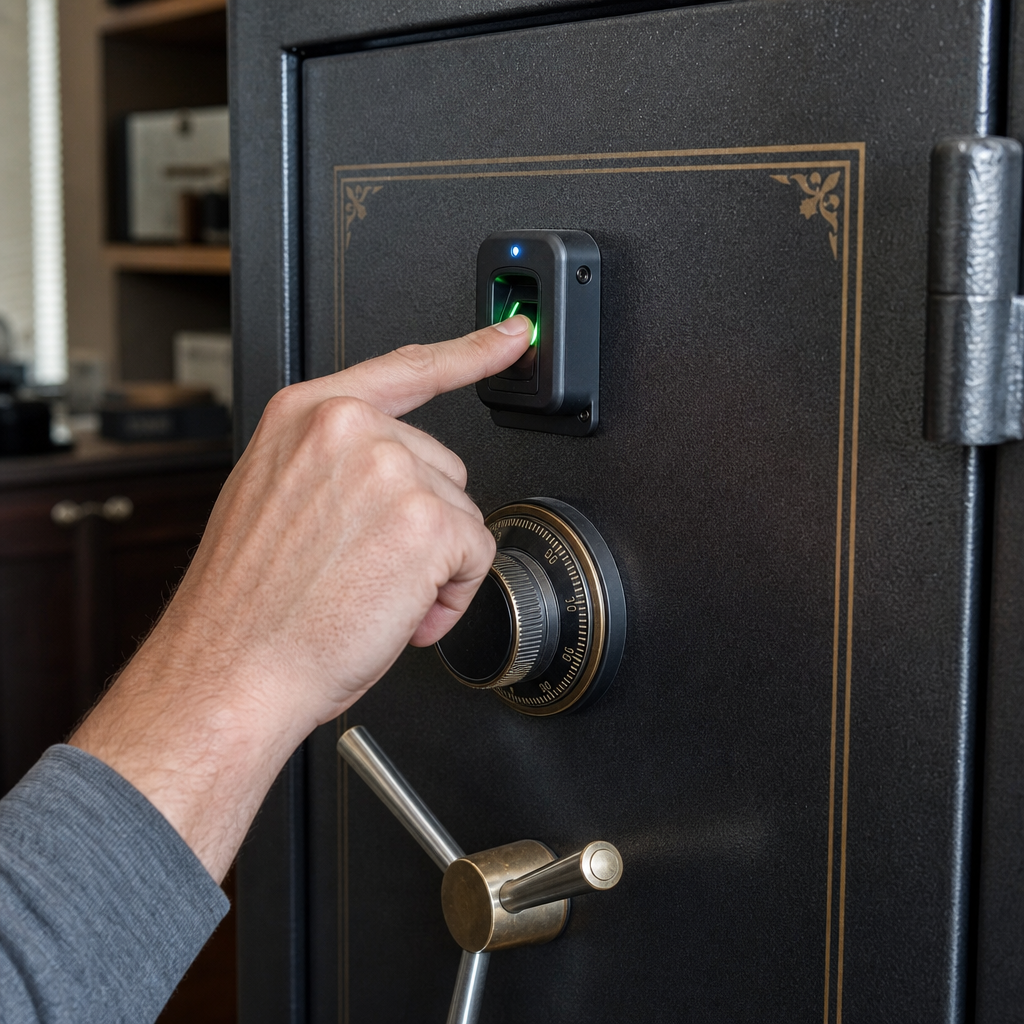
Installing biometric fingerprint scanners on older gun safes is one of the most practical upgrades a firearm owner can make, especially when a solid mechanical safe still has years of service left but lacks the fast access and user management of newer locks. In simple terms, a biometric fingerprint scanner is an electronic access control device that verifies a stored fingerprint template before releasing a lock, while an older gun safe usually relies on a key lock, mechanical dial, or basic electronic keypad. I have worked on retrofit projects where owners wanted bedside speed, stronger household access control, or better compliance with their own storage routines without replacing a heavy safe that was already anchored, fire rated, and structurally sound. That is why this topic matters. A well-planned retrofit can improve access speed, limit unauthorized entry, and extend the useful life of an expensive safe, but a poor installation can weaken the door, drain batteries, void a warranty, or create a dangerous lockout. This article serves as the hub for custom and DIY gun safe modifications, with fingerprint scanner installation as the core example and with related upgrade paths, planning criteria, and safety standards explained in plain language.
Assessing whether an older gun safe is a good candidate
Not every older safe should receive a biometric retrofit. The first step is evaluating the safe’s construction, lockwork, door thickness, relocker design, and current condition. In practice, the best candidates are UL-listed residential security containers or heavier burglary-rated safes with healthy boltwork, a reliable door swing, and enough internal clearance around the lock body. If the door has rust around the lock footprint, warped steel, cracked hardplate, or badly worn linkage, fix those issues before adding electronics. A fingerprint scanner improves access control; it does not repair weak mechanics.
Start by identifying the existing lock type. Many older gun safes use a Group 2 mechanical combination lock from Sargent and Greenleaf, La Gard, or AMSEC-compatible platforms. Some use a key lock with direct cam engagement. Others already have a first-generation keypad that can be swapped for a modern electronic or biometric assembly. The lock footprint matters because many retrofit kits are built around standard safe lock mounting patterns, spindle locations, and cable channels. If the scanner requires drilling a larger hole or relocating the lock body, installation becomes more invasive and risk rises.
Door design is the next checkpoint. Composite doors with internal fireboard, glass relockers, and hardplate require careful drilling strategy. A simple steel plate door is more forgiving. I always map the inside of the door before any modification: lock body position, relocker arms, bolt travel path, hinge-side clearance, and insulation layers. That inspection tells you whether a scanner can be mounted externally with an internal control cable, or whether you need a complete lock replacement. It also helps you preserve fire lining and avoid striking tempered glass relock components that would freeze the lock.
Power and environmental conditions matter more than many owners expect. Fingerprint readers dislike oily residue, metal dust, and wide humidity swings. A garage safe in a coastal climate may need a sealed scanner housing and disciplined maintenance. A bedroom safe usually presents fewer environmental issues. If your safe sits in an outbuilding, low winter temperatures can reduce battery performance and affect capacitive sensors. In those cases, choose a lock specifically rated for the expected operating range and verify whether it supports external emergency power contacts.
Choosing the right biometric retrofit system
The best biometric fingerprint scanner for an older gun safe is not simply the fastest reader advertised online. It is the system that matches the safe’s lock geometry, attack resistance, power design, and daily use pattern. There are three common retrofit approaches. First, a complete safe lock replacement combines a fingerprint reader, keypad, and internal lock body. Second, an add-on actuator works with the existing latch or handle system, usually on lighter cabinets or nonstandard enclosures. Third, a custom access-control build uses a commercial biometric module to trigger a solenoid or motor drive, which is usually the least suitable option for firearm storage because it can bypass tested safe-lock standards.
For most gun safes, stick with established safe lock manufacturers rather than consumer drawer locks. Products from Sargent and Greenleaf, SECU, and La Gard occupy the serious end of the market, while some gun safe brands offer OEM biometric kits designed around their own doors. Look for features that directly affect reliability: false reject rate, fingerprint template capacity, dual credential support, lockout timing after failed attempts, low-battery warning, audit trail capability, and a mechanical override policy that does not create an obvious attack point. A scanner that reads quickly but stores poor templates will frustrate you under stress.
Many owners ask whether fingerprint-only access is enough. My answer is usually no. A scanner paired with a keypad is better because fingers change. Cuts, dry skin, cold weather, or aging can reduce match accuracy. Dual-mode access gives you speed when the scanner works normally and a secure fallback when it does not. It also lets you enroll multiple household users with different permissions. If your safe stores defensive firearms, test access with your support hand and with at least two fingers per authorized user. Redundancy is not optional; it is part of safe operation.
| Option | Best Use Case | Main Advantage | Main Limitation |
|---|---|---|---|
| Biometric lock replacement | Older safes with standard lock footprints | Cleaner integration with existing boltwork | May require door panel disassembly and precise fitting |
| Biometric plus keypad unit | Defensive access and multiple users | Backup credential if fingerprints fail | Higher cost than single-mode systems |
| Add-on actuator kit | Light cabinets or nonstandard compartments | Lower installation complexity | Often weaker security and less tested durability |
| Custom DIY control module | Experimental projects only | Maximum flexibility | Poor fit for firearm security and liability concerns |
Installation planning, tools, and door preparation
Successful installation depends more on planning than on the scanner itself. Before ordering parts, remove the inner door panel and document everything with photos and measurements. Measure backset, lock centerline, spindle length, keypad clearance, cable routing space, and the distance between the lock body and moving bolts. Compare those numbers against the manufacturer’s template. If the scanner housing will sit near a handle hub or decorative trim, confirm that the user can place a finger naturally without striking the handle. A rushed mounting position is one of the biggest causes of poor real-world usability.
Use the right tools. At minimum, you need calipers, transfer punches, a drill with controlled speed, cobalt bits for hardened steel, step bits for finish work, deburring tools, threadlocker where approved, and a borescope or inspection mirror. On some safes, a carbide burr and cutting fluid are necessary because of hardplate. Vacuum metal shavings immediately. They can interfere with the reader electronics and create corrosion points. Protect fire insulation when cutting, and reseal penetrations if the manufacturer specifies a sealant compatible with the fire lining.
Door preparation should preserve strength, not just create a place to mount a scanner. Follow the lock maker’s drilling template exactly. If the retrofit uses the existing spindle hole, verify alignment before tightening the lock body. If new holes are unavoidable, place them where they do not intersect relock triggers, lock-bolt travel, or hardplate that is intended to resist drilling attacks. On higher-end safes, I prefer making a cardboard mockup and running the full boltwork through several cycles before any final drilling. Ten extra minutes with a mockup can prevent an expensive error inside a composite door.
Wiring deserves the same attention as steelwork. Cables must never bind against moving bars or hinge pockets. Use protective sleeves where the cable passes through steel edges, and leave a service loop only where the manufacturer permits one. Too much slack can snag; too little can pinch when the inner panel is reinstalled. If the system supports external battery contacts, mount them where they are accessible but not obvious. The goal is to avoid emergency disassembly during a dead-battery event. Good planning also supports future hub pages on safe lighting, dehumidifier routing, organizer panels, and accessory mounting, because every door modification competes for the same limited internal space.
Step-by-step retrofit process and programming
The standard retrofit process begins with opening the safe, extending the work area, and locking the door in an open position so it cannot swing unexpectedly. Next, remove the interior door panel and verify that the boltwork is fully understood before touching the original lock. If replacing a mechanical dial, carefully detach the dial ring, spindle, and lock body while preserving reference photos. Dry-fit the new internal lock first, then test bolt engagement manually with the door open. Never close the door until repeated open-door tests confirm smooth lock and unlock cycles.
Once the lock body and scanner are mounted, route the cable and reinstall any internal brackets exactly as specified. Secure fasteners to the manufacturer torque guidance if provided. Then install fresh batteries from a reputable brand such as Energizer Ultimate Lithium or premium alkaline cells recommended by the lock maker. Cheap batteries are a false economy. In service calls, a surprising number of biometric complaints trace back to battery sag under load rather than to the fingerprint sensor itself.
Programming is where many DIY jobs become unreliable. Enroll fingerprints only after the hardware is fixed in its final position, because scanning angle affects consistency. Clean the sensor and the user’s finger, then enroll the same finger multiple times if the system allows duplicate templates. Capture at different pressures and slight rotations so the scanner learns a fuller image set. For defensive use, I usually enroll the dominant thumb, support-hand thumb, and at least one index finger for each authorized user. If the lock offers a PIN backup, use a nontrivial code that is memorable under stress and different from alarm or phone passcodes.
After programming, conduct a formal test sequence with the door open: repeated fingerprint openings, backup code entry, lockout behavior after failed attempts, low-battery alert simulation if available, and power-loss recovery. Then test with the door nearly closed but not latched, followed by full closure only after complete confidence in the cycle. I recommend at least twenty successful openings before the safe returns to normal service. Document the model number, battery type, programming date, and emergency procedure in your firearm storage records. That discipline pays off months later when another household member needs access or troubleshooting.
Security tradeoffs, maintenance, and complementary DIY modifications
Installing biometric fingerprint scanners on older gun safes improves convenience, but convenience always has tradeoffs. Mechanical dials remain the benchmark for long-term independence from batteries and electronics. Biometric systems trade some of that simplicity for speed and user management. The key question is whether the chosen lock preserves the safe’s resistance to forced entry and accidental lockout. That means selecting a tested lock, protecting mounting points, and avoiding weak add-on gadgets that can be peeled, pried, or bypassed from the outside. If a retrofit requires obvious external screws or a flimsy plastic escutcheon, walk away from it.
Maintenance is straightforward but nonnegotiable. Replace batteries on a schedule, not only after a warning. Inspect the fingerprint window for oil film, dust, and corrosion. Verify that the handle and boltwork still move freely and that no cable insulation is rubbing through. In my own maintenance routine, I test every enrolled user quarterly and after any firmware or settings change. If one finger starts failing repeatedly, re-enroll before it becomes an emergency. Keep a written backup entry method secured separately from the safe. Never store the override key, if the system has one, in the same room without additional protection.
This retrofit also fits into a broader custom and DIY gun safe modification strategy. Older safes often benefit from upgraded LED lighting, door organizers, rifle barrel rests, humidity control, and anchor reinforcement. Those projects should be planned together because space, power routing, and door weight interact. Add too many accessories to the inner door panel and you may affect panel fit or scanner cable clearance. Drill for lighting without mapping the fire lining and you may compromise insulation. The most effective hub approach is to treat the biometric lock as part of a whole safe system: access control, environmental protection, interior organization, and structural mounting working together.
Local law, insurance terms, and manufacturer support should shape your final decision. Some insurers care about specific lock ratings or professional installation. Some safe makers will sell retrofit kits but warn that owner drilling can void portions of the warranty. If the safe protects high-value collections, NFA items, or irreplaceable family firearms, paying a safe technician may be the smart move. For many standard gun safes, however, a careful owner with accurate measurements, patience, and respect for the door’s internal mechanics can complete a biometric upgrade successfully.
Installing biometric fingerprint scanners on older gun safes works best when you approach the project as a security retrofit, not a gadget upgrade. The safe must be structurally sound, the lock must match the door geometry, and the installation must protect boltwork, relockers, insulation, and cable routing. Choose proven safe-lock hardware, favor fingerprint plus keypad systems over fingerprint-only designs, and test the setup extensively with the door open before trusting it in daily use. That process delivers the real benefit people want: faster authorized access without giving up disciplined firearm storage.
As the central guide to custom and DIY gun safe modifications, this article should help you evaluate related upgrades with the same standard. Every change, from lighting and dehumidifiers to door organizers and anchor bolts, should improve function without weakening security. If you are planning a retrofit, start by identifying your lock footprint, documenting the inside of the door, and comparing your safe against a manufacturer template. Then decide honestly whether the work belongs in your shop or in the hands of a qualified safe technician. A careful plan now will give your older gun safe many more years of safer, smarter service.
Frequently Asked Questions
Can you install a biometric fingerprint scanner on any older gun safe?
Not every older gun safe is an ideal candidate, but many can be upgraded successfully with the right hardware and planning. The first thing to understand is that a biometric fingerprint scanner does not usually replace the entire security structure of the safe. Instead, it is typically integrated as part of an electronic locking system or retrofit lock package that works with the safe’s existing boltwork. Whether installation is possible depends on several factors, including the safe’s door thickness, the internal clearance behind the lock area, the type of existing lock, and whether the safe was originally built to accept standardized lock footprints.
Many older gun safes use mechanical dial locks, key locks, or basic electronic keypads. If the safe uses a common lock mounting pattern, retrofitting a biometric system may be relatively straightforward. If the safe has a non-standard lock body, unusual relocker arrangement, or limited room inside the door, the upgrade may require modification or may not be worth the cost. That is why a careful inspection is essential before ordering parts. In some cases, a locksmith or safe technician can determine compatibility in a short visit and recommend specific biometric lock models that fit the safe without compromising its structural integrity.
It is also important to distinguish between a true lock retrofit and a superficial add-on. A high-quality installation ties the fingerprint reader to a proper locking mechanism designed for safe use, not just a consumer-grade cabinet latch. Owners should avoid low-end kits that promise universal compatibility without addressing bolt alignment, relockers, tamper resistance, and emergency override access. In practical terms, most older, well-built safes can be upgraded, but the best results come from matching the scanner and lock body to the safe’s construction rather than forcing a one-size-fits-all solution.
What are the main benefits of adding a biometric fingerprint scanner to an older gun safe?
The biggest advantage is speed of access. A well-installed biometric scanner allows authorized users to open the safe much faster than with a mechanical dial, especially under stress or in low light. That matters to firearm owners who use a safe for defensive storage, because every extra second spent spinning a dial or searching for a key can feel much longer in a real emergency. A fingerprint-based system reduces those steps by letting the user authenticate with a stored print and release the lock in a much more direct way.
Another major benefit is convenience without giving up controlled access. Older safes are often structurally excellent, with heavy steel bodies and dependable boltwork, but their original locks can feel outdated compared with modern access systems. A biometric upgrade brings newer functionality to a safe that may still have decades of useful life left. Depending on the system, owners can enroll multiple authorized fingerprints, which is especially useful in households where more than one responsible adult needs entry. Some systems also include secondary access methods such as keypad codes or emergency backup keys, adding flexibility if a fingerprint cannot be read due to moisture, dirt, or minor injury.
There is also a user-management and usability benefit. Mechanical locks are reliable, but they are not always practical for shared access or quick changes in authorization. A biometric system can often be reprogrammed more easily than changing a mechanical combination. That can be useful after a move, staffing change, divorce, estate transfer, or any situation where access permissions need to be updated. For many owners, the value of the upgrade is not that it makes the safe inherently stronger than it already was, but that it makes a strong older safe more usable, more responsive, and better aligned with how they actually store and access firearms today.
Will installing a biometric lock make an older gun safe less reliable or less secure?
It can, if the wrong product is chosen or the installation is done poorly. But when a quality biometric safe lock is installed correctly, the upgrade can provide fast access while maintaining strong security. The key issue is that electronic convenience should never come at the expense of secure lock design. A biometric fingerprint scanner is only as dependable as the lock body, power management, internal wiring protection, and integration with the safe’s boltwork. Cheap consumer electronics may work fine on lightweight cabinets, but older gun safes deserve hardware specifically engineered for secure storage applications.
Reliability concerns usually center on three areas: fingerprint reading performance, battery dependence, and failure modes. A good scanner should read consistently across different angles and conditions, and it should store multiple fingerprint samples per user to improve recognition. Battery-powered systems should provide clear low-battery warnings long before performance becomes an issue. Better units are designed so that loss of battery power does not create a security weakness; instead, they rely on external battery contacts, emergency power options, backup keypad entry, or mechanical override methods where appropriate. Those safeguards are what separate purpose-built safe locks from generic biometric gadgets.
Security also depends on preserving the safe’s original defenses. Drilling unnecessary holes, interfering with relockers, misaligning the lock, or weakening the door panel can reduce protection. That is why professional installation is often the better route, especially for higher-end or heavier safes. In short, a biometric upgrade does not automatically make a safe less secure. Poor planning does. If the lock is reputable, the fit is correct, and the installation respects the safe’s existing structure, an older gun safe can gain modern access control without sacrificing the dependability that made it worth keeping in the first place.
Should you install the biometric scanner yourself or hire a professional locksmith?
That depends on your experience level, the value of the safe, and the complexity of the lock replacement. Some retrofit kits are marketed as do-it-yourself friendly, especially when they are designed around standard lock footprints and include clear templates and hardware. For mechanically inclined owners who understand safe lock alignment, door panel disassembly, and proper handling of internal components, a straightforward installation may be manageable. However, older gun safes are not all built the same, and what looks simple from the outside can become more complicated once the door panel is opened.
A professional safe locksmith or qualified safe technician brings more than just tools. They can verify lock compatibility, protect sensitive internal mechanisms, ensure the new lock engages the boltwork correctly, and test the system under real operating conditions. That matters because even a small alignment issue can create intermittent lock failures, excessive pressure on the bolt mechanism, or incomplete retraction. A professional can also check for relockers, hardplates, and other anti-tamper features that should not be disturbed. If the safe is expensive, inherited, or contains valuable firearms and documents, the cost of professional installation is often a smart investment compared with the risk of damaging the safe or creating an access problem later.
There is also the warranty and liability side to consider. Some lock manufacturers and safe makers may limit warranty coverage if a retrofit is performed incorrectly or by an unapproved installer. In addition, a professional can usually advise on the best location for the scanner, battery access considerations, enrollment practices, and backup entry setup. For a simple, compatible lock swap, a knowledgeable owner may handle the job successfully. But for most firearm owners, especially those upgrading a true heavy safe rather than a light cabinet, hiring a professional is the safer and more dependable choice.
What should you look for when choosing a biometric fingerprint scanner for an older gun safe?
Start with compatibility and build quality, because those are the foundations of a successful retrofit. The scanner or biometric lock must be designed for safe applications, not just general home electronics use. Look for models that support common safe lock mounting standards, have solid construction, and come from established manufacturers with a track record in secure storage or access control. Before focusing on features, confirm that the lock body will fit the safe, that the scanner can be mounted without weakening the door, and that the system works properly with the existing boltwork.
Next, evaluate authentication performance and backup access options. A good biometric system should allow multiple fingerprints per user, fast recognition, and simple enrollment. It should also provide a reliable secondary entry method, such as a keypad code, external emergency power contact, or mechanical override where appropriate. Backup access matters because no biometric device is perfect in every condition. Dry skin, dirty fingers, gloves, cuts, and cold weather can all affect fingerprint reading. The best systems account for those realities and let the owner maintain secure access without improvising in an emergency.
Finally, pay attention to power management, environmental durability, and user capacity. Battery life should be long, warnings should be clear, and the battery compartment should be easy to service without creating a security issue. The scanner should be durable enough for repeated use and should tolerate the environmental conditions where the safe is located, whether that is a climate-controlled interior room or a garage with more temperature variation. If more than one person needs authorized access, choose a system with adequate fingerprint storage and intuitive administration. In the end, the right biometric scanner for an older gun safe is one that balances speed, compatibility, secure backup options, and long-term reliability rather than simply offering the newest or cheapest technology.