
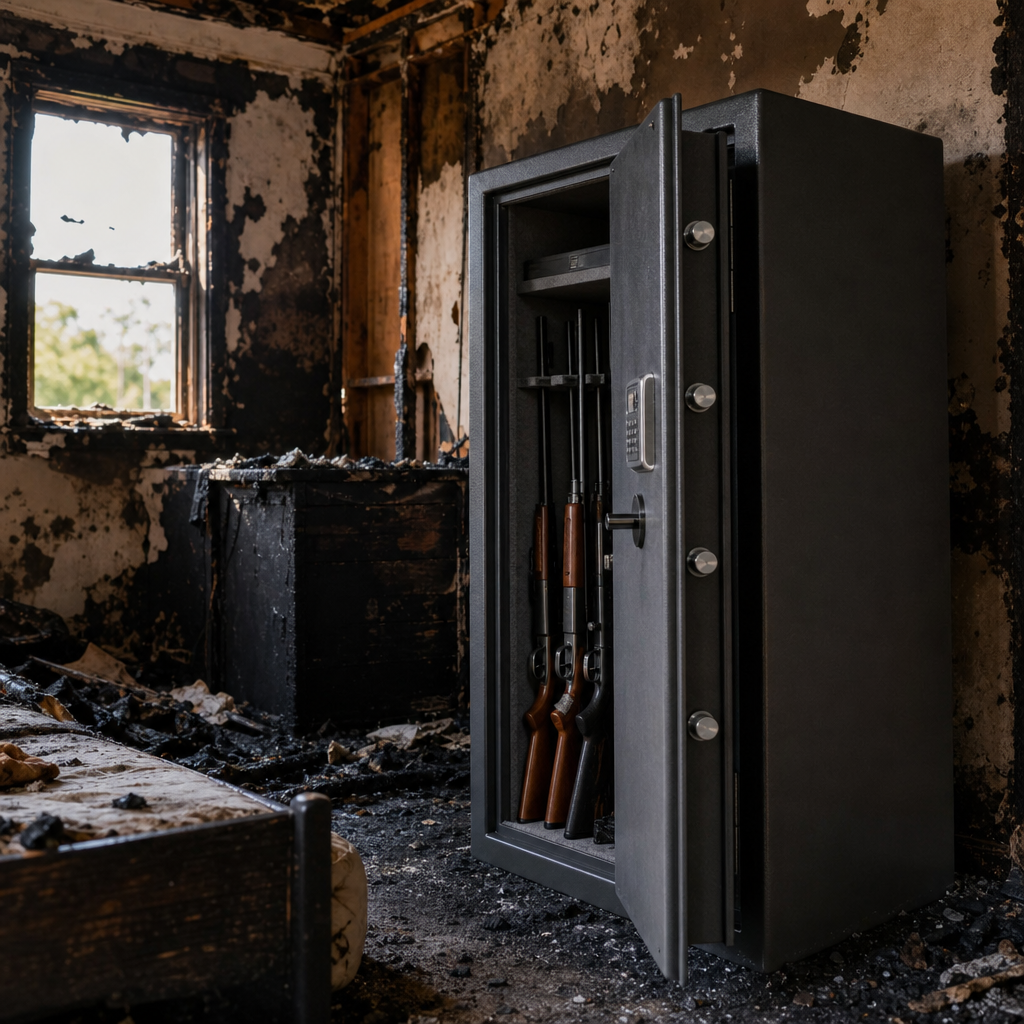
Fireproof gun safes are one of the few security products that protect both life-saving responsibility and expensive property at the same time. A gun owner needs storage that prevents unauthorized access, preserves firearms from theft, and shields them from disasters that can destroy metal, wood, optics, documents, and ammunition-related accessories within minutes. In practical terms, “fireproof” refers to a safe engineered and tested to resist high heat for a stated period, while “disaster-resistant” expands the idea to include smoke, water, impact, and structural collapse. Those labels matter because a burglary and a house fire create different threats, and the wrong safe can fail even if it looks substantial on a showroom floor.
I have seen owners focus almost entirely on burglary ratings, bolt counts, and glossy paint, then realize too late that heat damage can ruin heirloom shotguns, polymer-framed pistols, serialized receivers, suppressor paperwork, and mounted electronics long before flames physically reach the safe. Modern homes burn hotter and faster than many people assume because synthetic furnishings accelerate flashover. According to long-cited fire service guidance, room temperatures can rise above 1,100 degrees Fahrenheit during fully developed fires, which is why thin steel cabinets are not meaningful fire protection. A proper fireproof gun safe uses layered insulation, reinforced door seals, and tested construction to keep interior temperatures below damage thresholds for a defined duration.
This topic matters for every kind of gun owner, not only collectors. A first-time handgun owner may need to secure one pistol, a passport, and a carry permit. A hunter may need to protect scoped rifles, wood stocks, and irreplaceable tags or records. Competitive shooters may have optics, match ammunition components, and maintenance gear worth more than the guns themselves. Families also face liability: if a disaster displaces you, retaining access to legal records, serial numbers, insurance documentation, and functional firearms can make recovery far easier. That is why fireproof and disaster-resistant storage sits at the center of responsible ownership and why this hub connects the major questions buyers should answer before choosing a safe.
What a fireproof gun safe actually protects against
A fireproof gun safe is designed to slow heat transfer long enough to preserve contents during a realistic fire event. The key phrase is “slow heat transfer.” Steel alone is a poor answer because it conducts heat. Effective safes add fireboard, proprietary composite fill, intumescent door seals that expand under heat, and internal construction that limits direct pathways for temperature spikes. Good models also account for smoke and steam infiltration, because corrosion after a fire is often as destructive as the heat itself. When people ask whether a gun safe is really fireproof, the accurate answer is that no safe is invulnerable forever; the meaningful measure is how long it maintains survivable internal conditions at a tested external temperature.
Disaster resistance goes further. In my experience, many total-loss claims involve water before they involve ash. Firefighters drench rooms with thousands of gallons of water, sprinkler systems activate, ceilings collapse, and a safe can end up in standing water for hours. That is why door seals, elevated bases, powder-coated finishes, and rust prevention matter. Some manufacturers also design safes to stay intact after impact from debris or from falling through weakened flooring. If you live in hurricane, tornado, or wildfire zones, you should read fire ratings together with water resistance claims, anchor guidance, and the thickness of the body and door structure.
The practical takeaway is simple: disaster-resistant storage is not one feature. It is a system of heat resistance, moisture management, structural strength, and secure installation. A buyer who understands that system avoids the most common mistake in this category, which is paying for oversized capacity and decorative finishes while neglecting the actual hazards most likely to destroy the contents.
How fire ratings work and what numbers matter
Fire ratings are where buyers most often get confused. A label such as “30 minutes at 1,200 degrees” or “90 minutes at 1,680 degrees” sounds straightforward, but the quality of that claim depends on who performed the test, what standard was used, and what interior temperature was considered acceptable. For firearms, interior heat matters because lubricants break down, wood stocks warp, adhesives fail, optics degrade, and documents char long before steel receivers visibly distort. Paper begins to carbonize around 350 degrees Fahrenheit, and many digital media items fail at much lower thresholds, so a safe protecting documents and electronic backups needs a better margin than one used only for metal hardware.
Recognized testing organizations such as UL have long set benchmarks for fire endurance, although many gun safes rely on manufacturer testing rather than formal third-party certification. That does not automatically make a safe poor, but it means you should read claims critically. Ask whether the rating reflects peak external temperature, total test duration, and whether the safe was opened hot or cooled first. In the field, I treat independent testing as a strong advantage because it creates a consistent basis for comparison across brands. If a manufacturer cannot explain its testing protocol, the printed fire rating should carry less weight.
| Rating element | What it tells you | Why it matters |
|---|---|---|
| Duration | How long the safe resists heat, such as 30, 60, or 120 minutes | Longer duration gives more survival time in extended fires or delayed response areas |
| External temperature | The furnace temperature used during testing | Higher test temperatures better reflect severe residential fire conditions |
| Interior temperature | The maximum heat allowed inside the safe | Determines whether guns, documents, optics, and media remain usable |
| Testing source | Independent lab or manufacturer-conducted test | Third-party validation generally improves trust and comparability |
For most homes, I recommend starting at a true 60-minute class from a reputable maker and moving upward if you have a remote location, a large collection, or irreplaceable records inside the safe. The point is not to chase the biggest number on a brochure. The point is to buy enough verified protection for the actual fire load and response time in your area.
Why burglary protection and fire protection must work together
A common buying mistake is treating fire resistance as a luxury add-on instead of a core requirement. Another is assuming that a fire-lined safe is automatically secure against theft. The best gun safe balances both. Burglars attack hinges, doors, locks, and anchor points. Fire attacks seams, insulation gaps, and thin body steel that quickly transmits heat. A strong safe therefore needs plate reinforcement in critical areas, a reliable lock, hard plate or relocker features on better models, and construction substantial enough to resist pry attacks without compromising insulation. Brands such as Liberty, Fort Knox, Browning, AMSEC, and Rhino have built product lines around this balance, though specific models vary widely.
Weight is part of the equation. Heavier safes usually contain more steel, more insulation, or both. That improves resistance to forced entry and often boosts thermal endurance, but only if the safe is anchored correctly. I have inspected homes after break-ins where thieves tipped an unanchored safe, attacked the thinner top or back, and defeated it with basic tools. Fire protection would not matter in that scenario because the safe was removed or opened first. Bolting the safe to concrete or to an engineered floor structure using manufacturer specifications is not optional; it is part of the safe’s real-world performance.
Placement matters too. A garage may seem convenient, but temperature swings, humidity, and easier access for thieves can make it a poor default choice. An interior location on a ground floor concrete slab often gives better security and better fire survival, especially if it is away from likely fuel sources. Closets and corners can reduce exposed surfaces and make pry attacks harder. If the safe is in a basement, consider flood risk and use a riser or pedestal. The best setup protects against the event most likely to happen while reducing vulnerability to secondary damage after that event begins.
What can be lost without disaster-resistant storage
When people think about gun safe loss, they usually picture stolen guns. In reality, post-fire losses are often broader and more expensive. Fine wood stocks can crack from heat and moisture cycling. Blued finishes can rust rapidly after exposure to steam or contaminated runoff. Optics can delaminate internally, lose nitrogen integrity, or suffer adhesive and electronic failure. Suppressors, tax documents, trust paperwork, receipts, serial number inventories, and insurance schedules can all become unreadable. If your safe also stores jewelry, family records, emergency cash, or hard drives, one weak fire event can create a legal, financial, and sentimental loss all at once.
Collectors and hunters face special risk because many firearms have value that cannot be replaced by an insurance check. Limited-production rifles, custom 1911 pistols, engraved over-under shotguns, and inherited service weapons may have provenance that vanishes if the paper trail burns. I advise owners to store a printed inventory, digital backups in a separate location, and photographs of distinguishing marks. Even with a strong safe, documentation should never exist only inside the same safe as the collection. Redundancy is part of responsible disaster planning.
There is also the family safety issue. After a fire or severe storm, homes become chaotic. Doors are open, contractors come and go, and residents may be staying elsewhere. A secure fireproof gun safe prevents firearms from becoming unsecured during that disruption. That matters for child safety, legal compliance in some jurisdictions, and simple peace of mind. The safe is not only preserving hardware; it is preserving control over access when normal routines break down.
How to choose the right safe for your home, collection, and risk profile
Start with capacity, but do not believe the advertised gun count. If a safe claims to hold twenty-four long guns, assume that number refers to slim, unscoped firearms packed tightly together. Optics, bipods, slings, and modern chassis rifles reduce usable space quickly. In practice, I tell buyers to purchase at least one size larger than their current collection requires. Extra room helps airflow, prevents stock damage from crowding, and leaves space for documents, handguns, magazines, and valuables. Interior flexibility matters, so look for adjustable shelving, barrel rests, and door organizers that fit your actual equipment.
Next, evaluate lock type. Electronic locks offer speed and simple code changes. Mechanical dial locks have a long service history and avoid battery dependence. Higher-end safes may offer redundant systems or EMP-resistant electronic options. There is no universal winner; the better choice depends on your tolerance for maintenance, expected access frequency, and environmental conditions. In humid or coastal regions, add a dehumidifier rod or rechargeable desiccants, because fire protection does not prevent everyday corrosion. A safe can survive a disaster and still fail you if routine moisture is ignored for years.
Finally, compare construction details that brochures often minimize: door edge design, active locking bolts versus dead bolts, hinge protection, steel gauge, internal power access, and warranty language related to fire replacement. Some manufacturers will repair or replace a safe after a house fire; others are less generous. Delivery and installation also deserve attention. A 700-pound safe on an upper floor requires serious planning. Professional installers know how to protect staircases, distribute weight, and anchor correctly. For most buyers, that cost is money well spent because improper placement can compromise both safety and warranty coverage.
Building a complete storage strategy beyond the safe
A fireproof gun safe is the hub of a broader protection plan, not the entire plan. The strongest setup pairs the safe with smoke alarms, monitored security, documented serial numbers, climate control, and adequate insurance riders for firearms and accessories. If you keep defensive firearms for quick access, use a dedicated bedside or vehicle safe in addition to the main safe, then define clear rules for where each gun belongs. Long-term storage should include cleaning, a light protective lubricant, and periodic inspection after seasonal humidity changes. Disaster resistance begins before the emergency by reducing the chance that neglect creates damage first.
This subtopic also includes several related decisions worth exploring in depth: comparing fireboard versus poured insulation, understanding waterproof gun safe claims, choosing basement versus closet placement, anchoring methods for concrete and wood floors, and protecting documents and digital media inside a gun safe with secondary containers. Those are not side issues. They are the difference between a safe that looks reassuring and a safe that performs when conditions turn ugly. As a hub topic, fireproof and disaster-resistant storage should guide every later buying decision you make under gun safes and safety.
The essential point is clear. Fireproof gun safes are not specialty products for elite collectors; they are practical risk-management tools for every gun owner. They protect firearms from theft, heat, smoke, water, and post-disaster chaos while preserving records and controlling access when households are under stress. Buy based on tested fire performance, solid anti-theft construction, realistic capacity, and proper installation, then support the safe with inventory records and moisture control. If you are reviewing your setup today, start by checking your current storage against those standards and identify the first upgrade your collection and family need.
Frequently Asked Questions
Why is a fireproof gun safe considered essential instead of just optional for gun owners?
A fireproof gun safe is essential because it solves multiple serious risks at once: unauthorized access, theft, and damage from fire or other home disasters. A standard locking cabinet may keep firearms out of sight, but it often does little to protect against extreme heat, smoke, structural collapse, or a determined burglar. For most gun owners, firearms are not only valuable pieces of property, but also tools tied to personal safety, hunting, sport shooting, family heirlooms, and legal responsibility. That means proper storage is not just about convenience; it is about reducing the chance of injury, preventing misuse, and preserving items that may be difficult or impossible to replace.
Fire adds a level of risk many owners underestimate. House fires can reach temperatures high enough to damage steel finishes, warp stocks, ruin optics, destroy important paperwork, and compromise accessories in a very short period of time. Even if the firearms themselves are partially salvageable, heat, soot, moisture from firefighting efforts, and corrosion can cause long-term damage. A fireproof gun safe is designed and tested to resist those conditions for a stated time and temperature range, giving your firearms and related valuables a much better chance of surviving a disaster.
Just as importantly, responsible firearm ownership includes securing guns from children, guests, burglars, and anyone who should not have access. A quality fireproof safe helps meet that responsibility while also protecting the significant financial investment many owners have in firearms, optics, suppressor paperwork, tax stamps, serial records, and insurance documents. In short, it is one of the few security products that protects both human safety and expensive property at the same time, which is why many experienced gun owners view it as a necessity rather than an upgrade.
What does “fireproof” really mean when it comes to gun safes?
In practical terms, “fireproof” does not mean a safe is invincible or that its contents will survive any fire under all conditions. It means the safe has been engineered and, ideally, tested to withstand high heat for a specific period under defined conditions. Manufacturers usually rate a safe by time and temperature, such as 30, 60, 90, or 120 minutes at a stated heat level. That rating gives buyers a realistic benchmark for how long the safe can help protect its contents during a fire event.
The most important thing to understand is that fire ratings are not all created equal. Some are based on independent testing, while others may come from internal manufacturer standards. A higher-quality fireproof gun safe typically includes layers of fire-resistant insulation, expanding door seals that help block heat and smoke, and construction methods intended to keep interior temperatures lower for longer. This matters because the goal is not just to keep flames away from the safe’s exterior, but to slow the transfer of heat so firearms, optics, stocks, documents, and accessories inside are less likely to suffer catastrophic damage.
Buyers should also remember that “disaster-resistant” protection goes beyond flames alone. In a real house fire, contents may be exposed to smoke, steam, water from sprinklers or hoses, and impact from falling debris. A well-built safe can help mitigate several of these threats at once. That is why it is wise to look beyond marketing language and compare actual fire ratings, seal systems, body thickness, door construction, and test credibility. The term “fireproof” is best understood as a measurable level of fire resistance, not an absolute guarantee against every possible scenario.
How does a fireproof gun safe protect firearms, optics, and important documents during a disaster?
A fireproof gun safe protects its contents by creating a controlled barrier between the outside environment and the valuables stored inside. Its steel body provides physical security, while the fire-resistant materials built into the walls and door slow down heat transfer during a fire. Many models also include heat-activated or expanding seals around the door frame, which help block smoke, hot gases, and moisture from entering the interior. Together, these features buy crucial time during the period when fire conditions are most intense.
This matters because different items stored in a gun safe have different vulnerabilities. Firearms may survive moderate heat better than paper, but they can still suffer finish damage, corrosion, warped stocks, degraded lubricants, and harm to internal components. Optics are especially vulnerable because lenses, seals, adhesives, electronics, and reticles can be damaged by heat and smoke. Documents such as receipts, serial number lists, tax forms, permits, trust paperwork, and insurance records are often destroyed far earlier than metal items, making them some of the most important things to protect in a fire. Even accessories like slings, holsters, magazines, and ammunition-related gear can be ruined quickly if exposed to enough heat, soot, or water.
A good fireproof gun safe also helps after the fire itself. Firefighting efforts often leave behind heavy moisture, and the aftermath can trigger rust and mold if valuables are exposed. By limiting direct exposure to flame, smoke, steam, and water, the safe increases the odds that your firearms and records remain usable, identifiable, and insurable. For gun owners who have invested substantial money in their collection, or who rely on specific firearms for home defense, that protection can make the difference between a manageable recovery and a complete loss.
What features should gun owners look for when buying a fireproof gun safe?
Start with verified fire protection and solid security construction. Look for a clearly stated fire rating that lists both the time and the temperature the safe is designed to withstand. The more transparent the manufacturer is about testing, the better. From there, examine the safe’s steel thickness, door design, locking bolts, and overall weight. A safe that is easier to pry open or carry away undermines the benefit of fire resistance, so physical security and fire protection should always be evaluated together.
The locking system is another major consideration. Many owners prefer electronic locks for quick access, while others value the long-term simplicity of mechanical dial locks. Either can be effective if the safe itself is well made. Interior layout also matters more than people expect. Adjustable shelving, gun racks, document storage, pistol organizers, and protected compartments help prevent damage from crowding and make it easier to secure firearms responsibly. If you plan to store optics, suppressor-related paperwork, passports, cash, or irreplaceable family documents, make sure the interior is configured to protect more than just long guns.
Other features worth prioritizing include expandable fire seals, anchored installation capability, tamper-resistant hinges, interior carpeting, dehumidifier compatibility, and enough capacity for future growth. Many buyers outgrow their first safe quickly, especially once they account for scoped rifles, ammunition accessories, handguns, and records. It is usually smarter to buy larger than your current needs. Finally, consider where the safe will be installed. A fireproof gun safe performs best when placed in a secure, dry location and bolted down properly. The right safe is not simply the one with the highest advertised rating; it is the one that combines credible fire resistance, dependable access, anti-theft strength, and practical day-to-day storage for your specific collection.
Is a fireproof gun safe still necessary if I already have home insurance and a security system?
Yes. Insurance and alarm systems are valuable layers of protection, but neither replaces what a fireproof gun safe does. A security system may alert you or law enforcement to a break-in, but it does not physically stop a burglar from accessing unsecured firearms in the meantime. Insurance can help reimburse financial loss, but it cannot prevent unauthorized use, criminal theft, sentimental loss, or the destruction of items that are difficult to replace. In the case of a fire, insurance may cover some costs after the damage is done, but it cannot preserve the original firearms, optics, paperwork, or heirlooms while the disaster is happening.
There is also the practical issue of claims and replacement. Firearms may require documentation, serial numbers, proof of ownership, appraisals, or receipts for a smooth insurance process. Those are exactly the types of documents a fireproof safe helps protect. Without them, recovery can become slower, more stressful, and less complete. In addition, some firearms have sentimental, historical, or customized value that far exceeds what a standard insurance payout can capture. A family hunting rifle, a rare revolver, or a heavily customized competition firearm is not truly “replaced” by a check.
The best approach is layered protection. A security system helps deter and detect intrusion. Insurance helps with financial recovery. A fireproof gun safe provides immediate, physical protection where it matters most: at the point of storage. It helps prevent unauthorized access, slows or defeats theft attempts, and shields firearms and critical records during fire and related disasters. For responsible gun owners, that combination offers far more complete protection than relying on insurance or alarms alone.