
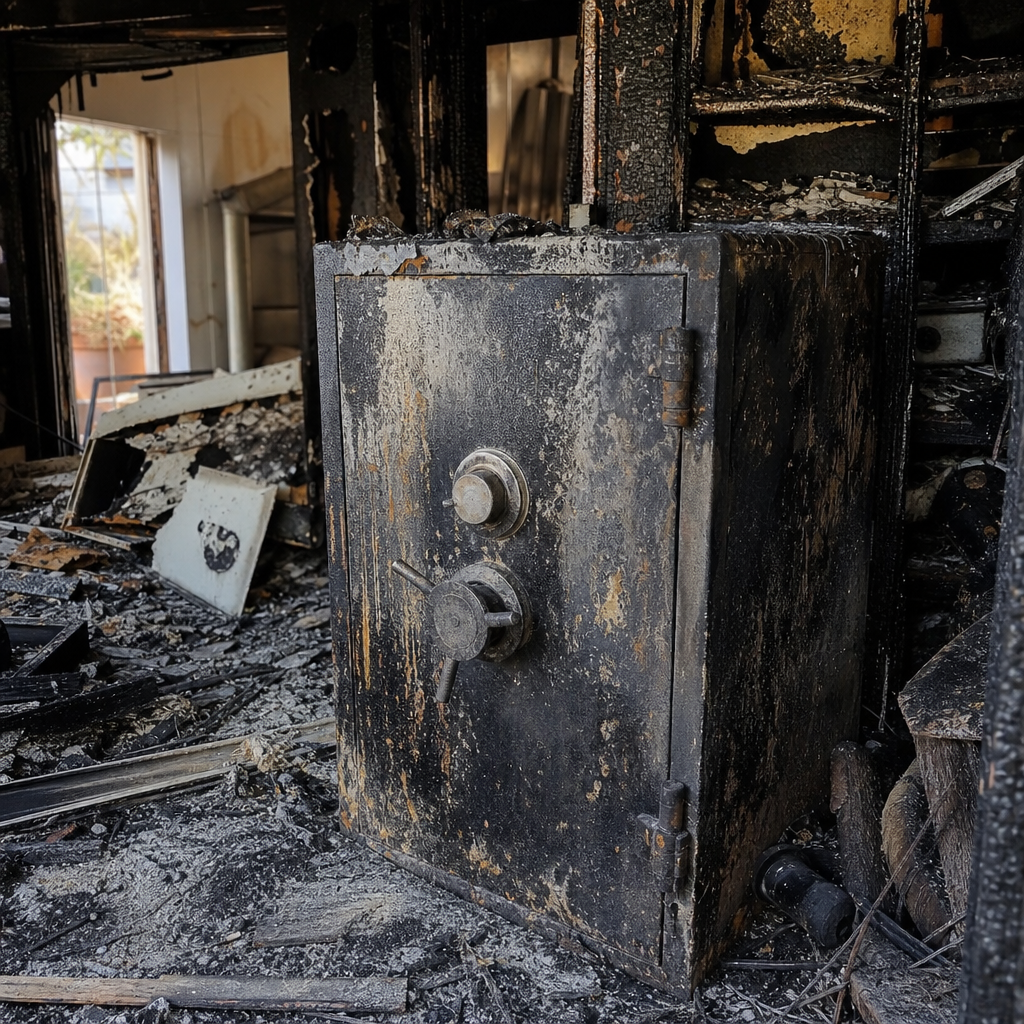
A house fire can push a gun safe far beyond the conditions most owners imagine, and what happens next depends on temperature, duration, placement, seal integrity, and the safe’s actual construction. In practical terms, a gun safe in a fire may protect firearms and documents, partially fail, or become a superheated metal box that preserves some contents while damaging others. Understanding that range matters because “fireproof” is not a literal promise. It is a shorthand for tested resistance under specific conditions, usually measured by time and temperature, and often misunderstood at the point of sale.
When I walk customers through fire ratings, I start by defining the basics. Fire resistance refers to how long a safe can keep interior temperatures below a threshold while exposed to external heat. Disaster-resistant storage is broader. It includes not only fire protection, but also smoke sealing, water exposure from fire hoses or sprinklers, structural collapse, humidity swings after the event, and the physical impact of debris. A house fire is rarely a clean laboratory test. It is a chaotic combination of radiant heat, direct flame, steam, corrosive smoke, and sudden cooling. For gun owners, that complexity affects steel, optics, wood stocks, polymer frames, ammunition, important records, and sentimental items stored beside firearms.
This topic matters because many buyers assume a safe’s label answers the whole question. It does not. Residential fire temperatures often reach about 1,100°F to 1,500°F, and hotter pockets can occur where fuel loads are concentrated. Meanwhile, paper chars around 451°F, many plastics deform much earlier, optics adhesives can fail, and bluing, coatings, lubricants, and wood finishes can be ruined well before a firearm is structurally unsalvageable. The right safe can prevent total loss, but only if its rating, materials, and installation match the real hazard. This guide explains what actually happens to a gun safe in a house fire and how to choose fireproof and disaster-resistant storage that performs when conditions stop being theoretical.
What a house fire does to a gun safe
In a real house fire, the safe is attacked from several directions at once. First comes radiant heat, which raises the temperature of the steel shell even if flames never directly touch it. If flames do reach the safe, heat transfer speeds up sharply. The steel body and door begin conducting heat inward, while the fire lining tries to slow that transfer. Most residential gun safes rely on layers of gypsum board or proprietary composite insulation. Gypsum contains chemically bound water that turns to steam as temperatures rise, buying time by absorbing heat. That mechanism works, but only for a limited period. Once the insulating layers are exhausted or compromised, interior temperatures climb faster.
The outside of the safe often shows the first visible damage. Paint blisters. Door seals expand. Electronic keypads melt or fail. External wiring and battery compartments are commonly destroyed. In several post-fire inspections I have seen, owners assumed the keypad failure meant the lock body had failed; often the lock mechanism was intact, but the entry components were gone and the safe required professional opening. Heat can also warp thinner steel bodies or doors enough to affect door gaps. Better safes resist this with thicker steel, tighter tolerances, more robust hinges, and reinforced door structures.
Even when the steel shell remains standing, interior conditions may still become destructive. Fire ratings are built around keeping paper below a target temperature for a given time, not guaranteeing ideal conditions for every stored item. Firearms can survive substantial heat exposure, but finishes, grips, optics, slings, magazines, and lubricants may not. Wood stocks can dry out, crack, or delaminate. Polymer parts can soften. Ammunition can cook off, typically with less projectile danger outside a chamber, but enough force and heat to damage adjacent gear. Documents in paper sleeves may survive while passports with plastic components fuse together. The safe can protect against total consumption while still leaving contents smoke-stained, water-damaged, or partly unusable.
How fire ratings really work
A fire rating should be read as a test result, not a universal guarantee. When a safe is labeled “30 minutes at 1,200°F” or “60 minutes at 1,400°F,” that usually means a sample unit endured a controlled furnace test for that duration while interior temperatures stayed below a specified threshold. The details matter. Independent testing from laboratories such as UL carries more weight than unverified manufacturer claims. UL 72 is the recognized standard for record protection, with classes tied to maximum internal temperatures for paper, data, and film media. Many gun safes are not certified under the same standard as dedicated data safes, which is why hard drives, flash media, and optics electronics need extra caution.
Manufacturers also differ in whether they include a cool-down phase. This is a critical point. A safe can pass the active heating phase and still fail as the unit continues absorbing retained heat after the fire is knocked down. Better testing accounts for this heat soak effect because real fires do not stop the moment the timer ends. Interior temperatures can keep rising after flame exposure ends, especially in larger steel bodies with depleted insulation. If a brand does not clearly explain its testing method, assume the advertised rating reflects the most favorable interpretation.
Placement changes performance too. A safe on a concrete slab in a first-floor interior room usually experiences different conditions than one in a second-floor closet over a garage. Heat rises, fuel loads vary, and collapse risk is not uniform. A safe surrounded by burning cabinetry or stored near paint, ammunition cans, and solvents faces more severe exposure than one in a minimalist room with lower combustibles. That is why two safes with the same label can perform differently in separate homes.
| Safe feature | What it helps resist | Where limits appear |
|---|---|---|
| Gypsum fire lining | Slows heat transfer by releasing steam | Protection drops after moisture is exhausted |
| Expanding door seal | Reduces smoke and heat intrusion at gaps | May not stop standing water or long submersion |
| Thicker steel body | Improves structure and pry resistance during fire | Still conducts heat; insulation quality remains essential |
| Composite fire barrier | Can outperform basic drywall-only construction | Quality varies widely by manufacturer |
| Mechanical lock | Avoids keypad and battery damage issues | Dial and relocker service may still be needed after fire |
What happens to firearms, ammo, and valuables inside
Firearms inside a safe rarely all fare the same way. Metal receivers and barrels often remain structurally intact unless exposure is extreme, but hidden damage is possible. Heat can alter springs, temper small parts, degrade sights, and cook off oils, leaving immediate corrosion risk once humidity and fire suppression water enter the picture. I advise owners never to assume a fire-exposed gun is range-ready. A qualified gunsmith should inspect any recovered firearm for heat damage, bore obstruction, pitting, warped components, and compromised optics mounts. Insurance documentation should be completed before aggressive cleaning or refinishing, because restoration can erase evidence needed for claims.
Ammunition is another area where assumptions cause problems. Inside a fire-rated gun safe, boxes of cartridges may survive, partially degrade, or ignite from prolonged heat. Sporting Arms and Ammunition Manufacturers’ Institute guidance has long noted that loose ammunition in a fire generally presents less hazard than chambered rounds, but that does not mean it remains reliable afterward. Primers and powder can be heat-damaged without obvious visual clues. In practice, any ammunition exposed to significant fire or water should be treated as suspect and disposed of according to local hazardous waste or range guidance. Keeping large ammo quantities in a dedicated, separately considered storage plan is smarter than loading every box into the main gun safe.
Documents, jewelry, cash, and digital media each have different vulnerability points. Paper can survive where USB drives fail. Family photos may be harmed more by humidity and smoke residue than by direct heat. Watches and jewelry often emerge intact but coated with corrosive soot. If you store passports, deeds, hard drives, or backup media in a gun safe, add a smaller rated document or media container inside the main safe. Nested protection is one of the most effective upgrades because it addresses the fact that one interior temperature threshold does not suit every item you care about.
Water, smoke, and collapse risks after the flames
Many losses occur after the hottest phase of the fire. Firefighters may direct thousands of gallons of water into a structure. Sprinkler systems can soak the safe for extended periods. If the safe sits in a low area, runoff and debris can pool around the door seam. Most gun safes are not waterproof in the same way purpose-built waterproof cases are. Some brands advertise water resistance based on door seals and elevated thresholds, but prolonged standing water, pressure, or full submersion can defeat those protections. Once moisture gets inside a hot safe, the contents face a damaging mix of steam, soot, and flash corrosion.
Smoke is equally underestimated. Combustion byproducts from plastics, wiring, insulation, and household finishes create acidic residues that cling to metal and optics. A firearm that looked “fine” on opening day can begin rusting within hours if soot remains on the surface. Leather slings, soft cases, and foam inserts can trap those residues against metal. That is why post-fire handling should be deliberate: ventilate, document, separate items, and begin controlled drying and assessment quickly. Desiccants help only after standing water is removed and the safe interior is stabilized.
Then there is structural collapse. A safe on an upper floor may fall into a basement when joists fail, multiplying impact and water exposure. Anchoring reduces theft risk and tipping in normal use, but in a collapse event the surrounding structure dictates outcomes. Heavier safes usually fare better physically, especially on concrete slabs, yet even a heavy unit can become inaccessible under debris. When planning storage, the best location is often a low-level interior spot on reinforced concrete, away from garages, fuel storage, and rooms with unusually high combustible loads.
How to choose truly disaster-resistant storage
The best buying decision starts with matching the safe to the hazard profile of the home. For fire resistance, look for clear, specific ratings with named testing conditions and, ideally, independent verification. A longer rating at a realistic temperature is more valuable than vague “fireproof” language. Construction matters just as much. Compare steel thickness, door design, number of fire board layers, seal type, and whether the brand uses poured or composite barriers instead of drywall alone. Ask whether the safe includes an intumescent seal, how the body is insulated, and whether the stated rating includes the cool-down period.
Lock choice should be practical. Electronic locks are fast and popular, but keypads, displays, and battery compartments are vulnerable in fire. Mechanical dials are slower but less exposed. Many quality safes now use reliable commercial-grade electronic locks from brands such as Sargent and Greenleaf or SecuRam, and those can be excellent if paired with emergency access planning and post-fire locksmith support. The real point is not that one lock type is universally superior, but that no lock compensates for weak insulation and poor installation.
For full disaster resistance, think in layers. Use a dehumidifier rod or desiccant in normal conditions. Place irreplaceable documents in a rated inner box. Store backup media separately from firearms. Keep a digital inventory with serial numbers, photos, and receipts offsite or in encrypted cloud storage. Review your homeowners policy or specialized firearms insurance to confirm limits, documentation requirements, and whether accessories are covered. The hub approach to safe storage is simple: the safe itself is one layer, but placement, internal organization, humidity control, water planning, and insurance complete the system.
What to do after a house fire affects your safe
After a fire, do not rush to force the door or wipe everything down. Start with safety and documentation. Confirm the fire scene is released by authorities and the structure is stable enough to enter. Photograph the safe from all sides before moving debris. Capture serial labels, lock damage, door gaps, and the room context. Contact your insurer early and ask whether they want a restoration specialist, locksmith, or firearms appraiser involved before the safe is opened. If the keypad is destroyed, a professional safe technician can often open the unit with less damage than a general contractor using saws or pry bars.
Once opened, remove contents carefully and separate categories: firearms, ammunition, documents, electronics, and sentimental items. Tag each item to preserve identity for claims. Dry metal surfaces promptly with clean cloths and apply a corrosion-inhibiting protectant if the insurer permits emergency mitigation. Do not fire recovered guns until they are inspected. Dispose of compromised ammunition safely. Replace soft goods that absorbed smoke and acidic residue. Then use what the event taught you. If the safe performed well but water got inside, improve door sealing and placement. If the rating proved too short, upgrade. If critical records barely survived, add an inner document safe. The goal is not simply recovery. It is building a storage plan that performs better before the next emergency.
A gun safe in a house fire can be a lifesaving barrier for firearms, records, and family valuables, but only when owners understand what the safe is designed to do and where its limits begin. Fire ratings measure resistance, not invincibility. Heat, smoke, water, and collapse all matter. Better safes use stronger bodies, more credible testing, effective seals, and thoughtful installation, yet even the best unit works best as part of a layered disaster-resistant storage plan. That means matching the rating to realistic fire conditions, choosing the right location, protecting sensitive items inside secondary containers, and documenting what you own before any loss occurs.
The main benefit of this approach is not marketing peace of mind. It is measurable risk reduction. A properly selected and installed safe can turn a total loss into a recoverable event, preserve evidence for insurance, and protect items that cannot be replaced. Review your current setup with a critical eye: check the fire rating, verify how it was tested, inspect placement, and decide whether water, humidity, and document protection need upgrades. Then move to the next step in your Gun Safes & Safety plan and strengthen the weak points now, before a house fire decides for you.
Frequently Asked Questions
What actually happens to a gun safe during a house fire?
In a house fire, a gun safe is exposed to far more than just “heat.” It can face rapidly rising temperatures, direct flame contact, collapsing building materials, steam, smoke, water from firefighting efforts, and long periods of heat soak even after visible flames move on. What happens to the safe depends on several factors working together: how hot the fire gets, how long the safe is exposed, where it is located in the home, whether it is insulated, and how well the door seal and body seams hold up under stress.
In the best-case scenario, the safe slows heat transfer long enough to protect the contents until the fire is controlled. In a moderate fire, the exterior may be scorched and the interior may remain partly protected, but delicate items such as paper documents, optics, wood stocks, adhesives, and lubricants can still suffer damage. In a severe or prolonged fire, the safe can become a superheated metal enclosure. At that point, even if the shell stays intact, internal temperatures may rise enough to char paper, warp plastics, damage finishes, ruin electronics, and compromise ammunition or firearm components.
It is also important to understand that a gun safe does not need to “melt” to fail. Fire damage often comes from sustained internal heating, failed door seals, expanding steel, and the breakdown of insulation materials. Many safes remain standing after a fire, which gives the impression they performed perfectly, but the real question is what temperature the inside reached and for how long. That is why the phrase “fireproof” is misleading. A safe is not immune to fire; it is only resistant to heat for a limited time under specific test conditions.
Are gun safes really fireproof, or is that just marketing language?
“Fireproof” is mostly a marketing shortcut, not a literal guarantee. A more accurate term is “fire-resistant.” Most gun safes are designed to resist heat for a stated period, such as 30, 60, 90, or 120 minutes, at a certain tested temperature. That rating is not a promise that everything inside will survive any house fire. It means the safe performed to a certain standard under a controlled test, and real-world fires do not always behave like lab tests.
Testing conditions matter a great deal. Some manufacturers use independent third-party testing, while others rely on internal testing methods. The temperature curve, whether the safe is preheated or gradually heated, whether a cool-down period is included, and what internal temperature threshold is considered acceptable all affect the meaning of a fire rating. For example, paper begins to suffer damage at much lower temperatures than steel, and items like USB drives, memory cards, optics, and polymer parts can be damaged even sooner. So a safe that “passes” a fire test for paper protection may still be too hot inside to protect more sensitive items.
Construction quality matters just as much as the label. Thicker steel, better insulation, tighter door gaps, high-quality expanding seals, and stronger overall design generally improve fire performance. Placement matters too. A safe in a garage against an exterior wall may see different conditions than one in the middle of a fully involved room surrounded by combustible materials. So yes, some gun safes offer meaningful fire protection, but no safe should be treated as invulnerable. Owners should read ratings carefully, understand the test behind them, and think of fire resistance as a time-limited buffer rather than absolute protection.
Can firearms survive a house fire if they are stored inside a gun safe?
Yes, firearms can survive a house fire in a gun safe, but survival does not always mean they come through undamaged or safe to use immediately. If the fire is relatively short, the safe is well built, and internal temperatures stay controlled, guns may emerge with little more than smoke exposure or minor cosmetic damage. In harsher conditions, firearms may still be physically present and recognizable while suffering hidden problems such as heat damage to springs, optics, sights, stocks, grips, coatings, and lubrication systems.
Wood stocks can crack, dry out, or char. Polymer components can deform. Lubricants can burn off or break down, leaving metal surfaces vulnerable to corrosion. Moisture from firefighting efforts or post-fire humidity inside the safe can accelerate rust, especially if the safe remains closed for an extended period afterward. Ammunition stored inside may also be compromised by heat, even if it never ignites in a dangerous way. Optics, electronics, and accessory adhesives are often among the first things to fail when temperatures rise.
Another point many owners miss is that heat can affect metallurgy and tolerances without obvious exterior signs. A firearm that looks intact after a fire should not automatically be fired. It should be inspected by a qualified gunsmith or manufacturer-authorized service provider before being used again. The same goes for suppressors, magazines, optics, and ammunition. So while a gun safe may absolutely improve the odds of firearms surviving a house fire, the real answer is nuanced: some contents may be protected, some may be partially damaged, and some may require professional evaluation even if they appear fine at first glance.
What items inside a gun safe are most vulnerable to fire damage?
The most vulnerable items are usually the ones people assume are safest: paper records, passports, cash, photos, digital media, optics, and anything made with plastic, rubber, glue, or electronic components. Fire-resistant gun safes are often marketed with firearms in mind, but many owners also store legal documents, family heirlooms, hard drives, and backup media inside. Those items can be damaged at lower temperatures than the safe’s advertising may lead people to expect.
Paper begins to discolor, char, and eventually ignite at temperatures far below the point where steel structure fails. Digital storage media is often even more sensitive. USB drives, external hard drives, CDs, DVDs, and memory cards can fail from heat that a firearm might physically tolerate. Optics can lose seals, lenses can craze or crack, illuminated reticles and batteries can fail, and internal adhesives can break down. Ammunition may become unreliable after severe heat exposure even if it remains contained. Leather slings, foam liners, cases, and synthetic fabrics can trap moisture, melt, or off-gas chemicals that contribute to damage inside the safe.
This is why many experienced owners separate storage by vulnerability. A gun safe may be suitable for firearms and some rugged valuables, but especially sensitive documents and digital backups are often better placed in a dedicated media-rated or document-rated fire safe, depending on the item. If you do keep mixed contents in one gun safe, understand that the safe’s fire rating may not apply equally to everything inside. The shell may survive, the guns may be recoverable, and your paper or electronics may still be ruined. Thinking in terms of internal temperature limits for specific items is much more realistic than relying on a single broad “fireproof” claim.
What should you do after a house fire if your gun safe was exposed to heat?
After a fire, do not rush to open and empty the safe without a plan. First, make sure the property has been cleared for entry by fire officials or other authorities. A fire-damaged structure may still be unstable, and the safe itself may be extremely hot long after the flames are out. In some cases, sudden opening can expose contents to oxygen, moisture, and cooler air in ways that worsen condensation or handling damage. Once it is safe to approach, document the exterior of the safe and the surrounding area with photos for insurance purposes before moving anything.
When the safe is opened, handle contents carefully and assume they may be heat-affected even if they look normal. Firearms should be unloaded, inventoried, and set aside for inspection. Do not attempt to fire them until they have been evaluated by a qualified professional. Wipe away loose soot only if recommended, because improper cleaning can scratch finishes or spread corrosive residues. For documents, photos, and collectibles, preservation specialists may be able to help stabilize or recover some materials. For optics, electronics, and ammunition, replacement is often safer than guessing about reliability after heat exposure.
You should also expect hidden moisture issues. Water used to extinguish the fire, plus trapped humidity inside the cooling safe, can create corrosion risk quickly. That means recovery should involve careful drying, corrosion control, and professional assessment where appropriate. Keep records of serial numbers, photographs, receipts, and damage notes for insurance claims. If the safe itself was significantly heated, warped, or had its seals compromised, replacement is often the prudent move. Even if it still locks, a fire-exposed safe may no longer provide the burglary or fire protection it once did. In short, post-fire recovery is not just about opening the safe and seeing what survived; it is about evaluating safety, preserving evidence, limiting further damage, and making informed decisions about repair or replacement.