
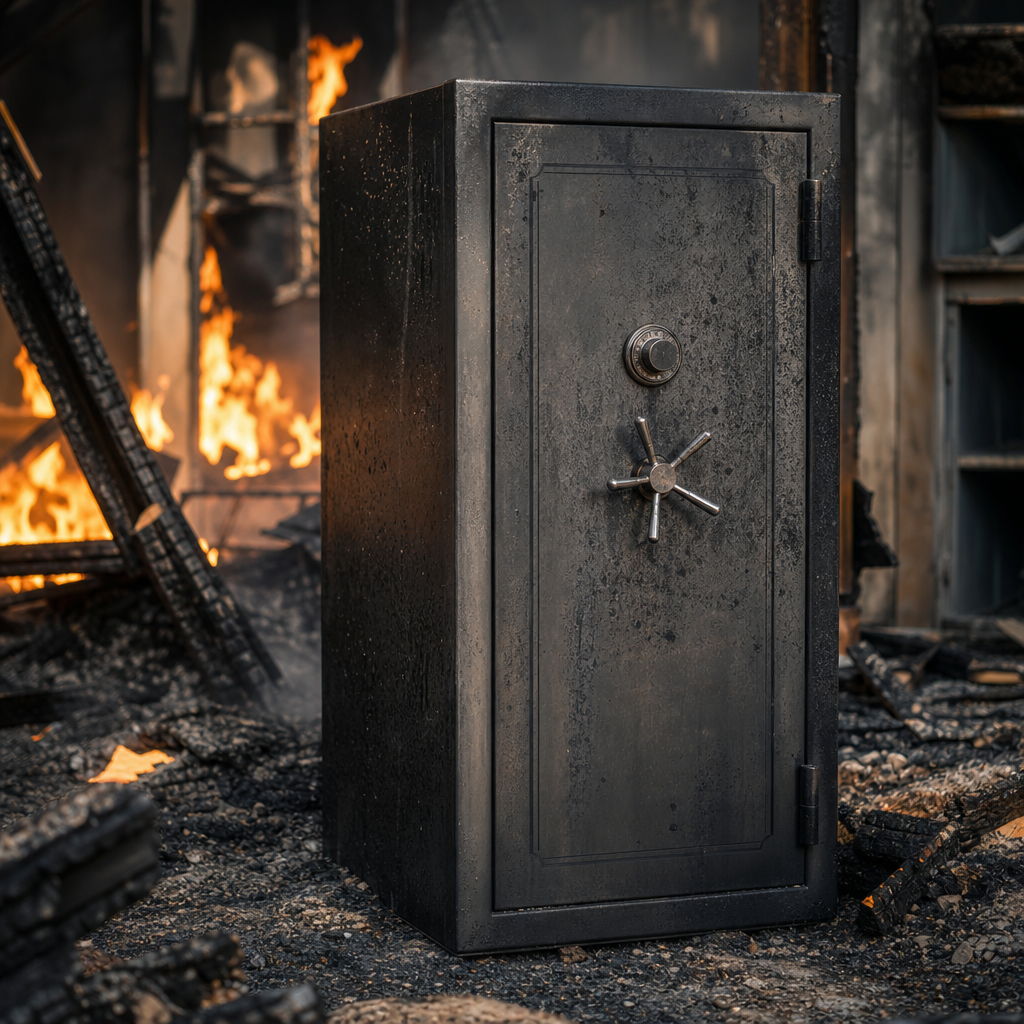
A fireproof gun safe can withstand extreme heat anywhere from 30 minutes to two hours or more, but that headline figure only makes sense when you understand the test temperature, the allowable internal temperature, the seal design, the insulation type, and the difference between a house fire and a prolonged structural burn. In the gun safes and safety category, fireproof and disaster-resistant storage is the part of the buying decision that most owners misunderstand, because marketing language often compresses complex performance data into a single number. I have evaluated safes by reading test reports, reviewing manufacturer specifications, and inspecting construction details firsthand, and the pattern is consistent: fire resistance is not a yes-or-no feature. It is a system made up of steel thickness, layered insulation, expanding door seals, body-to-door fit, lock protection, anchor strategy, and placement inside the home. For firearm owners, that matters for three reasons. First, heat can damage firearms, optics, wood stocks, ammunition packaging, and critical documents long before a safe fails completely. Second, water from sprinklers or firefighting efforts can destroy contents after the flames are controlled. Third, the wrong expectations lead people to buy a safe that matches a sales brochure rather than the actual fire risk in their area. This hub explains how long a fireproof gun safe can withstand extreme heat, how fire ratings are determined, what “fireproof” really means in practical use, and how to compare burglary, fire, and disaster resistance without getting distracted by oversized claims.
What “Fireproof” Means for a Gun Safe in Real Use
Strictly speaking, very few consumer gun safes are truly fireproof in the absolute sense. The more accurate term is fire resistant. A safe is designed to delay heat transfer so the interior stays below a damage threshold for a stated period under specific test conditions. For paper documents, that threshold is commonly 350 degrees Fahrenheit, because paper chars around 405 degrees Fahrenheit. For digital media, the threshold is much lower, which is why a gun safe that protects paper may still be unsuitable for hard drives, flash storage, or thermal imaging files. Firearms introduce another nuance. Steel gun parts can survive temperatures that would ruin documents, but lubricants burn off, finishes can discolor, optics can fail, polymer components can warp, and wood can crack as moisture is driven out. In practical terms, a safe rated for 60 minutes at 1200 degrees Fahrenheit is not promising that every item inside emerges untouched. It is promising that the interior, during that test, stayed under the benchmark specified by the manufacturer or testing protocol. That distinction is the foundation of disaster-resistant storage. You are not buying invincibility; you are buying time.
How Long Can a Fireproof Gun Safe Withstand Extreme Heat?
Most residential gun safes on the market carry claimed fire ratings of 30, 45, 60, 75, 90, or 120 minutes, usually at external temperatures between 1200 and 1400 degrees Fahrenheit. Premium models may claim protection for two hours or more, and commercial burglary-fire safes can exceed those benchmarks under more rigorous testing. In real house fires, however, exposure is not uniform. According to fire science data commonly cited in the industry, room temperatures in a developed residential fire can exceed 1100 degrees Fahrenheit, and localized conditions can rise well beyond that depending on ventilation, fuel load, and structural materials. The key question is not simply how long flames exist, but how long the safe remains in a high-heat environment, whether it is exposed on multiple sides, and whether it falls through a weakened floor into a hotter debris field. In my experience reviewing customer incidents, a quality 60- to 90-minute safe placed on a ground-floor concrete slab often performs far better than a higher-rated safe installed upstairs in a room full of fuel load. Heat duration, placement, and post-collapse exposure all matter as much as the brochure rating.
How Fire Ratings Are Tested and Why Ratings Differ
Fire ratings differ because manufacturers do not all use the same test method. The most credible evaluations reference independent laboratories such as UL and Intertek, while some brands rely on proprietary testing. A legitimate fire test should specify the furnace temperature curve, the pass-fail internal temperature, the duration, and whether the safe was also subjected to impact or explosion hazard tests after heating. UL Class 350 is a well-known benchmark for paper protection, while higher classes exist for lower internal temperatures needed by data media. Many gun safes are not UL fire-classified even if they are advertised with a minute rating. That does not automatically mean they are poor products, but it does mean the claim deserves closer scrutiny. Ask who performed the test, whether the safe was heated from all sides, whether sensors were placed at multiple interior points, and whether the sample included production locks and seals. A 75-minute rating from an internal factory test is not equivalent to a 90-minute independently certified rating. Consumers who understand this usually make better, less emotional comparisons.
Construction Details That Determine Heat Resistance
The number on the label is the summary; construction tells the real story. Most fire-resistant gun safes use one of two insulation approaches: drywall-type gypsum board layers or poured proprietary insulation. Gypsum contains chemically bound water that releases as steam when heated, slowing temperature rise. It is common, affordable, and effective when properly layered, but performance depends on thickness, coverage, and door fit. Poured insulation generally fills cavities more completely and can improve consistency, though quality varies by formula and manufacturing control. Door seals are equally important. Expanding intumescent seals swell under heat and help block smoke and hot gases at the gap, which is often the weakest point. Continuous welds, reinforced door frames, internal hinges or protected external hinges, and lock relockers improve the overall integrity of the safe during both fire and forced entry. Even details like the interior fabric and adhesive matter. Cheap glue can fail under heat, causing liners to sag and exposing insulation gaps. When I inspect safes in person, uneven door compression and thin body construction usually correlate with weak real-world fire performance, regardless of the advertised minute rating.
Fire, Water, Smoke, and Impact: Disaster-Resistant Storage Is Broader Than Heat
Fireproof and disaster-resistant storage does not end with furnace temperatures. After a residential fire, contents are often harmed by water, steam, soot, corrosive smoke compounds, and impact from falling debris. Some gun safes include waterproof seals rated for temporary submersion or hose spray, though those claims also vary widely. This matters in hurricane zones, flood-prone basements, and homes with sprinkler systems. Smoke is another underappreciated threat. Combustion byproducts can deposit acidic residue on metal surfaces and optics, accelerating corrosion after the event. Impact resistance matters if a safe falls through a floor during structural collapse. Certain tests heat the safe and then drop it, simulating a fall into a lower level. If the body splits or the door gap opens, the original fire rating becomes far less meaningful. For a complete disaster-resistant storage plan, owners should think in layers: fire resistance, water resistance, humidity control, secure anchoring, and post-event recovery. A dehumidifier rod, silica packs, document pouches, and a home inventory stored off-site are not accessories; they are part of the protection system.
How to Compare Fire-Resistant Gun Safes
When comparing options, use the same criteria every time so you are evaluating substance rather than branding.
| Feature | What to Check | Why It Matters |
|---|---|---|
| Fire rating | Minutes, external temperature, and internal threshold | Shows whether the claim is meaningful and comparable |
| Test source | UL, Intertek, or proprietary factory test | Independent testing is more reliable than marketing-only claims |
| Insulation | Gypsum layers or poured composite, including door coverage | Insulation thickness and continuity control heat transfer |
| Seal system | Intumescent door seal and tight body-to-door fit | Limits smoke and hot gas intrusion at the most vulnerable gap |
| Placement and anchoring | Concrete floor, low level, away from fuel-heavy rooms | Reduces tip-over, collapse risk, and peak heat exposure |
| Water protection | Gasket design, threshold lip, water-resistance claim | Firefighting water often causes secondary damage |
This comparison method keeps the buying process honest. A lower-priced safe with transparent testing can be a smarter purchase than a larger safe with inflated numbers and thin documentation.
Placement, Maintenance, and Real-World Performance
Safe placement is one of the most effective ways to improve survivability without spending more money. A gun safe anchored on a concrete slab in a lower-risk room typically benefits from more stable support and less chance of falling into a hotter burn area. Avoid garages if they contain fuel, solvents, or ammunition stockpiles that intensify heat. Avoid upstairs installations unless structure and fire exposure have been carefully considered. Closets can help by limiting direct flame contact, but they can also become heat traps if packed with combustible contents. Maintenance matters too. Door seals should be inspected for damage, hinge alignment should be checked, and dehumidification should be maintained year-round. After delivery, confirm that the door closes evenly and that no shipping distortion affects compression. I also advise owners to photograph serial numbers, optics, and accessories, then store that record in cloud storage. If a fire occurs, insurance recovery is much faster when proof exists. Finally, remember that no fire-resistant gun safe substitutes for a monitored alarm, smoke detectors, and sensible household fire prevention. The best protection comes from combining deterrence, detection, and delay.
Choosing the Right Level of Protection for Your Collection
The right fire-resistant gun safe depends on what you own, where you live, and how much consequence you can tolerate. If the safe holds a basic rifle and a handgun in a low-risk suburban home, a well-built 45- to 60-minute model from a reputable manufacturer may be entirely reasonable. If the safe contains NFA items, collectible revolvers, heirloom shotguns, suppressors, rare optics, and paper records, the calculation changes. In wildfire regions, longer ratings, better seals, and strategic placement become more important. In flood zones, water resistance and elevation matter nearly as much as fire protection. For high-value collections, many serious owners step up from mass-market gun safes to commercial-grade burglary/fire safes or vault rooms because they want documented test standards, thicker steel, and better environmental control. That is not overkill; it is risk matching. The practical question is simple: if your home suffered a severe fire tonight, what contents would be hardest or impossible to replace? Buy protection for that answer, not for the average sales pitch. If you are building out a complete gun safes and safety plan, use this article as your hub, then review related guidance on safe placement, humidity control, anchoring, theft resistance, and insurance documentation before you buy.
A fireproof gun safe can withstand extreme heat for a limited, test-defined period, not forever, and that is the most important takeaway. The stated rating only becomes useful when you pair it with the test source, internal temperature limit, insulation method, door seal quality, and the safe’s location inside your home. Real disaster-resistant storage also includes protection from water, smoke, corrosion, impact, and humidity after the fire itself. For most owners, the smartest purchase is not the safe with the biggest printed number, but the one with credible testing, solid construction, proper anchoring, and a protection level matched to the value of the firearms and documents inside. If you treat fire resistance as part of a complete safety system, you will make a better decision and avoid expensive assumptions. Use this hub as your starting point, compare specifications carefully, and choose a gun safe that is built for the risks you actually face.
Frequently Asked Questions
How long can a fireproof gun safe really withstand extreme heat?
A fireproof gun safe can withstand extreme heat for anywhere from about 30 minutes to two hours or more, but that number is only meaningful when you look at the exact conditions behind the rating. A safe labeled “30 minutes at 1200°F” is being evaluated very differently from one rated for 90 minutes at 1400°F or 120 minutes at 1700°F. The duration by itself does not tell the whole story. What matters is how hot the exterior environment gets, how long that heat is sustained, and how cool the interior of the safe remains during the test.
For gun owners, the internal temperature threshold is especially important. Fire ratings are often based on keeping the inside of the safe below a certain level, commonly around 350°F for paper protection, but firearms, ammunition, optics, documents, electronics, and polymer components may all react differently to heat. A safe may technically “pass” a fire test while still exposing contents to enough heat to damage finishes, stocks, seals, lubricants, or sensitive accessories. That is why the best approach is to think of fire ratings as a comparison tool, not a guarantee of perfect protection in every fire.
In real-world terms, many residential fires burn intensely but unevenly, and not every safe will experience peak heat for the full length of its advertised rating. On the other hand, a prolonged structural burn, collapse, or secondary flare-up can create harsher conditions than some consumers expect. So the honest answer is that a fireproof gun safe may hold up for 30, 60, 90, or 120 minutes or longer, but its actual performance depends on the test standard, safe construction, and the severity of the fire event.
What does a fire rating on a gun safe actually mean?
A fire rating is supposed to indicate how long a safe can protect its contents while exposed to a specified external temperature, but the details behind that claim matter enormously. The rating usually combines three variables: the duration of exposure, the furnace temperature, and the maximum allowable interior temperature. If any one of those factors is missing from the marketing material, the claim is incomplete. Saying a safe is “fireproof for 60 minutes” without naming the test temperature or internal temperature limit leaves out critical information.
For example, a 60-minute rating at 1200°F is not equivalent to a 60-minute rating at 1700°F. Likewise, a safe tested to keep the interior below 350°F offers a different level of protection than one allowed to climb much higher. Some manufacturers use independent lab testing, while others rely on proprietary or in-house testing. Independent verification generally carries more weight because it gives buyers a more objective basis for comparison.
Another point many buyers miss is that “fireproof” is really marketing shorthand. No safe is immune to all fire conditions indefinitely. A more accurate term is “fire-resistant.” A well-built gun safe slows heat transfer and protects contents for a defined period under defined conditions. Understanding that distinction helps set realistic expectations. When comparing safes, look for specifics about the test protocol, the temperature curve, whether the safe was tested with seals active, and whether the rating reflects a full assembled product rather than just the insulation material on its own.
Why do seal design and insulation type make such a big difference in fire performance?
Seal design and insulation type are two of the biggest factors in whether a gun safe performs well under extreme heat. Even a thick steel body does not stop heat by itself. Steel conducts heat, so the real fire protection comes from the barrier system inside the safe walls and around the door. That usually means layers of fireboard, poured insulation, composite materials, or other heat-resistant fill designed to slow the transfer of thermal energy into the interior.
The door seal is especially important because the door opening is one of the most vulnerable points in any safe. Many fire-resistant safes use intumescent seals, which expand when exposed to high temperatures. As they swell, they help close off gaps around the door and limit the entry of smoke, hot gases, and flames. A safe with poor door fitment or a weak seal system may allow heat and smoke to penetrate much sooner than a better-designed model, even if both advertise similar fire ratings.
Insulation quality also varies widely. Some entry-level safes rely on thinner gypsum-based board systems that offer modest protection for shorter exposures. Higher-end designs may use thicker multi-layer barriers, poured composite insulation, or more advanced materials engineered for longer and hotter burns. Construction quality matters too. Gaps, thin door edges, poorly reinforced corners, and inconsistent assembly can all reduce real-world fire performance. In practical terms, a safe’s fire resistance is not just about wall thickness or the sticker on the door; it is about how the entire structure works together to keep the inside temperature under control.
Is the fire rating enough to tell me how a safe will perform in a real house fire?
No, the fire rating alone is not enough to predict exactly how a safe will perform in a real house fire. A rating is based on a controlled test, but actual fires are chaotic. A house fire may burn fast and hot in one room, remain cooler in another, get ventilation from broken windows, or intensify dramatically if structural materials ignite. The location of the safe in the home can make a major difference. A safe placed on a lower floor against an interior wall may experience different conditions than one in a garage, attic-adjacent room, or near combustible storage.
There is also an important difference between a typical room-and-contents fire and a prolonged structural burn. In many residential fires, the most intense heat may not last for hours. But if the fire spreads through framing, collapses flooring, or continues burning after the initial flashover phase, the safe may be exposed to sustained heat well beyond what buyers imagine when they see a simple time rating. Debris falling onto the safe, direct flame impingement, and post-fire smoldering can all increase thermal stress.
That is why experienced buyers look beyond the headline rating. They consider where the safe will be installed, whether it will be anchored on concrete, how close it is to likely fuel sources, and whether the manufacturer provides credible testing details. A strong fire rating is still useful, but it should be viewed as one part of the decision, not the entire answer. Real fire performance is influenced by environment, placement, duration, and the overall construction of the safe.
How can I choose a gun safe with fire protection that matches my needs?
The best way to choose a gun safe with meaningful fire protection is to start with your actual risk profile, not just the biggest number on a sales tag. If you live in a standard single-family home with average response times from the fire department, a well-built safe with a verified 60- to 90-minute rating at a credible test temperature may be a practical fit. If you live in a remote area, store irreplaceable firearms, or want extra protection for documents, optics, and other sensitive valuables, stepping up to a more robust model with thicker insulation, better seals, and a stronger test specification can make sense.
Look for specifics. Ask what temperature the safe was tested at, how long the test lasted, and what maximum internal temperature was allowed. Find out whether the testing was done by an independent laboratory or by the manufacturer. Check whether the safe includes intumescent door seals and what kind of insulation system it uses. You should also evaluate the burglary side of the equation, because a fire-resistant safe that is easy to pry open is not giving you complete protection.
Installation matters as much as the safe itself. Place the safe in a lower-risk area when possible, preferably on a concrete surface and away from obvious fuel loads such as stored gasoline, workshop solvents, or stacked combustibles. Anchoring the safe helps with both theft resistance and post-fire stability. Finally, remember that no safe is absolute protection against every disaster. The goal is layered risk reduction: a well-built safe, sensible placement, realistic fire expectations, and proper insurance for the items stored inside.