
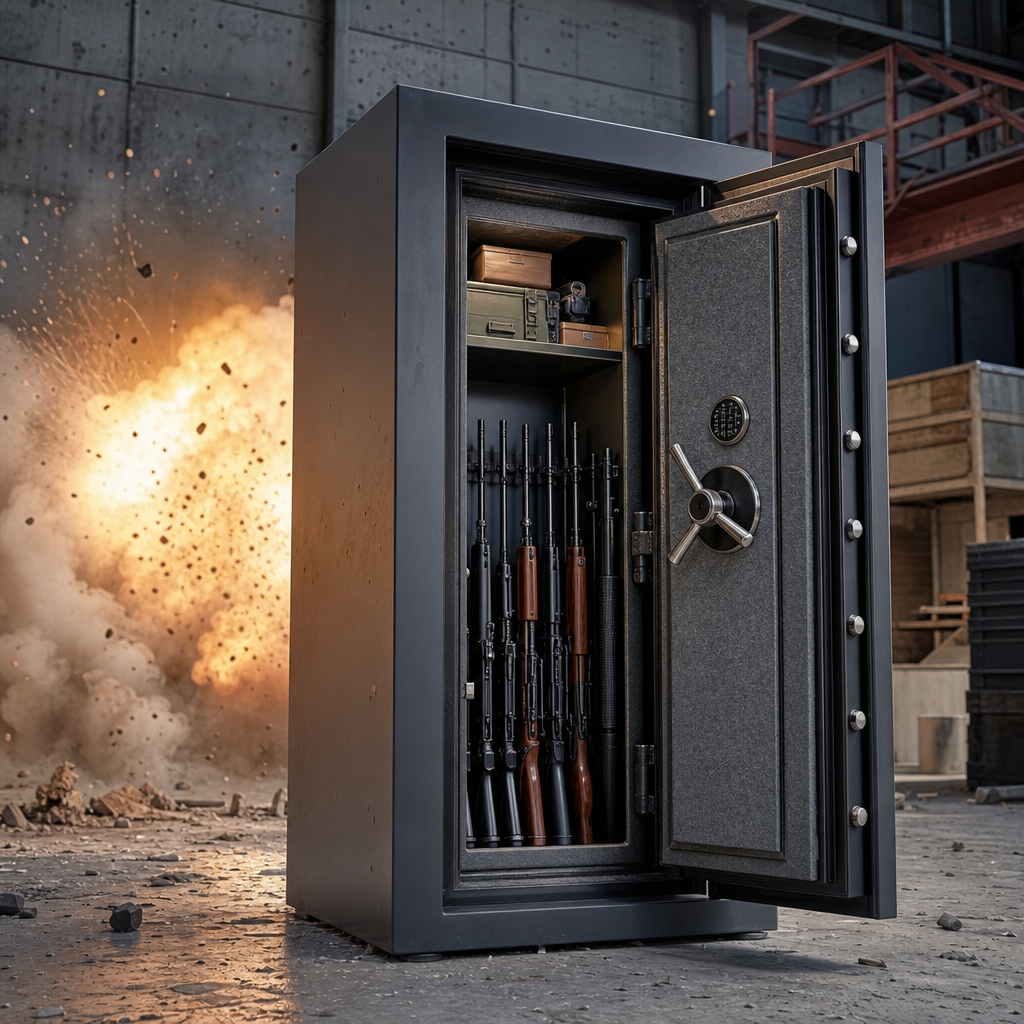
Fireproof gun safes are engineered to do far more than resist heat, because the best models are built as disaster-resistant storage systems that protect firearms, documents, and valuables during fire, structural collapse, pressure shock, and secondary impacts. In practical terms, “fireproof” in the gun-safe market usually means fire-resistant for a stated duration and temperature, while “explosion-resistant” describes a design that limits failure when rapidly heated gases, pressure changes, or nearby blasts stress the enclosure. That distinction matters. I have inspected safes after house fires where the lock survived, the steel shell stayed intact, and the contents were still ruined because the door seal failed or interior temperatures climbed too high for paper, optics, or ammunition. Understanding how these safes are designed helps buyers evaluate claims, compare ratings, and choose storage that supports both firearm security and family safety.
At the hub level, fireproof and disaster-resistant storage includes more than one feature. It combines steel body construction, insulating layers, expanding door seals, reinforced hinges, robust boltwork, concrete or composite fill, anchor systems, and tested locking mechanisms. It also involves installation choices, such as placing a safe on a slab rather than a wood-framed floor, keeping it away from accelerants, and using dehumidification so corrosion does not quietly undermine expensive firearms after a disaster event. Because gun safes often store loaded magazines, optics, suppressor paperwork, heirloom documents, and digital media, the design target is not only theft resistance. It is survivability under multiple hazards at once.
This matters because residential fires routinely exceed the internal tolerance of paper, polymers, adhesives, and electronics long before a home is fully consumed. Paper begins to char around 451 degrees Fahrenheit, many plastics deform much earlier, and ammunition can cook off in a fire even if it does not produce the same projectile hazard as chambered rounds in a firearm. Add the possibility of a gas-line ignition, a garage solvent fire, or pressure waves from an adjacent blast, and the safe must handle dynamic stress as well as sustained heat. A true hub article on gun safe disaster resistance therefore needs to explain the materials, engineering tradeoffs, test standards, and real-world limitations behind the labels. That is what follows.
Core engineering principles behind fireproof and explosion-resistant gun safes
The first design principle is controlled heat transfer. Every fire-resistant gun safe tries to slow conduction through steel, convection through gaps, and radiant heat entering through the door opening. Steel alone is a poor answer because it heats quickly and transfers that heat inward. That is why quality safes add insulating barriers between outer and inner steel shells. In entry-level units, manufacturers commonly use multiple layers of Type X gypsum board because chemically bound water in the board absorbs energy as steam during heating. In higher-end safes, a proprietary composite fill may combine concrete-like material, vermiculite, ceramic fiber, and other low-conductivity components. Composite construction generally performs better under severe fire exposure because it reduces hot spots, adds structural stiffness, and is less likely than thin drywall liners to detach when a safe is dropped or struck.
The second principle is pressure management and structural integrity. Explosive forces and rapid heating can cause warping, seam failure, latch misalignment, and lock damage. To reduce that risk, well-designed safes use continuously welded bodies, reinforced door frames, anti-pry returns, and multi-directional boltwork that keeps the door engaged even if one section distorts. In field evaluations, I pay close attention to the door-to-frame relationship because that interface usually fails before the body shell. A thick door skin means little if the jamb buckles or the locking bolts retract under impact. Internal hinges protect against heat and pry attacks but can limit door swing; external hinges allow full opening yet must be paired with dead bars or fixed locking studs so the door stays secure if hinges are compromised.
The third principle is internal environment control. Fire does not only burn contents; it generates steam, soot, acidic residues, and rapid humidity shifts. Fire seals are critical here. Most premium gun safes use intumescent seals that expand many times their original size when exposed to high heat, blocking smoke and reducing convective heat flow around the door perimeter. Some designs pair intumescent material with a secondary gasket to resist water intrusion from fire suppression. That matters because many “surviving” safes are later opened to reveal rust blooming on blued steel, mildew on slings, and ruined paperwork from trapped moisture. Disaster-resistant storage is therefore about what happens during the event and in the hours after it.
The fourth principle is anchoring and mass distribution. A safe that tips over in a structural collapse or blast event can crack insulation layers, shear lock components, and expose weaker surfaces to direct heat. Manufacturers that take disaster resistance seriously provide pre-drilled anchor holes, reinforced base plates, and heavier body sections that lower the center of gravity. On-site installation completes the design. Anchoring to concrete with appropriate expansion or wedge anchors is not optional for a large safe in a hazard-prone environment; it is part of the protective system.
Materials, fire ratings, and the tests that actually matter
Buyers often focus on steel gauge, but in fire performance the insulation package and test protocol are equally important. Body steel on consumer gun safes may range from 14 gauge in basic cabinets to 7 gauge or thicker in premium units, while doors are often formed to greater equivalent thickness with plate steel or layered composites. Thicker steel improves rigidity and burglary resistance, yet without substantial insulation it can also conduct more heat inward. The best fireproof gun safes balance steel mass with thermal breaks and fill materials that absorb and delay heat.
Fire ratings are notoriously inconsistent because not all brands use the same test standard. Independent standards such as UL 72 are more credible than in-house tests, but many residential gun safes are marketed with proprietary ratings like “75 minutes at 1400°F.” That number may still be useful if the manufacturer explains the furnace curve, allowable internal temperature, sensor placement, and whether the test included a cool-down phase. Cool-down is crucial. In many fires, the furnace exposure ends yet the safe continues to absorb heat while surrounded by debris. A safe can pass the headline portion of a test and still overheat internally afterward.
| Design Element | What It Does | Why It Matters in a Blast or Fire |
|---|---|---|
| Composite insulation fill | Slows heat transfer and supports body rigidity | Reduces interior temperature rise and helps shell resist cracking after impact |
| Intumescent door seal | Expands under heat to close perimeter gaps | Blocks smoke, hot gases, and some water intrusion at the most vulnerable opening |
| Continuous welds and reinforced frame | Maintains door alignment and body integrity | Limits seam failure, warping, and latch binding under pressure or collapse |
| Multi-directional boltwork | Keeps the door engaged on several sides | Improves retention if one edge distorts during an explosion or drop |
| Concrete anchoring | Prevents tipping and movement | Reduces rollover damage, theft opportunity, and shock loads on lock components |
Explosion resistance in the residential market is less standardized than fire resistance, so buyers need to understand what they are really shopping for. Most gun safes are not rated to withstand a military-grade blast wave. Instead, designers account for related effects: overpressure from a nearby ignition, rapid heating of enclosed air, falling debris, and impact from partial structural failure. Features that help include heavier door frames, robust welds, protected relockers, and lock bodies shielded from direct heat. Some commercial record safes and specialized hazard cabinets go further, but for firearm storage the practical goal is preserving enclosure integrity long enough to protect contents and maintain safe handling after the event.
Another rating issue is what is being protected. Paper, USB drives, hard drives, optics, and ammunition all have different temperature tolerances. A gun safe that keeps paper below its damage threshold may still cook a red-dot optic, battery pack, or polymer pistol frame. If you store NFA paperwork, passports, backup drives, and firearms in one safe, look for layered storage inside the safe, such as a smaller media-rated insert or document chest. I recommend this setup often because it addresses the real weakness of broad marketing labels: a single fire rating does not mean every item inside is equally protected.
How safes handle pressure, shock, and secondary hazards during disasters
When people think about explosions, they imagine a dramatic external blast, but many of the damaging forces in a home incident are indirect. A fast-moving garage fire can create pressure differentials as windows fail and rooms flash over. A natural gas ignition can shift walls, throw debris, and slam a safe onto one corner. In these conditions, the safe’s survival depends on both shell strength and how well internal components stay aligned. Quality lockwork includes relockers that trigger if the main lock is attacked or damaged, hardened plates that protect against drilling, and spindle arrangements designed to tolerate some distortion without leaving the safe permanently sealed or permanently open.
Door geometry is especially important. A recessed door can provide better protection to seals and reduce direct flame exposure at the seam, while stepped door profiles create longer paths for heat and smoke to travel. Anti-pry tabs serve a theft function, but they also help maintain engagement if the frame twists. Some manufacturers add thicker hinge-side reinforcement because side impacts from collapse loads often stress that region first. In post-loss inspections, I have seen safes with visually intact front panels that failed along the hinge-side frame because the cabinet body was too thin to resist torsion.
Water is the neglected hazard. Fire departments use large volumes of water, and storm events that accompany regional disasters can leave a safe standing in several inches of contaminated runoff. A nominally fireproof safe with no effective door gasket can become a humidity chamber. Interior drywall-based insulation may trap moisture for days. That is why disaster-resistant storage should include desiccants, rechargeable dehumidifiers, or powered rods where appropriate, plus a plan to open, inspect, and dry the safe safely after any incident. Stainless interior hardware, powder-coated shelves, and sealed electrical pass-throughs also improve recovery outcomes, although they are not universal features.
Placement inside the home changes survivability more than most buyers realize. A safe in an attached garage faces fuel loads from vehicles, paint, and solvents, while a safe on an upper story may fall through weakened flooring in a fire. A first-floor interior closet on a concrete slab is usually better. Exterior walls can remain cooler in some fires, but they may also increase theft visibility and water exposure from firefighting. The right location depends on structure type, local wildfire risk, flood risk, and the size of the safe. Design and installation are inseparable.
Choosing the right disaster-resistant gun safe for your risk profile
The right safe starts with a threat assessment, not a catalog photo. If your main concern is a short-duration house fire, a heavier residential security container with a credible 60- to 90-minute fire rating may be enough. If you live in a wildfire interface zone, where prolonged radiant heat and delayed response are realistic, step up to composite construction, a stronger seal system, and higher verified ratings. If you are also guarding against tornado debris or collapse hazards, weight, anchoring, and frame strength should move up your priority list. In my experience, buyers regret undersizing more often than overspending; crowded safes reduce airflow, increase handling damage, and tempt owners to store important documents somewhere less protected.
Look closely at lock options. Mechanical dial locks have a long service history and tolerate heat well, but they are slower to access and can be harder for some users to manipulate under stress. Electronic locks offer speed and audit features on some models, yet quality varies dramatically, and cheap keypads are common failure points after heat, moisture, or battery neglect. Reputable lock brands such as Sargent and Greenleaf and SecuRam are safer bets than unbranded electronics. For true disaster resistance, lock placement behind insulated door structure and the presence of relockers matter more than marketing terms like “military style.”
Interior configuration deserves equal attention. Firearms with optics, suppressors, and slings require more clearance than brochure capacities suggest. Soft-lined racks protect finishes but can trap moisture if the safe is damp after a fire event. Modular interiors let you create zones for long guns, handguns, documents, and emergency gear. For this subtopic hub, the practical takeaway is simple: a fireproof gun safe is only as effective as the way it is loaded and maintained. Store critical papers in sealed sleeves, keep silica or an active dehumidifier inside, document serial numbers off-site, and review the manufacturer’s post-fire procedures before you ever need them.
Price follows construction. Entry models can offer useful delay against heat and theft, but premium safes justify their cost with thicker steel, better composites, more reliable seals, stronger boltwork, and independently documented testing. The best value is not the cheapest large safe. It is the unit that matches your hazards, carries credible specifications, and is installed correctly. When comparing options, ask direct questions: What test standard was used? What was the maximum internal temperature? Was there a cool-down period? Are seals replaceable? What lock brand is fitted? If a seller cannot answer those questions clearly, keep shopping.
Maintenance, limitations, and what owners should do after a fire event
No safe is invincible, and the word fireproof should never be taken literally. Extreme duration, fuel-rich fires, direct structural collapse, or submersion can defeat even expensive models. Disaster-resistant storage reduces risk; it does not eliminate it. That balanced view is important because owners sometimes develop false confidence and stop backing up documents, insuring collections, or controlling humidity. The best protection strategy layers physical storage, documentation, and routine maintenance.
Maintenance is straightforward but often ignored. Check door seal condition annually, verify anchor bolts remain tight, replace electronic lock batteries on a schedule, and inspect for rust around penetrations or floor contact points. After any nearby fire, even if the safe was not directly exposed, open it when conditions are safe and look for condensation, soot infiltration, and lock stiffness. Following a major event, treat the safe as contaminated until cleaned. Wear gloves, photograph the exterior before moving anything, and involve the manufacturer or a qualified safe technician if the lock or frame shows distortion. For firearms, field-strip, dry, and oil them promptly because acidic residues and trapped moisture cause corrosion fast.
The core lesson across fireproof and disaster-resistant storage is that engineering details determine outcomes. Composite insulation, credible testing, expanding seals, reinforced frames, reliable lockwork, and proper anchoring are what allow a fireproof gun safe to withstand explosions and related disaster stresses better than a basic cabinet. If you are building a safer home storage plan, use this hub as your starting point, then compare ratings carefully, install the safe correctly, and maintain it like any other critical safety equipment. The right safe protects more than property; it protects access control, legal documents, and peace of mind when conditions are at their worst.
Frequently Asked Questions
What does “fireproof” really mean when it comes to gun safes?
In the gun-safe industry, “fireproof” is usually shorthand for fire-resistant, not literally immune to fire under all conditions. A quality safe is typically tested or rated to withstand a specific temperature for a specific period of time, such as 30, 60, 90, or 120 minutes. That rating reflects how long the safe’s construction can keep interior temperatures below the threshold that would damage firearms, paper documents, optics, ammunition packaging, and other valuables. In other words, the claim is about delayed heat transfer, not permanent invulnerability.
The way manufacturers achieve that protection is through layered construction. Many fire-resistant gun safes use steel bodies combined with insulating materials in the walls and door, such as proprietary fireboard, composite barriers, or heat-absorbing fill. When exposed to intense heat, these materials slow the movement of thermal energy into the interior. Better safes also use expanding door seals that swell under high temperatures to block smoke and hot gases from entering through gaps around the door frame.
That distinction matters because real fires are dynamic. Temperatures rise unevenly, room contents collapse, oxygen levels change, and the safe may be exposed to flame, radiant heat, or debris impact at different stages. A well-designed fire-resistant gun safe is built to manage those changing conditions long enough to improve the odds that the contents survive until the fire is controlled. So when consumers see “fireproof,” the most accurate interpretation is “engineered to resist heat and protect contents for a tested duration under specified conditions.”
How are fireproof gun safes designed to withstand explosions or pressure shock?
Explosion resistance in a gun safe is less about surviving a movie-style blast and more about resisting the kinds of rapid pressure changes and structural stress that can happen during severe fires, gas ignition events, pressure shock, or violent secondary impacts. When a fire intensifies quickly, heated gases can expand fast, nearby materials can rupture, and the safe may experience a sudden combination of heat, force, and vibration. A better-designed safe is built to limit catastrophic failure under those conditions.
One of the main ways manufacturers improve resilience is through reinforced body and door construction. Thick steel shells, formed door edges, internal stiffeners, and multi-point locking systems help the safe maintain its shape when exposed to pressure or impact. If a safe body twists, bows, or the door frame deforms too easily, the door seal can fail and allow heat and smoke inside. Stronger hinges, more robust welds, and reinforced locking bolt channels all help the safe stay closed and structurally intact when conditions become chaotic.
Insulation also plays a role beyond simple heat resistance. Certain composite fire barriers can help absorb thermal shock and reduce the rate at which sudden external temperature changes affect the interior. At the same time, well-fitted door seals can limit the intrusion of superheated gases that might otherwise increase internal pressure or accelerate damage to contents. Some high-end designs are engineered as integrated disaster-resistant systems, meaning they are intended not only to resist flame but also to remain functional and protective during collapse, falling debris, and blast-like stress events that accompany major structural fires.
It is important, however, to keep terminology realistic. “Explosion-resistant” does not mean a safe is designed to endure every industrial detonation or direct high-order blast. It means the design aims to reduce the chance of rupture, door failure, or sudden loss of protection when exposed to the pressure shock and violent environmental changes that can occur in real-world disaster scenarios.
What construction features make a fire-resistant gun safe more durable during a disaster?
The most durable fire-resistant gun safes rely on a combination of structural strength, thermal insulation, and protective sealing. Steel thickness is one of the first indicators people look at, and for good reason: heavier-gauge steel generally resists warping, impact, and forced deformation better than thinner metal. But thickness alone is not the whole story. The quality of the welds, the shape of the door frame, and whether the body includes reinforcing bends or internal supports all affect how well the safe performs during a fire or collapse.
Door design is especially important because the door is the most complex and vulnerable part of the safe. Premium models often use recessed doors, reinforced door edges, and multi-directional locking bolts that engage deeply into the frame. This helps the door remain seated even if the body is jarred by falling debris or sudden pressure changes. Continuous or strategically placed welds can further reduce weak points where the safe might separate under stress.
Inside the walls and door, fire insulation determines how slowly heat moves inward. Manufacturers may use multiple layers of fireboard, poured composite materials, or proprietary insulation blends. Better systems are paired with expanding intumescent seals that react to heat by swelling and closing off door gaps. These seals are critical because smoke and hot gases can destroy contents even before direct flame penetration occurs.
Additional durability features may include reinforced hinges, protected relockers, anchor provisions, corrosion-resistant coatings, and interiors designed to cushion contents against impact if the safe shifts or tips. Some safes are also engineered to remain more stable during floor failure or partial structural collapse. Taken together, these details are what separate a basic fire-rated box from a more serious disaster-resistant gun safe.
Can a fireproof gun safe protect firearms, documents, and valuables after a building collapse or secondary impact?
Yes, a well-built fire-resistant gun safe can offer meaningful protection after a building collapse or secondary impact, but the level of protection depends heavily on its construction quality, fire rating, placement, and anchoring. In a major fire, the danger often does not end with heat. Floors can fail, beams can fall, and heavy debris can strike the safe from above or the side. A safe that only performs well in a controlled heat test may not protect contents as effectively if its body deforms, the door shifts, or seals break during impact.
This is why higher-end gun safes are increasingly described as disaster-resistant storage systems rather than simple fire containers. They are designed to keep functioning through multiple phases of an emergency: initial heat exposure, smoke infiltration risk, pressure shock, structural collapse, and post-fire impact. Reinforced steel bodies, stronger door frames, and better bolt engagement improve the chance that the safe remains closed and aligned even after being struck or partially buried under debris.
Protection for mixed contents also matters. Firearms can be damaged by heat, moisture, soot, and corrosive residues, while paper documents and digital media have even lower tolerance thresholds. A safe that manages internal temperature and limits smoke entry gives all of those items a better chance of survival. However, no safe can guarantee perfect protection in every extreme event, especially if it is subjected to prolonged fire beyond its rating or severe crushing forces from total structural failure.
For the best results, owners should also think about installation strategy. Anchoring the safe to a stable slab, placing it in a lower-risk part of the home, and avoiding locations with exceptionally high fuel loads can improve real-world survival odds. The safe’s design is crucial, but how and where it is installed is part of the protection system too.
What should buyers look for if they want a gun safe that offers both fire resistance and explosion-related durability?
Buyers should start by looking past marketing labels and focusing on measurable design features. A clear fire rating with stated time and temperature is essential, and independently verified testing is preferable whenever available. The more transparent the manufacturer is about how the rating was established, the easier it is to compare products. Shoppers should also examine the safe’s steel thickness, door construction, locking bolt coverage, seal system, and insulation type, because these factors directly affect how well the safe holds up under heat, pressure changes, and impact.
For explosion-related durability, the key question is whether the safe is built to resist sudden stress without losing structural integrity. Strong body geometry, reinforced welds, robust door frames, and secure bolt engagement all matter. A safe that can resist warping and door displacement is better positioned to handle the blast-like shock and secondary impacts that can occur during a severe fire. Composite construction can also be beneficial because it may offer both thermal insulation and improved resistance to cracking or rapid failure compared with simpler thin-wall designs.
Buyers should also evaluate practical details such as weight, anchoring options, hinge protection, and the presence of expanding smoke seals. Heavier safes generally perform better in disaster conditions because they are harder to move, less likely to tip, and often built with more substantial materials. Interior layout matters too, especially if the safe will store not only firearms but also passports, legal papers, hard drives, jewelry, and other valuables with different heat sensitivities.
Finally, it helps to buy from manufacturers with a strong reputation for engineering rather than just advertising. The best choice is usually a safe designed as a total protective enclosure, not merely a theft deterrent with a fire label attached. For anyone concerned about fire, pressure shock, structural collapse, and secondary impacts, that broader design philosophy is what makes the biggest difference in real-world performance.