
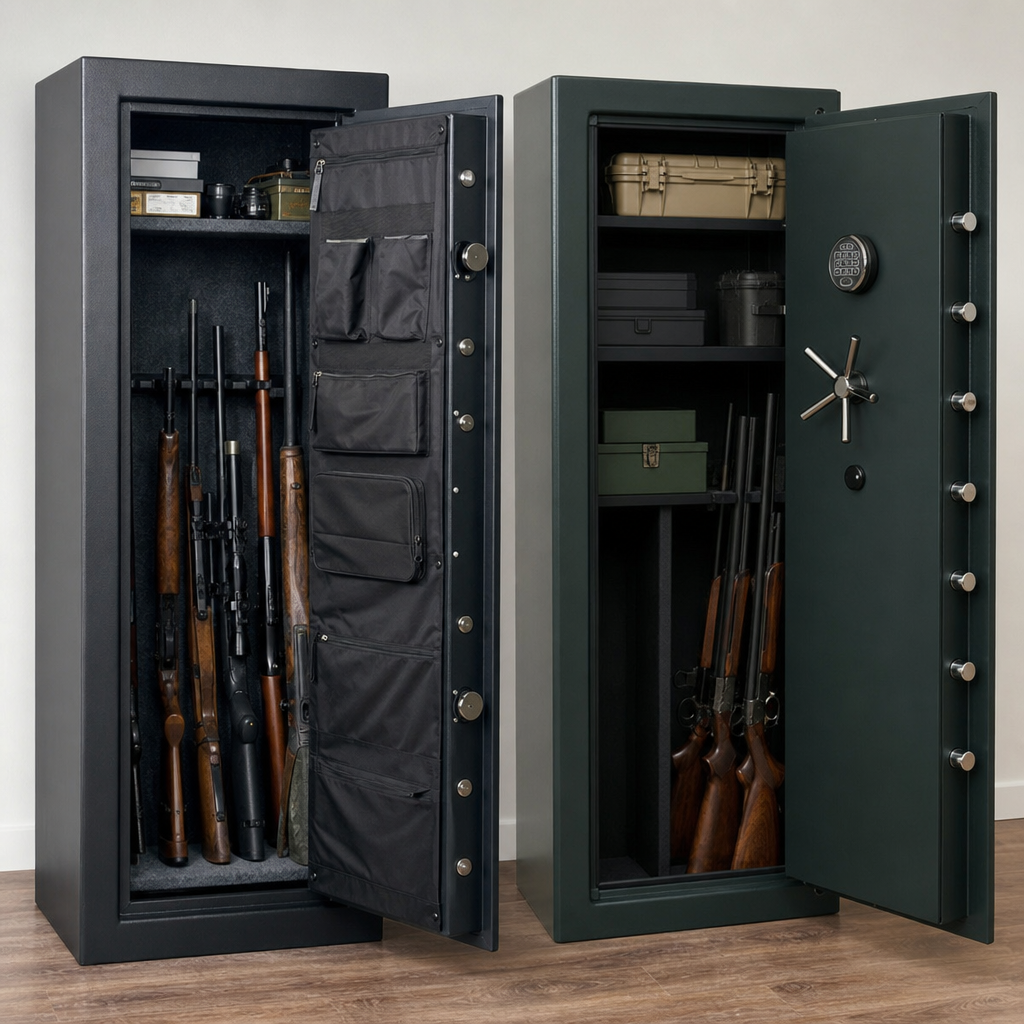
Choosing between Stack-On and Fortress comes down to a practical question: which brand gives you more real value for your money when you need secure firearm storage? In the gun safe market, value does not simply mean the lowest sticker price. It means the balance of burglary resistance, fire protection, interior capacity, locking reliability, build quality, ease of installation, warranty support, and long-term ownership costs. For buyers comparing gun safe brands, Stack-On and Fortress often appear in the same short list because both target mainstream households rather than the ultra-premium custom safe segment. Yet they approach that market differently, and those differences matter.
I have helped buyers compare entry-level cabinets, mid-range fire safes, and retail-exclusive models for years, and the biggest mistake I see is shopping by advertised gun count alone. A “24-gun safe” may realistically hold far fewer long guns with optics, slings, and bipods. Another common error is assuming every steel box with an electronic keypad offers the same protection. It does not. Steel thickness, door construction, bolt engagement, hinge design, anchor options, and verified fire testing all affect performance. That is why a direct Stack-On vs. Fortress comparison is useful as a hub topic within gun safe comparisons and brand spotlights.
Stack-On built its name on accessible gun security products, including steel security cabinets, compact safes, and budget-conscious fire-resistant gun safes sold through major retailers. Fortress is better known for offering feature-heavy gun safes at aggressive prices, often emphasizing thicker steel than many entry models, organized interiors, and strong visual appeal. Both brands serve buyers who want a step up from unsecured closet storage, but they are not interchangeable. The better choice depends on whether you prioritize entry price, upgrade features, or a stronger baseline for burglary resistance.
This guide explains how these brands compare across construction, fire ratings, locking systems, interior design, installation, ownership experience, and ideal use cases. It also serves as a central resource for anyone researching gun safe comparisons and brand spotlights under the broader gun safes and safety category. If you need a quick answer, Fortress usually offers more value in the mid-range because you often get heavier construction and better interior appointments for the money, while Stack-On remains compelling for buyers who need affordable, basic security from a widely available brand. The sections below show where each brand wins, where each falls short, and how to choose the right fit for your home.
Brand Positioning and Product Range
Stack-On and Fortress compete in overlapping but distinct parts of the market. Stack-On has long focused on affordability and broad retail distribution. Its lineup commonly includes gun cabinets made from thinner sheet steel, convertible safes, compact personal safes, and fire-resistant gun safes designed for first-time buyers. You will frequently find Stack-On products in big-box stores, farm and fleet retailers, and online marketplaces. That reach matters because replacement parts, basic setup guidance, and customer familiarity are easier to access than with niche brands.
Fortress, by contrast, is usually positioned as a better-equipped alternative for buyers willing to spend more than entry-level cabinet money without moving into premium brands such as Liberty’s upper lines, AMSEC’s heavier residential security containers, or specialty TL-rated safes. In practice, Fortress models tend to emphasize upgraded door organization, more substantial bodies, attractive interiors, and feature lists that look strong on a showroom floor. Buyers comparing the two often notice that Fortress tries to “over-deliver” on visible value, while Stack-On tries to remove barriers to purchase.
That difference in positioning shapes expectations. If your benchmark is a locking cabinet intended mainly to keep children, casual visitors, or smash-and-grab thieves away from firearms, Stack-On can make sense. If your benchmark is a true gun safe with meaningful steel, multiple locking bolts, fire lining, and a more refined interior, Fortress usually competes from a stronger starting point. Neither brand dominates every price bracket, and model-specific specifications still matter, but the general pattern is consistent enough to guide a first-pass decision.
Build Quality, Steel Gauge, and Security Design
When evaluating gun safe value, construction is the first place to look. Marketing language can blur the distinction between a cabinet and a safe, so buyers should check measurable specifications. Steel gauge is one of the simplest reference points. Lower gauge numbers indicate thicker steel. Many entry-level cabinets across the industry use relatively thin steel, often suitable for access control but not prolonged attack resistance. Stack-On’s lower-cost products have historically excelled at affordable organization and deterrence, but thinner bodies and simpler doors are common in that segment. That does not make them useless; it means they should be matched to the right threat model.
Fortress typically gains its reputation by offering thicker steel or at least a more substantial overall feel than bargain cabinets. In side-by-side retail comparisons, buyers often respond to door weight, boltwork presence, and the solidity of the frame. A heavier body can slow pry attacks and provide a better platform for anchor-down installation. More locking bolts do not automatically create a superior safe, because bolt size and placement can be more cosmetic than functional, but robust bolt engagement on the opening side and effective door jamb design are real advantages.
One point I stress to clients is that anchored weight matters as much as shipping weight. An 18- to 24-gun safe that is not bolted into concrete or substantial framing can still be tipped and attacked. Both Stack-On and Fortress models should be anchored according to manufacturer instructions. In practical home use, the best value comes from a safe with a continuous-recess door design, decent steel thickness, protected lock area, and solid anchor points. Fortress more often checks those boxes in mid-range models, while Stack-On wins when the budget is too tight for a heavier safe and the alternative is unsecured storage.
Fire Protection Claims and Realistic Expectations
Fire ratings are one of the most misunderstood parts of gun safe shopping. Brands may advertise a temperature and duration, such as 30, 45, or 60 minutes at a stated external heat level, but those figures are not always directly comparable across manufacturers. Testing protocols vary. Some companies use independent labs; others rely on internal testing. Important details include whether the safe was pre-heated, whether moisture release was considered, and what internal temperature threshold was used. Paper chars around 350 degrees Fahrenheit, but firearms, optics, wood stocks, documents, and electronics all respond differently to heat and humidity.
Stack-On offers fire-resistant models that appeal to mainstream households wanting combined firearm storage and document protection. For many buyers, that hybrid role is appealing because the safe must do several jobs in a limited footprint. Fortress also markets fire protection aggressively, often pairing fireboard insulation with upgraded seals and more premium presentation. The value question is not which brand prints the bigger number on the label, but which model gives you the most credible fire package for your environment and budget.
Realistically, neither brand should be treated as a substitute for a commercial fire data safe or a high-end composite burglary safe. In a serious structure fire, duration, fuel load, fire department response time, and safe placement all matter. A safe on a garage slab may fare differently from one on an upper floor exposed to collapse heat. For most homeowners, the best practice is to view a fire rating as a delay feature, not a guarantee. Fortress often looks stronger in the mid-tier because it combines better security construction with respectable fire claims, but Stack-On still offers practical value if the goal is to add moderate fire resistance at a lower cost than many competitors.
Locks, Interiors, and Everyday Usability
A gun safe can look impressive on paper and still be frustrating every day. Lock reliability, shelving flexibility, lighting, door storage, and realistic capacity determine whether owners actually use the safe well. Both Stack-On and Fortress commonly offer electronic locks, and some models may include mechanical dial alternatives. Electronic keypads are convenient, especially for frequent access, but they depend on battery maintenance and proper lock quality. Buyers should look for reputable lock manufacturers, relocker features where available, and clear procedures for battery replacement and emergency support.
Stack-On interiors are often functional rather than luxurious. You may get basic barrel rests, shelf arrangements, and enough organization for a straightforward setup. That simplicity helps hold down cost. Fortress tends to invest more in presentation and user convenience, including door organizers for handguns and documents, adjustable shelving, and interiors that better accommodate mixed firearm collections. For owners with scoped rifles, AR-pattern carbines, and accessories, that flexibility can add real value because usable capacity is more important than advertised maximum capacity.
| Category | Stack-On | Fortress | Value Verdict |
|---|---|---|---|
| Entry price | Usually lower | Usually higher | Stack-On for tight budgets |
| Steel and body feel | Varies, often lighter in entry models | Often more substantial in mid-range | Fortress for stronger baseline security |
| Interior features | Basic and practical | More organized and upscale | Fortress for usability |
| Retail availability | Very broad | More selective | Stack-On for convenience |
| Best fit | First safe, limited budget, low-risk setting | Buyers wanting more features per dollar | Depends on threat level and budget |
Usability also includes door swing, handle clearance, dehumidifier accommodation, and access speed under stress. If a safe is going in a closet, basement corner, or garage alcove, measure swing space before buying. I have seen buyers choose a larger Stack-On because the price was attractive, only to discover the interior layout wasted space for modern rifles. I have also seen buyers stretch into a Fortress model and keep it far longer because the shelf system adapted as their collection changed. That long-term satisfaction is a real part of value.
Installation, Warranty, and Long-Term Cost
The purchase price is only the beginning. Delivery fees, stair carries, anchoring hardware, humidity control, and possible lock replacement all affect cost of ownership. Stack-On’s lower weight in some models can reduce delivery complexity and make placement easier in older homes. That is a legitimate advantage when floor loading, narrow staircases, or apartment moves are concerns. Fortress safes, being heavier and often more feature-rich, may cost more to deliver and install, but the payoff can be greater resistance to tampering and a more stable platform once anchored.
Warranty support deserves close reading. Fire and attempted-break-in warranties vary by brand and model, and buyers should verify whether labor, freight, locksmith service, or replacement coverage is included. It is also smart to ask who services the lock if it fails outside warranty. A safe from a major retailer with broad customer service channels can be easier to resolve, which helps Stack-On in many situations. Fortress can still offer strong support, but availability may depend more on the selling dealer or regional distributor.
Long-term cost is also influenced by whether you outgrow the safe. Buying too small is the most common expensive mistake in this category. Firearms accumulate accessories, important papers migrate into the safe, and interior space disappears fast. If a Fortress safe costs more upfront but prevents an upgrade within three years, it may be the better value. If a Stack-On cabinet or safe solves an immediate safety problem now and fits a plan to buy a larger safe later, that can also be a rational decision. Value is not abstract; it is the fit between product capability and your likely ownership path.
Who Should Buy Stack-On and Who Should Buy Fortress?
Stack-On is the stronger choice for buyers who need an affordable, widely available solution quickly. That includes first-time gun owners, households mainly concerned with child access prevention, renters who may move often, and shoppers in lower-risk areas who need basic organized storage more than high-level burglary resistance. Stack-On also works well when the realistic alternative is leaving firearms in soft cases, closets, or under beds. In that scenario, even a modest locking cabinet or entry safe is a meaningful improvement in safety and accountability.
Fortress is the better fit for buyers who want more substantial protection without entering premium pricing tiers. If you own multiple rifles with optics, need flexible shelving, care about fire resistance, and want a safe that feels like a long-term fixture rather than a temporary compromise, Fortress usually offers more value. It is especially compelling for suburban homeowners who want a stronger deterrent against forced entry and enough interior refinement to keep firearms, documents, and valuables organized in one place.
As a hub for gun safe comparisons and brand spotlights, the clearest takeaway is this: Stack-On wins on accessibility, while Fortress wins on feature-weighted value in the middle of the market. Compare specific steel thickness, lock type, fire rating method, anchor provisions, interior layout, and delivered price before deciding. Then buy the largest well-built model you can properly install. That approach almost always leads to better security, better usability, and fewer regrets. If you are narrowing your options today, start by defining your threat level and space, then match those realities to the strongest model each brand offers in your budget.
Frequently Asked Questions
1. Which brand offers better overall value: Stack-On or Fortress?
For most buyers, the better value depends on what you expect a safe to do on a daily basis and over the long term. If you define value primarily as getting basic firearm security at a lower upfront cost, Stack-On often appeals to budget-conscious shoppers who want an entry-level storage solution without spending premium-safe money. Stack-On products are commonly considered practical for light-duty residential use, especially for owners who need to secure firearms from children, guests, or opportunistic theft rather than defend against a determined, tool-equipped intruder.
Fortress, on the other hand, often delivers stronger value for buyers who are looking beyond the purchase price and focusing on the total ownership equation. That includes heavier construction, better fit and finish in many models, stronger locking systems, more robust fire ratings, and a generally more substantial feel. In many side-by-side comparisons, Fortress tends to justify its higher cost by offering more of the features that matter when buyers are serious about burglary resistance and long-term durability.
So the answer is not simply that one brand is always “better.” Stack-On can be the better value for a first-time safe buyer, a secondary storage location, or someone with a limited budget who still wants a recognized brand. Fortress often becomes the better value when you want more meaningful protection per dollar, particularly if you plan to keep the safe for many years and store a larger number of firearms, optics, documents, or other valuables. In short, Stack-On usually wins on affordability, while Fortress more often wins on protection and feature depth.
2. How do Stack-On and Fortress compare in burglary protection and build quality?
Burglary protection is one of the biggest separators between lower-cost and higher-value gun safes, and this is where buyers need to look carefully past marketing language. Many entry-level safes and cabinets look secure from the outside, but true resistance to forced entry depends on steel thickness, door design, locking bolt coverage, hinge protection, relockers, anchor options, and overall structural rigidity. Stack-On has built a strong presence in the entry-level and mid-range market, and many of its products are intended to provide organized, lockable firearm storage rather than elite burglary resistance. That means some models are better thought of as secure cabinets or basic safes, not high-security vaults.
Fortress products are often positioned to feel more substantial, with construction details that inspire more confidence for buyers worried about break-in attempts. Depending on the model, Fortress may offer thicker steel, stronger doors, improved bolt engagement, and interiors that suggest a more premium build philosophy. These details matter because many residential theft attempts are fast, aggressive, and opportunistic. A safe that delays pry attacks, door flex, or lock compromise even modestly better can make a real difference in a home burglary scenario.
That said, no mainstream gun safe should be judged by brand name alone. Both Stack-On and Fortress have product lines that vary by price tier, and buyers should compare the exact model specifications rather than rely on broad assumptions. If burglary resistance is your top concern, prioritize steel gauge, total weight, boltwork design, and whether the safe can be properly anchored to concrete. In this category, Fortress often has the edge in perceived sturdiness and premium construction, but Stack-On can still serve well when expectations are realistic and the safe is used as part of an overall layered security plan.
3. Which brand is better for fire protection and protecting valuables beyond firearms?
Fire protection is another area where “value” can be misunderstood. A lower purchase price is not necessarily a savings if the safe cannot protect what matters during a house fire. When comparing Stack-On and Fortress, buyers should understand that fire ratings are not always tested the same way across brands, and advertised numbers may not reflect identical standards. Some safes list a time-and-temperature rating, but the testing method, pass criteria, and insulation design can differ significantly. That makes direct comparisons tricky unless you examine the details closely.
In general, Fortress often attracts buyers who want a stronger all-around safe for mixed storage use, including firearms, documents, jewelry, cash, and family records. Many shoppers perceive Fortress as the better fit when fire resistance is a higher priority, particularly if the model includes more serious insulation, better door seals, and a heavier overall build. A safe with stronger fire features may also do a better job managing internal heat rise, which is critical for paper documents, digital media, and heat-sensitive valuables.
Stack-On can still be a sensible choice for users whose primary goal is firearm access control and moderate protection at a lower cost, but buyers should be cautious about assuming that all fire-rated models offer equal performance. If you plan to store important paperwork, passports, hard drives, or irreplaceable heirlooms, it may make sense to spend more for a model with more credible fire-protection features. For firearm owners who want one unit to serve as a broader household safe, Fortress often delivers better value because it is more likely to meet both gun storage and general valuables protection needs with fewer compromises.
4. Are Stack-On or Fortress safes better in terms of locking reliability, interior layout, and everyday usability?
Everyday usability is a major part of value because the best safe is the one that works smoothly, organizes your gear well, and does not become frustrating over time. Locking reliability matters just as much as headline specs. Both Stack-On and Fortress offer models with electronic locks, and in some product categories buyers may also find combination or upgraded lock options. Electronic locks are convenient, but their long-term satisfaction depends on component quality, keypad responsiveness, battery access, and how well the lock system is integrated into the safe’s door design.
Fortress often earns attention from buyers who want a more refined ownership experience. Depending on the model, that can mean smoother door action, more adjustable shelving, better barrel rests, improved door organizers, and more efficient use of interior space. This can be especially important if you are storing scoped rifles, tactical firearms, handguns, ammo, and accessories together. A safe that technically holds a certain number of firearms on paper may feel crowded in real life, so interior flexibility is a big part of actual value.
Stack-On models can be very practical, especially for straightforward storage needs. They may be a good match for owners who want simple access, basic organization, and a lower entry price. However, some buyers eventually outgrow entry-level interiors if their collection expands or if they need room for optics, magazines, important documents, and defensive gear. If you want more adaptability and a layout that supports long-term ownership rather than short-term storage, Fortress often has the edge. If your needs are simpler and your budget is tighter, Stack-On can still represent good value as long as you buy enough capacity from the start and anchor the unit properly.
5. What should buyers consider besides price when deciding between Stack-On and Fortress?
The smartest way to compare Stack-On and Fortress is to think beyond the sticker price and evaluate total cost of ownership. That includes delivery, installation, anchoring, dehumidification, interior accessories, lock maintenance, warranty support, and the likelihood that you will need to upgrade later. A safe that costs less initially can become the more expensive choice if it fills up too quickly, lacks enough protection for your risk level, or leaves you wanting a second purchase in a few years.
Warranty and customer support also matter more than many buyers expect. If you ever deal with lock issues, shipping damage, missing parts, or fire-related claims, responsive service can dramatically affect your experience. Brand reputation in this area can vary by retailer, model, and region, so it is worth checking real owner feedback before buying. Installation is another overlooked factor. Heavier, better-built safes may cost more to move into place, but they often reward that investment with improved stability and security. A lighter safe is easier to place, but it may also be easier for thieves to attack or remove if it is not anchored correctly.
Ultimately, the decision comes down to matching the safe to your risk profile. If you need economical firearm storage with recognizable branding and basic security, Stack-On can make a lot of sense. If you want more robust protection, stronger materials, better interior versatility, and a safer long-term bet for storing both guns and valuables, Fortress often provides more value even at a higher purchase price. The best choice is the one that fits your collection, your home, your threat concerns, and your budget without forcing major compromises in the areas that matter most.