
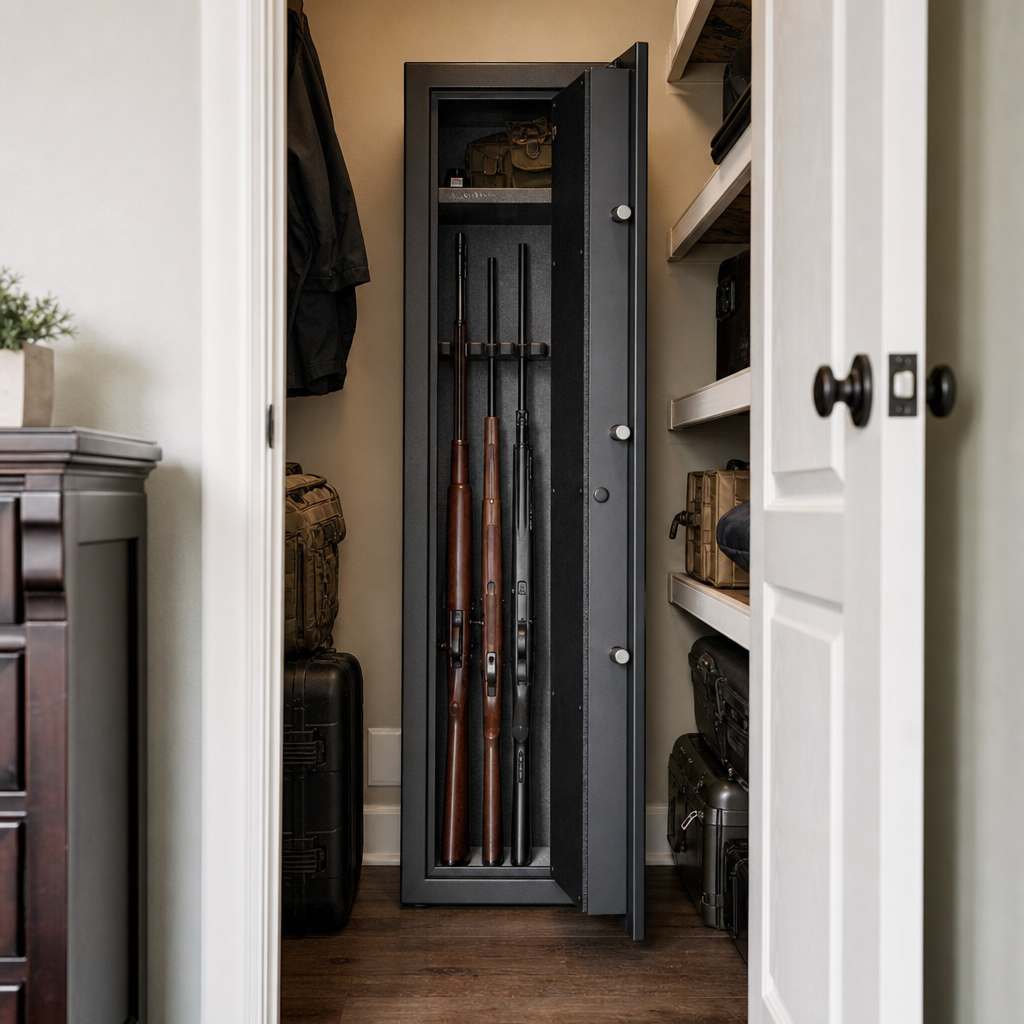
Comparing gun safe brands that specialize in small-space storage is essential for owners who need secure firearm protection without dedicating a full room, large closet, or basement corner to a bulky cabinet. In apartments, condos, shared homes, and modest houses, the challenge is not whether to use a gun safe, but how to fit one into daily life without sacrificing access, security, or floor space. Small-space storage refers to safes designed for tight footprints, low visual impact, and flexible placement under beds, inside closets, in furniture cavities, or in narrow wall-adjacent locations. This category includes under-bed safes, vertical narrow-body safes, bedside biometric vaults, hidden furniture-style units, and compact modular safes that can pass through tight stairwells and door frames.
When I evaluate compact safes for clients or for my own recommendations, I look at a different set of priorities than I would for a full-size long-gun safe. External dimensions matter more than advertised capacity. Door swing clearance matters as much as interior volume. Weight matters because upper-floor installations, rental properties, and one-person moves are common. Anchoring options matter because a lighter safe that is not bolted down can be removed quickly. In small spaces, every compromise is amplified. A safe that is two inches too deep may block a closet door. A keypad placed awkwardly may be hard to reach from a bedside position. A glossy finish may attract attention that a low-profile matte unit would avoid.
This hub article covers the main brands and product categories buyers encounter when comparing compact gun safes. It explains where each brand tends to excel, where limitations appear, and how to match the safe to your room layout, firearm type, and access needs. It also helps connect the broader topic of gun safe comparisons and brand spotlights under the larger gun safes and safety category. If you are deciding between speed and fire protection, concealment and capacity, or affordability and construction quality, the most useful approach is not to ask which brand is best overall. The right question is which brand best solves your small-space storage problem while meeting realistic security expectations.
What small-space gun safe buyers should compare first
The first comparison point is safe type, because brands often specialize within one compact format rather than across all of them. Vaultek is strongly associated with smart pistol safes and modern bedside units. SecureIt is known for lighter, modular rifle storage with efficient interior organization. Hornady RAPiD focuses on fast-access safes using RFID, keypad, and mobile-friendly layouts. Fort Knox and V-Line are respected for robust mechanical and simplex-style handgun vaults. SnapSafe, Stealth, and Barska appear often in compact cabinet, closet, and under-bed discussions, though construction and long-term fit-and-finish vary by model.
The second comparison point is construction. For compact units, buyers should verify steel thickness, pry resistance, door overlap, hinge placement, and lock reinforcement rather than relying on marketing labels like heavy duty. Many small vaults use 16-gauge to 14-gauge steel; stronger units move into 12-gauge or thicker bodies, with reinforced doors adding meaningful real-world resistance. Because compact safes are more likely to be attacked with hand tools in close quarters, pry points around the lid or door matter greatly. A good small safe often shows its quality in details: recessed doors, anti-pry lips, protected hinges, and pre-drilled anchor holes that allow installation into framing, concrete, or substantial furniture bases.
The third comparison point is access method. Biometric locks are convenient, but sensor quality varies sharply. Keypad safes remain the most common balance of speed and reliability. Mechanical simplex locks, while less flashy, have excellent reputations because they do not depend on batteries or finicky fingerprint reads. RFID systems offer fast access in dark rooms, especially for nightstand placement, but users must manage tags carefully. In every format, a backup key or redundant entry path is important. Compact safes are often bought for urgent-access scenarios, so lock failures are more than an inconvenience.
Brand strengths by small-space safe category
Brand comparison becomes clearer when organized by use case. Vaultek usually stands out for premium compact handgun safes with app features, biometric options, and well-designed interiors. Its Lifepod line fits travel and discreet storage, while the VT and Slider series target nightstands, desks, and closets. Hornady RAPiD earns attention for fast-access home-defense storage, including under-bed and wall-compatible units that can store both pistols and long guns. V-Line remains a favorite for buyers who prioritize mechanical reliability over electronics, especially in top-draw and closet-friendly handgun vaults.
For rifle owners in small homes, SecureIt occupies a distinct position. Its Agile models are not traditional thick-walled safes; instead, they emphasize organized, ready access and efficient vertical storage with lighter weight and modularity. That matters in homes where a 700-pound safe is impractical or impossible to deliver. SnapSafe and Stealth offer under-bed and compact long-gun options that appeal to buyers needing horizontal storage beneath a bed frame. Fort Knox, while best known for larger premium safes, also makes handgun vaults with strong steel construction and excellent lock credibility. Barska competes on price and broad retail availability, though quality consistency should be checked model by model.
| Brand | Best Small-Space Use | Typical Strength | Main Tradeoff |
|---|---|---|---|
| Vaultek | Nightstand, desk, closet pistol storage | Fast access, smart features, refined design | Higher cost, electronic dependence |
| Hornady RAPiD | Bedside and under-bed access | RFID speed, practical layouts | Feature set varies widely by model |
| V-Line | Mechanical handgun vaults | Simplex reliability, sturdy construction | Less modern interior and styling |
| SecureIt | Compact rifle and closet storage | Modular organization, lighter footprint | Less burglary resistance than heavy safes |
| Fort Knox | Premium pistol vaults | Build quality, lock confidence | Price and weight |
| SnapSafe | Under-bed and modular compact storage | Flexible placement, easier delivery | Model-specific variation in robustness |
Under-bed safes and low-profile horizontal storage
Under-bed gun safes solve one of the most common small-space problems: where to place a firearm safe when closets are full and floor footprint is limited. In this category, Hornady RAPiD Safe Ready Vault, SnapSafe Under Bed Safe, and similar Stealth models are frequently compared. The best under-bed safes combine a shallow height with enough drawer extension to clear the bed frame and allow practical access. Buyers should measure not just bed clearance, but side reach and front clearance. I have seen strong safes returned simply because the drawer could not extend far enough between a bed leg and a dresser.
Hornady’s advantage is access speed and user-friendly opening methods, especially for owners who want one motion from wake-up to retrieval. SnapSafe often appeals to buyers who want broad storage utility, since these safes can hold handguns, documents, valuables, and some long guns depending on dimensions. Stealth under-bed options are often favored when buyers want a balance between a more substantial feel and a discreet low profile. The limitation of nearly every under-bed safe is that fire protection is minimal or absent, and because these are wide, shallow boxes, their steel gauge must be interpreted alongside anchor quality. If they are not secured to the floor, platform, or structural members, two people can remove many of them quickly.
Vertical safes for closets, corners, and narrow footprints
When floor depth is limited, vertical narrow safes often outperform wider cabinets. SecureIt Agile models are a leading example because they store rifles upright with thoughtful door-mounted and interior organization. Their CradleGrid system uses adjustable accessories to fit carbines, shotguns, optics, and gear in a way that makes better use of cubic space than traditional rack-and-shelf layouts. For a small apartment closet, that can be the difference between storing two rifles awkwardly and storing several long guns with magazines, slings, and documents in one compact station.
The tradeoff is important: SecureIt products are security cabinets optimized for access and organization, not direct substitutes for heavy composite fire safes. For many urban or suburban owners, that is an acceptable compromise because the realistic threat model is unauthorized household access, not prolonged attacks with power tools. Buyers who need higher burglary resistance in a narrow footprint should compare compact models from American Security, Hollon, or sturdy steel cabinets from specialty dealers, but they will usually pay with more weight and more difficult installation. In upper-floor spaces or rental units, the lighter design philosophy behind SecureIt often makes practical ownership possible where traditional safes would never be installed.
Bedside and rapid-access handgun vaults
For owners focused on home-defense readiness in a tight bedroom layout, bedside handgun vaults are their own category. Vaultek’s Slider series, Lifepod bedside use cases, and VT biometric models are common choices because they fit drawers, shelves, and narrow nightstands while presenting the pistol in a repeatable orientation. Hornady RAPiD bedside units and V-Line top-draw safes compete from different philosophies. Hornady emphasizes rapid electronic access options, while V-Line leans on mechanical simplex locks that many experienced users trust for long-term dependability.
In real use, the best bedside vault is the one you can open under stress, in darkness, and while half awake. That is why I usually recommend buyers test lock logic before obsessing over interior lighting or app notifications. If multiple household members need access, keypad and simplex systems are often easier to share consistently than biometrics. If only one trained user needs access, a high-quality biometric reader can be extremely fast. Fort Knox handgun vaults deserve mention here because they are overbuilt compared with many bedside boxes, though the extra weight and cost may exceed what some renters want on furniture. The practical lesson is simple: prioritize repeatable opening, secure anchoring, and a safe draw path over gadget count.
How to judge value, security, and fit before buying
Price alone does not tell you whether a compact safe is a good buy. A $200 handgun vault that opens reliably, anchors cleanly, and fits the exact space may deliver more real value than a $500 unit with extra features you never use. Start with measurements in three dimensions, then add clearance for the door, lid, or drawer. Next, match the safe to the firearm and intended condition of storage, including optic height, spare magazine space, and whether a light-bearing handgun actually fits. Many returns happen because listed dimensions describe the shell, not usable interior space.
Then verify lock reputation, construction details, and warranty support. Look for California DOJ listings where applicable, understand that they are not the same as true burglary ratings, and treat broad marketing claims with caution. Read installation instructions before purchase, not after delivery. A compact safe that cannot be properly anchored to your floor, bed platform, wall studs, or closet base is less secure than its photos suggest. Finally, consider how this hub connects to deeper articles on biometric safes, under-bed comparisons, rifle cabinets, and mechanical lock brand spotlights. Use this page as your starting point, then narrow your search by room, firearm type, and access priority.
Small-space gun safe shopping gets easier when you stop looking for a universal winner and start comparing brands by storage format, access method, and installation reality. Vaultek leads in premium compact electronic handgun storage, Hornady RAPiD is strong in fast-access bedroom and under-bed designs, V-Line remains a benchmark for mechanical handgun vault reliability, SecureIt is especially effective for organized long-gun storage in closets and corners, and Fort Knox offers premium build quality for buyers willing to pay for it. SnapSafe and similar brands fill important roles where modularity, delivery convenience, or low-profile placement matter most.
The key takeaway is that compact safes succeed or fail on details that larger safe buyers sometimes overlook: clearance, anchoring, lock consistency, usable interior dimensions, and how the unit fits your daily routine. If you choose a safe based on a realistic threat model and a measured floor plan, you can secure firearms responsibly even in a small apartment or crowded bedroom. Start with the category that matches your space, compare brands within that category, and continue through the related brand spotlights and comparison guides in this gun safes and safety hub to make a confident purchase.
Frequently Asked Questions
1. What should I look for first when comparing gun safe brands for small-space storage?
The first thing to compare is not the exterior finish or even the advertised size—it is whether the safe truly fits your space, your firearm collection, and your daily routine. Brands that specialize in small-space storage often design around compact footprints, under-bed profiles, closet-friendly dimensions, corner placement, or furniture-style concealment. That means you should start by measuring the exact area where the safe will go, including height clearance for opening the door or lid, nearby baseboards, and any furniture or walls that could limit access. A safe that technically fits the floor space but cannot open fully is not a practical solution.
Next, compare construction quality. In the compact-safe category, steel thickness, door design, lock protection, anti-pry features, and internal reinforcement matter more than marketing language like “heavy duty” or “tactical.” Small safes are easier to move than full-size vaults, so the ability to anchor the safe securely to the floor, wall studs, bed frame platform, or a solid cabinet structure becomes extremely important. A reputable brand should clearly explain bolt-down options, included hardware, and acceptable mounting surfaces.
You should also evaluate access speed and lock type. For many owners in apartments or shared homes, a small-space safe is used for defensive access as well as secure storage. Brands may offer biometric readers, electronic keypads, RFID access, mechanical simplex locks, or traditional keyed entry. The best option depends on whether you prioritize quick one-handed access, battery-free reliability, multiple-user access, or long-term simplicity. Well-regarded brands are usually transparent about lock testing, battery backup procedures, and manual override availability.
Finally, look at interior usability. A compact safe should not waste space. Compare how brands handle foam inserts, adjustable racks, barrel rests, magazine storage, shelf options, lighting, and cable pass-throughs. In a small apartment or condo, every inch counts, so thoughtful interior design can make a major difference. The strongest brands in this category tend to balance three things well: efficient dimensions, dependable security, and realistic everyday access.
2. Are under-bed, closet, and furniture-style gun safes actually secure enough for firearm storage?
They can be, but security depends heavily on the brand’s engineering and on proper installation. Small-space gun safes are not all built to the same standard. An under-bed safe with reinforced steel, internal locking lugs, tamper-resistant hinges, and a solid anchoring system can provide meaningful protection against unauthorized access and smash-and-grab theft. On the other hand, a lightweight lockbox with thin metal and poor mounting points may offer only basic containment. When comparing brands, the key question is not whether the safe is under a bed or inside furniture—it is how well it is built and how securely it can be fixed in place.
Closet safes and furniture-style safes can be especially effective in smaller homes because they reduce visual exposure. A safe that is hidden inside a wardrobe, integrated into a nightstand, or positioned in a low-traffic closet is less likely to attract attention from visitors, contractors, or thieves who are acting quickly. That lower profile is an advantage in apartments and shared residences where privacy matters. However, concealment should support security, not replace it. The strongest brands pair discreet design with good steel construction, pry resistance, and reliable locks.
Another important point is matching the safe to the threat level. If your primary goal is child access prevention and secure daily storage in a small home, a high-quality compact safe from a trusted brand may be an excellent fit. If you are trying to store multiple long guns, valuable optics, documents, and ammunition with a higher level of burglary resistance, a compact unit may need to be part of a larger security plan rather than the entire plan by itself. The best small-space brands are realistic about this and clearly position their products for fast access, limited-space storage, or discreet placement instead of overstating what a compact safe can do.
In short, under-bed, closet, and furniture-style models can be secure enough when they come from reputable brands, use quality materials, and are properly anchored. For small-space living, they are often the most practical answer—as long as you compare them based on real security features rather than appearance alone.
3. Which lock type is best when comparing compact gun safe brands: biometric, keypad, RFID, or mechanical?
There is no single best lock for every owner, but there is usually a best lock for your particular situation. Biometric locks are popular because they offer fast access without remembering a code, which appeals to owners who want quick retrieval in a bedside or under-desk setup. When comparing brands, pay close attention to fingerprint reader quality, memory capacity, false rejection rates, and whether the safe consistently opens under realistic conditions. Better brands tend to use more dependable readers, allow multiple fingerprint registrations, and provide alternative entry methods if the scanner fails.
Electronic keypads remain one of the most common options in compact safes because they balance speed, convenience, and familiarity. A good keypad safe should have responsive buttons, clear low-battery warnings, and a straightforward battery replacement process that does not lock you out unexpectedly. Some brands offer silent mode, backlit controls, or programmable user codes, which can be helpful in shared households or low-light environments. The downside is that keypad systems rely on power, so emergency backup access matters.
RFID-enabled safes appeal to users who want very fast entry with a card, fob, or wristband. In a small-space environment where the safe may be hidden in a drawer, under a bed, or inside furniture, RFID can make access especially convenient. The tradeoff is that you must manage the RFID device itself responsibly. If a child, guest, or unauthorized person can access the fob or card, the lock’s speed becomes a liability. That makes brand reputation and fail-safe programming especially important.
Mechanical locks, including simplex-style pushbutton systems or traditional key-operated locks, are often preferred by buyers who want reliability without depending on batteries or electronics. A well-made mechanical pushbutton lock can be a strong choice for compact defensive storage because it combines speed with durability. Traditional key locks are usually the least desirable as a primary access method for ready-use firearm storage because keys can be lost, copied, or discovered by others, though they may still be acceptable for lower-risk use cases.
When comparing brands, the best approach is to prioritize reliability over novelty. Look for lock systems with a strong track record, consistent user feedback, and clear backup entry procedures. In small-space storage, where the safe may serve both as a security device and an access tool, a dependable lock is often more important than extra features.
4. How important is anchoring when using a gun safe in an apartment, condo, or other small living space?
Anchoring is one of the most important factors in compact gun safe ownership, especially in small homes where the safe itself may be light enough to remove. Even an impressively built small safe can be compromised if a thief can simply carry it away and attack it elsewhere. This is why the best small-space brands design their products with clear bolt-down provisions and provide mounting hardware or detailed installation guidance. In practical terms, a smaller safe should almost always be anchored unless there is a very specific reason it cannot be.
In apartments and condos, anchoring can be more complicated because residents may not want to drill into concrete, hardwood, or shared structural surfaces. That does not mean it should be ignored. Some safes can be secured to heavy furniture structures, closet framing, bed platforms, wall studs, or dedicated mounting plates, depending on the model and the construction of the home. Before buying, compare brands on mounting flexibility. A company that truly understands small-space storage will usually offer designs meant for under-bed anchoring, vertical closet installation, drawer integration, or other constrained setups.
It is also important to think beyond theft. Anchoring improves daily usability. A properly mounted safe is easier to open quickly, easier to operate one-handed, and less likely to shift or tip during access. This matters a great deal for bedside safes, pull-out under-bed units, and narrow vertical cabinets in closets. If a compact safe moves every time you use it, the owner experience suffers and so does overall safety.
If you rent, review lease terms and consider discussing acceptable installation methods with the property owner if needed. Many firearm owners in small residences choose solutions that can be mounted discreetly and later patched with minimal cosmetic repair. The bottom line is simple: when comparing compact gun safe brands, do not treat anchoring as an afterthought. In small-space storage, it is a core part of the safe’s real-world security performance.
5. How do I compare capacity and organization between small gun safe brands without overbuying or running out of space?
Start by ignoring the manufacturer’s headline capacity claims and focusing instead on your actual firearm dimensions and storage needs. Capacity numbers can be misleading, especially in compact safes. A brand may advertise room for a certain number of handguns or a “tactical” layout, but optics, lights, extended magazines, suppressor-height sights, and mounting brackets all reduce usable space. If you own accessorized firearms, compare internal dimensions carefully and look for photos or specifications that reflect