
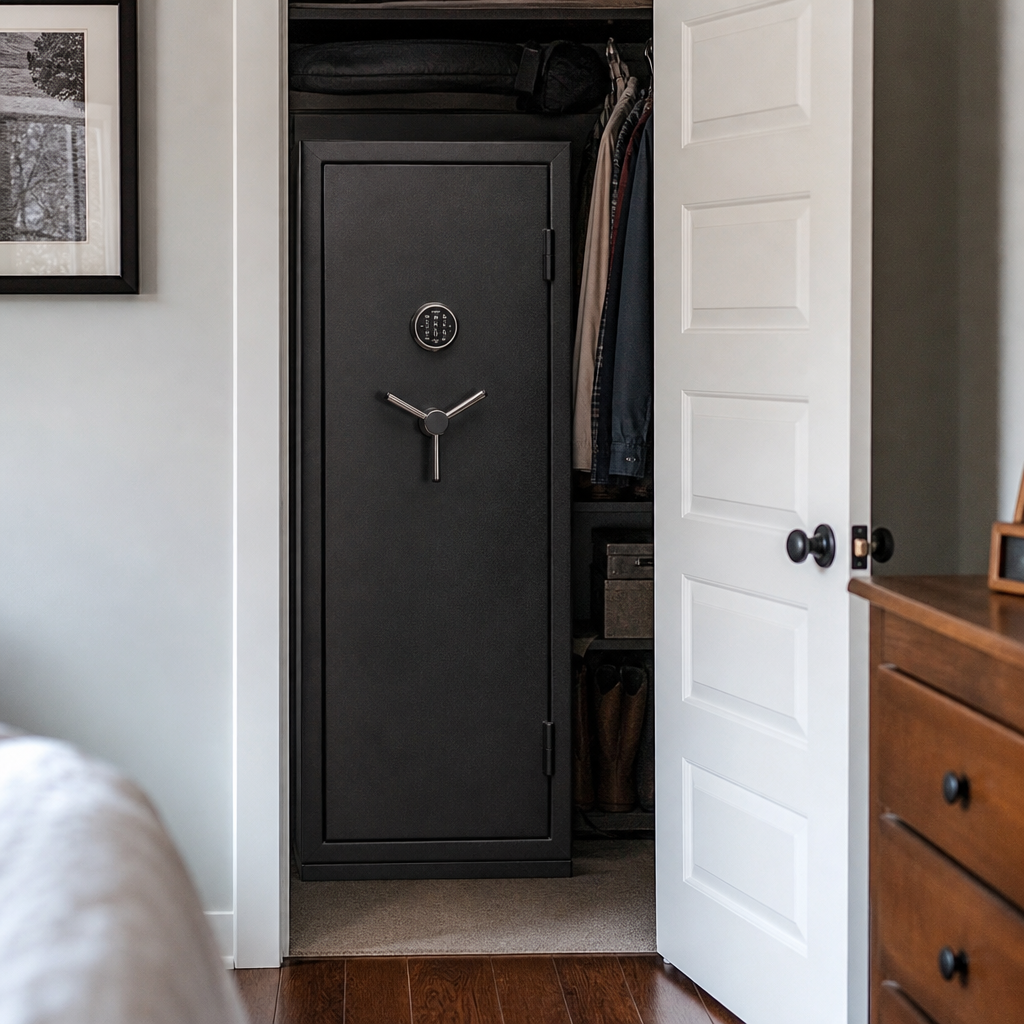
Gun safes often work better when placed in a closet, but only when the closet improves concealment, anchoring options, climate control, and daily access without creating moisture, clearance, or code problems. That answer matters because many owners assume a hidden safe is automatically a secure safe, and in practice I have seen closet installations range from excellent to disastrous. The difference comes down to how safes resist theft, fire, unauthorized access, and environmental damage in the specific room where they sit.
A gun safe is a locking security container designed to delay forced entry and restrict access to firearms. In the consumer market, that category spans thin steel residential security containers, heavier composite safes with fire liners, and specialty cabinets meant primarily for organization. Closet placement means installing the safe inside a bedroom, hallway, utility, or walk-in closet rather than leaving it exposed in a garage, office, or open room. Better does not mean invisible alone. Better means the safe performs more effectively across the risks that matter most: burglary, misuse by children, corrosion, and practical readiness.
This topic sits at the center of gun safe myths and misconceptions because placement is one of the most misunderstood factors in safe performance. Buyers spend heavily on gauge thickness, fire ratings, and lock types, then treat location as an afterthought. That is backwards. A midrange safe, anchored correctly in a suitable closet on a stable floor, will usually outperform the same safe left unbolted in a visible room or damp garage. At the same time, a poor closet can make a good safe worse by trapping humidity, limiting door swing, weakening floor support, or blocking emergency access.
In homes I have evaluated, the best closet installations combine concealment with structure. They place the safe against an interior wall, bolt it into concrete or reinforced wood framing, preserve enough clearance for shelving and long-gun access, and add a dehumidifier rod or desiccant. The worst installations hide the safe behind clothes but leave it unsecured, packed into carpet padding, or exposed to condensation from adjacent bathrooms or HVAC equipment. Understanding what closet placement can and cannot do helps owners make choices based on real risk instead of common myths.
Why closet placement can improve gun safe performance
A closet can improve gun safe performance for four practical reasons. First, it reduces visibility. Most residential burglaries are quick, and thieves usually search for cash, jewelry, electronics, and firearms that are easy to spot and remove. A safe that is not visible from entry points or common rooms is less likely to become a primary target during a short break-in. Concealment is not a substitute for steel and anchoring, but it often buys time by preventing immediate discovery.
Second, closets can offer better anchoring geometry than many open living spaces. A safe performs best when bolted to a concrete slab or through a subfloor into joists, and ideally positioned near wall studs to limit pry-bar access around the sides. Closets often let installers push the safe tightly into a corner or recess. That matters because pry attacks need working room. If the hinge side and one body side are constrained by walls, the attacker has fewer angles and less leverage.
Third, interior closets usually provide a more stable environment than garages, sheds, or exterior-facing rooms. Firearms and optics dislike humidity swings. Blued steel rusts, wood stocks swell, and electronics inside red dots or weapon lights can corrode at battery contacts. Closets located within conditioned living space tend to avoid the heat spikes of attics and the dampness common in basements and garages. With a GoldenRod-style heater, silica gel, or an active dehumidifier, a closet can become a very good microclimate for firearm storage.
Fourth, closets can support layered security. A safe inside a locked bedroom, behind a solid-core closet door, and monitored by a door contact or motion sensor adds delay and detection before anyone reaches the safe itself. That layered approach is recommended by physical security professionals because no residential safe is impenetrable. The goal is to increase time, noise, and risk for an intruder while limiting unauthorized access inside the home.
Common myths about gun safes in closets
The biggest myth is that hidden equals secure. Concealment helps, but thieves who know the home owner has guns may search closets first. Bedroom closets are predictable locations. If the safe is small enough to carry and not anchored, concealment merely delays theft by a few minutes. I have seen compact safes taken whole from closet floors because the owner relied on camouflage rather than bolts.
Another myth is that any closet is automatically safer than a garage. Sometimes it is, sometimes it is not. A dry interior closet is usually superior, but a cramped closet over weak framing, beside a steamy bathroom, or under a roof valley prone to leaks may be worse than a climate-controlled interior room with better structure. The correct question is not closet versus non-closet. It is whether the specific location supports security, moisture control, and access.
A third myth is that fire protection improves simply because the safe is indoors. Fire dynamics are more complicated. Interior placement can reduce direct exposure to exterior heat and water intrusion, but closets contain fuel loads such as clothing, cardboard, and linens. Those materials can intensify local heat. Consumer fire ratings also vary widely. Some manufacturers test to proprietary standards, while better-known benchmarks include UL classifications for burglary devices and ETL or manufacturer fire tests. Owners should read rating details, not assume a closet compensates for a weak fire design.
The fourth myth is that a closet installation is always more discreet for family use. In real homes, a master bedroom closet may actually increase unauthorized exposure because children, guests, cleaners, or contractors often pass through bedrooms and storage areas during daily life. A dedicated utility closet with controlled access may be better than the obvious clothes closet in the primary bedroom.
How to evaluate whether a closet is the right location
The best way to evaluate a closet is to score it against structure, humidity, concealment, access, and clearance. Structure comes first. Many full-size gun safes weigh from 300 to over 1,000 pounds before firearms and ammunition. On wood-framed floors, weight distribution matters. A safe placed perpendicular across multiple joists near a load-bearing wall is generally better than a heavy point load in the middle of a span. If the safe is especially heavy, consult a contractor or structural engineer. Concrete slabs are usually the easiest foundation for anchoring.
Humidity comes next. Closets on exterior walls, near bathrooms, in basements, or around HVAC condensate lines need extra scrutiny. Use a hygrometer and monitor relative humidity for at least several days. A target around 45 to 50 percent relative humidity is a practical range for firearm storage in most homes. Higher levels increase corrosion risk, while extremely low levels can dry wood components. If readings drift upward, plan for desiccant, a heater rod, weatherstripping review, or a different location.
Clearance is the factor buyers underestimate most. A gun safe door needs full swing for shelf access, rifle removal, and keypad use. Interior shelves, door organizers, and long barrels all require maneuvering room. Measure not just the footprint but the diagonal path through the house, closet door width, baseboards, trim, and final open-door angle. Several installations fail because the safe fits the closet but cannot open enough to retrieve a scoped rifle without banging walls or shelving.
| Evaluation factor | What to check | Why it matters |
|---|---|---|
| Anchoring surface | Concrete slab, joist direction, stud access, bolt spacing | Prevents tip-over and whole-safe theft |
| Humidity | Hygrometer readings, exterior wall contact, nearby plumbing | Reduces rust, mold, and stock damage |
| Door clearance | Safe door swing, closet door removal, shelf interference | Ensures practical daily use |
| Concealment | Visibility from hallways, windows, service entries | Lowers chance of quick discovery |
| Access speed | Walking path, lighting, keypad reach, alarm delay | Balances security with readiness |
Where closet placement falls short
Closet placement has clear limitations. The first is access speed. If the safe stores a defensive firearm, every extra barrier matters in a high-stress event. Walking to a closet, opening one or two doors, turning on a light, and then opening the safe may be too slow for some households. For that reason, many owners separate long-term storage from quick-access storage. They keep the main collection in a closet-installed safe and use a dedicated handgun safe on a nightstand or secured furniture for immediate defensive access.
The second limitation is moisture accumulation. Closets can become stagnant air pockets, especially when packed tightly with clothing. In several inspections, I found rust beginning on shotgun magazine caps and scope rings because the owner assumed interior placement was enough and never monitored humidity. Moisture control inside the safe matters as much as the room itself. Heater rods work by slightly warming the air to reduce condensation, while rechargeable desiccants absorb ambient moisture. Both are inexpensive compared with refinishing a rusted firearm.
The third limitation is installation difficulty. Moving a 700-pound safe into a second-floor closet is not a casual DIY task. Professional movers use stair-climbing dollies, lift gates, pallet jacks, and floor protection, and even then the route may be impossible without removing trim or doors. Improper moves damage floors, walls, and backs. If the safe cannot be installed safely and anchored properly, the closet is the wrong location.
The fourth limitation is false confidence. Some owners believe a closet safe is hidden enough that alarms, cameras, and inventory records are optional. That is a serious mistake. Physical security works best in layers: hardened entry points, monitored alarms, cameras, exterior lighting, concealed storage, robust anchoring, and documented serial numbers. A closet improves one layer. It does not replace the others.
Best practices for a closet gun safe installation
If a closet is the chosen location, anchor the safe first. Use the manufacturer’s anchor points and hardware appropriate for the surface, such as wedge anchors for concrete or lag bolts through a reinforced subfloor into joists where permitted by the safe maker. Bolting the rear of the safe into wall studs can supplement floor anchoring, but it should not be the only method unless the safe is specifically designed for that arrangement. Follow torque guidance and verify there is no hidden plumbing, wiring, or radiant heat tubing before drilling.
Control the environment next. Add a hygrometer inside the safe, not just in the room. If humidity trends above 50 percent, install a low-watt dehumidifier rod or use silica canisters that change color when saturated. Keep firearms lightly protected with appropriate corrosion inhibitors, especially blued steel and older walnut-stocked guns. Avoid storing wet cases, foam inserts, or recently cleaned guns that still carry solvent moisture. In my experience, routine humidity monitoring prevents more avoidable damage than any other maintenance habit.
Then improve concealment without compromising function. A closet safe should not be blocked by heavy bins, laundry, or unstable shelving. Concealment should be visual, not obstructive. Consider a solid-core closet door with a quality latch, motion-activated lighting inside, and a contact sensor tied to the home security system. If the safe uses an electronic lock, replace the battery on a schedule and learn the manual override or key bypass policy from the manufacturer. Mechanical dial locks remain highly durable, though slower for frequent use.
Finally, match the safe to the mission. A fire-rated long-gun safe in a walk-in closet serves differently than a compact handgun safe in a linen closet. Choose dimensions that allow future growth, optics clearance, and shelf flexibility. Many owners outgrow advertised gun counts because manufacturers count bare rifles packed tightly without slings, bipods, or scopes. Buying a safe rated for more guns than you currently own is usually the practical move.
The verdict on closet placement and what owners should do next
So, do gun safes work better when placed in a closet? Usually yes, if the closet is dry, structurally sound, discreet, and compatible with full anchoring and normal use. Closet placement improves concealment, often improves environmental stability, and can reduce pry access when the safe is positioned correctly. Those gains are real, and they explain why many well-planned residential installations use interior closets as the primary location.
But closet placement is not magic. It does not make a light safe heavy, a weak lock strong, or a humid room dry. It can also create problems with access speed, floor loading, and cramped door swing. The smartest approach is to treat the closet as one part of a layered storage system rather than the whole solution. Evaluate the exact space, anchor the safe properly, monitor humidity, and build around how the firearms will actually be used and protected.
For owners exploring gun safe myths and misconceptions, this is the key takeaway: placement matters as much as many hardware features, but only when matched to real conditions. Review your current location, measure clearance, check humidity, and inspect anchoring this week. If your safe is visible, unbolted, or sitting in a damp area, moving it to the right closet could be one of the most effective upgrades you make.
Frequently Asked Questions
Do gun safes actually work better when placed in a closet?
Often, yes, but only if the closet improves the overall installation rather than just hiding the safe. A closet can make a gun safe less visible to guests, service workers, or a burglar moving quickly through the home. That extra concealment matters because most residential theft is opportunistic and time-sensitive. If a thief never sees the safe, they may never attempt to attack it. A closet can also provide nearby wall framing and floor structure that make anchoring easier, which is one of the biggest factors in real-world security. A properly bolted safe is far harder to tip, pry, or remove than one sitting loose in an open room.
That said, a closet does not automatically make a safe more secure. Some closet installations create new problems, such as poor door swing clearance, difficult access in an emergency, weak flooring, or trapped humidity that can damage firearms over time. In some homes, a tight closet can even make it harder to anchor the safe correctly or inspect it for moisture and maintenance issues. The best way to think about it is this: a closet can improve a gun safe when it adds concealment, support, and convenience without compromising access, structural stability, or climate control. If it only hides the safe but introduces moisture, code concerns, or awkward use, then it may actually make the setup worse.
What are the biggest advantages of installing a gun safe in a closet?
The biggest advantage is concealment. A safe placed in a closet is naturally less visible than one installed in a bedroom corner, garage, or office wall. That reduced visibility lowers the chance that a visitor or intruder will notice it, and that alone can be a meaningful security benefit. Closets can also make a room look more ordinary and less like a storage area for valuables. In security planning, avoiding attention is often just as important as resisting attack.
Another major benefit is the potential for better anchoring. Many closets are located along interior walls where you may have easier access to studs, concrete, or solid subflooring suitable for bolting down a safe. Anchoring is critical because even a heavy safe can be tipped or moved with enough leverage if it is not secured. A closet can also limit side access, which may reduce the room available for pry attacks. In practical terms, a safe tucked into a closet corner and bolted properly can be significantly harder to attack than the same safe sitting exposed in an open area.
Closets can also improve day-to-day ownership. If the location is convenient, a closet safe may be easier to access without advertising its presence to everyone in the home. It can offer a more controlled indoor environment than a garage, shed, or basement, which helps protect firearms, optics, and important documents from extreme temperature swings. For many owners, that combination of privacy, indoor climate, and physical support makes the closet one of the better placement options. The key is making sure those advantages are real in your specific house, not just assumed.
What problems can happen when a gun safe is placed in a closet?
The most common problem is moisture. Closets, especially those on exterior walls or in older homes, can trap humidity with very little airflow. That creates a hidden environment where rust, corrosion, mildew, and wood stock damage can develop slowly without being noticed until it becomes serious. A safe placed in a damp closet may need a dehumidifier rod, desiccant, better ventilation, or a different location entirely. Owners sometimes focus so much on hiding the safe that they overlook the environmental risk, and firearms usually pay the price for that mistake.
Another issue is clearance and usability. Some closet openings are simply too narrow for safe delivery, proper door swing, shelf access, or comfortable use. A safe door may open fully in the room but not inside the closet, or interior drawers and long-gun racks may become awkward to reach. That may sound minor, but poor access can cause owners to leave the safe unlocked temporarily, delay routine storage, or avoid using it consistently. In an emergency, a cramped closet can also slow retrieval when seconds matter.
Structural and code-related concerns also matter. Not every closet floor is ideal for a heavy safe, especially on upper stories. Concentrated weight can exceed what the floor comfortably supports if the safe is large and fully loaded with firearms, ammunition, and documents. There can also be issues with blocking egress, interfering with closet doors, or violating local requirements in certain multifamily properties or specialty builds. Finally, some closets are poor security locations because they offer no good way to bolt the safe down. A hidden safe that is not anchored and sits in a damp, cramped space is not a strong installation just because it is out of sight.
How do you know if a closet is a good location for anchoring and protecting a gun safe?
Start by evaluating the floor and surrounding structure. A good closet location should have a stable surface and a realistic path for anchoring the safe into solid material, such as concrete or strong wood framing. The best installation is usually one where the safe can be bolted through the base into a reliable substrate and, if appropriate, positioned near walls that reduce access to the sides and back. You also want to consider the total loaded weight, not just the empty safe weight. Firearms, ammo, magazines, documents, and accessories add up quickly, and that load needs to be supported safely.
Next, assess climate and airflow. The ideal closet is in a conditioned part of the home, away from recurring dampness, roof leaks, plumbing lines, and major exterior temperature swings. If the closet shares an exterior wall, inspect carefully for condensation risk. A hygrometer inside the safe and basic humidity control are smart additions in almost any closet installation. It is much easier to prevent moisture than to reverse rust damage later.
Finally, test the location for practical access. Confirm that the safe can be delivered into the space, the door can open enough for real use, and you can reach shelves, long guns, and lock controls comfortably. Think through both routine storage and urgent access. You should also check whether the closet placement interferes with doors, trim, lighting, or household movement. A good closet installation balances four things at once: concealment, anchoring, environmental protection, and daily usability. If one of those fails badly, the closet may not be the right spot after all.
What is the best way to set up a gun safe in a closet without creating security or moisture issues?
The best setup starts with choosing the right closet, not forcing the safe into the nearest empty one. Pick a closet in a climate-controlled part of the home with a solid floor, enough clearance for delivery and full door operation, and a layout that supports anchoring. Once the location is confirmed, bolt the safe down according to the manufacturer’s instructions and the construction conditions in the home. If you are installing on wood framing or an upper floor, it is wise to verify load support and anchoring strategy before the safe is filled. Security improves dramatically when the safe is both concealed and physically secured against removal or tipping.
Then address moisture proactively. Install a dehumidifier rod or use desiccant, monitor humidity inside the safe, and avoid packing the closet so tightly that air cannot circulate at all. Keep the safe away from known damp walls, water lines, or areas with seasonal condensation. If the closet tends to run humid, solve that problem first rather than assuming the safe will protect its contents from every environmental issue. Most residential gun safes are not airtight vaults, and they should not be treated as moisture-proof enclosures.
Finally, preserve access and safe operation. Make sure the closet door, the safe door, interior shelves, and locking system all work comfortably in real use. Add lighting if needed so you are not handling firearms in a dark, cramped space. Keep the area organized enough that you can open and use the safe without obstruction. If fast access is part of your goal, rehearse how the setup works under normal conditions rather than just admiring how hidden it looks. A closet gun safe works best when it is not only harder for the wrong person to find and remove, but also easy for the right person to use safely and consistently.