
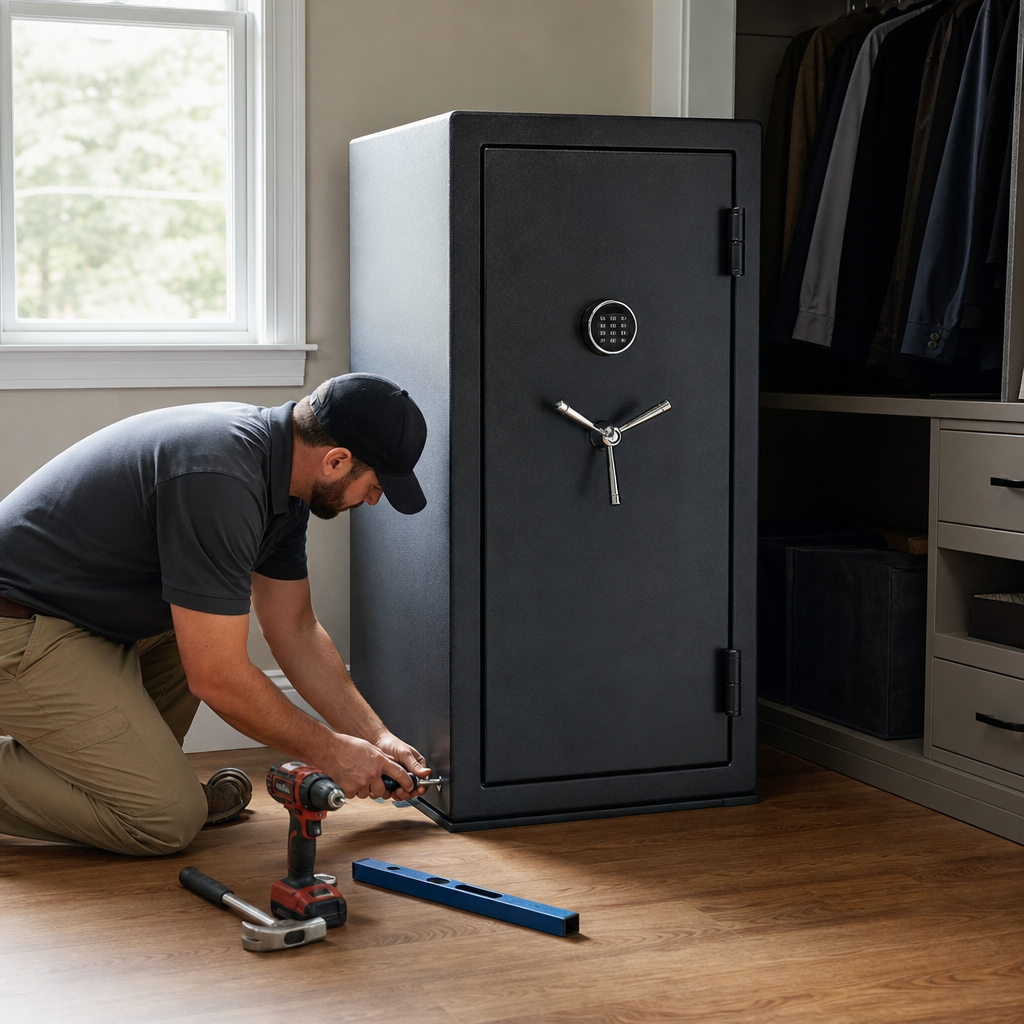
Does a gun safe need professional installation to be secure? Usually, no—but the right answer depends on the safe’s weight, anchoring method, floor structure, location, and the level of theft resistance and child safety you actually need. I have helped homeowners place, anchor, and troubleshoot gun safes in garages, closets, basements, and upstairs rooms, and the biggest misconception I see is treating installation as an all-or-nothing decision. Security is not created by delivery alone. It comes from matching the safe, the site, and the anchoring plan to real risks.
In practical terms, professional installation means a dealer, locksmith, safe company, or specialized mover delivers the safe, places it in the intended room, levels it, and often anchors it to concrete or wood framing. Secure means the safe resists unauthorized access, tipping, and removal long enough to deter common theft attempts while also supporting responsible firearm storage. That includes preventing children, guests, and opportunistic burglars from gaining access, and reducing the chance that thieves can simply cart the entire safe away to open later with more time and better tools.
This matters because many gun owners overestimate what the word safe guarantees. A Residential Security Container, or RSC, is not the same thing as a commercial burglary safe, and a heavy safe sitting loose on a slab can still be vulnerable if attackers bring pry bars, appliance dollies, or a pickup truck. At the same time, paying for installation does not automatically make a mediocre setup secure. A badly chosen location, weak anchors, poor humidity control, or visible placement near the front door can cancel out the benefit of professional labor.
As a hub for Gun Safe Myths & Misconceptions, this guide answers the questions people ask most: Is weight alone enough? Do you always need a pro? Can a safe go upstairs? Is bolting mandatory? Does fire rating equal burglary protection? The short version is simple. Professional installation is often the safest and most efficient option for large safes, difficult sites, and liability-sensitive households, but many safes can be made highly secure with careful planning, proper anchors, and a realistic understanding of what the container can and cannot do.
What actually makes a gun safe secure
A gun safe is secure when it addresses the most likely threats for your home. In my experience, those threats usually fall into four categories: unauthorized household access, smash-and-grab burglary, forced removal of the entire safe, and environmental damage such as moisture. Professional installation mainly helps with the third risk and, to a lesser extent, with safe placement and door clearance. It does not upgrade thin steel into thick steel, and it does not turn a poor lock into a superior one.
Start with construction. Many consumer gun safes sold through big-box stores are RSCs tested under UL 1037, which is a meaningful but limited standard. They are designed to resist a short attack using common hand tools, not a prolonged professional burglary. Better security comes from thicker body steel, reinforced door edges, hard plates protecting the lock, relockers, internal hinges that limit pry points, and anchor holes positioned for solid mounting. If you compare two safes of the same size, the one with 10-gauge steel and a stronger boltwork system is usually more secure than the heavier model that adds drywall for fire lining but keeps thinner exterior steel.
Placement matters just as much. A safe tucked into a corner, closet recess, or alcove is harder to attack because thieves cannot easily access the sides for prying. A safe that opens outward with full door swing but sits against two walls reduces leverage points and limits tool access. I have seen modest safes become significantly harder targets simply because they were anchored into concrete in a corner behind a lockable utility room door. By contrast, an expensive safe displayed prominently in a garage near the vehicle bay gives burglars space, visibility, and a straight path for removal.
Anchoring is the decisive factor in many homes. A free-standing safe, even one weighing 600 to 900 pounds, can sometimes be tipped, slid onto pipes, or moved with lifting straps and a heavy dolly by two or three determined people. Once the safe is on its back, prying the door can become easier because body weight can be used against the bar. Bolting the unit down to a concrete slab or properly reinforced wood floor sharply raises the time, noise, and tools required. That is real security, whether the bolts were installed by a pro or by a careful owner following manufacturer instructions.
When professional installation is worth it
Professional installation becomes worth the cost when the safe is very heavy, the route is complicated, or the anchoring conditions require judgment. In most homes, that means safes above roughly 700 pounds, stair carries, tight turns, finished floors, and any location where a mistake could injure people or damage structure. Safe movers use stair-climbing dollies, pallet jacks, lift gates, pry bars, and cribbing methods that most homeowners do not have. More important, they know how to control the center of gravity of a top-heavy safe, which is where many DIY attempts go wrong.
There is also a liability and warranty angle. Some manufacturers and dealers require professional delivery for very large models, especially if the customer wants placement beyond the garage or wants anchoring included. If the safe damages tile, gouges hardwood, breaks a stair tread, or injures a helper during self-install, those costs can quickly exceed the delivery fee. I have seen one cracked stone threshold and one ruined oak staircase erase the savings of skipping installation. For many buyers, paying a professional is not about laziness; it is about risk transfer and predictable results.
Professional installation is especially valuable on concrete anchoring jobs where moisture barriers, post-tension slabs, radiant heat tubing, or finished flooring complicate the work. In newer homes, blindly drilling into a slab without confirming what is beneath can be a costly error. In wood-frame rooms, installers may identify joist direction, subfloor thickness, and whether added blocking is needed. They can also advise on shim materials, level the safe so the door seals correctly, and ensure dehumidifier cords or lighting pass-throughs are not pinched.
| Scenario | DIY usually works | Professional installation advised |
|---|---|---|
| Safe size and weight | Small to mid-size, commonly under 500 pounds | Large, tall, or top-heavy units over about 700 pounds |
| Location | Ground floor with direct access | Basement stairs, upstairs rooms, narrow landings |
| Anchoring surface | Accessible concrete slab with clear drill points | Post-tension slab, radiant floor, uncertain framing |
| Tools and skills | Rotary hammer, anchors, moving equipment, helpers | No safe-moving gear or no anchoring experience |
| Risk tolerance | Comfortable accepting minor finish damage risk | Need insured delivery and reduced liability |
A pro does not make every safe secure, but a skilled installer often prevents the avoidable failures that matter most: poor location, weak anchoring, unsafe stair moves, and preventable floor damage. If any of those variables are uncertain, professional help is usually money well spent.
Common myths about gun safe installation and security
The first myth is that a heavy safe does not need to be bolted down. Weight helps, but it is not a substitute for anchoring. Thieves routinely use leverage, dollies, and teamwork. A 700-pound object sounds immovable until it is tipped onto a hand truck with ratchet straps. Once moved into a garage or onto a trailer, the attack environment shifts in the thief’s favor. Bolting the safe to concrete or structural framing is one of the most effective steps a homeowner can take.
The second myth is that professional installation automatically means maximum security. Some installers simply place the safe where the customer points and do not discuss line-of-sight exposure, moisture, or pry clearance. Security depends on decisions, not just labor. If the safe is visible through an open garage door, sits on a weak raised platform, or cannot be anchored because the owner chose a decorative spot over a structural one, the final setup may still be poor.
The third myth is that fire rating tells you how secure the safe is against theft. Fire protection and burglary resistance are separate design priorities. Many gun safes boost fire performance with gypsum-based insulation and door seals, which can add weight without adding much resistance to pry tools. A buyer who sees a high fire-minute claim may assume the safe is equally robust against forced entry. That is often false. Evaluate steel thickness, lock protection, and boltwork separately from fire numbers.
A fourth myth is that any lock type is fine because the steel matters most. In reality, lock quality, user behavior, and maintenance all affect security. Electronic locks can be very reliable when sourced from reputable makers and kept on fresh batteries, but bargain keypad locks fail more often and tempt users into weak codes. Mechanical dial locks avoid battery issues and can last decades, yet they are slower for defensive access. Biometric options vary widely and should be judged by false reject rate, override design, and audit features, not marketing language alone.
Another common misconception is that a safe upstairs is always unsafe. The truth is more nuanced. Many modern homes can support a mid-size safe if the load is distributed across joists and placed near a load-bearing wall, but the structure must be evaluated. The International Residential Code sets standard live-load assumptions, yet a concentrated load from a safe can exceed what a small footprint should place on unsupported spans. Professional advice from the dealer, builder, or an engineer is prudent when the safe is large or the floor system is uncertain.
How to decide between DIY and professional installation
If you are choosing between self-installation and hiring a pro, answer five questions in order. First, how much does the safe weigh empty, and how top-heavy is it with the door installed? Second, what is the route from curb to final location, including stairs, thresholds, and turns? Third, what will you anchor into: slab, joists, or masonry? Fourth, do you have the right tools: appliance dolly rated for the load, straps, pry bars, plywood sheets, shims, rotary hammer, bits, anchors, and torque tools? Fifth, what happens if something goes wrong?
For a straightforward ground-floor install on a slab, many owners can do the job safely with planning. Remove interior shelves to reduce weight, protect floors with plywood, keep the safe strapped to the dolly, and never let the unit free-stand on a slope or threshold where it can get away from you. Use manufacturer-specified wedge anchors for concrete or properly sized lag screws or through-bolts into structure for wood, and confirm door swing before drilling. After anchoring, test that the safe sits flat without rocking and that the door opens and locks smoothly.
DIY becomes a poor choice when helpers are inexperienced, the path includes stairs, or you are guessing about structure. One near-tip event is enough to understand why. Safes carry their mass high and forward when the door is open, and fingers, feet, and backs lose against steel every time. If you are unsure whether your floor system can support the load, whether your slab contains post-tension cables, or whether your chosen anchors are appropriate, stop and bring in qualified help. Security improves when the installation is correct, not merely cheaper.
Best practices that matter more than who installs the safe
Whether you hire a professional or do it yourself, the biggest gains come from a handful of best practices. Choose a discreet location away from obvious sight lines. Anchor the safe properly. Use a quality lock from a recognized manufacturer such as Sargent and Greenleaf or SecuRam. Control humidity with a desiccant or an electric dehumidifier rod, especially in basements and garages. Store keys, override keys, and combinations securely and never inside nearby drawers. Most important, practice consistent access discipline so the safe is not left open during routine handling.
Layered security also matters. Alarm contacts on the safe room or motion sensors in the area can shorten the time thieves have to work. Camera coverage aimed at the approach path, not just the safe door, helps with deterrence and evidence. In some homes, a reinforced closet door or a locked utility room meaningfully increases delay. These measures are often more valuable than spending the same money on cosmetic safe upgrades. The goal is not only to make entry difficult but also to reduce discovery, increase noise, and compress the burglar’s timeline.
Finally, match expectations to the product. A gun safe is a critical part of responsible firearm storage, but it is one layer in a broader safety plan that includes ammunition management, child access prevention, inventory records, and insurance documentation. If you are building your setup under the broader Gun Safes & Safety topic, use this page as the hub for deeper questions about fire ratings, lock types, anchoring methods, safe placement, and moisture control. The main takeaway is clear: professional installation can improve safety and execution, but true security comes from sound placement, solid anchoring, realistic expectations, and disciplined use. Assess your space, identify your risks, and choose the installation method that produces the strongest overall setup for your home.
Frequently Asked Questions
Does a gun safe need professional installation to be truly secure?
Not always. In many homes, a gun safe can be secure without professional installation if it is the right size for the space, placed on a suitable surface, and properly anchored. The key point is that security does not come from delivery or setup alone. It comes from how well the safe resists tipping, prying, unauthorized access, and quick removal from the home. A heavy safe sitting loose on a floor may look secure, but if it is not anchored, thieves can sometimes tip it, pry at weak points, or even remove it with enough time and leverage. On the other hand, a modestly sized safe that is correctly installed in a tight location and bolted to a solid structure can offer much better real-world protection.
Professional installation becomes more valuable when the safe is extremely heavy, the path into the home is difficult, the floor structure is questionable, or the owner wants the safe integrated into a specific security plan. For example, navigating stairs, placing a safe in an upstairs room, or anchoring into concrete or post-tension slabs can raise enough risk that expert help is worth it. If your main goal is child safety and basic unauthorized access prevention, careful DIY placement and anchoring may be enough. If your goal includes meaningful theft resistance against determined intruders, then installation details matter more, and professional help may improve both safety and performance.
When is professional installation a smart idea even if it is not strictly required?
Professional installation is a smart idea when the safe’s weight, location, or anchoring method creates risk that goes beyond ordinary DIY work. One common example is a very heavy safe that has to move through narrow hallways, around tight corners, or up or down stairs. In those situations, the issue is not just convenience. It is preventing injuries, damage to the home, and damage to the safe itself. A safe that is dropped, twisted, or dragged carelessly can harm flooring, crack tile, damage stair treads, or even affect door alignment and locking performance.
Another situation where professional installation makes sense is when the floor structure is uncertain. Concrete is usually straightforward, but wood-framed floors, older homes, and upper-story rooms require more thought. The installer may need to confirm where joists are, spread the load, or choose a location that minimizes structural stress. If the safe is going into a garage, basement, closet, or utility room, moisture control, uneven surfaces, and anchor compatibility can also matter. A pro may also help choose discreet placement that reduces visibility and limits access to pry tools. In short, professional installation is most useful when poor placement or poor anchoring could reduce security, create structural concerns, or make the safe less reliable over time.
Is anchoring more important than who installs the safe?
In many cases, yes. Proper anchoring is often more important than whether the work is done by a professional or a capable homeowner. A gun safe that is not anchored is generally easier to tip, shift, pry against, or remove entirely. Even a heavy safe can become vulnerable if thieves can lay it on its back or side and attack weaker areas with leverage. Anchoring helps the safe behave like part of the structure rather than a movable object. That single difference can significantly improve theft resistance and stability, especially in homes with children.
That said, anchoring only helps if it is done correctly and to the right material. Bolting into solid concrete is different from bolting into thin subflooring. Anchoring a safe to wood framing requires proper hardware, correct bolt locations, and confidence that you are tying into structural members where appropriate. The goal is not just to drill holes and tighten bolts. The goal is to create resistance against movement, tip-over, and forced repositioning without damaging the floor system or weakening the installation. So while professional installation is not automatically necessary, a poor anchor job can give a false sense of security. If you are unsure about the floor type, anchor points, or hardware, that is exactly where expert help can be valuable.
Can I safely install a gun safe upstairs, in a closet, or in a garage by myself?
Possibly, but each of those locations has its own challenges, and that is where many homeowners underestimate the installation decision. Upstairs placement raises questions about floor load, safe weight, and how the weight is distributed over time. A closet can be a good security location because it limits access and visibility, but closets are not automatically ideal if the floor is weak, the space prevents proper anchoring, or the door swing becomes restricted. Garages are practical for access and often easier for delivery, but they may expose the safe to humidity, temperature swings, and greater visibility if the garage door is open. Basements are often excellent structurally, especially with concrete, but moisture control is important there too.
If you are installing the safe yourself, the process should start with evaluating structure, access, and environment before the safe is moved into place. Confirm the floor can support the load, identify the exact anchor method, and make sure the location allows the door to open fully without exposing the safe unnecessarily. Also think about how a thief would interact with that location. Is there room to use pry bars? Is the safe hidden from casual view? Is it near a wall or in a corner that reduces attack angles? DIY installation can absolutely work in these spaces, but only when the placement is deliberate and the safe is not simply set wherever it fits. If the move is physically hazardous or the structural questions are unresolved, that is when professional installation becomes the safer choice.
What matters most for security besides installation?
Installation is only one part of making a gun safe secure. The safe itself, its lock quality, the location inside the home, and the habits of the owner all matter. A well-installed safe with thin steel and limited pry resistance may still underperform against theft. Likewise, a quality safe in a poor location may be attacked more easily than one tucked into a tight corner or concealed room. The best security comes from layers: choosing a safe with appropriate construction, placing it where it is hard to access and hard to see, anchoring it correctly, and controlling humidity and maintenance so the lock and door continue functioning properly.
Child safety also deserves separate attention. If the safe’s main purpose is preventing children or unauthorized guests from reaching firearms, then consistent locking practices, responsible key or code management, and fast but secure access methods are just as important as anchoring. Many failures happen because owners leave the safe unlocked temporarily, store backup keys poorly, or choose a code that is too easy to guess. For theft resistance, consider the larger home security picture as well: alarms, cameras, reinforced entry points, and keeping the safe out of obvious locations can all reduce risk. In practical terms, installation matters a lot, but it is not magic. A secure gun safe setup is the result of matching the safe, the floor, the location, and the owner’s real security goals rather than assuming professional delivery alone solves the problem.