
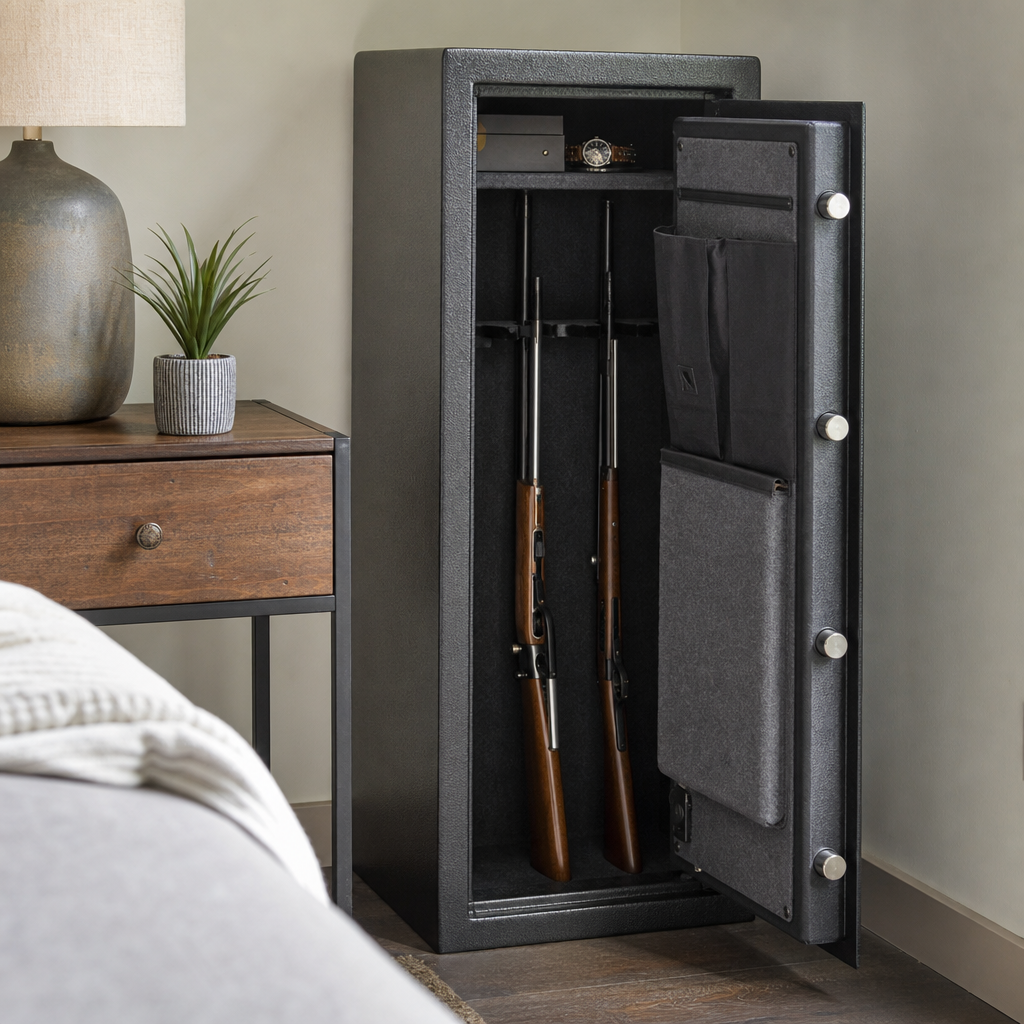
The idea that gun safes are only for large firearm collections persists because many people picture a heavy vault stuffed with dozens of rifles, not a practical security tool for a single handgun or one inherited shotgun. In real use, that assumption is wrong. A gun safe is any purpose-built secure storage solution designed to restrict unauthorized access, reduce theft risk, and help protect firearms from fire, moisture, and careless handling. It does not require a collector’s budget or a dedicated gun room. For first-time owners, apartment dwellers, parents, and people who keep one defensive firearm at home, a safe often matters more, not less, because a small number of guns are usually stored in multipurpose living spaces where children, guests, contractors, or burglars can reach them.
I have seen this firsthand when helping buyers choose storage after a first handgun purchase. Many started with the same belief: “I only own one gun, so I do not need a safe yet.” What changed their minds was not marketing. It was a practical review of how guns are actually accessed and misused in homes. According to reporting from the National Shooting Sports Foundation and public safety agencies, stolen firearms are a major source of crime guns, and unauthorized access by minors remains a recurring cause of preventable injury. Safe storage is not a collector issue. It is a risk-management issue. That is why this hub on gun safe myths and misconceptions matters. It addresses the mistaken beliefs that delay secure storage, clarifies what different safes really do, and helps readers navigate related questions on size, cost, speed, installation, and legal responsibility.
Several key terms frame the discussion. “Gun safe” often refers broadly to UL-rated or non-rated lockable containers for firearms, but the market includes full-size long-gun safes, handgun vaults, under-bed safes, modular cabinets, and lock boxes designed for vehicles or travel. “Safe storage” means keeping firearms inaccessible to unauthorized users, typically unloaded when appropriate, paired with separate ammunition storage depending on household needs and local law. “Residential Security Container,” or RSC, is a common rating under UL 1037 indicating a baseline level of attack resistance; it is not the same as a commercial high-security vault. Fire ratings, lock types, pry resistance, anchoring, and interior layout all vary widely. Understanding those distinctions is the foundation for separating myth from reality.
This article serves as the hub for the broader topic of gun safe myths and misconceptions. The core myth is that safes are only for people with large collections, but that belief connects to other bad assumptions: that trigger locks are enough, that a closet is hidden security, that biometric locks are unreliable toys, that a cheap cabinet offers the same protection as a tested safe, or that fire ratings are all marketing. Each misconception affects buying decisions. By breaking them down, this page helps readers choose the right storage for their actual household, not for an imagined collector lifestyle.
Why even one firearm justifies secure storage
If you own one firearm, you still face the full set of storage risks: unauthorized access, theft, negligent handling, and environmental damage. The number of guns does not change those categories. In many homes, a single pistol in a nightstand is more exposed than ten rifles locked in a basement safe. That is why the “only collectors need safes” claim fails immediately. Risk is driven by accessibility, household traffic, and threat exposure, not by collection size.
For homes with children, the case is straightforward. Curious minors do not care whether a house contains one gun or twenty. They care whether they can find and handle it. The same is true for teenagers’ friends, visiting relatives, or service workers left briefly unattended. A locked safe creates a physical barrier that removes casual access and slows determined access. Public health research has repeatedly linked secure firearm storage with lower rates of unintentional injuries and youth suicides. The exact study results vary by design, but the direction is consistent: reducing immediate access reduces harm.
Theft risk also makes small-owner complacency expensive. Burglars often spend only minutes inside a residence. They check dresser drawers, closets, under beds, and office spaces because those areas hold jewelry, cash, and unsecured handguns. A pistol in a soft case or shoebox is easy to grab and easy to sell. A bolted handgun safe, even a compact one, forces more time, more noise, and more tools. That obstacle changes outcomes. In practical security, delay is protection.
There is also a legal and insurance dimension. Some states impose child access prevention or safe storage requirements, especially when minors may gain access. After a theft or injury, the question becomes whether the owner used reasonable care. A modest safe is far easier to defend than an unlocked drawer. For insurance, documenting secure storage can support claims and show responsible ownership. One gun is enough to create serious liability, so one gun is enough to justify secure storage.
Common gun safe myths and what is actually true
The biggest misconception is cost. Many buyers imagine that a safe means spending several thousand dollars on a massive fire-lined unit. In reality, secure options start far lower. A quality handgun safe from brands such as Fort Knox, Vaultek, V-Line, Hornady, or SnapSafe can fit a bedside table, closet shelf, or vehicle mounting point. Full-size safes do cost more, but the market spans from basic steel cabinets to premium TL-rated vaults. The right question is not “Do I need a giant safe?” but “What level of protection matches my firearm, home, and threat profile?”
Another myth is that a trigger lock or cable lock makes a safe unnecessary. Locks supplied with firearms are useful secondary devices and may satisfy temporary transport or basic compliance needs, but they do not provide theft resistance, fire protection, or protection from parts removal and tampering. A cable-locked pistol can still be stolen easily. In homes with children, many experts treat cable locks as supplemental, not primary, storage.
A third myth is that hiding a gun is effectively the same as securing it. Owners say the handgun is “tucked away” in a closet, high shelf, or laundry room cabinet. Burglars know those locations. Children explore them. Hidden is not locked. Concealment without physical security is a convenience strategy, not a safety strategy.
Biometric skepticism deserves a more balanced view. Early fingerprint safes had inconsistent sensors, and some cheap models still do. But modern units using capacitive readers, better enrollment, and multi-user memory can be reliable if set up correctly and maintained with fresh batteries. The truth is not that biometric safes are bad; it is that poor-quality biometric safes are bad. The same applies to electronic keypads. A reputable lock body from Sargent and Greenleaf, SecuRam, or La Gard is not equivalent to an anonymous marketplace keypad with no documented testing.
Finally, many buyers think every “fireproof gun safe” delivers the same protection. Fire ratings vary by testing method, duration, temperature threshold, and whether the test is independently verified. Some ratings are based on internal company protocols rather than UL Class 350 or similar standards. That does not make them fake, but it does mean comparisons require scrutiny. Always ask how the rating was established, what temperature was reached, and whether the safe remained sealed during a drop test or structural failure event.
Choosing the right safe size, type, and lock for ordinary households
The practical answer for most non-collectors is not a one-size-fits-all safe. It is a storage method matched to the firearm type and use case. A homeowner with one defensive pistol often needs a quick-access handgun vault near the bed plus anchoring hardware. A person with one hunting rifle may be better served by a slim long-gun safe or locking cabinet in a climate-controlled room. Someone with both may want a compact vertical safe with a shelf for documents, spare magazines, and optics.
| Owner situation | Best-fit storage type | Main benefit | Main limitation |
|---|---|---|---|
| One bedside handgun | Quick-access handgun safe | Fast entry with controlled access | Limited fire protection and capacity |
| One or two hunting rifles | Slim long-gun safe or cabinet | Vertical storage with better organization | May need separate handgun solution |
| Apartment owner with mixed firearms | Compact modular safe | Moves more easily through stairs and tight halls | Usually higher cost per cubic foot |
| Family with children | Anchored safe with interior segregation | Access control and safer ammo management | Requires careful placement and training |
Capacity claims are another area where buyers get misled. A “24-gun safe” rarely holds twenty-four scoped rifles in usable fashion. Manufacturers often calculate capacity using bare long guns with minimal accessories. In the real world, pistol grips, bipods, optics, slings, and AR-pattern rifles consume much more space. My rule is simple: if you think you need space for four long guns, shop as if you need eight. This matters even for small owners because buying too small often leads to temporary unsecured overflow storage.
Lock choice should reflect access needs and tolerance for maintenance. Mechanical dial locks are durable and do not need batteries, but they are slower and less convenient in low light. Electronic keypads are fast and straightforward, though they require battery replacement and quality components. Biometric locks can be excellent for a primary user who enrolls multiple finger angles and tests routinely, but they should still include keypad or key backup. No lock type is perfect; the best one is the one you can open reliably under stress while keeping everyone else out.
What makes a safe effective: steel, anchoring, fire protection, and placement
People often focus on lock style because it is easy to see, but real safe performance depends heavily on the body, door, and installation. Steel thickness matters. Heavier-gauge steel resists prying and deformation better than thin sheet metal. Door construction, hard plates protecting the lock, relockers, reinforced door frames, and continuous welds all improve attack resistance. Marketing language such as “military style” means little without specific material details.
Anchoring is one of the most important and most ignored factors. A compact safe that is not bolted down can be carried away and attacked later with privacy and time. I have seen excellent handgun safes turned into temporary obstacles simply because they were left loose in closets. Bolting to concrete or solid framing transforms performance. It prevents smash-and-grab removal and makes pry attacks much harder. If you rent, look for landlord-approved locations, modular systems, or furniture-integrated units designed for discreet mounting.
Fire protection should be evaluated realistically. Fireboard insulation can protect contents during many residential fire events, but survival depends on burn time, peak temperature, room location, water exposure, and structural collapse. Paper chars at lower temperatures than steel is damaged, and optics, polymers, documents, and loaded ammunition all respond differently to heat. A 30-minute rating is better than none, but it is not a promise of total preservation in an intense whole-structure fire. If fire is a primary concern, place the safe on a lower level when flood risk is low, away from accelerants, and consider storing critical documents in a separate media or document-rated safe.
Placement balances access, concealment, humidity, and structure. Garages are convenient but can bring moisture swings that promote rust. Basements may offer cooler temperatures but can create flood concerns. Bedrooms are common for quick-access handgun storage, while closets can work well for compact long-gun safes if wall support and swing clearance are adequate. Add a dehumidifier rod or desiccant in humid climates, and inspect firearms regularly. A safe is a controlled environment only if you manage the environment inside it.
How this hub connects the wider gun safe myths and misconceptions topic
This page is the starting point for the broader subtopic because the “large collection” myth sits at the center of many others. Once a person believes safes are only for collectors, every weaker substitute becomes easier to justify. That is how people end up relying on dresser drawers, cable locks, closet shelves, or vague plans to “buy a real safe later.” The related articles under this hub should tackle those specific misconceptions one by one: whether gun cabinets are enough, whether biometric safes fail too often, whether fire ratings can be trusted, whether vehicles count as secure storage, whether ammo should be stored separately, and whether renters have practical options.
That hub structure matters because gun storage decisions are rarely made in one step. A new owner may first ask if a safe is necessary, then compare lock types, then question fire protection, then look for apartment-friendly installation methods. Searchers also ask direct questions that need direct answers: What is the best safe for one handgun? Is a nightstand safe secure? Are cheap gun safes worth it? How much fire rating do I need? Can I bolt a safe to wood? Can a child open a biometric safe? Each deserves a precise explanation, and each links naturally back to the main principle of this article: secure storage is about exposure and responsibility, not collection size.
For site architecture, this hub supports stronger navigation within the broader Gun Safes & Safety topic. Readers who arrive here with one myth can move into detailed guides on lock comparisons, fire ratings, placement, maintenance, and legal considerations. That progression mirrors how real buyers think. It also prevents oversimplified advice. For example, saying “buy the heaviest safe you can afford” ignores upstairs floor loads, rental restrictions, emergency access needs, and the reality that a well-anchored compact safe may outperform a large but poorly installed one for a single-gun owner.
The myth that gun safes are only for large firearm collections fails on every practical test. One firearm can be stolen, mishandled, found by a child, damaged by humidity, or used by an unauthorized person just as easily as a room full of guns. In many cases, the owner of a single handgun has a greater need for disciplined storage because that firearm is often kept close at hand in shared living space. Safe storage is not a luxury add-on for enthusiasts. It is a baseline part of responsible ownership.
The key takeaways are clear. First, buy storage based on risk, not collection size. Second, match the safe type to the firearm and access need, whether that means a quick-access handgun vault, a slim long-gun safe, or a compact modular unit. Third, judge products by steel, anchoring, lock quality, and credible fire information rather than by marketing claims alone. Fourth, remember that hidden is not secure, cable locks are supplemental, and installation quality often matters as much as the safe itself.
As the hub for gun safe myths and misconceptions, this article should help you ask better questions before you buy. Review the related guides in this subtopic, compare your household risks honestly, and choose the smallest safe that fully solves your real problem today with room for sensible growth tomorrow. If you own even one firearm, now is the right time to secure it properly.
Frequently Asked Questions
Do you need a gun safe if you only own one firearm?
Yes. A gun safe is not something reserved for collectors with a room full of rifles. Even if you own a single handgun for home defense or one shotgun for hunting, secure storage still matters. The core purpose of a gun safe is to prevent unauthorized access, reduce the chance of theft, and help protect the firearm from environmental damage such as humidity, dust, and in some cases fire. Those benefits apply whether you own one firearm or twenty.
For many households, the biggest concern is not the number of firearms but who else may be able to access them. Children, teens, guests, service workers, or even a burglar can all pose a risk if a firearm is left in a drawer, closet, nightstand, or under a bed. A properly selected safe creates a controlled barrier between the firearm and anyone who should not handle it. That alone makes it worthwhile for single-firearm owners.
It is also important to understand that responsible ownership is measured by safe handling and secure storage, not by collection size. A single unattended firearm can create the same safety issue as a larger collection if it is stored carelessly. In that sense, a safe is less a luxury item and more a basic security tool. Compact handgun safes, under-bed safes, and smaller long-gun cabinets make secure storage practical and affordable for people who own only one firearm.
Are gun safes too expensive for casual or first-time gun owners?
No. One reason this myth continues is that many people imagine a gun safe as a massive, premium vault that costs thousands of dollars. While those high-end options certainly exist, they are only one part of the market. Today, there are many smaller and more budget-friendly secure storage products designed specifically for first-time owners, apartment dwellers, and households with limited space. Depending on the firearm type and the level of protection you need, there are reliable options at a wide range of price points.
A casual owner with one handgun may not need a large freestanding safe with extensive fire ratings and room for future expansion. A well-built lockbox, bedside safe, or biometric handgun safe may be a more practical fit. Someone with a single shotgun or rifle can often find a slim vertical safe or compact locking cabinet that provides strong access control without requiring a major investment. The key is matching the safe to the firearm, the living situation, and the risks present in the home.
It also helps to think in terms of overall value rather than sticker price alone. The cost of secure storage is often small compared with the financial and personal consequences of theft, unauthorized access, accidental handling, or damage from moisture and fire. In many cases, spending a manageable amount on a quality safe is far less costly than replacing a stolen firearm or dealing with the aftermath of preventable misuse. For first-time owners especially, a safe should be seen as part of the total cost of responsible ownership, not as an optional accessory meant only for serious collectors.
What kinds of gun safes work best for small homes, apartments, or limited firearm ownership?
There is no single best option for everyone, but the good news is that secure storage comes in many sizes and formats. For people with small homes, apartments, or only one or two firearms, compact safes are often the best fit. Handgun owners frequently choose bedside safes, drawer safes, vehicle lockboxes, or small biometric units that allow quick authorized access while still blocking children, visitors, and thieves. These options are designed to be discreet and can often fit in tight spaces without taking over a room.
For owners of a single rifle or shotgun, slim-profile long-gun safes and locking cabinets are common choices. Some are narrow enough to fit in closets, corners, utility rooms, or under stair areas. Others are designed for under-bed storage, which can be especially useful in smaller living spaces where vertical room is limited. If protection from moisture or fire is a concern, it is worth looking for models that include weather sealing, interior lining, or published fire resistance information.
When choosing among these options, focus on practical features rather than marketing hype. Consider the locking method, the strength of the construction, whether the unit can be bolted down, how quickly you need access, and whether it fits your daily routine. A safe only works well if you will consistently use it. The best safe for a small household is usually one that balances access, security, size, and location in a way that supports safe habits every day.
Can a smaller gun safe really provide meaningful security and protection?
Yes, provided it is appropriately built and used correctly. A smaller safe does not automatically mean weak protection. In fact, for owners with one or two firearms, a compact purpose-built safe can be more effective than an oversized unit simply because it is easier to place properly, easier to use consistently, and better matched to the items being stored. The main goals are to restrict unauthorized access, slow down theft attempts, and protect the firearm from casual discovery or mishandling.
Meaningful security comes from a combination of factors. Construction quality matters, including the thickness of the steel, the strength of the locking mechanism, and whether the hinges and door design resist tampering. Installation also matters. A small safe that is bolted to a secure surface is usually far more protective than one that is left loose and can be carried away. Placement within the home can add another layer of security, especially when the unit is kept out of obvious sight and not advertised to visitors.
Protection is not limited to theft prevention. Many smaller safes also help guard against moisture exposure, dust, and careless contact, all of which can affect a firearm’s condition and safe handling over time. Some models include interior padding, desiccant compatibility, or fire-resistant features. While no safe should be viewed as invulnerable, a well-chosen smaller safe provides a substantial improvement over storing a firearm in a drawer, closet, or vehicle compartment. For most households, that practical increase in safety and control is exactly what matters.
Why does the myth persist that gun safes are only for large firearm collections?
The myth persists largely because of how gun safes are often portrayed in advertising, popular culture, and casual conversation. People tend to picture a large steel vault in a basement or dedicated gun room, usually owned by a collector with dozens of firearms. That image is memorable, but it is incomplete. It leaves out the much more common reality that many gun safes are compact, affordable, and designed for ordinary owners who simply want to store one firearm responsibly.
Another reason is that people often confuse the idea of a safe with the idea of a collection. They assume the safe exists primarily to organize and display a large number of valuable firearms, when in reality its primary purpose is security. Whether the firearm is a family heirloom, a home-defense handgun, or a hunting shotgun used a few times a year, the need for controlled access does not depend on quantity. One firearm can still be stolen, mishandled, or accessed by someone who should not have it.
The myth also survives because many new owners do not realize how broad the gun safe category really is. A gun safe can include a small lockbox, a quick-access handgun safe, an under-bed unit, a vertical long-gun safe, or a larger fire-rated cabinet. Once people understand that secure storage is available in practical sizes and price ranges, the assumption starts to fall apart. The more accurate view is simple: gun safes are not for large collections alone. They are for anyone who owns a firearm and wants to store it more safely, securely, and responsibly.