
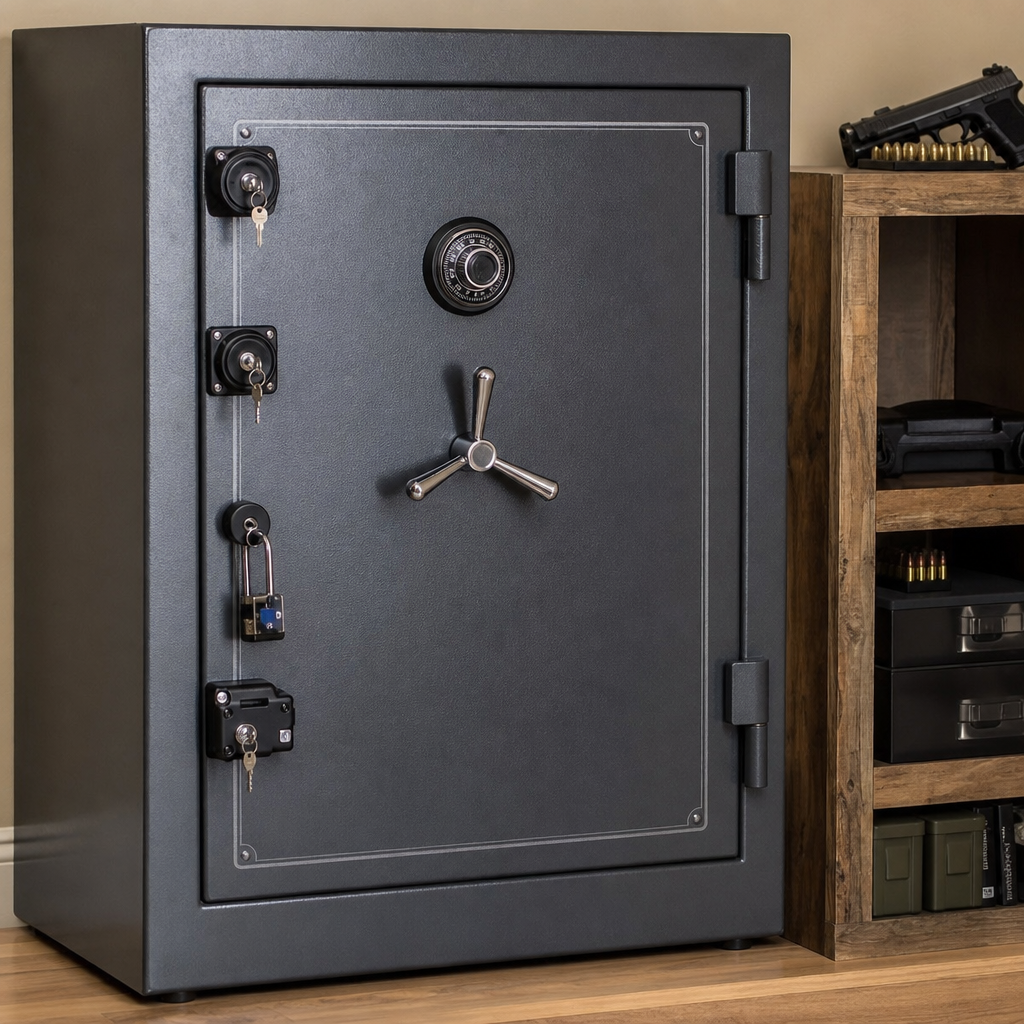
Adding extra locks can make a gun safe safer in some situations, but the idea is often misunderstood, and many owners spend money on hardware that adds inconvenience without meaningfully improving security. In the gun safes and safety category, few topics create more confusion than the belief that every additional lock automatically equals better protection. I have evaluated residential security containers, true safes, retrofit lock kits, relockers, door designs, and anchoring methods, and the pattern is consistent: security is a system, not a single feature. A gun safe’s resistance to theft, unauthorized access, fire, and accidental misuse depends on construction quality, lock design, installation, user habits, and the threat you are trying to stop.
To answer the question directly, “extra locks” can mean several different things. It may refer to adding a second electronic lock, replacing a standard lock with a biometric model, installing internal locking compartments, using external hasps, or choosing a door with multiple live locking bolts. Those are not equivalent upgrades. Some improve delay against casual attack; others create new failure points. This matters because gun owners often buy based on marketing claims such as military-style locking bars, more bolts, or dual-access controls without understanding how burglary resistance is actually measured. Standards from Underwriters Laboratories, construction details like steel gauge and hardplate placement, and practical issues such as battery failure matter far more than lock count alone.
This article serves as a hub for gun safe myths and misconceptions, with extra locks as the central question. It also addresses common assumptions about fire ratings, weight, bolt count, biometric speed, hidden safes, and room placement, because these myths influence buying and setup decisions together. If you want a gun safe that protects firearms from children, smash-and-grab theft, and preventable lockouts, the right approach is to match the safe and its locking system to your real risks, then install and maintain it correctly.
What extra locks actually do, and where they help
An extra lock increases security only when it adds meaningful resistance against a defined threat. In practice, that means the lock must either delay unauthorized entry, limit access to a subset of contents, or improve control over who can open the safe and when. A secondary mechanical key lock on an electronic lock can help in a narrow case: managing electronic failure or providing supervisory control in a business or armory setting. An internal locking compartment is useful when one safe stores firearms, documents, cash, and controlled items with different access needs. In homes with teenagers, for example, a lockable interior ammo box or pistol vault can reduce unauthorized handling even when the main safe is open during supervised use.
Where owners go wrong is assuming that all lock additions delay burglary. Many residential gun safes are attacked at the body, door gap, hinges, or anchor points rather than through lock manipulation. Most thieves do not pick modern safe locks. They pry, tip, cut, punch, or remove the entire safe. If the cabinet uses thin steel, weak door jambs, or poor anchoring, a second keypad will not change the outcome. I have seen entry-level safes with elaborate boltwork and decorative lock clusters fail faster than simpler models because the sidewalls bowed under pry pressure. In other words, the lock can be stronger than the container around it.
Extra locks do help in one frequently overlooked area: layered access control. A household may need one code for adults, a separate compartment for a defensive handgun, and restricted access for certain medications or legal papers. That is a valid security design choice. It is not the same as increasing burglary resistance, but it can still make the overall storage setup safer.
The biggest myth: more locking bolts mean a better safe
One of the oldest gun safe myths is that more bolts on the door automatically mean more security. Bolt count is easy to market because it is visible and intuitive. A brochure can claim twelve, sixteen, or even twenty locking bolts and make a safe sound formidable. In reality, locking bolts are only one part of the door system. The quality of the steel, depth of bolt engagement, door edge design, relocker configuration, hardplate protection, and rigidity of the frame matter more. If the door frame peels open under a pry bar, a forest of locking bolts will not save it.
Commercial safe technicians know this well. On better-built safes, fewer robust bolts combined with a reinforced door return and thicker steel often outperform higher bolt counts on lightly built bodies. Some manufacturers also count dead bolts on the hinge side, which may stabilize the door but do not represent the same resistance as active boltwork driven by the lock mechanism. Others use boltwork purely for appearance, with limited actual engagement. Consumers should look for independent ratings where available, clear steel thickness specifications, and plain descriptions of body and door construction rather than relying on bolt numbers alone.
This is where extra locks can become misleading. A second visible lock may create the impression of a harder target while doing little to strengthen the structure. Security theater is common in the gun safe market. The safer purchase is the one with better materials, stronger assembly, and a credible test basis.
Construction beats complexity: steel, door design, and anchoring
If you want to improve gun safe security, prioritize construction before adding complexity. Steel thickness is fundamental. Many residential security containers use 14-gauge to 12-gauge steel bodies, while more robust units move toward 10-gauge, 7-gauge, or composite construction. The difference is substantial during pry and cut attacks. Door design matters just as much. A formed door with a return flange, reinforced jamb, and properly supported boltwork resists spreading better than a flat panel with decorative hardware.
Anchoring is often the single highest-value upgrade. A 700-pound safe sounds immovable until two thieves use a dolly or pry it onto a blanket and slide it out. Once a safe is removed, attackers gain time, privacy, and better tool access. Bolting the safe to a concrete slab or a structurally reinforced floor changes the attack completely. Closet installations, corner placement, and snug wall fitment also reduce pry access. In my experience, a properly anchored mid-range safe in a constrained location usually performs better against opportunistic burglary than an unanchored premium safe in an open room.
| Security factor | What it affects | Why it matters more than an extra lock |
|---|---|---|
| Body steel thickness | Resistance to prying and cutting | Thin walls fail regardless of how many locks are installed |
| Door and frame design | Resistance to door spreading | Strong boltwork is useless if the frame bends open |
| Anchoring | Prevents removal for off-site attack | Most residential thieves prefer stealing the entire safe |
| Lock quality | Reliability and access control | A good lock helps, but only within a strong container |
| Placement | Limits tool access and visibility | Less working room means slower attacks and higher risk for thieves |
That does not mean locks are unimportant. It means they work within a hierarchy. Start with the container, then improve access control, then maintain the system. Owners who reverse that order often overpay for features that do not address their main risk.
Electronic, mechanical, and biometric locks: common misconceptions
Another major misconception is that one lock type is universally superior. It is not. Mechanical dial locks remain respected because they are durable, require no batteries, and have long service histories when properly serviced. Their tradeoff is speed and user convenience. Electronic keypad locks offer faster access, simple code changes, and better day-to-day usability for many households. Their tradeoff is dependence on power, electronics, and environmental tolerance. Biometric locks promise instant entry, but performance varies widely by sensor quality, fingerprint condition, enrollment quality, and fallback design.
When owners add an extra lock, they often do so to compensate for distrust in one primary lock type. That can be reasonable, but only if the added system is reliable and the user understands the workflow. A biometric reader paired with a keypad can make sense for quick access while preserving a backup method. A cheap add-on keypad attached to a poor actuator can create more lockouts than it prevents. UL-listed lock models from established manufacturers such as Sargent and Greenleaf, SecuRam, and La Gard generally inspire more confidence than generic no-name modules, especially on safes used daily.
A practical rule is simple: reliability beats novelty. If a safe protects defensive firearms, you need a lock you can open consistently under stress, in darkness, and with imperfect hand placement. If it protects long guns primarily against theft, slower but highly reliable access may be acceptable. The right answer depends on use case, not marketing language.
Fire ratings, weight, and “hidden equals secure” myths
Gun safe myths extend far beyond locks. Fire ratings are one of the most abused claims in the market. Some manufacturers publish internal tests with favorable conditions rather than independent furnace testing. A label stating forty-five or ninety minutes may not tell you the temperature curve, pass criteria, or whether the safe body and door were tested as sold. Drywall-based fire lining can provide real insulation value, but it is not equivalent across brands, and more fireboard does not automatically mean better burglary performance. Buyers should ask who performed the test, what standard was used, and what internal temperature threshold was maintained.
Weight is another misunderstood signal. Heavier often is better because it can indicate more steel, thicker doors, or additional fire insulation. But weight alone proves nothing. Some very heavy safes achieve mass through insulation and composite fill rather than burglary-resistant steel placement. Hidden safes create similar confusion. Concealment is valuable, especially for short-duration burglaries, but concealment is not a substitute for structure. A hidden cabinet behind a false wall may avoid detection; if found, it may still be defeated quickly if lightly built.
The balanced view is this: concealment, fire resistance, and mass all matter, but they support security differently. A good setup uses concealment to reduce discovery, construction to resist attack, and anchoring to prevent removal. Extra locks only help after those fundamentals are addressed.
Making a gun safe truly safer in the real world
The most effective upgrades are usually less glamorous than adding another lock. Bolt the safe down. Place it where prying room is limited. Use a dehumidifier or desiccant to protect firearms and prevent lock corrosion. Change default codes immediately. Replace weak factory hardware if a competent safe technician recommends it. Store ammunition, bolts, or high-value handguns in a separate internal compartment when differentiated access makes sense. Keep purchase records, serial numbers, and photos in a separate secure location for insurance and recovery purposes.
Think through likely threats. If your biggest concern is children or unauthorized household access, rapid and reliable locking discipline matters more than burglary ratings. If your concern is residential theft, body thickness, anchoring, and placement matter most. If your concern is document survival in a house fire, verify fire testing and consider whether a dedicated document safe should supplement the gun safe. In many homes, the best answer is not one larger safe with more locks, but two purpose-built units: a fast-access handgun safe for defensive use and a heavier long-gun safe for bulk storage.
As a hub for gun safe myths and misconceptions, the practical takeaway is straightforward. Extra locks are tools, not magic. They can improve compartmentalization, backup access, and administrative control, but they do not compensate for thin steel, weak installation, poor lock quality, or unrealistic expectations. To make a gun safe safer, evaluate the whole system: construction, lock reliability, anchoring, placement, fire performance, and how the safe is used every day. If you are comparing options now, start with independently supported construction details, then choose the simplest lock setup that delivers dependable access and appropriate control. That approach produces safer storage, fewer failures, and better long-term value.
Frequently Asked Questions
Does adding extra locks automatically make a gun safe more secure?
No. That is the biggest misconception in this category. An extra lock can improve security in some specific circumstances, but it does not automatically make a gun safe meaningfully harder to defeat. Real-world security depends on the entire system: steel thickness, door construction, boltwork design, lock quality, relockers, hardplate protection, hinge-side reinforcement, how the safe is installed, and whether it is anchored correctly. If the container itself has weak sheet metal, flex in the door, poor lock protection, or can be tipped and pried, then adding another lock may do little more than add a second step for the owner. In some cases, a retrofit lock can even create new weak points if it requires additional holes, poor mounting, or awkward internal linkage.
Many buyers assume “more locks” means “more layers,” but that is only true when those locks are integrated into a design that actually resists common attacks. For example, a safe with a well-protected primary lock, robust boltwork, and good anchoring will often outperform a thinner cabinet that simply has two or three separate locking points. Security is not just about how many devices secure the door; it is about how difficult the entire unit is to pry, peel, drill, punch, cut, or remove. So yes, extra locks can help in limited scenarios, but they should never be treated as a shortcut or substitute for better construction and proper installation.
When does adding an extra lock actually make sense on a gun safe?
Adding an extra lock makes the most sense when it solves a clearly identified weakness rather than serving as a generic upgrade. One example is access control in a shared household or business setting, where a second lock can create a dual-control arrangement so that no single person can open the safe alone. Another situation is when the existing lock is reliable but the owner wants a separate keyed or mechanical lockout for child access prevention, temporary restricted access, or maintenance control. In those cases, the added lock is improving how the safe is used, not just trying to make the door look more secure.
It can also make sense on certain higher-end safes if the extra lock is part of a professionally designed modification that works with the original boltwork and relocker system. For instance, on a true safe or heavy burglary-rated container, a secondary lock may be integrated in a way that adds delay to manipulation or unauthorized opening. But this is very different from adding a simple aftermarket hasp, cam lock, or surface-mounted device to a residential security container. The best reason to add a lock is because you know exactly what risk you are addressing. If you cannot clearly define the threat it solves, the upgrade is often unnecessary.
What matters more than extra locks when trying to improve gun safe security?
Several upgrades usually provide more security value than adding another lock. Anchoring is near the top of the list. A gun safe that is not bolted down can be tipped, moved, or attacked from better angles, and in some burglary scenarios the criminal simply removes the whole container to open later. Proper anchoring to concrete or a structurally sound floor dramatically reduces that risk. Location matters too. A safe installed in a tight corner, closet, or alcove can limit pry-bar access to the sides and door edges, which often does more for practical burglary resistance than an extra lock alone.
Construction quality is also critical. Thicker steel, stronger door frames, better bolt support, hardplate over the lock, effective relockers, and tighter tolerances all matter. If you are comparing where to spend money, improving from a thin residential cabinet to a better-built security container is usually more meaningful than retrofitting multiple locks. Fire protection claims should also be viewed separately from burglary resistance, because a safe can have good fire features and still be mediocre against forced entry. In short, the most effective improvements are usually better safe design, better installation, and better placement. Extra locks rank behind those fundamentals unless there is a very specific use case.
Can adding aftermarket locks create problems or weaken the safe?
Yes, and this is something many owners do not consider before buying retrofit hardware. Aftermarket lock additions can introduce convenience issues, reliability problems, and even structural compromises if they are poorly chosen or improperly installed. Drilling extra holes in the door or body can affect internal clearances, reduce fire lining integrity, interfere with boltwork, or create paths for attack if the new lock is not protected by hardplate or reinforced mounting. Some add-on locks look impressive from the outside but are attached to relatively thin steel, meaning they can be bent, bypassed, or ripped free with less effort than people expect.
There is also the issue of user error. Every additional lock adds another code, key, procedure, or failure point. That can slow emergency access, increase the chance of lockouts, and create maintenance burdens. Electronic add-ons may introduce battery concerns, wiring issues, or inconsistent quality if they are not from reputable manufacturers. Mechanical add-ons can bind, misalign, or wear if they are not fitted correctly. The strongest recommendation is to avoid treating a gun safe like a project box for random hardware upgrades. If you are considering an extra lock, it should be compatible with the safe’s design and installed by someone who understands security containers, not just general metalwork.
How should a gun owner decide whether to add extra locks or invest elsewhere?
Start by identifying your most realistic threats. Are you trying to prevent child access, slow down a smash-and-grab burglary, manage shared access, or improve resistance against a knowledgeable attacker with tools and time? Once you define the threat, it becomes much easier to judge whether an extra lock will help. If the concern is unauthorized access by family members or casual visitors, a secondary access-control feature might be useful. If the concern is residential burglary, the better investment is often anchoring, concealment, upgraded alarm coverage, surveillance, reinforced installation, or moving to a better-built safe altogether.
It is also wise to look at the value of the contents compared to the value of the container. If you own expensive firearms, optics, documents, and regulated items, spending money on a higher-grade safe may be far more effective than modifying a lighter container. Owners should also consider insurance requirements, response times in their area, and whether the safe is in a garage, basement, or interior room. In many cases, a carefully installed, well-anchored safe with one high-quality lock is a better security choice than a weaker unit with multiple add-on locks. The best decision is the one that improves overall resistance and reliability, not just the number of locking devices on the door.