
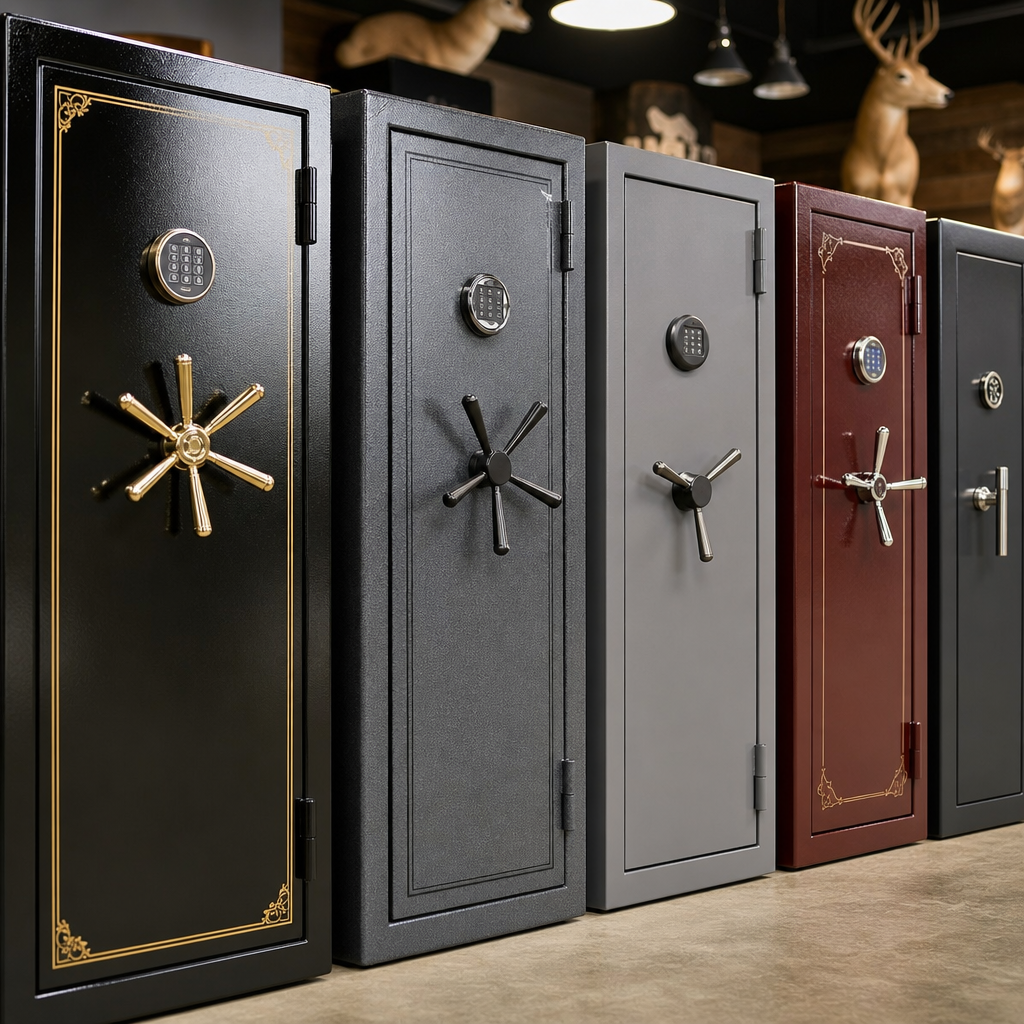
Many buyers assume every gun safe uses the same basic lock, but that belief causes poor purchasing decisions, unrealistic security expectations, and avoidable failures in daily use. The short answer is no: gun safes do not all have the same locking mechanism, and the differences matter for burglary resistance, fire performance, speed of access, maintenance, and long-term reliability. In my work evaluating residential security products, I have seen owners choose a safe based on exterior size or brand alone, only to learn later that the lock type, boltwork design, relocker system, and door construction determined how well the safe actually fit their needs.
To understand the issue clearly, it helps to separate several terms that are often mixed together. A lock is the device that controls opening, such as a mechanical dial, an electronic keypad, a biometric reader, or a tubular key lock. A locking mechanism is broader. It includes the lock itself, the internal linkage, the boltwork that extends steel bolts into the frame, and protective components such as hard plates, relockers, and anti-punch features. Boltwork refers to the moving bolts along the side, top, or bottom of the door. A relocker is a secondary device designed to keep the safe locked if the primary lock is attacked. These distinctions explain why two safes can both have electronic keypads yet perform very differently under force.
This topic matters because gun safes sit at the intersection of theft prevention, child access prevention, and responsible firearm storage. The Department of Justice and firearm safety organizations consistently stress secure storage, but “secure” is not one-size-fits-all. A bedside handgun safe prioritizes fast access and compact size. A long-gun safe in a garage may prioritize pry resistance, anchored installation, humidity control, and larger boltwork. A collector storing optics, documents, and heirlooms may need a higher burglary rating than a casual owner storing a single hunting rifle. When people repeat myths like “all locks are basically the same” or “electronic locks always fail,” they oversimplify a category where design details directly affect safety outcomes.
As a hub for gun safe myths and misconceptions, this article addresses the biggest misunderstanding first: lock type alone does not tell you whether a safe is good. You need to evaluate how the lock interacts with the safe’s body, door gap, steel thickness, internal hinges or external hinges, anchor points, and emergency access provisions. That broader view will help you read product descriptions more critically, compare models on more than marketing language, and choose the right safe for your firearms, household, and risk profile.
Gun safe locks are not all the same, and neither is the hardware behind them
The most important correction to the common myth is simple: gun safes use several distinct locking systems, and each has tradeoffs. The main consumer categories are mechanical combination locks, electronic keypad locks, biometric locks, and key-operated locks, usually found on smaller lock boxes rather than full-size safes. Beyond those visible interfaces, manufacturers use different boltwork layouts, cam systems, gear-driven actuators, spring-loaded bolts, and secondary relockers. That means two safes can open in a similar way from the user’s perspective while using very different internal architecture.
Mechanical combination locks, often based on Group 2 or upgraded lock standards from established makers such as Sargent and Greenleaf or La Gard, remain popular because they do not rely on batteries and have a long service record. Their weaknesses are slower entry, user error during dialing, and the need for precise lock servicing if wear develops. Electronic keypad locks are faster to use and easier for multiple authorized users, but they introduce power management, circuit durability, and keypad quality as variables. On better models, the lock body and keypad are UL-listed, and the internal components are protected by a hard plate and relocker. On weak models, the keypad may feel modern while the internal mechanism is minimal.
Biometric locks add another layer of complexity. Fingerprint access can be very fast, particularly on pistol safes intended for defensive use, but sensor quality, enrollment quality, and environmental conditions affect reliability. Dry skin, dirty sensors, rushed finger placement, and low battery voltage can all reduce successful reads. That does not make biometric safes bad; it means they should be judged by actual testing, backup entry options, and whether the user maintains them properly. In practice, many experienced owners prefer biometric access only when a keypad or key override is also present.
The hidden side of the locking mechanism matters just as much as the visible side. Quality safes often use active locking bolts on multiple edges, dead bars on the hinge side, drill-resistant hard plates over the lock body, and glass relockers or spring relockers that trigger during an attack. Budget cabinets may use simple cam locks or limited side bolt engagement that looks substantial from the outside but offers much less resistance against prying. This is why “same lock” claims fail: the opening interface is only one component in a larger security system.
Common gun safe myths that confuse lock choice
Several myths distort how people compare gun safes. The first is that a heavier door automatically means a better lock. Door weight can indicate thicker steel or added fireboard, but it does not guarantee a superior lock body, relocker, or boltwork pattern. The second myth is that electronic locks are inherently unreliable while mechanical dials never fail. In reality, both can fail through wear, poor installation, manufacturing defects, misuse, or neglected maintenance. I have seen dead keypad batteries lock owners out, but I have also seen dial locks drift out of tolerance after years of rough handling.
Another widespread misconception is that more locking bolts always equal more security. Bolt count is a favorite marketing metric because it is easy to advertise, yet bolt diameter and count alone do not tell you how much pry resistance a door provides. The frame design, door fit, steel thickness, internal reinforcement, and anchor installation often matter more. A safe with fewer well-supported bolts and a strong door edge can outperform a model with many decorative bolts and thinner steel. Buyers should ask where the bolts engage, whether there is a continuous dead bar, and how the door resists spreading attacks.
There is also a persistent belief that any lock with a backup key is less secure. That is too broad. On some low-cost handgun safes, a wafer key override can indeed create a vulnerability if the design is weak. On other products, the override is shielded, the keyway is better protected, and the overall risk is acceptable for the intended use. Context matters. A quick-access handgun safe beside a bed serves a different purpose than a heavy long-gun safe anchored to concrete in a basement. Security should be judged against use case, not slogans.
Finally, many owners assume a fire rating says something about lock quality. It does not. Fire performance and locking performance are related only indirectly. Heat can affect electronics, lubricants, and door seals, but a stated fire rating primarily concerns thermal protection over time, not burglary resistance. A safe can advertise an impressive fire number while using light steel and basic locking hardware. That is why comparing safes requires looking at both fire construction and security construction separately.
How the main lock types compare in real use
Each lock type serves a different storage scenario, and understanding those scenarios prevents expensive mismatches. Mechanical dial locks are usually best for owners who prioritize long-term durability, low dependence on electronics, and infrequent access. They are common on traditional gun safes in dedicated storage rooms. Electronic keypad locks are often the best all-around option for households that want faster access, straightforward code changes, and simpler operation under stress. Biometric locks make the most sense for quick-access handgun safes when the sensor is proven and a secondary entry method exists. Keyed locks are generally the least desirable primary solution for firearm storage, especially on larger safes, because keys can be lost, copied, or discovered by unauthorized users.
| Lock type | Best use | Main strengths | Main limitations |
|---|---|---|---|
| Mechanical combination | Long-term firearm storage | No batteries, proven durability, established standards | Slower access, harder code changes, more user error during dialing |
| Electronic keypad | General home use | Fast access, easy code management, familiar operation | Battery dependence, quality varies widely by brand |
| Biometric | Quick-access handgun storage | Very fast entry, convenient for authorized users | Sensor inconsistency, environmental sensitivity, battery concerns |
| Key-operated | Basic lock boxes only | Simple, inexpensive, no code memorization | Keys can be lost, copied, hidden poorly, or attacked directly |
In real homes, user behavior often matters more than brochure language. A retired hunter opening a safe once a week may be perfectly happy with a dial. A parent storing a defensive pistol cannot afford a lock interface that is slow or confusing at night. A competitive shooter who enters the safe daily may prefer a high-quality electronic keypad because repeated dial use becomes tedious. In testing and customer feedback, the best lock is usually the one that fits the access pattern while still providing reliable security layers behind the door.
Brand quality matters within every category. An excellent electronic lock from a recognized manufacturer is not equivalent to a no-name keypad on a promotional import safe. Likewise, a mechanical lock installed poorly or paired with weak boltwork does not become superior just because it is mechanical. Focus on listed components, replacement part availability, warranty support, and whether locksmiths in your area service that lock family.
What actually determines security beyond the lock face
Consumers often overfocus on the keypad, dial, or fingerprint reader because those are visible. Burglars, however, attack the entire container. Steel thickness is one of the clearest factors. Many residential gun safes use 14-gauge to 12-gauge bodies, while stronger models may use 10-gauge or thicker steel. Doors are often thicker than bodies, but thickness claims sometimes include composite layers rather than solid plate. A lock attached to a thin, poorly anchored cabinet cannot compensate for weak structure.
Door design is equally important. Pry attacks target gaps and leverage points. Safes with tighter door tolerances, reinforced frames, robust bolt pockets, and hinge-side dead bars resist spreading better. Internal hinges protect hinge components from tampering, but external hinges are not automatically insecure if the safe includes dead bars that keep the door captured when hinges are cut. I routinely tell buyers to stop treating hinge style as a shortcut for quality. The real question is how the door remains secured under attack.
Relockers and hard plates are features worth seeking out. A hard plate, commonly made from drill-resistant steel, protects the lock body from direct drilling. A relocker is designed to engage if a thief punches, drills, or manipulates the primary lock area. Some safes use spring-loaded relockers; others incorporate glass relockers that trigger when shattered during drilling. These are serious security features, not decorative terms, and they are one reason premium safes command higher prices.
Installation is the final piece many people ignore. An unanchored safe can be tipped for easier prying or removed entirely and attacked off-site. Anchoring a safe to concrete or substantial framing materially improves real-world security. Humidity control matters too. Corrosion can affect lock components and stored firearms over time, especially in garages and basements. Dehumidifier rods, desiccants, and stable placement extend both safe life and firearm condition.
How to choose the right locking mechanism for your situation
Start with the firearms being stored and the speed of access required. If the safe is primarily for long guns used seasonally, quick entry may matter less than durability and interior capacity. If it stores a home-defense pistol, access time becomes critical, and a tested electronic or biometric unit may be justified. Then assess who lives in the home. Children, frequent guests, caregivers, and shared access needs all influence whether a changeable keypad code is more practical than a fixed mechanical combination.
Next, match the lock to the environment. Garages and outbuildings expose safes to wider temperature swings, dust, and moisture. Those conditions can challenge low-end electronics and increase corrosion risk. For humid locations, ask about keypad sealing, battery compartment design, finish durability, and the availability of replacement parts. For high-traffic households, choose a lock with straightforward operation and a low chance of rushed user mistakes. If several adults need access, electronic systems usually simplify secure code management.
Finally, verify standards and support. Look for UL-listed lock components when available, established lock brands, clear warranty terms, and local service options. Ask the seller how lockouts are handled, whether override procedures require proof of ownership, and how often batteries should be changed. Practical ownership details separate a safe you can live with for years from one that becomes a headache after the sale. The best decision combines lock type, safe construction, installation quality, and realistic household use.
No, all gun safes do not have the same locking mechanism, and treating them as interchangeable is one of the most common mistakes in firearm storage. The visible lock interface may be a dial, keypad, fingerprint reader, or key, but the true locking mechanism also includes boltwork, relockers, hard plates, door design, and frame engagement. Those differences affect how quickly you can open the safe, how well it resists attack, how much maintenance it needs, and how well it fits your daily routine.
The biggest takeaway from this gun safe myths and misconceptions hub is that good buying decisions come from evaluating the whole security system, not just the marketing headline. Mechanical locks offer proven longevity, electronic keypads offer speed and convenience, biometric locks can excel in specific quick-access roles, and key-only designs are usually best left to basic lock boxes. None is universally best. The right choice depends on firearm type, access pattern, home environment, user skill, and the safe’s overall construction quality.
If you are comparing safes now, read product specifications closely, look for recognized lock brands and protective features, and prioritize anchoring and steel construction alongside lock style. Use this hub as your starting point for the wider gun safe myths and misconceptions topic, then narrow your search to the models that match your real risks instead of common assumptions. A better-informed choice leads to safer storage, more reliable access, and fewer surprises after installation.
Frequently Asked Questions
Do all gun safes use the same type of lock?
No. Gun safes do not all use the same locking mechanism, and that difference has a direct impact on security, convenience, durability, and overall ownership experience. The most common lock types include mechanical dial locks, electronic keypad locks, biometric locks, and redundant systems that combine two access methods. Each of these works differently internally. A mechanical dial lock relies on physical wheels and precise alignment, an electronic lock depends on a keypad and internal circuitry, and a biometric lock uses fingerprint recognition tied to an electronic release system. Even among safes that appear similar from the outside, the lock body, bolt actuation method, relocker design, and emergency override features can vary significantly.
This matters because buyers often assume a “safe is a safe” and focus only on size or exterior styling. In reality, the lock is one of the most important parts of the unit. It affects how quickly you can get in during an emergency, how likely you are to experience lockouts or maintenance problems, and how the safe performs over years of repeated use. Some locks are favored for simplicity and long-term reliability, while others are chosen for speed and user convenience. A good buying decision comes from matching the lock type to your actual needs, not assuming all safes protect firearms in the same way.
What are the main differences between mechanical, electronic, and biometric gun safe locks?
The main differences come down to access speed, power requirements, failure points, user habits, and long-term maintenance. Mechanical dial locks are often valued for their durability and independence from batteries or electronics. They can last a long time when properly made and installed, and many owners trust them because there is less that can fail electronically. The tradeoff is speed and ease of use. Opening a dial lock takes more time, more precision, and more practice, especially under stress or in low-light conditions.
Electronic keypad locks are popular because they are fast and simple to use. You enter a code, the lock disengages, and the safe opens quickly. For many households, that convenience is the deciding factor. However, electronic locks rely on batteries, circuit boards, keypads, and internal components that can wear out or malfunction over time. Battery neglect, poor-quality electronics, or environmental issues can create access problems. That does not mean electronic locks are bad; it means quality and maintenance matter.
Biometric locks are marketed for rapid access, often with the promise of opening by fingerprint in seconds. In ideal conditions, they can be very convenient. But they can also be more sensitive to finger placement, skin condition, sensor quality, and software performance. Sweat, dirt, dry skin, small cuts, and inconsistent scans can reduce reliability. Higher-end biometric systems tend to perform better than entry-level versions, but buyers should still test them realistically. The best lock type depends on whether your priority is maximum simplicity, rapid access, minimal maintenance, or a balance of all three.
Does the locking mechanism affect how secure a gun safe really is?
Yes, but it is important to understand that the locking mechanism is only one part of total safe security. A strong lock on a poorly built safe body does not create excellent burglary protection, and a solid steel body paired with a weak or unreliable lock also leaves you exposed. The lock influences resistance to unauthorized entry, tampering, and manipulation, but overall security also depends on steel thickness, door construction, hard plates, relockers, boltwork, hinge design, and how the safe is anchored in place.
That said, lock choice absolutely matters. Some locks are more resistant to manipulation or forced attack than others, and some safes include additional protective features around the lock area to slow drilling or punching attempts. A good locking system should work together with reinforced internal components, not function as a stand-alone selling point. This is one reason two safes with similar dimensions and similar-looking doors can perform very differently in a break-in attempt. One may have a more robust lock and supporting hardware, while the other may rely on lighter materials and less sophisticated protection.
For most buyers, the practical takeaway is this: do not evaluate a gun safe by lock style alone, but do not ignore the lock either. A serious purchase should consider how the locking mechanism integrates with the safe’s full security design. If a manufacturer provides meaningful construction details, lock certifications, and anti-tamper features, that is usually more useful than broad marketing claims about being “heavy-duty” or “military grade.”
Are some locking mechanisms better for quick access and daily use?
Yes. If quick access is a major priority, electronic keypad and well-designed biometric locks usually outperform traditional mechanical dial locks in everyday use. An electronic keypad can typically be opened in just a few seconds, which is a major advantage if the safe is intended for defensive firearms that may need to be accessed under pressure. Biometric locks can be even faster in theory, especially when they read consistently, but real-world performance depends heavily on sensor quality and user setup.
Mechanical dial locks are usually slower because they require a sequence of turns with accurate stopping points. That is not necessarily a problem for long-term storage or lower-frequency access, but it can be frustrating if you open the safe often or need immediate entry. Daily use also affects wear patterns. Households that open the safe frequently may prefer a lock that is easier to operate repeatedly, especially for multiple authorized users. An elderly owner, someone with reduced hand dexterity, or a user who wants access in darkness may find a keypad much more practical than a dial.
The best approach is to think honestly about how the safe will be used. A safe for hunting rifles accessed occasionally may benefit from the simplicity of a mechanical lock. A bedside handgun safe or frequently used long-gun safe may justify the convenience of electronic access. Speed should never be the only factor, but it should be part of the buying decision because the lock that looks good on paper may not fit your routine in real life.
How should buyers choose the right locking mechanism for a gun safe?
Buyers should start by identifying the safe’s actual job. Is it mainly for theft deterrence, child access prevention, fire protection, quick defensive access, organized storage, or some combination of those needs? Once that is clear, the right lock type becomes easier to evaluate. For example, if long-term reliability with minimal dependency on electronics is your top concern, a quality mechanical dial may be the right choice. If you want fast access several times a week, an electronic keypad may make more sense. If multiple household members need rapid entry and you are comfortable with electronic systems, a higher-quality biometric or redundant lock system may be worth considering.
It is also smart to evaluate the lock in the context of the full safe, not as an isolated feature. Look into the manufacturer’s reputation, lock brand, service support, battery access design, emergency procedures, and warranty terms. Ask practical questions: What happens if the battery dies? Can the lock be serviced easily? Is the keypad exposed to wear or damage? Does the biometric reader perform consistently in normal household conditions? Is the safe intended for frequent access or mostly static storage? These are the kinds of details that prevent disappointment later.
Finally, avoid assuming that a more advanced-looking lock is automatically better. The best locking mechanism is the one that delivers dependable access for you while supporting the level of security your firearms require. A thoughtful purchase balances speed, reliability, maintenance, burglary resistance, and user skill. That is why no two locking systems should be treated as interchangeable, even if the safes themselves look similar from the outside.