
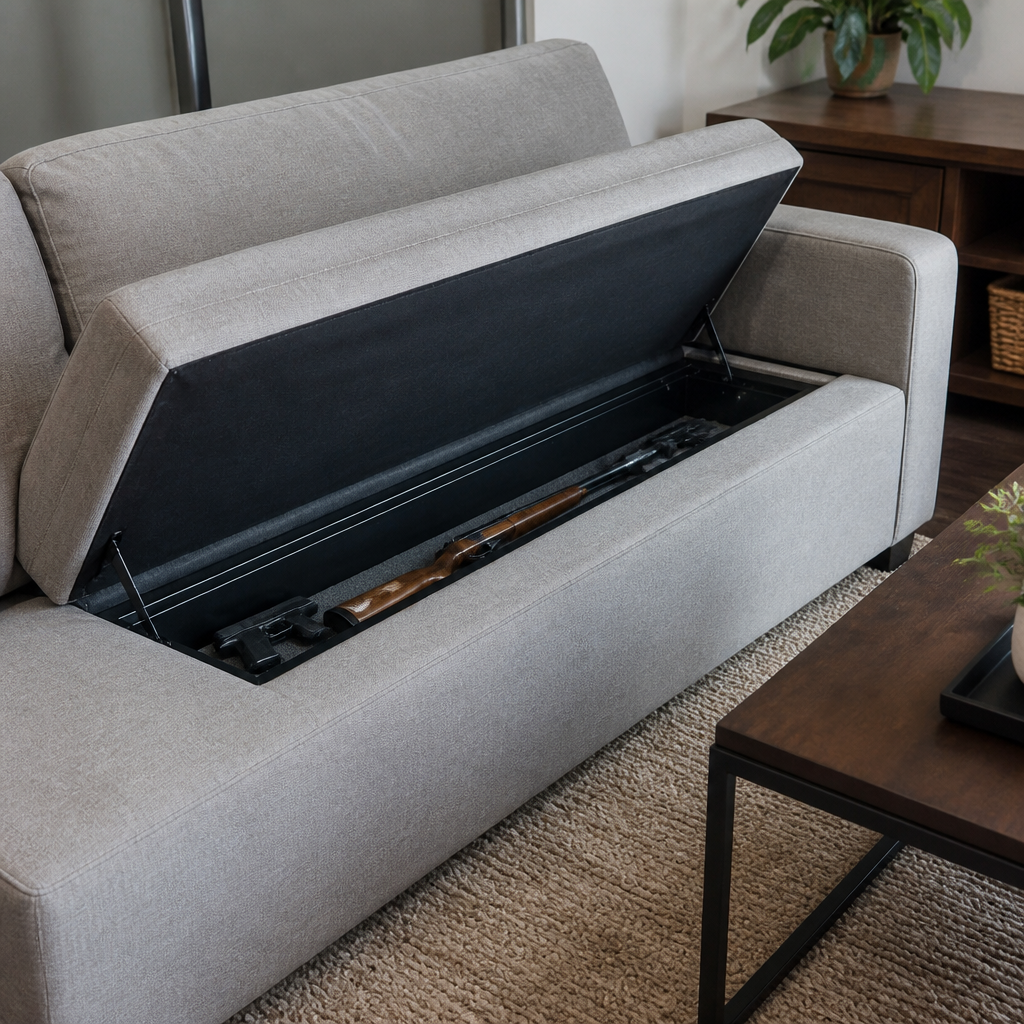
The best couch and sofa gun safes solve a specific problem: they keep a defensive firearm close at hand without leaving it visible, unsecured, or awkwardly stored in a nightstand drawer. In the gun storage world, “couch safe” and “sofa gun safe” usually refer to low-profile lockboxes, slide-out safes, under-furniture drawers, or rigid retention systems designed to fit beside, beneath, or inside upholstered seating. They matter because living rooms are common gathering spaces, fast access matters in a home-defense plan, and ordinary furniture creates natural concealment that does not advertise where valuables are kept.
I have worked with handgun safes in real homes, not just showrooms, and the practical lesson is always the same: discreet storage only works when it balances access, concealment, child resistance, and physical security. A pistol tucked between couch cushions is not discreet storage; it is negligent storage. A proper sofa gun safe gives you defined placement, consistent orientation, and controlled access through a simplex lock, biometric scanner, RFID reader, or keyed backup. The best models also account for bolting surfaces, pry resistance, and the realities of carpet, wood floors, pets, visitors, and children moving through the room.
This hidden and discreet gun storage solutions hub covers how couch and sofa safes fit into a broader home setup, what features separate a serious safe from a thin metal box, and which product styles make sense for apartments, family homes, and single-room living spaces. If you are comparing quick-access firearm storage for a sectional, loveseat, recliner, or sleeper sofa, start here. You will learn what to buy, where to place it, how to secure it, and when another hidden gun storage option may be smarter than any couch-mounted design.
What couch and sofa gun safes are, and who should use them
A couch or sofa gun safe is a compact storage unit placed under, behind, beside, or inside living room seating to conceal a handgun, spare magazine, flashlight, or small documents while preserving fast retrieval. Most are built for handguns rather than long guns because the dimensions of standard sofas rarely support rifle-length access without major furniture modification. In practice, the category includes under-couch drawer safes, side-mounted lockboxes hidden by throw blankets or end tables, and furniture-integrated safes installed into custom frames or storage chaises.
These safes are best for homeowners who spend significant time in a living room and want one designated defensive firearm location beyond the bedroom. They are also useful in open-plan homes where the front door, patio door, and family room intersect. The right user is someone committed to secure storage discipline. If children or frequent guests are present, the safe must stay locked whenever the firearm is not physically on your person. If you need storage for multiple handguns, a couch safe should supplement, not replace, a larger primary gun safe in a bedroom closet, office, or dedicated safe room.
Not every household should prioritize this format. If your seating has exposed legs and little under-frame clearance, installation options shrink. If your couch moves when people sit down, a lightweight unbolted box becomes frustrating and insecure. If your threat model centers on smash-and-grab burglary while the house is empty, concealment alone is not enough; you need anchoring and ideally a secondary monitored alarm layer. That is why hidden firearm storage must be judged within an overall home security plan rather than as a standalone gadget purchase.
Key features that separate the best discreet firearm storage from gimmicks
The first feature to evaluate is access method. Mechanical simplex locks remain a benchmark because they are fast, reliable, and unaffected by dead batteries. Biometric safes can work well when the scanner is high quality and enrollment is done correctly, but cheap sensors often fail with dry skin, sweat, or rushed placement. RFID-enabled furniture safes offer excellent concealment because there is no visible keypad, though you should confirm that a backup key or combination method exists. For a living room handgun safe, I generally trust simplex and premium biometric designs more than budget electronic keypads.
Steel thickness and construction matter more than many listings admit. A thin 18-gauge box hidden under a sofa may stop casual handling, but it is not meaningfully pry resistant. Better quick-access handgun safes use heavier steel, reinforced doors, internal hinges or protected hinge points, and tight door gaps that limit screwdriver attacks. Foam interiors should hold the firearm in a repeatable orientation, with enough clearance for optics if you run a micro red dot. Gas struts or spring-assisted doors improve one-handed access, especially from a seated position.
Mounting flexibility is the next dividing line. The best sofa gun safes include predrilled holes, hardware, and enough flat surface area to secure the unit to floor joists, wood subfloor, wall studs near the couch, or a substantial furniture frame. Weight alone is not security. A thief who discovers a hidden safe will often remove the entire box and attack it elsewhere. Interior lighting, tamper alerts, and silent mode controls are worthwhile extras, but they are secondary to solid construction and secure anchoring.
Best product styles for couch and sofa gun safes
There is no single best sofa gun safe design for every room. Under-couch drawer safes are often the cleanest option when the furniture has adequate clearance and a stable frame. They stay out of sight, preserve rapid access from a seated position, and can hold a full-size pistol with a spare magazine. Side-mounted vertical safes work well when a couch sits against a wall or beside an end table, creating natural visual cover. These often provide better door swing and easier anchoring than under-seat models.
Furniture-integrated safes appeal to buyers who want the deepest concealment. Some ottomans, storage benches, and modular sectionals can be adapted with hidden compartments and dedicated lockboxes. The advantage is stealth; the disadvantage is complexity. Custom integration raises cost, may void furniture warranties, and can complicate emergency access if cushions shift or storage lids stick. Recliners and power sofas add another warning: motors, wiring, and moving mechanisms can interfere with safe placement and firearm retrieval if dimensions are not carefully measured.
| Style | Best use case | Main advantage | Main limitation |
|---|---|---|---|
| Under-couch drawer safe | Standard sofas with good clearance | Excellent concealment and seated access | Limited by floor clearance and dust buildup |
| Side-mounted quick-access safe | Couches near walls or end tables | Easier anchoring and larger door opening | Can print visually if placement is careless |
| Ottoman or bench integrated safe | Multiuse living rooms | Deep concealment in plain sight | Slower access and more complex installation |
| Behind-sofa floor safe or lockbox | Sofas with rear clearance | Works when under-frame space is poor | Harder to reach under stress |
For most households, a side-mounted or under-couch handgun safe is the practical sweet spot. Those styles deliver the fastest balance of concealment and access without requiring custom upholstery work. If you want deeper hidden firearm storage solutions across the whole home, this living room hub should connect conceptually with bedside gun safes, hidden wall safes, shelf safes, and under-desk handgun safes so each room has a purpose-built storage method rather than a one-size-fits-all compromise.
How to choose the right model for your room, firearm, and risk profile
Start with measurements, because most returns happen after buyers discover their couch sits too low or has a crossbar exactly where the safe should go. Measure height from floor to frame, depth from front edge to rear support, and any obstructions such as recline hardware, center legs, or storage compartments. Then measure the firearm with its mounted accessories. A compact pistol with a weapon light may need more interior width than an unmodified full-size gun, and a red-dot optic can interfere with shallow lids.
Next, decide what kind of access you need in realistic terms. If your dominant hand naturally rests on the sofa arm, a side-mounted safe may be fastest. If you sit centered on a sectional and want ambidextrous reach, an under-couch drawer closer to the middle cushion can be better. Households with children should favor locks with low false-accept rates and strong automatic locking. Households with elderly users or reduced hand strength may prefer a larger button layout or assisted opening lid rather than a stiff compact door.
Risk profile matters too. For quick defensive access, opening speed and repeatability are critical. For burglary resistance, anchoring and concealment take priority. If you live in an apartment and cannot drill into concrete or hardwood, look for models that can bolt into substantial furniture framing or a heavy platform concealed under the couch. If humidity is high, choose a safe with a durable interior finish and add a small desiccant pack. Good discreet firearm storage is always location specific; copying someone else’s setup without measuring your own room is how mistakes happen.
Installation, placement, and daily-use mistakes to avoid
The best installation keeps the safe reachable to the authorized user and invisible to a casual observer standing in the room. In most living rooms, that means avoiding placements visible from the entryway, patio doors, or common traffic paths. Test the draw path while seated, standing, and kneeling beside the couch. You should be able to open the safe without striking a cushion, coffee table, or recliner footrest. Dry-run access with the room lights low, because many home-defense incidents happen at night or in dim conditions.
Avoid placing the safe where children naturally play on the floor, where robotic vacuums can strike it repeatedly, or where spilled drinks and pet bowls raise moisture exposure. I have seen otherwise solid installations ruined by an owner hiding the safe behind a decorative skirt that snagged the door under stress. Another common mistake is storing too much inside. A defensive handgun safe should not become a clutter box for remotes, papers, and loose ammunition. Keep the firearm, a spare magazine if desired, and perhaps a compact flashlight; anything else slows access.
Maintenance is simple but essential. Check mounting bolts, lock function, battery level, and biometric enrollment on a schedule. Wipe dust from tracks and hinges, especially on under-couch drawer safes. Verify that the gun is still oriented exactly as practiced and that the holster or trigger coverage method, if used, has not shifted. Hidden and discreet gun storage solutions succeed through consistency. If the safe is hard to reach, unreliable to open, or annoying to maintain, people stop using it correctly, and that defeats the purpose.
Best brands, standards, and how couch safes fit into a complete safety plan
Several established handgun safe brands repeatedly outperform generic imports in reliability and build quality. Fort Knox is well regarded for simplex lock designs and stout steel construction. V-Line has long specialized in mechanical quick-access safes with straightforward operation. Vaultek has pushed the category forward with refined biometric and Bluetooth-enabled options, though buyers should evaluate whether connected features add genuine value for their use case. Hornady RAPiD models remain popular for RFID access, especially when concealment benefits from a clean exterior without visible buttons.
No couch safe, however well built, replaces broader firearm safety principles. Follow secure-storage laws in your state, especially where child-access prevention standards apply. If your collection includes multiple handguns or long guns, maintain a larger central safe for primary storage and use the living room safe only for the defensive firearm you actually stage there. Document serial numbers, keep batteries fresh where relevant, and integrate the room into your overall home security system with cameras, lighting, reinforced entries, and an intrusion alarm when feasible.
The main benefit of the best couch and sofa gun safes is controlled readiness. They let you keep a firearm accessible in a room where people actually live, while avoiding careless storage that invites accidents or theft. Choose a model with dependable access, real steel, and secure mounting. Match the safe to your furniture dimensions, household needs, and local legal obligations. Then practice retrieval safely and maintain the setup. If you are building out hidden and discreet gun storage solutions across your home, use this hub as your starting point and compare each room’s needs before you buy.
Frequently Asked Questions
What is a couch or sofa gun safe, and how is it different from a regular handgun safe?
A couch or sofa gun safe is a discreet firearm storage solution designed specifically to fit beside, beneath, or inside upholstered furniture in a living room or den. Unlike a standard bedside handgun safe or bulky lockbox, these safes are built with a much lower profile and are intended to blend into spaces where people relax, entertain, and spend time during the day. In practical terms, that often means slim slide-out drawers, under-sofa lockboxes, side-mounted retention systems, or hidden enclosures that keep a defensive handgun close without leaving it visible or casually accessible.
The biggest difference is placement and purpose. A regular handgun safe is often designed for a nightstand, closet shelf, or dresser, where concealment is less about décor and more about basic security. A sofa gun safe, by contrast, is solving a lifestyle and access problem: how to keep a defensive firearm available in a main living area without storing it loose between cushions, tucked under a throw blanket, or hidden in an unsecured drawer. Good couch safes are meant to support fast access while maintaining a cleaner level of discretion in one of the most heavily used parts of the home.
Another important distinction is form factor. The best couch and sofa gun safes are shaped to work around furniture dimensions and room layout. They may be narrow enough to slide under a frame, shallow enough to mount out of sight, or structured to anchor securely so they do not shift during use. Many are also designed with quick-entry options such as mechanical simplex locks, RFID access, or fast electronic keypads, which can be more practical in a defensive scenario than a traditional keyed lock. In short, a couch safe is not just a smaller gun safe. It is a purpose-built solution for discreet, living-room-ready firearm storage.
Are couch and sofa gun safes actually secure enough for responsible firearm storage?
They can be, provided you choose the right model and use it correctly. A quality couch or sofa gun safe should be viewed as a quick-access defensive storage tool, not the same thing as a heavy full-size burglary safe. Its job is to keep a firearm hidden, secured against casual access, and available when needed. That makes construction quality, lock reliability, and anchoring methods especially important. A well-made unit with solid steel construction, reinforced locking points, a tamper-resistant design, and secure attachment to the furniture or floor can provide a meaningful level of protection in a living area.
For most homeowners, the main safety concern is preventing unauthorized access by children, guests, or anyone who should not be handling the firearm. In that role, a properly installed sofa gun safe can be far safer than common but risky alternatives such as storing a pistol in a side table drawer, wedging it under a cushion, or leaving it in a bag nearby. The entire point is controlled access. If the safe opens quickly for the authorized user but remains inaccessible to everyone else, it is doing exactly what it is supposed to do.
That said, no compact quick-access safe is invulnerable. Security depends on realistic expectations. Thin, unanchored lockboxes can be removed, pried, or defeated more easily than robust models. That is why buyers should look for anti-pry features, welded seams, reliable hinges, and mounting systems that prevent the safe from simply being carried away. It is also wise to think about your household environment. If your home includes children, frequent visitors, house cleaners, or service workers, a hidden but securely mounted unit becomes even more important. The best answer is this: couch safes are secure enough when selected carefully, installed properly, and used as part of a broader responsible storage plan.
Where should a couch or sofa gun safe be installed for the best combination of concealment and fast access?
The best installation point depends on how you use the room, where you usually sit, and whether you are prioritizing right-handed or left-handed access. In many homes, the most practical spot is under the sofa frame or just alongside the primary seating position, where the firearm can be reached naturally without standing up or making an exaggerated movement. The ideal location should allow you to access the safe quickly while still keeping it out of normal sightlines from children, guests, or anyone walking through the room.
Concealment works best when the safe is integrated into the furniture footprint rather than merely placed near it. Under-couch mounting, inner-side mounting on a hidden panel, or placement between the sofa and a wall can all be effective, depending on the safe’s design. You want the storage location to feel intuitive to you but invisible to others. It should not interfere with vacuuming, reclining mechanisms, foot traffic, or the structural stability of the furniture. A good installation also avoids obvious visual clues, such as a protruding keypad in plain view or a drawer handle that looks out of place.
Access matters just as much as concealment. A sofa gun safe should be positioned so you can open it under stress, in dim light, and from your normal seated posture. If you have to twist awkwardly, lean too far, or move multiple cushions just to reach it, the setup may not serve you well in a real emergency. It is smart to test the access angle before final installation and to make sure the door or drawer can open fully without obstruction. In many cases, the best location is the one that balances three things at once: it stays hidden during everyday life, it remains physically secure, and it allows quick, consistent access when seconds matter.
What features should I look for when choosing the best couch or sofa gun safe?
The most important features are speed, concealment, security, and fit. Start with access method, because that directly affects how useful the safe will be in a defensive role. Mechanical push-button locks are popular because they are fast, reliable, and do not depend on batteries. Electronic keypads can also work well if they are high quality and responsive. RFID options appeal to some buyers because they can offer very quick access, though they should be tested regularly. Whichever lock type you choose, it should be easy to operate under stress and in low light.
Construction quality is next. Look for steel thickness, reinforced locking areas, strong hinges, anti-pry design, and a door or drawer that does not flex excessively. Interior design also matters more than many people expect. A usable interior should accommodate your firearm with any realistic setup you keep on it, such as a mounted light or optic, rather than forcing you to strip the gun down to fit. Foam protection, a secure retention layout, and a smooth opening motion all improve day-to-day usability. If the safe binds, rattles, or requires too much force to open, that is a red flag.
Mounting options are critical in this category because the safe is often installed around furniture rather than simply dropped onto a shelf. The best models provide reliable mounting points for wood frames, floor anchoring, or hidden attachment systems that keep the unit stable and difficult to remove. Size and profile also deserve close attention. Measure the available space under or beside the couch carefully, including clearance for the opening mechanism. A safe that is technically secure but visually obvious or awkwardly placed defeats much of the purpose. Finally, think about noise. A quiet open, soft-close action, and minimal metal-on-metal rattle can make a major difference in real-world use. The best couch and sofa gun safes do not just store a firearm securely; they fit your furniture, your habits, and your home layout without drawing attention.
Are couch and sofa gun safes a good choice for homes with children or frequent guests?
Yes, they can be an excellent choice, and in many households they are much safer than improvised living-room storage methods. The reality is that living rooms are shared spaces. Children play there, guests sit there, and people move through them constantly. That means an unsecured firearm hidden in cushions, behind pillows, or in a nearby drawer is not truly hidden or secure. A properly selected and installed couch or sofa gun safe creates a much better balance between defensive readiness and responsible access control.
For homes with children, the standard should be especially high. The safe should be genuinely locked, not simply concealed, and it should be mounted in a way that prevents tampering or removal. Children are naturally curious, and they often notice hiding spots adults assume are invisible. A discreet storage solution only works if it also resists unauthorized handling. Fast-access does not have to mean careless-access. The best sofa gun safes are designed so the authorized adult can retrieve the firearm quickly while a child, babysitter, guest, or contractor cannot casually discover or open it.
In homes with frequent visitors, discretion becomes even more valuable. A visible handgun safe on an end table or an unsecured firearm tucked nearby can create both safety and privacy concerns. A well-hidden sofa gun safe keeps the firearm out of sight without sacrificing accessibility for the owner. That said, it should still be part of a larger storage strategy. If you are away from home, if the room will be used unsupervised, or if long-term storage is the goal, a larger dedicated gun safe may still be the better solution. For daily defensive use in an occupied home, though, couch and sofa gun safes can be one of the smartest options available, especially when the goal is to keep a firearm