
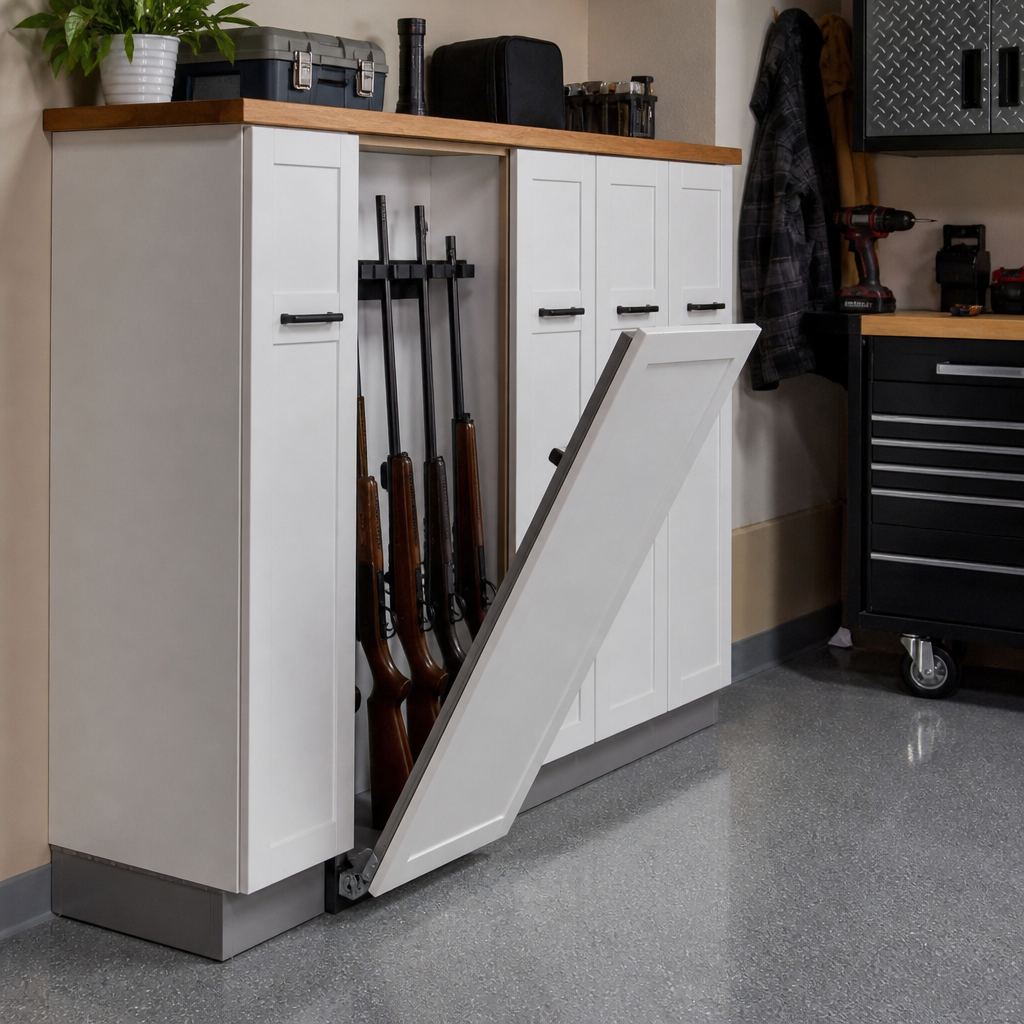
A discreet gun storage system in your garage protects firearms from theft, unauthorized access, moisture, dust, and casual visibility while preserving fast, lawful access for the owner. In practice, it means more than hiding a rifle behind boxes or sliding a pistol into a drawer. A real system combines concealment, physical security, environmental control, inventory management, and safe handling procedures. In my experience helping homeowners evaluate storage layouts, the biggest mistake is treating “hidden” as the same thing as “secure.” A gun that cannot be seen but can be reached by a child, a guest, or a burglar with a pry bar is not safely stored.
The garage is a challenging but useful space for firearm storage. It often offers more wall area, concrete anchoring points, utility access, and distance from main living areas than a bedroom closet. It also introduces risks that indoor gun storage does not: humidity swings, temperature changes, vehicle fumes, lawn chemical exposure, vibration, and frequent contractor or visitor access. Because of those factors, the best discreet gun storage system in a garage is layered. You need a storage container suited to your firearms, a concealment strategy that avoids obvious patterns, corrosion protection, and a placement plan that does not compromise emergency egress or violate local law.
Hidden and discreet gun storage solutions usually fall into four categories: true safes concealed by surrounding structures, lockable cabinets blended into garage fixtures, in-wall or between-stud compartments protected by locking covers, and modular systems built into workbenches, shelving, or utility chases. Each approach has tradeoffs in cost, speed, install complexity, and burglary resistance. A heavy UL-rated safe behind a false storage wall offers strong protection but requires space and planning. A concealed cabinet inside a tall tool chest may be faster to access and easier to integrate, yet usually resists attack less effectively than a real safe.
This article serves as a hub for hidden and discreet gun storage solutions within the broader gun safes and safety category. It explains how to plan a garage layout, choose the right enclosure, reduce moisture damage, improve concealment without creating unsafe shortcuts, and decide when a hidden setup should supplement, rather than replace, a dedicated gun safe. If you want a practical framework for building a discreet gun storage system in your garage, start with risk, then match the hardware and concealment method to that risk.
Start with a risk-based plan for garage gun storage
The first step is defining what your storage system must defend against. For most households, the priorities are unauthorized access by children or guests, smash-and-grab theft, corrosion from humidity, and accidental discovery during normal garage use. If your garage door is often open, if service workers enter regularly, or if you store expensive tools that already attract thieves, your system needs stronger concealment and stronger anchoring than a low-traffic attached garage in a controlled climate. A detached garage usually requires the highest level of protection because it is isolated from the house and often easier to attack without being heard.
Map the space before buying anything. Identify load-bearing walls, electrical panels, water heaters, gas lines, attic access, and vehicle clearance. Firearms should never block code-required access to utilities, nor should they be placed where a car bumper, mower handle, or stacked lumber can strike the enclosure. I recommend sketching three zones: high visibility areas seen when the garage door opens, medium visibility areas noticed during routine activity, and low visibility areas concealed by fixed features. The best location is usually in a low visibility area that still allows controlled owner access without moving clutter, kneeling awkwardly, or exposing the firearm during retrieval.
Your access requirement matters just as much as your threat model. A defensive handgun needed quickly should not be buried in the same compartment as long-term storage rifles sealed in silicone socks. Separate use cases. Many homeowners do best with one high-security primary safe for most firearms and one discreet rapid-access lockbox integrated into the garage only if local law, household traffic, and climate conditions make that reasonable. Discreet storage is most effective when it is intentional, not when it becomes a catchall hiding spot.
Choose the right foundation: safe, cabinet, wall vault, or bench system
The strongest discreet garage gun storage starts with a robust enclosure. A true gun safe with a formed steel body, pry-resistant door design, internal hinges or protected external hinges, and anchor points remains the benchmark. Standards matter. Many residential security containers are marketed as safes but vary widely in steel thickness and lock quality. Look for clear specifications: body gauge, door plate thickness, bolt count, fire seal details, lock type, and tested burglary or residential security ratings where available. Brands differ, but the principle is constant: concealment should sit on top of physical security, not replace it.
Gun cabinets are lighter and easier to fit into concealed garage layouts, especially inside utility-style storage runs. They work best where the main goal is access control and visual discretion rather than serious burglary resistance. If you use a cabinet, improve it with structural anchoring into concrete or framing, reinforced surrounding carpentry, and a placement method that denies pry-bar leverage. Wall vaults and between-stud compartments can be effective for handguns, documents, and compact firearms, but they are generally constrained by stud spacing and wall depth. In garages, they also require careful planning around insulation, vapor barriers, wiring, and fire separation rules for attached structures.
Workbench and shelving integrations are popular because they create natural camouflage. A locking compartment built beneath a heavy workbench, behind a faux drawer bank, or inside a deep overhead cabinet can disappear in plain sight. The advantage is contextual concealment: it looks like ordinary garage storage. The disadvantage is that many DIY builds focus on hidden panels and magnetic latches while neglecting real lock hardware and attack resistance. If a thief can remove a back panel with a cordless drill in two minutes, the system is only decorative security.
| Storage type | Best use | Main advantage | Main limitation |
|---|---|---|---|
| Anchored gun safe | Multiple firearms, long-term storage | Highest physical security | Heavy, expensive, harder to disguise |
| Locking gun cabinet | Budget setups, moderate access control | Easier to fit into concealed layouts | Lower burglary resistance |
| Wall vault | Handguns and compact valuables | Excellent visual concealment | Limited size and wall constraints |
| Workbench or shelf integration | Custom garage systems | Blends naturally with the space | Security depends heavily on build quality |
Build concealment that looks ordinary, not clever
The most effective hidden gun storage does not announce itself as a secret compartment. In garages, themed concealment often fails because it looks staged. A mirror on a garage wall, a flag panel in a workshop, or an oddly shallow cabinet may attract curiosity precisely because it feels out of place. Better concealment uses ordinary garage elements: tall utility cabinets, slatwall sections, breaker-access dead space that remains code compliant, shelving chases, freezer alcoves, and shop furniture with believable dimensions. The goal is pattern matching. When someone scans the room, nothing should break the expected visual rhythm.
Concealment should also account for how burglars search. Thieves typically check primary bedroom closets, dresser drawers, bedside furniture, offices, and obvious “man cave” displays first. In garages, they often target tool storage, open shelving, and anything that looks like a premium locker. That means a concealed safe should avoid obvious premium finishes, exposed keypad glamour, or a spotlight location on a clean feature wall. A simple cabinet face, matching paint, and surrounding visual clutter that remains organized but unremarkable are more effective than theatrical hidden-door hardware.
Noise and light discipline matter too. Electronic locks with loud beeps, bright keypads, or interior LEDs visible from the driveway can compromise discretion. Many modern locks allow silent mode, code-length adjustment, and delayed relock settings. If you install battery-powered lighting inside a hidden compartment, verify that no light leaks around seams. I have seen otherwise excellent garage concealment projects undone by a glowing line under a false panel at night. Test the system from the driveway with the garage lights off and the door partially open.
Control moisture, temperature, and contaminants in a garage environment
Garages are harder on firearms than conditioned indoor rooms. Humidity swings promote rust, especially on blued steel, iron sights, springs, and fasteners. Condensation can form when cold metal meets warm humid air. Dust carries salts and abrasive particles. Fertilizers, chlorine products, road salt, and solvents stored nearby can accelerate corrosion. A discreet gun storage system in your garage must actively manage the environment or it will quietly damage the firearms you are trying to protect.
Use a layered moisture-control approach. Start with the enclosure seal and placement. Keep the unit off exterior walls if those walls sweat seasonally, and avoid direct contact with bare concrete unless the base is designed for it. Inside the safe or cabinet, use a dehumidifier rod or rechargeable desiccant packs, plus a hygrometer so you can measure instead of guess. Relative humidity around 40 to 50 percent is a practical target for most firearm storage. In humid regions, passive desiccants alone are often not enough; an electrical goldenrod-style heater or a small climate-controlled enclosure performs better over time.
Protect individual firearms as well. Wipe metal with a corrosion-inhibiting protectant, store magazines clean and dry, and avoid soft foam cases for long-term storage because many foams trap moisture against metal. Silicone-treated gun socks help with dust and minor abrasion, but they are not substitutes for environmental control. If your garage is uninsulated or frequently opened during wet weather, inspect firearms on a schedule. Monthly checks are reasonable in difficult climates. A discreet storage system fails if it hides corrosion until pitting appears.
Install for security, access, and legal responsibility
Proper installation determines whether a garage gun storage system holds up under real use. Anchor heavy safes into concrete with manufacturer-approved wedge anchors or epoxy anchors, observing edge distances and slab condition. For wood-framed platforms or bench integrations, lagging into thin plywood is not enough; the load path should run into structural framing. If a cabinet can be tipped, it can often be pried open more easily. If a false wall can be unscrewed from the front, concealment has become a weak facade over an accessible target.
Access planning should be deliberate. Keep muzzle direction in mind when retrieving any firearm from a confined compartment. A narrow side-opening locker positioned beside a parked vehicle may force poor handling angles. Favor layouts that let you open the enclosure fully, establish positive control, and verify condition under adequate light. If the system stores loaded defensive firearms, local law and household safety rules become even more important. Many jurisdictions impose requirements related to child access prevention, negligent storage, or criminal liability when a minor gains access. Compliance is not optional.
Document the system like any other serious security installation. Record model numbers, serial numbers, lock codes stored in a secure password manager, anchor locations, and maintenance dates. Keep an inventory with photographs for insurance and police reporting if theft occurs. Consider integrating discreet door contacts or vibration sensors tied to a monitored alarm. Hidden storage benefits from detection because concealment can buy time, and alarms convert time into intervention. As this hub expands, explore related guides on garage gun safe placement, dehumidifier selection, hidden wall compartments, and quick-access lockboxes to refine your setup and keep your firearms secure.
A discreet gun storage system in your garage works when concealment, security, and environmental control support each other instead of competing. Start by defining the real risks in your space: theft, unauthorized access, rust, and accidental discovery. Then choose the right base, whether that is an anchored gun safe, a reinforced cabinet, a wall vault, or a custom bench integration. The strongest setups hide in ordinary garage architecture, avoid attention-seeking design, and use quality locks, solid anchoring, and believable surrounding storage.
Do not underestimate the garage environment. Moisture, dust, chemicals, and temperature swings can damage firearms long before a burglary test ever occurs. A hygrometer, desiccant or powered dehumidification, regular inspections, and corrosion-preventive treatment are essential parts of the system, not accessories. Just as important, installation must support safe retrieval and legal compliance. If a storage layout forces awkward handling, blocks utilities, or leaves access gaps for children or visitors, redesign it before relying on it.
The main benefit of hidden and discreet gun storage solutions is controlled privacy without sacrificing responsible ownership. You can reduce visibility, limit temptation, and fit firearm storage into a functional garage, but only if the system is built with the same seriousness you would apply to any other household security measure. Review your garage this week, identify the best low-visibility zone, and compare it against the level of protection your firearms actually require. That simple audit is the right first step toward a safer, smarter storage plan.
Frequently Asked Questions
What makes a gun storage system in a garage truly discreet and secure?
A truly discreet gun storage system in a garage does much more than keep firearms out of sight. Real discretion means reducing visibility, limiting access, and protecting the firearms from common garage hazards at the same time. Simply covering a case with a tarp, placing a long gun behind storage bins, or tucking a handgun into a cabinet does not provide meaningful security. Those approaches fail because they are easy to discover, easy to access, and often leave firearms exposed to moisture, dust, and temperature swings.
A proper system combines concealment with physical security. That usually means a lockable safe, security cabinet, or hidden compartment that is anchored to wall studs or concrete so it cannot be easily removed. The discreet part comes from integrating that storage into the garage layout in a way that does not draw attention. For example, a secure unit may be placed inside a built-in workbench, behind a finished utility panel, or within a locked cabinet that appears to store ordinary household items. The goal is not to rely on “hiding” alone, but to make the storage blend in while still resisting forced entry.
Environmental protection is also essential. Garages are rarely climate-controlled as well as interior rooms, so firearms stored there need protection from humidity, condensation, and dust. A discreet system should include dehumidification, desiccants, weatherstripping where appropriate, and a routine for inspecting rust-prone surfaces. In addition, safe handling and lawful access matter just as much as concealment. The owner should be able to reach the firearms quickly when needed, but unauthorized users, visitors, and children should have no practical way to access them. In short, a discreet garage gun storage system is a layered setup: hidden enough to avoid casual discovery, strong enough to resist theft, controlled enough to prevent damage, and organized enough to support safe ownership.
Is it safe to store firearms in a garage, or is that generally a bad idea?
Storing firearms in a garage can be safe if the setup is designed correctly, but it is not automatically a good storage location. Garages usually present more risk than interior living spaces because they are common targets for burglary, often have more entry points, and are exposed to wider swings in temperature and humidity. They also tend to collect dust, automotive chemicals, and moisture from vehicles, lawn equipment, and weather changes. Those conditions can accelerate corrosion and increase the chances of both theft and neglect if the storage system is not intentionally built for that environment.
That said, many homeowners use the garage because it offers space, privacy from the main living area, and flexibility for installing larger safes or built-in storage. The key is treating the garage as a higher-risk location and compensating for those risks. That means using a heavy, anchored safe or cabinet instead of lightweight furniture; selecting a location away from windows and direct sight lines; keeping the storage away from water heaters, garage doors, and exterior walls prone to condensation; and adding humidity control inside the storage enclosure. It also helps to improve the overall garage security with better locks, lighting, cameras, door reinforcement, and alarm coverage.
Another important factor is daily use. If the owner is in and out of the garage often, a poorly planned system can encourage shortcuts, such as leaving a firearm out temporarily or failing to relock the storage. A safer approach is to create a storage routine that is easy to follow every time, with designated shelves, quick-access procedures where legally appropriate, and regular inspection intervals. In most cases, a garage can work, but only if the homeowner understands that the environment and security profile require more planning than a bedroom closet or interior safe room. The garage should never be treated as a convenient afterthought.
How can I keep guns hidden in the garage without sacrificing quick access?
The best way to balance concealment with access is to separate “hidden” from “hard to reach.” Many people make the mistake of creating storage that is so buried behind tools, boxes, or seasonal items that retrieval becomes slow, awkward, and unsafe. A better system allows the owner to move directly to the storage location, open it with a reliable access method, and retrieve the firearm without digging through clutter or exposing the storage area to everyone in the garage. The hidden element should come from the design of the space, not from surrounding the firearm with random obstacles.
Practical options include a concealed safe built into a bench base, a hidden locking compartment inside garage cabinetry, or a secure enclosure behind a flush wall panel. These solutions can keep the storage from being obvious while still allowing a direct, rehearsed access path. For access control, many owners choose simplex-style mechanical locks, high-quality electronic keypads, or biometric locks with backup methods. The right choice depends on reliability, local law, and how often the storage will be accessed. In a garage setting, it is especially important to choose locking hardware that tolerates dust and temperature changes and to test it regularly.
Speed also depends on organization. Firearms, magazines, documents, and maintenance supplies should each have assigned positions so retrieval is consistent. Lighting matters too. If the garage is dim, add task lighting near the storage area so access does not become guesswork under stress. At the same time, maintain discretion by avoiding visual cues that signal what is being stored. Do not label containers with firearm-related branding, and avoid a layout that leaves cases, ammo boxes, or cleaning gear in plain view. Fast lawful access comes from simplicity, repetition, and a well-designed storage footprint, not from leaving firearms loosely stored in the name of convenience.
What should I do to protect firearms in a garage from moisture, dust, and temperature changes?
Environmental control is one of the most overlooked parts of garage gun storage, and it is often where otherwise secure setups fail. Garages tend to experience humidity spikes, cold-to-warm transitions that create condensation, and a constant layer of dust from vehicles, tools, and outdoor debris. Over time, that combination can damage metal finishes, optics, stocks, ammunition, and documents. If you are storing firearms in the garage, you need a system that actively manages those conditions rather than assuming the container alone will solve the problem.
Start with the location. Avoid placing the storage unit directly against an exterior wall if that wall gets damp or cold, and avoid areas near garage doors, laundry equipment, water heaters, utility sinks, or anywhere moisture is likely to collect. Elevating the safe or cabinet slightly off the floor can help protect against minor water intrusion and reduce contact with cold concrete that contributes to condensation. Inside the storage unit, use desiccant packs or a powered dehumidifier rod where appropriate, and monitor humidity with a small hygrometer so you can track conditions instead of guessing.
Maintenance is just as important as equipment. Firearms stored in the garage should be cleaned and lightly protected with suitable rust-preventive products according to manufacturer guidance and your usage patterns. Wipe down exposed metal after handling, inspect optics and screws periodically, and check hidden surfaces that can collect moisture unnoticed. Store firearms in a way that allows airflow and avoids trapping moisture in soft cases, foam-lined containers, or fabric sleeves for long periods. Ammunition should also be kept in sealed, organized containers appropriate for your environment, following all applicable safety and legal requirements. The most effective approach is layered: smart placement, climate mitigation inside the storage enclosure, and a regular inspection schedule that catches problems before they become expensive or unsafe.
What are the most common mistakes homeowners make when building a discreet garage gun storage system?
The most common mistake is treating concealment as if it were security. Homeowners often assume that if a firearm is not immediately visible, it is adequately protected. In reality, casual hiding places such as storage totes, overhead shelves, drawers, or behind workshop materials are usually the first places a thief, curious teenager, or visitor may explore. These setups also create handling risks because firearms may be moved around frequently, placed near unrelated items, or left unsecured during everyday garage activity.
Another major mistake is failing to account for the garage environment. Even a quality safe can underperform if it is installed in a damp corner, set directly on a cold slab with no moisture plan, or packed with firearms in soft cases that trap humidity. Homeowners also frequently underestimate how much dust and corrosion can accumulate in garages, especially when the space doubles as a workshop or vehicle bay. Without inspection routines, people often discover rust or deteriorating accessories only after significant damage has already occurred.
Poor layout planning is another problem. If access to the storage requires moving heavy items, reaching into awkward positions, or standing in full view of an open garage door, the system is not as discreet or safe as it should be. Similarly, relying on low-grade locks, unanchored cabinets, or furniture not designed for secure firearm storage creates a false sense of protection. Many people also forget inventory control. A discreet system should include a clear record of what is stored, where it is stored, and when it was last inspected. That helps with maintenance, accountability, and timely detection of problems.
Finally, one of the biggest practical mistakes is creating a system that the owner will not consistently use. If the setup is inconvenient, unreliable, or poorly organized, people tend to develop shortcuts. Those shortcuts are where security breaks down. The best garage gun storage systems are not only hidden and strong; they are also