
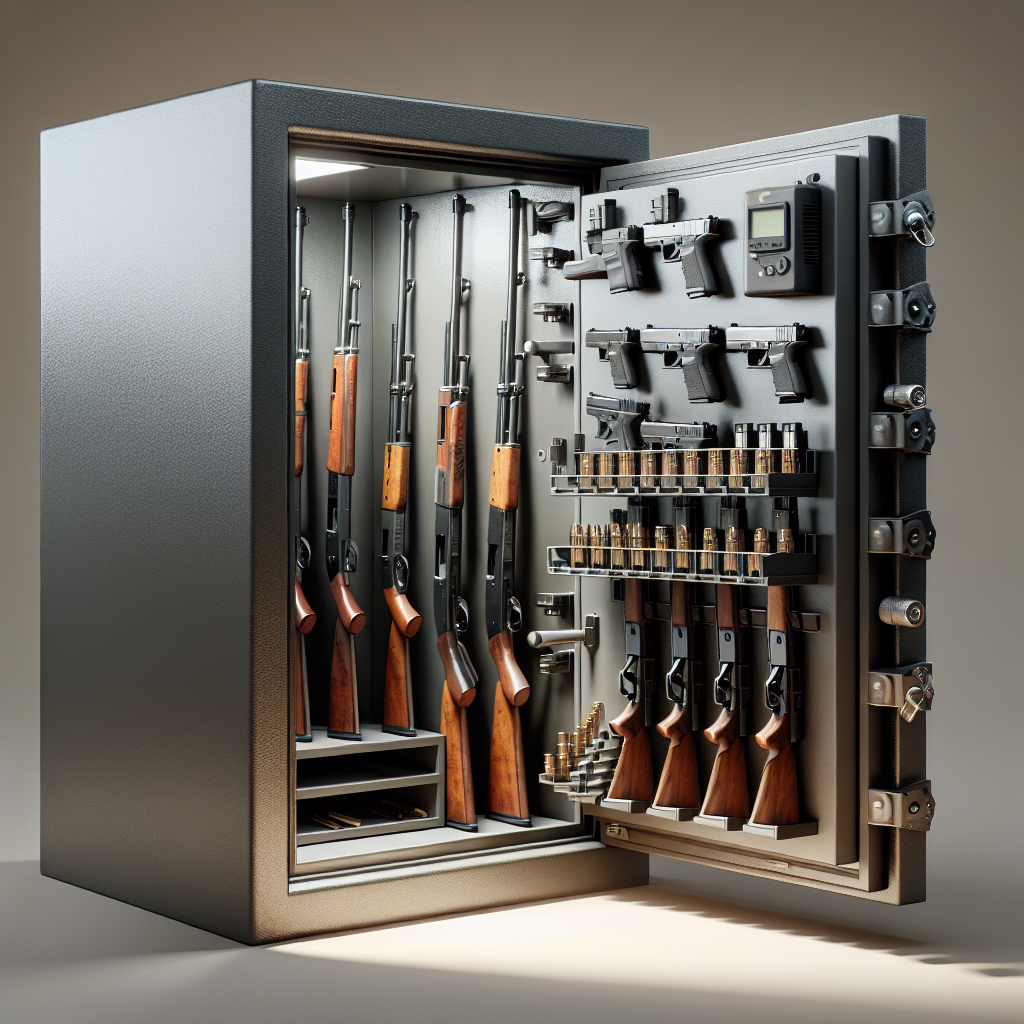
When it comes to securing your firearms, choosing a gun safe is a critical decision that cannot be taken lightly. The balance between the size and capacity of your gun safe is one of the most vital aspects that will determine how effectively your firearms and other valuables are protected. It’s easy to feel overwhelmed with the variety of safes available in the market, each boasting different features, designs, and price ranges.
Investing in the proper gun safe is important for several reasons: it keeps your firearms out of unauthorized hands, secures them against theft, and protects them from potential damage due to environmental factors like fire or moisture. However, striking the right balance between the size and capacity of your gun safe is pivotal in ensuring you get the maximum functionality and security.
Whether you’re a seasoned gun owner or a novice who just purchased their first firearm, understanding the nuances of different gun safes helps in making an informed decision. Throughout this article, we’ll delve into key considerations for balancing size and capacity in gun safes, helping you determine the best option for your needs. This includes understanding what capacity means, how to measure size requirements, the importance of future-proofing your purchase, and tips for optimizing your space. By the end of this guide, you will be armed with the knowledge to confidently choose a gun safe that fits your unique requirements.
Understanding Capacity: What Does It Really Mean?
When we talk about the capacity of a gun safe, it essentially refers to the number of firearms it can store. However, it’s crucial to recognize that capacity is more nuanced than simply counting the number of guns. Different safes come with a variety of interior configurations such as shelves, drawers, and compartments, which can significantly alter how much you can store.
Most safes provide a “maximum capacity”, but this figure often assumes the smallest types of firearms without considering additional attachments like scopes, grips, or extended magazines. If you own larger rifles, shotguns, or firearms with numerous accessories, the effective capacity of your gun safe will likely be lower than the maximum capacity stated by the manufacturer.
Another aspect to consider is the type of firearms you possess. Safes designed for long guns have different dimensions and configurations compared to those intended for handguns. Some versatile models offer interchangeable or adjustable interiors, which allow you to modify the layout based on your needs. These options can be very advantageous if your firearm collection is diverse or if you plan to expand it in the future.
Furthermore, real capacity also implies accommodating other valuables such as important documents, family heirlooms, or expensive gadgets. Therefore, while selecting a gun safe, consider how its interior layout matches not only your current firearms but also other critical items you may need to store securely.
Assessing Your Size Requirements
Determining the right size for your gun safe is the next crucial step. The size not only includes the dimensions but also the weight and space where the safe will be installed in your home. Since the main aim is to balance size with capacity, you need to consider several factors to arrive at the ideal dimensions for your safe.
Firstly, assess the available space in your home where the safe will be kept. Measure the height, width, and depth of that space and keep these measurements handy while you shop. Also, think about the weight of the safe, particularly if you’re planning to place it on an upper floor. The flooring and structure should be able to support the safe’s weight without any issues.
Next, take stock of your current firearms and plan for the future. Are you likely to acquire more firearms in the coming years? It might be worth investing in a slightly larger safe now to avoid having to upgrade later. Ensuring that the size of the safe accommodates your projected needs can save you considerable trouble and expense down the line.
Another keyword consideration is doorway and pathway clearance. Ensure that the safe can be transported through doorways, hallways, and staircases, and can fit into the desired location without difficulty. Some safes are modular or can be assembled in place, which may provide more flexibility in terms of size and space constraints.
Lastly, keep in mind that the interior space of larger safes can often be more efficiently organized compared to smaller ones. An optimized layout can effectively increase the useable capacity, making a larger safe potentially more economical over time.

The Importance of Future-Proofing Your Purchase
When you invest in a gun safe, you’re making a long-term commitment. Hence, future-proofing your purchase by considering potential changes and expansions is essential. This approach not only saves money, but it also ensures the longevity and relevance of your safe over time.
One aspect of future-proofing is considering the versatility of the safe’s interiors. Look for safes with adjustable shelving, modular compartments, and customizable interiors. These features can adapt to your needs as they change, whether that involves adding more firearms or diversifying the types of valuables you store.
Another critical point is the safe’s security features. As technology evolves, so do security threats. Choosing a safe that allows for future upgrades in locking mechanisms, digital interfaces, or even biometric systems can keep your safe up to date and resistant to emerging threats. Some high-end safes offer upgrade kits to integrate new technologies without needing to buy an entirely new unit.
Moreover, consider the maintenance and servicing aspects. Opting for a reputable brand with strong customer service and a good warranty can be invaluable. Future-proofing also means that your safe should have easily replaceable parts or be capable of receiving updates and maintenance without hassle.
Lastly, think beyond firearms to other valuables like important documents, cash, jewelry, or electronics. A versatile safe can serve multiple purposes, offering better security and peace of mind. Therefore, planning for future storage needs helps in making a smart, long-term investment.
Choosing the Right Location for Your Safe
The location of your gun safe plays a significant role in both its security and its usability. Selecting the right location involves more than just picking a place that is convenient or aesthetically pleasing.
Security is the primary consideration. Ideal locations are those that are out of plain sight, reducing the risk of theft or tampering. Basements, concealed closets, and fortified rooms are generally good choices. However, be cautious of environments prone to moisture, as this can damage both the safe and its contents. To combat moisture issues, you may consider safes with built-in dehumidifiers or moisture-resistant linings.
Accessibility is another key factor. While you want your safe to be hidden from potential intruders, it should still be conveniently accessible for you. If you regularly use the items stored within, a safe that is too difficult to access can become cumbersome. Balancing security with accessibility ensures you can quickly and easily access your firearms and valuables when needed.
Also, consider the structural integrity of the placement area. The location should be robust enough to support the weight of the safe, especially if it’s a heavy-duty model. Reinforcements might be necessary for certain floors or walls to ensure maximum safety and stability.
Lastly, take into account natural disaster risks associated with your location. For instance, if you live in an area prone to flooding, placing your safe on a lower level may not be the best idea. Similarly, if you are in a region prone to wildfires, ensure your safe has a high fire-resistance rating, and position it in an area least likely to be exposed to fire.
Optimizing the Interior Layout
A well-organized interior can significantly enhance the capacity and usability of your gun safe, especially when space is limited. Optimizing the layout involves making smart use of shelves, racks, and compartments to maximize storage efficiency.
First, start by categorizing the items you intend to store. Group similar items together, such as handguns in one section, long guns in another, and ammunition or accessories in yet another. This not only makes it easier to locate items but also helps in utilizing the available space more effectively.
Consider investing in additional accessories such as pistol racks, rifle rods, and door organizers, which can greatly enhance the interior storage capacity of your safe. These add-ons are usually affordable and can fit various models, offering a simple way to optimize space.
If your safe’s shelving is adjustable, experiment with different configurations until you find the layout that best suits your needs. Lower shelves can be used for heavier items, while upper shelves or compartments can store lighter, less frequently accessed items.
Another effective technique is using multi-purpose storage solutions. For instance, you could use stackable boxes or bins that fit within the shelving units. This allows you to store smaller items like ammunition, cleaning supplies, and important documents more efficiently.
Finally, always leave some room for future acquisitions or temporary storage needs. Overpacking a safe can make it difficult to access items and may also impair the safe’s internal climate control mechanisms if it has any. A bit of foresight in layout planning can go a long way in making your gun safe highly usable and efficient.
Conclusion
Balancing the size and capacity of a gun safe is a fundamental element in making an informed and beneficial purchase decision. The key is to recognize that capacity involves more than merely counting the number of firearms a safe can hold; it also includes accommodating accessories, other valuables, and future needs. Properly assessing size requirements, considering future-proofing, and selecting the right location for your safe are critical steps in ensuring that your investment is secure and functional for years to come.
Moreover, the optimization of the safe’s interior layout further enhances its storage efficiency and usability. Accessories like racks, adjustable shelves, and door organizers can significantly maximize capacity within a limited space. Planning your layout and maintaining some room for future acquisitions ensures long-term satisfaction with your purchase.
By thoroughly understanding these elements and applying them to your selection process, you make a well-informed decision tailored to your specific needs. Remember, the right gun safe is not just a purchase; it’s an investment in security, peace of mind, and long-term usability. With the insights provided in this guide, you’ll be well-equipped to choose a gun safe that perfectly balances size and capacity, ensuring your firearms and other valuables are genuinely protected.