
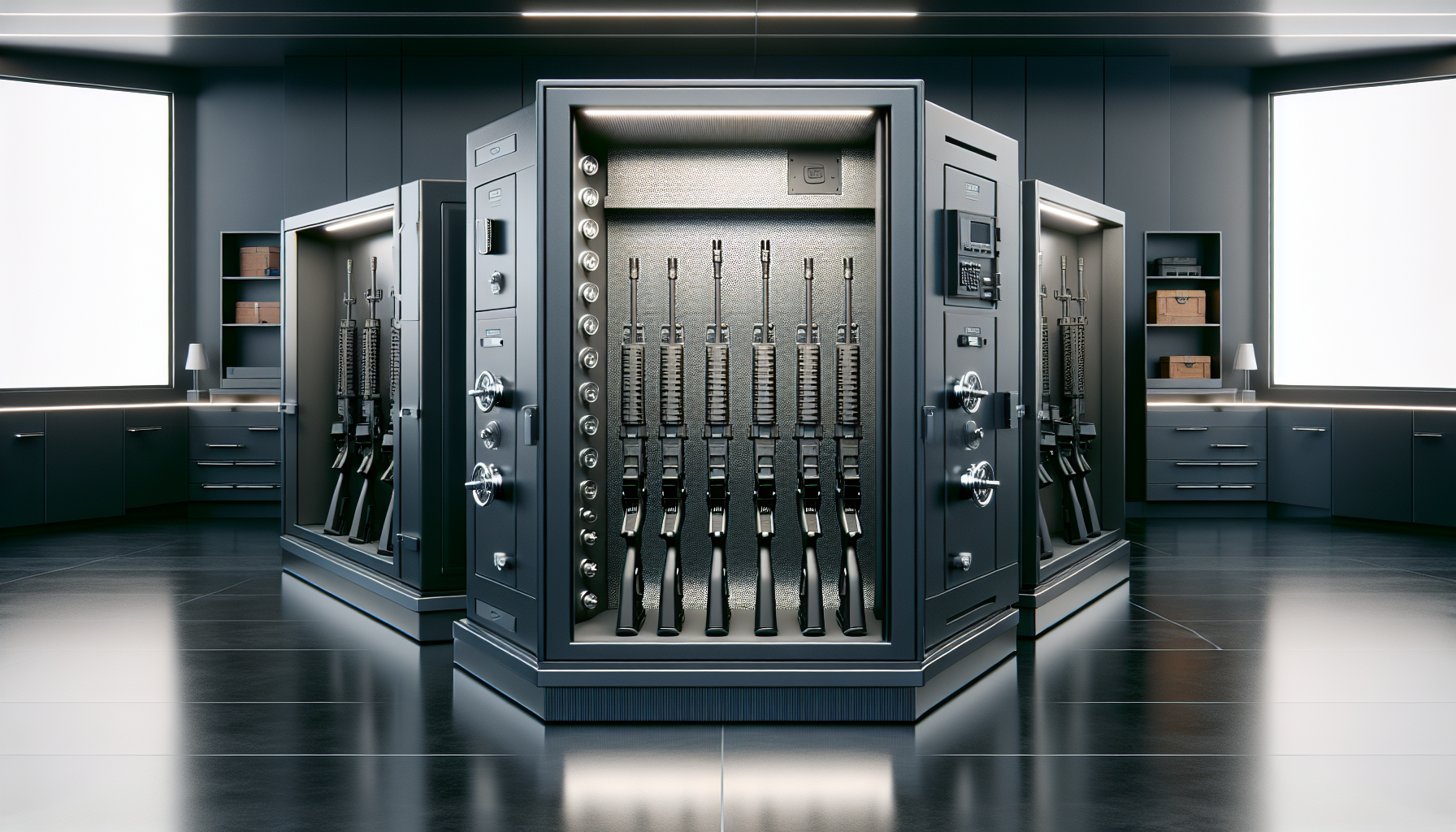
Large-caliber rifles place unique demands on a safe, and choosing the best gun safes for large-caliber rifles requires more than checking a capacity sticker or comparing glossy photos. In this buying guide, large-caliber usually means rifles chambered for rounds such as .308 Winchester, .30-06 Springfield, 7mm Remington Magnum, .300 Winchester Magnum, .338 Lapua Magnum, .45-70 Government, and similar cartridges built on full-size actions, heavy barrels, longer overall lengths, or high recoil platforms. Those rifles often wear oversized scopes, bipods, suppressor-ready barrels, and muzzle brakes, all of which change storage needs. A safe that works for compact carbines can become frustrating fast when you try to fit precision rifles, dangerous game rifles, or long-range setups.
This matters for three reasons: security, preservation, and access. Security means resisting theft through thick steel, strong locking bolts, reliable hinges, and proper anchoring. Preservation means maintaining stable humidity and protecting optics, wood stocks, sling hardware, and metal finishes from rust or impact damage. Access means opening the safe quickly, seeing what is inside, and removing a rifle without dragging a turret against a shelf or knocking zero off an expensive optic. I have helped owners set up safes for everything from elk rifles to .338 Lapua precision rigs, and the same mistake appears repeatedly: they buy by advertised gun count instead of actual usable fit. The best hub-level buying advice starts there. Measure rifles carefully, plan for accessories, and choose a safe around real dimensions, not marketing labels alone.
A hub article on buying guides should answer the core questions first. What size safe is best for large-caliber rifles? Usually one class larger than you think. What features matter most? Steel thickness, lock quality, fire protection, interior flexibility, and anchoring. Are modular and cabinet-style options enough? Sometimes, but not for every threat model. What brands are commonly considered? Liberty, Browning, Fort Knox, American Security, Rhino Metals, Winchester, Vaultek, and SecureIt all appear frequently, but the best choice depends on rifle length, budget, and installation constraints. The sections below break the decision into practical factors so you can compare safes with confidence and use this page as the central reference point for deeper articles across the buying-guides category.
How to Size a Safe for Magnum and Long-Barreled Rifles
The first sizing rule is simple: ignore the printed firearm count. A “24-gun” safe may realistically hold eight to twelve scoped large-caliber rifles comfortably, fewer if several have chassis stocks or 56-millimeter objective lenses. Measure your longest rifle from buttpad to muzzle, then add room for barrel guides, door clearance, and future accessories. Many long-range rifles run 48 to 52 inches overall, especially with 26-inch barrels, brakes, and bipods. Interior height and door opening geometry matter just as much as external dimensions. I have seen owners buy a safe with enough listed interior height, only to find the rifle catches on the frame because the opening is narrower than expected.
Depth matters too. Standard safes can feel shallow once you add a wide tactical stock, a protruding bolt handle, or a large optic with tall turrets. A deeper body gives you cleaner staging and reduces stock-to-scope contact between neighboring rifles. Adjustable shelving is not a luxury here; it is essential. If the interior forces every long gun into identical slots, large-caliber rifles fight for space with hunting shotguns and carbines. Configurable racks, barrel rests, and side storage let you create zones for precision rifles, lever guns, and traditional sporters. Better organization also improves safety because you are less likely to bang crowns, dent scope tubes, or scrape a walnut stock while removing one firearm from a crowded stack.
| Safe Buying Factor | What to Look For | Why It Matters for Large-Caliber Rifles |
|---|---|---|
| Interior height | At least 57 to 60 inches usable height for many full-length setups | Accommodates long barrels, taller optics, and barrel rests without forcing awkward angles |
| Interior depth | 14 inches minimum, more if storing chassis rifles | Prevents contact between stocks, turrets, bolt handles, and neighboring firearms |
| Realistic capacity | Assume half to two-thirds of advertised count for scoped rifles | Marketing counts are based on slim, unscoped guns placed tightly together |
| Adjustable interior | Moveable shelves, barrel racks, and door organizers | Lets you fit magnum rifles, ammo, suppressor tools, and optics logically |
| Future growth | Buy one size larger than current collection | Owners usually add rifles, documents, and accessories faster than expected |
If you are choosing between two sizes, the larger safe is usually the better long-term value. The price jump from one tier to the next is often smaller than the cost of replacing a too-small safe, especially after delivery and bolting. This is especially true for rifle owners who rotate between hunting season, long-range matches, and general storage. A safe is not just a box for today’s rifles; it becomes the storage system for optics, suppressor mounts, ammunition records, passports, and serialized accessories. Capacity planning should reflect that reality.
Security Features That Actually Protect Heavy Rifles
For large-caliber rifle owners, security should start with body steel, door construction, lock quality, and anchoring. Many mainstream residential gun safes use 14-gauge to 12-gauge steel bodies. Those are common and can be acceptable when bolted down in a low-risk environment, but thicker steel offers more resistance to pry attacks and tool intrusion. Step up to 10-gauge, 7-gauge, or composite construction and the difference is significant. In practical terms, thicker steel slows attacks with pry bars, axes, and cordless grinders, which is exactly what thieves use in smash-and-grab burglaries. Door edge design matters too. A recessed door and robust frame can be as important as bolt count.
Do not overfocus on locking bolts alone. Marketing often highlights “16 bolts” or “20 bolts,” but more bolts do not automatically mean more security if the steel is thin or the lock mechanism is weak. A quality UL-listed mechanical dial or proven electronic lock from a recognized manufacturer is more important than bolt theatrics. Electronic locks provide faster access and easier code changes; mechanical locks offer excellent longevity and no battery dependency. I have installed both, and the best choice usually comes down to access habits and environment. In busy households, a dependable electronic lock often wins because owners actually use it consistently.
Anchoring is non-negotiable. A 700-pound safe can still be tipped, pried, and moved with appliance dollies if it is not anchored to concrete or substantial framing. Once a thief gets a safe on its back, leverage improves dramatically. Properly installed anchor bolts reduce that risk and help the safe perform as intended during pry attempts. If the safe sits on a wood floor above a crawlspace or basement, confirm load capacity and anchoring method before delivery. Large-caliber rifle safes are heavy because they should be heavy, but that weight must work with the structure under it, not against it.
Fire Protection, Humidity Control, and Interior Preservation
Fire ratings deserve careful reading. Manufacturers may advertise 30, 60, 90, or 120 minutes at temperatures ranging from roughly 1,200 to 1,800 degrees Fahrenheit, but test methods vary widely. Some ratings come from independent labs, while others are internal manufacturer standards. That does not make all manufacturer tests meaningless, but it does mean comparisons are not always apples to apples. In real use, fire performance depends on more than the rating label: seal quality, insulation type, door fit, and where the safe is installed all matter. A garage can expose a safe to different heat patterns and moisture swings than a climate-controlled interior room.
Humidity control is just as important for preserving large-caliber rifles. Precision rifles with premium barrels, blued steel, and exposed fasteners can develop corrosion surprisingly fast in damp spaces. Add expensive optics, sling swivels, magazines, and reloading data, and the inside of the safe becomes a microclimate worth managing. GoldenRod dehumidifiers, rechargeable desiccant packs, and wireless hygrometers are common, effective tools. Aim for stable humidity rather than chasing an arbitrary number, but many owners target around 45 to 50 percent relative humidity. Too much dryness is less common than excess moisture, yet both extremes can affect wood stocks and stored documents.
Interior materials matter because large-caliber rifles are often heavier and bulkier than standard sporting rifles. Carpeted barrel rests, high-density stock bases, and door organizers with rigid backing reduce shifting and impact. Soft interiors alone are not enough if spacing is poor. A well-designed interior lets a 15-pound precision rifle stand securely without leaning its optic into another gun. For owners storing heirloom big-bore rifles or custom builds, that controlled spacing is part of preservation, not a convenience upgrade.
Best Types of Gun Safes for Large-Caliber Rifles by Use Case
The best type of safe depends on how you use your rifles. A hunter with four scoped bolt-actions and seasonal gear may do well with a mid-size fire-rated safe from Browning, Winchester, or Liberty, provided interior height is generous and capacity expectations stay realistic. A precision shooter with chassis rifles, tripods, and multiple optics usually benefits from a wider, deeper safe or a modular storage system like SecureIt paired with a locked room strategy. Modular systems are especially useful in upstairs rooms, basements with tight stairwells, or homes where a welded safe cannot be moved easily. Their main tradeoff is that security and fire protection can differ substantially from traditional heavy safes.
Collectors and owners of expensive safari or long-range rifles should look toward heavier construction from brands such as American Security, Fort Knox, Rhino Metals, or higher-tier Liberty models. These safes typically offer thicker steel, stronger doors, interior customization, and more substantial lock options. They cost more, but the value is easier to justify when one optic can cost as much as an entry-level safe. For apartment dwellers or temporary setups, a full-size residential security container may not be practical. In that case, a lighter cabinet can provide basic unauthorized-access control, but it should not be mistaken for burglary-resistant storage. The distinction matters.
If quick access is your top concern, understand the tradeoff. Fast-access long-gun safes and vertical lockers can stage a defensive rifle effectively, but they rarely replace a full-capacity main safe for a collection of large-caliber rifles. Many owners end up with a layered approach: one heavy main safe for long-term storage and one smaller quick-access unit for a single frequently used firearm. That setup aligns better with actual behavior than forcing one product to solve every problem poorly.
How to Compare Popular Brands, Prices, and Features
Brand comparison works best when you ignore fan loyalty and inspect specifications line by line. Start with steel thickness, lock type, fire rating method, interior dimensions, weight, warranty, and dealer support. Liberty is widely known for broad dealer networks and approachable model ranges. Browning often stands out for thoughtful interior layouts and door storage. American Security has a strong reputation for serious construction in many models. Fort Knox is often favored for customization and heavier builds. Rhino Metals earns attention for fit, finish, and premium configurations. Vaultek is better known for modern electronics and compact quick-access products than for traditional large-rifle safes, so it fits some roles better than others.
Price tiers generally break into clear bands. Entry-level options can start around several hundred dollars, often emphasizing cabinet-style security or lighter-gauge bodies. Mid-range residential gun safes commonly run from about $1,000 to $3,000 and cover what many households actually buy. Higher-end safes often begin above that and climb rapidly once you add thicker steel, upgraded locks, premium interiors, and delivery complexity. Remember to budget for installation, electrical pass-through use, dehumidification, and anchoring hardware. The delivered price is the real price.
One practical comparison method is to build a short list of three safes and rank them against your real rifles. Place your longest rifle, your widest optic setup, and your heaviest chassis gun at the center of the decision. If a safe only works when those rifles are stripped of accessories or packed tightly enough to rub, it is not the right hub recommendation for buying guides. Fit should be obvious, not theoretical. That standard saves money and frustration.
Common Buying Mistakes and the Smartest Next Step
The most common mistake is underbuying on size. The second is believing fire ratings and gun counts without reading the fine print. The third is overlooking installation. I have watched buyers spend heavily on a safe, then place it in a humid garage, fail to anchor it, and cram oversized rifles into a layout designed for slim shotguns. The result is reduced protection and constant annoyance. Another frequent error is neglecting optics clearance. Large objective lenses, elevated rings, and exposed turrets are exactly what make a rifle hard to store, so they should shape the purchase from day one.
The smartest next step is to measure every rifle, define your threat level, and set a realistic budget that includes delivery and moisture control. Then compare safes by body steel, lock quality, interior dimensions, and real usable capacity. For most owners shopping for the best gun safes for large-caliber rifles, a larger fire-rated safe with adjustable shelving, solid anchoring, and proven humidity management is the safest bet. Use this hub as your starting point, then move deeper into model-specific reviews, fire-rating explainers, and installation guides within the Gun Safes & Safety category. Buy once, install it correctly, and your rifles will be more secure, better preserved, and easier to access when they are needed.
Frequently Asked Questions
What makes a gun safe suitable for large-caliber rifles specifically?
A gun safe that works well for large-caliber rifles has to do more than simply lock up firearms. Rifles chambered in cartridges like .308 Winchester, .30-06 Springfield, 7mm Remington Magnum, .300 Winchester Magnum, .338 Lapua Magnum, and .45-70 Government are often built on longer actions, wear larger scopes, use heavier barrels, and may include muzzle brakes, bipods, or adjustable stocks. All of that changes the storage equation. A suitable safe needs enough true interior height and depth to accommodate long overall lengths and larger optics without forcing awkward angles or contact between rifles.
Interior layout is especially important. Many “gun count” ratings are optimistic and based on slim, unscoped long guns placed tightly together. Large-caliber rifles usually require more slot width, more clearance around the fore-end, and enough space to prevent scopes and turrets from bumping into neighboring firearms. Adjustable shelving, barrel rests, and modular interiors are valuable because they let you configure the space around real-world rifles instead of idealized showroom dimensions.
Strength and security matter too, particularly because large-caliber rifles often represent a significant investment. A well-suited safe should have a solid steel body, a reinforced door, quality locking bolts, and a reliable lock system. Fire protection is another major factor, since wood stocks, optics, ammunition accessories, slings, and documents can all be damaged by high heat and smoke. In short, the best safe for large-caliber rifles combines usable interior space, flexible organization, strong construction, and a realistic level of fire and theft protection rather than relying on a large capacity number alone.
How much interior space do I really need for scoped large-caliber rifles?
In most cases, you need more space than the safe’s advertised capacity suggests. Large-caliber rifles with scopes, heavy-contour barrels, raised cheek pieces, muzzle devices, and sling studs take up significantly more room than standard hunting rifles or basic long guns without accessories. If you own rifles chambered in .300 Win Mag, .338 Lapua, or similar long-range cartridges, they may also have oversized optics with tall turrets and larger objective lenses, which can quickly crowd a conventional interior.
A practical rule is to shop for a safe that exceeds your current collection size by a comfortable margin. If you own six large-caliber rifles, a safe marketed for 10 to 14 guns may be far more realistic than one rated for eight. This extra room helps prevent pressure points on optics, keeps stocks from rubbing together, and makes access easier when you need to remove one rifle without shifting several others. It also leaves room for future purchases, spare shelves, ammo storage bins, or bolt and accessory organization.
Pay close attention to interior dimensions, not just exterior size. Measure your longest rifle from buttpad to muzzle, and account for any suppressor-ready length, muzzle brake, or recoil pad extension. Then consider the width required by the optic and bolt handle. Depth matters just as much as height, because some safes are tall enough but too shallow for rifles with large scopes mounted high above the receiver. A well-planned interior with adjustable racks and shelves often matters more than raw cubic space, especially if your collection includes a mix of magnum hunting rifles, tactical precision rifles, and lever guns in larger calibers.
Are fire ratings and steel thickness important when choosing a safe for big rifles?
Yes, both are important, and they deserve careful attention. Steel thickness affects how resistant the safe is to prying, deformation, and physical attack. While no residential gun safe is invulnerable, heavier steel generally provides better real-world protection than thin sheet metal. For owners of expensive large-caliber rifles, especially precision rifles with premium optics, stronger construction can be worth the added cost. Look beyond marketing terms and try to find actual body and door steel specifications, along with details about bolt coverage, hinge design, and door reinforcement.
Fire ratings are equally important because heat can damage much more than the firearm itself. Stocks can crack or warp, finishes can degrade, optics can fail, lubricants can break down, and important paperwork can be destroyed. A fire rating should be viewed as one part of an overall protection strategy, not a guarantee. The most useful ratings are those tied to a specific duration and temperature, and ideally supported by transparent testing information. A vague “fireproof” claim is much less meaningful than a clearly stated rating with construction details such as multiple fireboard layers, heat-expanding door seals, and insulated wall design.
For large-caliber rifle owners, it helps to balance security and fire protection instead of focusing only on one. A safe with decent fire protection but light construction may not offer the theft resistance you expect, while a very strong steel box with poor insulation may leave your gear vulnerable in a house fire. The best choice depends on your environment, budget, and collection value, but in general, thicker steel, a better-built door, and a credible fire rating are signs you are shopping in the right category.
What locking features and installation practices matter most for securing large-caliber rifles?
The lock itself matters, but the overall installation matters just as much. Most quality safes use either an electronic lock or a mechanical dial lock. Electronic locks are popular because they are fast to open and convenient for regular access, while mechanical locks appeal to buyers who prefer simplicity and long-term reliability without batteries. Either can be a good choice if it comes from a reputable manufacturer. More important than choosing one style over the other is making sure the lock system is paired with a solid boltwork design, a reinforced door frame, and anti-pry features that help the safe resist forced entry.
Anchoring the safe is one of the most overlooked but most critical steps. Even a heavy safe can be tipped, moved, or attacked more easily if it is not bolted down. Large-caliber rifles are valuable, and a thief who can move the entire safe gains time and privacy to work on it elsewhere. Bolting the safe to a concrete floor or other approved structural surface dramatically improves security. If possible, place it in a low-visibility area with limited side access, because tight placement can reduce pry opportunities around the door.
It is also smart to think about everyday use. A secure safe that is frustrating to access may tempt owners to leave rifles out temporarily, which defeats the point. Interior lighting, door organizers, dehumidification, and a layout that allows safe retrieval of long, heavy rifles all improve practical security. The best setup combines a trustworthy lock, strong construction, proper anchoring, and a location that makes unauthorized access more difficult while still letting you use the safe consistently and safely.
Should I prioritize capacity, rifle fit, or extra features when buying the best gun safe for large-caliber rifles?
If you have to prioritize, start with rifle fit and core protection, then look at capacity and extra features. Large-caliber rifles are less forgiving than compact firearms when it comes to interior dimensions. If the safe cannot comfortably hold your longest and bulkiest rifles with optics installed, nothing else matters much. A proper fit protects the rifles from being knocked around, makes organization easier, and ensures you can actually use the safe as intended. Measure first, and treat published capacity claims as rough estimates, not decision-making facts.
After fit, focus on the fundamentals: steel construction, lock quality, door design, fire protection, and anchor capability. These elements determine whether the safe is truly doing its job. Once those basics are covered, capacity becomes a question of convenience and future-proofing. It is often wise to buy larger than you think you need, especially if you plan to add more hunting rifles, precision rifles, optics, or accessories over time. A slightly larger safe is usually easier to live with than one that becomes crowded immediately.
Extra features should be considered useful upgrades, not substitutes for build quality. Adjustable shelving, scope-friendly barrel rests, power outlets, lighting, door storage, humidity control, and better interior materials can all improve ownership. For large-caliber rifles, these features can be especially helpful because they support safer storage of heavier firearms and expensive optics. But they are most valuable when built into a safe that already meets the essential requirements of fit, security, and fire resistance. In other words, buy the structure first, then the conveniences.