
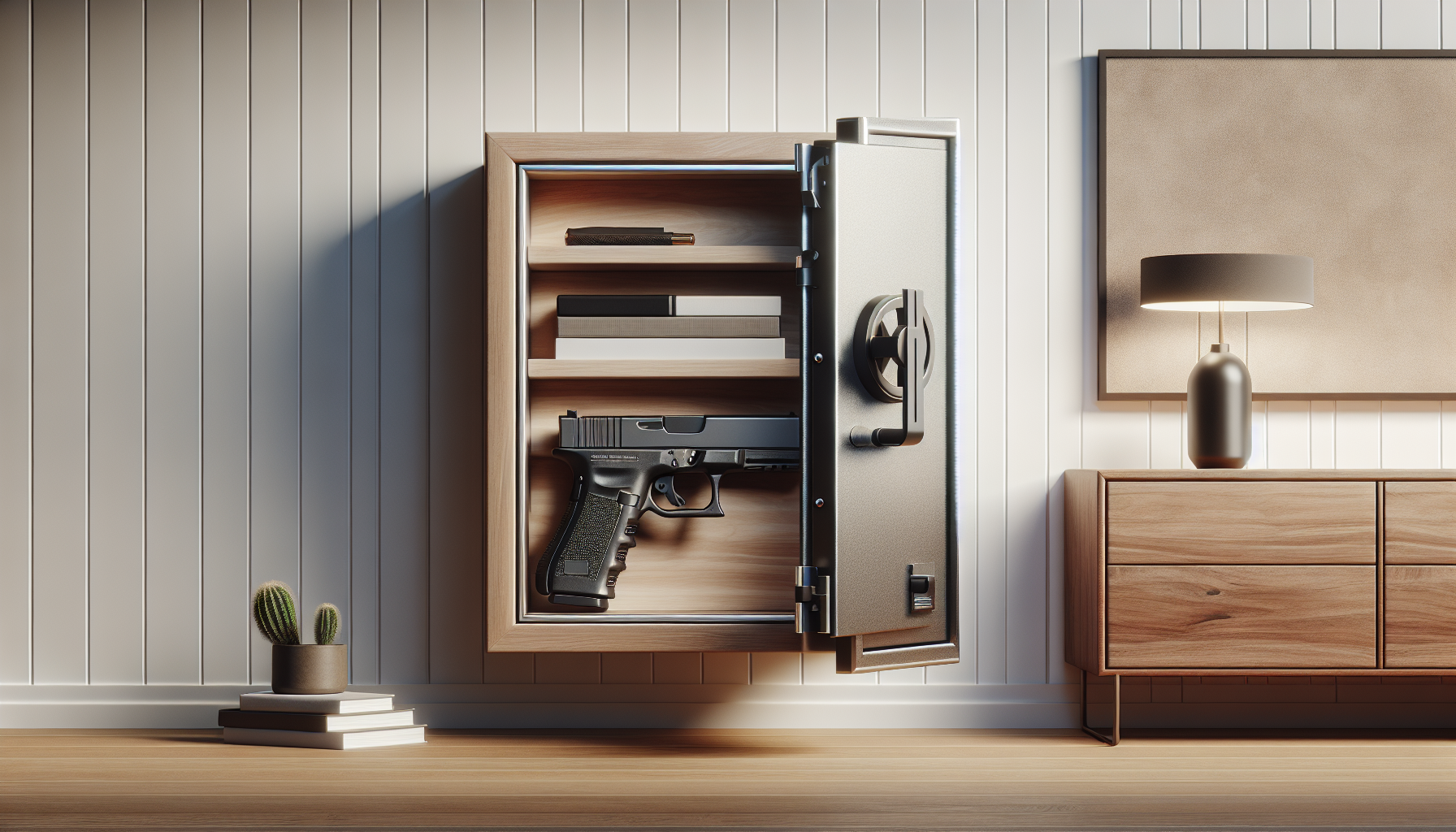
Choosing the best wall-mounted gun safes for handguns starts with understanding what these products are designed to do: provide fast-access, tamper-resistant storage in a fixed location that keeps a defensive pistol secure yet reachable. A wall-mounted handgun safe is typically a steel lockbox or quick-access vault bolted between studs, across framing, or onto masonry so it cannot be easily carried away. In practical use, these safes solve a common problem I see in home security planning: owners want a bedside handgun, hallway access point, or office defensive firearm available within seconds, but they also need protection from children, guests, smash-and-grab burglars, and negligent handling.
This category matters because storage method directly affects both safety and response time. A large traditional safe offers better overall burglary protection, but it can be too slow or inconvenient for a single defensive handgun. A drawer safe is discreet, yet furniture mounting is usually weaker than structural wall anchoring. Wall-mounted gun safes occupy a middle ground. They can be hidden behind artwork, inside a closet, beside a bed, or in a home office, while using lag bolts or expansion anchors that make quick theft harder. The best models combine 12-gauge to 16-gauge steel bodies, pry-resistant doors, internal hinges or protected external hinges, reliable electronic or biometric entry, and enough depth to hold a handgun with a mounted light, spare magazine, or basic valuables.
For shoppers researching buying guides in the broader gun safes and safety space, this hub article explains the core decisions: where to mount a wall safe, what level of steel thickness and lock type to prioritize, which features justify the price, and where wall-mounted designs outperform under-bed, bedside, or full-size safes. It also addresses limits. No compact wall-mounted handgun safe is truly burglary-proof, and many advertised biometric options are less dependable than keypad models. The goal is not marketing hype. The goal is choosing a wall-mounted handgun safe that fits your firearm, your room layout, your access needs, and the actual threats you are trying to manage.
What Makes a Wall-Mounted Handgun Safe Worth Buying
The best wall-mounted gun safes for handguns succeed in four areas: anchoring strength, entry speed, usable interior space, and resistance to opportunistic attack. Anchoring comes first because a safe that can be unscrewed or ripped from drywall defeats the entire purpose. In my experience installing compact safes, the strongest results come from direct attachment to two studs when the safe spans framing, or to one stud plus a steel backplate that distributes load. Masonry mounting can be excellent if you use proper sleeve or wedge anchors. Drywall-only installation is not acceptable for defensive firearm storage.
Entry speed is the next deciding factor. For a bedside role, you want a lock that opens in darkness, under stress, and with partial hand dexterity. Backlit simplex-style mechanical locks are rare in this category, so most buyers choose electronic keypad or biometric entry. A good keypad safe should allow tactile orientation, four- to six-digit programming, silent mode, and a backup override key used only for emergencies. Biometrics can work well when the sensor is high quality and enrolled correctly, but lower-end scanners often struggle with dry skin, dirty fingertips, or inconsistent finger placement. For that reason, the safest buying approach is a biometric safe with a dependable keypad, not biometrics alone.
Interior fit also matters more than many listings suggest. A safe advertised for handguns may not accommodate a full-size pistol with a red-dot sight, suppressor-height sights, or a weapon light. Measure overall length, height, and width with your defensive setup exactly as stored. If you use a Glock 17 with a Streamlight TLR-1 HL, a SIG P320 with optic, or a full-size 1911, check both depth and door clearance. Foam interiors are useful, but reconfigurable shelves, magazine clips, and holster inserts are better for repeatable access.
Finally, think realistically about attack resistance. Compact wall safes are designed primarily to defeat unauthorized access and slow down quick theft. They are not substitutes for a UL-rated burglary safe. Stronger models use thicker steel, anti-pry lips, recessed doors, punch-resistant lock areas, and internal hinge protection. These features matter because most residential break-ins are fast. If a burglar cannot pry the door quickly or remove the safe easily, the safe has done its job.
How to Evaluate Lock Types, Steel Thickness, and Mounting Design
Shoppers comparing wall-mounted gun safes often focus on brand names first, but the technical details tell you more than the logo. Start with steel thickness. Lower-cost units commonly use 16-gauge steel, which is better than a sheet-metal lockbox but still vulnerable to aggressive prying or cutting. Moving to 14-gauge or 12-gauge steel significantly improves stiffness and pry resistance. Door thickness also deserves separate attention because some manufacturers advertise thick doors while using thinner bodies. For a defensive handgun safe, I consider 14-gauge body steel a practical baseline and 12-gauge a notable upgrade.
Lock design affects both reliability and safe failure modes. Electronic keypads from established lock makers tend to be the most balanced option for handgun access. They are fast, intuitive, and generally less finicky than bargain biometric systems. Look for sealed keypads, low-battery warnings, external battery backup if available, and lockout protection after repeated failed entries. Biometric readers should store multiple prints and recognize at varied angles, but they still need a fallback method. Mechanical key override is common; just do not store that override key in the same room in an obvious place.
Mounting design determines whether the safe works in your house at all. In-wall safes fit between studs, typically on 16-inch centers, and offer the best concealment because the body recesses into the wall cavity. Their weakness is depth. Standard interior walls are often built from 2×4 framing, leaving limited usable depth once drywall and rear clearance are considered. Surface-mount wall safes project into the room but usually provide more storage volume and stronger framing options. If your handgun has an optic, light, and spare magazine, a shallow in-wall design may be too restrictive.
| Feature | Best Choice for Most Buyers | Why It Matters |
|---|---|---|
| Steel body | 14-gauge minimum | Better resistance to flexing and pry attacks than typical 16-gauge boxes |
| Lock type | Keypad with backup override | Fast access, strong reliability, fewer false reads than cheap biometrics |
| Biometric option | Only as secondary access | Convenient, but fingerprint sensors vary widely in real use |
| Mounting | Direct stud or masonry anchoring | Prevents smash-and-grab theft of the entire safe |
| Interior depth | Sized for pistol plus light/optic | Many safes fit the gun alone but not the defensive setup you actually use |
| Door design | Recessed with anti-pry edge | Reduces leverage points at the seam |
Another overlooked factor is power management. Battery-powered handgun safes should use common batteries, usually AA or 9V, and should preserve codes during battery changes. I recommend scheduled replacement on a set date rather than waiting for warnings. I have seen more lockouts caused by ignored low batteries than by true electronic failure. Good maintenance is part of safe ownership.
Best Types of Wall-Mounted Gun Safes for Different Rooms and Uses
The best wall-mounted gun safe for a bedroom is not always the best choice for an entry hall, office, or closet. Placement should reflect likely use. In a primary bedroom, fast-access keypad safes mounted beside or slightly behind the bed frame work well because they support a natural draw path while staying hidden from casual view. If children are in the home, mounting height matters. A higher position behind a lockable closet door adds another layer of control without making adult access too slow.
In a hallway or home office, concealment often matters more than split-second reach. An in-wall safe behind framed art or a mirror can be effective here, especially for people who carry during the day and want a consistent place to secure a handgun on returning home. This type of staging is safer than leaving a pistol on a desk, in a backpack, or on a shelf. For remote workers who spend long hours in an office, a wall-mounted safe near the workstation can outperform a nightstand safe because it keeps the firearm accessible without occupying drawer space.
Closets are another smart location because they offer visual cover, reduced guest traffic, and easier access to studs. A surface-mounted safe on a closet wall can hold a handgun, magazine, passport, and small valuables, though once you start storing multiple items, organization becomes important. Overstuffing a compact safe leads to slow retrieval and increased risk of snagging a trigger guard on loose contents. If you want storage for two handguns, documents, and jewelry, move up in size rather than forcing everything into a single-pistol unit.
For apartment dwellers, the decision is more nuanced. Lease restrictions may limit invasive mounting, and shared walls can complicate concealment. In these settings, a removable but still stud-anchored surface unit may be better than cutting drywall for an in-wall safe. If permanent mounting is impossible, a wall-mounted handgun safe may not be the right product category; a heavier bedside or closet floor safe with approved anchoring could be more practical.
Traveling households should also think about daily routine. If one adult leaves early and another returns late, the safe should allow silent opening, visible keypad controls in low light, and room for the gun in its normal carry configuration. Convenience sounds minor until a safe is used every day. In real homes, the easiest safe to use correctly is the one that actually improves safety.
Top Buying Guide Criteria, Common Mistakes, and Brand-Level Differences
When reviewing brands in this subcategory, I separate them into three groups: entry-level import safes, better-engineered consumer safes, and premium fast-access designs. Entry-level models dominate online marketplaces and usually compete on fingerprint claims, LED lighting, and price. Some are adequate for basic unauthorized access prevention, but quality control can be uneven. Common issues include thin mounting hardware, rattling doors, poor weld finish, inconsistent biometric reads, and vague steel specifications. If a listing does not clearly state steel gauge, interior dimensions, mounting method, and backup entry options, treat that as a warning sign.
Better-engineered consumer models generally come from established safe or security brands with clearer specifications, replacement parts support, and more realistic marketing. These units often use thicker steel, cleaner welds, stronger internal hinges, and keypads that feel more deliberate instead of toy-like. Premium designs add refined lock housings, better anti-pry geometry, and superior fit and finish, but the price rises quickly. Whether that premium is worth paying depends on your environment. For a low-traffic master closet in a low-risk area, a midrange safe properly anchored may be enough. For a home with frequent visitors, children, contractors, or a greater burglary risk, better build quality is easier to justify.
The most common mistake buyers make is choosing based on concealment alone. A tiny safe hidden perfectly but too small for the actual handgun setup becomes frustrating immediately. The second mistake is trusting biometrics without testing them. Enroll multiple fingers on both hands, test in the dark, and practice from the position where you would really access the safe. The third mistake is poor installation. Short screws into drywall, sloppy stud alignment, and inaccessible mounting bolts undermine even a well-made safe.
Another mistake is ignoring legal and insurance context. State storage laws vary, especially where minors are present. Some jurisdictions impose criminal liability for negligent storage if a child or prohibited person gains access. Insurance carriers may also treat firearms differently from general contents. A wall-mounted handgun safe can support compliance and reduce risk, but only if it is used consistently and installed according to both manufacturer guidance and local building realities.
For most buyers, the smartest purchase process is simple: measure the firearm and accessories, choose location before brand, require stud or masonry anchoring, prioritize keypad reliability over marketing gimmicks, and buy one size larger than you think you need. That approach avoids most regrets and creates room for future upgrades such as an optic-equipped handgun or spare magazine storage.
How This Hub Fits the Broader Gun Safe Buying Journey
As a hub within the gun safes and safety buying-guides category, wall-mounted handgun safes connect naturally to several adjacent decisions. Many shoppers start here because they want immediate-access storage, then realize they also need guidance on bedside gun safes, biometric versus keypad safes, child-resistant storage, concealed in-wall safes, and full-size home safes for long guns and ammunition. Wall-mounted models are rarely a complete security plan on their own. They work best as one layer in a broader storage system where a quick-access handgun safe handles defensive readiness while a larger anchored safe protects the rest of the collection.
This is also why comparing use cases matters more than comparing advertised features in isolation. A family with children may value tamper resistance and consistent lock behavior above all else. A single adult in a small condo may prioritize concealment and space efficiency. A rural homeowner may stage one handgun near a bedroom and another in a secure office, using multiple compact safes instead of one central location. The right answer depends on layout, routine, firearm configuration, and who could access the room when you are not present.
If you are building out your storage plan, use this page as the starting point for the buying-guides branch of your research. From here, narrow by installation type, lock preference, room placement, and handgun size. Then compare specific models with a checklist grounded in real performance, not bullet-point marketing. That process leads to a safer purchase and a safer home.
The main takeaway is clear: the best wall-mounted gun safes for handguns balance fast access with meaningful physical security. Look for sturdy steel, reliable locking hardware, proper structural mounting, and enough interior space for your actual pistol setup. Avoid undersized units, weak installation, and biometric-only dependence. A well-chosen wall-mounted safe will not replace a full burglary safe, but it will dramatically improve everyday handgun security, reduce unauthorized access risk, and keep a defensive firearm available where you need it most. Review your room layout, measure your handgun, and choose the model that fits your real routine rather than an idealized one.
Frequently Asked Questions
What is a wall-mounted gun safe for handguns, and how is it different from a regular bedside or portable pistol safe?
A wall-mounted gun safe for handguns is a fixed, tamper-resistant storage unit designed to be installed directly into a wall, across framing, or onto a solid surface such as masonry. Its main purpose is to keep a defensive handgun secure while still allowing fast access when needed. Unlike a portable lockbox or a small bedside safe that can sometimes be picked up and removed by a thief, a wall-mounted model is anchored into the structure of the home. That fixed installation is one of its biggest advantages because it reduces the risk of smash-and-grab theft and creates a more permanent security solution.
In practical terms, these safes are especially useful for homeowners who want a handgun accessible in a predictable location without leaving it unsecured in a drawer, nightstand, or closet shelf. Most quality wall-mounted handgun safes are made from steel, use reinforced doors, and offer quick-access locking methods such as biometric scanners, keypad entry, RFID, or mechanical push-button systems. Some are designed to sit recessed between studs for a cleaner, more concealed installation, while others mount on the wall surface and prioritize simplicity and capacity.
The biggest difference between a wall-mounted handgun safe and a standard portable handgun safe is the balance of security, concealment, and permanence. Portable safes are useful for travel or temporary storage, but they often rely on tether cables or lightweight designs that do not provide the same resistance to forced removal. A wall-mounted safe, by contrast, becomes part of the room’s layout. For many people, that means better control over where the firearm is stored, more confidence that unauthorized users cannot casually access it, and less chance that the safe itself will disappear during a burglary.
Are wall-mounted handgun safes actually secure enough to prevent theft and unauthorized access?
A well-made wall-mounted handgun safe can be very effective at preventing casual theft and unauthorized access, especially when it is properly installed and chosen with realistic expectations. It is important to understand that no residential handgun safe is completely impenetrable. The goal is to create meaningful delay, discourage opportunistic theft, and prevent unauthorized handling by children, guests, or intruders who do not have time, tools, or privacy to attack the safe aggressively. For that purpose, a quality wall-mounted model can perform extremely well.
Security depends on several factors working together. The first is construction quality. Look for solid steel body panels, a reinforced door, strong internal hinges or protected external hinges, and a locking mechanism with real resistance to prying. The second is installation. Even an excellent safe can be compromised if it is mounted poorly with weak hardware or attached only to drywall. The third factor is placement. A safe that is hidden behind furniture, inside a closet, or in a low-traffic part of the room is naturally more secure than one mounted in obvious plain sight. Concealment is not a replacement for strength, but it adds a valuable layer of protection.
For unauthorized access, quick-access lock quality matters just as much as steel thickness. A dependable biometric reader, secure keypad, or mechanical simplex-style lock can make a major difference in daily use. Cheap electronic locks may be unreliable or easier to defeat, so it is smart to focus on reputable brands with a strong record for lock durability and consistent opening under stress. If you store a handgun for home defense, the safe must open quickly for you while staying locked to everyone else. That balance is the entire point of the category.
It is also wise to frame wall-mounted gun safes correctly in terms of burglary protection. These units are best viewed as part of a layered security plan that may also include alarm systems, reinforced doors, cameras, lighting, and responsible concealment. In that context, a wall-mounted safe is an excellent solution for securing a handgun where it is needed most without leaving it exposed or easy to steal.
What features should I look for when choosing the best wall-mounted gun safe for handguns?
The best wall-mounted gun safe for handguns will combine fast access, strong construction, dependable locking, and installation compatibility with your space. One of the first things to evaluate is the lock type. Biometric access is appealing because it allows quick opening with a fingerprint, but quality varies widely. A good biometric system should read reliably from multiple angles and store enough authorized users for everyone who legitimately needs access. Keypad locks are also popular and can be extremely effective if the buttons are responsive and easy to use in low light. Mechanical push-button locks appeal to buyers who want speed without depending on batteries or electronics.
Build quality should be near the top of your checklist. Pay attention to steel gauge, door thickness, anti-pry design, locking bolts, and the overall rigidity of the safe body. A heavier and better-reinforced safe will generally offer better resistance to attack. Interior protection matters too. A well-designed interior with foam lining, adjustable shelving, or handgun racks can help you store one or more pistols securely without unnecessary movement or cosmetic wear. If you plan to keep a spare magazine, flashlight, or important documents inside, make sure the safe has enough internal space without becoming too bulky for the wall location.
Mounting design is another major consideration. Some safes are designed for recessed installation between standard wall studs, which gives a more discreet appearance and can make concealment easier. Others are surface-mounted and may offer easier installation or larger capacity. Before buying, measure stud spacing, wall depth, and the exact area where the safe will go. If the safe does not match the structure of your wall, installation becomes more complicated and may compromise security or convenience.
Finally, consider practical usability. Interior lighting, silent mode, low-battery warnings, override access, and the direction the door swings can all affect real-world performance. In an emergency, small details become important. A wall-mounted handgun safe should not just be secure on paper; it should be intuitive to access under stress, dependable over time, and suitable for the specific place you intend to install it.
Where should a wall-mounted handgun safe be installed for the best mix of access, concealment, and safety?
The best installation location depends on how the handgun will be used, who lives in the home, and how quickly access may be needed. In most cases, the ideal location is one that gives the authorized owner fast, repeatable access while staying hidden from casual view and physically secured to strong structural materials. Common locations include bedroom closets, behind furniture, inside a home office, near a primary sleeping area, or in a discreet hallway location. For many homeowners, the sweet spot is a place that is close enough to reach quickly but not so obvious that a guest, child, or burglar would immediately notice it.
Concealment is especially valuable with wall-mounted safes because these products are often smaller than full-size long-gun safes and can be integrated into the room more discreetly. A recessed unit installed between studs behind a mirror, framed art, cabinet door, or clothing in a closet can be very effective. That said, concealment should never interfere with safe access. If you need to move multiple items or open several barriers before reaching the safe, the location may be too complicated for defensive use. The safest setup is one that you can reach consistently and open confidently even in low light or while under stress.
You should also think about environmental and structural factors. Avoid areas with excessive moisture, plumbing lines, HVAC obstructions, or electrical hazards unless the installation is planned carefully. If the wall is exterior-facing, temperature and humidity swings may be greater, which can affect both electronics and firearm storage conditions. Interior walls with stable temperatures are usually better. Most importantly, the mounting surface must be solid. Anchoring into studs, framing members, or masonry is critical. Drywall alone is not an acceptable foundation for a security product intended to protect a handgun.
For homes with children or frequent visitors, placement should emphasize controlled access and invisibility. The handgun should remain inaccessible to unauthorized users not only because the safe is locked, but also because its presence and location are not obvious. A thoughtful installation supports both security and responsible firearm ownership, which is exactly what a wall-mounted handgun safe is meant to do.
How do I properly install and maintain a wall-mounted gun safe for long-term reliability?
Proper installation starts with following the manufacturer’s instructions exactly, but the general principle is simple: the safe must be anchored to solid structural material with appropriate hardware. For recessed installations, that usually means fitting the unit between studs and fastening it directly to framing members. For surface-mounted models, it may involve lag bolts into studs or masonry anchors into concrete or brick. The safe should sit level, the mounting points should be tightened securely, and the wall area should be checked beforehand for wiring, plumbing, and other hidden obstacles. If you are not comfortable working with structural mounting or locating utilities inside walls, hiring a qualified installer is often the smartest choice.
Once installed, test the safe thoroughly before storing a loaded handgun inside. Open and close it multiple times using the primary access method and any backup entry method. Confirm that the door clears nearby trim, shelving, or furniture and that the lock operates smoothly from the normal standing or kneeling position you will use in real life. If the safe includes a biometric scanner, enroll fingerprints carefully and test them under different conditions, including dry hands, slightly damp