
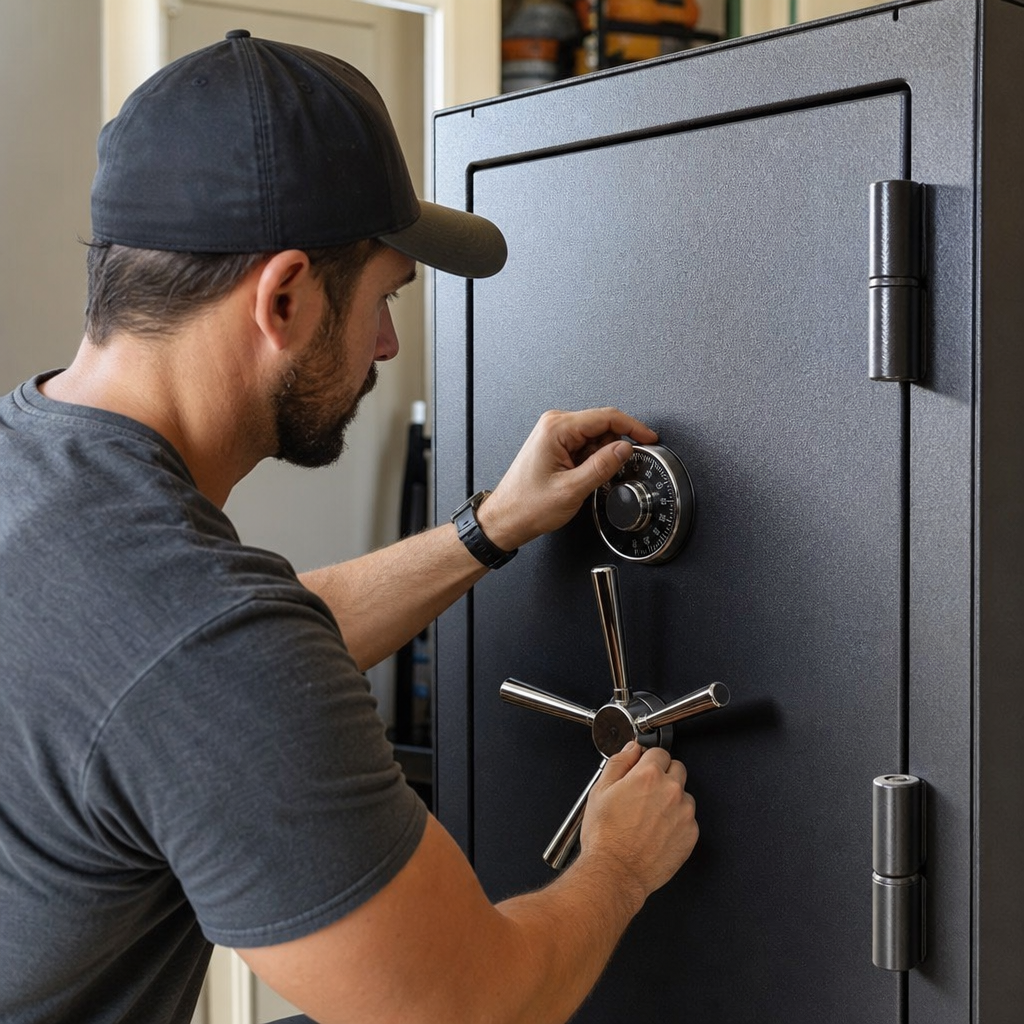
Can you reset a gun safe lock without professional help? Sometimes yes, but the correct answer depends on the lock type, the safe’s design, and whether you still have authorized access. In my experience working with residential security products and reviewing manufacturer service procedures, the biggest mistake owners make is assuming every gun safe lock can be reset with the same method. That assumption leads to lockouts, damaged relockers, voided warranties, and in some cases an unsafe storage situation that defeats the purpose of owning a safe in the first place.
A gun safe lock reset usually means one of three things: changing a combination you already know, restoring a digital keypad after a battery or electronics issue, or recovering access after the code has been lost. Those are very different tasks. A mechanical dial lock may allow a combination change only with a change key and the door open. An electronic lock may let you program a new code through the keypad, but only after entering the current manager code. A biometric lock may require deleting stored fingerprints and re-enrolling users. None of those procedures is the same as bypassing a locked safe, and reputable manufacturers intentionally make unauthorized resetting difficult.
This matters because gun safes are not just storage boxes. They are part of a layered firearm safety plan that also includes child access prevention, theft resistance, fire protection expectations, and compliance with local storage laws. Misunderstanding how resets work feeds a broader set of gun safe myths and misconceptions: that digital locks are easy to hack, that factory reset buttons always exist, that replacing batteries erases codes, or that a locksmith can open any safe in minutes. This article serves as a hub for those myths, explains what is true, what is false, and what owners should do before they touch the lock.
What “resetting” a gun safe lock actually means
The first misconception to clear up is the word reset. Owners use it loosely, but manufacturers and safe technicians do not. If you know the current combination and the safe is open, changing a code is routine maintenance. If the keypad is unresponsive and you are trying to restore function, that is troubleshooting. If the combination is lost and the door is closed, that is a lockout recovery problem. The steps, tools, risks, and legal requirements differ sharply.
For example, SecuRam, Sargent and Greenleaf, and La Gard electronic locks typically support user code changes through a defined programming sequence. That is not the same as a factory reset. Many consumer safes never provide a consumer-accessible full reset because doing so would create an obvious attack path. Mechanical Group 2 or Group 2M dial locks also are not “reset” by spinning the dial in a pattern seen on social media. Changing a mechanical combination normally requires the existing combination, alignment at the change index, and a dedicated change key, all performed with the door open so the boltwork can be tested before closing.
Another important distinction is the lock versus the container. A “gun safe” sold through a big-box store may actually be a Residential Security Container rated under UL 1037 rather than a burglary safe with a TL rating. That does not make it useless, but it affects expectations. Light-gauge cabinets and entry-level safes often use simpler lock packages, while higher-end units may pair hardplates, relockers, and upgraded lock bodies that raise the stakes if you force the wrong procedure. Knowing the model matters more than guessing based on appearance.
When you can reset a gun safe lock yourself
You can usually reset a gun safe lock yourself when four conditions are met: the safe door is open, you know the current combination or possess the authorized reset credential, you have the manufacturer’s exact instructions for that lock, and the lock is functioning normally. If any of those conditions is missing, stop and verify before proceeding. Safe owners get into trouble when they treat similar-looking keypads as interchangeable. They are not.
Electronic keypad locks are the most common do-it-yourself case. Many models allow a user code change by entering a programming mode, authenticating with the current master or manager code, then entering the new code twice. Good practice is to use a code length the manufacturer recommends, avoid obvious patterns such as birthdays, and test the new code at least three times with the door open. I always tell owners to throw the locking bolts fully in and out during testing, because a code that seems accepted by the keypad may still reveal a mechanical issue when the boltwork is under load.
Biometric gun safes can also be reset by the owner, but they are often less forgiving. Deleting all users may wipe the enrollment database, and some units have small sensors that perform poorly with dry skin, dirty fingertips, or inconsistent hand placement. After reprogramming, enroll the same finger multiple times from slightly different angles if the manufacturer permits it. That improves recognition and reduces false rejects. You should also maintain a secondary access method such as a code or override key where the design includes one.
Mechanical dial locks are where owners should be more cautious. Changing a dial combination is possible without a technician on many locks, but the process is precise. A single misread index mark or an incomplete wheel engagement can create a lockout when the door is shut. That is why technicians insist on open-door verification. If you are not completely comfortable reading the dial and following the specific sequence for your lock body, professional service is usually cheaper than drilling a safe later.
When professional help is the right move
Professional help is the right choice when the safe is locked and the code is unknown, when the lock is malfunctioning, when the keypad beeps but the handle will not move, when you suspect relocker activation, or when the safe is under warranty and the manufacturer requires authorized service. It is also the right move if the safe contains loaded firearms you need secured quickly and you cannot confirm the reset procedure with confidence.
One myth I hear often is that a locksmith can simply “look up” the combination from the serial number. Reputable manufacturers do not work that way. They usually require proof of ownership, serial verification, identity documents, and sometimes notarized forms before releasing any recovery information. Some will not release combinations at all and instead route owners to certified technicians. That is not bureaucracy for its own sake. It protects against social engineering and unauthorized access.
Another misconception is that drilling always ruins the safe. In fact, safe drilling by a qualified safe technician is a controlled method, not random destruction. A trained technician consults lock diagrams, identifies drill points, manipulates or scopes the lock, repairs the opening, and restores security where possible. That is very different from attacking the container with a generic drill bit or grinder. If your safe uses glass relockers, hardplate, or multiple active relock systems, uninformed drilling can convert a service call into a major repair.
Common gun safe myths and misconceptions about lock resets
The hub topic here is not only whether you can reset a gun safe lock without professional help, but why owners get confused in the first place. Most confusion comes from persistent myths. The table below summarizes the most common ones and the reality behind them.
| Myth | Reality | What owners should do |
|---|---|---|
| All digital gun safe locks have a factory reset button | Most do not offer a consumer-accessible full reset because it would weaken security | Use the model-specific programming steps from the manufacturer |
| Dead batteries erase your safe code | Most modern electronic locks store codes in nonvolatile memory | Replace batteries with fresh alkaline cells and retest with the door open |
| Mechanical dial locks are obsolete and less secure | Quality dial locks remain durable, proven, and resistant to battery-related failure | Choose based on use case, not internet stereotypes |
| Biometric safes open reliably for everyone, every time | Performance varies by sensor quality, enrollment method, and finger condition | Enroll backup fingers and keep a secondary access method ready |
| If the keypad lights up, the lock is fine | Power to the keypad does not confirm the lock body, cable, spindle, or boltwork is functioning correctly | Troubleshoot systematically before forcing the handle |
| You can recover any combination with a serial number | Manufacturers require ownership verification and may refuse direct disclosure | Contact the maker and follow the documented recovery process |
A related misconception is that expensive safes never fail and budget safes always fail. Reality is more nuanced. Entry-level imports may have inconsistent quality control, but premium safes can still develop keypad failures, wire fatigue, handle linkage issues, or user-programming mistakes. Reliability comes from design, component quality, installation, maintenance, and how the owner uses the safe. Slamming doors, forcing handles against bolt pressure, and ignoring low-battery warnings shorten the life of any lock system.
There is also a dangerous myth that an override key automatically makes a safe insecure. On some low-cost handgun safes, override keys are indeed a weak point if the keyway and key control are poor. On better products, the override is integrated more thoughtfully. The right conclusion is not “all override keys are bad,” but “evaluate the specific design, key management, and your threat model.” A quick-access bedside safe balancing child safety and emergency access has different priorities than a large long-gun safe anchored in a basement.
How to approach a safe reset without creating a lockout
If you plan to reset a gun safe lock yourself, work methodically. First, identify the exact safe model and, if possible, the lock model. The badge on the door tells you the brand of the container, but the lock may be from another manufacturer. Remove the keypad only if the manual instructs you to do so. Many owners see a cable and assume unplugging it will reboot the safe. On some systems that does nothing useful; on others it risks pinching or damaging the cable during reassembly.
Second, open the door and leave it open through the entire programming process. Extend and retract the bolts repeatedly while testing the new code. Third, install fresh, name-brand alkaline batteries unless the manufacturer specifies another chemistry. I have seen too many intermittent keypad issues traced to bargain batteries with poor voltage consistency. Fourth, write down the new code temporarily and store that note in a separate secure place until you have memorized it. Do not lock the note inside the same safe unless you enjoy self-inflicted service calls.
Fifth, watch for signs that the issue is not a code problem. A keypad that beeps correctly but will not retract the lock may indicate a disconnected cable, failed solenoid, pressure on the bolts from an overpacked door, misaligned handle linkage, or door-frame interference from a bad installation surface. In those cases, changing codes will not solve the problem. The safe may need adjustment, parts replacement, or professional opening.
Choosing the right lock type and setting expectations
Many myths about resetting gun safe locks start at the buying stage. Owners select a lock type based on a single claim such as “biometric is fastest” or “mechanical never fails,” then are surprised by the tradeoffs later. The better approach is to match the lock to the use case. For a primary long-gun safe that you open infrequently, a quality mechanical dial or a well-supported electronic lock from an established brand can both work well. For a handgun safe used daily, speed and repeatable access matter more, so keypad ergonomics, silent entry mode, and low-light usability become important.
Expectations around fire ratings also distort reset decisions. Consumers often assume a safe with a high advertised fire number is automatically a better security product. Fire lining, door seals, steel thickness, lock quality, and boltwork design are separate variables. Likewise, a reset problem is not evidence that the safe’s theft resistance is poor. It may simply mean the lock is doing its job by refusing ambiguous input. Good security products are designed to fail closed more often than open.
The practical lesson for this subtopic hub is simple: most gun safe myths flatten a complex product into a slogan. Real safe ownership is more technical than that. Read the manual, register the safe if the manufacturer offers product support, record the serial number in a separate secure location, and learn the lock’s recovery process before an emergency happens. If you need more detailed guidance, continue into related topics under Gun Safes & Safety, including digital versus mechanical lock reliability, biometric safe limitations, override key security, and what fire ratings really mean for firearm storage decisions.
You can reset some gun safe locks without professional help, but only in authorized, clearly defined situations. If the safe is open, the current code is known, and you have the exact manufacturer procedure, a careful owner can often change a keypad code, update a biometric enrollment, or in some cases change a mechanical combination safely. If the safe is locked, the code is unknown, the lock is malfunctioning, or the procedure is uncertain, professional service is the safer and often cheaper option. That distinction is the core truth behind this topic.
The broader value of understanding gun safe myths and misconceptions is better decision-making. You avoid internet shortcuts that create lockouts. You set realistic expectations about digital, biometric, and mechanical locks. You understand that battery replacement is maintenance, not magic; that serial numbers do not bypass ownership verification; and that a real safe technician uses controlled methods rather than guesswork. Most importantly, you protect the safe’s primary purpose: secure, reliable firearm storage that reduces unauthorized access and supports responsible ownership.
Before you attempt any reset, confirm the lock model, gather the manual, install fresh batteries if applicable, and test every change with the door open. If anything does not behave exactly as documented, stop and contact the manufacturer or a qualified safe technician. Then explore the rest of the Gun Safes & Safety hub to compare lock types, decode fire-rating claims, and separate durable advice from persistent gun safe myths.
Frequently Asked Questions
Can you reset a gun safe lock yourself, or do you always need a professional?
Sometimes you can reset a gun safe lock yourself, but it depends heavily on the type of lock installed, the safe manufacturer’s instructions, and whether you still have legitimate access to the safe. Many electronic locks allow a code change from the open position if you know the current combination or have the required management code. Some mechanical dial locks can also be changed, but only if they were designed with a change key process and only if the door is open and the procedure is followed exactly. If you no longer have the current code, have lost the override key, or are dealing with a commercial-grade lock with relocking features, the situation becomes much more sensitive.
The biggest issue is that gun safe locks are not universal. A keypad on one brand may have a straightforward code reset process, while another may require a sequence that must be done within a narrow time window or only with the door open and locking bolts extended. If the safe has internal relockers, hard plates, or anti-tamper mechanisms, a mistake can turn a simple reset into a lockout. That is why the safest rule is this: if the manufacturer’s manual clearly describes a user-level reset procedure and you still have authorized access, it may be reasonable to do it yourself. If the process is unclear, the lock model is unknown, or the safe contains firearms and critical documents, it is usually smarter to contact the manufacturer or a qualified safe technician before experimenting.
What types of gun safe locks are easiest to reset without professional help?
Electronic keypad locks are usually the most user-friendly for owner-performed resets, especially on residential gun safes. In many cases, the owner can open the safe, locate the reset or programming button on the inside of the door panel or lock body, enter the existing code, and then create a new one. Some models use a master code plus a user code, while others allow multiple user profiles. These systems are often designed with the expectation that a homeowner may need to change codes periodically, so the process is generally documented in the owner’s manual.
By contrast, mechanical dial combination locks are often less forgiving. Certain models can be changed by the owner using a special change key, but that does not mean they are simple. The wheel pack must be aligned correctly, the existing combination must be dialed precisely, and the change procedure must be performed exactly as specified. A small error can leave the lock out of sync. Biometric locks vary widely; some allow fingerprint enrollment changes easily, but that does not necessarily mean the underlying backup code or administrative settings are equally simple to reset. The easiest locks to reset are the ones clearly intended for end-user programming, with published procedures from the lock manufacturer or safe manufacturer. If the lock requires specialty tools, a change key, disassembly, or undocumented programming steps, it is no longer in the “easy to reset” category.
What should you check before trying to reset a gun safe lock yourself?
Before attempting any reset, confirm the exact make and model of both the safe and the lock. Many owners focus only on the safe brand, but the lock itself may have been sourced from a separate lock manufacturer with its own instructions and limitations. Next, verify that the safe door is open and stays open during the entire procedure. This is one of the most important precautions. If you change a combination or code incorrectly with the door closed, you can create a full lockout situation that is far more expensive and difficult to resolve.
You should also locate the owner’s manual or official manufacturer instructions, not a generic online video. Internet tutorials often skip steps, combine procedures from different lock families, or fail to mention critical warnings about test cycles. Replace weak batteries first if the safe uses an electronic lock, because low voltage can interrupt programming and cause misleading symptoms. Inspect the keypad and handle for existing issues such as delayed beeps, sticky buttons, or boltwork drag, since those problems can complicate the process and make it harder to tell whether a failed reset is electronic or mechanical. Finally, after making any change, test the new code or combination multiple times with the door open before closing and locking the safe. That single habit prevents a large percentage of avoidable lockouts.
What can go wrong if you use the wrong reset method on a gun safe lock?
Using the wrong reset method can create anything from a minor inconvenience to a complete access failure. On electronic locks, entering the wrong programming sequence may trigger a temporary penalty lockout, erase a user code, or leave the lock in an unknown programming state. On some locks, repeated failed attempts can make owners believe the batteries or keypad are bad when the real issue is a corrupted or incomplete code change process. Mechanical locks carry even more risk because an incorrect change procedure can misalign the combination wheels, making the original and new combinations both unusable.
There are also non-lock consequences. Many gun safes include relockers designed to react to tampering or forced entry. While a simple code change usually does not activate them, unnecessary drilling, disassembly, or aggressive manipulation definitely can. Damage to interior panels, lock mounting screws, spindle components, or wiring harnesses may void the manufacturer’s warranty. Beyond the mechanical risks, there is a serious safety issue: if the reset is done improperly and the safe cannot be secured afterward, firearms may be left inaccessible to authorized users or insufficiently protected from unauthorized access. That is why guessing, improvising, or following “close enough” instructions is a poor approach. Precision matters with safe locks.
When is it best to stop and call the manufacturer or a safe locksmith?
You should stop and get professional help if you do not know the exact lock model, no longer have the current combination or administrative code, or cannot complete the procedure with the safe door open. Those are major red flags. It is also time to call for assistance if the keypad is unresponsive after battery replacement, the dial feels abnormal, the handle binds, the lock beeps in an unfamiliar pattern, or the manufacturer’s instructions do not match what you see on your safe. Any mismatch between the manual and the actual hardware suggests that the safe may have a different lock generation or an aftermarket replacement, and that makes generic reset steps risky.
Professional help is especially important for higher-end safes with mechanical Group 2 or Group 2M locks, redundant lock systems, internal glass relockers, or proprietary electronic lock modules. In those cases, a trained safe technician can identify the lock family, confirm the correct change procedure, and avoid damaging the safe’s security features. If the safe stores defensive firearms, legal documents, cash, or irreplaceable valuables, the cost of a professional service call is usually small compared with the cost of a lockout or a damaged locking system. In short, owner resets are often possible on basic residential models when the instructions are clear and access is still authorized, but once uncertainty enters the picture, calling the manufacturer or a qualified safe locksmith is the safer and smarter move.