
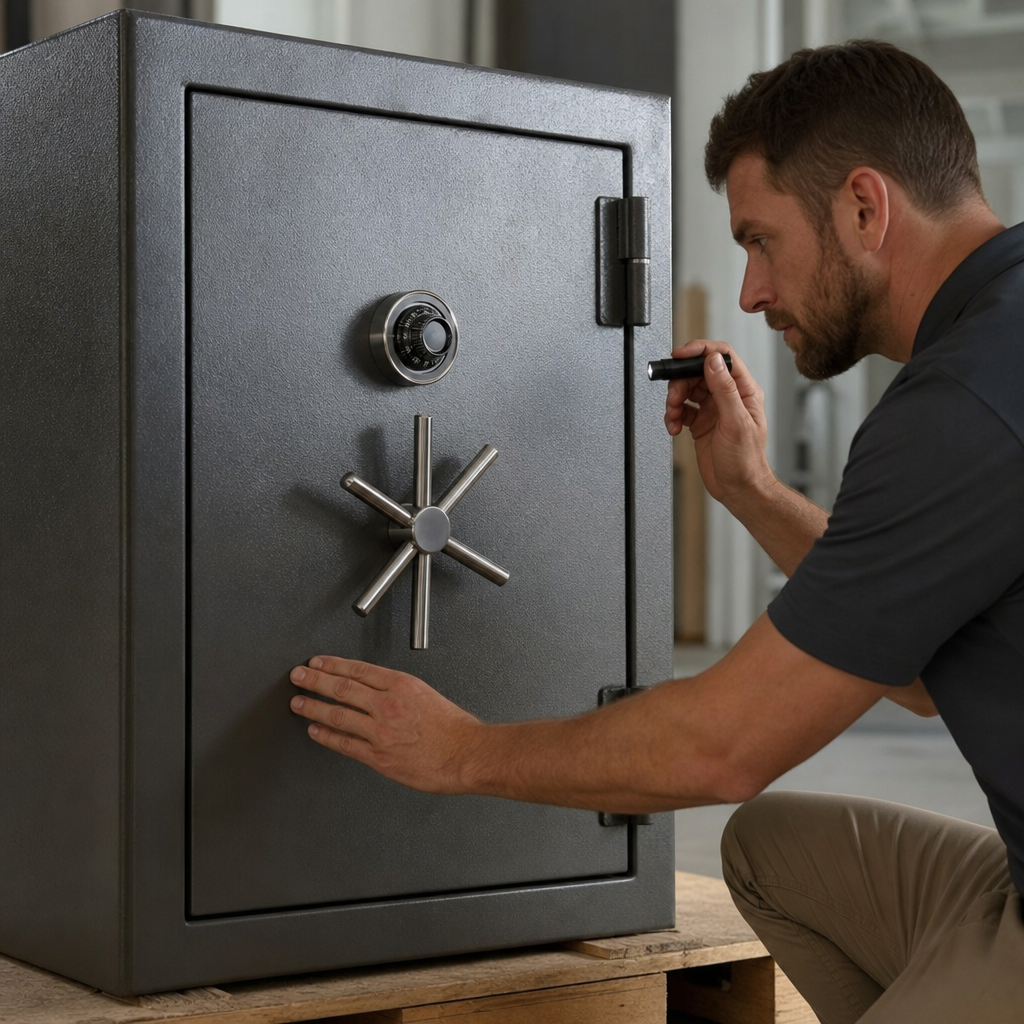
Steel gauge ratings dominate gun safe marketing, yet gauge alone is not the best indicator of a safe’s security. In the gun safes and safety category, few topics create more confusion than steel thickness, because buyers often equate a lower gauge number with complete protection. That assumption sounds reasonable, but it ignores how real burglary resistance works. A safe is a system, not a sheet of metal, and security depends on the door design, boltwork, lock quality, pry resistance, weld integrity, anchoring, fire insulation layout, and how the safe is installed in the home.
When people ask whether steel gauge ratings are the best indicator of a safe’s security, the direct answer is no. Steel gauge is an important data point, but it is only one variable among many. In practice, I have seen thin-bodied safes outperform heavier-looking models because their doors had better reinforcement, tighter door gaps, stronger relockers, and proper anchoring. I have also inspected “12-gauge” units that looked impressive on a sales floor but used weak hinges, sparse locking bolts, and broad pry points that made forced entry easier than buyers expected.
Understanding the terminology helps. In sheet steel, gauge refers to thickness, and for gun safes a lower number usually means thicker steel. For example, 12-gauge steel is thicker than 14-gauge, and 10-gauge is thicker than 12-gauge. Security, however, is not measured by thickness alone. Burglary resistance concerns how long a container can resist attack using common tools such as pry bars, screwdrivers, hammers, grinders, and drills. Fire protection is a separate performance category. Storage capacity is another. A safe that scores well in one area can still be mediocre in another.
This matters because gun owners are making a risk-management decision, not merely a furniture purchase. A well-chosen safe reduces unauthorized access, slows theft, supports responsible storage, and may help satisfy insurer or legal expectations depending on your location. A poorly chosen safe can create false confidence. In the broader discussion of gun safe myths and misconceptions, steel gauge is the myth that often drives every other mistake: shoppers compare a single number, miss the full construction picture, then overestimate real-world protection. This hub article explains what gauge does tell you, what it does not, and which factors actually determine whether a gun safe is secure.
Why steel gauge became the headline number
Steel gauge became the headline specification because it is simple, visible, and easy to market. Most buyers can understand “10-gauge is thicker than 14-gauge” in seconds, while explaining hardplate, active relockers, stitch weld spacing, or composite door construction takes more effort. Sales pages therefore lead with the easiest comparison point. That does not make the number useless. Thicker steel generally improves resistance to denting, flexing, puncture, and some pry attacks. A body made from 10-gauge steel usually provides a stronger shell than one made from 14-gauge steel, all else being equal.
The phrase “all else being equal” is where the myth breaks down. In real safes, all else is never equal. Manufacturers vary in door thickness, frame geometry, reinforcement plates, bolt carriage design, lock placement, and anchoring provisions. One safe may use a 12-gauge body with a multi-layer door and robust anti-pry tabs, while another uses an 11-gauge body but a comparatively weak door edge. During forced-entry attempts, thieves commonly attack the door perimeter and lock area rather than trying to cut through the broad sidewalls. That means door engineering can matter more than a modest difference in body gauge.
Another source of confusion is that some marketing descriptions blur the distinction between body steel and door steel. A company might advertise “thick steel construction” while the body is one thickness and the door skin is another, sometimes with multiple layers or composite materials. Without precise language, buyers assume the heaviest number applies everywhere. It rarely does. The practical takeaway is straightforward: gauge is useful only when you know exactly which component it describes and how the rest of the safe is built around it.
What steel gauge tells you, and what it cannot tell you
Steel gauge gives you a baseline estimate of shell thickness. That matters because a thicker body can better resist deformation under force and may require more time or more aggressive tools to breach. For a residential security container used to store firearms, moving from 14-gauge to 12-gauge can be a meaningful upgrade. Moving from 12-gauge to 10-gauge can be another step up, especially for owners who want added rigidity and are willing to accept more weight and cost. Thickness is not irrelevant; it simply is not definitive.
What gauge cannot tell you is how the safe behaves under attack. It does not reveal whether the door has internal reinforcement around the lock. It does not tell you whether a hardplate protects against drilling, whether a spring-loaded relocker activates if the lock is punched, or whether the locking bolts engage deeply into the frame. It does not describe the gap tolerance between the door and body, the presence of return bends that reduce pry leverage, or the quality of continuous versus intermittent welds. Two safes with the same gauge rating can perform very differently because their structures distribute force differently.
Gauge also says nothing about installation, and installation routinely determines the outcome of a theft. A moderately built safe bolted to a concrete slab in a tight closet can be far more secure than a thicker, more expensive safe left free-standing in an open garage. Thieves want speed, noise control, and access. If they can tip a safe over, pry from above, or remove it entirely for off-site attack, the benefit of extra shell thickness narrows quickly. That is why any honest discussion of safe security must move beyond steel gauge and consider the entire attack environment.
The features that matter more than gauge in many break-ins
In many residential burglaries, the winning or losing details are not the body panels but the door, lock, and anchoring system. The door is the primary target because it is where the contents are accessed. A secure safe has a door structure that resists prying at the corners and along the opening side, uses substantial reinforcement behind the lock, and minimizes exploitable gaps. Anti-pry tabs, formed door returns, and robust door jambs often matter more than one incremental change in body gauge.
Lock quality is another decisive factor. A UL-listed mechanical or electronic lock from a recognized manufacturer such as Sargent and Greenleaf or SecuRam is generally more trustworthy than an unbranded lock on a bargain safe. Good locks are only part of the equation, though. The mounting of the lock, the presence of drill-resistant hardplate, and relockers that trigger under tamper conditions can dramatically improve resistance to manipulation and destructive entry. In shop inspections, I have repeatedly found that budget safes fail at the lock area first, not through wholesale sidewall penetration.
Boltwork receives too much and too little attention at the same time. Buyers are impressed by large counts of locking bolts, yet bolt quantity alone is not the key metric. Bolt diameter, bolt travel, bolt support, and frame engagement matter more than inflated numbers. Some low-end safes advertise many bolts that add visual appeal but do little to strengthen the vulnerable opening edge. Similarly, external hinges are not automatically weak if the door includes dead bars or fixed locking studs on the hinge side. That is a common misconception that persists because shoppers focus on visible features instead of structural function.
| Security Factor | What to Check | Why It Matters in Real Use |
|---|---|---|
| Body steel | Exact gauge and whether it applies to the body, door, or both | Sets a baseline for resistance to flexing, puncture, and cutting |
| Door construction | Reinforcement, return bends, anti-pry tabs, tight gaps | Most attacks focus on the door perimeter and lock area |
| Lock protection | UL-listed lock, hardplate, relocker, secure mounting | Prevents fast drill or punch attacks from defeating the lock |
| Boltwork | Deep engagement, stout bolts, rigid carriage | Reduces door spread during pry attempts |
| Anchoring | Factory anchor holes, concrete anchors, tight placement | Stops thieves from tipping over or removing the safe |
| Fire liner layout | How insulation is installed and whether it affects rigidity | Some designs add mass but not meaningful burglary resistance |
Common gun safe myths and misconceptions buyers should avoid
The first major myth is that thicker steel automatically means a safe is “burglar proof.” No consumer gun safe is burglar proof. Residential safes are delay devices. Their job is to deny quick access, raise the time and tool requirement, and increase the chance that a thief abandons the attempt. A heavy safe with poor anchoring can still be carried away with dollies, straps, and enough time. Calling any gun safe invulnerable is inaccurate and potentially dangerous because it encourages complacency.
The second myth is that fire rating and burglary resistance rise together. They do not. Some products offer strong fire performance through gypsum-based liners or other insulation systems but rely on relatively thin steel shells. Fireboard adds mass and can improve heat resistance, yet it is not the same as a composite burglary barrier. Buyers must assess fire and theft protection separately. If you need both, verify both.
The third myth is that weight equals security. Weight can come from thicker steel, but it can also come from fire insulation, interior finish materials, or decorative components. I have compared two similarly heavy safes where the lighter-steel model simply used more insulating board. The fourth myth is that more locking bolts always mean better security. As noted earlier, bolt geometry and frame strength matter more. The fifth myth is that any safe with an electronic keypad is inferior. In reality, quality electronic locks can be reliable and secure when sourced from reputable makers, installed correctly, and maintained with fresh batteries.
The sixth myth is that a garage is automatically a fine installation location. Garages often expose safes to humidity swings, visible placement, easier tool access, and less oversight during daytime burglaries. The seventh myth is that once a safe is purchased, security is solved. Storage security is ongoing. Owners need proper anchoring, humidity control, code management, periodic lock checks, and disciplined key custody if a backup key or override exists. The hub topic of gun safe myths and misconceptions ultimately comes down to this principle: no single spec, feature, or purchase decision replaces layered security habits.
How to evaluate a gun safe like a security professional
Start by asking what threat you are trying to stop. For most homeowners, the realistic threat is smash-and-grab burglary by attackers using hand tools and limited time, not a prolonged commercial safe-cracking operation. That threat model points you toward balanced construction, good anchoring, and discreet placement. First, confirm the body steel gauge and the door construction separately. Second, inspect the door gap. Tight, consistent gaps are harder to exploit with pry tools. Third, verify lock brand, listing status, and the presence of drill protection and relockers.
Fourth, examine the boltwork and frame. Ignore oversized marketing language and look for deep bolt engagement and substantial support around the opening edge. Fifth, check weld quality and interior finishing around structural seams. Clean cosmetic panels can hide sparse weld patterns, so ask for construction details or cutaway images from the manufacturer. Sixth, assess anchor options. A safe without practical anchor access is a poor choice for most homes. Use concrete anchors whenever possible, and place the safe where walls or shelving limit pry-bar angles.
Seventh, review independent certifications carefully. Some gun safes are sold as residential security containers rather than true burglary safes, and that distinction matters. Ratings from recognized testing bodies provide stronger evidence than marketing adjectives. Eighth, think about use. If the safe stores defensive firearms you may need quickly, lock type, interior layout, and accessibility matter. If it stores collectibles, resistance to removal and climate management may be the priority. The best safe is not the one with the most dramatic brochure headline. It is the one whose construction and installation match your actual risk profile.
Choosing the right safe for your home and next steps
Steel gauge ratings are useful, but they are not the best indicator of a safe’s security. They tell you something important about shell thickness, yet they do not explain how the safe resists prying, drilling, lock attacks, removal, or poor installation. In the real world, security comes from the complete package: body steel, reinforced door design, quality lock, protective hardplate, effective relockers, rigid boltwork, sound welds, and proper anchoring in a low-access location. Buyers who understand that system-level view make better decisions and avoid the most expensive mistakes.
For anyone navigating gun safe myths and misconceptions, the key lesson is to stop shopping by a single number. Compare body and door specifications separately, verify lock components by brand, look for recognized testing standards, and ask how the safe will perform against the tools a residential burglar is most likely to use. Remember that fire ratings, weight, bolt count, and hinge style can all be misunderstood when removed from context. A safe is only as good as its weakest design element and only as secure as its installation allows.
If you are upgrading storage or buying your first gun safe, build a short checklist before you shop. List your threat level, firearm count, fire concerns, installation surface, and budget. Then compare complete construction details instead of relying on gauge alone. That approach will lead you to a safer, smarter purchase and better long-term firearm security. Continue through the rest of this gun safes and safety hub to explore lock types, fire ratings, installation mistakes, and the other myths that can mislead responsible owners.
Frequently Asked Questions
Is steel gauge the best way to judge how secure a safe really is?
No. Steel gauge is useful, but it is not the best standalone measure of a safe’s real-world security. Gauge only describes the thickness of a piece of steel, and while thicker steel can improve resistance to bending, cutting, and prying, it does not tell you how the entire safe performs during an attack. A safe is a complete security system made up of the body, the door, the frame, the hinges, the lock, the relocking components, the boltwork, the welds, and the overall design. If one of those elements is weak, the safe can still be vulnerable even if the body uses relatively thick steel.
This is where many buyers get misled by marketing. A lower gauge number sounds like a simple shortcut to better protection, but burglars do not attack a safe by politely measuring one wall panel. They target the easiest point of entry. In many cases, that means the door edge, the lock area, the corners, the seams, or the pry points around the frame. A safe with thicker body steel but weak bolt support, poor weld quality, or a flexible door structure may perform worse than a well-engineered safe made from slightly thinner steel. In short, gauge matters, but only as one part of a much bigger security picture.
Why can two safes with similar steel gauge ratings offer very different levels of protection?
Because steel thickness is only one variable in the construction of a safe. Two safes may both advertise 12-gauge or 10-gauge steel, yet their actual resistance to burglary can be dramatically different depending on how that steel is used. One manufacturer may reinforce the door with internal plates, anti-pry tabs, hard plates over the lock, strong bolt carriers, and continuous welds. Another may use the same nominal steel thickness but pair it with weaker door geometry, limited bolt engagement, sparse welds, or less rigid structural support.
Door construction is especially important. The door is usually the most heavily attacked part of a safe, so thickness alone does not tell the whole story. A composite or reinforced door with better edge support and anti-pry features may outperform a simpler design even if the body gauge is similar. Boltwork also matters. Active locking bolts, dead bars, relockers, and well-designed internal mechanisms can slow or stop forced entry far more effectively than raw steel thickness alone. Even the way panels are folded and joined affects strength, because structural shape can increase rigidity and reduce flex during pry attacks. That is why comparing safes by gauge only can produce very misleading conclusions.
What features should I evaluate in addition to steel gauge when comparing safes?
Look at the safe as a complete defensive package. Start with the door design, because the door and frame area are common attack points. Pay attention to whether the safe has reinforced door edges, anti-pry features, solid bolt engagement, and a frame that limits access for pry bars. Next, consider the lock itself. A high-quality mechanical or electronic lock from a reputable manufacturer is more important than many buyers realize, especially when paired with relockers and hard plates designed to resist drilling and lock tampering.
You should also evaluate the boltwork, because the number, size, and placement of locking bolts can affect how well the door resists forced opening. Just as important is how those bolts are supported internally. Weld integrity is another major factor. Strong, continuous, well-executed welds contribute to a rigid structure, while poor welds can create weak points despite decent steel thickness. Look at the safe’s overall construction quality, including body stiffness, seam protection, and hinge-side security. Finally, review whether the safe has undergone any independent burglary or fire testing. Third-party certification is often more meaningful than marketing language because it reflects performance under defined standards rather than just a single material specification.
Does thicker steel always mean a safe will be harder to break into?
Not always. Thicker steel generally helps, but it does not automatically make a safe secure. Real burglary resistance depends on how an attacker can exploit the safe’s weakest area. If a safe uses thick body steel but has a vulnerable lock area, a poorly reinforced door, exposed pry gaps, weak internal bolt supports, or minimal protection at the seams, a burglar may still gain access faster than expected. In practical terms, a safe is only as strong as its most vulnerable component.
It is also important to remember that burglary attacks are often about speed, noise, and available tools. Many break-ins are not sophisticated laboratory tests. Attackers use pry bars, grinders, hammers, wedges, and leverage against seams and doors. A design that limits tool purchase points and maintains rigidity under force can outperform a thicker but poorly engineered model. That is why smart buyers should think in terms of attack resistance, not just material thickness. Thicker steel is a positive feature, but it becomes far more valuable when combined with better engineering, stronger lock protection, reinforced door construction, and secure anchoring to prevent the entire safe from being moved and attacked elsewhere.
How should a buyer use steel gauge information when shopping for a gun safe?
Use gauge as a starting point, not the final answer. It can help you avoid extremely thin, lightly built cabinets that offer minimal resistance, but once you move beyond the most basic level, you should shift your focus to overall design and verified performance. A lower gauge number can indicate thicker steel, which is generally desirable, but it should prompt deeper questions rather than end the evaluation. Ask how the door is built, what protects the lock, how the boltwork is arranged, whether relockers are included, how the body is welded, and whether the safe has any independent ratings or testing behind it.
It is also wise to match the safe to your actual risk level. For many gun owners, the goal is not just keeping children out, but delaying or defeating a determined burglar long enough to make the attack impractical. In that situation, anchoring, placement, concealment, and overall construction can matter as much as steel thickness. A well-installed, well-designed safe with balanced security features is typically a better investment than a heavily marketed model that leans too hard on gauge claims. The best approach is to treat steel gauge as one important data point within a broader assessment of security, quality, and suitability for your home and threat environment.