
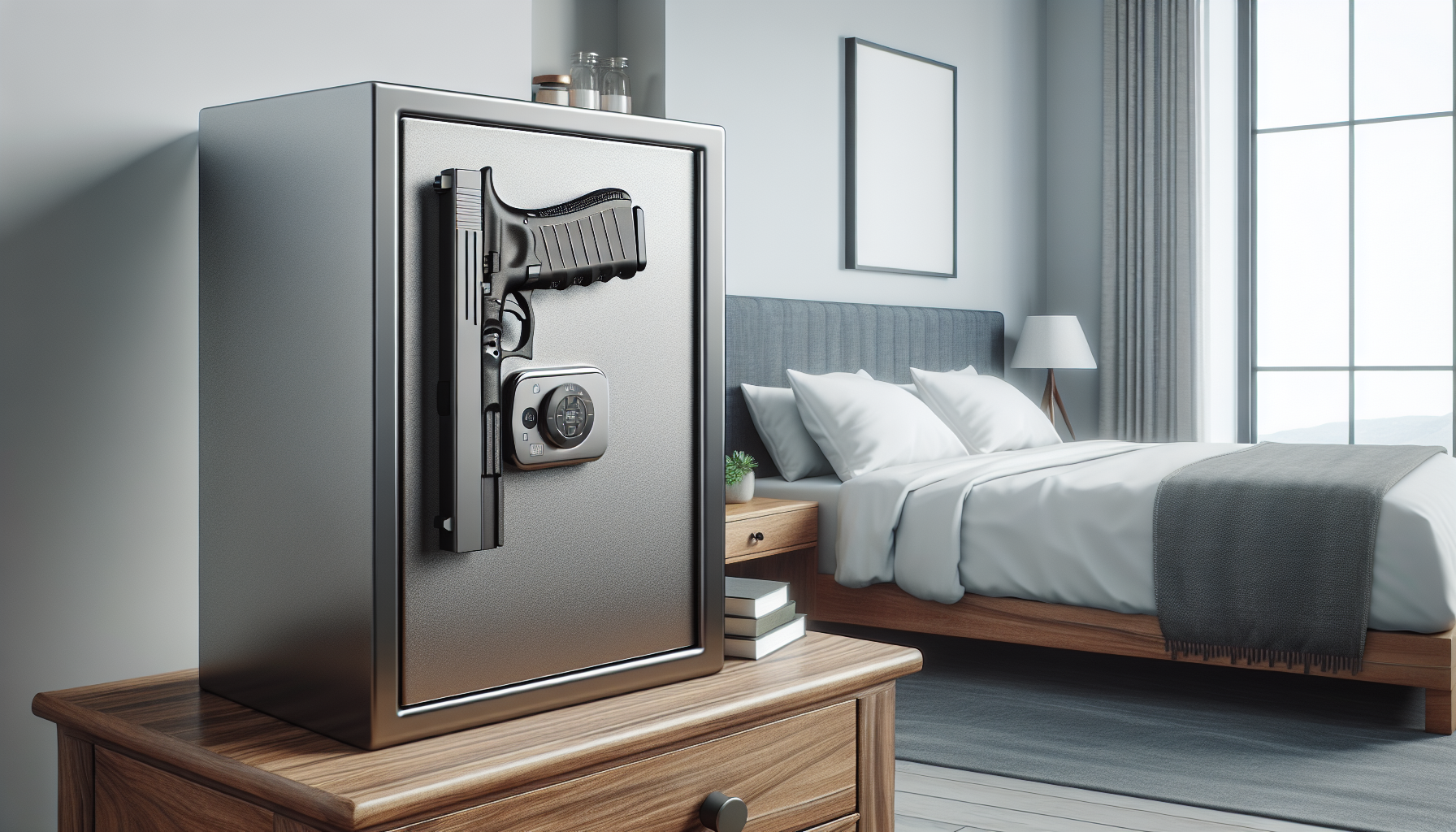
Choosing the right gun safe for quick bedside access starts with understanding a simple truth: speed matters, but secure storage matters more. A bedside gun safe is a compact firearm storage unit designed to keep a defensive handgun inaccessible to children, guests, thieves, and unauthorized users while still allowing the owner to open it quickly in an emergency. In practice, that balance is harder than most buyers expect. I have tested lockboxes that opened in under two seconds but failed basic pry resistance, and I have seen heavier safes with excellent steel construction become frustrating under stress because their keypad layout or lid geometry slowed the draw. For anyone building a complete home-defense setup, this buying guide is the central resource for evaluating features, comparing lock types, and understanding where bedside safes fit within broader gun safes and safety planning.
The topic matters because defensive firearms are often kept where people sleep, where reaction time is short and visibility is poor. According to guidance consistently emphasized by groups such as the National Shooting Sports Foundation and many law-enforcement trainers, firearms intended for home defense should be secured against unauthorized access yet available to the lawful owner. That means a bedside safe is not just a box with a lock. It is a system involving placement, access method, anchor strategy, battery management, and user training. The best choice depends on who lives in the home, whether the firearm has an optic or weapon light, whether one-handed access is required, and how much noise, bulk, or maintenance the owner can tolerate. Buyers who understand those variables make better decisions and avoid the most common mistake: purchasing for advertised speed instead of real-world reliability.
What a Quick-Access Bedside Gun Safe Must Do
A quick-access bedside gun safe has four jobs. First, it must prevent unauthorized access, especially by children. Second, it must present the handgun in a consistent orientation so the draw is repeatable. Third, it must open under realistic conditions such as darkness, elevated heart rate, weak-hand operation, or partial wakefulness. Fourth, it must resist easy removal or simple attacks long enough to defeat casual theft. If a product fails any one of those tests, it is not the right bedside safe no matter how polished the marketing sounds.
Construction is where many buying decisions go wrong. Steel thickness, door overlap, hinge protection, internal weld quality, and anti-pry design matter more than cosmetic finish. Most bedside safes are not true burglary safes, and buyers should be honest about that limitation. A typical handgun lockbox may deter a smash-and-grab thief if it is properly bolted down, but it will not stand up to prolonged attacks with power tools. That does not make it useless. It means you should judge it correctly: as a rapid-access security device layered within a broader home-security plan. A well-built bedside unit anchored to furniture or structure is far safer than an unanchored “hidden” gun in a drawer.
Capacity and fit also deserve more attention than they usually receive. Many owners buy a safe based on handgun dimensions alone, then discover the pistol no longer fits once they add a red-dot sight, suppressor-height sights, or a weapon-mounted light. Foam compression can press controls, snag optics, or force awkward retrieval angles. Measure the gun in its ready configuration and compare that to the safe’s usable interior, not just external dimensions. If you keep a spare magazine, flashlight, or passport in the same unit, ensure those items do not interfere with the draw path.
Comparing Lock Types for Speed, Reliability, and Security
The lock is the heart of a quick-access bedside gun safe, and each type carries tradeoffs. Biometric safes use a fingerprint reader and appeal to buyers who want immediate access without remembering a code. The best biometric units can work well, especially when they store multiple prints and use quality sensors. However, no fingerprint system is perfect. Dry skin, cuts, sweat, awkward finger placement, and low-quality scanners can cause failures. I advise buyers to treat biometric access as a convenience layer, not the only layer, and to insist on a backup keypad or key override.
Electronic keypad safes remain the most practical choice for many households. A good keypad offers reliable access in darkness through muscle memory, allows multiple-button combinations, and avoids some biometric inconsistencies. Keypad quality varies enormously. Raised buttons, distinct tactile feedback, and intuitive spacing are far better than flat membrane controls that feel identical under stress. Look for designs that allow silent mode, backlit controls, and code lengths long enough to reduce accidental entry yet short enough to enter quickly when awakened. Battery access should be simple and external whenever possible.
Mechanical simplex-style locks, where available, are highly respected because they do not depend on batteries or electronics. They can be exceptionally durable and fast with practice. Their downside is bulk, fewer product choices, and often higher prices. Traditional tubular keys or wafer locks are usually the weakest bedside option because keys can be misplaced, inserted slowly, or reached by unauthorized users. They are acceptable only as a secondary override.
| Lock type | Main advantage | Main limitation | Best fit |
|---|---|---|---|
| Biometric | Fast single-touch access | Can misread under poor finger conditions | Users wanting convenience with backup access |
| Electronic keypad | Consistent operation through muscle memory | Depends on battery power and keypad quality | Most households needing balanced speed and reliability |
| Mechanical push-button | No batteries, strong long-term durability | Fewer models, often larger and costlier | Buyers prioritizing reliability over compact size |
| Key only | Simple and inexpensive | Slowest practical access, weaker security | Backup override rather than primary bedside use |
Size, Mounting, and Placement Beside the Bed
Where the safe sits is as important as which safe you buy. A quick bedside gun safe should be reachable from your normal sleeping position without forcing you to stand, search, or clear obstacles. Common placements include inside a nightstand, bolted to the floor beside the bed, mounted to a bed frame, or secured within a closet near the sleeping area. Every location changes the access angle, opening clearance, and concealment profile. Top-opening safes work well on low shelves or floors because the lid lifts away from the user. Front-opening safes can be better inside cabinets where upward clearance is limited.
Anchoring is non-negotiable. Many compact safes ship with a steel cable, but cables are a minimum solution, not an ideal one. Bolting the safe to a solid surface is stronger and reduces twisting during one-handed opening. If you use a nightstand, verify that the furniture itself is sturdy enough to support the safe and withstand pulling force. Thin particleboard can fail before the safe does. In apartments or rented homes where drilling is limited, buyers should look for furniture-integrated solutions or reinforced mounting plates that spread the load.
Accessibility must be balanced against concealment. A safe sitting openly on top of a nightstand may be fast to reach but obvious to visitors, cleaners, or contractors. A unit mounted inside a drawer can be more discreet, but drawer travel, lid clearance, and lighting become critical. Test the full motion: reach, identify controls, open, establish grip, and present the firearm without muzzling yourself or your partner. That dry run often reveals ergonomic problems a product page never mentions.
Features That Matter in Real Use
Marketing often highlights alarms, LED lights, Bluetooth apps, or “military-grade” labels, but the features that matter most are simpler. Interior lighting is genuinely useful because many defensive incidents occur in darkness and many users wear corrective lenses that are not immediately at hand. A gas strut or spring-assisted door helps the safe open fully and predictably. A foam-lined interior can protect the finish, but it should not obstruct the grip. Audible beeps should be defeatable so the safe can be opened discreetly.
Power management deserves careful attention. If the safe uses batteries, know the battery type, expected life, low-battery warning behavior, and whether battery replacement requires opening the safe first. Some well-designed units provide external emergency power contacts; others force owners into awkward override procedures. For a bedside role, simplicity wins. You want a predictable maintenance schedule, not a gadget-heavy device that introduces extra points of failure.
The handgun’s stored orientation affects both safety and speed. Vertical presentation systems can be very fast and compact, especially for larger pistols with optics. Horizontal drawer-style layouts are familiar and versatile. Whichever you choose, the trigger guard must remain fully protected while stored, and the grip should be accessible without forcing fingers near the trigger during retrieval. Owners using a pistol with a mounted light should verify the interior does not activate the switch when the lid closes. I have seen that happen, and the dead battery discovered later was not a minor inconvenience.
How to Match the Safe to Your Household and Threat Profile
The right bedside gun safe depends on who needs access and who must be denied access. In a home with young children, the margin for error is effectively zero. That favors a proven lock, rigid anchoring, and disciplined storage habits. In a household where two adults may need emergency access, multiple enrolled fingerprints or a shared keypad code may be necessary, but that creates training and accountability questions. In homes with elderly users or people with limited hand strength, oversized buttons and low-effort latches become more important than raw opening speed in advertisements.
Your local environment matters too. Humid climates may require corrosion control, desiccants, or dehumidifying packs even in a small bedside unit. If power outages are common, battery-independent locks gain appeal. If burglary risk is a greater concern than immediate defensive use, a bedside safe may hold the handgun overnight while a heavier full-size safe stores firearms during the day. That layered approach is often the most sensible solution and aligns this hub with the wider buying-guides category: one safe rarely does every job well.
Budget should be approached realistically. Extremely cheap bedside safes often cut corners in steel thickness, lock quality, hinge design, and quality control. Paying more does not automatically buy better security, but established brands with documented testing, responsive customer support, and replaceable parts usually justify the premium. Read reviews with care. The most useful reviews describe opening reliability after months of use, battery life, fit with common pistols like a Glock 19 or SIG P320, and the quality of mounting hardware. Reviews written the day the box arrives tell you very little.
Buying Checklist and Common Mistakes to Avoid
Before buying, confirm five points. One, the safe fits your exact firearm setup with optic, light, and magazine configuration. Two, the primary lock can be operated reliably in darkness and under stress. Three, the safe can be anchored securely in the location you actually plan to use. Four, the door or lid opens fully without interference from furniture, bedding, or wall clearance. Five, you have a maintenance routine for batteries, code updates, and practice repetitions. If any point is uncertain, keep shopping.
The most common mistake is choosing a safe after watching a speed demo online. Demonstrations rarely replicate being half-awake at 3 a.m., using your support hand, or opening the safe while protecting a family member. The second mistake is ignoring installation. Even a well-made gun safe loses much of its value when left loose in a drawer. The third mistake is buying too small. Firearms evolve with accessories, and cramped interiors create poor retrieval habits. Finally, many owners fail to practice. Quick access is a trained skill. Once a month, with an unloaded firearm and safe direction procedures, rehearse the opening sequence from your actual sleeping position.
Choosing the right gun safe for quick bedside access means selecting a product that is secure enough, fast enough, and dependable enough for your specific home. The best bedside safe is not the one with the longest feature list; it is the one you can operate consistently, that fits your defensive handgun correctly, and that resists unauthorized access every day. Start with lock reliability, then evaluate construction, mounting, placement, and fit. If you treat the bedside safe as part of a larger gun safes and safety plan rather than a standalone gadget, you will make a better purchase and build safer routines around it.
As the hub for bedside buying guides, this page should help you narrow the field and ask smarter questions before spending money. Use it to compare lock types, installation options, and household needs, then move deeper into product-specific reviews, mounting guides, and safe-size comparisons for your firearm setup. A disciplined choice now improves both readiness and safety later. Measure your handgun, inspect your bedside space, and create a shortlist based on real use, not marketing claims.
Frequently Asked Questions
What should I prioritize when choosing a gun safe for quick bedside access?
The most important priority is finding the right balance between fast access and real security. Many buyers focus almost entirely on how quickly a safe opens, but a bedside gun safe is not just an access tool. It is first and foremost a secure storage device meant to keep a defensive handgun away from children, guests, burglars, and anyone else who should not be able to reach it. A model that opens in under two seconds sounds impressive, but if it can be pried open easily, defeated with a weak latch, or accidentally opened by an unauthorized person, then it is not doing its job.
Start by evaluating the locking system. Biometric access can be very fast, but the quality varies dramatically between brands. A good fingerprint reader should recognize enrolled prints consistently in different conditions, including when your hands are slightly sweaty, dry, or under stress. Mechanical push-button and simplex-style locks are often praised for reliability because they do not depend on electronics, batteries, or finicky sensors. Electronic keypad safes can also work well if they have responsive buttons, clear programming, and dependable battery life. Whichever system you choose, consistent performance matters more than marketing claims about speed.
Next, look at construction quality. Steel thickness, internal hinges or protected external hinges, anti-pry tabs, and solid locking bolts all make a difference. A bedside safe is usually small enough that a thief could try to carry it away, so the ability to bolt it to furniture, flooring, or a bed frame is a major security feature. Interior layout matters too. Your handgun should fit properly, ideally with room for a spare magazine, without snagging on the opening. In short, prioritize a safe that opens quickly for you, stays closed to everyone else, is built well enough to resist tampering, and can be securely mounted where you actually need it.
Are biometric gun safes reliable enough for bedside use?
Biometric gun safes can be reliable enough for bedside use, but only when you buy a high-quality model and understand their limitations. The appeal is obvious: a fingerprint reader can allow very fast one-handed access without requiring you to remember a code in a high-stress moment. For many gun owners, that convenience is valuable. However, not all biometric systems are created equal, and lower-end units often struggle with inconsistent reads, poor sensor quality, and weak backup options.
A dependable biometric bedside safe should have a responsive scanner, the ability to store multiple fingerprints, and a backup entry method such as a keypad or physical override key. Storing multiple versions of the same finger can improve performance, as can enrolling more than one finger from each hand. This is especially important because emergency access may happen from an awkward angle, in low light, or while you are half awake. You should also consider how the safe behaves after battery depletion. A biometric unit that becomes difficult or impossible to access when the battery dies is not ideal for defensive use.
That said, reliability is not just about the hardware. It is about training and testing. If you choose a biometric safe, you should test it repeatedly under realistic conditions, including in darkness and from your actual bedside position. Practice with the exact hand placement and motion you would use in an emergency. Also check how often the safe needs battery replacement and whether it gives early low-battery warnings. A well-made biometric safe from a reputable manufacturer can be an excellent choice, but it should never be trusted blindly straight out of the box. It needs to prove itself through regular, realistic use.
Is a keypad or mechanical lock better than biometric access for a bedside gun safe?
Neither option is automatically better in every situation. The better choice depends on your priorities, your comfort level, and how much importance you place on simplicity versus convenience. Mechanical locks, especially simplex-style push-button systems, have a strong reputation because they are durable, intuitive with practice, and not dependent on batteries or electronics. For many experienced gun owners, that reliability is the biggest advantage. There is less that can fail, and the tactile feedback can be especially useful in the dark.
Electronic keypads sit in the middle. They can be very fast and easy to use, and they often cost less than premium biometric safes. A good keypad safe should have buttons that are easy to identify by touch, a straightforward programming system, and a battery setup that is easy to monitor and replace. Some owners prefer keypad models because they avoid the occasional fingerprint-reading issues associated with biometric units while still offering rapid access. The downside is that under stress, entering a code can feel slower than placing a finger on a scanner, especially if the keypad is small or poorly designed.
Biometric access offers speed and convenience, but it introduces another variable: scanner performance. Some people love it, especially after extensive testing and practice. Others prefer mechanical or keypad systems because they want a more predictable process with fewer technological unknowns. If you want the simplest, most failure-resistant design, a mechanical lock is often hard to beat. If you want a balance of speed and modern convenience, a quality keypad or biometric unit may fit better. The smartest approach is not choosing based on trends but based on how reliably you can open the safe in darkness, under pressure, and without compromising security.
How important is mounting and placement for a quick-access bedside gun safe?
Mounting and placement are extremely important, and they are often overlooked. Even the best bedside gun safe loses much of its value if it is positioned awkwardly, shifts during access, or can be stolen in seconds. A quick-access safe should be mounted in a location that allows you to reach and open it naturally from your sleeping position. That might be inside a nightstand, attached to the side of a bed frame, fixed to the floor beside the bed, or secured inside nearby furniture. The key is consistency. You should be able to reach it the same way every time without fumbling.
Proper mounting also matters for security. Because bedside safes are compact, an unsecured unit can become a target of convenience for a burglar. If someone can simply grab the whole box and leave, they have all the time they need to attack it later. Bolting the safe down greatly reduces that risk. Look for pre-drilled mounting holes, sturdy hardware, and a stable installation surface. The mounting location should also allow the lid or door to open fully without obstruction. A safe that technically fits in a drawer but cannot open cleanly when you need it is poorly placed.
Placement should also take into account children, visitors, and daily life. The safe should not be visible or easily accessible to others, but it also should not be buried under clutter or placed so low and far back that access becomes slow. Test the setup in both daylight and darkness. Practice opening it from bed, from a seated position, and under likely real-world conditions. A good bedside safe is not just about lock speed. It is about a complete access system: location, mounting, opening motion, and the ability to retrieve the handgun safely and consistently when seconds matter.
How can I tell if a bedside gun safe is actually secure and not just fast to open?
The best way to judge a bedside gun safe is to look beyond advertised opening times and examine how well it resists unauthorized access. Many low-end safes are marketed around speed, but true security depends on build quality, lock integrity, and resistance to tampering. Start with the body construction. Thicker steel, reinforced edges, tight door gaps, anti-pry features, and strong locking bolts are all signs that the manufacturer paid attention to security. Thin metal shells and weak latches may look acceptable online but can fail basic pry or impact attempts.
You should also evaluate how the lock performs in real-world use. A secure lock should not be easily bypassed, tricked, or opened accidentally. Read independent reviews from testers who examine not just convenience but also physical strength, latch design, and failure points. If a safe opens quickly but pops open when dropped, flexed, or manipulated, it is not appropriate for serious bedside storage. Secure mounting capability is another major factor. A well-built safe that cannot be anchored still leaves an obvious vulnerability, especially in a home break-in scenario.
Finally, think about secure storage in practical terms. A genuinely secure bedside safe should protect against unauthorized access while still allowing dependable retrieval by the owner. It should accommodate your handgun properly, open cleanly without jamming, and maintain consistent lock performance over time. Test it regularly, inspect the hardware, replace batteries if applicable, and make sure the mounting remains solid. In other words, do not confuse quick access with quality. The right bedside gun safe proves itself by being both difficult for the wrong person to defeat and easy for the right person to use when it matters most.