
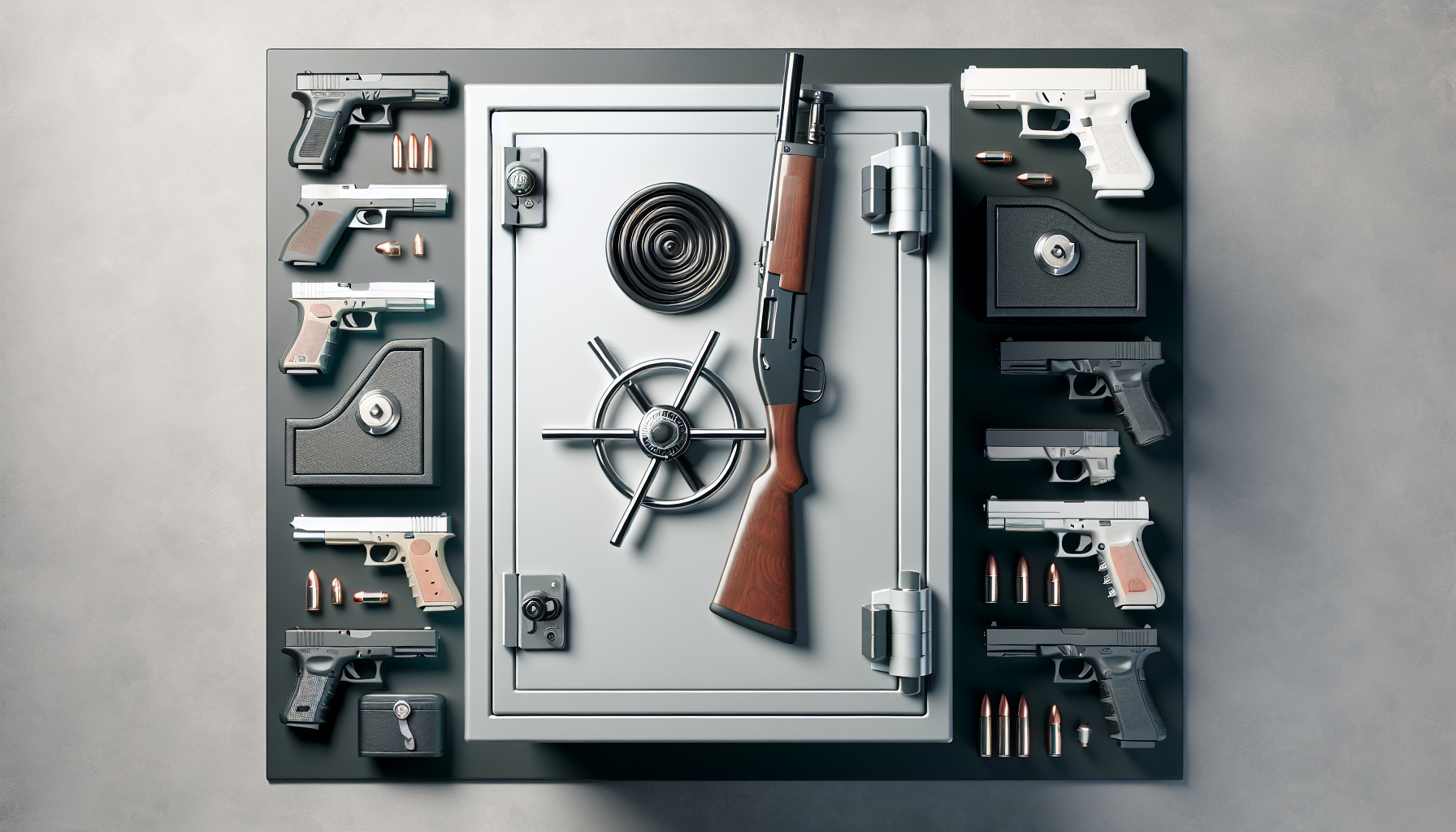
Choosing between gun safe brands is harder than most buyers expect because the logo on the door tells you very little about burglary resistance, fire performance, lock quality, or long-term serviceability. In my experience comparing safes for homeowners, collectors, and small firearms retailers, the brands people mention first—Liberty, Winchester, AMSEC, Browning, Fort Knox, Cannon, and Rhino—often overlap in marketing claims while differing sharply in steel thickness, bolt design, relocking systems, and dealer support. A gun safe, in plain terms, is a secure container built to restrict unauthorized access to firearms and related valuables; a better definition is a risk-management product that balances theft delay, fire protection, storage capacity, and usability. That distinction matters. The right buying guide is not about finding the “best” brand in the abstract. It is about comparing construction standards, certifications, lock options, interior layout, warranty terms, and installation realities so the safe matches your threat level, home structure, and budget. This hub article explains how to compare major gun safe brands in a way that prevents expensive mistakes and helps you narrow the field with confidence.
Start with the metrics that actually determine gun safe quality
The first rule in any gun safe buying guide is simple: compare specifications before comparing branding. I have seen buyers choose a safe because it had a patriotic paint scheme or an impressive “45-minute fire rating,” only to discover later that the body steel was thin, the fire test was not independently verified, or the stated capacity assumed slim, unscoped rifles packed tightly together. The most important comparison points are body steel gauge, door plate thickness, locking bolt engagement, hardplate protection around the lock, relockers, hinge design, anchor provisions, interior flexibility, and lock type. If a manufacturer does not clearly publish these details, treat that as a warning sign.
Steel thickness deserves special attention because it directly affects pry resistance and overall rigidity. Many mass-market residential gun safes use 12-gauge or 14-gauge body steel, while stronger models move to 11-gauge, 10-gauge, or composite constructions with added plate and concrete-like fill. Lower gauge numbers indicate thicker steel. That sounds technical, but the practical takeaway is straightforward: a heavier body usually resists deformation better during an attack. Door construction matters too. Some brands advertise massive doors, but much of the thickness may come from outer panels, drywall layers, or decorative build-up rather than solid plate. Ask for actual steel thickness, not total door thickness.
Burglary ratings are another area where brand comparison becomes clearer. A true UL Residential Security Container rating indicates the safe met a recognized test for basic attack resistance. Higher classifications, such as TL-15 or TL-30, represent significantly stronger burglary protection and are common in high-end security safes, though less common in mainstream gun safes due to cost and weight. Fire ratings are useful, but they are often manufacturer-defined rather than third-party validated. Look for details: duration, temperature, test protocol, internal target temperature, and whether the test included a cool-down phase. A 60-minute claim without method disclosure is less meaningful than a shorter rating with transparent testing information.
How leading gun safe brands differ in the real world
Liberty is widely recognized because its dealer network is broad, its model range is easy to shop, and its interiors tend to appeal to mainstream firearm owners. In practical terms, Liberty often performs well for buyers who want decent fit and finish, accessible accessories, and recognizable model tiers from entry level to premium. However, as with any large brand, quality varies across lines. You should compare each series on steel gauge, lock package, and included security features rather than assuming every Liberty safe offers the same protection level. For many homeowners, Liberty is a solid baseline brand, not an automatic winner.
Winchester safes, often sold through large retailers, are popular because they are visible and price-competitive. The upside is availability and frequent promotional pricing. The downside is that retail-floor comparisons can blur important distinctions between cosmetic size and true protection. Some Winchester models provide reasonable value for basic firearm storage and child-access prevention, but buyers should examine body steel, lock origin, and fire construction carefully. If you are choosing between Winchester and a dealer-sold safe at a similar price, the decision often comes down to whether the retail model sacrificed steel thickness or internal hardware quality to hit a volume-market price point.
AMSEC, short for American Security, is one of the most respected names when buyers prioritize actual security engineering. AMSEC’s catalog includes gun safes, but the company also builds commercial burglary safes and high-security products, which shows in its design language. In my experience, AMSEC stands out for stronger construction options, better attention to boltwork and relockers, and meaningful upgrade paths for customers who need more than basic residential protection. The tradeoff is price and weight. An AMSEC safe with genuinely stronger burglary resistance will usually cost more and require more planning for delivery and installation. That is not a drawback if your goal is serious protection; it is simply the honest cost of stronger materials.
Browning emphasizes interiors, organization, and capacity management. For owners with mixed long guns, optics, handguns, and documents, Browning’s shelving systems and door-panel storage can be a major advantage. Capacity claims still need skepticism, but Browning often does a good job making space more usable than the raw number suggests. Fort Knox is typically associated with customization, heavier steel options, and higher-end purchasing. Buyers who want to specify body thickness, color, lock type, and interior details often find Fort Knox attractive. Cannon and Rhino occupy important middle territory, with models that range from entry to upper-mid market. Rhino, in particular, has earned attention for balancing aesthetics with respectable construction in certain lines.
| Brand | Typical Strengths | Common Watchouts | Best Fit |
|---|---|---|---|
| Liberty | Broad dealer network, strong model variety, good mainstream features | Quality differs by series; compare steel and lock specs closely | Homeowners seeking recognizable midrange options |
| Winchester | Easy retail availability, frequent discounts, straightforward ownership | Retail pricing may hide thinner steel or lighter build | Budget-conscious buyers needing basic secure storage |
| AMSEC | Strong security engineering, better burglary-focused construction, respected reputation | Higher cost and heavier installation requirements | Owners prioritizing stronger theft resistance |
| Browning | Flexible interiors, strong accessory organization, practical shelving | Capacity marketing can still be optimistic | Collectors with varied firearm types and accessories |
| Fort Knox | Customization, heavier steel options, premium build paths | Pricing rises quickly with upgrades | Buyers wanting tailored specs and long-term ownership |
What matters most is not the brand label but where a specific model sits in that brand’s lineup. A premium Winchester can outperform an entry Liberty, and a carefully chosen AMSEC may justify its price over two lesser safes replaced over time. Compare model to model, not reputation to reputation.
Burglary protection, fire ratings, and locks: what to compare line by line
If you want a direct answer to the most common buying question—what should I compare first between gun safe brands—the order is burglary resistance, fire construction, lock quality, and installation compatibility. Burglary resistance comes first because most residential gun safes are attacked with prying, leverage, grinders, and time, not laboratory fire curves. A safe with better steel, tighter door gaps, stronger boltwork, and proper anchoring will usually matter more than a dramatic paint finish or a high interior-capacity sticker. This is why AMSEC and Fort Knox often score well with security-focused buyers: their stronger models give more attention to actual forced-entry delay.
Fire protection still matters, especially for paper records, optics, and heirlooms stored with firearms. The issue is consistency. Some brands use multiple drywall layers and expanding door seals, which can provide meaningful short-duration protection in residential fires. However, there is no universal consumer-safe fire standard across all gun safe marketing. Ask whether the test was independent, what maximum furnace temperature was used, and whether the internal temperature stayed below about 350 degrees Fahrenheit for paper protection. Electronics, ammunition packaging, and some adhesives may be affected at lower temperatures, so the “fireproof” label should never be taken literally.
Lock choice is another major point of comparison. Mechanical dial locks from recognized manufacturers such as Sargent and Greenleaf or La Gard have long track records and do not depend on batteries, but they are slower to open and less convenient for some households. Electronic locks offer fast access and easier code changes, and quality units from established lock makers can be reliable, but cheap electronic locks fail more often and may be harder to service years later. I generally advise buyers to focus less on “dial versus keypad” ideology and more on lock brand, warranty, and local locksmith support. A great safe with a weak lock package is a compromised purchase.
Also examine relockers and hardplates. A hardplate helps resist drill attacks on the lock and boltwork. A relocker is designed to secure the mechanism if the lock is punched or attacked. Many shoppers never ask about these features, yet they are exactly the kind of engineering details that separate a security product from a decorative cabinet. When you compare brands, request a cutaway image or dealer explanation of the door structure. Reputable sellers can usually show how the door is layered and how the boltwork is protected.
Capacity, fit, installation, and ownership costs often decide the smartest buy
One of the most common mistakes in gun safe buying guides is treating purchase price as the full cost. Real ownership includes delivery, stair carries, garage versus interior placement, anchoring hardware, dehumidification, lighting, insurance implications, and the likelihood that your collection grows. A “24-gun safe” is rarely comfortable for 24 modern long guns with optics, slings, bipods, and varied stock shapes. In practical planning, I tell buyers to assume real capacity is often 50 to 70 percent of the stated number unless the collection is unusually uniform. This is where Browning’s interior systems or larger AMSEC and Liberty layouts may create value that is not obvious from the sticker alone.
Installation conditions matter as much as the brand. A 1,000-pound safe on a slab has very different options than a 700-pound safe on a raised wood floor. Basement humidity, garage temperature swings, and flood risk should influence where you place the safe and which features you prioritize. Anchoring is essential. Even a heavy safe can be tipped and attacked if it is not bolted down. Some of the successful theft cases I have reviewed involved thieves removing an unanchored safe with dollies in minutes, then opening it elsewhere with more tools and more time. Brand choice cannot compensate for poor installation.
Support after the sale is another underappreciated factor. Ask who handles warranty labor, lock replacement, and door realignment if the safe settles over time. Dealer-backed brands often outperform warehouse-club purchases here because there is a local business invested in solving problems. That does not mean retailer brands are bad; it means service pathways should be part of the comparison. Availability of replacement shelves, door organizers, power outlets, and humidity control kits also affects long-term satisfaction. A safe is not a one-season product. Buyers typically live with the decision for decades.
For a hub page on buying guides, the practical next step is to break your search into linked subtopics: how to measure steel thickness, mechanical versus electronic lock comparisons, realistic fire rating analysis, safe installation planning, and capacity sizing for rifles with optics. Those deeper guides help you compare Liberty, Winchester, AMSEC, and similar brands on evidence rather than advertising.
How to choose the right brand for your situation
The best gun safe brand for you depends on the problem you are solving. If your primary concern is keeping children and unauthorized visitors away from firearms while staying near a moderate budget, a well-selected midrange Liberty, Winchester, Cannon, or Rhino may be sufficient if it is anchored properly and fitted with a reliable lock. If your priority is stronger burglary resistance because you own a valuable collection, live in a remote area, or cannot rely on a fast police response, AMSEC or a heavier Fort Knox configuration deserves serious attention. If organization, access, and mixed-use storage are central, Browning may be a better fit than a safe with stronger raw specs but a frustrating interior.
The smartest way to compare gun safe brands is to use a checklist and force each model into the same framework: steel gauge, door steel, independent rating, lock brand, relocker presence, fire test method, actual interior width, shelf flexibility, total weight, warranty, dealer support, and delivered cost. Once buyers do that, the field usually narrows quickly. Marketing becomes less persuasive when a specification sheet is sitting beside it. Visit a dealer if possible, operate the handle, inspect the door gap, and ask what service calls they see most often. The answers are revealing.
Gun safe buying guides should reduce risk, not amplify brand loyalty. Compare the actual model, verify the construction, plan the installation, and buy for the collection you expect to own five years from now. If you are building out your Gun Safes & Safety research, use this hub as the starting point, then move into detailed guides on locks, fire ratings, sizing, and placement before you make the final purchase.
Frequently Asked Questions
1. What should I compare first when evaluating gun safe brands like Liberty, Winchester, AMSEC, Browning, Fort Knox, Cannon, and Rhino?
The first thing to compare is not the brand name, the paint finish, or the advertised gun capacity. Start with the core security and construction details that determine how the safe will actually perform under attack or during a fire. That means looking at the body steel thickness, door construction, boltwork, lock type, relockers, hardplate protection, hinge design, and the safe’s overall weight. These factors tell you far more than the logo on the door.
In practical terms, many brands offer multiple product tiers, and that is where buyers often get misled. A brand with a strong reputation may sell both entry-level safes and very high-security models, and the difference between those lines can be dramatic. For example, one model may use thinner body steel and basic fireboard construction, while another from the same manufacturer may include a heavier plate door, better locking protection, and stronger internal reinforcements. Comparing “brand versus brand” without comparing specific models and series usually leads to bad conclusions.
You should also pay close attention to burglary-related features over broad marketing claims. A safe with thicker steel, strong door-to-frame tolerances, effective relockers, and a well-protected lock is generally more meaningful than one advertising a long list of oversized locking bolts. More bolts do not automatically mean more security if the steel is thin or the boltwork is poorly supported. Likewise, external appearance and interior accessories are secondary compared to resistance against prying, drilling, and forced entry.
Finally, evaluate support and long-term ownership factors. Ask who services the lock in your area, whether replacement parts are readily available, what the warranty actually covers, and how responsive the manufacturer is if you ever need repairs after a malfunction or attempted break-in. A good gun safe is a long-term purchase, so brand comparison should include not only security and fire performance, but also serviceability and parts support years down the road.
2. Are fire ratings on gun safes reliable, and how do fire claims differ between brands?
Fire ratings are one of the most confusing parts of gun safe shopping because not all ratings are created the same way. Some brands publish fire times and temperatures based on internal testing methods, while others use third-party testing, and some do not clearly explain the conditions at all. That means a “90-minute” rating from one brand may not be directly comparable to a “90-minute” rating from another. Without knowing the test standard, furnace temperature curve, cool-down procedure, pass/fail criteria, and sensor placement, the number by itself can be misleading.
When comparing brands like Liberty, Winchester, AMSEC, Browning, Fort Knox, Cannon, or Rhino, look beyond the headline fire rating and examine how the safe is built. Fire resistance typically depends on the amount and type of insulation, the design of the door seal, the body construction, and whether the safe is designed to limit heat transfer at seams and gaps. Some safes rely heavily on layers of drywall-type fireboard, while others use more advanced insulation methods in higher-end models. The total structure matters more than one advertised number in a brochure.
It is also important to understand what you are protecting. Fire ratings can help with survivability, but they do not guarantee that all contents will remain undamaged in every fire scenario. Paper, wood stocks, optics, electronics, and ammunition may all respond differently to heat, steam, and extended exposure. A safe that protects documents to one standard may not protect delicate optics or collectible firearms the way an owner expects. For that reason, serious buyers often treat the fire rating as one part of a larger risk-management strategy rather than a promise of total protection.
The best approach is to compare tested details, insulation design, seal quality, and real-world construction. If a manufacturer is vague about how the fire rating was achieved, that is a reason to ask more questions. In general, clearer and more transparent documentation is a good sign. Brands that explain their testing methods and build quality tend to be easier to trust than those that rely on marketing language alone.
3. Which matters more in a gun safe comparison: steel thickness, locking bolts, or the lock itself?
Steel thickness is usually the most important starting point because it affects the safe’s resistance to pry attacks, cutting, deformation, and general forced entry. If the body or door skin is too thin, impressive-looking bolt counts and decorative interiors do not make up for that weakness. A safe’s shell is the foundation of its security. In many cases, a heavier body with fewer but well-supported bolts is preferable to a lighter safe with flashy bolt marketing.
That said, locking bolts still matter, just not in the simplistic way they are often advertised. The key issue is not how many bolts are listed, but how they engage, how they are supported, and whether the surrounding door structure is strong enough to resist spreading or twisting. Active bolts on all four sides can be helpful, but the design quality behind them matters more than the number itself. Some brands emphasize bolt diameter and count because it is easy to market, while more meaningful details like door edge strength and internal reinforcements are harder for consumers to see.
The lock is another critical part of the comparison because it is both the most used component and one of the most common failure points over time. Buyers should compare mechanical versus electronic lock options, the reputation of the lock manufacturer, the presence of a hardplate, and whether the safe includes one or more relockers. A good lock protected by proper anti-drill features can significantly improve resistance against tampering or attack. On the service side, lock quality also affects long-term reliability and ease of repair.
So, if you are prioritizing, think in this order: shell strength and door construction first, lock protection and relockers second, and bolt design as part of the larger structural system. The strongest comparison is never about a single feature in isolation. It is about how the entire safe is engineered to resist attack while remaining dependable for daily use.
4. Is AMSEC really better than consumer brands like Liberty or Winchester, or does it depend on the model?
It absolutely depends on the model, and that is one of the biggest mistakes buyers make when comparing gun safe brands. AMSEC has a strong reputation because it offers products that extend into commercial-grade and higher-security categories, and some of its safes are built to a much more demanding standard than many mass-market residential gun safes. However, not every AMSEC safe is identical in build level, just as not every Liberty or Winchester safe is entry-level. The specific series and construction details matter far more than the brand alone.
What often makes AMSEC stand out is that its lineup includes safes with heavier steel, stronger anti-pry construction, better lock protection, and in some cases true burglary ratings or composite construction that goes well beyond standard gun safe design. That gives buyers an upgrade path if they want more than a basic residential security container. By contrast, many consumer-focused brands concentrate heavily on mainstream home users, where features like interior finish, shelving flexibility, and broad retail availability are emphasized alongside decent but more moderate security levels.
Liberty, Winchester, Browning, Fort Knox, Rhino, Cannon, and similar brands can still offer very solid options depending on the line. Some provide excellent fit and finish, strong warranties, good dealer networks, and practical features that fit a homeowner’s needs well. Fort Knox, for example, is often discussed for customization and heavier builds in certain configurations, while other brands may shine in value, dealer support, or layout. The right comparison is not “Is AMSEC better?” but “Which specific model gives me the right combination of burglary resistance, fire protection, interior function, and serviceability for my budget?”
In short, AMSEC often has an edge in higher-security offerings, but there are many situations where a properly chosen model from Liberty, Winchester, Browning, Fort Knox, Rhino, or another brand can be a perfectly smart purchase. The key is to compare construction specifications, not brand mythology. Buyers who stay focused on steel, lock protection, relockers, door design, and verified performance usually make much better decisions.
5. How important are warranty, dealer support, and long-term service when comparing gun safe brands?
They are extremely important, and they are often undervalued until something goes wrong. A gun safe is not just a steel box; it is a long-term security product with moving parts, locks, electronic components, boltwork, hinges, handles, and interior systems that may eventually need adjustment or repair. Even a well-built safe can develop lock issues, keypad failures, alignment problems, or damage from moving and installation. When that happens, the quality of the warranty and the availability of qualified service matter just as much as the original purchase specs.
Not all warranties are equal. Some manufacturers advertise lifetime coverage, but buyers should read the details carefully. Ask whether the warranty covers parts only or also labor, locksmith service, and freight-related issues. Ask what happens after a fire, attempted burglary, lock failure, or electronic malfunction. Also ask whether there is a local dealer or technician authorized to work on that brand. A warranty that sounds generous on paper may be much less