
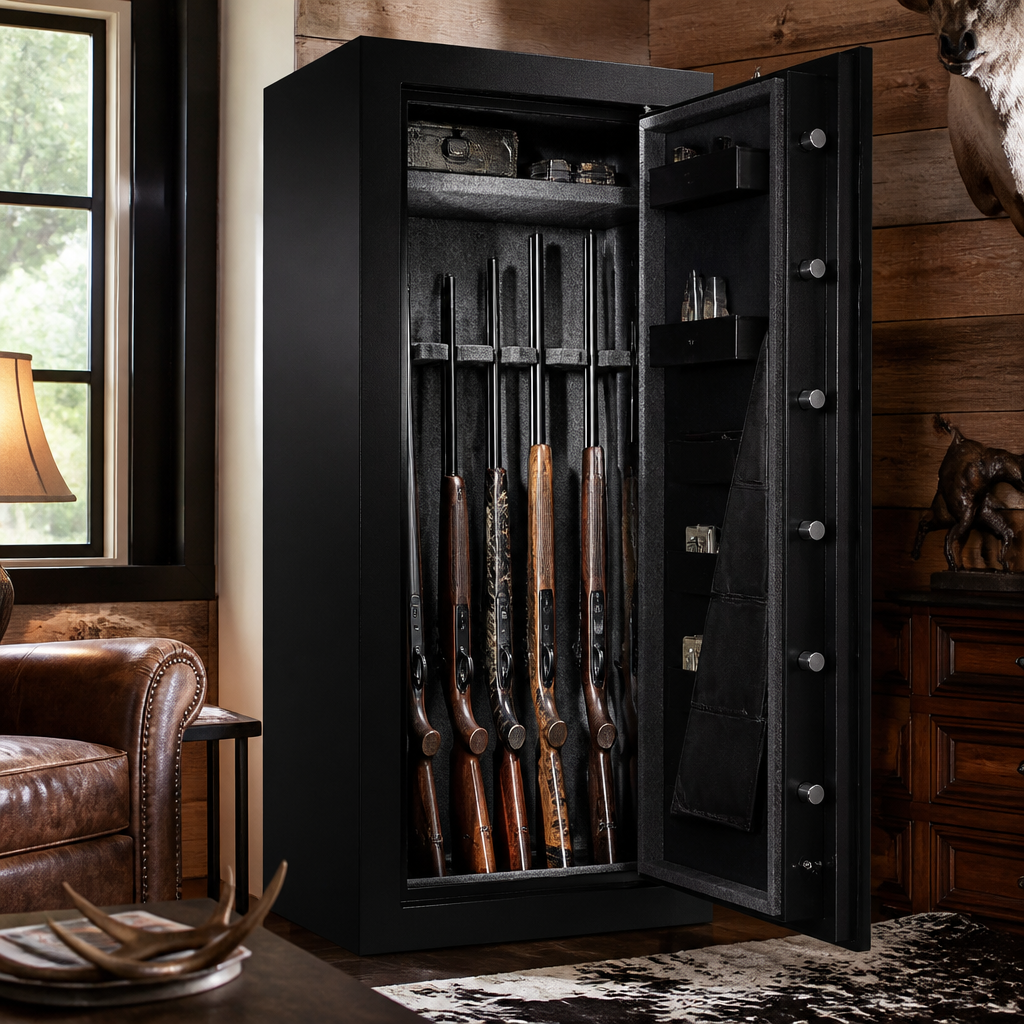
Choosing the right Fort Knox shotgun safe matters because shotgun owners face a storage challenge that is different from storing handguns, optics, or compact rifles. Shotguns are longer, often heavier at the muzzle, and commonly used for hunting, clay sports, waterfowl, and home defense, so they need a cabinet or vault that protects wood stocks, synthetic finishes, chokes, sights, and accessories without making access awkward. A Fort Knox shotgun safe is generally understood as a heavy-duty gun safe from Fort Knox Vaults configured to store long guns, especially shotguns, with stronger steel construction, upgraded locking options, fire protection, and interior layouts that can be tailored to real collections.
This article serves as a product review hub for shotgun-focused safe buyers under the broader Gun Safes & Safety topic. Instead of looking at one model in isolation, it explains how Fort Knox safes fit the needs of shotgun enthusiasts, what features deserve attention, and which tradeoffs affect value. I have worked with buyers comparing premium safes against big-box alternatives, and the same questions come up every time: How much steel is enough, what fire rating is meaningful, how many long guns really fit, and are custom interiors worth paying for? Those questions are practical because a shotgun safe is not just a box with a lock. It is part security barrier, part climate-controlled storage system, and part organization tool for expensive sporting equipment.
Fort Knox stands out in the premium safe market because the company emphasizes American-made construction, customization, and thicker steel than many mass-market competitors. For a shotgun owner, that matters in daily use. A safe that looks large on paper can become cramped once you add 30-inch barrels, side-by-side shotguns with wider profiles, scoped slug guns, choke tubes, shell pouches, and documents. A good review therefore has to go beyond brochure claims. It must explain capacity honestly, compare lock choices, and show how layout, door organizers, dehumidification, anchoring, and installation affect ownership over years, not weeks. If you are researching the best shotgun safe, this hub will help you understand the product category and identify the Fort Knox features that justify the premium.
What Makes a Fort Knox Shotgun Safe Different
A Fort Knox shotgun safe is different primarily because of its build philosophy. Many entry-level safes sold through warehouse retailers use thinner steel bodies, basic drywall-based fire liners, and generic interiors designed around marketing-friendly gun counts. Fort Knox typically offers heavier body steel, stout doors, and more extensive options for reinforcement. In practical terms, thicker steel slows pry attacks, resists deformation around the door frame, and gives the safe a more substantial feel when the handle cams the bolts into place. Owners notice the difference immediately in door weight, hinge performance, and overall rigidity.
Another distinction is configurability. Shotgun enthusiasts do not all store the same gear. A trap shooter may need room for multiple over-under shotguns, shell bags, spare recoil pads, and cleaning rods. A duck hunter may prioritize corrosion control, boot-room-adjacent access, and separation for muddy accessories. A home-defense owner may need quicker access to one defensive shotgun while securing family documents and a sidearm. Fort Knox supports this range of use with interior options, shelving choices, door panel accessories, lock upgrades, and exterior finishes. That flexibility is important because a safe becomes inconvenient when the layout fights the collection.
Fort Knox also has strong brand recognition among premium safe buyers, and that matters in a review context. A known manufacturer with long-term parts support and dealer networks is easier to service than an off-brand import with changing specifications. When you are spending serious money on a shotgun safe, you want clarity on boltwork, relockers, lock brands, warranty structure, and moving requirements. Fort Knox earns attention because buyers can evaluate these details model by model rather than relying on vague security language. That transparency is one reason the brand appears often in serious gun safe comparisons.
Core Features Shotgun Enthusiasts Should Evaluate
The most important feature in any shotgun safe is usable interior geometry. Long guns need vertical clearance, but that alone is not enough. You also need enough depth for ribbed barrels, raised sights, recoil pads, and soft cases if you use them. A narrow interior can force shotguns to lean into one another, which increases finish wear and makes retrieval clumsy. Fort Knox interiors generally offer better spacing than promotional gun counts suggest, but shoppers should still measure their longest gun, include any case or sock they use, and compare that number against internal dimensions rather than exterior size.
Security hardware deserves equal scrutiny. Look for plate thickness, door edge design, internal hard plates that protect the lock, and relocking mechanisms that engage if someone attacks the lock body. Fort Knox commonly promotes robust boltwork and upgraded steel packages, which are more meaningful than flashy paint. The lock itself matters too. Mechanical dial locks remain highly respected for longevity and simplicity, while quality electronic locks provide faster entry and easier code changes. I usually advise shotgun owners to choose based on household use: a dedicated sporting collection can do well with a dial, while a defensive long-gun setup may justify an electronic lock from a reputable manufacturer such as Sargent and Greenleaf or SecuRam.
Fire protection is another area where buyers need realism. Fire ratings vary by test method, temperature, and duration, so no single number tells the whole story. A premium safe with better door seals, layered insulation, and tighter construction can offer meaningful protection, but location still matters. A safe in a climate-controlled first-floor room may fare differently from one in a garage with fuel sources nearby. Shotgun owners with fine walnut stocks should remember that heat, steam, and humidity can damage wood and metal even if the safe survives structurally. For that reason, I recommend treating fire protection as one layer in a broader storage plan that includes insurance, documentation, and humidity management.
How Fort Knox Models Compare for Product Reviews
As a product review hub, this page should help readers distinguish among the types of Fort Knox safes most relevant to shotgun storage. The company’s lineup ranges from more accessible models to heavily upgraded flagship options. The practical differences usually come down to steel thickness, door construction, fire package, standard features, and the degree of customization available. Buyers comparing models should focus less on branding tiers and more on what each tier changes in day-to-day ownership, especially if the safe will hold valuable sporting shotguns or heirloom hunting guns.
| Evaluation Area | What to Look For | Why It Matters for Shotguns |
|---|---|---|
| Interior height and depth | Measure longest barrel and overall length | Prevents cramped storage and finish wear |
| Steel thickness | Compare body and door gauge or plate options | Improves resistance to pry and cut attacks |
| Fire protection | Review duration, heat rating, and seal design | Protects wood stocks, bluing, and optics |
| Lock type | Choose quality dial or electronic lock | Balances speed, reliability, and maintenance |
| Interior configuration | Shelves, barrel racks, door storage, accessory bins | Fits over-unders, pumps, side-by-sides, and gear |
| Installation plan | Weight, anchoring, stairs, and room placement | Determines real security and daily convenience |
In reviews, mid-tier Fort Knox options often appeal to the shotgun owner who wants a genuine security upgrade over mass-market safes without paying for every cosmetic or structural add-on. These models can be the sweet spot for families storing a handful of field guns, one defensive shotgun, ammunition kept within legal limits, and key documents. Higher-end Fort Knox configurations make sense when the collection includes premium Beretta, Browning, Benelli, or Perazzi shotguns, or when the owner wants thicker steel and stronger fire packages because replacement cost would be significant.
That is why hub content matters. One review article can cover a specific model, but a hub page should frame the buying criteria used across the entire subtopic. Readers who move from this page to narrower articles on safe size, fire ratings, lock types, or installation will make better decisions because they understand the category, not just the marketing language around one product.
Real-World Ownership: Capacity, Access, and Organization
The biggest surprise for first-time buyers is that advertised capacity rarely reflects real shotgun storage. If a safe says it holds twenty-four guns, that number may assume slim rifles with no optics arranged tightly. Shotguns, especially over-unders and side-by-sides, consume more width because their receivers and fore-ends are bulkier. Add hard cases, choke tube kits, hearing protection, range bags, and cleaning supplies, and the safe fills quickly. My rule is simple: if you own eight to ten shotguns, buy a safe marketed for significantly more than that unless the interior is specifically optimized for long guns with generous spacing.
Access also changes what “best” means. A sporting clays shooter may open the safe several times each week and care deeply about visibility, shelf arrangement, and smooth retrieval. In that case, LED lighting, labeled accessory storage, and door-panel organization are not luxuries; they reduce handling mistakes and speed packing for early mornings. By contrast, someone focused on security for a defensive shotgun may care most about dependable lock response, straightforward placement near the home’s center, and immediate access without digging around cases or stacked gear. Fort Knox customization helps here because owners can configure the interior around routine behavior, not abstract capacity numbers.
Organization has a preservation role too. Shotgun safes should prevent guns from knocking against one another, protect checkering from abrasion, and keep metal parts away from moisture-trapping clutter. Quality barrel rests, soft contact points, and dedicated shelving for choke tubes, snap caps, and maintenance products matter more over ten years than they do on delivery day. A well-organized safe also improves accountability. It is easier to see when a firearm, bolt, or document is missing, and easier to maintain household rules for safe storage.
Security, Fire, and Moisture Control in Plain Terms
Security starts before anyone touches the lock. Safe placement, concealment, and anchoring are major parts of theft prevention. A Fort Knox shotgun safe that is properly bolted to concrete in a low-visibility interior room is far harder to remove or attack than a heavier safe left freestanding in a garage. If the floor is wood-framed, use the manufacturer’s anchoring guidance and consider the structural load. Professional delivery is usually worth the cost because these safes are heavy enough to create injury risk and property damage when moved casually.
Fire protection should be viewed as time bought for the fire department and as insulation against heat transfer, not as a promise of perfect survival. Paper chars, polymers deform, lubricants break down, and wood finishes can blister. If you own valuable shotguns, keep serial numbers, photographs, appraisals, and receipts stored digitally and off-site. Many experienced owners also avoid storing large volumes of ammunition in the same safe as collectible guns, depending on local laws and household needs, because storage goals differ between firearms, documents, and consumables.
Moisture control is especially important for shotgun enthusiasts. Hunting guns often return home damp, and even a premium safe can trap humidity if wet gear is put away too quickly. Use a dehumidifier rod or desiccant system, allow guns to air dry after field use, and wipe down metal with a corrosion-inhibiting protectant before storage. Wood-stocked shotguns benefit from stable humidity because excessive dryness can stress wood, while high humidity promotes rust and mold. In practice, climate control is one of the least expensive upgrades and one of the most valuable.
Who Should Buy One and What to Read Next
A Fort Knox shotgun safe is best suited to buyers who see gun storage as a long-term investment rather than a commodity purchase. If you own one utility pump shotgun and need only basic compliance storage, a premium Fort Knox may be more safe than you need. But if you own several shotguns, travel for hunts, compete in clay sports, or keep heirloom firearms that would be difficult or impossible to replace, the value equation changes. Better steel, better fit and finish, better configuration, and stronger support become rational purchases, not indulgences.
This hub also defines the scope of product reviews within the broader Gun Safes & Safety category. From here, readers should continue into more specific articles on Fort Knox model comparisons, shotgun safe size guides, electronic versus mechanical lock reviews, humidity control methods, safe delivery and installation checklists, and fire rating analysis. Those supporting pages answer narrower questions, but this article provides the framework for evaluating them. In other words, the best product review hub does not just rank products; it teaches readers how to judge products intelligently.
The key takeaway is straightforward: the right shotgun safe protects firearms from theft, fire exposure, careless damage, and disorganization, while making ownership easier day after day. Fort Knox has earned serious attention because its safes typically offer stronger construction, meaningful customization, and practical long-gun storage advantages over many mainstream alternatives. Measure your collection honestly, prioritize steel and layout over marketing claims, plan for moisture control, and install the safe correctly. Then move to the next review in this subtopic with those standards in mind, and choose the Fort Knox shotgun safe that fits how you actually use your guns.
Frequently Asked Questions
What makes a Fort Knox shotgun safe different from a standard gun safe?
A Fort Knox shotgun safe is designed with the realities of shotgun storage in mind, which is important because shotguns do not behave like handguns or shorter tactical firearms when it comes to organization, fit, and access. A standard gun safe may technically hold long guns, but many generic interiors are optimized around mixed firearm collections and can feel cramped once you start placing longer-barreled shotguns with ribbed barrels, extended chokes, optics, slings, or wider buttstocks inside. A shotgun-focused safe aims to provide better vertical clearance, more practical barrel spacing, and interior configurations that reduce crowding around delicate finishes and accessories.
That difference matters for both protection and convenience. Shotguns used for hunting, sporting clays, waterfowl, and home defense are often taken in and out of storage more frequently than collectible firearms, so ease of use becomes a major factor. A well-built Fort Knox shotgun safe is generally associated with heavy-duty construction, strong locking systems, quality steel, and interior protection that helps prevent unnecessary contact between firearms. In practical terms, that means your over-under, pump, semi-auto, or field shotgun has a better chance of being stored upright, accessed smoothly, and protected from dents, scratches, moisture exposure, and accidental bumping that can happen in a poorly arranged safe.
How do I choose the right size Fort Knox shotgun safe for my collection?
Choosing the right size starts with a realistic look at the shotguns you own now and the ones you are likely to add later. Shotgun owners often underestimate how much room they really need because manufacturer capacity ratings can be optimistic. A safe advertised for a certain number of long guns may count slim rifles placed tightly together, not larger shotguns with wide fore-ends, raised sights, recoil pads, optics, side saddles, or extended choke tubes. If your collection includes waterfowl guns, sporting shotguns, tactical models, or youth and full-size variants, you should expect them to take up more usable space than a simple brochure number suggests.
A smart approach is to buy more capacity than your current collection requires. If you own six shotguns today, a model intended for significantly more than six long guns will usually offer a more practical fit and better spacing. Extra room also gives you storage flexibility for choke cases, cleaning supplies, documents, hearing protection, slings, and other equipment that tends to accumulate around shotgun ownership. Beyond capacity, pay close attention to interior height, shelf layout, and whether the interior can be adjusted to support a shotgun-heavy arrangement rather than a rifle-heavy one. The best size is not just about fitting firearms inside the safe; it is about storing them safely without crowding and still leaving yourself room to access each one without knocking into the next.
Will a Fort Knox shotgun safe protect wood stocks, synthetic finishes, and shotgun accessories?
Yes, a quality Fort Knox shotgun safe should help protect a wide range of materials and components, which is especially important because shotgun owners often have collections that mix blued steel, stainless finishes, camo coatings, walnut stocks, laminated wood, and synthetic furniture. These materials all benefit from being kept in a stable, secure, padded environment rather than in corners, closets, or lightly built cabinets where humidity, impact, and surface abrasion are more likely. A properly finished interior with protective shelving and barrel supports helps minimize hard contact points that can mar a stock or rub a finish over time.
Protection also extends to the small but important parts that make shotguns versatile. Choke tubes, sights, optics, shell carriers, slings, and maintenance tools all need to be stored in a way that keeps them organized and separate from the firearms themselves. When accessories are loose or piled onto the floor of a safe, they can scratch stocks, chip finishes, or make access unnecessarily awkward. The ideal setup uses shelves, bins, door storage, or accessory compartments so that everything has a place. Many owners also add dehumidification or moisture-control products, since humidity is one of the biggest long-term threats to wood, metal, and internal components. In short, the safe protects more than theft resistance alone; it helps preserve the condition, appearance, and usability of the entire shotgun system.
Is a Fort Knox shotgun safe a good option for both sport and home-defense shotguns?
It can be an excellent option for both, provided the layout and access method match how you use your firearms. Shotgun enthusiasts often own different types of shotguns for different purposes: a long-barreled over-under for clays, a camo semi-auto for waterfowl, a pump for general utility, and a shorter defensive shotgun for home protection. Storing all of these in one secure location makes sense, but they should still be organized in a way that reflects their roles. A sporting shotgun that is used on weekends may simply need safe, padded storage, while a home-defense shotgun may need to be accessible quickly without being buried behind other firearms.
That is where interior planning matters. A good Fort Knox shotgun safe can support a mixed-use collection by combining strong security with practical arrangement options. You may reserve one side or one front-access position for your defensive shotgun while keeping hunting and sport guns in more traditional long-gun slots. It is also helpful to think about how accessories are stored. Defensive setups may include lights, side saddles, or different sighting systems, while sporting guns may need space for choke sets, snap caps, and cleaning gear. The key is not just whether the safe can hold both categories, but whether it lets you retrieve the right shotgun efficiently while still maintaining responsible security. For many owners, that balance is exactly why investing in a robust shotgun-safe setup makes sense.
What features should I look for when buying a Fort Knox shotgun safe?
The most important features are the ones that directly affect security, fit, and day-to-day usability. Start with core build quality: heavy steel construction, a strong door, reliable locking bolts, and a proven lock system are foundational. A shotgun safe should not just look substantial; it should feel engineered to resist tampering and provide long-term durability. From there, look closely at the interior. Adjustable shelving, well-designed barrel rests, quality upholstery or lining, and enough depth and height for longer shotguns are all extremely valuable. If your shotguns wear optics, ghost-ring sights, thicker recoil pads, or oversized controls, make sure the interior does not force awkward placement.
Beyond the basics, consider features that improve real-world ownership. Door organizers can free up shelf space for choke tubes, gloves, tools, and paperwork. Interior lighting can make a major difference in visibility, especially when you are accessing gear early in the morning before a hunt or returning firearms for storage at the end of the day. Moisture control is another must-have, either built in or added later, because rust prevention and stock preservation are critical for shotguns that may be exposed to field conditions. Finally, think about placement, weight, and anchoring. A heavy-duty safe performs best when installed properly in a secure location with enough room for the door to open fully and for you to remove long guns comfortably. The best Fort Knox shotgun safe is the one that combines serious protection with a layout that actually works for the way shotgun owners store, maintain, and access their firearms.