
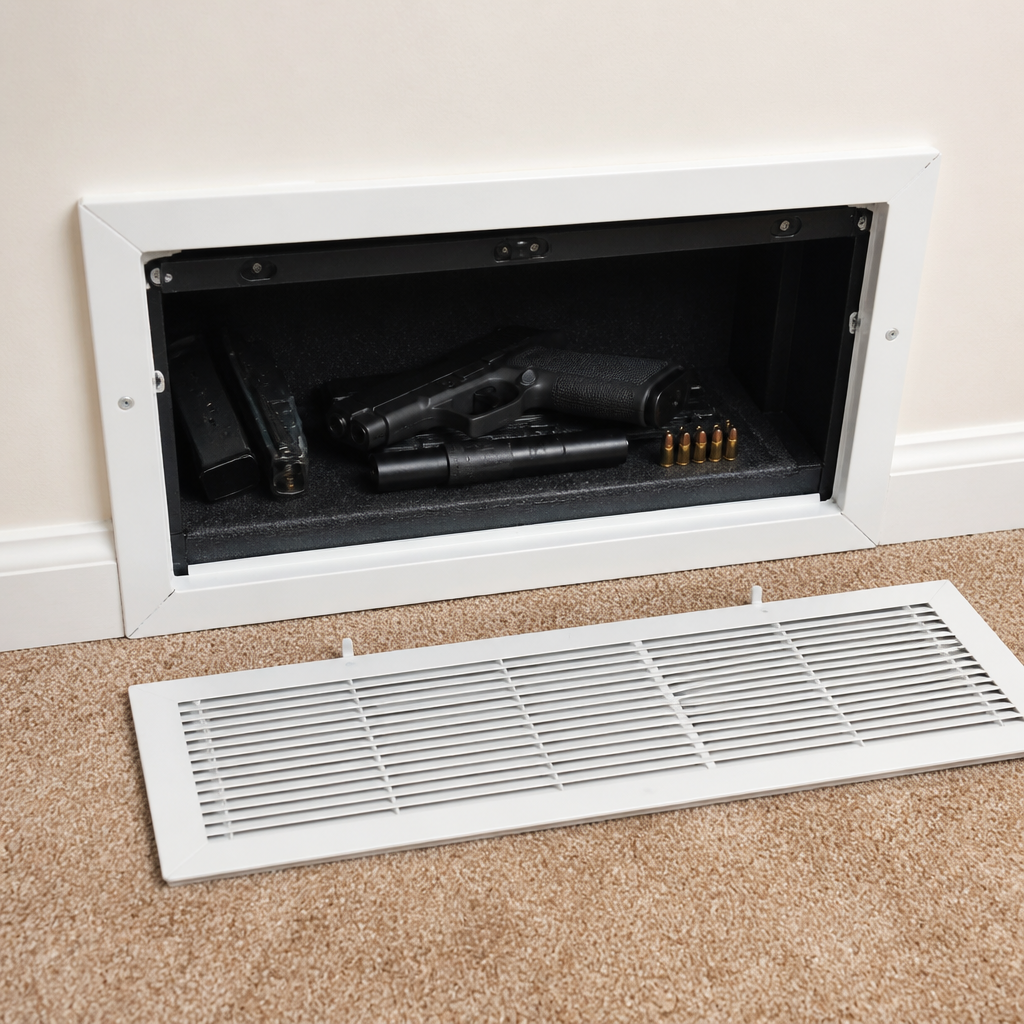
A gun safe hidden inside a fake air vent offers discreet firearm storage, rapid access, and a cleaner room layout, but it only works when concealment, structural integrity, locking security, and legal compliance are planned together from the start. In the gun safes and safety category, hidden and discreet gun storage solutions are designed to keep firearms out of casual sight while still preventing unauthorized access. That distinction matters. Hidden storage is not automatically secure storage, and secure storage is not always hidden. A fake vent safe attempts to deliver both by disguising a lockable compartment as an ordinary HVAC register mounted on a wall or ceiling.
I have worked on hidden storage installations in bedrooms, home offices, and hallways, and the same lesson comes up every time: the disguise is the easy part. The hard part is building a compartment that supports the firearm safely, resists tampering, and opens reliably under stress. A pistol tucked behind a decorative grille is one thing; a defensive carbine, spare magazines, documents, and a light present different weight, sizing, and retention problems. If the compartment sags, binds, prints through the wall, or rattles when the door closes, the concealment has already failed.
This hub article explains how to build a secret safe inside a fake air vent and how that project fits into the wider world of hidden and discreet gun storage solutions. You will learn where a vent safe makes sense, what materials and lock styles work best, how to frame and anchor the cavity, how to avoid common mistakes, and when a conventional quick-access safe is the smarter choice. You will also see how fake vent safes compare with mirror safes, shelf safes, headboard compartments, and furniture-based concealment so you can choose the right approach for your space, risk profile, and access needs.
For many owners, the appeal is obvious: a visible gun safe can advertise that firearms are present, while a concealed compartment blends into normal architecture. Yet concealment is only one layer. Responsible storage still means controlling access by children, visitors, burglars, and anyone prohibited from handling the firearm. State law, landlord rules, and insurance requirements can all affect what is considered adequate. A well-built fake vent safe should therefore be judged by five standards: concealment quality, locking strength, safe access speed, installation durability, and compliance with local storage duties.
What a fake air vent gun safe is and when it works best
A fake air vent gun safe is a recessed compartment installed between wall studs or ceiling joists and covered by a grille that resembles a standard supply or return register. Behind the grille sits a lockable box or framed cavity sized for a handgun, compact PDW, valuables, magazines, and accessories. The best applications are interior walls with standard stud spacing, low moisture exposure, and enough depth to clear the firearm and door hardware. In most homes, a 2×4 wall provides about 3.5 inches of stud depth before drywall, which is often enough for a handgun but usually too shallow for a full framed rifle unless the design uses a vertical angled mount or a bump-out cabinet.
Vent safes work best when speed and discretion matter more than maximum burglary resistance. A hidden vent in a bedroom near the bed, in a hallway outside a master suite, or in a home office can provide practical access for a staged defensive handgun. They are less ideal for long-term storage of a collection, high-end optics, or NFA-regulated items that demand stronger physical protection and more formal documentation. If your main goal is child resistance, a tested quick-access handgun safe from brands such as Fort Knox, Vaultek, Hornady, or V-Line usually provides clearer security performance than a custom concealment build.
The disguise must fit the house. Register styles differ by region, age of construction, and HVAC layout. A glossy white aluminum grille in a 1920s plaster hallway may look wrong, while an oversized return vent in a room with no duct runs raises suspicion. Measure nearby vents, match screw placement and paint sheen, and copy the airflow pattern you actually see elsewhere in the home. Good concealment is mundane. If a guest notices the vent because it looks new, too large, oddly placed, or perfectly clean compared with every other register, the secret compartment has already announced itself.
Planning the build: placement, dimensions, and legal considerations
Start with placement. Use a stud finder that can detect framing, live AC wiring, and plumbing paths. Franklin Sensors models are reliable for mapping studs, while a borescope helps inspect the cavity through a small pilot hole before cutting drywall. Never place a fake vent over an active duct, inside a fire-rated assembly you are not prepared to restore correctly, or in a high-humidity bathroom wall where corrosion can degrade both lock and firearm. An interior bedroom wall is usually the cleanest option because it avoids insulation, vapor barriers, and exterior temperature swings that create condensation.
Dimension the compartment around the firearm in its ready state. Include the optic, mounted light, suppressor-height sights, holster if used, and any foam or magnetic retention system. I recommend at least one inch of side clearance and enough depth that the grip does not contact the grille when the door shuts. For staged long guns, confirm overall length with stock collapsed or folded, and test draw angle from the exact mounting height. Many builders focus on fitting the gun inside the cavity and forget the equally important question of whether the gun can be removed quickly without snagging on screws, trim, or lock housings.
Legal considerations are not optional. Storage laws vary widely by state and sometimes by city, especially when minors may access the home. Some jurisdictions impose liability if a child or prohibited person gains access because the firearm was not secured with a locking device or in a locked container. A magnetic latch hidden behind a vent may be discreet, but it may not satisfy the standard expected after an incident. Insurance carriers may also distinguish between concealed compartments and listed burglary-rated safes. Before building, confirm what your state requires for loaded firearms, handgun storage, and defensive access in occupied homes.
Materials, lock choices, and the core build process
The strongest approach is to build a steel safe box that fits inside a framed wall opening rather than relying on drywall and trim as the structure. Fourteen-gauge steel is a practical minimum for a concealed handgun compartment; 12-gauge is better if weight and budget allow. The box should be flanged or anchored through the sides into studs with lag screws or structural screws such as GRK RSS or Simpson Strong-Drive. Inside, use closed-cell foam, a formed Kydex holster mount, or magnetic retention designed for firearms, not generic hardware magnets that can shift under recoil spring tension or repeated movement.
Lock selection determines whether the safe is merely hidden or meaningfully secured. Mechanical push-button locks from Simplex-pattern systems are durable, fast, and not battery dependent. Electronic keypad locks offer easy code changes and audit-style convenience but need battery maintenance and quality electronics. RFID locks are discreet and quick, yet they can be inconsistent around metal housings if poorly installed. Cam locks are cheap and compact but offer limited resistance. In my experience, a hidden vent safe intended for defensive use benefits most from a mechanical push-button lock or a high-quality electronic keypad with an external battery override and a key backup stored separately.
Build sequence matters because drywall work, framing alignment, and door swing tolerance interact. Cut the opening only after confirming stud spacing, level, and cavity obstructions. Frame the cavity with horizontal blocking so the safe box has solid top and bottom support. Dry-fit the steel insert, verify the vent grille clears the trim, and test the lock with the firearm inside before final anchoring. If the grille itself becomes the door, use concealed hinges rated for the load and add a stop so the panel opens to a repeatable angle. Finish by matching paint, screw heads, and surrounding texture so the vent reads as original construction rather than a retrofit.
Step-by-step design priorities and comparisons within hidden storage
The safest way to think about this project is as a balance of access, concealment, and resistance. A fake vent is excellent at disappearing into a room, but it rarely equals a dedicated burglary safe in steel thickness, pry resistance, or fire protection. That is why many homeowners use vent safes as secondary defensive storage while keeping bulk firearms and important documents in a full-size UL-listed safe. As the hub page for hidden and discreet gun storage solutions, this article should also help you place vent safes among the most common alternatives.
| Storage type | Best use | Main advantage | Main limitation |
|---|---|---|---|
| Fake air vent safe | Staged defensive handgun | Blends into architecture | Limited depth and fire resistance |
| Mirror or picture frame safe | Bedroom or hallway access | Larger opening for long guns | More visible if discovered |
| Shelf or cabinet compartment | Office or living room | Good usable depth | Furniture can be moved or examined |
| Headboard or bed frame safe | Nighttime access | Fast reach from bed | Limited separation from children in room |
| Conventional quick-access safe | Primary secure handgun storage | Stronger tested locking design | Not visually concealed |
If you are building the vent safe yourself, prioritize the following in order: lock integrity, stud anchoring, quiet operation, draw clearance, then cosmetic realism. Many DIY failures reverse that order and spend hours on grille paint while ignoring flex in the box or weak screws into drywall only. Real-world use exposes these shortcuts immediately. A door that rings when tapped, a latch that needs a second pull, or a pistol that catches on foam under stress can turn a clever concealment idea into a poor defensive tool.
Comparison across hidden storage options is useful because the fake vent safe is not universally best. A mirror safe can fit a short rifle more naturally because the door opening is larger and the cavity can span multiple studs with proper reframing. A shelf safe offers easier integration with books or office decor and often gives more depth. Under-desk and nightstand safes can be faster under pressure because they require less body movement and no standing reach. The vent safe wins when you need architectural camouflage in a space where a visible safe or furniture compartment would stand out.
Security upgrades, maintenance, and common mistakes to avoid
Small upgrades make a major difference. Line the interior with thin automotive felt or closed-cell foam to eliminate metal-on-metal contact. Add a rechargeable motion light so the compartment is usable in darkness without forcing a white-light search. Install a desiccant pack or low-profile vapor corrosion inhibitor if the wall experiences seasonal humidity swings. Use thread locker on internal fasteners, and check torque twice a year. If the safe stores a loaded firearm, secure magazines or medical gear in defined positions so nothing interferes with the trigger guard or blocks the draw path.
For higher security, connect the compartment to a home alarm using a recessed contact sensor so any opening generates an alert. Some owners also place a secondary cable lock through the firearm when the house is unoccupied for extended periods, accepting slower access in exchange for another barrier. This is a sensible compromise for vacation homes or rentals. If burglary resistance is a priority, reinforce the door frame with steel angle and use interlocking return flanges that reduce pry points. These features do not make the vent safe equal to a TL-rated safe, but they substantially improve resistance to quick smash-and-grab attacks.
The most common mistakes are predictable. Builders choose a location before checking for wires or ducts. They buy a generic decorative vent that does not match surrounding registers. They mount a heavy steel door on weak hinges, causing sag and uneven reveal. They underestimate how much room a pistol with a red dot and weapon light needs. They forget that fast access requires a consistent opening arc and an intuitive grip angle. And they assume concealment alone satisfies safe-storage obligations. It does not. A hidden compartment without a robust lock is still vulnerable to children, curious guests, cleaners, and any burglar willing to inspect the room methodically.
How this hidden storage hub fits into a complete gun safety plan
A fake air vent safe is best understood as one part of a layered storage system, not as a universal replacement for traditional safes. In practical home setups, I recommend dividing firearms by role. The daily defensive handgun may live in a quick-access or concealed compartment near the point of need. Hunting rifles, spare pistols, suppressors, and high-value optics belong in a heavier anchored safe with better theft and fire performance. Training ammunition, legal paperwork, and serialized accessory records should be organized separately so they are protected but not mixed loosely with grab-access guns.
As the hub for hidden and discreet gun storage solutions, this topic connects naturally to deeper guides on mirror safes, furniture concealment, under-bed safes, vehicle lockboxes, and child-resistant quick-access devices. The key principle across all of them is the same: the right storage method depends on your threat model. If your main concern is a smash-and-grab burglar, concealment helps by delaying discovery. If your main concern is unauthorized access by children or visitors, lock quality and placement matter more. If your main concern is a house fire, a vent safe is the wrong primary answer because it offers limited insulation and no meaningful fire rating.
Choose the fake vent safe if you want discreet, room-integrated access to a staged firearm and you are willing to build it carefully with real steel, dependable locking hardware, proper anchoring, and a location that makes architectural sense. Avoid it if you need maximum burglary protection, certified fire resistance, or storage for a larger collection. Done right, a secret safe behind a fake air vent can be effective, elegant, and practical. Review your local storage laws, map the wall before cutting, and build around security first, then camouflage. That approach produces a hidden gun storage solution that is both discreet and responsible.
Frequently Asked Questions
Is a fake air vent gun safe actually secure, or is it just hidden?
A fake air vent gun safe can be a smart concealment option, but concealment and security are not the same thing. A hidden compartment keeps firearms out of casual view, which can reduce the chance of opportunistic discovery by visitors, contractors, or a quick walk-through burglar. However, if the compartment has a weak door, no lock, poor mounting, or flimsy framing, it may fail the moment someone starts pulling, prying, or inspecting the wall. In other words, hidden storage is helpful, but hidden storage alone is not enough.
For this type of setup to be meaningfully secure, the safe body should be made from durable material, anchored firmly to wall framing, and fitted with a lock that resists tampering. The vent cover itself should look believable, but the compartment behind it should function like a true security container rather than a decorative box. It also needs to prevent easy access by children, prohibited persons, or anyone else who should not be able to handle the firearm. That is especially important if the storage location is in a bedroom, hallway, office, or other lived-in space where people may spend time unsupervised.
The best way to think about a fake air vent safe is that it works in layers. The first layer is disguise: it does not attract attention. The second is structure: it cannot be easily pulled from the wall or broken open. The third is access control: only authorized users can open it. If one of those layers is missing, the overall system is weaker. So yes, it can be secure, but only when concealment, locking security, and proper installation are planned together from the start.
What should I consider before building a gun storage compartment inside a fake air vent?
Before building anything, start with purpose and placement. Decide whether the compartment is meant for rapid access, long-term discreet storage, or a combination of both. That decision affects size, lock style, interior layout, and location in the room. A bedside installation may prioritize speed and familiarity, while a home office or closet location may emphasize lower visibility and reduced traffic. You also need to confirm that the chosen wall cavity is suitable and that you are not interfering with real HVAC components, electrical wiring, plumbing, insulation requirements, or fire-blocking features inside the wall.
Structural planning is equally important. The opening must fit between studs or be framed correctly without weakening the wall. The unit should be anchored securely so it cannot shift, sag, or tear free under force. Weight matters more than many people expect, especially if the compartment is built with steel components or intended to hold a handgun, extra magazines, documents, or other valuables. A realistic-looking vent cover is only part of the project. Behind that cover, the compartment needs enough rigidity to withstand repeated use and enough depth to store the firearm safely without snagging.
You should also consider your access method and daily routine. A hidden safe that is too slow to open, too awkwardly placed, or too tight internally may be frustrating in practice. At the same time, a design optimized only for speed may leave too many security compromises. Interior retention matters too. The firearm should sit in a stable position, protected from unnecessary movement, with the trigger guarded and the orientation consistent every time you open it.
Finally, legal compliance should be addressed before construction begins. Storage laws vary by state and locality, especially where child access prevention, locking requirements, or defensive firearm storage rules are concerned. In some areas, hidden storage may still be legally inadequate if it does not meet specific locking or unauthorized-access standards. Building first and checking later is the wrong order. A good design starts with lawful storage requirements, then builds concealment and convenience around them.
What kind of lock or access system works best for a hidden air vent gun safe?
The best lock depends on how you balance speed, reliability, and security. In many cases, a quality mechanical or electronic quick-access lock is preferred because it provides controlled entry without making the compartment visibly look like a safe. Mechanical push-button systems are valued for simplicity and independence from batteries, while electronic keypads or biometric systems can offer faster access when properly designed and maintained. No matter which type you choose, reliability under stress should carry more weight than novelty.
Biometric access can be convenient, but it is not automatically the best option for every owner or every room. Fingerprint systems may be affected by skin condition, sensor quality, maintenance, or hurried use. Electronic keypads can be excellent if they allow fast operation in low light and include dependable power backup. Mechanical locks eliminate battery concerns but should still be tested for ease of use, especially from awkward positions such as beside a bed or behind furniture. A hidden vent safe should open consistently and predictably every time, because inconsistency undermines both safety and confidence.
Another major consideration is whether the lock is integrated into the disguised faceplate or concealed behind it. The more obvious the hardware, the less convincing the fake vent becomes. At the same time, a completely hidden release should not be so obscure that authorized users struggle to access it. The best designs hide the presence of the lock while preserving intuitive operation for the owner. If the compartment is intended for defensive access, rehearse opening it safely and repeatedly under realistic conditions.
Whatever system you choose, avoid treating the lock as a decorative afterthought. A weak latch on a disguised panel may stop curiosity, but it may not stop deliberate access. The locking method should resist tampering, remain functional over time, and support safe storage laws in your jurisdiction. In short, the best lock is the one that combines dependable restricted access, believable concealment, and a level of speed that matches the safe’s actual intended use.
How do I make a fake air vent look convincing without sacrificing safety and strength?
A convincing fake air vent starts with realism in size, placement, finish, and proportion. It should resemble the vents already used in the home, or at least fit naturally with the style of the room. If the grille design, paint sheen, screw placement, or wall location look unusual, the feature may attract exactly the kind of attention you are trying to avoid. The safest hidden storage often looks boring, ordinary, and consistent with the house around it.
That said, realism should never come at the expense of secure construction. A vent cover that bends easily, rattles, or pulls off with minimal effort may look authentic at first glance but perform poorly when touched. The challenge is to create an exterior that appears ordinary while concealing a sturdier access point underneath. The faceplate should align cleanly with the wall, sit flush, and avoid obvious gaps, but the compartment itself needs reinforcement and proper mounting into framing. A well-built hidden safe does not advertise itself through movement, noise, or sloppy installation.
It is also wise to think through how people interact with the room. A fake vent placed in an implausible location or one that blocks furniture strangely can invite curiosity. Likewise, putting the compartment where children play, where guests frequently wait, or where maintenance workers may notice inconsistencies can defeat the purpose of concealment. Believability is not only about visual design; it is also about choosing a location that makes practical sense within the room’s layout.
Internally, safety and strength depend on more than the vent cover. The storage cavity should protect the firearm from shifting, support repeat opening and closing, and avoid sharp edges or awkward retrieval angles. A believable disguise is valuable, but it should wrap around a properly constructed, secure compartment rather than replace one. The most effective hidden air vent safe is the one people never notice because it looks normal, feels solid, and still functions like a controlled-access storage solution behind the scenes.
Are there legal or safety issues to know before using a hidden gun safe in a wall?
Yes, and they are significant. Hidden firearm storage must still comply with all applicable federal, state, and local laws regarding possession, access prevention, transport within the home, and storage around minors or prohibited persons. A concealed compartment does not exempt an owner from secure storage requirements. In many jurisdictions, the law focuses on whether unauthorized access was reasonably prevented, not simply whether the firearm was out of sight. If a child or unauthorized person can open the compartment, the fact that it was disguised behind a fake vent may offer little legal protection.
Safety considerations are just as important as legal ones. The firearm should be stored in a condition consistent with your training, household risk factors, and applicable law. The compartment should prevent accidental handling, protect the trigger area, and keep the firearm stable. If the safe is designed for rapid access, that goal should be balanced with robust access control. A setup that is fast for you but easy for others is not a safe solution. You should also consider environmental conditions inside the wall, including humidity, dust, and temperature fluctuations, which may affect corrosion protection and long-term reliability.
There are also building and installation issues to keep in mind. Cutting into a wall without understanding what is inside can create electrical hazards, compromise HVAC systems, affect insulation performance, or interfere with structural and fire-safety features. In some homes, code-related details inside wall cavities matter more than a casual DIY builder realizes. If there is any uncertainty about what is behind the wall, professional evaluation is the responsible approach.
Ultimately