
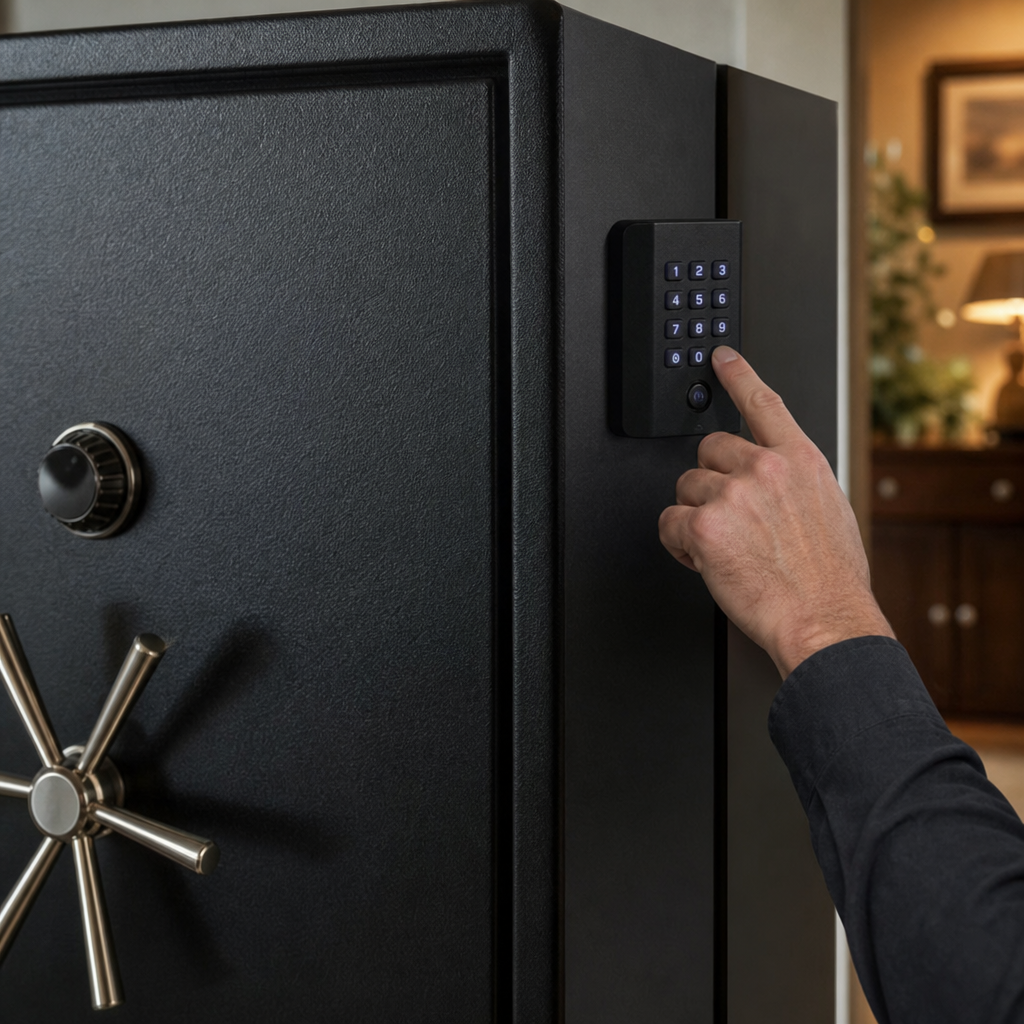
Adding an external keypad for quick access to your gun safe is one of the most practical custom upgrades you can make, but it has to be done without compromising security, fire protection, or safe function. In the custom and DIY gun safe modifications category, an external keypad is a retrofit that places the code entry point outside the safe body, usually through a manufacturer-approved electronic lock conversion or a carefully planned relocation kit. The goal is simple: reach the safe faster, especially in low light or under stress, while keeping the locking mechanism reliable and tamper resistant. This matters because a modification that saves seconds during access can also create failure points if you drill the wrong place, route the cable poorly, or ignore lock compatibility. I have worked on safe retrofits where a clean keypad addition improved usability immediately, and I have also seen rushed installs destroy interior fire liners and void warranties. If you own a gun safe and want quicker access, this hub explains how to evaluate lock types, choose between factory and aftermarket parts, install an external keypad correctly, and understand where this project fits among broader gun safe modifications.
Before changing anything, define the parts involved. The keypad is only the user interface. The real lock system includes the keypad, lock body, spindle or cable path, relocker protections, boltwork interface, and power source. Many gun safes use either a mechanical dial lock, a standard electronic lock such as the SecuRam SafeLogic or S&G Spartan, or a proprietary keypad paired to the safe maker’s lock body. Quick access means reducing the time and movement needed to enter a code and open the door, not weakening the locking system. In practical terms, the best external keypad setups use a lock designed for that exact door thickness and mounting pattern, installed according to UL-listed safe lock standards and the safe manufacturer’s drilling guidance. As a hub page for custom and DIY gun safe modifications, this article also connects the keypad project to related upgrades like LED interior lighting, dehumidifier routing, shelf reconfiguration, door panel organizers, biometric retrofits, and anchor improvements. Those projects often interact, because once you open interior panels for one change, you need to think holistically about wiring, battery access, and preserving the safe’s core defenses.
When an External Keypad Upgrade Makes Sense
An external keypad upgrade makes sense when the existing lock slows access, the keypad location is awkward, or the safe was built to accept an electronic conversion. The most common scenario is replacing a mechanical dial with a direct-mount electronic lock kit. On many residential security containers, the standard lock footprint follows an industry pattern, allowing a conversion without changing boltwork geometry. That is the cleanest path because the keypad stays outside by design and the lock body remains inside the door where it belongs. Another scenario is upgrading an older electronic lock with a newer keypad that has better tactile buttons, a wake-up backlight, penalty lockout, and low-battery alerts.
Where owners get into trouble is trying to add a second external keypad separate from the original lock or routing a cable through an unapproved hole. Most safe doors are layered systems: steel skin, fireboard, inner panel, lock mounting plate, and hardplate around the lock area. Drilling without a factory template can strike a relocker, disable boltwork, or create a path for heat and moisture. In the field, the best results come from safes that already support lock swaps from brands like AMSEC, Liberty, Browning, Rhino, or Winchester, provided the exact model confirms compatibility. If your safe uses a sealed proprietary lock system, the correct answer may be a manufacturer service call rather than a DIY retrofit.
Compatibility, Safety, and Warranty Checks Before You Start
Before ordering parts, verify five things: lock footprint, bolt throw direction, spindle or cable clearance, door thickness, and warranty terms. Most retrofit-safe locks mount on the standard 2.75-inch by 4-inch pattern used across the safe industry, but not all gun safes expose that pattern in the same way. Remove the interior door panel carefully and inspect the lock area. Look for glass relockers, hardplates, clutch mechanisms, and any anti-punch components. Photograph everything before disassembly. I always advise owners to compare the existing lock body dimensions against the replacement lock’s technical sheet rather than relying on marketing copy.
Warranty is equally important. Some manufacturers explicitly allow lock upgrades when performed by an authorized locksmith. Others void fire and burglary coverage if the door is modified. That distinction matters because fireboard damage or a compromised intumescent seal can reduce fire resistance. Also check whether your homeowners insurance rider for firearms storage references a specific safe rating or lock configuration. If your policy depends on maintaining the safe as manufactured, a DIY keypad relocation may create coverage issues after a loss.
| Checkpoint | What to Verify | Why It Matters |
|---|---|---|
| Mounting pattern | Standard safe lock footprint or proprietary layout | Determines whether a retrofit lock will physically fit |
| Door construction | Steel thickness, fire liner, hardplate, relockers | Affects drilling risk and cable routing options |
| Lock compatibility | Bolt swing, handing, cable length, keypad style | Prevents boltwork binding and lock failure |
| Power setup | 9V battery, internal battery pack, or keypad battery tray | Impacts maintenance and emergency access planning |
| Warranty and service | Manufacturer rules and approved installer requirements | Protects safe coverage and future repair options |
Choosing the Right Lock and Keypad for Fast, Reliable Access
The right lock for quick access balances speed, durability, and serviceability. For most gun safe owners, a proven electronic safe lock from SecuRam, Sargent and Greenleaf, or La Gard is the safest choice. These systems are purpose-built for safes, not adapted from consumer door locks. Good models offer time delay options, wrong-try penalty lockout, multiple user codes, and durable tactile keys. Some include swing-bolt designs, while others use dead-bolt configurations. Either can work if matched correctly to the safe’s boltwork.
Avoid generic “universal safe keypad” products sold without clear certification, lock body specifications, or manufacturer support. Many low-cost kits look attractive online but use inconsistent membranes, fragile battery contacts, and poor cable shielding. In actual use, the problems show up fast: intermittent wake-up, missed key presses, or lockouts during cold weather. A gun safe is not the place to test bargain electronics. Choose a lock with established service networks and published installation instructions.
If speed is the top priority, select a keypad with raised, easy-to-index buttons and a backlit face. Under stress, finger placement matters more than cosmetic design. Some users prefer a redundant setup with a mechanical key override, but on higher-security safes that feature is uncommon and often less secure. I generally recommend reliability over gimmicks. A well-installed electronic lock with fresh batteries and a practiced code entry routine is faster and safer than an unproven hybrid system.
How the Installation Process Works in Practice
The installation process depends on whether you are swapping an existing lock or creating a new keypad position. A direct replacement is the preferred route. Start with the safe open and the bolts extended or positioned according to the manufacturer’s instructions. Remove the interior door panel, disconnect the old keypad, and unbolt the existing lock body. Keep pressure off the boltwork so parts do not shift. Install the new lock body first, confirm bolt engagement by hand, and only then mount the keypad. Route the cable exactly as directed so it cannot be pinched by the handle hub or moving bars.
After assembly, test the lock repeatedly with the door open. This is nonnegotiable. Run at least ten complete cycles, listening for drag, delayed solenoid action, or inconsistent retraction. Verify the code change process, battery orientation, and lockout behavior after incorrect entries. Only once the lock performs consistently should you close the door for live testing. If a retrofit requires drilling a new cable pass-through or repositioning the keypad, stop unless the manufacturer provides an exact template and confirms that the location avoids relockers, hardplates, and fire seals. In many cases, that stage belongs to a safe technician or certified locksmith, not a DIY owner.
Common Mistakes That Can Weaken a Gun Safe
The biggest mistake is treating the keypad as a simple accessory rather than part of the security system. Drilling through the door skin without understanding the internal layout can destroy anti-tamper features. Misrouting the cable can lead to abrasion, shorting, or intermittent lock communication. Overtightening keypad screws can crack housings or distort membrane contacts. Another common error is failing to test door alignment after the lock swap. If the door already has minor sag, a new lock can mask the issue briefly before opening becomes erratic.
Battery neglect is another avoidable problem. Most electronic safe locks are dependable when maintained, but owners often wait until the keypad beeps weakly or fails outright. Replace batteries on a schedule, not after a warning. Use high-quality alkaline batteries if the manufacturer specifies them, and avoid mixing brands or using rechargeables unless the lock maker approves them. Also resist the urge to hide your combination on the safe body, inside the nearby closet, or in a phone note without protection. Quick access should never come at the expense of basic code security.
How This Project Fits Into Broader DIY Gun Safe Modifications
An external keypad is often the gateway project that leads owners into broader gun safe customization. Once the interior door panel is off, it becomes easier to plan LED lighting, a power pass-through for a GoldenRod or dehumidifier, pistol rack changes, magazine storage, and door organizers. Those upgrades can improve daily use significantly, but they should follow a clear order. Start with the lock and access system, then address moisture control, then storage layout. Security-critical work always comes first.
For example, I have seen owners install adhesive LED strips before thinking about lock cable routing, forcing them to peel everything back later. I have also seen dehumidifier cords run through improvised holes that bypass the intended pass-through, creating air leaks and exposing the cord to door pinch points. The best custom and DIY gun safe modifications treat the safe as an integrated system. Access, security, fire protection, power management, and organization affect one another. If you are building a complete modification plan, create a checklist, use manufacturer documentation, and decide which tasks truly belong in the DIY category versus professional service.
When to Call a Locksmith or Safe Technician
Call a locksmith or safe technician when the safe uses a proprietary lock, the door must be drilled, the lock area includes visible relockers, or the safe stores defensive firearms you cannot afford to lose access to. Professional installation is also the right choice when your safe is still under warranty or when insurance documentation matters. A qualified safe technician can identify hidden relock devices, verify boltwork timing, and test the lock against manufacturer tolerances. That level of precision is hard to match with online tutorials alone.
Choose someone who works on safes regularly, not just residential door hardware. Ask whether they install UL-listed safe locks, whether they service your safe brand, and whether they guarantee their work. A competent pro will explain why a specific keypad can or cannot be added and will not improvise on critical lock geometry. That honesty is a good sign. If the answer is no, it is usually no for a structural reason, not because the upgrade is unfamiliar.
Adding an external keypad for quick access to your gun safe can be an excellent upgrade when it is done through a compatible lock system, tested carefully, and integrated into a broader plan for safe performance. The key lessons are straightforward: prioritize compatibility before convenience, protect the door’s security layers, use established safe lock brands, and test every function with the door open before trusting the modification. As a hub within custom and DIY gun safe modifications, this topic connects directly to lighting, moisture control, storage layout, and other upgrades that improve usability without undermining security. The main benefit is faster, more confident access to your firearms while preserving the protective purpose of the safe itself.
If you are planning this project, start by identifying your current lock model, reviewing the manufacturer’s documentation, and deciding whether your safe supports a direct electronic retrofit or requires professional service. A careful plan now will save money, protect your warranty, and keep your gun safe both accessible and secure.
Frequently Asked Questions
Can you add an external keypad to any gun safe?
Not every gun safe is a good candidate for an external keypad retrofit. The safest and most reliable installations are usually done on safes that already support an electronic lock conversion from the manufacturer or from a well-known lock brand such as Sargent & Greenleaf, SecuRam, La Gard, or AMSEC-compatible systems. In those cases, the door and lock mounting pattern are designed to accept an electronic lock body on the inside, while the keypad mounts cleanly on the outside without altering the safe’s core security structure.
If your safe currently has a mechanical dial, the first step is to confirm the lock footprint, spindle hole compatibility, relocker design, and door clearance. Many modern safes use a standard lock mounting pattern, but that does not automatically mean every electronic keypad setup will fit. Some doors are too thin or too thick for certain keypad stems, some have internal hard plates that interfere with lock placement, and some include proprietary boltwork layouts that only work with specific lock models.
The biggest mistake owners make is assuming an external keypad is just a matter of drilling a hole and attaching a keypad wherever it is convenient. A proper retrofit is really a lock conversion or approved keypad relocation, not a casual add-on. If the safe was not designed for this type of upgrade, improvised modifications can weaken fire lining, interfere with relockers, void the warranty, or create a path for tampering. Before buying parts, check with the safe manufacturer, review the lock specifications, and if there is any uncertainty, have a safe technician evaluate the door construction and compatibility.
Will installing an external keypad weaken the security or fire protection of the safe?
It can if the job is done incorrectly, but a properly planned installation should not meaningfully reduce the safe’s protective value. The key is preserving the integrity of the safe door, especially the hard plate, lock pocket, relocker system, door skin, and fire insulation. Manufacturer-approved conversions are the best option because they use existing openings or designed mounting points rather than creating unnecessary penetrations through the safe body.
Security problems usually happen when someone routes a cable through an unprotected area, enlarges an opening without understanding what is inside the door, or relocates a keypad in a way that exposes wiring to attack. The cable from the keypad to the lock body should be protected, routed cleanly, and positioned so it cannot be pinched by moving boltwork or easily accessed from outside the safe. The keypad itself should only be an input device, not a shortcut around the lock. In other words, the safe must still rely on the internal lock body and boltwork to do the actual securing.
Fire protection is another area where shortcuts cause trouble. Gun safes with fire ratings often use layers of gypsum-based insulation, poured fill, heat-expanding seals, or composite door construction. Random drilling can break those layers and create weak points for heat and smoke. If a penetration is required, it should be minimal, properly sealed, and consistent with the safe maker’s guidance. That is why the best practice is to use a listed lock conversion kit or a factory-supported retrofit rather than a homemade approach. Done right, an external keypad can improve speed of access without sacrificing what the safe was built to do.
What is the best way to add quick access without compromising the lock or boltwork?
The best method is to use a compatible electronic lock conversion kit or a manufacturer-approved external keypad relocation system that works with your safe’s existing lock footprint and internal mechanism. This keeps the critical parts of the security system where they belong: the lock body remains mounted inside the door, the boltwork still engages normally, and the external keypad only serves as the code entry interface. That is the cleanest and most professional way to gain faster access while maintaining proper lock geometry and resistance to tampering.
Before installation, identify the lock model, mounting pattern, door thickness, and available clearance behind the door panel. You also need to know whether your safe has glass relockers, mechanical relockers, hard plate shielding, or other anti-drill features that could be disturbed during the upgrade. A quality installation avoids altering any of those systems. It also ensures the keypad location is ergonomic and reachable in a hurry, but not positioned where it interferes with the handle, door swing, closet walls, or surrounding cabinetry.
Another important factor is reliability under stress. Quick access means nothing if the keypad is mounted awkwardly, the cable is strained, or the battery compartment becomes difficult to service. Choose a keypad with a proven track record, clear tactile buttons, and a simple battery replacement process. Once installed, test the setup repeatedly with the door open before trusting it in real use. Confirm that the lock retracts consistently, the handle movement is smooth, and the door opens without resistance. A fast-access upgrade should make the safe easier to use, not more finicky or failure-prone.
Should you install an external keypad yourself or hire a professional locksmith or safe technician?
If your safe model explicitly supports a straightforward electronic lock swap and you are comfortable working carefully with lock hardware, a DIY installation may be possible. However, many gun safe owners are better served by hiring a qualified safe technician or locksmith who regularly works on UL-listed safe locks and residential security containers. That is especially true if your safe has layered fire insulation, complex boltwork, anti-tamper relockers, or unclear compatibility with aftermarket keypad systems.
A professional brings more than just tools. They know how to identify the lock footprint, protect internal components, route cables safely, maintain bolt alignment, and test the lock without damaging the door or voiding the warranty. They can also spot issues a DIY installer may miss, such as incorrect lock hand, bolt pressure problems, door panel interference, or a keypad location that seems convenient but becomes problematic in actual use. In many cases, the service cost is worth avoiding an expensive lockout or a compromised safe door.
If you do go the DIY route, take a disciplined approach. Start by confirming the exact lock and safe compatibility, read every installation instruction fully, remove interior door panels carefully, and keep track of screw lengths and mounting points. Never force parts, never drill blindly, and never modify hard plate or relocker components. After installation, perform full function testing with the door open multiple times, change the default code immediately, and replace the battery on a predictable schedule. DIY can work, but only when it is treated like a precision lock retrofit rather than a casual weekend project.
What features should you look for in an external keypad lock for a gun safe?
The most important features are compatibility, reliability, and security. Compatibility comes first because even the best keypad is useless if it does not match your safe’s lock mounting pattern, spindle or cable routing, and door construction. Look for systems from reputable safe lock manufacturers that publish clear fitment information and installation instructions. If the safe manufacturer recommends a specific family of locks, start there instead of trying to adapt a generic keypad solution.
For reliability, focus on proven electronic safe locks with stable code entry, solid tactile buttons, low-battery warnings, and straightforward battery replacement from the exterior. A keypad intended for fast access should be easy to operate in low light and under stress. Backlit keys, raised button profiles, and audible or visual confirmation signals can help, but they should not come at the expense of durability. The lock should also have a strong reputation for consistent solenoid or motor performance and a low rate of nuisance lockouts when installed correctly.
On the security side, look for features such as penalty lockout after repeated wrong codes, tamper resistance, secure cable connections, and certification or listing where applicable. Some electronic safe locks also support multiple user codes, time delay modes, or manager controls, which can be useful depending on how the safe is used. Just remember that more features are not always better if they complicate emergency access. For most gun safe owners, the ideal external keypad lock is one that is simple, rugged, well-supported, and designed specifically for safe applications—not a consumer keypad adapted from another type of security device.