
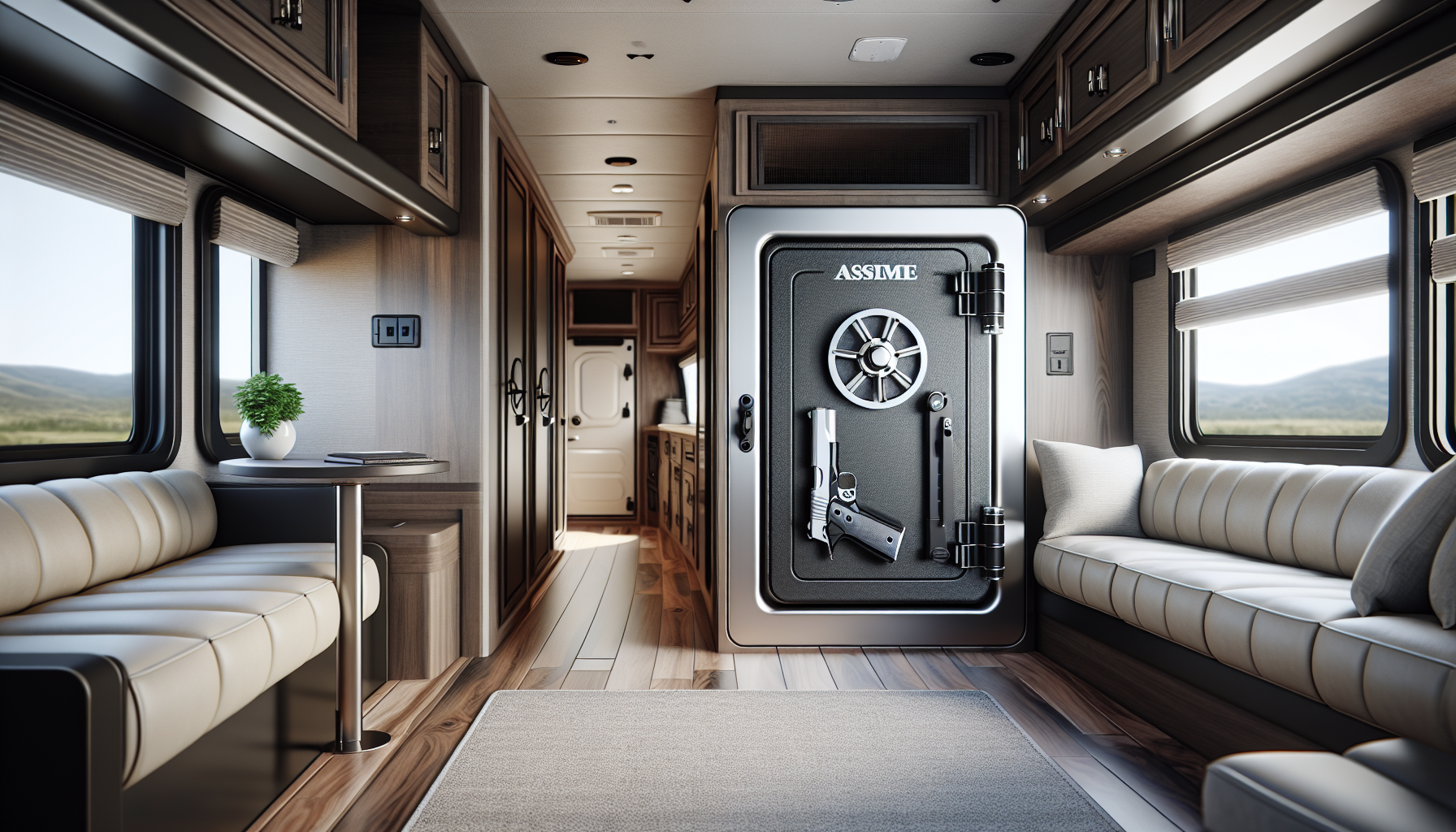
Choosing a gun safe for an RV or camper requires a different mindset than buying one for a house, because every decision is shaped by weight limits, limited floor space, vibration on the road, humidity swings, and the reality that a vehicle can be stolen whole. A gun safe, in this context, can mean anything from a small lockbox for a handgun to a compact long-gun cabinet or a purpose-built modular safe bolted into a storage bay. The right choice depends on firearm type, travel style, legal obligations, and how quickly you need access while still preventing unauthorized use. This matters because RV owners face a concentrated version of every storage challenge at once: break-in risk at campgrounds, exposure to temperature changes, family members or guests in tight quarters, and changing state laws as they cross borders. I have helped owners outfit travel trailers, fifth wheels, toy haulers, and Class A and Class C motorhomes, and the mistakes are consistent. People buy a safe sized for the gun, not for the mounting location. They focus on theft ratings without checking tongue weight, axle capacity, or wall construction. They choose quick access over retention, then discover a lockbox tears loose under leverage. A smart buying guide starts with the operating environment. In an RV, “secure” means the safe resists smash-and-grab theft, stays anchored during motion, protects from casual discovery, and remains usable after dust, condensation, and road vibration. Once those conditions are clear, you can match safe type, locking method, installation approach, and maintenance plan to the way you actually travel.
Start With the RV Environment and Threat Model
The first step is defining what problem the safe must solve. In a sticks-and-bricks house, weight is usually an advantage. In an RV or camper, weight is a design constraint. A 250-pound safe may sound modest, but in a travel trailer it can consume a meaningful share of cargo carrying capacity and alter balance if installed forward or aft of the axles. A motorhome adds another variable: some spaces are accessible while driving, others only when parked, and basement compartments differ widely in framing strength. I usually tell buyers to list five facts before shopping: the firearms to store, the available mounting locations, the RV’s cargo capacity, who needs authorized access, and whether the priority is theft delay, child access prevention, or legal compliance during travel.
Threat modeling matters because an RV safe cannot do everything at once. If you need a bedside handgun within seconds, a compact quick-access lockbox near the sleeping area may be appropriate, but it will not offer the same pry resistance as a heavier steel safe bolted through reinforced flooring. If the goal is storing two rifles during long campground stays, a vertical cabinet hidden in a wardrobe or pass-through compartment may make more sense, assuming optics clearance and secure mounting are addressed. If you leave the rig unattended often, concealment becomes as important as steel thickness. A thief who does not find the safe cannot attack it with time and tools.
Be realistic about the biggest RV-specific risk: theft of the entire vehicle or trailer. That changes safe selection. A lockbox attached with cable alone may stop a child or a casual thief, but if the trailer disappears, the firearms go with it. In practice, this is why many experienced owners combine layers: a concealed safe, a monitored RV alarm, hardened compartment locks, serial number records, and insurance documentation. The safe is one part of a system, not the whole system.
Choose the Right Safe Type for the Firearms You Carry
For most RV owners, there are three practical categories. First is the handgun lockbox. These are compact, usually 16- to 12-gauge steel boxes designed for one to two pistols, spare magazines, and documents. They fit under beds, in nightstands, inside dinette benches, or in tow vehicle consoles when lawful. Better models use internal hinges, reinforced lock areas, and predrilled anchor holes. This style is ideal for travelers who carry a defensive handgun and want fast access with minimal footprint.
Second is the compact upright safe or security cabinet. These units store one to six long guns or a mixed collection of rifles and handguns. In RV use, they work best in closets, bunk compartments, or basement storage with enough height. Buyers often underestimate interior dimensions. A scoped rifle, especially with a 50 mm objective, can require several more inches of width and depth than the listed “gun count” implies. Manufacturers’ capacity numbers are optimistic; in real installations, divide stated capacity by roughly half when optics or soft cases are involved.
Third is the modular or hidden-compartment approach. Some owners use low-profile safes under fixed beds, false-bottom drawers, or custom boxes integrated into cabinetry. This can be effective in campers where conventional safes simply do not fit. The tradeoff is that custom work must still use adequate steel, robust locks, and backing plates. Decorative carpentry is not security.
Where this subtopic often branches into related buying guides is firearm-specific fit. A handgun safe for a Class B camper van is a different purchase from a two-rifle cabinet for a toy hauler. Buyers should also think about future changes. If you may add a pistol-mounted optic, weapon light, suppressor host, or folding-stock carbine, buy for the actual configured firearm, not the stripped version you own today.
Focus on Construction, Locking Method, and Real Security
Marketing language around safes is notoriously loose, so buyers need to look past words like “heavy duty” and compare measurable features. Steel thickness is the first checkpoint. Thicker steel generally improves pry resistance, but design matters too. A well-made 12-gauge lockbox with a tight door gap and reinforced latch area can outperform a poorly designed “safe” made from similar metal. Continuous welds, internal hinges, anti-pry lips, and a recessed door are all meaningful features in RV use, where thieves usually rely on quick hand tools rather than prolonged attacks with power equipment.
Lock choice is equally important. Mechanical simplex-style pushbutton locks are popular because they avoid batteries and are reliable in temperature swings. Electronic keypads provide fast access and flexible codes, but battery condition and moisture resistance matter. Biometric locks can be convenient, yet I have seen fingerprint readers struggle with dusty fingers, cold weather, and inconsistent enrollment. For an RV, I generally favor either a proven mechanical pushbutton lock or a quality electronic lock with a backup key and a low-battery warning. The right answer depends on whether the safe is for emergency access or longer-term storage.
It also helps to understand ratings. Many small safes have no burglary rating from UL, and that is not automatically disqualifying for RV use, where size and anchoring often matter more than formal certification. Still, recognized testing carries weight. California DOJ firearm safety device standards are common on lockboxes. UL Residential Security Container ratings appear on some larger units, though true TL-rated burglary safes are usually too heavy and impractical for campers. Fire ratings deserve special scrutiny. Residential fire claims assume a stationary structure engulfed in a house fire. In an RV, fuel load, construction materials, and burn dynamics are different, so treat fire ratings as limited guidance, not a guarantee.
| Feature | What to Look For | Why It Matters in an RV |
|---|---|---|
| Steel thickness | 12-gauge or thicker for many handgun safes; heavier if weight allows | Improves resistance to prying and smash-and-grab attacks |
| Lock type | Mechanical pushbutton or quality electronic keypad with backup access | Balances quick entry, reliability, and low maintenance on the road |
| Anchor points | Predrilled holes sized for bolts, backing plates, or reinforced mounts | Prevents the entire safe from being carried away |
| Door design | Internal hinges, anti-pry tabs, tight door gaps | Reduces leverage opportunities in confined RV spaces |
| Interior fit | Space for optics, lights, magazines, and documents | Avoids buying a safe that technically fits but is unusable in practice |
Match Size and Placement to Weight, Space, and Mounting Structure
The best safe for an RV is the one you can mount correctly without compromising the rig. Placement starts with structure. RV floors may be plywood over steel joists, aluminum framing, foam sandwich panels, or raised platforms over tanks and wiring. You cannot assume a cabinet base or bed pedestal is strong enough to anchor a safe by itself. I recommend locating frame members or solid subfloor areas, then using through-bolts with large washers or steel backing plates where accessible. In storage bays, verify that drilling will not hit wiring harnesses, propane lines, water lines, or tank walls.
Weight distribution is not an afterthought. In bumper-pull trailers, heavy items placed too far forward can overload tongue weight; too far rearward can worsen sway. In motorhomes, excess weight on one side can affect handling and tire loading. A compact 35-pound lockbox is usually easy to place, but a 120-pound cabinet loaded with firearms and ammunition can become a chassis issue. Use the RV’s gross vehicle weight rating, cargo carrying capacity, and axle ratings as hard limits, not suggestions.
Concealment opportunities vary by rig type. Under-bed platforms work well if the lift mechanism can still operate and bedding does not block access. Dinette benches offer concealment but may require awkward entry. Wardrobes can hide a slim cabinet, though hanging clothes interfere with quick access. Exterior pass-through storage is useful for larger safes, but it introduces more heat, cold, dust, and moisture, so seals and desiccants become important. In a van conversion or truck camper, every inch counts, which is why many owners choose a low-profile lockbox integrated under a seat base or fixed cabinet.
If you plan to use the article as a hub for buying guides, this is where readers naturally branch into deeper topics like under-bed safe options, handgun safe dimensions, long-gun storage in toy haulers, and how to mount a safe without damaging the RV frame. The core principle stays the same: measure twice, inspect structure carefully, and buy only after you know the exact mounting location.
Plan for Moisture, Vibration, Access Speed, and Legal Travel Issues
RVs expose firearms and safes to conditions that stationary owners rarely face. Moisture is the most common overlooked problem. Condensation forms when interior temperatures change quickly, especially in shoulder seasons and humid regions. A safe in an exterior compartment is particularly vulnerable. Use rechargeable desiccants, rust inhibitors such as VCI products, and regular inspection. Foam interiors can hold moisture against metal, so do not assume padded equals protective. Silicone-treated gun socks and a light protective oil on stored firearms help if access is not needed immediately.
Vibration is the second major issue. Road shock can loosen mounting hardware and shift contents. Use locking fasteners, threadlocker where appropriate, and periodic torque checks. Inside the safe, padded racks or separators reduce optic-to-optic contact and finish wear. I have seen unsecured magazines and accessories batter a pistol’s finish during long trips simply because the safe was treated like a drawer.
Access speed should be balanced against safety. A biometric bedside safe may sound ideal until low temperatures, dead batteries, or sleepy hands produce failed opens. Test any locking system repeatedly in the conditions you expect to encounter. Practice at night, in dim light, and after the safe has ridden thousands of miles. Reliability under real use beats theoretical convenience.
Finally, legal compliance can drive the purchase. Firearm transport laws vary by state and can change based on whether the RV is considered a vehicle, a temporary residence, or both in specific circumstances. Some jurisdictions require firearms to be unloaded and locked during transport; others regulate magazine capacity or specific firearm features. A lockable container with clear separation from ammunition may help support compliance, but it is not universal legal protection. Before crossing state lines, verify current laws through official state resources or a qualified attorney. The practical buying implication is simple: choose a safe that supports lawful transport configurations, not just storage at the campsite.
Evaluate Brands, Budget, and Total Cost of Ownership
Price matters, but the cheapest safe often becomes the most expensive mistake. In this category, buyers should compare not just purchase price, but installation hardware, moisture control, lock maintenance, and replacement risk if the safe fails when needed. Reputable names in handgun and compact safe segments include Fort Knox, V-Line, Hornady, Vaultek, Titan, and SnapSafe, though the best model depends on use case rather than logo. For example, V-Line and Fort Knox are often favored for mechanical pushbutton reliability, while Vaultek emphasizes modern electronic features and app-connected options that some travelers value. Hornady RAPiD models are popular for quick access, but any electronic system should be tested extensively before relying on it in an RV.
Budget realistically for mounting. A quality safe anchored with proper bolts and backing plates is fundamentally different from the same safe looped to a bed frame with a cable. If you cannot install it securely, buy a smaller model you can mount correctly. Also consider support and warranty. Replacement parts, lock service, and responsive customer support matter more for travelers than for homeowners because a lockout on the road is disruptive and potentially serious.
The strongest buying decision is the one built around your rig, your firearms, and your travel pattern. Measure the space, confirm the structure, check the laws on your route, and choose the simplest lock you trust under stress. For most RV and camper owners, that means a compact, well-built safe with real anchor points, placed in a concealed location, maintained for moisture control, and sized for the guns as actually configured. If you are building out your broader storage plan, use this guide as the starting point, then move to the next step: compare specific safe types, mounting methods, and travel-law scenarios for your setup before you buy.
Frequently Asked Questions
What makes choosing a gun safe for an RV or camper different from choosing one for a house?
Choosing a gun safe for an RV or camper is fundamentally different because the safe has to work within the limits of a moving vehicle, not a fixed structure. In a house, buyers often focus on theft protection, fire resistance, storage capacity, and convenience. In an RV, those concerns still matter, but they are filtered through much tighter constraints such as total vehicle weight, cargo carrying capacity, limited floor space, awkward storage layouts, constant vibration, and changing temperature and humidity levels. A safe that works perfectly in a garage or closet may be completely impractical inside a camper simply because it is too heavy, too large, or too difficult to anchor correctly.
Another major difference is the theft scenario. In a home, a burglar usually has to break in, find the safe, and defeat it on site. In an RV or camper, the entire vehicle can be stolen and taken somewhere else, giving a thief more time and privacy to attack whatever security container is inside. That means RV firearm storage should be viewed as layered security rather than absolute security. The safe should delay unauthorized access, stay concealed when possible, and be anchored in a way that makes quick removal difficult, but owners should also think about alarm systems, parking choices, visibility through windows, and whether firearms should remain in the vehicle at all when it is unattended for long periods.
Travel conditions also change the safe requirements. Roads create repeated vibration, impacts, and movement, which can loosen hardware and shift contents if the safe is not designed or installed properly. Moisture is another serious issue because RV interiors and exterior storage bays can experience condensation, humidity swings, and temperature extremes much more frequently than climate-controlled homes. For that reason, corrosion protection, sealed design, interior padding, and desiccant or dehumidifying strategies become more important than many first-time buyers expect. In short, selecting a gun safe for an RV means balancing security, weight, size, installation method, and environmental durability all at once.
What type of gun safe works best in an RV: a handgun lockbox, a compact long-gun safe, or something larger?
The best type depends on what firearms you carry, how often you travel, how much room you actually have, and whether you need quick access, longer-term storage, or both. For many RV owners, a high-quality handgun lockbox is the most practical starting point because it is compact, easier to conceal, lighter than a full safe, and much easier to install securely in a bedroom cabinet, under a bed platform, inside a dinette base, or in a reinforced storage compartment. If your primary goal is storing a defensive handgun while traveling, a lockbox with a mechanical simplex lock or a reliable electronic keypad can be a very strong solution.
If you travel with rifles or shotguns, a compact long-gun safe or security cabinet may be necessary, but that choice requires more planning. Long-gun storage takes up valuable vertical or horizontal space, and many RV interiors simply do not have enough depth or height for a traditional safe. In those cases, owners often look at low-profile horizontal units that fit under a bed, modular safes that can be assembled in place, or purpose-built cabinets installed in a pass-through compartment or basement bay. The challenge is making sure the structure beneath the installation point can support the weight and anchor load, especially in a travel trailer or fifth wheel where storage floors may not be designed for concentrated heavy loads.
Larger safes are rarely the best option unless you have a large motorhome with substantial carrying capacity and a carefully engineered installation plan. Heavy steel sounds appealing from a security standpoint, but if the safe consumes too much payload or compromises vehicle balance, it creates a safety problem of its own. In most RV applications, the sweet spot is a compact, well-built unit sized only for the firearms and valuables you truly need to secure on the road. Buying smaller but smarter usually works better than trying to force a residential safe into a mobile environment where every pound and every inch matters.
How heavy should a gun safe be for an RV or camper, and where should it be installed?
There is no single ideal weight, because the right answer depends on your RV’s cargo carrying capacity, axle ratings, floor strength, and the location of the safe. What matters most is not simply choosing the heaviest safe you can afford, but selecting one that provides meaningful security without overloading the vehicle or placing too much concentrated mass in the wrong area. Before buying anything, check the RV’s cargo carrying capacity and remember that water, propane, batteries, tools, food, and personal gear already consume part of that allowance. A safe that seems modest on paper can become a serious issue once ammunition and other valuables are added.
Placement matters just as much as weight. Ideally, the safe should be installed low in the vehicle to keep the center of gravity stable and in a location that does not interfere with slide operation, plumbing, wiring, or access panels. Common mounting spots include under-bed storage platforms, inside reinforced dinette benches, in closets with proper structural backing, or in basement compartments on motorhomes and larger trailers. The best location is usually one that balances concealment, structural support, and ease of access. A hidden safe is generally better than one visible through a window or immediately obvious when a compartment door is opened.
Anchoring is critical. A safe should be bolted to substantial structure, not just thin plywood, decorative paneling, or lightweight sheet metal. In many RVs, that means adding backing plates or reinforcement so the mounting hardware can resist both theft attempts and the dynamic forces of travel. It is also wise to confirm what is beneath the mounting surface before drilling, since fuel lines, tanks, wiring harnesses, and plumbing can run through floors and compartments. If there is any doubt, professional installation is worth considering. A correctly placed and reinforced smaller safe is almost always a better choice than a larger one that is poorly mounted.
What security features matter most for a gun safe in a mobile environment?
In an RV or camper, the most important security features are strong construction, reliable locking, solid anchoring options, and practical concealment. Thick steel and anti-pry design matter because many RV safes are compact enough that a thief may try to attack them directly with hand tools. A flimsy lockbox made from thin metal may satisfy a basic storage need, but it will not offer much delay against determined theft. Look for welded steel construction, reinforced doors, concealed or protected hinges, and mounting points designed for bolts or security cables, although bolting is generally preferable to cable-only attachment.
The lock type also deserves careful attention. Electronic keypads can be convenient for quick access, especially for defensive handguns, but they should come from a reputable manufacturer and have a dependable track record under vibration and temperature changes. Mechanical simplex locks are popular in vehicle use because they do not rely on batteries and are generally very durable. Traditional key locks are simple, but they introduce the challenge of secure key management, which can undermine the whole system if spare keys are easy to find. Biometric locks can be useful, but in RV conditions they should be treated cautiously unless they are proven reliable in dust, humidity, and fluctuating temperatures.
Concealment and layered protection are especially valuable in a vehicle. Even a good safe is more vulnerable if it is obvious and accessible. Installing the unit in a hidden compartment, behind a false panel, or inside ordinary-looking cabinetry can reduce the chance of attack in the first place. Many owners also pair the safe with other deterrents such as monitored alarms, entry sensors, GPS tracking for the RV, exterior lighting, and smart parking habits. The goal is not just to buy a stronger box, but to create enough delay, uncertainty, and effort that unauthorized access becomes difficult and risky.
What legal and practical issues should RV owners think about before storing firearms in a camper safe?
Legal compliance is one of the most important parts of the decision, because firearm laws can change dramatically from one state to another, and RV travel often crosses multiple jurisdictions in a single trip. Owners should understand transport rules, storage requirements, magazine restrictions, ammunition rules, reciprocity for carry permits, and whether a firearm must be unloaded or locked separately while traveling. Some states treat a motorhome differently depending on whether it is being driven, parked, or used as a temporary residence. Because the rules are highly location-specific and subject to change, it is wise to verify current laws for every state and local area on your route before departure rather than relying on old assumptions.
Practical considerations matter just as much as legal ones. Think honestly about how long the firearm may be left unattended in the RV, where the vehicle will be parked, who else has access, and whether children or guests may be present. A safe that is sufficient for overnight storage during active travel may not be adequate if the RV sits in a storage lot for weeks. You should also consider environmental protection, because rust and moisture damage are common in campers. Using desiccant packs, checking seals, and inspecting the safe regularly are simple but important habits.
Finally, match the storage plan to your actual travel style. Weekend campers, full-time RVers, hunters, and people carrying a defensive handgun may all need different solutions. A good purchase is one that supports safe handling, lawful transport, and realistic access while minimizing theft risk