
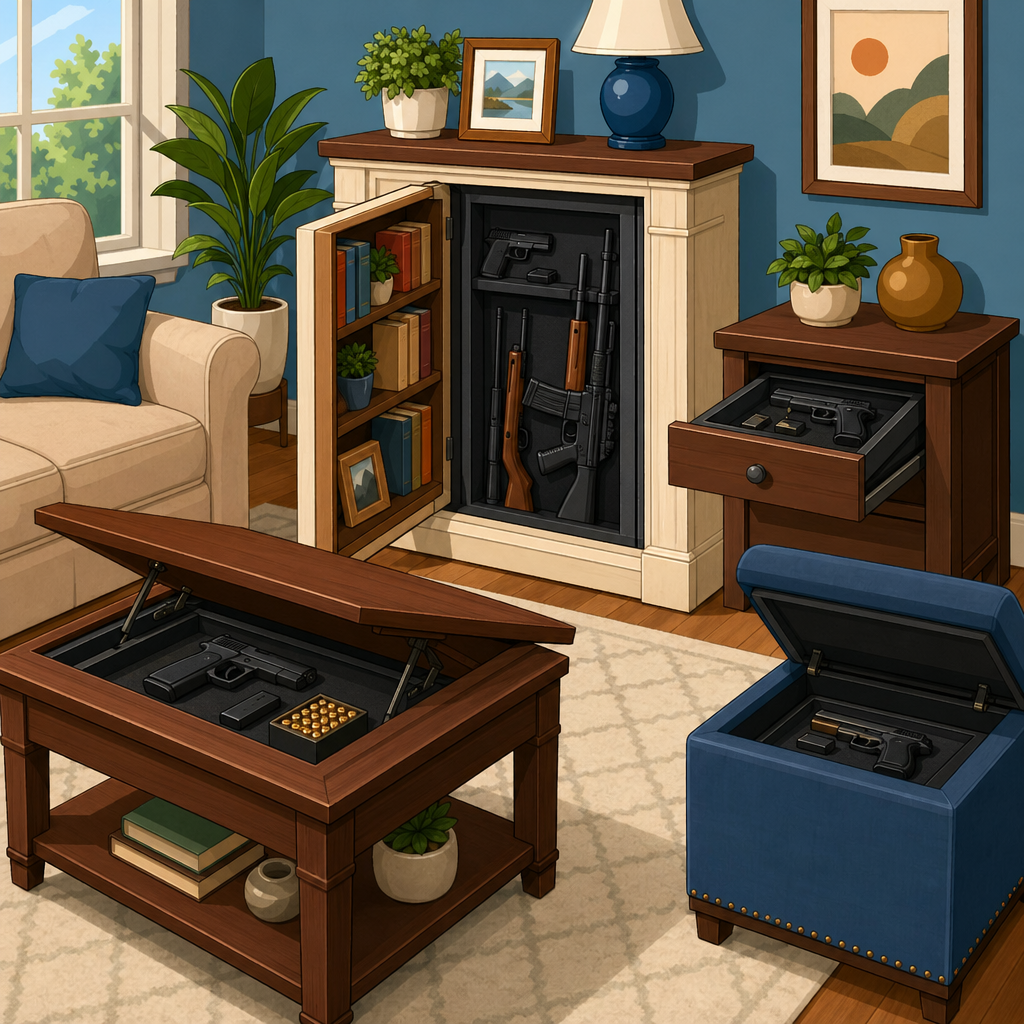
The best hidden gun safes that double as furniture solve two problems at once: they secure firearms against theft or unauthorized access, and they keep those firearms out of plain sight inside everyday pieces such as nightstands, coffee tables, mirrors, shelves, and benches. In practical terms, a hidden gun safe is a lockable storage compartment integrated into furniture or disguised as décor. A furniture gun safe may use biometric locks, RFID readers, keypad entry, mechanical keys, or magnetic release systems, but the core purpose is the same: fast access for authorized adults without advertising where valuables are stored.
This category matters because most homeowners are not choosing between a giant freestanding vault and nothing at all. They are balancing security, speed, room layout, child access, visitor privacy, and aesthetics. In my experience evaluating residential gun storage, people often reject conventional safes for bedrooms and living areas because a steel box in the corner changes the feel of the room and signals that firearms or valuables are present. Hidden gun safes reduce that visibility, which can lower opportunistic theft risk and support more discreet home defense storage. They are especially relevant in apartments, shared homes, and primary bedrooms where space is limited and appearance matters.
They are not a replacement for every use case. If you need to store a large collection, satisfy insurer requirements for high-value firearms, or maximize fire resistance, a full-size UL-rated gun safe is still the benchmark. But for staged defensive access, bedside readiness, and compact storage in lived-in spaces, concealed furniture safes fill a real need. This buying guide serves as the hub for furniture gun safe decisions within the broader gun safes and safety category, covering types, locking options, placement, materials, installation, legal and household considerations, and how to compare models without being fooled by marketing language.
What Counts as a Hidden Gun Safe That Doubles as Furniture
A true hidden gun safe that doubles as furniture is functional furniture first and secure storage second. It should perform the visible job of the item—a nightstand holds a lamp, a bench supports weight, a mirror hangs cleanly—while concealing a reinforced compartment sized for one or more firearms and related essentials such as a spare magazine, flashlight, passport pouch, or small documents. The strongest designs avoid obvious seams, weak backing panels, or novelty mechanisms that are easy to spot after a quick look around the room.
The most common formats are nightstand gun safes, coffee table safes, end table safes, wall mirrors with hidden compartments, floating shelves with lockable cavities, bed benches with lift-top storage, and headboards with sliding or drop-down access. There are also sofa arm compartments, false-bottom cabinets, and picture-frame safes. Among these, bedside furniture safes remain the most practical because they balance concealment with rapid access during a nighttime emergency. A living room coffee table safe can work well, but traffic patterns, guests, and children often make placement and access more complicated.
When assessing whether a product belongs in this category, ask three direct questions. First, is the lockable compartment structurally reinforced with steel of meaningful thickness, or is it just thin sheet metal inside wood veneer? Second, can the piece be anchored to the floor, wall, or studs to prevent grab-and-go theft? Third, does the furniture form help conceal the safe naturally, or does it scream “secret compartment” to anyone familiar with tactical décor? Good hidden storage disappears into normal home design. Bad hidden storage looks like a gimmick.
How to Judge Security, Access Speed, and Daily Usability
The central buying decision is not style. It is the balance between security and speed. A bedside hidden gun safe is usually intended for quick authorized access under stress, in low light, and sometimes from an awkward position. That means the opening sequence must be consistent and intuitive. Biometric scanners are popular because they can be fast, but lower-end sensors often struggle with dry skin, angled placement, or partial fingerprint reads. I recommend looking for units that store multiple fingerprints, wake quickly from sleep mode, and include a secondary keypad or key override. RFID systems are quiet and discreet, yet they introduce dependency on carrying a tag or card in the right place.
Construction matters just as much as lock type. Many furniture safes use 14-gauge to 18-gauge steel liners; thicker steel generally resists pry attacks better, though overall design is more important than a single gauge number. Look for concealed hinges, reinforced lock bars, anti-pry lips, and a door that does not flex easily when pulled. Soft-close slides and damped hinges improve quiet access, but they should not create slack that weakens the compartment. If the product claims child resistance, verify whether the lock automatically relocks and whether there is any simple mechanical bypass through exposed screws or removable panels.
Usability details separate a safe you trust from one you stop using. Interior lighting, silent entry mode, cable pass-through for charging electronics, foam-lined cradles, and left- or right-hand opening options all matter in everyday life. A hidden furniture safe should let you retrieve the firearm with a full firing grip rather than forcing an awkward pinch. It should also fit your actual setup. A compact handgun with a weapon light may not fit a compartment sized around bare pistols. If you plan to store a compact rifle or folding carbine, measure overall length with optics attached, not just barrel length.
| Buying factor | What to look for | Why it matters |
|---|---|---|
| Lock type | Fast biometric, reliable keypad, or quality RFID with backup access | Determines speed, failure points, and usability in darkness or stress |
| Steel construction | Reinforced liner, anti-pry edges, concealed hinges | Improves resistance to forced entry and tampering |
| Anchoring | Wall stud, floor, or frame mounting hardware | Prevents thieves from removing the entire unit |
| Furniture realism | Normal proportions, clean finish, hidden seams | Better concealment lowers attention from guests and burglars |
| Interior fit | Space for firearm, light, optic, spare magazine | Prevents access delays and poor storage habits |
Best Furniture Styles for Different Rooms and Use Cases
For bedroom use, the best hidden gun safes that double as furniture are usually nightstands and bed benches. A nightstand safe supports the most direct access path from bed, especially if the compartment opens toward the dominant hand. Models with a side-swing or top-lift door can work, but drawer-style deployment often feels more natural because it mirrors how people already use bedside furniture. The compromise is storage depth. If the drawer front is thick and the steel insert is shallow, a full-size pistol with a red dot may fit tightly. Bed benches offer more room for multiple handguns or a folding PCC, but they are slower to open and more obvious during cleaning or rearranging.
For living rooms, coffee table safes and end table safes make sense when the firearm is staged for daytime occupancy rather than strictly for nighttime access. The challenge is traffic and visibility. Guests put drinks, bags, and feet on coffee tables. Children climb on them. A side table near a primary seating position is often the smarter choice because it reduces accidental attention and allows more controlled access. Mirrors and wall shelves work well in hallways, home offices, or dens where vertical storage is preferable, though they are typically better for concealment than rapid access.
Entryway benches and console tables can provide discreet storage near the front of the home, but they need extra discipline. If a hidden compartment is close to the door, anchoring becomes critical because burglars who discover it can try to remove the whole piece quickly. In small homes, multipurpose furniture is the clear winner: a lamp table that looks completely ordinary, a shelf above a desk, or a mirror safe in a dressing area. The best room placement is the one that matches your actual routine, not an idealized home-defense scenario copied from a catalog.
Materials, Installation, and the Difference Between Concealment and Real Protection
Furniture gun safes live in the gap between cabinetry and security hardware, so material quality deserves close inspection. Solid hardwood exteriors tend to hold up better than particleboard and thin MDF in high-use areas, especially around hinges and anchor points. Veneers are not automatically bad, but they should cover a stable substrate and clean joinery. Internally, powder-coated steel resists corrosion better than bare metal, and lined interiors reduce finish wear on firearms and optics. If the safe sits in a humid bedroom, basement office, or lake house, add a desiccant pack or low-profile dehumidifier where appropriate.
Installation is where many products fail in the real world. A hidden safe is only as secure as its anchoring. If a 140-pound table can be tipped, dragged, or lifted by two people, concealment has bought you time, not security. The best manufacturers provide lag bolts, anti-tip brackets, stud-mount templates, and clear instructions for different floor and wall types. For floating shelves and wall mirrors, stud placement is nonnegotiable. Drywall anchors alone are not sufficient for anything holding a loaded firearm. For floor-mounted benches or cabinets, use structural anchoring whenever the design allows.
It is also essential to separate concealment from burglary resistance. A disguised compartment may stop a casual observer, a babysitter, or a smash-and-grab intruder who spends only minutes inside the house. It will not equal the attack resistance of a heavy-gauge, purpose-built, bolted-down safe with a tested lock and thick door. That does not make hidden furniture safes ineffective. It means buyers should assign them the right role: rapid-access storage, discreet staging, and protection from unauthorized household access, not long-duration defense against determined tool attacks.
Lock Options, Safety Standards, and Household Risk Management
The lock you choose should match the users in the home, the environment, and the storage purpose. Biometric locks are convenient for single-user access, but they require battery management and careful enrollment. Enroll the same finger multiple times at slightly different angles, then test in daylight and darkness with dry and damp skin. Keypad locks are often more consistent, particularly from established lock makers, but code entry under stress can be slower unless practiced. Mechanical Simplex-style pushbutton locks remain a strong option for reliability because they do not depend on batteries, though they are less common in decorative furniture pieces.
Safety standards in this segment are uneven. Most hidden furniture gun safes are not independently rated the way commercial burglary safes or some fire safes are. That means buyers should look for specific disclosures instead of broad claims. Ask whether the lock has been cycle-tested, whether the steel thickness is stated, whether the product has a California DOJ-approved firearm safety device listing if relevant to your jurisdiction, and whether child-resistance claims are tied to any testing protocol. Fire ratings should be viewed skeptically unless the manufacturer explains the test duration, temperature, and whether the rating applies to the steel insert or the entire furniture unit.
Household risk management matters more than any single feature. If children are present, the firearm should be stored loaded only if local law, personal training, and your risk assessment support that choice, and even then the safe must relock reliably after every access. In homes with teens, roommates, domestic staff, or frequent guests, concealment should never be treated as the primary safety barrier. Layer security with anchoring, access logs if available, routine battery checks, and a consistent rule about who knows the compartment exists. The strongest setup is one that still works when routines break down.
How to Compare Brands, Prices, and Long-Term Value
Price ranges in this category are wide because you are buying both furniture and security hardware. Entry-level hidden handgun furniture may start around a few hundred dollars, while handcrafted hardwood pieces with integrated steel compartments, biometric access, premium slides, and white-glove delivery can run well into four figures. Higher price does not automatically mean better protection. Sometimes you are paying for finish quality, domestic woodworking, custom stains, or design integration. Those can be worthwhile if the piece sits in a primary bedroom or formal living space, but they should not distract from lock reliability and anchoring options.
When I compare brands, I look first at measurements, steel specification, lock provenance, and installation details before finish options. Reputable makers publish exact interior dimensions, firearm fit notes, battery type, emergency override method, and mounting instructions. They also show the compartment open, not just closed glamour shots. Reviews are useful only when they mention real use: scanner speed, drawer alignment after months of opening, noise, fit with optics, and customer support response when a lock fails. Generic praise about “beautiful craftsmanship” tells you little about whether the compartment works at 2 a.m.
Long-term value comes from the safe you actually use consistently. The best hidden gun safes that double as furniture fit the room, open reliably, resist casual attack, and support disciplined storage habits. As you evaluate options, map the furniture type to the room, verify locking and anchoring, and measure your firearm setup exactly. Then move deeper into related buying guides within the gun safes and safety topic, including bedside handgun safes, biometric versus keypad safes, safe placement strategies, and child-access prevention planning. A well-chosen hidden furniture safe gives you discreet access without turning your home into a showroom for security hardware.
Frequently Asked Questions
What is a hidden gun safe that doubles as furniture, and how does it work?
A hidden gun safe that doubles as furniture is a secure storage compartment built into, or disguised as, an everyday household item such as a nightstand, coffee table, wall mirror, shelf, bench, or end table. The idea is simple: instead of placing a traditional gun safe in plain view, you store firearms inside a piece that blends naturally into the room. This approach adds a layer of concealment while still providing controlled access. In most cases, the hidden compartment is reinforced and fitted with a locking mechanism designed to keep unauthorized users from opening it.
These safes can operate in several ways depending on the design. Some use biometric scanners that recognize a fingerprint for fast entry. Others rely on RFID technology, keypad codes, mechanical keys, or magnetic release systems. The best models are designed so that the access method is discreet but still quick enough for practical use. For example, a bedside hidden safe may open through a fingerprint reader mounted out of obvious sight, while a wall-mounted mirror safe may release with an RFID card or a concealed latch. The key advantage is that the safe remains visually unobtrusive while still functioning like a real security product rather than just a secret compartment.
Are furniture gun safes actually secure enough for home firearm storage?
They can be, but security depends heavily on construction quality, lock type, installation method, and how you plan to use the safe. A well-made furniture gun safe can offer meaningful protection against unauthorized access, casual theft, and opportunistic discovery. Many quality models include solid steel compartments, tamper-resistant locking systems, reinforced doors, and mounting options that secure the unit to a wall, floor, or frame. These features matter because concealment alone is not security. A compartment hidden inside furniture is far more effective when it also includes real anti-theft protection.
That said, hidden furniture safes are not all built for the same purpose. Some are intended for quick-access defensive storage in a bedroom or living area, while others are better suited for discreet storage of a handgun, magazine, and small valuables. If you need to store multiple long guns, large collections, or high-value firearms, a full-size heavy-duty safe may still be the better primary solution. For many households, though, a hidden furniture safe works very well as part of a layered security plan. It helps prevent obvious visibility, limits access by children or guests, and reduces the chance that a burglar immediately identifies where firearms are stored. The best approach is to match the safe’s level of protection to your storage needs and local legal requirements.
What types of furniture are best for hidden gun safes?
The best type of furniture depends on where you want access, what kind of firearm you are storing, and how much storage space you need. Nightstands are one of the most popular options because they place a handgun close to the bed while maintaining a normal bedroom appearance. Coffee tables and end tables work well in living spaces where discreet access may be desirable without drawing attention. Wall mirrors and framed décor pieces are often chosen for their ability to conceal a larger compartment in plain sight, especially in hallways, bedrooms, or offices. Shelves and benches can also be practical because they naturally fit into many rooms and can provide a little more flexibility in size and layout.
When comparing styles, think about more than appearance. Consider whether the piece fits your room naturally, whether the access point is intuitive under stress, and whether the compartment dimensions match your firearm and accessories. A hidden safe should not force you to store a firearm awkwardly or in a way that interferes with retrieval. It is also important to evaluate the furniture’s build quality. A piece that looks attractive but has weak hinges, thin materials, or poor lock integration may not deliver the reliability you expect. The best hidden gun safe furniture strikes a balance among concealment, speed of access, durability, and realistic day-to-day usability.
Which locking method is best for a hidden gun safe: biometric, RFID, keypad, key, or magnetic access?
Each locking method has strengths, and the best choice depends on your priorities. Biometric locks are popular because they offer very fast access and do not require remembering a code during an emergency. Higher-quality biometric systems can be extremely convenient, especially for bedside furniture safes intended for defensive use. RFID access is also valued for speed and discretion. A card, fob, or tag can open the safe quickly without a visible keypad, which helps preserve the hidden appearance of the furniture. Keypad locks are reliable and familiar, and they allow multiple authorized users to memorize a code. Mechanical keys are simple and independent of batteries, but they can be slower in urgent situations and create the risk of key misplacement. Magnetic access systems are often very discreet, though the overall security quality depends on the exact design and materials used.
In practice, many buyers prefer a lock system with backup access. For example, a biometric safe with a keypad or key override gives you flexibility if the sensor struggles with a wet finger, dead battery, or unusual lighting conditions. Reliability matters more than novelty. Look for responsive entry, low false-read rates, durable components, and clear battery management. It is also wise to test the safe repeatedly after setup so that access becomes second nature. The best hidden gun safe lock is the one that balances fast authorized access with consistent performance and enough security to prevent unauthorized entry.
What should buyers look for when choosing the best hidden gun safe furniture for their home?
Start with purpose. Decide whether the safe is meant for quick defensive access, discreet daily storage, child safety, theft deterrence, or a combination of these goals. From there, evaluate the size and layout of the compartment to make sure it fits your firearm, spare magazine, light, documents, or other valuables without crowding. Measure carefully, especially if you own a handgun with attachments or want room for more than one item. Access speed should also be a major factor. A hidden safe that looks great but is awkward to open may not serve you well when seconds count.
Construction quality is equally important. Look for reinforced steel components, strong internal hardware, solid mounting capability, quality hinges, and a locking system with a good track record. The furniture itself should feel sturdy and believable in the room rather than obviously out of place. Good concealment comes from natural design, not gimmicks. Also pay attention to where the unit will be installed. The best hidden gun safe furniture is placed where authorized users can reach it easily, but where children, visitors, and intruders are less likely to tamper with it. Finally, check for practical details such as interior padding, power source, battery backup, finish quality, ease of setup, and whether the product complies with your local firearm storage laws. The right model is one that fits your space, secures the firearm responsibly, and allows dependable access when needed.