
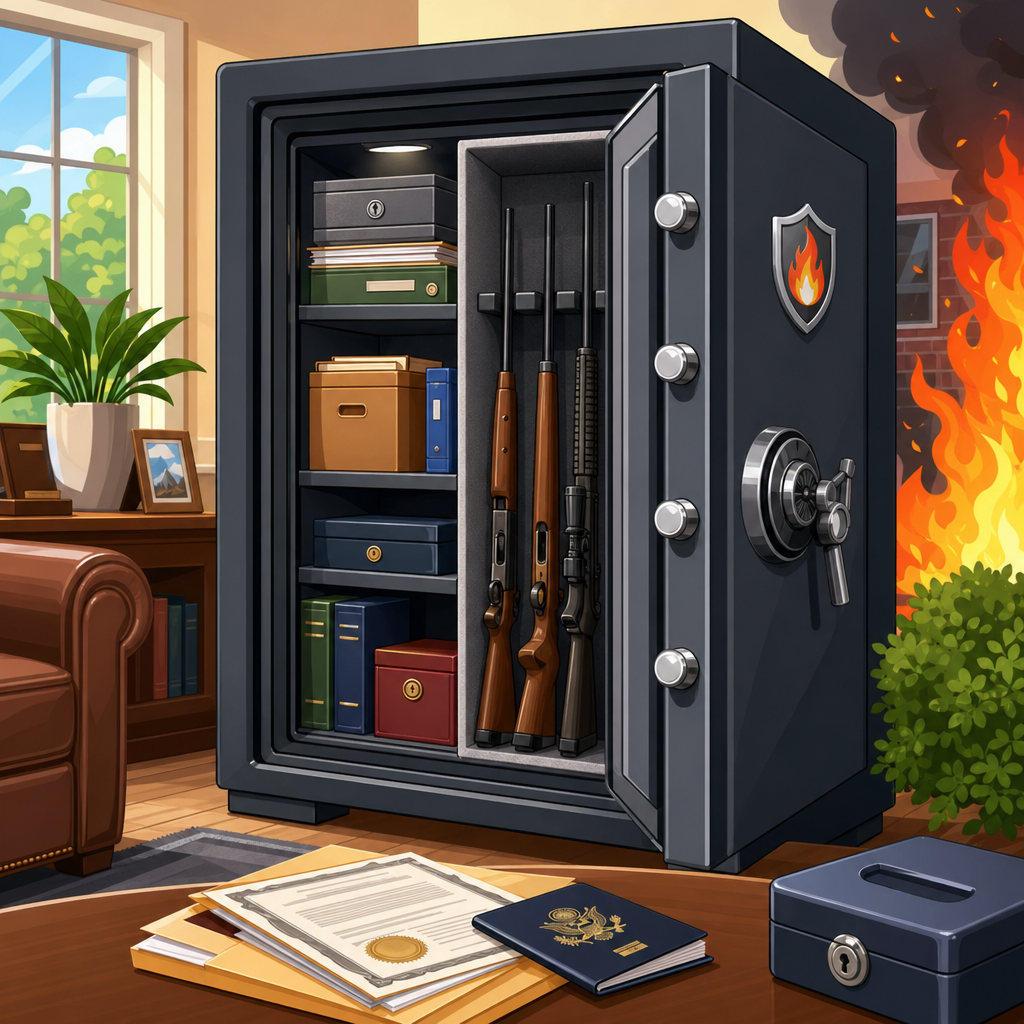
Choosing the best fireproof gun safes for protecting important documents is not just about buying a heavy steel box; it is about balancing fire resistance, secure firearm storage, humidity control, access speed, and enough interior flexibility to protect passports, deeds, wills, cash, hard drives, and other irreplaceable records alongside firearms. In the gun safes and safety category, this buying guide sits at the center because document protection changes how you evaluate every major specification. A safe that looks impressive on a showroom floor can still fail your real-world needs if the fire rating is weak, the door seal expands poorly under heat, or the interior layout crushes file folders and lock boxes. After helping homeowners compare residential security containers, true safes, and mixed-use storage setups, I have found that buyers get better results when they understand the terms first, then narrow options by fire performance, security level, capacity, and installation requirements.
A fireproof gun safe is a common phrase, but the more accurate term is fire-resistant gun safe. No consumer safe is completely proof against all fire conditions. Manufacturers usually rate fire resistance by time and temperature, such as 30 minutes at 1200 degrees Fahrenheit or 90 minutes at 1400 degrees. That rating estimates how long the interior stays below a threshold that protects paper documents, typically around 350 degrees Fahrenheit. Protection for digital media is stricter because hard drives, USB drives, backup discs, and memory cards can fail at much lower temperatures and humidity levels. This distinction matters: a safe that preserves paper may not preserve electronics. Understanding these limits helps you avoid the most expensive buying mistake in this category, which is assuming one label covers every kind of valuable.
Why does this matter so much today? House fires still create enormous property losses each year, and document recovery after a fire is slow, expensive, and often impossible. Replacing a title, birth certificate, trust paperwork, tax archive, or business contract can take weeks or months. At the same time, many gun owners want one secure, centralized location rather than separate boxes scattered through a home. The best fireproof gun safes for protecting important documents solve that problem when they offer tested fire protection, organized interior storage, reliable locks, and sensible sizing. This guide explains what to buy, what to ignore, and how to compare options so this page can serve as your hub before you move into brand reviews, size guides, and lock-specific comparisons.
What Makes a Gun Safe Good for Important Documents
A document-ready gun safe needs four things working together: credible fire resistance, stable interior conditions, security against theft, and practical organization. Fire resistance starts with insulation. Many residential gun safes use layers of gypsum-based fireboard in the body and door because gypsum releases chemically bound water as steam when heated, slowing temperature rise. Better models add multiple layers, thicker steel shells, expanding intumescent door seals, and tighter body-to-door tolerances. In my experience, these construction details matter more than glossy marketing language. A safe advertised as “fireproof” without a clear time-and-temperature rating should be treated cautiously.
Interior conditions matter because documents do not only face flame. They also face moisture from humidity, sprinkler discharge, and the steam generated inside insulated safes during a fire event. That is why well-designed models include provisions for dehumidifiers, power ports, or desiccant placement. For paper records, a lower-humidity environment helps prevent mold, curling, and ink damage. For digital items, I recommend an additional media-rated box inside the safe if you plan to store external drives, SSD backups, or flash media. That layered approach is far more dependable than assuming a standard gun safe protects everything equally.
Security is the next filter. If you are storing firearms and legal documents together, the safe must resist opportunistic burglary, pry attacks, and unauthorized household access. At minimum, look for a robust locking bolt system, hardened steel plates protecting the lock, internal hinges or protected external hinge designs, and anchor holes for bolting the safe to concrete. A heavy safe that is not anchored can still be tipped, pried, or removed with appliances dollies. Finally, organization is what turns a gun safe into a buying-guide-worthy document safe. Adjustable shelving, door organizers, pistol pouches, file boxes, and convertible interiors make a real difference. Without them, papers end up stuffed behind long guns, bent under ammo cans, or blocked by optics and slings.
How to Read Fire Ratings Without Getting Misled
The most important buying question is simple: who tested the fire rating, and under what conditions? Many gun safe brands publish internal factory testing. Some use independent laboratories such as Intertek or ETL. A recognized lab test is generally more persuasive because the procedure is documented and repeatable, though you still need to read what exactly was measured. Ratings are not interchangeable. One safe may be tested at 1200 degrees for 45 minutes, another at 1400 degrees for 60 minutes, and another at 1680 degrees for 90 minutes. Higher heat and longer duration usually indicate better protection, but construction quality still matters because localized failures at the door edge or corners can compromise the interior.
There is another nuance many buyers miss. House fires do not burn at one uniform temperature for one neat time period. Fire behavior depends on fuel load, room ventilation, response time from the fire department, and whether the safe is on a first floor, in a garage, or over a basement where collapse can expose it to prolonged heat. Because of that variability, I usually tell buyers to treat manufacturer ratings as a baseline, not a guarantee. If your area has rural fire response times or you are protecting original legal records, not copies, moving from a 30-minute entry model to a 60- or 90-minute safe is usually money well spent.
| Feature | Entry-Level Fire Safe | Mid-Range Fire Safe | Premium Fire Safe |
|---|---|---|---|
| Typical fire rating | 30 minutes at 1200°F | 60 minutes at 1400°F | 90+ minutes at 1400–1680°F |
| Steel thickness | Usually thinner body steel | Heavier body and reinforced door | Thicker plate, stronger composite build |
| Door seal | Basic expanding seal | Improved heat-expanding seal | Multi-point seal and tighter tolerances |
| Interior flexibility | Limited shelves | Adjustable shelves and door storage | Modular layouts, file-ready storage options |
| Best use | Basic firearm storage with copies of papers | Mixed firearm and document protection | Primary storage for valuable originals |
If you need a direct answer, here it is: for protecting important documents in a gun safe, 60 minutes of independently supported fire resistance is a practical minimum, while 90 minutes is the better target for original records, especially in larger homes or locations with slower emergency response. Buyers who need true media protection should add a separate media-rated container inside the gun safe or choose a dedicated document safe for digital items.
Security Construction, Lock Types, and Real Burglary Resistance
Fire protection gets attention, but theft resistance is what makes a gun safe different from a document chest. Steel thickness, door design, relockers, and anchoring are not secondary features. They are core buying criteria. Many big-box gun safes are technically residential security containers rather than high-security burglary safes. That does not make them useless; it means you should match expectations to risk. For most homes, a quality RSC from a reputable maker, properly anchored in a low-visibility location, offers a reasonable balance of cost and protection. If you own a high-value firearm collection or irreplaceable business records, step up to thicker steel and more advanced anti-pry construction.
Lock choice changes daily usability. Electronic keypad locks offer fast access and are popular for mixed firearm and document storage because they are easy to operate in low light. However, they depend on batteries and electronics quality. Mechanical dial locks are slower but have a long service history and fewer electronic failure points. Redundant systems, such as electronic plus key backup, can be convenient, though I prefer high-quality electronic or mechanical locks from established names like Sargent and Greenleaf or SecuRam rather than low-cost no-name units. Biometric locks can be useful on quick-access handgun safes, but on full-size fire-resistant gun safes I still prioritize proven keypad or dial systems.
Anchoring deserves special emphasis. The best fireproof gun safe for protecting important documents should be bolted down whenever possible. UL-listed anchors, expansion bolts for concrete, and proper spacing from walls improve both security and fire performance by limiting tip-over and keeping the door aligned. Placement also affects burglary resistance. A safe in a visible garage corner invites attack. A safe in a closet, basement utility area, or reinforced room gives burglars less working space and less time. In practical terms, location, anchoring, and concealment often matter as much as one extra locking bolt.
Interior Layout: Storing Firearms and Documents Without Compromise
Capacity claims on gun safes are routinely optimistic. A “24-gun” safe may hold far fewer modern rifles once you add scopes, bipods, slings, and wider handguards. That matters for document storage because paperwork needs dedicated, flat, easily accessible space. I encourage buyers to treat stated gun capacity as marketing, then buy one size larger than they think they need. The extra cubic space allows a shelf for binders, a locking document box, estate files, spare passports, insurance records, and backup media without jamming them beside rifle stocks.
The most effective mixed-use interiors are modular. Look for adjustable shelving, barrel rests that can be removed or shifted, and door panels with zip pouches or pistol holsters to free shelf space. Brands such as Liberty Safe, Browning, Fort Knox, Rhino Metals, and Hollon have offered configurations where one side stores long guns while the other side uses stacked shelves. That split layout is ideal for family records. I have also seen buyers improve safe interiors with fire-resistant document bags or hanging file frames, but those should supplement, not replace, the safe’s built-in fire barrier.
Another issue is interior lining and off-gassing. Fabric-lined interiors look refined and help prevent cosmetic scratches on firearms, but the bigger concern for documents is moisture management. Add a GoldenRod dehumidifier, rechargeable desiccant, or at minimum a hygrometer so you can monitor conditions. In humid climates, that small accessory purchase can prevent years of slow paper deterioration. If your safe includes a power outlet kit, verify that cable pass-throughs are sealed and do not create obvious weak points in fire insulation.
Best Buying Guide Criteria for This Subtopic Hub
As the hub page for buying guides under gun safes and safety, this article should give you a repeatable framework for comparing any model. Start with your protection priority. If documents are the primary concern and firearms are secondary, choose stronger fire ratings and more shelf space. If firearms dominate and documents are limited to passports, deeds, and emergency cash, a mid-range gun safe with one dedicated shelf may be enough. Next, set a realistic budget that includes delivery, installation, anchoring hardware, humidity control, and possible stair carries. Buyers often spend every dollar on the safe and then cut corners on placement, which undermines performance.
Then compare dimensions carefully. External size tells you whether the safe fits a closet, office, or garage alcove. Internal dimensions tell you whether legal-size folders, cash boxes, and rifle lengths actually fit. Check door swing clearance too. A safe may fit physically but become frustrating if the door cannot open fully near shelving or walls. Weight is another practical filter. Some 60-minute safes are manageable on a reinforced floor with professional movers, while heavier premium units may require slab placement or structural review. This is one area where buying from a dealer with in-home delivery experience pays off immediately.
Finally, evaluate brand support. Warranty terms, replacement lock service, fire replacement policies, and local locksmith familiarity all matter. Good brands stand behind paint finish, lock defects, and fire events with clear terms. Great dealers help you interpret those terms honestly instead of using them as a sales pitch. If you are building out this subtopic further, the next guides should logically drill into home size, lock style, brand comparisons, and safe placement, because those are the questions buyers ask after understanding the core criteria on this page.
Common Mistakes and the Smartest Final Decision
The biggest mistake is buying by exterior appearance alone. Gloss paint, door graphics, and oversized locking bolt count do not guarantee meaningful fire or burglary performance. The second mistake is underbuying size. Safe owners almost always add documents, jewelry, backup drives, heirlooms, and extra handguns over time. The third mistake is assuming all fire ratings protect paper, photos, and electronics equally. They do not. If digital media matters, use a media-rated insert or separate safe. Another common error is skipping anchoring because the safe is “too heavy to move.” Burglary reports repeatedly show that unanchored safes can be tipped, pried, or carted away.
The smartest decision is to buy a fire-resistant gun safe that fits your risk, not the marketing category. For many households, that means a reputable mid- to premium-range model with at least a 60-minute rating, adjustable shelving, a reliable electronic or mechanical lock, anchor capability, and room for a dedicated document zone. If the records are truly irreplaceable, move to a 90-minute model and consider duplicates in an off-site location or secure cloud archive. The real benefit is peace of mind with structure behind it: your firearms are controlled, your essential papers are organized, and one emergency does not become several. Use this hub as your starting point, then compare specific brands, sizes, and lock systems before you buy.
Frequently Asked Questions
What makes a fireproof gun safe a good choice for protecting important documents?
A good fireproof gun safe does more than resist forced entry. For document protection, it also needs reliable fire insulation, stable interior conditions, and a layout that keeps paperwork organized and accessible without compromising firearm storage. Many buyers focus first on steel thickness, lock type, and overall size, but for passports, deeds, birth certificates, wills, insurance records, titles, cash, photos, and digital backups, the fire rating is just as important as burglary resistance. The best models are designed to slow heat transfer long enough to help paper documents survive a house fire, while also providing secure storage for rifles, handguns, and ammunition in separate or carefully arranged areas.
Interior flexibility matters a lot in this category. A safe that only accommodates long guns can leave documents stacked awkwardly on the floor or exposed near hotter interior surfaces. Better fireproof gun safes include adjustable shelving, document compartments, door organizers, and enough vertical clearance for file boxes, binders, or hard drive cases. This lets you separate sensitive records from firearms and prevents important items from being crushed, bent, or lost in clutter. If your goal is dual-purpose protection, you want a safe that is purpose-built for both security and organization.
It is also important to understand that “fireproof” is really shorthand for “fire-resistant.” No safe is indestructible under every condition. What you want is a tested fire rating, quality door seals that expand during heat exposure, and enough internal capacity to store your most critical records in a cooler, more protected section of the safe. In practical terms, the best fireproof gun safe for documents is one that balances verified fire resistance, dependable security, low interior moisture risk, and a smart layout that protects both valuables and firearms without forcing trade-offs.
How much fire protection do I really need if I am storing documents, cash, and digital media in a gun safe?
The right level of fire protection depends on what you are storing, where you live, and how much time emergency responders may need to reach your home. Paper documents generally tolerate more heat than digital media, but they are still vulnerable once interior temperatures climb too high. As a general rule, a higher-quality fire rating with a longer duration is better if your safe will hold irreplaceable records such as wills, property deeds, trusts, tax files, medical records, or family archives. For many homeowners, a safe rated for at least 60 minutes at a meaningful external temperature provides a more reassuring baseline than entry-level models with limited or unclear test information.
Digital items need even more caution. USB drives, external hard drives, memory cards, CDs, and backup media can fail at lower temperatures than paper and may also be damaged by humidity, smoke, and rapid temperature swings. If you plan to store digital backups inside a fireproof gun safe, do not assume a standard paper-document fire rating automatically means those items are equally protected. In many cases, it is wise to place digital media inside an additional fire-rated media pouch or a smaller internal container designed for more temperature-sensitive contents. That extra layer can help reduce heat exposure inside the main safe.
Cash, photos, and legal records each have slightly different vulnerabilities too. Cash can be damaged by moisture and heat, while old photographs and laminated documents may warp or discolor. Because of that, buyers should look beyond marketing language and focus on independent fire test standards when available, the thickness and type of insulation, and whether the manufacturer clearly explains the conditions of the rating. If document protection is central to your purchase, it usually makes sense to buy more fire resistance than you think you need, especially in larger homes, rural locations, or multi-story buildings where fire exposure could last longer.
Can a fireproof gun safe also protect documents from humidity, water, and mold?
It can help, but only if you manage the interior environment properly. Fire-resistant safes are not automatically moisture-proof, and some can actually trap humidity if documents are stored inside without air control. That matters because passports, certificates, titles, handwritten records, and paper photos are vulnerable not just to fire, but also to mildew, curling, ink transfer, and mold growth. Add firearms to the same enclosed space, and humidity control becomes even more important because excess moisture can damage both documents and metal surfaces.
The best approach is to choose a safe that allows you to actively control internal humidity. Many owners use rechargeable desiccants, silica canisters, or electric dehumidifier rods depending on the safe design and installation location. If the safe is placed in a basement, garage, or another area with fluctuating temperatures, moisture management should be treated as essential rather than optional. Organizing documents in archival sleeves, waterproof pouches, or sealed document bags can add another layer of defense, especially against minor water intrusion from sprinklers, firefighting efforts, or damp conditions after a fire event.
Water resistance is a separate issue from fire resistance, and not every fireproof gun safe performs well when exposed to hose spray, runoff, or standing water. Some safes have door seals that help keep out smoke and heat but are not designed for prolonged submersion or heavy water exposure. If you live in a flood-prone area or plan to install the safe in a basement, that should influence your buying decision. For long-term document protection, the ideal setup combines a quality fire-resistant safe, interior humidity control, organized storage containers, and thoughtful placement in the home. That combination gives important records much better odds of surviving not just theft or fire, but the moisture problems that often follow both.
What size and interior layout should I choose if I want to store both firearms and important paperwork?
When documents are part of the plan, buyers almost always benefit from sizing up. Firearm capacity numbers advertised by manufacturers are often optimistic, especially once you add optics, slings, handguns, shelves, ammunition, and document organizers. A safe labeled for a certain number of long guns may hold far fewer in real-world use, and once paperwork enters the picture, cramped storage becomes a serious problem. Documents should not be shoved behind rifles or piled on the floor of the safe. That makes them harder to access, easier to damage, and less likely to survive a heat event intact.
A better setup includes adjustable shelving, dedicated file storage space, a door panel organizer, and separate zones for firearms and records. For example, one side of the safe can be configured for long guns, while the other uses shelves for binders, locking cash boxes, portable document files, hard drive cases, and family records. Handguns often fit well in door holsters or upper shelves, freeing lower areas for document bins. If you expect your collection of records to grow over time, choose a model with enough depth and shelf strength to hold legal-size folders, plastic file containers, or fire-rated document bags without crowding the interior.
Access matters too. In an emergency, you should be able to retrieve key records quickly without unloading firearms or disturbing the entire safe. That is one reason modular interiors are so valuable. They let you customize storage around your actual priorities rather than a generic gun count. If your main goal is protecting both weapons and irreplaceable paperwork, think in terms of usable organization, not just cubic capacity. A slightly larger, better-configured safe usually performs far better over time than a packed model that technically fits everything but protects nothing well.
What features should I prioritize when comparing the best fireproof gun safes for documents and firearms?
Start with verified fire resistance, solid construction, and a secure locking system, then evaluate the details that specifically affect document protection. A good safe in this category should have a meaningful fire rating, robust locking bolts, a well-built door frame, and a lock you trust to function consistently, whether that is an electronic keypad, mechanical dial, or redundant access system. Beyond that, document-focused buyers should pay close attention to interior shelving, door storage, seal quality, and whether the safe is designed to maintain a reasonably protective environment for paper records and valuables during a fire.
Humidity control compatibility is another key feature. Look for a safe that can accommodate dehumidifier rods or desiccants without awkward workarounds. Bolt-down capability also matters because a heavy fireproof gun safe is more secure when anchored, and proper installation can reduce the risk of theft or tipping. If access speed is important, especially for defensive firearms, choose a lock system that balances quick entry with reliability and battery backup planning. Fast access should not come at the expense of secure document storage, so consider whether the interior remains organized and easy to navigate under stress.
Finally, pay attention to practical usability. The best safe is one you can live with every day. That includes clear interior lighting, smooth shelf adjustment, enough space for expanding document needs, and a layout that lets you keep essential records in a consistent, easy-to-reach location. A strong warranty and reputable manufacturer support are also worth weighing, especially for a purchase expected to last many years. In short, prioritize independently supported fire protection, real-world security, moisture management options, and an adaptable interior. Those are the features that make a fireproof gun safe genuinely effective for protecting important documents, not just firearms.