
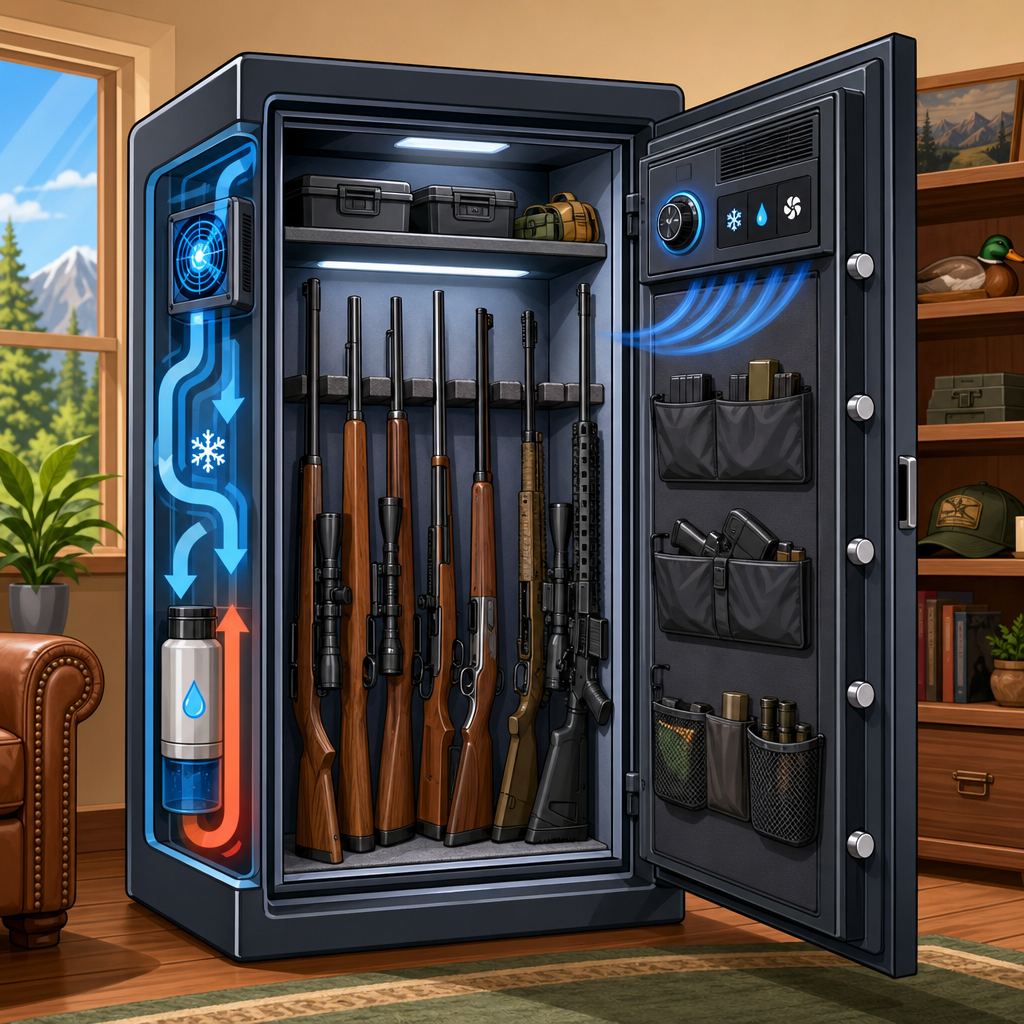
Best gun safes that offer built-in climate control solve a specific problem that every serious firearm owner eventually faces: protecting steel, wood, optics, documents, and ammunition from moisture swings as effectively as they protect them from theft and fire. In practical terms, climate control inside a gun safe means maintaining a drier, more stable interior environment through factory-installed heating elements, dehumidifier systems, sealed construction, ventilation design, humidity monitoring, or integrated electronic controls. The goal is straightforward. You want to prevent rust on blued barrels, corrosion on internal components, mildew on slings, swelling in wooden stocks, fogging in optics, and gradual damage to paper records, tax stamps, or passports stored alongside firearms.
I have seen this firsthand in garages, basements, lake houses, and insulated workshops where an expensive safe looked secure from the outside but trapped enough humidity to spot a rifle within a season. That is why this category matters. A climate-controlled gun safe is not simply a premium upsell. For many buyers, especially those living in humid, coastal, or highly variable climates, it is the difference between long-term preservation and hidden deterioration. As the central buying guide within Gun Safes & Safety, this article explains what built-in climate control actually includes, which features matter most, how to compare leading safe styles, and what tradeoffs you should understand before buying.
What built-in climate control means in a gun safe
Manufacturers use the phrase built-in climate control loosely, so buyers need a precise definition. In the best models, it refers to a safe designed at the factory to actively manage interior humidity rather than merely allowing an aftermarket dehumidifier rod. The most common systems include integrated electrical pass-throughs with pre-installed heating rods, hardwired dehumidifier modules mounted low in the cabinet, interior circulation fans, digital hygrometers, and sealed door systems that reduce outside air exchange. Some premium safes also incorporate smart monitoring that reports interior temperature and relative humidity to a phone app.
The reason heat is part of dehumidification is often misunderstood. A low-wattage heating element does not dry the air like a compressor dehumidifier in a basement. Instead, it raises the internal temperature slightly, creating convection that reduces condensation on cold steel surfaces. GoldenRod-style systems are the classic example, and many safe makers design their interiors around that principle. Better safes pair this approach with tight door seals, internal power outlets, and enough clearance under shelving so the warming element can circulate air effectively.
Climate control should also be distinguished from fire insulation. Fireboard, gypsum layers, and intumescent door seals help during a fire, but they do not automatically protect against everyday humidity. In fact, a sealed, insulated cabinet can trap moisture if the interior is loaded with damp gear. The best gun safes that offer built-in climate control are engineered to address both threats separately: fire from external heat and corrosion from internal moisture imbalance.
Key features that separate the best climate-controlled gun safes
When I evaluate safes in this segment, I focus on six factors before I look at cosmetics or branding. First is the dehumidification method itself. Factory-installed heating rods or modules are more convenient than aftermarket solutions because wiring, outlet placement, and airflow were planned in the design stage. Second is the quality of the door seal. A continuous seal helps limit humid air infiltration, especially in garages or basements. Third is electrical integration. Internal outlets, USB ports, and protected cable routing matter if you are powering lights, rechargeable accessories, or monitoring sensors.
Fourth is the steel body and door thickness. Climate control does not compensate for weak security. Serious buyers should verify body gauge, door plate thickness, hinge design, bolt diameter, and anchor provisions. Fifth is interior configuration. Air needs room to move. Overcrowded safes with rifles pressed tightly together tend to create stagnant microclimates where condensation lingers. Sixth is monitoring. A digital hygrometer or connected sensor lets you confirm that the system is working and spot seasonal changes before damage appears.
Lock type also matters. Mechanical dial locks are proven and durable, while electronic and biometric locks offer faster access. However, power-operated features should be separate from climate management. A safe that loses battery power at the keypad should not lose humidity protection if the dehumidifier is connected to household current through a pass-through port. Better models treat climate control as a continuous preservation system, not a convenience feature tied to the lock.
| Feature | Why It Matters | Best Use Case |
|---|---|---|
| Integrated heating rod | Reduces condensation by warming interior air slightly | Basements, garages, coastal climates |
| Factory power outlet kit | Supports dehumidifier, lights, hygrometer, charging | Collectors and frequent-access users |
| Door seal system | Limits humid air exchange and dust intrusion | Unconditioned rooms and workshops |
| Digital humidity monitor | Shows whether interior conditions stay in range | High-value firearm collections |
| Adjustable interior spacing | Improves airflow around long guns and optics | Mixed rifle, shotgun, and document storage |
How to choose the right size, placement, and environment
Safe buying mistakes usually start with size and placement. Most owners underestimate collection growth, then fill a “24-gun” safe with a realistic capacity closer to 12 to 16 scoped long guns. Once the interior is overcrowded, climate control becomes less effective because airflow is restricted. My rule is to buy at least one size larger than your current inventory requires, especially if you store handguns, magazines, suppressor paperwork, hard cases, or camera equipment inside the same cabinet.
Placement changes performance as much as the safe itself. A climate-controlled safe in a conditioned interior room will usually outperform a more expensive safe placed on bare concrete in a damp garage. Concrete slabs can transmit cool temperatures that encourage condensation near the safe floor, so raising the safe slightly or using a barrier under it can help. Basements add another challenge because ambient humidity may remain high for months. In those spaces, an integrated safe dehumidifier works best when the room itself is also managed by a dedicated home dehumidifier.
Regional climate should shape your buying decision. In the Southeast, Gulf Coast, Pacific Northwest, and lakeside environments, built-in humidity management is close to essential. In arid regions, it is still valuable because daily temperature swings can produce condensation when metal cools overnight. If your safe will hold heirloom firearms with blued finishes or walnut stocks, treat climate control as preservation insurance rather than an optional accessory.
Materials, fire ratings, and security standards that still matter
A gun safe is never just a humidity box. Security and fire performance remain central to value. Look for safes built from at least 12-gauge steel for entry-level serious storage, with 10-gauge or thicker bodies preferred for higher-risk environments. Door construction varies widely. Some brands advertise thick composite doors that sound impressive, but the real question is how much solid steel protects the opening side and lock area. Hard plate protection, relockers, drill-resistant designs, and robust boltwork are better indicators than marketing language alone.
Fire ratings also require scrutiny. Manufacturers may cite 30, 60, 90, or 120 minutes at temperatures such as 1200 or 1400 degrees Fahrenheit, but testing protocols are not standardized across the entire market. Independent certification from organizations such as UL carries more weight than internal brand testing. That does not make manufacturer testing useless; it means you should compare methods carefully. For buyers storing optics, paperwork, and wooden-stock firearms, heat and steam exposure during a fire can be as damaging as flames, so stronger sealing and insulation design matter.
An important nuance is that tightly sealed fire doors can keep external humidity out but also hold internal moisture in. That is why the best gun safes that offer built-in climate control combine fire protection, solid steel, and active moisture management. None of those features replaces the others. The most balanced safes are the ones designed to deliver all three at once.
Brands, configurations, and examples worth comparing
Several established manufacturers regularly appear in this category, though model quality varies within each catalog. Liberty Safe, Browning, Fort Knox, Rhino Metals, Champion Safe, Hollon, and Sports Afield all offer lines with internal power access and dehumidifier-ready or factory-equipped layouts. Browning’s Axis shelving is a good example of interior design that helps airflow while maximizing storage flexibility. Fort Knox is known for heavier customization, including electrical packages and upgraded steel. Liberty’s higher-end models often include outlet kits and premium door organization that prevents clutter from choking circulation.
For buyers who want true premium construction, custom and semi-custom safes deserve attention. A heavier U.S.-made safe with 10-gauge or 7-gauge steel, better weld quality, and tailored electrical integration can be a smarter long-term purchase than replacing a lighter imported cabinet later. On the other hand, a well-specified midrange safe can still perform very well if it is correctly placed, anchored, and paired with sensible room-level humidity control.
Configuration choice depends on what you store. Long-gun collectors benefit from wider interiors and adjustable racks that leave space between scoped rifles. Handgun-focused owners may prefer modular shelves, handgun hangers, and door panels. Mixed-use buyers storing legal papers, cash, optics, and hard drives should look for safe compartments that keep small valuables away from floor-level temperature shifts. The best buying decision is rarely the most expensive model. It is the one whose capacity, steel, lock, fire rating, and integrated climate features match the environment where it will actually live.
Common mistakes buyers make with climate-controlled safes
The most common mistake is assuming “fireproof” means “moisture proof.” It does not. Another is buying a safe with an electrical pass-through but no actual built-in climate hardware, then forgetting to add the dehumidifier later. I also see owners overload safes with foam cases, fabric sleeves, and recently cleaned firearms that still carry solvent residue or trapped moisture. Those items can raise interior humidity and reduce airflow, undermining the safe’s climate design.
Another frequent error is ignoring measurement and installation realities. A 700-pound safe may need professional delivery, stair planning, and reinforced placement. If it ends up in the garage because it could not fit upstairs, the environment changes and the climate-control requirement becomes more demanding. Finally, many buyers never monitor humidity after installation. A simple hygrometer reading between roughly 40 and 50 percent relative humidity is a practical target for most firearm storage, though local conditions and material mixes can shift that slightly.
Choosing among the best gun safes that offer built-in climate control comes down to matching preservation features with real security needs and the actual room where the safe will live. The right safe uses active humidity management, reliable electrical integration, solid steel construction, credible fire protection, and an interior layout that allows air to circulate around firearms and valuables. For humid regions, basements, garages, and collectors with optics or wood-stock guns, those features are not luxuries. They are foundational.
As the hub for Gun Safes & Safety buying guides, this page should help you narrow the field quickly. Start by measuring your space, estimating future capacity, and identifying your environmental risk. Then compare steel thickness, lock options, fire testing, outlet packages, seals, and monitoring features instead of shopping by advertised gun count alone. A well-chosen climate-controlled safe protects function, finish, and value for years. Use this guide as your benchmark, then move to detailed brand and size comparisons to find the model that fits your collection.
Frequently Asked Questions
What does built-in climate control in a gun safe actually do?
Built-in climate control is designed to manage the environment inside the safe so moisture, condensation, and temperature swings are less likely to damage what you store. In a practical sense, it helps keep the interior drier and more stable than the surrounding room. That matters because firearms are made from steel, springs, finishes, and internal components that can rust or corrode when humidity rises. It also matters for wood stocks, optics, important documents, and even some ammunition, all of which can be affected by damp conditions over time.
Depending on the model, built-in climate control may include factory-installed heating elements, dehumidifier systems, sealed construction, strategic ventilation design, and humidity monitoring features. A heating element usually works by slightly warming the air inside the safe so moisture is less likely to condense on cold metal surfaces. Humidity monitors help you keep track of interior conditions without guessing. Better seals and interior design can also reduce the speed at which outside humidity enters the safe.
The key idea is that a gun safe with built-in climate control is not just a theft deterrent or fire-resistant box. It is also a controlled storage environment. That extra layer of protection is especially valuable if the safe is placed in a basement, garage, coastal home, cabin, or any area where humidity fluctuates throughout the year.
Why is climate control so important for firearms, optics, and other valuables?
Climate control is important because moisture damage often develops quietly and gradually. A firearm can look fine on the outside while hidden rust begins forming in the bore, action, screws, magazine components, or around mounted optics. Even brief exposure to repeated humidity swings can lead to condensation, and condensation is one of the fastest ways to invite corrosion inside a safe. Once rust starts, it can affect reliability, value, appearance, and long-term performance.
Wood stocks and grips also benefit from a stable interior environment. Excess humidity can cause swelling, warping, or finish problems, while rapid changes in dryness and moisture can stress natural materials over time. Optics, electronics, and accessory coatings may also suffer if moisture repeatedly accumulates inside the safe. Documents such as permits, records, passports, titles, and emergency paperwork can curl, discolor, mildew, or deteriorate when stored in a damp enclosure. Even if ammunition is sealed well, prolonged exposure to poor storage conditions is never ideal.
That is why many experienced firearm owners consider climate control a necessity rather than a luxury. Security and fire resistance protect against sudden catastrophic events, but climate control protects against slow, everyday environmental damage. If you are investing in quality firearms and accessories, maintaining a dry and stable storage environment is one of the smartest ways to preserve them.
Are built-in climate control gun safes better than adding a separate dehumidifier later?
In many cases, yes, because a safe designed from the start with built-in climate control tends to offer a more integrated and efficient solution. The manufacturer may engineer the safe’s insulation, door seal, power access, interior airflow, and monitoring features to work together. That can produce more consistent results than trying to retrofit a basic safe after purchase. Built-in systems are also more convenient because they are often cleaner to install, easier to monitor, and less likely to interfere with shelving, long-gun placement, or door storage.
That said, the answer depends on quality. A premium safe with factory-installed climate management will usually outperform a lower-end unit with a simple add-on rod placed inside. Built-in humidity monitoring, better sealing, and purpose-designed airflow are meaningful advantages. However, a solid safe without factory climate control can still be improved with aftermarket dehumidification if done correctly. For some buyers, that can be a practical and cost-effective compromise.
The biggest advantage of built-in climate control is confidence. You know the safe was intended to protect against both theft and environmental stress from the moment it was designed. If you live in a humid region or store high-value firearms, collectibles, optics, and documents, that integrated protection often makes the higher upfront cost worth it.
What features should I look for when choosing the best gun safe with built-in climate control?
Start with the climate-control components themselves. Look for a factory-installed dehumidification system or heating element, a reliable humidity monitor, and a design that supports stable interior conditions rather than just claiming moisture protection in general terms. A good seal around the door is important, as is a body design that limits humid air intrusion. If the safe uses electrical climate-control features, make sure it has a proper power outlet kit or power pass-through that is cleanly installed and easy to use.
Next, evaluate the safe as a complete protective system. Strong steel construction, a well-designed locking mechanism, robust boltwork, and credible fire protection are still essential. Climate control should complement security and fire resistance, not replace them. Interior organization also matters. Adjustable shelving, door panels, and gun racks should allow good spacing so air can move around stored items instead of trapping moisture in crowded corners.
You should also think about where the safe will be installed. If it is going into a garage, basement, or outbuilding, climate control becomes even more important, and you may want a model known for superior sealing and monitoring. Capacity should be chosen carefully too. Overpacking a safe can reduce airflow and make moisture management less effective. As a rule, buy slightly larger than you think you need, and choose a safe from a reputable manufacturer that clearly explains how its built-in climate system works.
Do gun safes with built-in climate control still need maintenance or monitoring?
Yes. Built-in climate control greatly improves protection, but it does not mean you can ignore the safe indefinitely. You should still monitor the interior humidity level, inspect firearms periodically, and confirm that any powered component is operating as intended. Heating elements, dehumidifier modules, and digital humidity displays all need occasional verification. If the safe loses power or a component fails without you noticing, humidity can begin rising again.
It is also smart to maintain the items inside the safe. Firearms should still be cleaned, lightly protected with appropriate oils or corrosion-inhibiting products, and stored dry. Never place wet cases, damp paperwork, or recently exposed gear into the safe and assume the climate-control system will instantly solve the problem. Good storage habits and climate control work best together.
Finally, keep an eye on the room where the safe is located. A built-in climate-control system performs best when it is not constantly fighting extreme external conditions. If the safe is in a very damp basement or unconditioned garage, improving the room environment can help the safe work more effectively. In short, built-in climate control significantly reduces risk, but smart owners still treat it as part of an overall preservation strategy rather than a set-it-and-forget-it feature.