
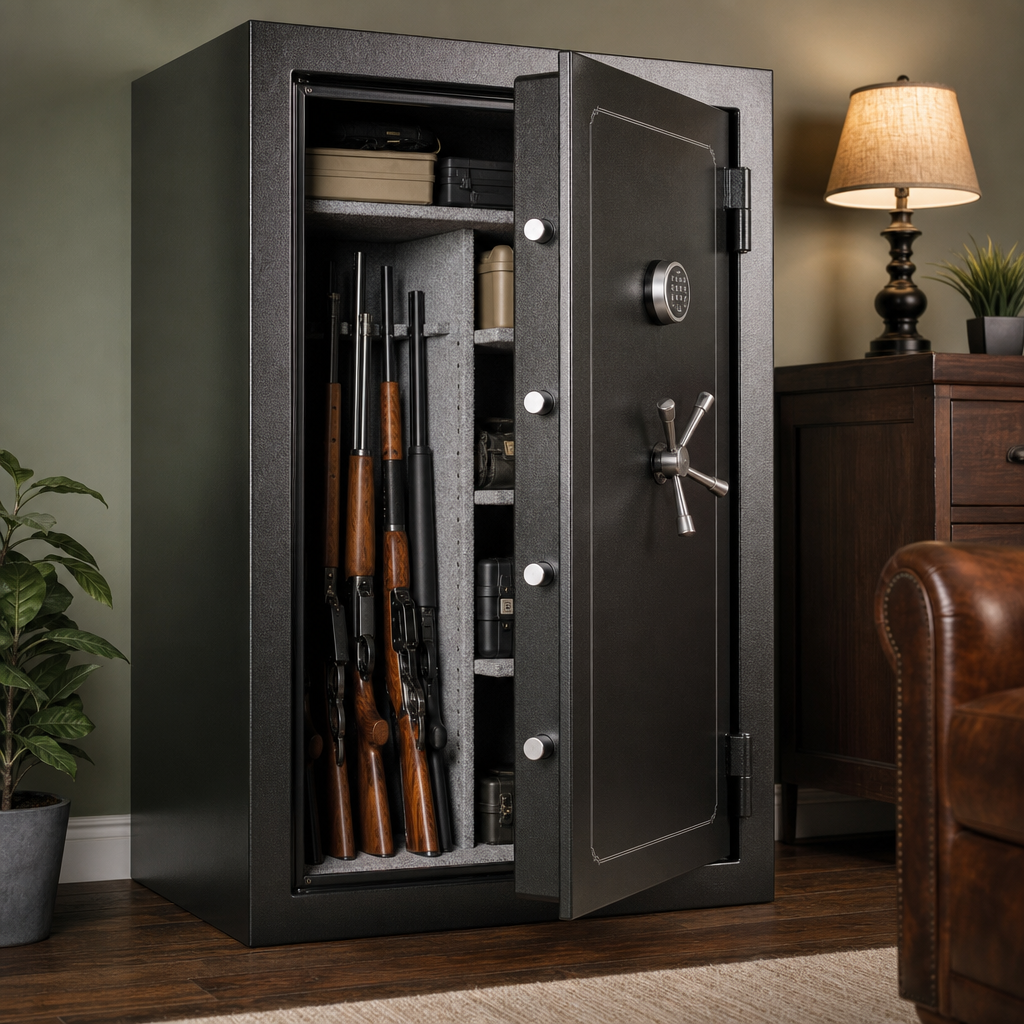
Choosing a gun safe with reinforced anti-theft hinges starts with understanding a simple fact: most successful safe break-ins are attacks on weak points, not dramatic Hollywood drilling through the middle of a door. In my experience evaluating residential security containers, thieves usually target the door gap, hinge side, lock area, or anchor points because those spots fail first under pry bars, grinders, and rushed smash-and-grab attempts. A reinforced anti-theft hinge system is designed to reduce that vulnerability by combining stronger hinge construction, internal or protected hinge placement, rigid door supports, and locking bolts that keep the door secured even if the hinges are cut. For gun owners, that matters for three reasons at once: theft prevention, unauthorized access prevention, and protection of a substantial financial investment in firearms, optics, documents, and ammunition-related accessories.
The term “reinforced anti-theft hinges” can describe several related features. Some safes use internal hinges that cannot be reached when the door is closed. Others use external hinges paired with dead bars, continuous interlocking steel lips, or full-length anti-pry tabs so the door stays locked to the body if the exposed hinges are attacked. The strongest designs do not rely on hinges alone. They create a system in which the hinge side, bolt work, hard plate, relocker, and door frame all support each other. This is why hinge marketing claims should never be read in isolation. A safe with “heavy-duty hinges” but thin steel, shallow door bolts, and no anchor holes is still a poor anti-theft choice.
This buying guide matters because the gun safe market is crowded with look-alike models, inflated steel claims, and vague security language. Many shoppers focus on capacity, interior lighting, or fire ratings first, then assume any premium-looking hinge must be secure. That is a mistake. The right way to choose a safe is to match hinge protection to the actual attack risks in your home, verify construction details against recognized standards, and compare how the hinge design works with door thickness, body steel gauge, locking bolt engagement, and installation method. When you understand those relationships, you can quickly separate a real security upgrade from a cosmetic feature and buy a safe that resists theft the way a serious gun safe should.
What Reinforced Anti-Theft Hinges Actually Do
Reinforced anti-theft hinges serve two practical purposes: they support the weight of a heavy steel door over years of use, and they reduce the chance that hinge-side attacks will open the safe. Those are related but not identical goals. A hinge can be robust enough for smooth door movement yet still add little real theft resistance if the door depends on the hinges to stay aligned and locked. On a well-designed safe, the hinges carry the door, but the locking system secures it. That distinction is critical.
In field inspections, I look for four hinge-side protections before I care about branding. First is hinge placement: internal hinges remove direct access, while external hinges require compensating security features. Second is hinge shielding: recessed doors, formed steel returns, or interlocking edges limit pry-bar purchase. Third is dead-side retention: fixed locking bars or continuous steel tabs on the hinge side prevent the door from opening if hinges are cut. Fourth is frame rigidity: thicker steel and better weld quality reduce flex under leverage. If one of those pieces is missing, the hinge claim is weaker than it sounds.
External hinges are not automatically inferior. In fact, many high-quality gun safes use external hinges because they allow a wider door opening, sometimes a full 180 degrees, which improves access to long guns and interior organization. The security question is whether the door remains captured after a hinge attack. If the safe uses active bolts on the opening side and fixed dead bars on the hinge side, a cut hinge should not release the door. Internal hinges can protect against direct attacks, but they sometimes limit door swing and can still be paired with mediocre steel or loose tolerances. Buyers should evaluate the complete hinge-side defense, not just whether the hinges are visible.
Key Construction Features to Check Before You Buy
The most important companion feature to reinforced anti-theft hinges is steel thickness. In residential gun safes, body steel often ranges from 14 gauge to 7 gauge, while doors may use thicker plate or composite construction. Lower gauge numbers mean thicker steel. A safe with 12-gauge or thicker body steel and a substantially reinforced door frame will resist prying better than a big-box model built from thinner sheet metal, even if both advertise anti-pry hinges. Door edge design matters just as much. Look for a stepped door, recessed fit, or continuous anti-pry flange that minimizes the gap where pry tools can bite.
Locking bolt design is the second major factor. Round bolts look impressive in showrooms, but bolt count alone does not determine security. Bolt depth, bolt diameter, hinge-side dead bars, and the quality of the bolt carriage matter more. A safe with fewer, longer bolts engaging a strong frame can outperform one with many short decorative bolts. Ask whether the hinge side uses fixed bars or active bolts, and whether the bolts secure all four sides of the door or only the opening side. Also verify the lock type. UL-listed mechanical or electronic locks from recognized manufacturers such as Sargent and Greenleaf or SecuRam inspire more confidence than unbranded keypad systems.
Fireboard layers, door organizers, and upholstery often dominate product pages, but anti-theft buyers should scrutinize the hard-security details first. Check for anchor holes, because an unanchored safe can be tipped over and attacked more easily. Confirm whether the safe has a relocker, hard plate over the lock, and robust internal hinges or dead bars. Review the claimed weight relative to the steel specification; suspiciously light safes often rely on more insulation and less steel than shoppers expect. If a manufacturer will not clearly state steel gauge, door construction, and hinge-side retention, treat that as a warning sign rather than a missing detail.
How to Compare Hinge Designs Across Safe Types
Gun safes sold to homeowners generally fall into three broad categories: basic residential security containers, heavier mid-tier safes, and premium plate or composite safes. Reinforced anti-theft hinges appear across all three, but the execution differs. In entry-level models, hinge protection is often limited to external hinges plus a few dead bars and a formed door edge. In better mid-tier units, you usually see stronger body steel, tighter door gaps, more rigid frames, and cleaner welds around the hinge area. Premium safes add plate steel doors, sophisticated bolt work, stronger hard plates, and better resistance to peeling or severe pry attacks.
| Safe Type | Typical Hinge Setup | What to Verify | Best Use Case |
|---|---|---|---|
| Basic residential container | External hinges with dead bars | 12–14 gauge body, anchor holes, UL-listed lock, tight door gap | Budget-conscious owners in lower-risk homes |
| Mid-tier gun safe | External or internal hinges with reinforced frame | 10–11 gauge or thicker body, stronger bolt work, relocker, better welds | Most households storing multiple firearms |
| Premium plate/composite safe | Protected hinge system with heavy door retention | Plate steel door, advanced hard plate, high mass, professional installation | High-value collections or elevated burglary risk |
One real-world example: a homeowner comparing a 30-gun big-box safe and a smaller premium model may assume the larger safe is the better value because it has more bolts and thicker-looking hinges. Yet the premium unit may use 3/16-inch or 1/4-inch plate on the door, far better weld continuity, a tighter frame, and fixed hinge-side bars that make hinge cutting irrelevant. In practical burglary resistance, that smaller premium safe often wins decisively. Capacity should be considered only after construction quality passes scrutiny. Safe manufacturers routinely overstate long-gun counts anyway, especially once scopes, slings, and modern sporting rifle dimensions are involved.
Standards, Testing, and Questions Smart Buyers Ask
The safest way to evaluate anti-theft hinge claims is to anchor them to recognized standards and direct manufacturer questions. For residential gun safes, many products are classified as Residential Security Containers under UL 1037 rather than true burglary-rated safes. That does not make them useless, but it does define the level of testing. If a seller implies vault-grade protection without listing a recognized rating, ask for the actual certification and the exact lock listing. Fire ratings should also be examined carefully, since in-house furnace tests are not equivalent to independent testing. Marketing language often sounds more definitive than the underlying data.
Ask sellers these questions plainly. If the hinges are cut off, what keeps the door from opening? Are there fixed dead bars on the hinge side? What is the body steel gauge and the door steel thickness? Is the lock UL listed, and from which manufacturer? Are anchor bolts included, and what substrate is required for proper installation? Does the safe use a hard plate and relocker? Can the door open 180 degrees, and if so, how is security maintained with external hinges? Reliable dealers can answer these quickly. Evasive answers usually signal weak product knowledge or weak construction.
Dealer quality matters more than many buyers realize. A specialized safe dealer often knows how hinge design translates to actual forced-entry resistance because they have seen damaged units, installation errors, and insurance claims. They also understand why placement and anchoring can make a mid-tier safe outperform a heavier but poorly installed one. I have seen a good safe compromised because it sat unbolted in a garage, giving thieves room to tip it onto its back and attack the door seam with long pry bars. Conversely, a properly anchored safe in a tight closet alcove can become dramatically harder to breach, even before the hinge system is considered.
Installation, Placement, and Ownership Factors That Affect Security
A gun safe with reinforced anti-theft hinges is only as effective as its installation. Anchoring is non-negotiable. Most manufacturers provide pre-drilled anchor holes for concrete or wood-subfloor installations, and those should be used according to the manual. Bolting the safe down prevents removal, reduces leverage opportunities, and stops attackers from tipping the cabinet to exploit body flex. Placement also changes security. A corner installation, with the hinge side or back against a wall and minimal clearance for pry tools, improves resistance without changing the safe itself. Closets, utility rooms, and finished basements often offer better defensive geometry than open garage floors.
Environmental factors matter too. Garage placement can expose hinges, welds, and lock components to humidity swings, especially in coastal or freeze-thaw climates. Corrosion does not usually defeat a safe quickly, but it can degrade hinges and door alignment over time if maintenance is ignored. Use a dehumidifier rod or desiccant, inspect hinge fasteners or weld areas for rust, and keep the door operating smoothly. A misaligned heavy door places stress on the hinge side and may eventually affect seal compression, bolt engagement, or lock function. Better safes tolerate years of use well, but preventive care is still part of ownership.
Finally, buy for the collection you will own in five to ten years, not the firearms you own today. Most people outgrow advertised capacity fast. Scopes, AR-style rifles, handguns in sleeves, documents, and valuables consume space and change how often the door is opened. More weight and larger doors increase the importance of a robust hinge system with stable alignment. Choose a safe from a manufacturer with a track record for parts support, lock replacement, and warranty service. Reinforced anti-theft hinges are a meaningful buying criterion, but the best purchase is a complete security package: strong steel, reliable lockwork, proper anchoring, and a hinge-side design that still protects the contents when attacked.
The best way to choose a gun safe that offers reinforced anti-theft hinges is to treat hinges as one element in a full burglary-resistance system. Start by identifying how thieves actually attack safes: prying door gaps, cutting exposed hardware, tipping unanchored units, and exploiting thin steel. Then compare safes based on hinge-side retention, body and door steel, bolt engagement, lock quality, relockers, and installation options. Internal hinges can be excellent, but exposed hinges are also highly secure when paired with dead bars, interlocking door edges, and a rigid frame. The right question is not “Are the hinges visible?” but “Will the door remain secured if the hinges are attacked?”
For most households, the smartest buying path is to shortlist models from reputable safe brands, verify construction details in writing, and buy through a dealer who understands security rather than showroom cosmetics. Prioritize UL-listed locks, honest steel specifications, anchor-ready designs, and enough size for future growth. If your firearms collection is valuable or your burglary risk is higher than average, move up to thicker steel and stronger door construction instead of chasing decorative features. A well-chosen safe protects firearms, supports responsible storage, and reduces the chance that a burglar can turn a weak hinge side into an easy entry point.
Use this guide as your hub for gun safe buying decisions, then compare individual models with a checklist in hand. Ask better questions, verify every anti-theft claim, and invest in a safe that is built to resist real attacks, not just look secure on a sales floor.
Frequently Asked Questions
What are reinforced anti-theft hinges, and why do they matter so much when choosing a gun safe?
Reinforced anti-theft hinges are hinge systems built to resist one of the most common real-world burglary tactics: attacking the door edge to force the safe open. In practice, most burglars do not try to slowly penetrate the center of a safe door like you might see in a movie. They go after weak points, especially the door gap, hinge side, lock area, and any place where leverage can be applied quickly. That is why hinge design matters. A reinforced hinge setup helps prevent the door from flexing, spreading, or separating from the body of the safe when someone uses pry bars, impact tools, or attempts to peel the door back.
When evaluating a gun safe, it is important to understand that the visible hinge itself is only one part of the picture. True anti-theft protection usually comes from a combination of reinforced hinge supports, solid door construction, internal or protected hinge placement, robust welds, and active locking bolts or dead bars that secure the hinge side even if the external hinge components are damaged. In other words, a good hinge system does not work alone. It works as part of the safe’s overall anti-pry structure.
The main reason this matters is simple: if the hinge side is weak, the safe can fail quickly under attack, even if the lock appears strong on paper. A safe with reinforced anti-theft hinges is better suited to resist rushed break-in attempts because it reduces flex, maintains door alignment, and makes it much harder for a thief to create enough separation to defeat the locking system. For buyers, this means better protection for firearms, valuables, and sensitive documents, especially in residential settings where a burglar may only need a few minutes to exploit a vulnerable design.
How can I tell whether a gun safe’s hinge system is actually secure and not just a marketing feature?
The best way to evaluate a hinge system is to look past the label and focus on how the safe is engineered around the hinge side. Marketing language often highlights “heavy-duty hinges” or “reinforced hinges,” but those phrases can mean very different things from one manufacturer to another. A truly secure design should include steel reinforcement at the hinge area, a tight and well-protected door gap, strong weld quality, and hinge-side locking support such as fixed dead bolts, interlocking door channels, or continuous locking engagement that keeps the door secured even if hinge components are attacked.
Ask whether the safe uses external hinges, internal hinges, or a protected hinge arrangement, but do not assume internal hinges are automatically better. External hinges can be very secure if the safe uses solid hinge-side locking bolts or dead bars that prevent the door from being removed after the hinge is cut. In fact, some high-quality safes use external hinges to allow a wider door opening without sacrificing security. The key question is not just where the hinge sits, but whether the door remains locked in place if that side is targeted.
You should also inspect the fit and finish. A narrow, consistent door gap is generally a good sign because it limits pry-bar access. The door should feel solid, not flimsy or flex-prone. If possible, review the locking bolt coverage on all sides of the door, especially the hinge side. Independent ratings, burglary certifications, and manufacturer cutaway diagrams can also help reveal whether the hinge protection is meaningful. If a company cannot clearly explain how the hinge side stays secure during an attack, that is a red flag. Good safe manufacturers are usually specific about steel thickness, reinforcement points, and hinge-side retention features because those details are what actually determine security.
Are internal hinges better than external hinges for anti-theft protection?
Not necessarily. This is one of the most misunderstood parts of shopping for a gun safe. Many buyers assume internal hinges are automatically safer because they are hidden, but hinge visibility is not the same thing as burglary resistance. What matters is whether the safe’s door remains secured under force, especially on the hinge side. A well-designed safe with external hinges can be extremely secure if it includes fixed locking bars, dead bolts, reinforced door channels, and a body structure that prevents the door from being pried free even if the external hinge is attacked or cut.
Internal hinges do offer some advantages. They may reduce direct access to the hinge mechanism, create a cleaner appearance, and potentially limit attack options on the outer hinge hardware. However, they can also limit how far the door opens, depending on the design, which may affect access to long guns, shelves, and interior storage. External hinges often allow a full 180-degree door swing, which many owners prefer for easier use. The tradeoff, again, is not automatically security versus insecurity. It is about how the safe compensates structurally for the chosen hinge style.
When comparing the two, focus on the entire anti-pry system rather than the hinge label. Ask whether the hinge side has active or passive locking protection. Look for anti-pry tabs, recessed doors, thick door edges, and quality construction that reduces flex under leverage. If a safe with external hinges has solid hinge-side dead bars and strong door retention, it may outperform a poorly built safe with internal hinges. The best choice is the model that shows strong real-world resistance at the hinge side, not simply the one that hides the hinge from view.
What other safe features should I compare along with reinforced anti-theft hinges?
Reinforced hinges are important, but they should be evaluated alongside the rest of the safe’s burglary-resistance features because thieves rarely attack just one component in isolation. Start with steel thickness in both the door and the body. Heavier-gauge steel generally offers better resistance to prying, cutting, and deformation. Next, look at door construction. A composite or multi-layered door with reinforced edges is typically stronger than a basic thin steel panel. Also pay attention to the locking bolt system, including bolt diameter, number of contact points, and whether the hinge side has dead bars or fixed locking bolts that keep the door retained under attack.
The lock type matters as well. Whether you choose a mechanical dial, electronic keypad, or other locking system, it should be paired with a hardened lock area and relocker protection if available. This helps defend against direct attacks on the lock mechanism. Anchor capability is equally critical. Even a well-built safe can be compromised if it is not bolted down. Burglars may tip, reposition, or remove an unanchored safe to attack it more effectively. A solid safe should have reliable anchor points and be installed securely into concrete or another strong structural surface whenever possible.
You should also consider fire protection, interior capacity, organization, and accessibility, but those should not distract from burglary fundamentals. A safe that looks impressive inside but has weak steel, poor welds, and minimal pry resistance is not a strong security choice. Check for third-party ratings if available, review manufacturer specifications carefully, and look for evidence of thoughtful engineering rather than decorative features. In short, reinforced anti-theft hinges are one piece of a larger security system, and the best gun safe is the one that combines hinge-side protection with strong steel, a solid lock area, reliable anchoring, and resistance to the common attack points burglars actually target.
How important is professional installation and anchoring when buying a gun safe with reinforced anti-theft hinges?
It is extremely important. Even an excellent gun safe with a strong anti-theft hinge system can be far less effective if it is poorly placed or not anchored at all. In many residential break-ins, burglars do not defeat the safe where it stands. Instead, they exploit mobility. If a safe can be tipped over, dragged into a garage, loaded into a vehicle, or laid on its back to gain better leverage, the attacker suddenly has much more time and a much better angle for pry tools and power tools. Anchoring reduces those opportunities significantly.
Proper installation helps the safe perform the way it was designed to perform. When the safe is bolted to a concrete slab or another suitable structural surface, it becomes much harder to shift, rock, or peel open. That stability matters because pry attacks become more effective when the safe moves under force. Anchoring also protects the weakest areas indirectly by denying the thief the ability to reposition the safe for easier attacks on the hinge side, door gap, or anchor points themselves. Placement matters too. A safe installed in a tight corner, closet, or alcove can limit tool access and reduce the space needed to swing pry bars or grinders.
Professional installation is especially valuable for larger or heavier safes because installers can verify proper floor support, bolt selection, spacing, and positioning. They can also help place the safe where access is practical for the owner but more difficult for an intruder. The bottom line is that reinforced anti-theft hinges improve resistance at a key weak point, but installation and anchoring are what keep the safe from being turned into an easier target through movement and leverage. If you are investing in a secure gun safe, anchoring it correctly is not an optional upgrade. It is part of the security package.