
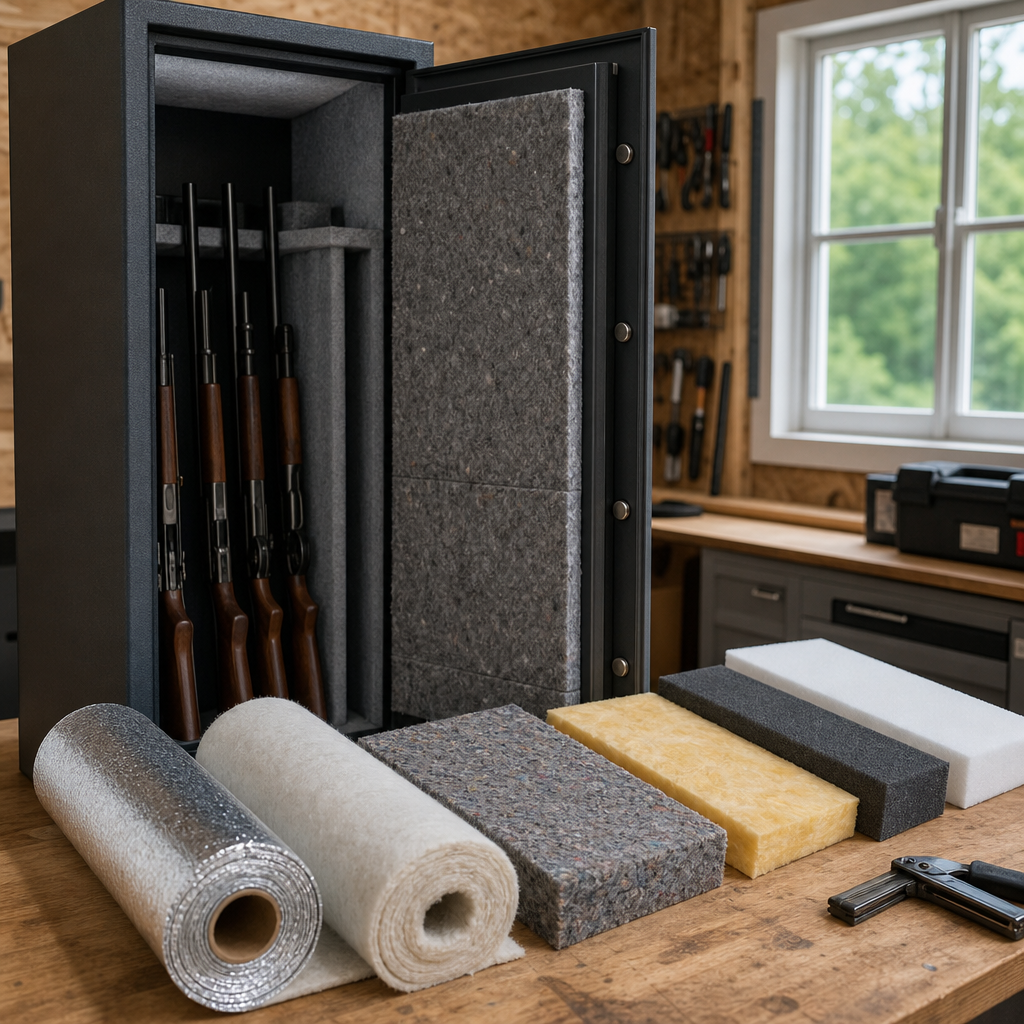
Custom gun safe insulation upgrades protect firearms, optics, documents, and ammunition from the two threats that ruin contents fastest: heat and moisture. When owners talk about insulation, they often mean different things, so it helps to define the terms clearly. Thermal insulation slows heat transfer during a house fire. Moisture control materials limit condensation, stabilize relative humidity, and reduce rust risk. Fireboard, mineral wool, ceramic fiber, intumescent seals, vapor barriers, and interior liners each solve different parts of the problem. I have upgraded factory safes and older steel cabinets for years, and the biggest mistake I see is treating every insulating material as interchangeable. It is not. The best material depends on the safe’s steel thickness, door gaps, interior volume, expected fire exposure, and whether the owner needs a cleaner DIY installation or a higher-performance custom build.
This topic matters because many safes sold as “fire-resistant” use modest layers of gypsum board and basic door seals, while many gun cabinets have no meaningful insulation at all. A custom insulation upgrade can improve survivability in a real fire, but it can also create problems if the wrong material traps moisture, sheds fibers, overloads door hinges, or interferes with locks and relockers. As the hub for custom and DIY gun safe modifications, this guide explains the best insulation materials, where each one works, where it does not, and how insulation ties into broader upgrades such as door seals, dehumidifiers, interior panels, shelving, lighting, and anchor layouts. If you are planning one modification or a full rebuild, understanding insulation first makes every later decision better.
What gun safe insulation needs to do
The goal of a gun safe insulation upgrade is not simply to make the walls thicker. It is to manage heat flow, smoke infiltration, and moisture migration in a steel enclosure that can experience huge temperature swings. In a fire, steel transfers heat rapidly by conduction, and unprotected interior temperatures can climb high enough to damage wood stocks, polymer frames, scopes, lubricants, and important paper records long before the steel body visibly fails. For most owners, a practical target is delaying interior heat rise long enough for the fire department to control a room-and-contents fire. In everyday use, the safe also needs to stay dry. Warm air can condense on cooler steel surfaces, especially in garages, basements, and workshops, so insulation must work with humidity control rather than against it.
That is why the best upgrades combine multiple layers. A thermal core slows heat transfer. A heat-reactive door seal expands to limit hot smoke entry. A controlled interior liner protects the insulation and creates a finished surface. Moisture control is handled with desiccants, goldenrod-style heaters, silica systems, or a small compressorless dehumidifier if the space allows. Even simple modifications, like lining a door panel cavity with mineral wool and adding an intumescent seal around the frame, can provide meaningful gains when done correctly. The wider custom and DIY gun safe modifications category builds on these principles, because shelving, power ports, lighting, and pegboard systems all need to respect the thermal and moisture design of the safe.
Gypsum fireboard: common, affordable, and often misunderstood
Gypsum-based fireboard remains the most common insulation inside residential security containers because it is relatively inexpensive, easy to cut, and effective at slowing heat transfer through chemically bound water. When heated, gypsum releases water vapor in an endothermic reaction, which helps absorb heat and delays temperature rise. That mechanism is why many mass-market fire-rated safes use multiple layers of Type X gypsum board. For a DIY upgrade, gypsum has one major advantage: it is easy to source at building suppliers and simple to install behind an interior fabric or panel system.
Its limitations are just as important. Gypsum is heavy, fragile at corners, and messy to fit around bolts, relockers, and door linkages. Once overheated, it can crack, shrink, and lose effectiveness. It also offers little value as a moisture-control material, and if it gets wet from flood exposure or chronic condensation, it degrades. I use gypsum mainly when the safe already has enough wall cavity depth to accept additional layers without crowding the interior too much, and when the door hinges and shelves can tolerate the extra weight. It is a sensible budget choice for a custom retrofit, but it is rarely the highest-performing option per inch.
Mineral wool and rock wool: the best all-around DIY upgrade
For most owners modifying a non-fire-lined gun cabinet or lightly insulated safe, mineral wool is the best all-around insulation upgrade. Sold under recognized names such as ROCKWOOL, mineral wool handles high temperatures, resists mold, does not readily absorb water, and is easier to friction-fit into cavities than rigid board products. It also provides useful acoustic damping, which slightly reduces the hollow drum effect of thin steel cabinets. In practical shop work, I have found mineral wool particularly helpful in sidewall and top-panel cavities where odd shapes make rigid materials frustrating.
Mineral wool does have tradeoffs. It is not a substitute for a tested fire rating because the overall safe assembly still matters, including steel body seams and door gaps. Loose fibers can irritate skin and lungs during installation, so gloves, eye protection, and a proper dust mask are mandatory. It should also be covered with a liner or panel so fibers do not circulate inside the safe. For DIY work, however, it hits the best balance of heat resistance, moisture tolerance, cost, and install flexibility. If a reader asks me for one insulation material that improves a gun safe without forcing a complicated rebuild, mineral wool is usually my first recommendation.
Ceramic fiber and high-temperature blankets: premium performance with stricter handling
Ceramic fiber blanket, often used in kilns, furnaces, and foundry applications, offers excellent high-temperature resistance and very low thermal conductivity. In simple terms, it can provide stronger thermal protection per inch than gypsum or mineral wool. That makes it attractive for custom gun safe builds where interior space is limited and every fraction of an inch matters. It is especially useful for reinforcing doors, top panels, and localized hot spots near seams. In high-end retrofit work, a thin layer of ceramic blanket behind an interior metal panel can substantially outperform thicker budget materials.
The drawbacks are serious enough that I do not recommend ceramic fiber to casual DIY users without careful planning. Fiber handling demands good respiratory protection, clean containment, and a sealed finish layer so fibers never reach stored firearms. It also costs more than gypsum or mineral wool, and some products are overkill for ordinary residential fire scenarios. Think of ceramic fiber as a precision material: excellent when the installer understands layering, fastening, edge sealing, and interior encapsulation. Used well, it is among the best materials for custom gun safe insulation upgrades. Used casually, it creates unnecessary risk and expense.
Intumescent seals, liners, and vapor management materials
Insulating the walls without addressing the door opening leaves a major weakness. Intumescent seals expand when exposed to heat, helping close the gap around the door and reducing smoke and hot gas infiltration. Brands and profiles vary, but the principle is consistent: the seal should be placed where expansion fills the frame channel without blocking normal closure. On many retrofits, the best performance gain per dollar comes from adding or replacing the door seal rather than stuffing more insulation into the body.
Interior liners matter too. Marine-grade carpet, automotive trunk liner, thin plywood, powder-coated sheet metal, and composite panels can all serve as finish surfaces. The liner’s job is to protect insulation, prevent fiber shedding, and create mounting points for accessories. For moisture management, avoid creating a fully trapped vapor sandwich. Steel already acts as a vapor barrier, so adding impermeable plastic on the wrong side can trap condensation inside the wall cavity. Instead, focus on keeping the interior slightly warmer and drier with a safe heater or desiccant system, and use insulation that tolerates incidental moisture without collapsing.
| Material | Best use | Main advantage | Main limitation |
|---|---|---|---|
| Type X gypsum board | Budget fire lining in large wall cavities | Low cost and familiar fire resistance | Heavy, brittle, poor moisture tolerance |
| Mineral wool | General DIY sidewalls, tops, doors | Heat resistant, moisture tolerant, easy fit | Needs liner to contain fibers |
| Ceramic fiber blanket | Space-limited premium retrofits | Excellent thermal performance per inch | Higher cost and stricter handling |
| Intumescent seal | Door frame perimeter | Reduces smoke and heat entry at gaps | Must be sized and placed correctly |
How to choose the best material for your safe and use case
The right insulation upgrade starts with the safe itself. A thin steel gun cabinet in a garage has different needs than a 10-gauge body safe in a climate-controlled closet. First, measure available cavity depth in the body and door. Second, inspect for lockwork, relockers, hard plates, and wiring that cannot be obstructed. Third, decide whether the priority is fire delay, everyday rust prevention, noise reduction, or all three. If interior space is generous and budget is tight, gypsum can work. If the safe is lightly built and the install needs to stay forgiving, mineral wool is the smartest choice. If the safe is compact but the owner wants maximum thermal resistance, ceramic blanket deserves consideration.
Use case matters just as much. A collector storing blued rifles, engraved shotguns, and paper records needs strong humidity control and a clean liner system. A homeowner in wildfire country should focus on thermal layers, door seals, and reducing heat bridges in the top and sides, where ambient fire temperatures often hit hardest. Someone modifying a basement safe in a humid region may get more benefit from moderate insulation plus a heater rod and silica canisters than from the thickest possible fireboard stack. Good custom and DIY gun safe modifications are never one-size-fits-all. They are matched to environment, construction, and what is actually inside the safe.
Installation mistakes to avoid and related upgrades to plan next
The most common installation errors are overpacking cavities, blocking moving lock parts, leaving exposed fibers, and adding so much material that the door no longer closes squarely. I have also seen owners glue insulation directly against lock bodies or drill mounting holes into areas that contain relockers. Before adding anything, remove interior panels carefully, photograph the mechanism, and test the door repeatedly during reassembly. Use high-temperature adhesive only where appropriate, and rely on mechanical retention when possible. Weight distribution matters, especially on retrofitted doors. A heavy stack of board on the door can sag hinges and compromise the seal you were trying to improve.
Insulation also connects to the rest of the modification roadmap. Once the walls are open, it is the right time to add low-voltage LED lighting channels, power pass-throughs for dehumidifiers, modular shelving, pistol racks, document drawers, and door organizers. Plan those systems before closing the liner, because retrofitting later usually means tearing finished work back apart. For a sub-pillar hub on custom and DIY gun safe modifications, that is the key principle: insulation is foundational. It influences humidity control, interior layout, cable routing, accessory mounting, and fire performance. Build the thermal and moisture strategy first, then add convenience features around it.
The best materials for custom gun safe insulation upgrades are the ones that solve the real problem your safe has, not the ones with the most aggressive marketing. Gypsum fireboard remains useful for affordable fire lining when space and weight are available. Mineral wool is the best all-around DIY option because it combines heat resistance, moisture tolerance, install flexibility, and reasonable cost. Ceramic fiber blanket delivers premium performance where space is tight, but it demands better handling and a more disciplined build. Intumescent seals are essential companions to any wall insulation upgrade, because door gaps are a major failure point in heat and smoke exposure.
If you remember one rule, make it this: treat insulation as part of a complete safe system. The steel shell, seams, door seal, liner, dehumidifier, shelving, and power routing all work together. Start by assessing your safe’s construction, climate, and storage priorities, then choose materials that fit those conditions. Done correctly, a custom insulation upgrade can extend fire resistance, cut condensation risk, and protect valuable contents far better than a bare cabinet or poorly planned retrofit. Use this hub as the starting point for your broader custom and DIY gun safe modifications plan, and map your next upgrade with the same care you would give the firearms inside.
Frequently Asked Questions
What materials are best for custom gun safe insulation upgrades?
The best materials depend on what problem you are trying to solve, because “insulation” inside a gun safe usually means two different forms of protection: slowing heat during a fire and controlling moisture during everyday storage. For fire resistance, common upgrade materials include fireboard, mineral wool, and ceramic fiber. Fireboard is widely used because it is practical, relatively affordable, and designed to slow temperature rise inside an enclosure. Mineral wool is valued for its heat resistance and dimensional stability, and it can perform well when properly fitted into safe wall cavities. Ceramic fiber offers very high temperature tolerance, but it is generally considered a more specialized option and must be selected and installed carefully for enclosed storage applications.
For moisture control, the best materials are not necessarily the same as the best fire materials. Vapor barriers, closed-cell insulation layers, desiccant systems, dehumidifier rods, and carefully selected interior liners all play a role in limiting condensation and stabilizing relative humidity. Intumescent seals are also important in many upgrade plans because they expand under heat and help reduce the passage of hot gases and smoke around the door gap during a fire. In a well-designed custom upgrade, the strongest results usually come from combining materials rather than relying on a single product. A layered approach may include fire-resistant core insulation, upgraded door seals, and a separate moisture-management strategy so firearms, optics, ammunition, and important documents are protected from both sudden heat and long-term humidity exposure.
What is the difference between thermal insulation and moisture control in a gun safe?
Thermal insulation and moisture control are related, but they do very different jobs. Thermal insulation is intended to slow heat transfer from the outside of the safe to the interior. In a house fire, the goal is not to make the safe “fireproof,” but to delay the internal temperature rise long enough to improve survival chances for the contents. Firearms, optics, paper records, electronic accessories, and ammunition can all be damaged at different temperature thresholds, so thermal insulation buys time. Materials such as fireboard, mineral wool, ceramic fiber, and intumescent door seals are used because they help limit how quickly heat and hot gases move into the safe.
Moisture control, by contrast, is focused on preventing condensation, minimizing humidity swings, and reducing rust, corrosion, mildew, and damage to stocks, slings, paperwork, and sensitive optical coatings. A safe can have decent fire insulation and still be a poor environment for long-term storage if moisture is unmanaged. That is why vapor barriers, dehumidification devices, desiccants, and air-sealing details matter. The safest way to think about the difference is this: thermal insulation helps during emergencies, while moisture control protects contents every day. A good custom gun safe insulation upgrade should address both, because heat can destroy contents quickly in a fire, but moisture can quietly ruin them over time with rust, pitting, tarnish, mold, and degraded finishes.
Is mineral wool, ceramic fiber, or fireboard the better choice for a gun safe upgrade?
Each of these materials has advantages, and the better choice depends on the safe’s design, your budget, the available wall cavity space, and whether the upgrade is being done by a qualified fabricator or as part of a carefully planned retrofit. Fireboard is often the most familiar option because it is commonly used in fire-rated enclosures and can provide effective thermal delay when installed in the correct thickness and arrangement. It is often a sensible choice for owners who want a proven, accessible fire-insulation material that integrates reasonably well into custom panels or inner wall assemblies.
Mineral wool is another strong candidate because it resists high temperatures, does not burn easily, and can fit irregular spaces better than rigid board products in some builds. It is also useful where sound damping and thermal performance are both desired. Ceramic fiber can tolerate extremely high temperatures and is sometimes chosen for more advanced heat-management applications, but it is not automatically the best solution for every safe. In many cases, it is more expensive, more specialized, and may require greater care in handling and encapsulation. The most important point is that material performance depends heavily on installation quality. Gaps, compression, poor door sealing, thermal bridges through metal framing, and lack of moisture planning can reduce the benefit of even premium insulation. For most gun safe owners, the “best” material is the one that fits the safe correctly, works as part of a layered design, and is installed with attention to both fire resistance and humidity control.
Do intumescent seals and vapor barriers really make a difference in a custom gun safe?
Yes, they can make a meaningful difference, especially when used correctly and for the right purpose. Intumescent seals are designed to expand when exposed to high heat. In a fire event, that expansion helps close off small gaps around the door opening, reducing the flow of hot gases, smoke, and flame-driven heat into the interior. Since door seams are often one of the most vulnerable points in a safe, upgrading or adding a properly matched intumescent seal can improve overall fire performance. It is not a substitute for proper body insulation, but it is an important supporting component in a complete thermal protection strategy.
Vapor barriers serve a different but equally valuable function. They help limit moisture migration and condensation problems, especially in environments with fluctuating temperatures or high ambient humidity. If warm, humid air reaches cooler metal surfaces inside a safe, condensation can form and create ideal conditions for rust and corrosion. A well-placed vapor barrier can reduce that risk, but it has to be selected and installed thoughtfully. If used incorrectly, it can trap moisture in places where it should not be trapped. That is why vapor control should be paired with active or passive humidity management, such as desiccants or low-watt dehumidifier rods. In short, intumescent seals help protect against fire intrusion, while vapor barriers help manage moisture behavior. Both can be highly worthwhile upgrades when they are integrated into a smart, balanced safe-insulation plan.
Can I upgrade my gun safe insulation myself, or should it be done professionally?
Some moisture-control improvements are very realistic for a careful owner to handle, but major fire-insulation upgrades are usually better left to professionals or experienced safe fabricators. DIY-friendly upgrades often include adding rechargeable desiccants, installing a dehumidifier rod if the safe has a power pass-through, improving interior organization to promote airflow, replacing worn door seals with compatible products, and using non-moisture-trapping liners or sleeves. These steps can significantly improve daily protection against rust and humidity-related damage without requiring structural modification of the safe.
By contrast, opening wall cavities, adding or replacing fireboard, fitting mineral wool or ceramic fiber, modifying door construction, or applying vapor barriers inside a sealed metal enclosure can be much more complex. Improper installation can reduce fire performance, create hidden condensation problems, interfere with locking mechanisms, or void manufacturer warranties and fire claims. There is also a real design issue to consider: adding insulation is not just about stuffing material into empty space. It requires understanding heat paths, seam leakage, interior clearances, door fit, and how different materials behave together over time. If your goal is a serious custom insulation upgrade for protecting firearms, optics, documents, and ammunition from both heat and moisture, professional guidance is usually the safer investment. A qualified specialist can help ensure the safe remains secure, functional, and better protected under real-world conditions rather than just looking upgraded on paper.