
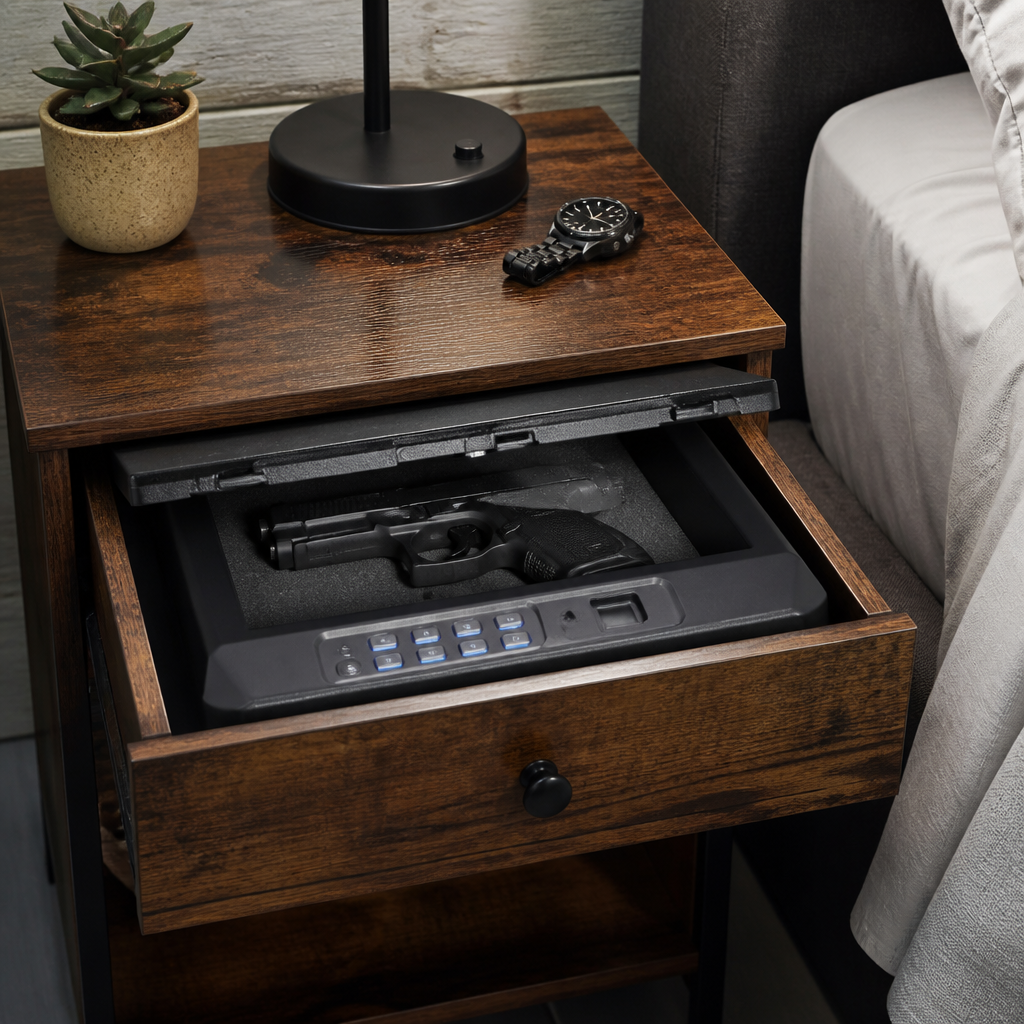
A nightstand gun safe is a compact secure container designed to keep a defensive handgun close at hand while preventing unauthorized access, and the best models combine fast opening, discreet appearance, solid construction, and dependable lockwork. In the context of hidden and discreet gun storage solutions, a nightstand safe sits at the intersection of home defense, child safety, theft deterrence, and day-to-day practicality. I have installed and tested bedside safes in apartments, suburban homes, and rural properties, and the pattern is always the same: people want a pistol accessible in seconds, but they do not want it visible to guests, cleaners, teenagers, or a smash-and-grab burglar scanning the bedroom.
That tension explains why this category matters. A nightstand gun safe is not simply a smaller version of a full-size safe. It has a different job. It must open reliably under stress, fit into tight spaces, conceal the firearm without advertising what it holds, and resist casual tampering long enough to prevent misuse. For many owners, it is the most frequently accessed safe in the house, which makes usability as important as steel thickness. A biometric reader that fails on dry fingers at 2 a.m. is not a feature; it is a liability. A keypad with intuitive tactile buttons, backup key override, and battery status warning is often the better choice.
This hub covers hidden and discreet gun storage solutions through the lens of the best nightstand gun safes for quick-access concealment. You will learn what separates a true bedside safe from a lockbox, which access methods work best, how concealment differs from security, where these products fit within a broader home storage plan, and what tradeoffs to expect. If you are comparing drawer safes, clamshell vaults, furniture-integrated designs, or under-bed units, this guide will help you decide what belongs beside the bed and what should live somewhere else.
What makes a nightstand gun safe effective
An effective nightstand gun safe does four things well: it controls access, supports a rapid draw, minimizes visibility, and stays anchored in place. Those requirements sound obvious, but many products fail one or more. Small steel lockboxes sold as travel safes often meet the first requirement only partially. They may be adequate for temporary vehicle use or legal transport, yet they slide around in a drawer, require awkward key access, and telegraph their purpose. By contrast, a purpose-built bedside safe is designed around one-handed retrieval, stable mounting, interior presentation of the handgun, and low-profile placement beside or inside a nightstand.
Construction is the first filter. Look for welded steel bodies, pry-resistant door geometry, and a reinforced latch area. In this category, 14-gauge steel is common, while stronger units may use thicker steel in critical areas. Door fit matters as much as stated gauge because large gaps invite pry attacks. A foam-lined interior should hold the handgun without shifting, but too much soft foam can snag optics or weapon lights. Good designs present the grip consistently. When I evaluate a bedside safe, I test whether a compact pistol with a mounted light and spare magazine can be retrieved cleanly in darkness without the muzzle catching on the frame.
Mounting is nonnegotiable. If a burglar can pick up the safe and leave, you have purchased delay, not protection. The best nightstand gun safes provide predrilled anchor holes for bolting to furniture, flooring, or a wall stud inside a cabinet cavity. Heavier units buy time, but anchoring is what prevents a five-second theft. Concealment also improves when the safe is fixed inside a drawer or behind a false panel rather than sitting openly on top of the nightstand.
Quick-access lock types and their real-world tradeoffs
The opening method determines whether a bedside safe works under pressure. Four access types dominate this market: biometric fingerprint, electronic keypad, mechanical simplex pushbutton, and RFID. Each has strengths, and none is perfect. The best choice depends on your tolerance for maintenance, who shares access, and whether the safe will be used in darkness, under stress, or by people with different hand sizes and dexterity.
| Lock type | Main advantage | Main limitation | Best use case |
|---|---|---|---|
| Biometric fingerprint | Fast for authorized users, no code to remember | Can fail with dirty, wet, or dry fingers; requires enrollment discipline | Single primary user who tests it regularly |
| Electronic keypad | Reliable, flexible codes, easy for multiple users | Needs battery power and tactile familiarity in darkness | Most homes needing consistent bedside access |
| Mechanical simplex | No batteries, durable, strong tactile feedback | Usually bulkier and slower to reprogram | Users prioritizing long-term reliability |
| RFID | Very fast with bracelet, card, or fob | Credential management can be inconvenient or less secure | Furniture-integrated or disguised safes |
Biometric safes dominate marketing because speed sells, but I treat fingerprint access as proven only after repeated testing with the exact enrolled users. Scan quality varies significantly between brands, and small sensors often struggle with inconsistent placement. Higher-end biometric safes from brands such as Vaultek and Fort Knox typically pair fingerprint access with keypad or key backup, which is essential. Electronic keypads remain the most balanced option for many households because they are predictable, inexpensive to maintain, and easy to teach to a spouse. Mechanical simplex locks have an excellent reputation for durability and are common on premium quick-access boxes because they function without batteries and provide strong tactile indexing in the dark.
Concealment versus security in hidden gun storage
Hidden and discreet gun storage solutions are frequently misunderstood. Concealment and security are related but not interchangeable. A disguised safe hidden in a drawer divider may avoid notice during a quick burglary, but if it uses thin metal and a weak cam lock, it offers limited resistance once discovered. Conversely, a visible steel bedside vault with a robust lock may resist attack better but attract more attention. The goal is layered protection: conceal the safe from casual observation and build enough physical resistance to stop unauthorized access during the period that matters.
Nightstand gun safes are especially suited to this layered approach because bedrooms are predictable locations for valuable items. Burglars often check under the bed, closet shelves, dresser drawers, and traditional nightstand tops. That means obvious placement is a mistake. Better discreet gun storage options include mounting a slim vertical safe along the inside wall of a nightstand cabinet, using a false-bottom drawer insert above the safe, or choosing furniture designed with a hidden compartment that contains an actual locking steel vault. The furniture itself should never be the only security layer. Magnetic shelves and secret panels are concealment devices, not gun safes.
For households with children, concealment alone is never enough. Children are observant, and repeated routines teach them where adults keep important items. If the firearm is loaded for defense, it needs a real lock. The American Academy of Pediatrics and major firearms training organizations consistently emphasize secure storage to reduce unauthorized access and accidental injury. In practical terms, that means the handgun should be inside a locked container whenever it is not physically under your direct control.
Best nightstand gun safe formats for discreet bedside use
The best format depends on your furniture, firearm size, and retrieval style. Top-opening clamshell safes are popular because they fit on or inside many nightstands and present the grip upward. They work well for compact and full-size pistols, especially when using a keypad or biometric lid release. Front-opening safes resemble miniature vaults and can be easier to mount vertically inside cabinets, though they require enough clearance for the door swing. Drawer safes install under or inside a drawer and are among the most discreet solutions because they vanish within existing furniture lines. Their weakness is installation complexity and limited accommodation for tall optics.
Slide-out and drop-down safes mounted under a nightstand or bed rail are excellent when surface space is limited. These models can place the firearm just below hand level, hidden from plain sight yet immediately available. Brands such as Hornady have popularized RFID-enabled RAPiD designs for this role. Furniture-integrated safes, including locking nightstands or headboards with hidden compartments, offer the strongest visual concealment, but quality varies sharply. I recommend them only when the concealed compartment houses a steel locking box from a recognized safe manufacturer rather than relying on furniture-grade latches.
Size planning matters. Measure the firearm with any mounted optic, suppressor-height sights, or weapon light installed. Many buyers discover too late that a safe advertised for one handgun will not comfortably fit a Glock 17 with a Streamlight TLR-1 or a SIG P320 with a red dot. Leave room for a spare magazine if that is part of your defensive setup. At the same time, avoid oversized interior space that lets the pistol shift and rotate, because consistency is central to safe quick access.
Leading brands and features worth paying for
In this category, several brands regularly stand out. Fort Knox is widely respected for heavy construction and mechanical simplex locks. Vaultek has pushed the market forward on interior lighting, smartphone management features, and refined biometric and keypad systems, though app connectivity should be treated as secondary to basic lock reliability. V-Line is known for durable simplex-operated steel cases with straightforward designs. Hornady’s RAPiD series remains relevant for RFID-based quick access and flexible mounting options. StopBox occupies a different niche with retention-focused lockable containers, but it is not equivalent to a steel gun safe and should be evaluated accordingly.
Features worth paying for include an internal light that activates on opening, silent mode to disable beeps, tamper alerts, low-battery warning, and an AC power option backed by battery redundancy. Gas struts or spring-assisted doors improve consistency. Foam should be closed-cell and trimmed to avoid pressing magazine releases or mounted lights. Exterior finish matters less than hinge protection and latch design. If a manufacturer avoids publishing steel thickness, lock type details, or mounting hardware specifications, take that as a warning sign.
I also place high value on certification and testing culture, even though many bedside safes are not formally rated like large burglary safes. California Department of Justice roster inclusion can indicate baseline lock compliance for some buyers, while independent reviews that demonstrate opening speed, drop resistance, and pry resistance are often more useful than marketing videos. A trustworthy manufacturer provides replacement support, clear battery guidance, and realistic claims about what the product can and cannot stop.
How a bedside safe fits into a complete discreet storage plan
A nightstand gun safe should be one layer within a larger gun storage strategy. The bedside handgun is the exception firearm: the one gun staged for immediate defensive access. Everything else should generally live in more secure primary storage, such as a full-size residential security container, modular gun cabinet, or dedicated safe room setup. This hub category, hidden and discreet gun storage solutions, works best when you match each hiding method to its actual purpose. Bedside safes are for immediate access. Under-bed safes handle larger pistols, extra magazines, and sometimes short defensive long guns. Closet concealment products prioritize discretion. Furniture safes reduce visual clutter in multipurpose rooms.
Think in zones. The bedroom zone supports nighttime defense. The entry zone may justify a quick-access handgun safe in a hall closet or mudroom, particularly for owners who disarm on arriving home. The office zone may use a hidden drawer safe integrated into a desk. The vehicle is separate and should use a vehicle-rated lockbox, not a loose bedside unit repurposed for travel. When I help clients map discreet gun storage through a house, we focus on routine, not fantasy scenarios. The best setup is the one that fits where you actually place valuables, charge batteries, and reach naturally in darkness.
The main benefit of the best nightstand gun safes for quick-access concealment is simple: they let you keep a defensive handgun accessible to you and inaccessible to everyone else, without turning the bedroom into an obvious storage site. Choose a real steel safe, prioritize a proven lock you can operate half awake, bolt it down, and hide it intelligently within your furniture layout. Then test it with your actual handgun, accessories, and nighttime routine. From there, build out the rest of your hidden and discreet gun storage solutions with the same standard: concealment plus controlled access, never one without the other. Review your current bedside setup, identify the weak point, and upgrade the one layer you rely on most tonight.
Frequently Asked Questions
What should I look for in the best nightstand gun safe for quick-access concealment?
The best nightstand gun safe balances four priorities at once: speed, security, concealment, and reliability. For quick access, look for a design that opens in one smooth motion using a dependable lock type such as a quality biometric scanner, a backlit keypad, or a mechanical push-button system that can be operated by touch in the dark. Fast access is only useful if the safe opens consistently, so lock reliability matters more than flashy features. A good bedside safe should also be compact enough to fit discreetly in or beside a nightstand, under a bed, or inside a drawer without advertising that a firearm is stored nearby.
Construction quality is equally important. A solid steel body, reinforced pry points, and a secure lid or door help resist tampering and basic smash-and-grab theft attempts. Interior dimensions matter too, especially if you want room for a full-size handgun, weapon light, spare magazine, or small valuables. In real-world use, some safes look ideal on paper but become frustrating when the lid does not open wide enough or the handgun grip is hard to reach under stress. That is why the best models are not just “secure”; they are also practical to use half-awake, in low light, and under pressure.
Finally, consider how the safe will be mounted and where it will live. A quick-access safe that is not anchored can be carried away, defeating much of its purpose. The most effective nightstand gun safes are bolted to furniture or structure whenever possible, placed where your hand naturally falls from bed, and tested repeatedly so opening the safe becomes second nature. In short, prioritize proven lock performance, discreet fit, sturdy construction, sensible interior layout, and secure installation over gimmicks.
Are biometric nightstand gun safes reliable enough for home defense use?
Biometric nightstand gun safes can be reliable, but only when you choose a well-made model and treat the fingerprint reader as one part of a layered access system rather than the only method of entry. A high-quality biometric safe offers very fast access and can be extremely convenient at bedside, especially if you want to avoid remembering a code while groggy or under stress. That said, fingerprint performance can vary based on skin condition, moisture, placement, scanner quality, and how well the reader stores and recognizes your prints. Cheap biometric safes are notorious for inconsistent performance, which is why brand reputation and long-term testing matter far more than marketing claims.
For a defensive setup, the safest approach is to choose a biometric safe that also includes a dependable secondary access method such as a keypad or mechanical override. Many strong bedside models let you program multiple fingerprints from different angles on the same finger, which improves recognition in real-world conditions. It is wise to enroll both hands, multiple fingers, and to test access when your hands are dry, slightly sweaty, and in complete darkness. If the scanner struggles during regular practice, it is not the right choice for emergency use.
In practical terms, biometric access can be an excellent option for a nightstand gun safe, but only if you verify that it works consistently in your own environment. Keep fresh batteries installed, test the safe regularly, learn the backup entry method by feel, and avoid relying on entry speed claims from product pages alone. A biometric safe is reliable enough for home defense when it has been proven through repeated personal use, not merely because it has a fingerprint sensor.
Where is the safest and most practical place to install a nightstand gun safe?
The safest and most practical place to install a nightstand gun safe is usually within arm’s reach of the bed, but not in plain sight and not loose or unsecured. The ideal location depends on your room layout, whether children or guests are in the home, and how quickly you need access in an emergency. Common placements include inside the nightstand, bolted to the side wall of the nightstand interior, mounted low on the bed frame, attached to the floor in a closet near the bed, or secured in a hidden compartment integrated into bedside furniture. The right location allows a natural, repeatable hand movement from your sleeping position while keeping the safe discreet during everyday life.
From a safety standpoint, the safe should be mounted so it cannot be easily tipped, carried off, or exposed to casual discovery. In apartments and suburban homes alike, I generally favor installations that combine concealment with a fixed anchor point. A safe hidden inside a drawer may look tidy, but if the drawer movement interferes with the lid or keypad, access can be slower than expected. Likewise, a floor-mounted unit may be more secure but less accessible if you must sit up, bend down, or move around obstacles before opening it. Every installation should be tested from bed, in the dark, with the room arranged exactly as it is during normal sleep.
The best placement is one that supports both retention and speed. Avoid locations where bedding, charging cables, lamp cords, or furniture edges can block the safe door. Also think about who can see the safe during routine life, including children, cleaners, contractors, or overnight guests. If a safe is obvious, it may attract curiosity or theft attempts. A concealed but reachable mounting position usually delivers the best mix of child safety, theft deterrence, and practical defensive access.
How secure are nightstand gun safes against theft or unauthorized access?
Nightstand gun safes are primarily designed to prevent unauthorized access and provide rapid defensive availability, not to replace a large burglary-rated gun safe. That distinction matters. A well-built bedside safe can do an excellent job keeping a handgun away from children, guests, and opportunistic thieves while also slowing down forced entry attempts. However, because these safes are compact and intended for quick access, they generally use lighter steel and simpler construction than full-size long-term storage safes. Their true strength lies in combining controlled access with concealment and anchoring.
In real-world terms, security improves dramatically when the safe is bolted down and positioned discreetly. An unsecured safe, even if heavy for its size, may simply be stolen and attacked elsewhere. Features that improve resistance include thicker steel, anti-pry door design, internal hinges or protected hinge areas, tamper-resistant keypads, and a lock mechanism with a good track record. Concealment also plays a meaningful role. A safe that blends into a nightstand or remains hidden inside furniture is less likely to be targeted in the first place.
For most households, the right expectation is that a quality nightstand safe should deter casual access, block impulsive misuse, and create a serious obstacle during a rushed theft. It is especially valuable in homes with children, teenagers, visitors, or service personnel coming and going. If your primary concern is heavy-duty burglary resistance, pair the bedside safe with a larger main safe elsewhere in the home and reserve the nightstand unit for the firearm you want immediately accessible. Used that way, it becomes a highly effective part of a broader home security plan.
How do I choose between a drawer-style, top-opening, or disguised nightstand gun safe?
The best format depends on how you access the safe from bed, how much space you have, and how important concealment is in your room. Drawer-style safes are popular because they present the handgun in a horizontal, easy-to-grab position and often fit naturally in a nightstand or under-bed location. They can be extremely fast when mounted properly, but they require enough forward clearance to extend fully. In tight bedrooms, that can be a drawback. Top-opening safes usually have a smaller footprint and can sit neatly inside or beside a nightstand, but the angle of presentation matters. Some open wide and position the grip well; others force an awkward reach that becomes obvious only during hands-on practice.
Disguised or furniture-integrated safes focus more heavily on concealment. These can be excellent when visual discretion is a top priority, especially in homes where you want the safe to disappear into normal decor. However, concealment should never come at the expense of reliable, repeatable access. A hidden compartment that is clever but slow or complicated may be less suitable for a defensive handgun than a simpler rapid-access safe mounted discreetly out of view. The best disguised options still allow a straightforward opening sequence with minimal fine motor skill required.
When deciding, simulate your actual nighttime access. Lie in bed, imagine waking suddenly, and consider which motion is easiest: pulling a drawer, lifting a lid, or pressing into a concealed compartment. Also account for your firearm’s size, whether it has a mounted light or optic, and whether you want room for a spare magazine. In testing, the winning design is usually the one that feels intuitive in darkness, clears surrounding furniture without obstruction, and lets you establish a firing grip immediately. If possible, prioritize ergonomics and consistency over aesthetics alone, because in a bedside safe, practical access is everything.