
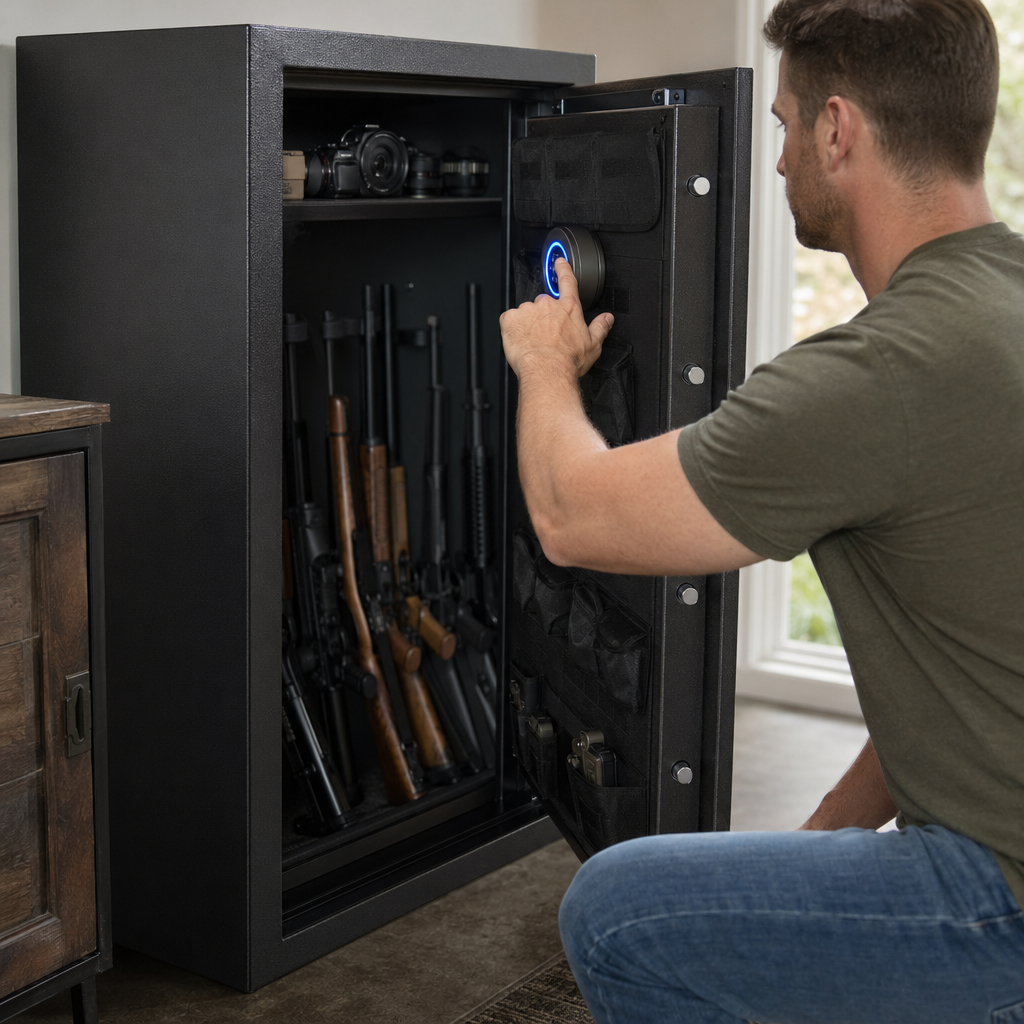
Choosing the best gun safes with RFID technology for quick entry starts with understanding a simple reality: a defensive firearm is only useful if you can access it in seconds, yet it must remain inaccessible to children, guests, burglars, and anyone else who should not touch it. RFID gun safes are designed to solve that tension. They use radio-frequency identification through a programmed card, wristband, sticker, or key fob to unlock rapidly, usually with a single tap. In practical terms, that means faster access than spinning a dial and often less fumbling than pressing a keypad in the dark.
In my experience testing bedside vaults, vehicle safes, and small home defense lockboxes, speed alone never tells the whole story. The best quick-access gun safe also needs reliable electronics, a solid backup entry method, durable steel construction, a secure mounting system, and interior dimensions that match the firearm you actually keep ready. Many buyers focus on the unlocking method first and regret it later when their full-size pistol with a mounted light will not fit, or when a cheap safe opens quickly but flexes under prying force. This guide is built to prevent those mistakes.
For buyers comparing options in the broader gun safes and safety category, RFID models occupy a specific niche. They are usually compact safes intended for one to four handguns, though some larger units support rifles or multiple pistols. They are especially popular for bedside use, closet shelves, entryway cabinets, and vehicles because they balance readiness with controlled access. The appeal is strongest for people who want one-handed operation, low-light usability, and a system that can be staged discreetly with a wearable tag or hidden sticker.
This hub article covers the main buying decisions: how RFID safes work, which features matter most, how to compare top brands, what standards and limitations to understand, and how to choose the right safe for your room, routine, and risk level. If you are researching bedside handgun safes, mounted vehicle lockboxes, child-resistant storage, or biometric versus RFID comparisons, this page gives the framework that should guide every follow-up purchase decision.
How RFID gun safes work and who should buy one
An RFID gun safe unlocks when an enrolled tag comes within range of the reader. Depending on the design, that tag may be a credit-card style card, a rubberized key fob, a sticker applied behind a phone case or nightstand, or a silicone wristband. The reader verifies the tag’s identifier and triggers a motorized latch or spring-assisted door. Good systems complete that sequence in roughly one second or less. That speed is the central selling point, but the real advantage is consistency under stress. When I evaluate these safes at night, the best models let me access a pistol without aligning fingers on a keypad or presenting a fingerprint at the exact right angle.
RFID safes are a strong fit for home defenders, shift workers returning late, parents who need controlled but fast access, and anyone storing a handgun in a consistent location. They also suit users who dislike biometric readers because fingerprint performance can vary with dry skin, sweat, dirt, or partial placement. Compared with simple keypads, RFID can be quieter and more intuitive in darkness. That said, no electronic safe should be chosen without a mechanical override key or another proven backup method, because batteries fail and electronics age.
The biggest misconception is that RFID equals high security. It does not. For most products in this category, the purpose is quick unauthorized-access prevention, not the burglary resistance of a heavy full-size gun safe. A bedside vault made from 14-gauge or 16-gauge steel can stop casual access and delay a smash-and-grab attempt, especially when bolted down, but it is not equivalent to a TL-rated commercial safe. Buyers should match expectations to the product class.
Core buying factors that matter more than marketing
When shopping for the best gun safes with RFID technology for quick entry, start with fit. Manufacturers often advertise capacity by gun count, but that is the least reliable measure. A “two-gun” safe may hold two compact pistols without optics, yet fail to accept one full-size handgun with a weapon light and extended magazine. Check interior length, width, and lid clearance. If you use a red dot optic, suppressor-height sights, or a mounted light such as a Streamlight TLR-1 HL or SureFire X300, verify real dimensions rather than trusting stock photos.
Next, evaluate construction. Look for steel thickness, reinforced edges, internal hinges where possible, anti-pry lips, and a design that does not expose weak seams near the opening side. Heavier steel generally resists flexing better. The lock mechanism matters just as much. A decent body can still fail if the latch is shallow or the motor weak. Reputable quick-access safes use sturdier locking bars or deadbolts and doors that open positively without sticking.
Access options are another key filter. The best RFID safe should not rely on a single entry method. Ideal setups include RFID plus keypad or RFID plus key, sometimes all three. Redundancy matters because every access system has limitations. RFID tags can be misplaced, keypads need batteries, and override keys should be stored securely but available. I strongly prefer safes with a low-battery warning and external power option, such as a USB emergency port, though a reliable override key remains essential.
Mounting is nonnegotiable. Any compact gun safe that is not bolted down can be stolen whole. Bedside models should anchor to a floor, wall stud, bed frame bracket, or heavy furniture according to the manufacturer’s hardware guidance. Vehicle safes need dedicated cable systems or console-specific mounts, but cable-only retention is a compromise, not a true equivalent to bolting. The best safe on paper becomes a poor choice if you cannot secure it properly where it will live.
| Buying Factor | What to Look For | Why It Matters |
|---|---|---|
| Interior dimensions | Measured clearance for pistol, optic, light, spare magazine | Prevents fit issues that make quick access impossible |
| Construction | Thicker steel, anti-pry edges, reinforced door, strong latch | Improves resistance to tampering and forced entry |
| Entry methods | RFID plus keypad or backup key | Maintains access when batteries fail or tags are lost |
| Mounting | Bolt-down holes, brackets, vehicle-specific fit | Stops thieves from removing the whole safe |
| Power system | Battery indicator, efficient electronics, emergency power | Reduces lockout risk during critical use |
Top brands and standout models buyers usually compare
Vaultek is one of the most recognized names in this segment because it combines RFID, keypad, app-connected options on some models, and generally polished fit and finish. The RS and LifePod lines serve different needs, but for RFID handgun access, buyers often focus on compact units built for bedside or drawer installation. Vaultek products tend to offer strong feature depth, decent interior organization, and wide accessory ecosystems. The tradeoff is price. You usually pay more for the brand’s electronics, design, and finish quality.
Hornady Security is another major player, especially with RAPiD safes. These units helped popularize RFID entry for firearms. In real use, Hornady’s tag ecosystem is convenient, and the company offers multiple form factors, including night-stand, wall, and vehicle-oriented designs. Several models are well suited to users who want a simple tap-to-open experience without diving into app settings. The main caution is to compare steel thickness, lock feel, and interior fit across models rather than assuming every RAPiD safe performs identically.
SnapSafe and Liberty Safe also appear in many comparisons, often appealing to buyers who already know those names from broader safe categories. Depending on the model, you may see stronger emphasis on value pricing or portability. These can be worthwhile options for secondary storage, travel, or office use, but the exact use case matters. A portable lockbox with RFID convenience is not automatically the best bedside defensive choice if it lacks fast lid geometry or stable mounting.
More budget-oriented brands can be attractive, especially on large online marketplaces, but this is where careful screening matters most. I have handled low-cost electronic safes with flashy features and weak doors, inconsistent latches, poor foam layout, and inaccurate dimensions. Reviews that mention failed solenoids, lids that do not spring open cleanly, or batteries draining quickly should be taken seriously. If a quick-entry safe is protecting a loaded firearm, reliability is part of safety, not a luxury upgrade.
Best use cases: bedside, vehicle, closet, and family home
The best RFID gun safe depends heavily on where and how you will use it. For bedside storage, focus on silent or low-noise entry, one-handed operation, a lid or drawer that clears furniture, and dimensions that fit your nightstand shelf or mounting location. A safe that opens upward may be ideal beside the bed but awkward in a tight drawer. Many owners overlook how the door swing interacts with lamps, bed frames, or charging cables until after installation.
For vehicles, compactness and concealment matter more. A console vault or under-seat lockbox must fit local laws, your vehicle layout, and your daily routine. RFID can be helpful in a vehicle, but it is not always the top priority; secure mounting and discreet placement often matter more. Cars are high-risk burglary environments, so a lightweight portable safe left unsecured is a poor solution. If vehicle storage is frequent, look for models designed around automotive use rather than adapting a bedside box.
For closets, home offices, and shared-family spaces, RFID offers a useful middle ground between hidden storage and immediate access. A sticker tag placed behind a shelf edge or on a personal item can make access fast while keeping the safe visually low profile. Parents should still treat any quick-access safe as one layer in a larger safety plan that includes education, routine checks, battery maintenance, and storing override keys where children cannot reach them. No access technology replaces responsible handling and verified lock engagement.
How RFID compares with biometric, keypad, and mechanical options
Buyers often ask whether RFID is better than biometric entry. The honest answer is that each system solves different problems. RFID is usually faster and more consistent in darkness because there is no need to position a finger carefully. Biometric safes can be very convenient for authorized adults and avoid carrying a tag, but lower-end fingerprint readers are inconsistent, and even good sensors can slow down with poor finger placement. Keypads are proven and inexpensive, yet they require memorization and tactile accuracy under stress. Mechanical simplex-style locks are exceptionally dependable and battery-free, but they are less common in very compact modern designs.
In practice, the best setup for many households is not choosing one method exclusively but choosing a safe that layers methods intelligently. RFID plus keypad plus key backup is often the most balanced combination for a defensive handgun safe. That approach gives fast primary access, a no-tag fallback, and a last-resort mechanical option. If you want the broadest buying guide principle from this article, it is this: redundancy beats novelty.
Installation, testing, and maintenance for dependable quick entry
Once you choose a safe, proper setup determines whether it will perform when needed. Mount the safe using manufacturer-approved hardware into solid material, not thin particleboard alone. Program multiple RFID tags and test each one from realistic angles and distances. If the safe supports a keypad, set a code you can enter under stress but that others cannot guess. Then rehearse access with the room dark, from your actual sleeping or seated position, using the firearm configuration you store inside.
Maintenance is straightforward but essential. Replace batteries on a schedule rather than waiting for failure. Check for firmware updates if the model supports them. Inspect mounting bolts, hinges, gas struts, and interior foam wear. Every few months, confirm that optics, lights, or updated holsters still fit cleanly. I also recommend verifying the safe opens reliably after minor household changes, such as moving furniture or adding a thicker phone case over an RFID sticker. Small changes can affect access more than buyers expect.
Finally, know the legal and practical limits. Storage laws vary by state and locality, especially around children, vehicles, and loaded firearms. Read both the manufacturer instructions and your local requirements. A quick-access RFID safe is a useful safety tool, but it works best when matched to your firearm, installed correctly, and tested like any other critical piece of equipment.
The best gun safes with RFID technology for quick entry deliver one main benefit: they shorten the time between need and access without abandoning responsible storage. The right model should fit your handgun exactly, open reliably in darkness, include a backup entry method, and mount securely where you will actually use it. Brand reputation matters, but use case matters more. A bedside safe, vehicle lockbox, and closet-mounted handgun vault solve different problems, so the best buying decision starts with location, routine, and realistic threat level.
As the hub for buying guides within the gun safes and safety category, this article should help you narrow the field before diving into specific comparisons. Focus on construction quality, fit for optics and lights, redundancy in access methods, and secure installation. Avoid being swayed by speed claims alone. In a product designed to store a firearm, reliability, mounting, and child resistance are every bit as important as flashy electronics.
If you are ready to choose, shortlist two or three RFID safes that match your firearm and room layout, verify interior dimensions and mounting options, and compare real-world reviews for lock reliability over time. That process will lead you to a safer, smarter purchase.
Frequently Asked Questions
What is an RFID gun safe, and how does it provide faster access than a traditional lock?
An RFID gun safe is a firearm storage unit that opens when it detects an authorized radio-frequency identification device, such as a key card, wristband, sticker, or key fob. Instead of entering a keypad code, turning a key, or dialing a combination, you simply place or tap the programmed RFID credential near the reader, and the locking mechanism releases almost instantly. That speed is the main reason many buyers look at RFID safes for home defense, bedside access, or vehicle storage where every second matters.
In real-world use, RFID technology can be faster and more intuitive than traditional access methods, especially in the dark or under stress. A user does not have to remember a sequence, line up a key, or worry about fumbling with tiny buttons while half awake. Many of the best RFID gun safes are designed for one-handed operation, allowing the lid or door to spring open quickly after authentication. For handgun owners in particular, that can make a meaningful difference during an emergency.
That said, speed should never be considered by itself. A well-designed RFID gun safe combines quick access with secure storage, sturdy construction, tamper resistance, and backup entry options. The best models also let you program multiple RFID tags and include keypad or manual key overrides in case the battery dies or the RFID credential is unavailable. In short, RFID safes stand out because they reduce access time without sacrificing the basic purpose of a safe: keeping unauthorized hands away from your firearm.
Are RFID gun safes secure enough to keep firearms away from children, guests, and thieves?
Yes, a quality RFID gun safe can be a very secure choice when it is properly built, properly mounted, and used correctly. The RFID component controls access, but overall security depends on much more than the unlocking method. A reliable safe should have durable steel construction, a reinforced lid or door, strong locking bolts or latches, pry-resistant design, and a secure mounting system. If the safe can be easily carried away or pried open with simple tools, the presence of RFID alone will not make it a good security solution.
For households with children, the biggest advantage of an RFID safe is controlled access. Children cannot casually open the safe the way they might discover a hidden key or observe a simple mechanical routine. Likewise, guests or service workers are less likely to gain access if your RFID tag is kept on your person and not stored nearby. Many owners also appreciate being able to assign multiple authorized credentials to trusted adults while still limiting access to everyone else.
Against theft, RFID gun safes are best understood as a delay and deterrence tool, especially for quick-access handgun storage. Most compact bedside or vehicle safes are not intended to perform like a full-size, heavy burglary-rated safe. Their job is to prevent unauthorized access, reduce the risk of smash-and-grab theft, and secure a defensive firearm while still keeping it available to the owner. If theft resistance is a top concern, choose a model with thick-gauge steel, internal hinges or protected hinge points, anti-pry features, and pre-drilled mounting holes so it can be bolted to a fixed surface. The strongest setup is always a quality safe, solid installation, and disciplined control of the RFID credentials.
What features should I look for when choosing the best gun safe with RFID technology for quick entry?
Start with access speed and consistency. The entire point of an RFID gun safe is rapid, repeatable entry under pressure, so the reader should respond quickly and unlock reliably with a simple tap. Look for reviews that mention dependable scanning from different angles and in low-light conditions. It is also wise to choose a model that stores multiple RFID credentials, since many users want a card in a wallet, a wristband for nighttime use, and perhaps a backup tag in another secure location.
Next, examine the backup access methods. Even excellent RFID safes should include alternatives such as a keypad, biometric scanner, or manual key override. Batteries can fail, tags can be misplaced, and electronics can malfunction. A backup entry option turns a minor inconvenience into a manageable problem instead of a lockout. The best safes also provide low-battery warnings, accessible battery compartments, and straightforward programming so you are not struggling with setup when you need the safe most.
Construction quality matters just as much as speed. Look for thick steel, a solid locking mechanism, good fit and finish, pry-resistant edges, and interior protection that prevents damage to the firearm. If the safe is for a handgun, check whether the interior layout allows a full grip on the firearm as soon as it opens. A fast-opening safe is less useful if you still have to awkwardly reposition your hand to retrieve the gun. Some models include interior lighting, gas struts, silent mode, and foam cutouts that improve practical access during the night.
Finally, match the safe to the intended location and firearm type. A bedside safe may prioritize silent entry and one-handed lid opening. A vehicle safe may need a lower profile, tethering options, and compact dimensions. A long-gun RFID cabinet may require more storage space, shelving, and stronger anti-tip installation. The best choice is not simply the fastest model on the market, but the one that balances quick entry, secure mounting, dependable electronics, and a layout that fits your firearm and daily routine.
Do RFID gun safes work reliably during emergencies, power outages, or battery failure?
In a good model, yes, but reliability depends on design quality, maintenance, and preparation. Most RFID gun safes are battery powered rather than dependent on household electricity, so a general power outage usually does not affect normal operation. That makes them practical for emergency use, including storms, grid failures, and nighttime situations when external power may be unavailable. As long as the batteries inside the safe have sufficient charge, the RFID reader and lock should continue working normally.
Battery failure is a different issue, and it is one every buyer should plan for. Reputable RFID safes typically include low-battery alerts and at least one backup access method, such as a physical key or keypad. This is a critical feature, not a luxury. If you are considering any quick-access gun safe, make sure you understand exactly how it behaves when battery levels drop, where the backup key is used, and whether you can still access the safe promptly if the electronics stop responding.
Reliability in emergencies also depends on user habits. Test the safe regularly, replace batteries on a schedule rather than waiting for complete failure, and confirm that every RFID credential still works. Practice opening the safe in low light and from your normal sleeping position if it will be used for home defense. Keep backup credentials secure but accessible to authorized adults. The owners who have the best experience with RFID gun safes are usually the ones who treat them like any other piece of defensive equipment: they do not just install them and forget about them; they verify performance consistently so there are no surprises when speed truly matters.
Are RFID gun safes better than biometric or keypad safes for bedside and home-defense use?
RFID gun safes can be an excellent option for bedside and home-defense use, and for many people they are faster and more intuitive than biometric or keypad models. Compared with keypads, RFID access often involves less fine motor effort. You do not need to punch in a code accurately while stressed or half asleep. Compared with biometric safes, RFID can avoid some of the issues associated with fingerprint recognition, such as dirty sensors, dry skin, wet fingers, awkward placement, or inconsistent reads under poor conditions. A simple tap with a programmed tag can be extremely efficient.
However, “better” depends on the user and environment. Some people prefer keypads because they do not want to carry or manage an RFID tag. Others prefer biometrics because they like the idea of their fingerprint being the credential rather than a separate object. RFID is often strongest when the owner values predictable access speed and is comfortable keeping an authorized card, fob, or wristband in a secure, consistent location. For example, many bedside users like an RFID wristband or sticker placed where it can be reached instantly at night.
The most practical approach is to think in terms of layered access, not a single perfect technology. Many of the best quick-entry gun safes combine RFID with keypad or biometric options, giving the owner multiple ways to get in depending on the situation. That flexibility is valuable because real life is messy. Hands can be shaking, lighting can be poor, batteries can weaken, and accessories can get misplaced. For many homeowners, an RFID safe with a reliable backup method offers one of the best balances of fast entry, day-to-day convenience, and controlled access for defensive firearm storage.