
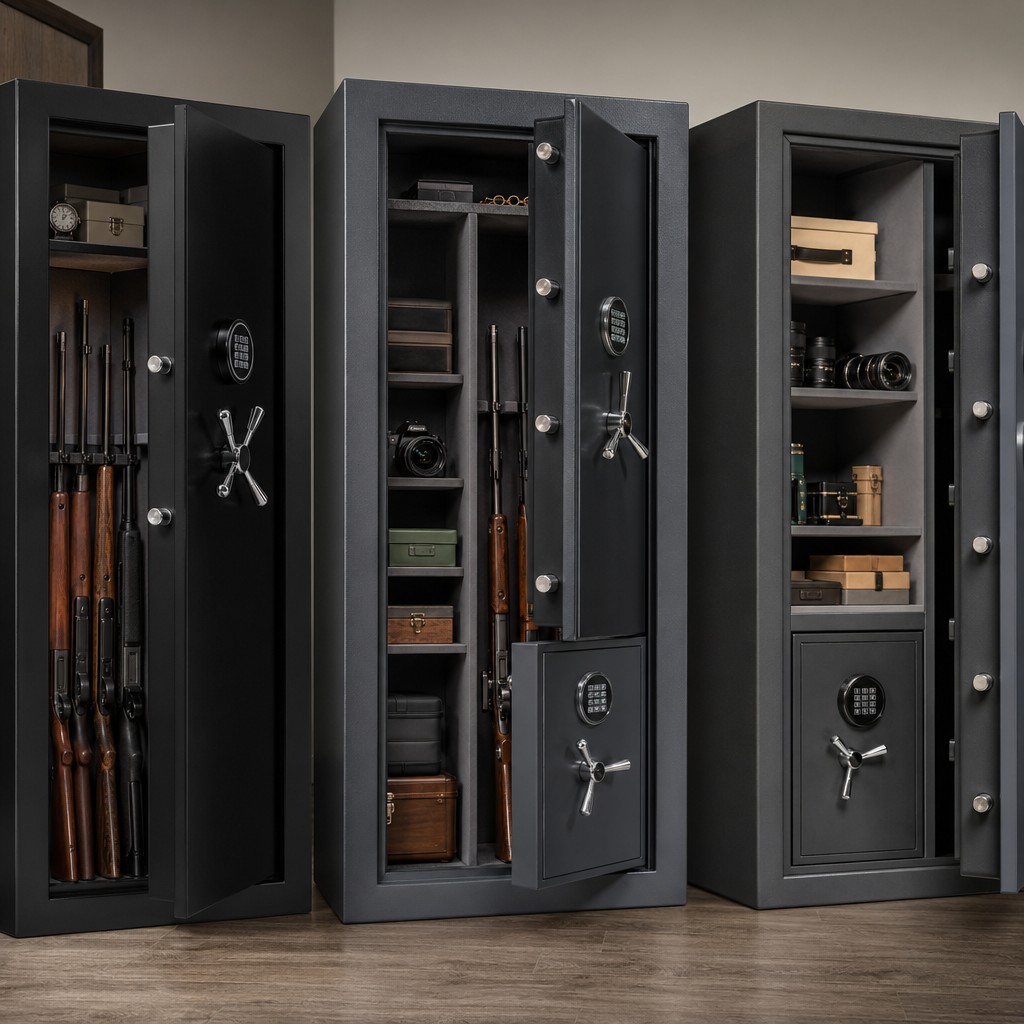
Choosing among gun safes that offer dual-locking compartments is more complex than comparing capacity, steel thickness, and a price tag. A dual-locking gun safe includes two independently secured areas inside one enclosure, typically separating firearms from ammunition, valuables, documents, or restricted-access handguns. In practice, I see buyers use these safes to solve three different problems at once: meeting household safety rules, organizing gear for faster retrieval, and limiting access for different users. That combination is why this category has become a serious buying consideration rather than a niche feature.
For a hub article on buying guides, the key question is simple: which dual-locking design fits your security needs, storage habits, and legal environment without creating frustration in daily use? The answer depends on lock type, compartment layout, fire protection, anchoring, and long-term reliability. A family storing hunting rifles, tax records, and a defensive handgun needs a different setup than a collector managing optics, suppressor paperwork, and ammunition inventory. Comparing these safes correctly matters because a poor choice can reduce readiness, increase unauthorized access risk, or waste money on features that do not match the owner’s routine.
When I evaluate this category, I treat dual-locking compartments as an access-control system, not just an organizational extra. Separate locking zones create layers: one layer for overall burglary resistance and another for internal permission control. That distinction is useful in homes with teenagers, multi-adult households, estate-management concerns, or shared hunting cabins. It also matters for owners who want a quick-access section for a carry pistol while keeping long guns and bulk ammunition behind a slower, more deliberate lock. Understanding those use cases is the foundation for buying intelligently.
What Dual-Locking Compartments Actually Mean
Not every safe marketed with “interior security” delivers true compartment separation. A genuine dual-locking gun safe has an outer safe door plus at least one internal compartment with its own lock, keypad, or keyed cam lock. In better designs, the inner section uses reinforced steel, tamper-resistant hinges, and a lock independent from the main body’s opening mechanism. Some models have a top interior locker for ammunition or documents. Others provide a side pistol vault, slide-out handgun drawer, or a second chamber hidden behind shelving. The strength of the concept is that opening the main safe does not automatically expose every stored item.
That distinction helps answer a common buying question: are dual-locking compartments more secure than shelves and pouches? Yes, because internal segregation changes who can access what. A shelf organizes items; a second lock restricts them. If one adult in the home needs access to long guns but not controlled medications, estate papers, or a defensive handgun reserved for another adult, a separate locked compartment becomes functionally important. It also supports more disciplined storage, such as keeping ammunition isolated from firearms or securing NFA paperwork, optics, and bolt assemblies apart from the guns themselves.
Construction quality varies sharply. Entry-level safes often use light-gauge steel for the internal locker, suitable for privacy and child deterrence but not strong enough to withstand determined prying. Mid-tier and premium safes may use thicker steel liners, welded seams, and better lock hardware. Brands frequently seen in this segment include Liberty Safe, Browning, Fort Knox, Rhino Metals, Winchester, and Sports Afield, though exact compartment designs differ by line. Buyers should inspect whether the inner lock is merely a tubular key on a thin box or a sturdier assembly integrated into the safe’s frame.
Who Benefits Most From This Safe Design
Dual-locking compartments are most useful for households with layered access needs. Parents often want one zone for sporting rifles and another for a home-defense handgun that remains unavailable to older children even if they know the primary combination. Collectors benefit because expensive optics, serialized accessories, rare pistols, and documents can be isolated from frequently handled firearms. In my experience, organized separation also reduces damage: a locked interior box keeps small valuables from shifting around rifle stocks, bipods, slings, and cleaning gear.
These safes are also practical in homes where more than one adult uses firearms differently. One spouse may need occasional access to hunting guns, while the other wants exclusive control over personal documents, jewelry, or a carry pistol. In a ranch, lodge, or cabin environment, the main safe can hold communal long guns, while a second compartment protects owner-only items. This arrangement is not a substitute for legal advice, but it can support safer household access boundaries and easier compliance with internal family rules or employer policies for off-duty equipment storage.
Another strong use case is staged access. For example, many owners prefer a quick-access handgun vault in the bedroom and a full-size safe elsewhere. A dual-locking long-gun safe can consolidate both roles when space is limited. The main section stores rifles and shotguns, while an internal compartment secures a handgun, passport, cash reserve, or emergency documents. That setup is particularly valuable in apartments, closets, and smaller homes where adding multiple standalone safes is impractical. The benefit is efficiency, though buyers must be realistic: an internal compartment is convenient, but it may not match the speed of a dedicated bedside handgun safe.
How To Compare the Most Important Buying Criteria
The best way to compare gun safes that offer dual-locking compartments is to evaluate six criteria together: burglary resistance, fire protection, lock architecture, storage layout, anchoring options, and service support. Focusing on only one factor, such as advertised fire minutes, often leads to a poor overall purchase. A safe with an impressive heat rating but weak boltwork or a flimsy inner locker may fail your real-world needs. Likewise, a heavy steel body with a cheap electronic keypad can become a daily headache if lockouts, battery issues, or service delays occur.
Steel thickness remains one of the clearest indicators of body strength. Many consumer gun safes use 14- to 12-gauge bodies, while stronger residential security containers move into 10-gauge or thicker. Door construction matters as much as the body. Composite doors with plate steel, hard plates protecting the lock, and active locking bolts on multiple sides generally outperform simple panel doors. For internal compartments, ask whether the box is welded or spot-fastened, whether the lock is shielded, and whether the compartment can be removed or bypassed after the main safe is opened.
Fire ratings deserve skepticism and context. Manufacturers often publish ratings based on proprietary testing rather than a common independent protocol. That does not mean the ratings are meaningless, but buyers should examine details such as test temperature, duration, internal temperature threshold, and whether the safe was tested as a complete unit. For document storage, maintaining interior temperatures below roughly 350 degrees Fahrenheit matters. For digital media, acceptable temperatures are even lower. If your inner compartment will hold passports, deeds, and backup drives, fire protection should be evaluated as seriously as theft resistance.
| Buying factor | What to check | Why it matters in a dual-locking safe |
|---|---|---|
| Outer lock | Mechanical dial, electronic keypad, or biometric reliability | Controls primary access and determines daily convenience |
| Inner lock | Keyed cam, tubular key, keypad, reinforced housing | Defines whether the second compartment is true security or basic privacy |
| Steel and door design | Body gauge, door plate, relocker, hard plate, bolt coverage | Protects the whole safe from pry and drill attacks |
| Layout | Rifle spacing, shelf adjustability, compartment location | Affects access speed, optic clearance, and usable capacity |
| Fire protection | Test method, seal type, insulation layers, stated limits | Protects documents and valuables stored in either zone |
| Installation | Anchor holes, concrete or wood-floor mounting plan | Prevents removal of the safe and improves attack resistance |
Lock Types, Access Speed, and Reliability Tradeoffs
Lock choice shapes the ownership experience more than most buyers expect. Mechanical dial locks remain the benchmark for long-term durability and low dependence on electronics. They are slower but proven, and many owners trust them for primary compartments that do not need emergency speed. Electronic keypad locks dominate current retail models because they are fast, easy to use, and simple for multiple adults to share. Quality varies dramatically, however. A lock from Sargent and Greenleaf, SecuRam, or La Gard inspires more confidence than an unbranded keypad with limited support and unclear failure history.
Biometric options are common on interior handgun boxes and some quick-access sections. They can work well when sensors are consistent and enrollment is done properly, but they should be treated cautiously in humid garages, dusty utility rooms, or high-use households where fingers are wet, dirty, or gloved. I generally recommend that any biometric compartment also include a reliable keypad or key override, and that buyers test access from awkward positions and low light. Fast access is only useful if the lock opens predictably under stress.
Dual-locking designs also raise battery-management and redundancy questions. If the outer safe uses an electronic keypad and the inner compartment uses another battery-powered lock, maintenance doubles. That is manageable, but only if you establish a replacement schedule and keep override procedures documented. Some owners intentionally pair a mechanical outer lock with an electronic inner compartment, creating a slower main barrier and a faster protected-access zone inside. Others prefer the reverse for convenience. There is no universal best setup; the right configuration depends on whether your priority is emergency retrieval, controlled sharing, or maximum simplicity.
Size, Layout, and Real Capacity
Safe capacity claims are routinely optimistic. A “24-gun” safe rarely holds 24 modern long guns comfortably if several have scopes, oversized bolt handles, bipods, slings, or AR-style accessories. In a dual-locking model, internal compartments consume cubic space and can interfere with barrel rests, shelf positions, and door organizers. That makes layout review essential. Buyers should look for actual interior dimensions, not just external measurements and headline capacity. If possible, map your firearm collection by type and height before shopping.
Compartment placement matters. A top interior locker is common because it leaves rifle storage mostly intact, but it can reduce room for taller firearms. Side compartments may preserve vertical rifle space while narrowing shelf width. Drawers and slide-out handgun modules improve organization yet can create conflicts with door pouches and scoped-rifle clearance. When I help buyers compare models, I ask them to think in terms of use cycles: which items are accessed weekly, monthly, or only in emergencies? The most-used items should not require unloading half the safe to reach them.
Plan for growth. Most owners underestimate future storage needs, especially once they add optics, suppressor accessories, magazines, hard drives, cash, passports, and heirloom items. A practical rule is to buy one size larger than your current collection suggests. In this category, that advice is even more important because the second locking zone reduces flexibility. Oversizing also helps airflow and dehumidification, both of which protect metal finishes, wood stocks, and paper documents over time.
Fire, Moisture, Installation, and Long-Term Value
A safe comparison is incomplete without considering environmental protection and installation. Fireboard insulation, intumescent door seals, and reinforced door gaps all contribute to heat resistance, but moisture control is equally important for gun safes. Basements, garages, and exterior-wall closets often experience condensation swings that cause rust and mildew. Dual-compartment designs can trap stagnant air in the inner section, so a dehumidifier rod, rechargeable desiccant, or climate-controlled room may be necessary. If the interior locker will store paperwork, adding sealed document sleeves is a sensible extra layer.
Anchoring is nonnegotiable. Even a heavy safe can be tipped, pried, or removed with dollies if left unsecured. Most residential models include predrilled anchor holes for concrete or wood subfloor installations. Concrete slab anchoring usually provides the strongest result. In closets with raised flooring, reinforcement may be necessary. I have seen buyers overspend on upgraded locks while ignoring installation, even though unanchored safes are easier to attack. Placement also matters: tight corners and recessed closet positions reduce pry-room and improve security.
Long-term value comes from matching build quality to risk level. If your goal is child resistance, organized storage, and modest burglary deterrence, a well-made residential security container with a solid inner locker may be sufficient. If you are storing high-value collections, rare handguns, or irreplaceable documents, consider stepping up to stronger steel, upgraded locks, and possibly separate dedicated safes for different asset classes. Compare warranties, lock replacement support, moving logistics, and local servicing before buying. Start by listing what must be accessed quickly, what must stay separately locked, and what loss would hurt most.
Frequently Asked Questions
What is a dual-locking gun safe, and how is it different from a standard gun safe?
A dual-locking gun safe is designed with two separately secured compartments inside one overall safe body. Instead of opening a single interior space and giving full access to everything stored inside, it allows you to control access to different categories of items independently. In practical terms, one compartment might hold long guns, while the second locked section stores ammunition, handguns, documents, cash, optics, or other valuables. That distinction matters because many buyers are not simply trying to store firearms; they are trying to create layers of access inside one footprint.
Compared with a standard gun safe, the biggest advantage is selective access. A conventional safe may be secure from outsiders, but once it is opened, all contents are generally available at the same time. With a dual-locking design, one user can access a certain section without automatically reaching everything else. That is useful in households where one adult should access defensive firearms but not sensitive paperwork, or where ammunition should remain separately secured from long guns to support a particular safety routine. It also helps when owners want to limit access to a small group of high-value items without buying a second full-size safe.
Another difference is organizational efficiency. A dual-locking layout often reduces clutter and improves retrieval because gear is intentionally divided by use, risk level, or user permission. Instead of stacking documents beside ammo cans or placing a quick-access handgun case on a shelf above rifles, the safe itself creates structure. When comparing models, it is smart to look beyond the label and study how the compartments are actually built, how each section locks, whether the divider is truly reinforced, and whether the internal layout matches how you plan to use it day to day.
Who benefits most from a gun safe with dual-locking compartments?
These safes are especially useful for buyers trying to solve more than one storage problem at once. The most obvious fit is a household that needs different access levels for different items. For example, a primary owner may want immediate access to one compartment for a defensive handgun or frequently used gear, while another section remains restricted for ammunition, legal documents, collectibles, or firearms that should not be accessed casually. That setup can support household rules without requiring multiple large safes in different rooms.
They also make sense for owners who care about organization and retrieval speed. If you hunt, shoot recreationally, and also keep emergency valuables secured, a dual-locking model lets you separate equipment by purpose. One side can be set up for range use, cleaning supplies, and hearing protection, while the other stores passports, family records, jewelry, or reserve cash. This kind of separation reduces digging through crowded shelves and lowers the chance of mishandling items when you are in a hurry.
Another strong use case is shared environments. In homes with teenagers, extended family, roommates, or frequent visitors, selective access becomes more important. Even in homes where everyone is trustworthy, not everyone should necessarily have access to every item. A dual-locking safe can create a practical middle ground between full access and total lockout. It is also appealing for buyers with limited floor space, because it can replace the need for a dedicated document safe and a separate firearm safe. That said, the best candidate is someone who will actually use the two compartments intentionally. If you just want raw gun capacity and do not care about access separation, a traditional single-interior safe may offer better value for the money.
When comparing dual-locking gun safes, what features matter most besides steel thickness and capacity?
The most important question is whether the two compartments are meaningfully independent, not just visually separated. Some models include a simple lockbox or thin internal cabinet that adds convenience but does not offer the same level of security as a reinforced, independently locked section. Look closely at how the divider is constructed, what material is used, whether the inner compartment is pry-resistant, and whether access to one section compromises the other. A true dual-locking design should create real separation, not just an internal shelf with a small door.
The lock configuration also deserves close attention. You want to know whether both compartments have separate locking mechanisms, whether those locks are electronic, mechanical, or biometric, and how reliable they are under repeated use. In many cases, the outer door protects the entire safe while an inner compartment adds a second layer. In other models, separate inner sections may each have their own access method. Think through how you will use the safe in real life. If one compartment is intended for defensive access, lock speed, keypad placement, battery serviceability, and low-light usability matter a great deal more than they do for document storage.
Interior layout flexibility is another major factor. Adjustable shelving, removable racks, door organizers, handgun holsters, and modular dividers can make a huge difference in how useful the safe remains over time. Firearm collections, family needs, and storage priorities change. A layout that looks efficient in a showroom may become frustrating once you add optics, magazines, paperwork, and accessories. Also evaluate anchor options, fire sealing, humidity management, and overall footprint. Some dual-locking safes lose usable long-gun space because the second compartment consumes the best internal real estate. The right choice is not the model with the most features listed on paper; it is the one whose compartment design, access control, and usable storage space genuinely match your storage routine.
Are dual-locking compartments better for firearm safety and legal compliance?
They can be, but the answer depends on your local laws, your household structure, and how the safe is used. From a safety standpoint, dual-locking compartments can support stronger storage habits by separating firearms from ammunition, isolating restricted-access handguns, or protecting sensitive valuables from anyone who is permitted to access the main safe but not everything inside it. That extra layer can help reduce unauthorized handling, especially in homes where multiple adults share storage responsibilities or where certain items require more controlled access than others.
For legal compliance, however, you should not assume that a dual-locking design automatically satisfies every requirement. Firearm storage laws vary by state, province, and locality, and some rules focus on preventing access by minors, some address loaded firearms, and others define what qualifies as a locking device or secure container. A dual-compartment layout may help you meet your own household rules very effectively, but whether it satisfies a legal standard depends on the law itself, the safe’s construction, and how you store the contents. For example, separating ammo from firearms may be a best practice in one household, but it is not a universal legal requirement everywhere.
The best approach is to treat a dual-locking safe as a tool that can improve compliance strategy, not replace legal due diligence. Check the relevant regulations where you live, verify whether anchoring, lock type, or construction standards are specified, and think about who needs access to what. In many cases, these safes are excellent for creating practical control layers that make safe storage easier to maintain consistently. And consistency is critical. A highly secure system only helps if it is convenient enough that you use it properly every day.
Is it better to buy one dual-locking gun safe or two separate safes?
That depends on your priorities for space, budget, access control, and risk management. A dual-locking gun safe is often the better choice when you want centralized storage in one location and need internal separation without giving up too much floor space. It simplifies installation, usually costs less than buying two quality safes of similar combined utility, and keeps firearms, ammunition, valuables, and documents organized within one anchored unit. For many households, that balance of convenience and layered access is exactly the point.
Two separate safes can be the better solution when you want complete physical separation rather than compartmental separation. For example, if you want documents in a dedicated fire-rated safe in one room and firearms in a heavier gun safe elsewhere, two units may provide better specialization. Separate safes can also improve resilience if one lock fails or one location is compromised. In some households, putting a small quick-access handgun safe in the bedroom and a larger long-gun safe in another area makes more functional sense than relying on a single all-in-one unit.
The tradeoff is complexity and cost. Two safes require more room, more installation planning, potentially more anchoring work, and often more total expense for comparable build quality. A dual-locking gun safe is usually the strongest value when your goal is to manage different access levels inside one secure enclosure. Two separate safes make more sense when your storage needs are truly distinct and benefit from different safe types, different locations, or different levels of fire and burglary protection. The key is to map your real use case first: who needs access, what needs to be separated, how quickly certain items must be reached, and whether one footprint or multiple locations better support safe, consistent storage.