
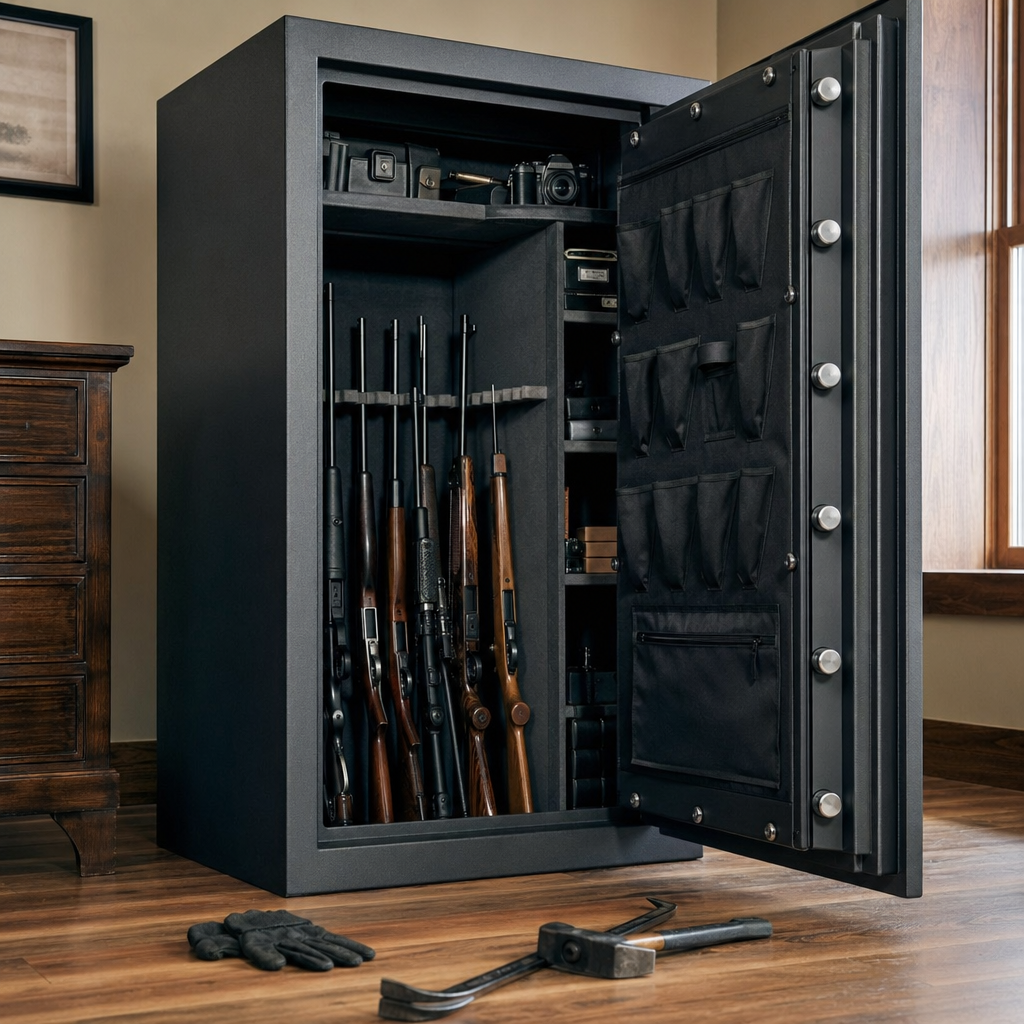
Choosing a gun safe that resists pry bars and hammers starts with understanding a hard truth: most break-ins are fast, noisy, and brutally simple. In my experience evaluating safes for homeowners, hunters, collectors, and small firearm retailers, thieves rarely arrive with exotic tools. They bring screwdrivers, wrecking bars, claw hammers, small sledgehammers, and enough time to attack weak doors, exposed gaps, and flimsy frames. A good buying decision is not about marketing terms like “military style” or “heavy duty.” It is about how a safe’s steel thickness, door construction, bolt system, lock protection, body design, anchoring method, and fire insulation work together under force. If you are shopping within the Gun Safes & Safety category, this buying guide should be your hub because it explains the core criteria that influence every related purchase, from compact handgun safes to full-size long-gun cabinets. It also answers the key question directly: what makes a gun safe resistant to pry bars and hammers? The answer is structural integrity. A pry-resistant safe minimizes leverage points, uses thicker steel, reinforces the door opening, and secures the body so attackers cannot tip, peel, or spread it. A hammer-resistant safe protects its lock, hardplate, relocker, hinges, and seams from impact designed to deform components or expose the boltwork. When you know what to inspect, you can separate real security from decorative sheet metal.
This matters because residential burglary remains a crime of opportunity, and firearm theft carries consequences beyond property loss. Stolen guns can be trafficked, used in violent offenses, or create liability and trauma for the owner. A safe also supports safe storage obligations, insurance requirements, and child-access prevention. Yet many buyers focus on capacity, shelving, or paint finish before asking the most important question: how does this safe fail when someone attacks it with common hand tools? The best buying guides start there. They define practical security levels, explain construction details in plain language, and help you match protection to risk, budget, and installation conditions. That is the goal of this article. By the end, you will know how to judge steel gauge correctly, why door gaps matter, when external hinges are acceptable, how lock types compare, which certifications deserve attention, and why anchoring often determines whether an otherwise solid safe survives a real burglary attempt.
Start with the attack you are trying to stop
If you want a gun safe resistant to pry bars and hammers, picture the actual attack sequence. The intruder usually tries the easiest path first: tipping the safe, attacking the door edge, striking the lock area, or working a bar into the frame gap. That means your first buying filter should be burglary construction, not interior accessories. I tell buyers to evaluate safes in four layers: body steel, door assembly, lock and relocker protection, and installation. If one layer is weak, the others can be bypassed. A safe with a thick door but thin body can be peeled from the side. A strong body with a weak frame can be spread open at the opening. A good lock without a hardplate can be smashed or drilled more easily. An excellent safe left unanchored can be laid on its back, where pry attacks become more effective because the attacker can use body weight against the door seam.
Real-world examples make this clear. I have seen entry-level residential security containers fail because the top corner of the door had enough flex for a 24-inch pry bar to create separation. Once the frame spread slightly, the locking bolts no longer mattered. I have also seen thicker-bodied safes survive repeated hammering because the lock was shielded by a hardened steel plate and the relocker engaged when the mechanism was disturbed. The lesson is simple: look for resistance to leverage and impact at the points where thieves actually strike, not just where brochures place the biggest number.
Understand steel thickness, body construction, and why gauge can mislead
Steel thickness is one of the clearest indicators of pry resistance, but many shoppers misunderstand gauge ratings. With sheet steel, a lower gauge number means thicker steel. Twelve-gauge steel is thicker than fourteen-gauge; ten-gauge is thicker than twelve-gauge. For many residential gun safes, fourteen-gauge bodies are common at the low end, twelve-gauge is a more serious minimum, and ten-gauge or thicker bodies provide a meaningful step up in resistance to bending and peeling. For doors, composite construction or plate steel matters more than a simple gauge claim. A door built from multiple layers with reinforcement in the lock area and frame can outperform a thin decorative panel attached to drywall-based fireboard.
You should also ask whether the safe uses formed body construction or assembled panels with visible weak seams. Continuous welds at critical joints are preferable to sparse stitch welds. The body should feel rigid, not drummy or flexible, and the door opening should have a reinforced return or stepped profile that reduces exposed pry points. Many buyers ignore the frame, but that is where pry attacks win. A recessed door, tighter door gap, and robust jamb reduce the ability to insert a bar and build leverage. If a retailer allows inspection, shine a light along the perimeter. Large, uneven gaps are a warning sign.
| Feature | Better for pry-bar resistance | Why it matters |
|---|---|---|
| Body steel | 10-gauge to 12-gauge steel | Resists bending, peeling, and spreading better than thinner shells |
| Door design | Reinforced plate or composite door with tight gap | Limits bar insertion and reduces edge flex |
| Frame/jamb | Stepped or recessed opening with continuous welds | Harder to attack than flat, exposed seams |
| Lock protection | Hardplate plus relocker | Defends against impact and lock defeat attempts |
| Anchoring | Bolted to concrete with proper hardware | Prevents tipping and improves real-world burglary resistance |
Evaluate the door, boltwork, hinges, and lock protection as a system
The door is the most attacked part of any gun safe, so inspect it as a complete system rather than counting bolts. Marketing often highlights “ten locking bolts” or “fourteen live bolts,” but bolt count alone does not determine security. What matters is bolt diameter, bolt engagement depth, the strength of the bolt carriage, and whether the frame around those bolts resists spreading. In many pry attacks, bolts remain intact while the door edge flexes enough to slip past them. That is why a stronger door edge and jamb usually matter more than inflated bolt numbers.
Hinges also create confusion. External hinges are not automatically insecure. On a well-designed safe, removing an exposed hinge does not free the door because fixed dead bars or interlocking profiles on the hinge side keep the door captured. External hinges can even allow a wider door swing, which many owners prefer for long-gun access. The real concern is whether the hinge side has protection against prying and whether the door fit remains tight. Internal hinges can reduce exposure, but they are not a substitute for strong construction.
For hammer resistance, pay close attention to the lock area. A quality safe should include a hardplate, usually hardened steel positioned to resist drilling and blunt-force attack around the lock. Better safes also include a relocker, a secondary mechanism that triggers if the primary lock is punched, drilled, or forcibly displaced. This feature matters because impact attacks often aim to shock or deform the lock body. If the relocker activates, boltwork remains secured even when the lock is compromised. Ask the dealer specifically: does this model use a hardplate, a relocker, or both? If the answer is vague, keep shopping.
Choose the right lock type and recognize the tradeoffs
Both mechanical dial locks and electronic keypad locks can secure a pry-resistant and hammer-resistant gun safe, but they have different strengths. A quality mechanical lock from established manufacturers such as Sargent and Greenleaf or La Gard is durable, proven, and not dependent on batteries. It is slower to open and less convenient for multiple users, but it has an excellent long-service reputation when properly maintained. Electronic locks offer faster access, easier code changes, audit features on some commercial-grade models, and better everyday usability for many households. However, they depend on electronics, and quality varies sharply by brand and model.
In practice, the lock is only as good as the protection around it. A premium electronic lock mounted behind a weak door skin is still vulnerable. Likewise, an old mechanical dial without a relocker or hardplate can be less resilient than a modern protected keypad system. For gun safes intended for home use, I advise buyers to prioritize reputable lock manufacturers, EMP-resistant claims only when documented, and easy battery replacement from the exterior without exposing internal components. Avoid no-name electronic locks on bargain safes. When you compare models, ask about lock certification, warranty support, and field service availability in your area. Security includes the ability to repair the safe without destructive opening if something fails years later.
Look for recognized standards, but know what they do and do not prove
Certifications help, but they must be interpreted correctly. Many gun safes sold in the consumer market are classified as Residential Security Containers under UL 1037 rather than true high-security burglary safes with TL ratings such as TL-15 or TL-30. An RSC rating indicates the unit has passed a limited attack test using common hand tools for a specified period. That is more meaningful than no rating at all, but it is not the same as a commercial burglary safe tested against sustained expert attack. Some higher-end gun safes now carry enhanced ratings like RSC Level II, which generally indicates stronger resistance. If your budget allows, these models deserve serious consideration.
Fire ratings deserve equal skepticism. Manufacturers often advertise ninety-minute or two-hour fire ratings, but testing protocols vary widely. Fire protection matters, yet it should not distract from burglary resistance if pry bars and hammers are your primary concern. In fact, some heavily marketed fire linings add bulk without improving structural strength. Read test details if available: what temperature curve was used, was there third-party validation, and how was internal temperature measured? The brands that publish specifics usually inspire more confidence than those relying on vague claims. Also remember that moisture from fireboard and temperature swings can affect firearms. A dehumidifier, desiccant, and regular inspection remain essential even in a rated safe.
Installation and anchoring often determine whether the safe survives an attack
I have seen mediocre safes perform acceptably when expertly installed, and good safes fail because they were left freestanding in a garage. Anchoring is not optional if you care about pry resistance. Once a thief tips a safe onto its back, the door seam becomes easier to attack with body weight and longer leverage. Bolting the safe to concrete with manufacturer-approved anchors dramatically increases the work required. If the safe sits on a wood floor, anchoring into structural members or adding a reinforced base can still help, but concrete is preferable whenever possible.
Placement matters too. A safe installed in a tight closet alcove with limited side clearance is harder to attack than one displayed in open space. Surrounding walls can deny room for long pry bars. The best home installations use concealment, constrained access, solid anchoring, and, ideally, monitored security layers such as alarms and cameras. Avoid garages if you can, because garages often provide privacy, tools, and easier removal routes. If garage placement is unavoidable, elevate the safe slightly above potential water intrusion, manage humidity, and add lighting and surveillance. Security is cumulative. The safe should slow and frustrate the intruder long enough for detection or abandonment.
How to compare brands, pricing tiers, and the right fit for your buying guide shortlist
When building a shortlist, compare safes by burglary construction first, then by storage needs, then by finish and accessories. In the entry tier, many products are better described as cabinets or light residential containers. They may deter children and casual theft, but they are less convincing against determined pry-bar attacks. In the mid-tier, you start seeing twelve-gauge or thicker bodies, better door reinforcement, upgraded boltwork, and more credible lock protection. In the premium tier, expect thicker plate, composite doors, stronger jambs, better weld quality, and more transparent testing. Brands frequently discussed by serious buyers include AMSEC, Fort Knox, Liberty, Browning, Rhino, and Hollon, though model-specific construction varies and should always be verified.
Do not buy solely by exterior dimensions or stated gun count. Gun counts are usually optimistic and assume slim, unscoped rifles packed tightly together. Buy more capacity than you think you need, but do not sacrifice steel for cubic feet if pry resistance is your priority. Ask dealers for body gauge, door construction details, hinge-side protection, hardplate type, relocker count, anchor hole configuration, and gross weight. Weight alone is not proof of strength, but extremely light safes in large footprints often indicate thinner steel or heavy reliance on fireboard rather than burglary-resistant material. Finally, inspect warranty terms, dealer delivery practices, and local service support before purchasing.
The best gun safe buying guide ends with a practical rule: choose the strongest construction you can afford, then install it so a thief cannot use space, time, and leverage against you. Focus on ten- or twelve-gauge bodies, reinforced doors with tight gaps, hardplate and relocker protection, credible certification, and proper anchoring. Ignore inflated bolt counts and decorative features if the frame and shell are weak. A pry-bar-resistant and hammer-resistant gun safe is not defined by one specification; it is defined by how well every component works together under attack. Use this hub as your starting point for every Gun Safes & Safety purchase decision, then compare specific models with these criteria in hand. If you are shopping now, make a shortlist, ask the construction questions above, and refuse to buy until the answers are concrete.
Frequently Asked Questions
What features actually make a gun safe resistant to pry bars and hammers?
A pry-resistant, impact-resistant gun safe is built around structural strength, not marketing language. The first thing to evaluate is the door construction. Many break-ins succeed because the door flexes under prying pressure, allowing the locking bolts to slip or the frame to deform. A stronger safe will usually have a thick steel door, reinforced door edges, and a body that does not leave obvious attack points around the seams. Look closely at the door gap as well. Large, exposed gaps make it easier for a thief to insert a screwdriver, crowbar, or wrecking bar and start peeling the door away from the frame.
The frame matters just as much as the door. A safe with a thin body and a stronger-looking door can still fail if the frame bends when struck or pried. Better designs use reinforced door jambs, stronger corner construction, and anti-pry tabs or return bends that reduce leverage opportunities. Internal hinges or protected external hinge designs can also help, but hinge style alone does not determine security. In many attacks, thieves ignore the hinges and go straight for the side of the door where flex and leverage are easiest.
Locking bolt design is another key factor, but bigger is not always better. What matters is how the bolts engage into a strong frame and whether the safe resists door flex. Some lower-quality safes advertise many locking bolts, yet still fail because the steel around them is too thin. A better safe combines solid steel thickness, reinforced bolt areas, and a rigid structure that stays aligned under force. For hammer resistance, the lock area should also have hard plate protection and relocking features that make it harder to disable the lock by impact or punch attacks.
Finally, weight and anchoring play a major role. Even a decent safe becomes vulnerable if thieves can tip it over and attack it from weaker angles. A safe that is properly bolted to concrete or another solid surface is much harder to pry open because it cannot be repositioned for leverage. In practical terms, the best pry-bar and hammer resistance comes from a combination of thick steel, a tight door-to-frame fit, reinforced construction, protected lock components, and secure installation.
How can I tell whether a gun safe is truly well built instead of just heavily marketed?
The best way to judge build quality is to ignore vague labels and inspect measurable details. Terms like “tactical,” “premium,” “military style,” or even “heavy-duty” do not tell you how a safe performs against common forced-entry tools. Start by asking for the steel thickness of both the door and the body, and make sure the seller is clear about whether that measurement refers to actual steel or a composite assembly. Some products sound impressive in advertisements but use thin steel shells with cosmetic reinforcement rather than real structural strength where it counts.
Pay attention to the door gap, the frame design, and the overall rigidity of the safe. If you can see a wide seam around the door, that is a warning sign. If the corners look lightly formed or the body panels seem easy to flex, that should also raise concern. Quality safes tend to feel rigid, substantial, and precise. The door should close solidly without looseness, and the locking system should engage smoothly without feeling fragile. If possible, inspect the inside edge of the door and frame to see whether there are anti-pry features that reduce direct tool access.
Independent testing and burglary ratings are extremely useful when available. A safe with recognized third-party testing generally gives you more confidence than one relying only on brand claims. That said, many residential gun safes are not held to the same standards as high-security commercial burglary safes, so buyers need to be realistic. A well-built residential safe can still offer strong resistance to smash-and-grab attacks and short-duration pry attacks, but that is different from claiming it is impenetrable.
Another practical step is to look for real-world reviews from owners, locksmiths, safe technicians, and installers rather than only influencer content or brand-sponsored videos. Professionals who move, open, repair, and evaluate safes often notice recurring weaknesses, such as poor welds, thin sidewalls, weak boltwork, or lock areas that are too exposed. In short, a trustworthy safe is supported by specific construction details, sound engineering, and credible evidence of resistance, not by oversized locking bolts and dramatic sales language.
Is thicker steel more important than locking bolts when choosing a gun safe for forced-entry resistance?
In most cases, yes. Steel thickness and structural design are more important than the number of locking bolts advertised on the door. Many buyers get drawn to safes with long rows of active bolts because they look secure, but locking bolts only matter if the surrounding steel and frame are strong enough to hold under attack. If a thief can pry the door edge, bow the frame, or peel back thin steel around the bolt channels, the presence of extra bolts does not solve the underlying weakness.
Thicker steel resists bending, tearing, and deformation from pry bars and hammer blows. When a thief attacks a safe, they are usually trying to create separation between the door and the frame. If that steel remains rigid, the attack becomes far more difficult and time-consuming. If the steel flexes, the lockwork can be defeated indirectly even if the bolts themselves never break. This is why a safe with fewer but well-supported locking points can outperform a safe with many bolts mounted in a weaker structure.
That does not mean bolts are unimportant. A good locking system should distribute pressure, engage securely into reinforced areas, and remain reliable over years of use. The strongest setups often combine robust boltwork with a reinforced door edge and substantial body steel so the door cannot be twisted out of alignment. You also want protection at the lock area itself, including hard plate and relocker features, because a hammer attack may target the lock or spindle area rather than trying to shear the bolts directly.
For practical buying decisions, prioritize a safe with a strong steel body, a reinforced door, a tight pry-resistant frame, and a proven lock setup over one that simply advertises a dramatic number of bolts. If forced-entry resistance is your concern, think like the attacker does: they are looking for flex, gaps, weak seams, and thin metal. A safe that denies those opportunities is usually the better choice, even if its spec sheet appears less flashy.
Does bolting down a gun safe really make a difference against pry attacks and hammer attacks?
Absolutely. Proper anchoring can make a major difference in how well a gun safe withstands real-world burglary attempts. Many thieves do not open a safe where it stands if they can avoid it. If the safe is not bolted down, they may tip it onto its back or side, where they can use body weight and tool leverage much more effectively. A standing safe in a corner presents one problem; a loose safe lying on the floor becomes a much easier target for pry bars, hammers, and even repeated kicks or sledge strikes.
Bolting the safe down limits movement, which is critical during an attack. Pry attacks depend on leverage, and leverage becomes much harder to generate when the safe cannot shift, rock, or fall. Anchoring also prevents thieves from carrying the safe away to open later in a garage, storage unit, or remote location where they have more time and less risk. This is especially important with lighter gun safes or entry-level models that may look substantial but can still be moved by two people with simple equipment.
Installation location also matters. A safe placed in a tight space, such as a closet corner or alcove, gives thieves less room to swing hammers or position pry bars. When paired with proper anchoring into concrete or another approved structural surface, that limited access can significantly improve your effective security. In my experience, placement and anchoring are often the difference between a safe that survives a rushed residential break-in and one that fails because it was easy to attack from all sides.
That said, anchoring is not a substitute for build quality. A poorly made safe that is bolted down is still a poorly made safe. The smartest approach is to choose a model with strong pry resistance, then install it so the thief loses mobility, leverage, and time. Security is layered, and anchoring is one of the most affordable, practical layers you can add.
What mistakes do buyers make when choosing a gun safe for protection against common break-in tools?
The biggest mistake is buying based on appearance, branding, or interior capacity before evaluating burglary resistance. Many people focus on glossy finishes, accessory door panels, lighting kits, and oversized stated gun counts while overlooking door construction, steel thickness, and frame strength. Those comfort and storage features are useful, but they do nothing to stop a pry bar from finding a weak seam. If the safe’s basic structure is compromised, the extras are irrelevant.
Another common mistake is assuming all large safes are secure safes. Size and weight can help, but they do not guarantee resistance to forced entry. Some large residential gun safes have broad doors, long seams, and relatively thin steel, which can create more attack surface rather than less. Buyers also tend to overvalue the number of locking bolts, external branding, or fire ratings while underestimating the importance of anti-pry design and lock protection. A safe can