
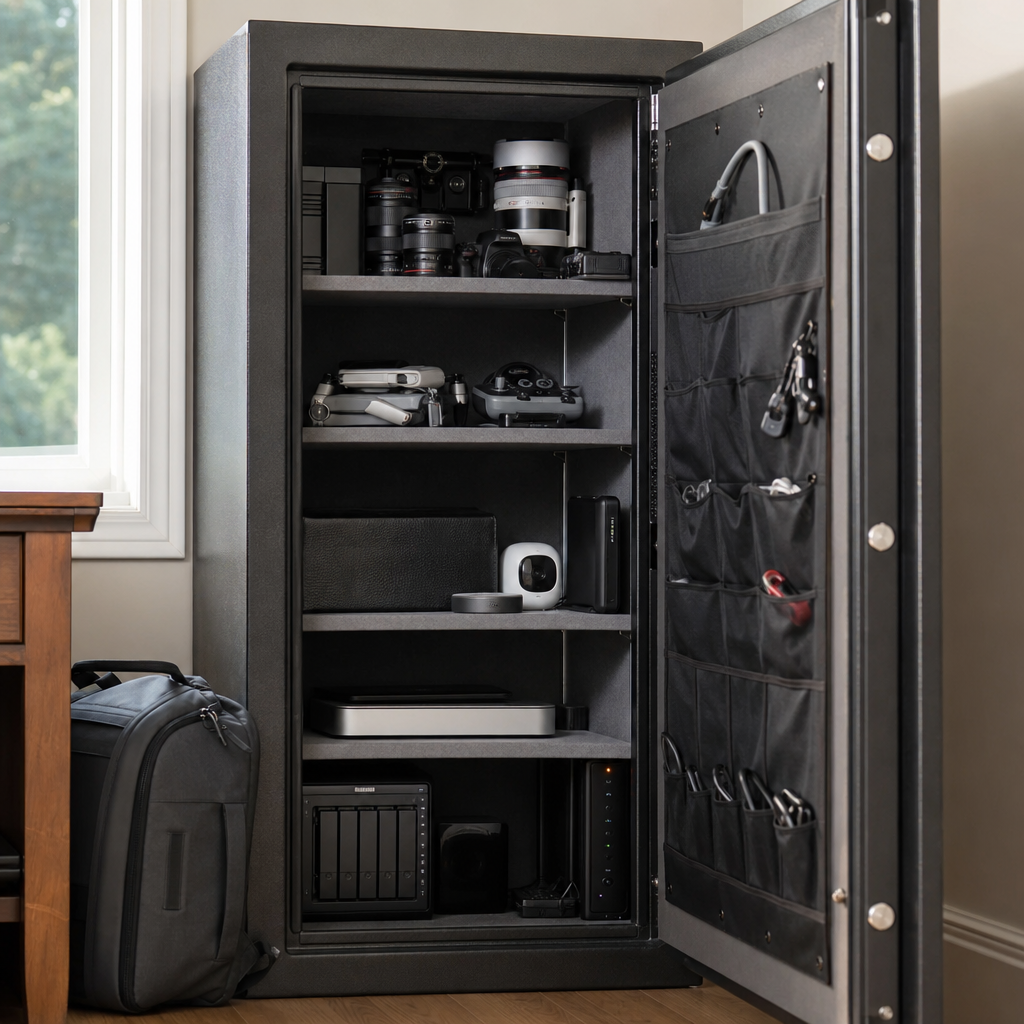
A gun safe can become an excellent secure electronics storage unit when you combine its steel shell, locking hardware, fire protection, and interior customization with the environmental controls that sensitive devices actually need. In practical terms, that means adapting a container designed for firearms into a hardened cabinet for laptops, external drives, cameras, radios, backup media, networking gear, and other valuables that benefit from both theft resistance and organization. I have helped clients make this conversion in home offices, workshops, and small businesses, and the successful projects all start the same way: define what you are storing, understand the safe’s limits, and modify the interior without compromising security. This matters because electronics are compact, expensive, data-rich, and often more vulnerable to humidity, heat, dust, and power issues than people expect. A safe can protect against opportunistic theft and some fire exposure, but only if the interior is set up for airflow, cable management, shelving, and moisture control rather than long-gun racks. For anyone researching custom and DIY gun safe modifications, this topic serves as the hub because the same principles—load planning, anchoring, interior reconfiguration, lighting, dehumidification, and access control—apply across nearly every safe upgrade. The difference is that electronics demand tighter environmental management, smarter organization, and more disciplined maintenance than firearms storage typically does.
Start with the safe’s structure, rating, and limitations
The first step is evaluating whether your current gun safe is suitable for electronics storage. Not every safe is. Many residential gun safes offer good deterrence against smash-and-grab theft but are not true high-security data safes. That distinction matters. A typical gun safe may have 12- to 10-gauge steel in the body, locking bolts on one to four sides, gypsum-based fire lining, and a fabric-covered interior. That package is useful, but electronics storage adds concerns about internal temperature rise, condensation, and cable routing. Before modifying anything, check the manufacturer’s documentation for fire rating, body thickness, anchor points, door clearance, shelf load limits, and whether drilling any new holes voids the warranty or weakens fire protection.
In real installations, I look at three questions first. How heavy is the safe and is it anchored to concrete or substantial framing? What is the fire rating and test method, if any? And what internal volume remains after removing gun racks and barrel rests? For electronics, internal geometry matters more than many buyers realize. Routers, NAS units, battery backups, camera cases, and document boxes need flat, stable shelving. A safe with a deep floor and adjustable shelves is easier to convert than one built almost entirely around rifle slots. If your safe lacks factory pass-throughs for power, adding them must be done carefully because every penetration can affect smoke sealing, insulation continuity, and security.
It is also important to set realistic expectations. A gun safe can be ideal for offline backups, cameras, drones, hard drives, rare parts, and inactive laptops. It is less ideal for electronics that generate continuous heat, require strong Wi-Fi, or need daily cable access. For example, storing a modem, switch, and UPS inside a fully sealed safe may create thermal buildup and signal attenuation. Steel blocks wireless performance, and even low-watt devices can heat a confined interior over time. Use the safe for physical security first, then decide whether specific devices belong inside full time or only during storage, travel, or after-hours lockdown.
Plan the interior like an equipment cabinet, not a gun locker
Once the safe is deemed suitable, strip the interior down to a blank layout. Remove rifle rests, barrel notches, and door organizers that interfere with shelves or bins. The goal is to create zones for categories of electronics rather than pile devices wherever they fit. In the best conversions, the lower section holds heavier items such as backup drives in cases, camera bodies in padded inserts, or power stations that are stored but not charged inside. The middle shelves carry frequently accessed devices. The upper area stores lighter accessories, manuals, and anti-static containers. Door panels can hold labeled pouches for cables, adapters, batteries removed from devices, and inventory sheets.
Use non-conductive, low-off-gassing materials whenever possible. Powder-coated steel shelving, sealed plywood, HDPE panels, closed-cell foam, and hook-and-loop dividers work well. Cheap open-cell foam can trap moisture and shed particles. Bare MDF can off-gas and absorb humidity. Carpet remnants and generic felt may hold dust and retain odors. If you are building custom shelves, calculate the load. A shelf carrying camera cases and hard drive boxes may be fine on simple brackets, but a shelf supporting a UPS or a heavy printer scanner battery module needs a clear weight rating. Soft-lined bins should still be rigid enough to keep devices from shifting when the door closes.
Labeling makes the safe far more usable. In home office projects, I recommend a simple map taped inside the door listing each shelf and item category, plus serial numbers for high-value equipment. This supports insurance documentation and reduces the time the safe stays open during access. If the safe is part of a wider storage strategy, dedicate one shelf to offsite-ready containers. For instance, a weather-resistant case with encrypted SSDs, passports, and a spare laptop can be grabbed quickly in an emergency. That kind of workflow is where thoughtful custom gun safe modifications deliver practical value beyond raw security.
Control humidity, condensation, and heat before storing devices
The biggest mistake I see in DIY gun safe modifications for electronics is assuming that a locking steel box with fireboard is automatically a good environment for sensitive devices. It is not. Electronics storage succeeds or fails on moisture and temperature management. Relative humidity inside the safe should generally stay around 35 to 50 percent for most consumer electronics, depending on your climate and the specific materials involved. Too much humidity promotes corrosion, mold on straps or cases, and oxidation on connectors. Too little is usually less damaging for inactive equipment, but static control becomes more important.
GoldenRod-style heating rods are commonly used in gun safes because they raise interior temperature slightly above ambient, reducing condensation. They can help, especially in basements or garages, but they are not a complete humidity solution. In many climates, I pair gentle heat with rechargeable desiccants or larger silica gel canisters and a digital hygrometer placed at mid-height. Hygrometers should be checked against a known reference periodically because inexpensive models drift. If humidity regularly exceeds target levels, the room itself may need correction through HVAC, a dehumidifier, or moving the safe away from exterior walls and slab moisture.
Heat requires a separate strategy. A powered safe interior can become warmer than expected, especially with networking gear, chargers, battery packs, or even task lighting left on continuously. Lithium-ion batteries deserve particular caution. They should not be charged inside a tightly enclosed safe unless the setup was deliberately engineered for thermal management and fire containment. In most residential conversions, the safer practice is to store batteries at partial charge in manufacturer-approved cases, inspect them regularly, and charge them outside the safe on a noncombustible surface. Keep vents on devices unobstructed, avoid packing gear edge to edge, and monitor internal temperature with a small sensor if anything remains powered for long periods.
Choose modifications that preserve security and improve daily use
Good safe modifications make access faster without creating new vulnerabilities. Interior LED lighting is one of the highest-value upgrades because electronics are often small and black, with labels hidden in shadows. Use low-heat LEDs with a door-activated switch or motion sensor rated for enclosed spaces. Magnetic strips can work on steel interiors, but mechanically secured channels are more durable over time. If you need power inside the safe for a hygrometer, low-watt light, or temporary device setup, use a factory power port if available. If none exists, ask the manufacturer about approved locations and grommet kits before drilling. Random penetrations through the body or door can reduce both security and fire performance.
Locking method matters too. Electronic keypad locks are convenient for frequent access, but they require battery maintenance and should come from established lock makers such as Sargent and Greenleaf, SecuRam, or La Gard. Mechanical dial locks remain reliable for low-frequency access and avoid battery issues, though they are slower. For high-value electronics, I also recommend changing factory default codes, documenting the lock model, and keeping override procedures in a secure separate location. If multiple family members or staff need access, define who can enter the safe and when. A safe loses much of its benefit when combinations are casually shared.
Anchoring is nonnegotiable. Electronics are dense and resalable, which makes even a heavy safe attractive to thieves if it is not bolted down. Most residential gun safes should be anchored to concrete with manufacturer-approved wedge anchors or to structural framing using appropriate hardware where allowed. Positioning also matters. Closets, interior rooms, and locations out of direct sight reduce attack opportunity. Avoid damp corners, unconditioned garages in humid regions, and spots with direct sun that drive internal temperature swings.
| Modification | Main benefit | Best use case | Watch out for |
|---|---|---|---|
| Adjustable steel or sealed wood shelves | Creates flat, stable storage for devices and cases | Laptops, drives, cameras, radios | Overloading weak brackets |
| LED interior lighting | Improves visibility and access speed | Frequent retrieval of small electronics | Cheap adhesive strips failing in heat |
| Heating rod plus desiccant | Reduces condensation and humidity spikes | Basements, coastal climates, seasonal swings | Assuming it solves all moisture problems |
| Door organizer with labeled pouches | Keeps cables and accessories sorted | Chargers, adapters, memory cards | Blocking shelf clearance or door seal |
| Factory-approved power pass-through | Allows monitored low-watt devices inside | Hygrometers, temporary charging setup | Unauthorized drilling that voids warranty |
Build a storage system for specific electronics categories
Not all electronics should be stored the same way. Laptops and tablets do best in padded sleeves stored vertically or flat with pressure kept off screens. External hard drives and SSDs should be kept in anti-static or protective cases, clearly labeled with backup dates and encryption status. Cameras benefit from divided padded inserts and lens caps kept on, with silica packs nearby but not loose against glass. Handheld radios and satellite messengers should have batteries removed if they will sit for extended periods, unless the manufacturer specifies otherwise. Cables should be coiled loosely with hook-and-loop ties, not tightly bent with zip ties that stress conductors.
For media preservation, think beyond the device itself. If the safe holds family photos, tax records, or business backups, use a layered approach: encrypted cloud backup, one local working copy, and one offline copy in the safe. This is more dependable than trusting a single hard drive in a fire-rated gun safe. Most gun safe fire ratings are based on paper survivability, not data media. Magnetic disks, SSDs, and optical media often have lower heat and humidity tolerance than documents. If digital preservation is critical, consider adding a dedicated media-rated insert or smaller data safe inside the gun safe for an extra thermal buffer.
Small business users often convert a gun safe into an after-hours electronics locker for checkout devices, barcode scanners, portable projectors, and field tablets. In those cases, a sign-in sheet, charging cart outside the safe, and shelf labels by employee role reduce confusion and wear. Homeowners usually focus on passports, old phones, backup drives, DSLR kits, and emergency communications gear. Both use cases benefit from periodic inventory reviews. If an item has not been used in two years, either archive it properly, wipe and recycle it, or move it elsewhere so the safe remains organized and useful.
Maintain the setup and know when a different safe is better
A converted gun safe is not a one-time project. Maintenance is what keeps the storage unit secure and electronics-safe over the long term. Check humidity monthly, inspect desiccants, replace lock batteries on a schedule instead of waiting for failure, and test interior lighting. Vacuum dust from shelves and pouches, review battery condition on stored devices, and inspect for rust on exposed metal accessories. Once or twice a year, update the inventory list with model numbers, serial numbers, and estimated values. This supports claims documentation and quickly reveals whether the safe is becoming a junk drawer instead of a controlled storage system.
You should also know when not to force the conversion. If you need continuous powered operation, active cooling, network connectivity, or certified media protection, a gun safe may not be the right answer. A server cabinet with controlled access, a media safe rated for data, or a burglary-rated commercial safe may be more appropriate. The right choice depends on the threat model. For most households, the goal is delaying theft, reducing casual access, and organizing high-value electronics in a low-visibility location. For regulated businesses or irreplaceable archives, requirements quickly exceed what a DIY gun safe modification can responsibly deliver.
The central lesson is simple: turn a gun safe into a secure electronics storage unit by treating it as a hardened shell that needs tailored interior design and environmental control, not as a generic lockbox. Start with the safe’s ratings and anchor it properly. Rebuild the interior with shelves, labels, lighting, and protective organizers. Manage humidity and heat with the same seriousness you bring to physical security. Store each class of device according to its needs, especially batteries and backup media. Finally, maintain the setup so it stays reliable, documented, and easy to use. If you are planning broader custom and DIY gun safe modifications, use this hub as your starting point, then map your next upgrade around access, protection, and the specific valuables you actually own.
Frequently Asked Questions
1. Can a gun safe really work well for storing electronics?
Yes, a gun safe can work extremely well as a secure electronics storage unit, provided you adapt it for the needs of sensitive equipment rather than assuming the original setup is automatically suitable. A quality gun safe already offers several major advantages: a heavy steel body, reinforced door, strong locking system, pry resistance, and in many cases some degree of fire protection. Those core features make it an excellent starting point for protecting laptops, hard drives, cameras, radios, backup media, networking gear, and other valuable electronics from theft, casual tampering, and certain physical hazards.
Where many people go wrong is focusing only on security and overlooking environmental management. Electronics are very different from firearms in one critical respect: moisture, heat buildup, stagnant air, and poor cable organization can create long-term reliability issues. To make a gun safe practical for electronics, you should think in terms of converting it into a hardened cabinet. That usually means adding dehumidification, monitoring humidity and temperature, using shelving or padded compartments, organizing chargers and cables, and deciding whether devices will be stored powered off, charged periodically, or operated inside the safe on a limited basis.
Another important point is access. If you plan to store emergency radios, backup drives, cameras, or business-critical devices, the interior should be arranged so you can reach items quickly without stacking delicate gear on top of each other. Foam inserts, adjustable shelves, small bins, and labeled sections can make a major difference. In short, the safe itself provides the security shell, but the success of the conversion depends on how well you tailor the interior environment and layout to the electronics you plan to protect.
2. What modifications are most important when converting a gun safe into electronics storage?
The most important modifications usually fall into four categories: moisture control, interior organization, power access, and protective surfaces. Moisture control comes first because humidity is one of the biggest threats to electronics stored in enclosed steel containers. Even if your safe is indoors, temperature swings can create condensation risk. A dehumidifier rod, rechargeable desiccant packs, or a combination of both can help maintain a safer internal environment. Adding a digital hygrometer and thermometer is strongly recommended so you can measure conditions rather than guess.
Interior organization is next. Gun safes are often designed around long-gun racks and narrow shelf arrangements that are not ideal for laptops, drives, cameras, drones, or networking hardware. Removing factory rifle supports and replacing them with adjustable shelving, padded dividers, equipment bins, and cable organizers makes the space much more functional. Soft shelf liners or closed-cell foam can protect screens, lenses, and device housings from scratches and vibration. If you store multiple small items such as SD cards, batteries, adapters, USB drives, or field radios, use labeled containers so they stay separated and easy to find.
Power access can be valuable if you want to recharge devices, run a small network appliance, or keep battery maintenance under control. Many safes include or can be fitted with a power pass-through kit. If you add electricity, keep the installation neat, use quality surge protection where appropriate, and avoid overloading the interior with heat-generating gear. Not every electronic device should remain plugged in continuously inside a sealed cabinet, so it helps to decide in advance which items need periodic charging and which should simply be stored offline.
Finally, protective surfaces matter more than people expect. Bare steel interiors and generic carpeting are not always ideal for modern electronics. You may want anti-slip mats, padded trays, camera dividers, hard-drive cases, or custom-cut foam inserts depending on what you are storing. The goal is to prevent impact damage, reduce clutter, and create a stable, organized storage system that protects both the devices and the safe’s interior over time.
3. How do you control humidity and temperature inside a gun safe used for electronics?
Humidity and temperature control are the heart of a successful electronics-safe conversion. A gun safe can be secure, but if the interior environment is damp or experiences repeated condensation cycles, your devices may suffer corrosion, battery degradation, connector damage, mold on accessories, or failures in backup media over time. The first step is to place the safe in a climate-controlled room whenever possible. A safe in a finished interior space is far better for electronics than one in a garage, shed, damp basement, or other area with large temperature swings.
Inside the safe, use a hygrometer to monitor relative humidity and a thermometer to track temperature. This gives you real data and helps you see trends across seasons. For moisture control, many owners use a gentle heating dehumidifier rod mounted near the bottom of the safe. Its job is not to dry the air aggressively, but to slightly raise the internal temperature and reduce condensation risk. Rechargeable desiccant units or silica gel packs can be added for supplemental moisture absorption, especially in humid climates. These should be checked and recharged or replaced on a schedule rather than forgotten.
Temperature management is just as important as humidity. Electronics generally prefer stable conditions over extreme heat or cold. Avoid storing heat-producing equipment in a way that traps warmth for long periods. If you keep chargers, battery backups, modems, or radios in the safe, make sure they are not packed tightly together. If the safe has a power access port, route cables cleanly and avoid creating a nest of adapters and transformers that generate excess heat. In many cases, the best practice is to store devices powered off and only charge or operate them when needed, unless you have a very specific reason to keep certain equipment active.
It is also wise to inspect the door seal and interior regularly. Fire-lined safes, especially when new, can sometimes have odors or off-gassing from interior materials. That is not always harmful, but it is another reason to monitor the environment and avoid assuming the factory condition is ideal for delicate electronics. A stable room, measured humidity, moderate dehumidification, and sensible spacing between devices will do more to protect your electronics than any single accessory alone.
4. Is it safe to run power, chargers, or networking gear inside a gun safe?
It can be safe, but it should be done carefully and with realistic expectations. A gun safe is not automatically designed to function as a continuously operating electronics cabinet. If you want to power chargers, a small UPS, a modem, encrypted backup storage, a radio base unit, or other low-power equipment inside the safe, the key issues are heat, cable routing, fire risk, maintenance access, and signal performance where applicable. A factory power outlet kit or a manufacturer-approved pass-through is usually the best approach because it avoids improvised drilling or unsafe cable pinching through the door frame.
Heat is the biggest concern. Chargers, power bricks, battery systems, and networking equipment all generate warmth, and a tightly enclosed steel safe does not dissipate heat like an open shelf or ventilated cabinet. Excessive heat can shorten battery life, degrade electronic components, and in severe cases create safety concerns. For that reason, many people use the safe primarily for secure storage and only power devices temporarily when charging or updating them. If you do run active equipment inside the safe, monitor internal temperature and keep the load modest.
You should also think about practical operation. For example, Wi-Fi routers and wireless devices may perform poorly inside a steel enclosure because the safe acts like a signal barrier. Similarly, leaving lithium-ion batteries on constant charge inside an enclosed space is usually not the best long-term storage strategy. A better system is often to store batteries and devices at appropriate charge levels, inspect them periodically, and recharge on a maintenance schedule. For sensitive data storage, external drives or backup media are often better kept offline inside the safe rather than spinning or charging continuously.
Finally, avoid clutter. Power strips, extension cords, and multiple adapters can turn a neat security solution into a messy, heat-producing tangle. Use only quality components, keep cable runs organized, and never compromise the door seal or locking mechanism to force in cords. If your goal is both security and equipment longevity, the safest approach is usually limited, intentional power use rather than treating the gun safe like a 24/7 server rack.
5. What types of electronics are best suited for storage in a converted gun safe?
A converted gun safe is best suited for electronics that are valuable, portable, theft-prone, and not dependent on continuous ventilation or constant wireless performance. That includes laptops, tablets, external hard drives, SSDs, cameras, lenses, drones, handheld radios, backup media, encrypted USB drives, specialty tools, field recorders, and small networking components kept as backup rather than active duty. It is also a strong option for storing accessories that are expensive and easy to misplace, such as memory cards, spare batteries, charging kits, microphones, cables, adapters, and proprietary power supplies.
Many people also use a converted safe for disaster-preparedness electronics. Examples include emergency radios, satellite messengers, battery banks, backup phones, document scanners, and archival storage devices containing critical records or media. In that role, the safe serves as both a theft-resistant cabinet and a central organization point. Instead of scattering important equipment across drawers, closets, and office shelves, you create one controlled, lockable location for high-value gear.
That said, not every electronic item belongs in a safe full time.