
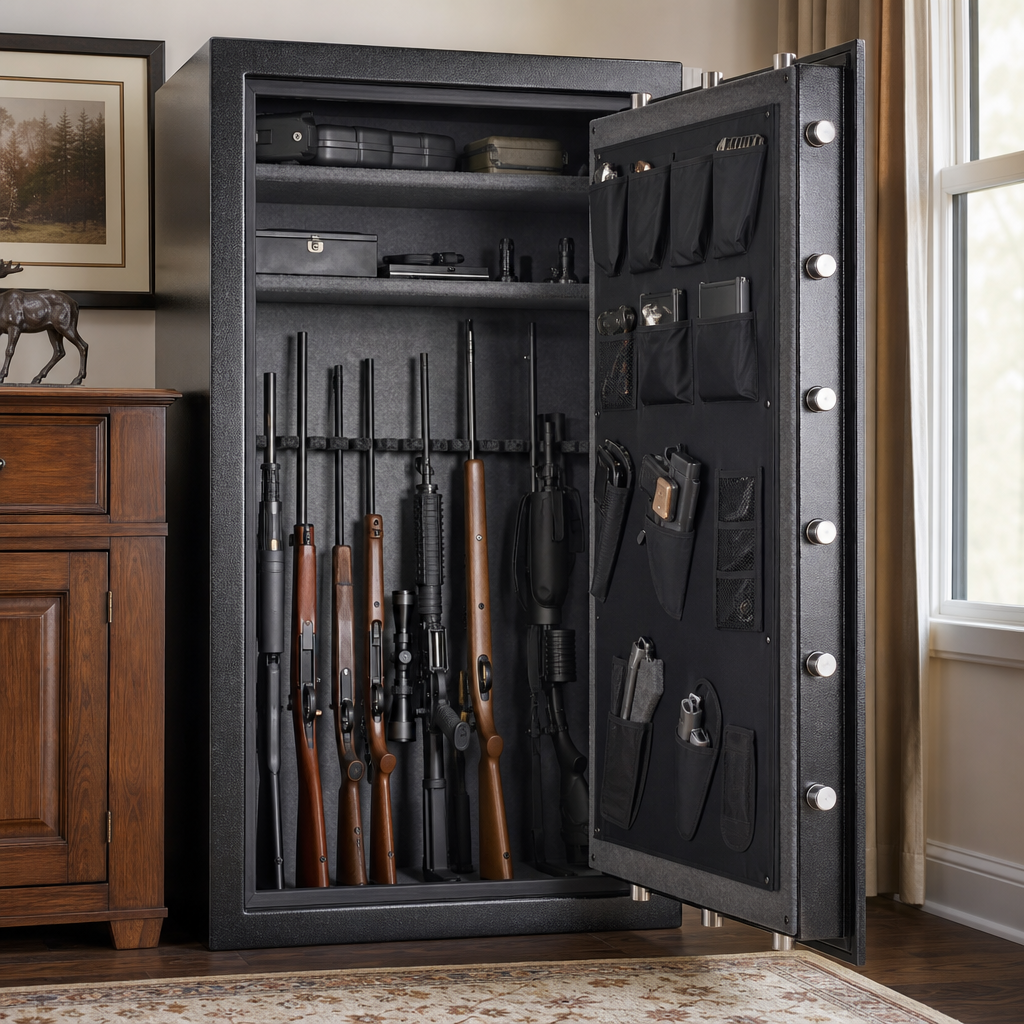
A gun safe’s fire resistance is not a fixed feature stamped on a label; it is a system shaped by insulation, door seals, room placement, installation quality, and the way the safe is used during an emergency. When owners ask how to enhance a gun safe’s fire resistance, they are really asking how to keep internal temperatures below the point where wood stocks char, optics fail, documents ignite, and ammunition components degrade long enough for firefighters to control the blaze. In practical terms, fire resistance means slowing heat transfer, limiting smoke and steam intrusion, and reducing exposure to the hottest parts of a structure fire. That matters because many residential fires reach ceiling temperatures above 1,000 degrees Fahrenheit, while paper begins to scorch around 350 degrees and many polymers, adhesives, and electronics inside modern firearms can suffer damage well before that threshold. I have evaluated safes after house fires, and the difference between a merely heavy box and a well-prepared storage system is usually obvious: strategic placement, proper anchoring, upgraded seals, and disciplined organization often preserve contents that would otherwise be lost. This hub article explains the major factors that determine gun safe fire performance, the practical upgrades that improve it, and the limits every owner should understand before trusting any rating.
Understand Fire Ratings, Heat Transfer, and Real Limits
The first step in improving fire protection is understanding what a fire rating actually means. Manufacturers commonly advertise numbers such as 30, 45, 60, or 90 minutes at a stated temperature, often between 1,200 and 1,800 degrees Fahrenheit. Those figures are not universally comparable because test methods vary. Some brands rely on independent laboratories such as Intertek/ETL or UL, while others use in-house protocols. A legitimate rating should state duration, external temperature, and the maximum internal temperature allowed during the test. For mixed-use gun safes, the usual target is keeping the interior below 350 degrees Fahrenheit to protect paper, though that threshold does not guarantee protection for optics, lubricants, plastics, batteries, or heirloom wood finishes.
Heat reaches the interior through conduction, convection, and radiation. Thick steel helps security, but steel alone is a poor fire solution because it rapidly conducts heat. Real fire resistance comes from barriers that slow thermal transfer, such as gypsum-based drywall layers, ceramic wool, proprietary concrete-like composites, and expanding door seals. In budget safes, multiple layers of Type X gypsum board often provide the fire rating. In higher-end models, poured composite fill can perform better because it distributes less heat through gaps and may resist structural failure longer. Door construction matters as much as body construction; if the door has thin metal skins and minimal insulation, the hottest side of the safe becomes the weak point even when the walls are well protected.
Owners should also separate “fire resistant” from “fireproof.” No consumer gun safe is truly fireproof under all conditions. A fully involved house fire can burn beyond the advertised duration, especially if fuel loads are high, windows fail early, or firefighting response is delayed. There is also the collapse problem. If a safe falls through weakened flooring into a basement or ends up buried under burning debris, exposure time and heat intensity increase sharply. That is why enhancement is about stacking advantages rather than expecting one specification to solve every scenario.
Choose the Best Location Inside the Home
Where the safe sits has a measurable effect on survival. In most homes, the garage looks convenient, but it is often one of the worst places for fire protection. Garages contain gasoline, paint, solvents, propane cylinders, and vehicles, all of which raise fire intensity. They also experience larger temperature swings and humidity changes that can compromise contents over time. A better location is generally on the lowest occupied level of the house, away from kitchens, utility rooms, fireplaces, and exterior walls with large windows. Central interior closets, dedicated safe rooms, and corners with two interior masonry-adjacent surfaces are usually better choices.
Concrete slab placement offers another advantage. A safe installed on a slab foundation is less likely to fall through during structural collapse than one placed on a framed second floor. Basement installation can be excellent for collapse resistance and thermal buffering, but only if flood risk is addressed. In disaster planning, fire and water must be treated together because firefighters often leave significant standing water. I typically recommend mapping likely fire loads in the home, then choosing the room with the least combustible storage, the shortest path for removal by thieves, and the best structural support. That mix improves both security and fire outcomes.
Clearance around the safe also matters. If combustible shelving, cardboard boxes, fabric, or stacked ammunition are pressed against the sides, they can increase localized heating. Leave breathing room around the safe when possible, especially near vents and dehumidifier pass-throughs. If the safe is recessed into cabinetry, the surrounding materials should be noncombustible or at least fire-rated. Decorative millwork looks clean, but untreated wood built tight around a safe can create a hotter micro-environment during a fire.
Upgrade Seals, Insulation, and Interior Protection
If your current safe is structurally sound, the most practical upgrades focus on the openings and interior. An intumescent door seal is one of the highest-value additions. These seals expand when heated, helping block smoke, hot gases, and water-driven steam from entering through the door gap. Many quality safes include them, but not all seals are equal. Look for products designed for high-temperature expansion with documented use in fire doors or fire-rated enclosures. Installation must be precise; poorly adhered seals can peel, interfere with door closure, or leave discontinuities at corners.
Interior insulation upgrades are more limited because retrofitting the body cavity of a welded safe is rarely practical. However, you can improve internal survivability by adding secondary fire-resistant containers for the most vulnerable items. Paper records, suppressor tax documents, passports, hard drives, and jewelry should go inside a UL-classified document chest or media chest placed within the gun safe. This “safe within a safe” approach creates another thermal barrier and is one of the few proven methods for protecting sensitive contents even if the main safe nears its rated limit. I have seen firearms emerge serviceable while paper files stored loose on the top shelf were destroyed; a small document chest would have changed that outcome.
Organization also affects heat exposure. Dense packing slows airflow and can slightly reduce direct radiant heating on some items, but overloading shelves can collapse liners or block doors from sealing fully. Keep the top shelf for less temperature-sensitive gear and place documents or optics in secondary containers lower in the body, where temperatures are often somewhat more stable. Use silicone-treated gun socks carefully; they help corrosion control after water exposure, but some fabric sleeves can trap moisture if items are stored wet after an incident. Fire resistance is strongest when paired with a post-event recovery plan.
Install the Safe Correctly and Protect the Surroundings
Installation quality often gets ignored because it is not printed on a sales sheet, yet it directly affects survival in a fire. Anchor the safe according to the manufacturer’s pattern using concrete wedge anchors or approved structural fasteners. Proper anchoring prevents tip-over, keeps the door geometry aligned, and reduces the chance that impact damage during collapse opens seams or breaks seal continuity. A safe that remains upright typically preserves its fire rating better than one that tumbles and lands door-down under debris.
Adding a noncombustible base is another worthwhile step. A concrete plinth, masonry pavers, or a tested fire-resistant platform can separate the safe from direct flame contact at floor level and reduce exposure to pooled burning liquids. This is especially useful in workshops or garages where flammable liquids may spread across the floor. If the safe sits on carpet over wood framing, remove the carpet beneath it and evaluate whether a fire-rated underlayment is feasible. Small changes at the base can buy meaningful time.
Room-level protection compounds the benefit. Residential sprinkler systems, interconnected smoke alarms, and a nearby clean-agent or ABC extinguisher can dramatically reduce fire duration before the safe ever faces full involvement. Fire-rated drywall on surrounding walls, a solid-core door, and proper garage-to-house fire separation all matter. Think of the safe as the final barrier, not the only barrier. Owners who harden the room usually get more real protection than owners who simply buy a thicker safe and leave it beside fuel cans and cardboard.
| Enhancement | What It Does | Best Use Case | Main Limitation |
|---|---|---|---|
| Intumescent door seal | Expands under heat to reduce smoke and hot gas entry | Older safes with minimal factory sealing | Requires precise installation and compatible adhesive |
| Interior document or media chest | Adds a second thermal barrier for sensitive items | Documents, drives, passports, optics accessories | Consumes interior space and adds weight |
| Concrete-slab placement | Reduces collapse risk and stabilizes temperature swings | Basements or ground-floor utility-safe rooms | May increase flood exposure if drainage is poor |
| Anchoring with rated hardware | Limits tip-over and impact damage during collapse | All heavy safes, especially tall models | Improper anchors can fail in weak substrate |
| Noncombustible surroundings | Lowers local fuel load and slows heat build-up | Closets, safe rooms, workshops | Requires room modifications beyond the safe itself |
Plan for Water, Smoke, and Post-Fire Recovery
Many owners focus on flame and forget the secondary threats that ruin contents after a fire. Water from sprinklers or hoses can penetrate damaged door gaps, raise humidity inside the safe, and trigger rust within hours. Smoke deposits are acidic and can etch finishes, cloud optics, and contaminate stocks and slings. Enhancing fire resistance therefore includes preparing for what happens once the heat event ends.
Use a rechargeable desiccant or a GoldenRod-style dehumidifier where power is safely available and manufacturer-approved. Store critical documents in waterproof pouches inside the secondary document chest, not loose in the safe. Keep an inventory with serial numbers, photos, and appraisals backed up offsite. After any fire exposure, open the safe as soon as authorities permit, remove firearms with gloves, and begin corrosion control immediately. In my experience, guns that survive heat can still be lost to neglect in the first 48 hours after exposure to moisture and residue.
Finally, match expectations to risk. If you own high-value collectibles, NFA paperwork, rare wood-stocked rifles, or irreplaceable family records, consider layered storage: a better-rated safe, room hardening, insurance, and offsite copies of documents. Fire resistance improves through systems thinking. Review your setup now, upgrade the weak points first, and build a storage plan that protects both firearms and everything that supports their lawful, safe ownership.
Enhancing your gun safe’s fire resistance comes down to five actions: verify the rating, place the safe wisely, improve sealing and secondary protection, install it on a stable noncombustible base, and prepare for smoke and water after the fire. Each step addresses a specific failure point. Ratings tell you how the safe was tested, placement affects how much heat it will actually face, seals limit hot gas intrusion, proper installation reduces damage during collapse, and recovery planning prevents surviving contents from corroding afterward. Together, those measures create a far stronger disaster-resistant storage system than any label alone can promise.
The main benefit is simple: more time and better odds. In a real house fire, minutes matter. A safer location, an intact door seal, and a protected document chest can be the difference between recoverable firearms and a total loss. This hub page gives you the foundation for evaluating every fireproof and disaster-resistant storage decision under the broader gun safes and safety category, from safe placement and room construction to moisture control and record protection. The goal is not marketing language or blind trust in a printed rating. The goal is preserving firearms, legal documents, optics, and family property under realistic emergency conditions.
Use this article as your starting checklist. Inspect your current safe, identify the weakest link, and make one upgrade now—whether that is relocating the safe, adding a secondary fire-rated chest, improving anchoring, or reducing combustibles nearby. Then continue building out the rest of your disaster plan. A gun safe protects best when it is part of a deliberate system, and the time to strengthen that system is before the alarm sounds.
Frequently Asked Questions
Can you really improve a gun safe’s fire resistance after you buy it?
Yes, but it helps to think in terms of improving the overall fire-protection system rather than trying to magically change the steel box itself. A gun safe’s fire resistance depends on multiple factors working together: the insulating material inside the walls, the quality and condition of the expanding door seal, how tightly the door closes, where the safe sits in the home, how it is anchored, and what is stored inside. Most owners cannot easily rebuild the safe’s internal construction, but they can absolutely improve real-world performance by reducing heat exposure and limiting pathways for hot gases and smoke.
One of the most effective upgrades is strategic placement. A safe located in a cool, dry interior room, away from garages, fuel sources, workshops, and exterior walls, generally has a better chance of staying below critical internal temperatures longer than a safe exposed to direct flame and rapid structural collapse. Another improvement is making sure the door seal is intact and clean. If the heat-activated seal is cracked, flattened, or obstructed by debris, it may not expand properly during a fire, allowing superheated smoke to enter sooner.
Owners can also improve survivability by organizing contents intelligently. Sensitive items such as paper records, suppressor paperwork, cash, hard drives, and heirloom documents should be placed inside separate fire-rated document containers or media-rated boxes within the safe. That creates an additional thermal barrier and buys extra time. Moisture control matters too, but it must be done carefully. Standard dehumidifier rods are useful for corrosion prevention, yet any accessory should be installed according to the manufacturer’s guidance so it does not compromise door closure or interior materials.
In short, while you may not be able to transform a basic safe into a commercial-grade fire vault, you can absolutely enhance its practical resistance by improving location, maintenance, sealing, interior layering, and emergency readiness.
Where should a gun safe be placed to maximize fire protection?
Location is one of the most overlooked parts of fire resistance, and in many homes it can make a major difference. The best place for a gun safe is usually on a ground-level concrete slab or in a basement area with lower fire load, stable temperatures, and some separation from the most common ignition sources. Concrete does not burn, and a slab foundation is less likely to fail early in a fire than a raised wood floor. That matters because if the floor collapses, the safe can fall into a hotter part of the structure, become damaged, or have its door frame distorted.
Interior placement is generally better than exterior placement. A safe against an outside wall may be exposed sooner to wind-driven fire, window breakage, and rapid heat transfer from flames entering from outdoors. By contrast, a safe positioned in an interior room, especially one with fewer combustibles, may be shielded from direct flame for longer. Closets can sometimes help by adding a small layer of separation, but they can also become heat traps if packed with clothing, boxes, or other fuel. The goal is not concealment alone; it is minimizing direct heat exposure and surrounding the safe with the least amount of burnable material possible.
Garages are convenient, but they are often poor choices for fire protection because they commonly contain gasoline, oil, paint, solvents, propane cylinders, lawn equipment, and vehicles. These increase fire intensity dramatically. Utility rooms can pose similar risks if they contain furnaces, water heaters, or electrical panels. If the safe must go in one of these spaces, owners should work harder on surrounding fuel reduction and ensure proper clearances from obvious hazards.
Finally, anchoring the safe securely is part of placement strategy. A firmly installed safe is less likely to tip, shift, or suffer structural stress during a chaotic fire event. Good placement cannot guarantee survival in a severe structure fire, but it can significantly improve the amount of time the interior remains below damaging temperatures.
Do fireproof accessories inside the safe actually help protect guns, documents, and optics?
Yes, interior accessories can help, especially when they are used as secondary layers rather than substitutes for the safe’s main fire rating. A gun safe’s interior does not heat instantly; temperatures rise over time as the safe absorbs heat. By placing highly sensitive items inside smaller fire-rated containers within the safe, you slow that heat transfer even more. This layered approach is especially valuable for paper documents, passports, tax records, trust paperwork, backup drives, and items that can be damaged at temperatures lower than many people realize.
It is important, however, to match the accessory to the item being protected. A basic document fire box may protect paper but still allow temperatures high enough to damage electronic media, optics adhesives, batteries, or lubrication products. Media-rated containers are designed to maintain lower internal temperatures than standard document boxes, so they are often better for hard drives, flash storage, and some sensitive accessories. If you keep serialized documents, photographs, inheritance records, or insurance paperwork in the safe, using a dedicated fire-rated insert is one of the most practical upgrades available.
For firearms themselves, soft cases, foam inserts, and tightly packed textiles are not true fire-protection materials. In some situations, they may even hold moisture or create heat-retention problems after a fire. A better strategy is careful spacing, avoiding unnecessary combustible clutter, and using smaller rated containers only for the most heat-sensitive components. Scopes, red dots, night vision accessories, and electronics often fail before the steel and major firearm parts do, so separating those components into added protective containers can make sense when possible.
The key takeaway is that accessories are useful when they create layered thermal protection without interfering with door seal performance, airflow management, or safe organization. They will not turn a lightly rated safe into an extreme-duty fire vault, but they can meaningfully reduce losses inside the safe during the critical window before firefighters bring the blaze under control.
How important are door seals, insulation, and installation quality in a gun safe fire?
They are absolutely central. In a real fire, many losses occur not because the steel shell melts, but because heat and smoke penetrate the safe faster than expected. The insulation slows heat transfer through the walls, ceiling, floor, and door, while the heat-activated seal around the door frame is designed to expand and close off gaps as temperatures rise. If either of those systems is weak, damaged, or poorly supported by the installation, the safe’s published fire performance may not reflect what happens in your home.
The door seal deserves regular inspection. It should be clean, continuous, and free from paint buildup, adhesive failure, warping, or visible cracks. If the seal channel is damaged or the door no longer aligns correctly, even a good seal may not perform as intended. Likewise, heavy aftermarket modifications such as interior wiring, lighting kits, organizational panels, or drilled pass-throughs should be evaluated carefully. Any modification that creates a gap, blocks compression surfaces, or alters the door’s closure can reduce the safe’s ability to resist smoke and heat.
Insulation quality matters because not all fire linings are equal. Different safes use different materials and thicknesses, and some ratings are based on limited testing conditions. While owners usually cannot upgrade wall insulation easily, they can protect what they have by preventing moisture damage, avoiding impact damage during moving, and keeping the safe in an environment that does not accelerate deterioration. Installation quality also affects fire performance. A safe that sits unevenly, twists slightly under its own weight, or is anchored poorly may develop door alignment issues that reduce seal effectiveness over time.
In practical terms, maintenance and proper installation are among the most important things a safe owner controls. A properly leveled, correctly anchored, undamaged safe with a healthy door seal and well-maintained closure system has a much better chance of keeping internal temperatures manageable than a neglected safe with hidden alignment and sealing problems.
What should you do before and during an emergency to help your gun safe perform better in a fire?
The best time to improve fire resistance is before the emergency begins. Start by reducing nearby fuel sources. Do not stack cardboard, ammunition cans, clothing, cleaning solvents, oily rags, or storage bins around the safe. These materials can intensify local heat and expose the safe to sustained flame. Keep the area around the safe clean and uncluttered, and if possible, install smoke alarms and monitored fire detection in the same part of the home. Early detection is one of the most powerful forms of fire protection because every minute of reduced burn time helps the safe remain cooler internally.
It is also wise to document your safe’s contents with photos, serial numbers, appraisals, and digital copies stored off-site or in secure cloud storage. That step does not increase the safe’s physical resistance, but it greatly improves recovery if a severe fire overwhelms even a good setup. Make sure your homeowners or specialty firearms insurance coverage is current, and verify whether documents, optics, accessories, and collectibles are fully covered. If firefighters can save the structure quickly, the safe may do its job; if not, having records becomes critical.
During a fire, do not attempt to open the safe unless emergency responders specifically advise it and conditions are unquestionably safe. Opening the door can allow a rush of oxygen and expose contents to smoke and heat. Your priority should always be life safety and evacuation. Once the fire is out, resist the