
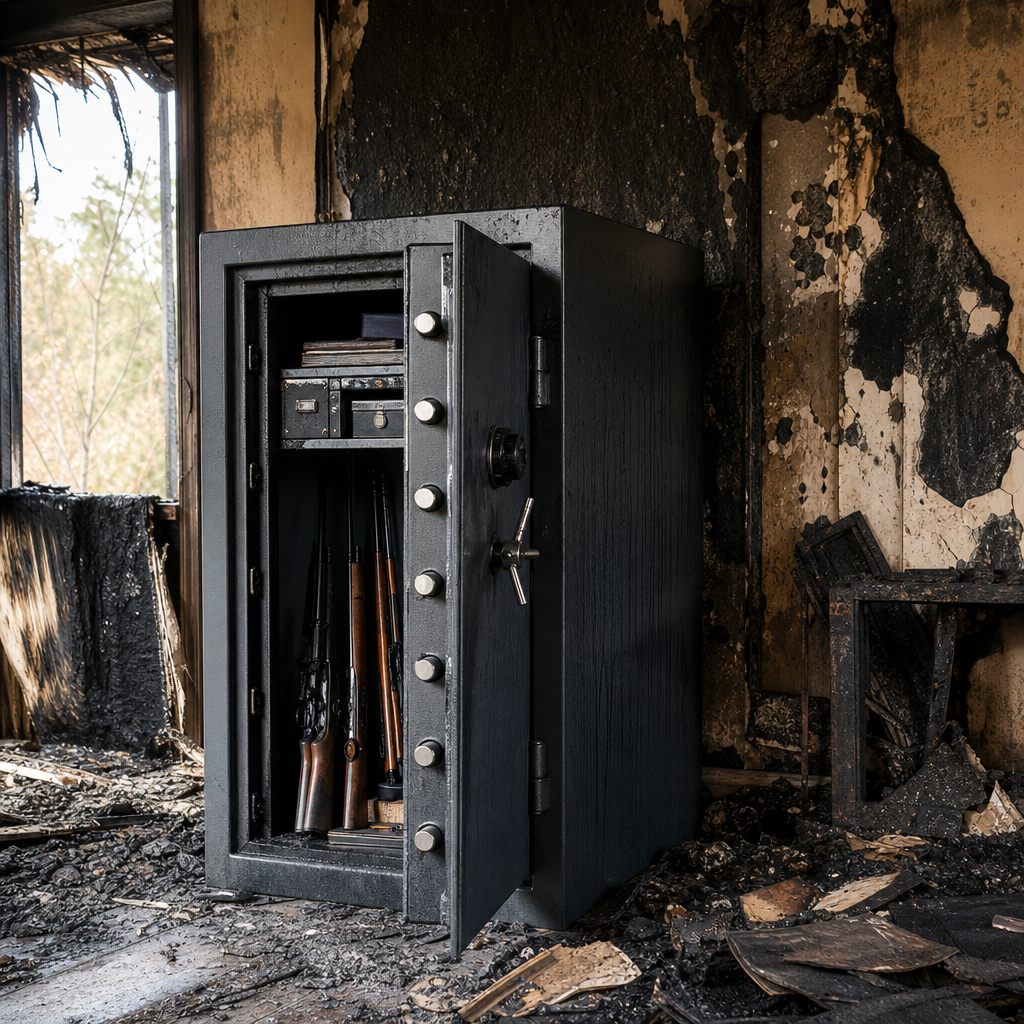
Are fireproof gun safes worth the investment? For most firearm owners, the practical answer is yes, but only when the safe is selected with a clear understanding of what “fireproof” actually means, how fire ratings are tested, and which other disaster risks matter in the real world. In my experience evaluating residential security containers, the biggest mistake buyers make is assuming any heavy steel box with drywall insulation will protect guns indefinitely in a house fire. It will not. A fireproof gun safe is better understood as a time-limited, heat-resistant storage system designed to delay temperature rise, reduce smoke and water intrusion, and improve the odds that firearms, documents, and ammunition survive a severe event. That distinction matters because modern home fires burn hotter, synthetic furnishings accelerate flashover, and fire departments often arrive after temperatures have already climbed high enough to damage optics, stocks, lubricants, and paper records. If you own firearms for defense, hunting, sport shooting, or collecting, replacing them after a fire can be expensive, complicated, and sometimes impossible when sentimental or historical value is involved.
Fireproof and disaster-resistant storage sits at the center of responsible gun ownership because risk rarely comes one incident at a time. Fire, theft, humidity, floodwater, and post-disaster chaos often overlap. A safe that resists heat but fails under a pry attack may still leave you exposed; a safe that defeats burglars but channels smoke and steam inside may leave rusted, warped contents after suppression efforts. This hub article explains how fire ratings work, what construction details actually matter, how water and impact resistance fit into the equation, and when the added cost is justified. It also provides the framework I use when advising buyers: match the safe to the firearm value, the likely fire load in the home, local hazards, insurance requirements, and the level of access control your household needs. By the end, you should know whether a fireproof gun safe is worth the investment for your situation, and what features separate meaningful protection from marketing language.
What “fireproof” means in a gun safe
No residential gun safe is literally proof against all fire. The useful question is how long the interior stays below a target temperature when the exterior is exposed to a stated heat level. Most manufacturers advertise ratings such as 30, 60, 90, or 120 minutes at temperatures ranging from about 1,200 to 1,800 degrees Fahrenheit. Those numbers are only comparable if the testing method is disclosed. Independent standards from organizations such as UL are more credible than in-house claims because they define furnace temperature, duration, and pass criteria. For firearms, interior temperature matters because wood stocks can crack, polymers can deform, adhesives can fail, and optics can suffer lens coating or seal damage well before steel receivers show visible harm. For paper documents, the common benchmark is keeping the interior below 350 degrees Fahrenheit, while digital media requires much lower temperatures and tighter humidity control.
In practice, fire resistance comes from layered insulation, robust door seals, body thickness, and tight fitment. Many gun safes use gypsum board, ceramic wool, proprietary concrete-like composites, or multiple insulating layers. During heating, some materials release bound water as steam, slowing heat transfer. That can help, but it does not guarantee a dry interior. I have opened safes after suppression events where the contents were not burned but still needed immediate cleaning because hot moisture and smoke residue had entered around weak seals. Buyers should therefore view the fire rating as one part of a system, not a stand-alone promise. Ask who tested it, what temperature curve was used, whether the rating applies to the whole safe or just the door, and whether the company publishes detailed specifications rather than a single badge on a brochure.
How house fires damage firearms and valuables
Understanding damage pathways helps explain why investing in a better safe often pays off. In a structure fire, direct flame is only one threat. Radiant heat can cook finishes, break down lubricants, and damage optics even without visible flame contact. Smoke carries acids and particulates that settle into actions, magazines, trigger groups, and scope turrets. Water from sprinklers or fire hoses can pool inside cabinets or wick into stocks and cases. If the home partially collapses, impact loading may distort a thin-walled container or jam the locking mechanism. After the event, humidity spikes and contaminated residue continue corroding metal unless the contents are cleaned quickly.
I have seen the difference safe quality makes when two houses on the same street burned under similar conditions. In one case, a basic metal cabinet kept children out but offered little thermal protection; the firearms showed severe finish failure and rust within days. In the other, a mid-grade fire-rated safe bolted to concrete preserved most long guns, though the owner still had to replace two optics and refinish one wood stock. Neither result was perfect, but one owner retained usable property and serial-number records, while the other faced a near-total loss. That is the practical value proposition: not magical immunity, but a measurable improvement in survivability, recovery speed, and insurance documentation.
Construction features that actually matter
When comparing fireproof gun safes, prioritize construction details over branding alone. Steel thickness affects burglary resistance and structural rigidity during heat exposure. Door design matters because many failures occur at the gap, not the center panel. Continuous welds, reinforced door frames, expanding intumescent seals, recessed doors, and hard plates over the lock all improve performance. Composite bodies generally resist sustained heat better than simple sheet steel lined with a single layer of drywall, though they are heavier and cost more. Boltwork should secure multiple sides of the door, but more bolts do not automatically mean more security if the surrounding steel is thin. Lock choice also matters: quality mechanical dials have long service lives and no electronics to fail, while well-made electronic locks offer faster access but need battery management and should come from reputable makers such as Sargent and Greenleaf or SecuRam.
Interior setup deserves attention too. Heat rises, so top shelves often see higher temperatures. Store irreplaceable documents in a dedicated fire-rated document box inside the gun safe for layered protection. Use desiccants or a dehumidifier rod because fire-resistant insulation and tight seals can trap moisture during normal conditions. Anchor the safe to concrete whenever possible. Bolting improves theft resistance, reduces tip-over risk, and helps the safe remain in place during impact or hose-stream forces. Finally, check hinges, relockers, warranty terms, and service network. A strong warranty is useful only if the company can supply replacement parts and qualified technicians after a disaster.
Comparing rating levels, costs, and ideal use cases
The right fire rating depends on what you store, where you live, and how your home is built. Open-plan houses with lots of synthetic materials can reach destructive temperatures quickly, while rural properties may have longer fire department response times than suburban neighborhoods close to hydrants. As a baseline, I usually consider 60 minutes the entry point for buyers who want meaningful residential fire protection, with 90 minutes or more preferable for larger collections, detached properties, or homes in wildfire-prone areas.
| Safe tier | Typical fire claim | Common construction | Best fit | Main limitation |
|---|---|---|---|---|
| Entry level | 30 minutes at 1,200–1,400°F | Thin steel with basic gypsum lining | Budget storage for a few firearms in lower-risk settings | Modest burglary resistance and limited heat margin |
| Mid grade | 60–90 minutes at 1,400–1,680°F | Heavier steel, better seals, multi-layer insulation | Most homeowners with mixed firearm and document storage | Weight and price increase significantly |
| Premium residential | 90–120 minutes, sometimes independently verified | Composite body, robust door system, upgraded lock and relocker | Collectors, high-value optics, slower emergency response areas | Requires strong floor support and professional delivery |
| Commercial-grade/security safe | Varies by burglary and fire certification | High-mass composite construction with certified ratings | Very high-value collections and records | Cost can exceed the value of many stored firearms |
Price usually follows mass, certification, and finish quality. Many buyers are tempted by a large safe with a flashy interior at a low price, but internal volume is less important than shell strength and tested insulation. A smaller, better-built safe often delivers more real protection than an oversized bargain model. If budget is tight, buy less capacity and more quality. You can expand later, but you cannot retroactively improve a failed safe after a fire.
Beyond fire: water, humidity, storms, and other disaster risks
Fireproof gun safes are often marketed as disaster-resistant, but the specific hazards vary widely. Water protection is especially misunderstood. A safe may survive exterior spraying yet still allow water entry if submerged in a flood. Manufacturers sometimes publish waterproof ratings in terms of depth and duration, such as several inches or feet for a set number of hours, but those claims depend on intact seals and proper installation. If you live in a floodplain, basement placement can be a major mistake even if the room seems convenient. Elevating the safe on a reinforced plinth and choosing a ground-floor interior location can significantly reduce flood exposure.
Humidity control is the everyday disaster most owners overlook. Even without a major event, trapped moisture causes rust, mold on slings or soft cases, and deterioration of wood and leather. Use a hygrometer and maintain stable relative humidity, typically around 40 to 50 percent for mixed firearm storage. In coastal regions, a powered dehumidifier rod plus rechargeable desiccants works better than passive packs alone. Tornadoes and earthquakes introduce another issue: movement. A heavy safe can still tip, slide, or suffer impact damage if it is not anchored properly. Wildfire zones raise the importance of longer fire ratings and exterior placement away from garages containing fuel, paint, and other accelerants. In short, the best disaster-resistant storage strategy considers the hazards your property actually faces, not just the word “fireproof” on the label.
When the investment makes financial and practical sense
A fireproof gun safe is worth the investment when replacement cost, legal responsibility, and peace of mind exceed the price gap between a basic cabinet and a genuinely protective safe. Start with the collection value, including optics, suppressors where legal, magazines, heirloom pieces, tax stamps, and important records. Many owners underestimate this total by thousands of dollars. Add the indirect costs of loss: time spent on insurance claims, transfer paperwork, police reporting after theft, and the possibility that discontinued or inherited firearms cannot be replaced at any price. If children or unauthorized adults may access the home, secure storage is not optional; it is part of responsible risk management and in some jurisdictions a legal requirement.
Insurance can offset losses, but only up to policy limits and only with adequate documentation. Some homeowner policies place low sublimits on firearms unless you schedule them separately. A quality safe can support insurability, reduce claim friction, and preserve serial-number records that would otherwise burn. The investment is also easier to justify if you plan to stay in the home for years, because a good safe spreads cost over a long service life. Where the investment may not make sense is buying a premium-rated unit for a very small, low-value collection while ignoring placement, anchoring, and maintenance. The safe should fit the risk. Overspending on prestige features you do not need is just as unwise as underspending on critical protection.
How to choose the right fireproof gun safe for your home
Buy with a checklist. Verify independent fire testing whenever possible. Confirm steel thickness, body construction, lock brand, seal type, weight, anchor hole design, and interior dimensions that reflect usable space, not marketing capacity. Measure the installation path, floor loading, and door swing clearance before purchase. Place the safe on the lowest practical fire-load side of the house, away from easy visibility, and preferably against a concrete slab rather than an upper wood-framed floor unless an engineer confirms capacity. Add layered protection: document pouch, dehumidification, inventory photos, and off-site digital backups of serial numbers and receipts. Revisit the setup annually by checking lock operation, bolt smoothness, humidity readings, and anchor tightness.
The bottom line is straightforward. Fireproof gun safes are usually worth the investment because they do more than slow thieves; they buy critical time against heat, smoke, water, and chaos during the kind of event that turns a manageable loss into a permanent one. The best choice is not the biggest safe or the loudest marketing claim, but the unit with credible testing, solid construction, appropriate capacity, and a placement plan that matches your home’s actual hazards. If you are building out your gun storage strategy, treat this page as your hub for fireproof and disaster-resistant storage, then compare models, review certifications, and map your risks before you buy. A well-chosen safe protects firearms, documents, and options when you need them most.
Frequently Asked Questions
Are fireproof gun safes really worth the investment for most gun owners?
Yes, in most cases they are worth the investment, but the value depends on buying the right safe for the risks you actually face. A fire-rated gun safe adds an important layer of protection against one of the most common ways firearms, documents, optics, and ammunition-related accessories are lost in a home disaster: heat exposure during a residential fire. That said, “worth it” does not mean every product marketed as fireproof delivers the same level of protection. Many entry-level safes use basic gypsum board insulation and advertise a fire rating that sounds impressive without explaining the testing standard, internal temperature threshold, or the real conditions under which the rating applies.
For most firearm owners, the real benefit is not that a safe will make your collection invincible, but that it can significantly improve your chances of preventing catastrophic loss during a fire of limited duration. A quality fire-rated safe can also serve multiple purposes at once by helping secure guns from unauthorized access, slowing down theft, and protecting related valuables. If you own several firearms, expensive optics, suppressor paperwork, tax stamps, heirloom documents, or irreplaceable records, the cost of a better safe is often small compared to the value of what is stored inside.
The key is to think of a fireproof gun safe as a delay-and-protection tool, not an absolute guarantee. In a severe structure fire, temperatures can exceed what many consumer safes are designed to handle, especially if the safe is placed in a garage, upstairs room, or location where collapse and prolonged burn exposure are possible. So yes, they are generally worth the investment, but only when you understand the limitations, choose a credible fire rating, and pair fire protection with strong burglary resistance, proper installation, and sensible placement within the home.
What does “fireproof” actually mean when it comes to gun safes?
In practical terms, “fireproof” is mostly a marketing shortcut, not a literal promise that the contents will survive any fire. A more accurate term is “fire-resistant.” A fire-resistant gun safe is designed to slow the transfer of heat into the interior for a specified amount of time under certain test conditions. The important details are the duration, the external temperature used in testing, and the maximum internal temperature allowed during the test. Those details matter because firearms themselves may tolerate heat differently than wood stocks, optics, electronics, ammunition packaging, lubricants, and paper records stored alongside them.
For example, many consumer safes are advertised with ratings such as 30 minutes, 60 minutes, 75 minutes, or 120 minutes at a stated external temperature. What buyers often miss is that not all ratings are created equal. Some are based on manufacturer testing, while others may rely on independent verification. Some tests focus only on heat exposure, while others may include humidity, seal performance, or post-fire conditions. If a safe has no transparent explanation of how the rating was established, that should be treated cautiously. A vague claim like “fireproof up to 1400°F” means very little without a time component and a defined internal temperature threshold.
Another issue is that surviving fire is not just about the steel shell. Insulation materials, door seals, body thickness, door gaps, and how the safe is constructed all affect performance. Many lower-cost safes rely on layers of drywall-type material that release moisture when heated, helping slow heat transfer for a period of time. That can work, but it is not magic and it does not last indefinitely. Once that protective effect is overwhelmed, interior temperatures can rise quickly. So when evaluating a safe, it is smarter to ask, “How long can this safe keep the inside below a damaging temperature in a realistic fire scenario?” rather than relying on the word “fireproof” alone.
How important are fire ratings, and what should buyers look for when comparing them?
Fire ratings are extremely important because they are one of the few concrete ways to compare one safe’s protective claims against another. However, they only help if you understand what the rating is actually measuring. A meaningful fire rating should tell you at least three things: how long the safe was exposed to fire, what external temperature it faced, and what internal temperature it stayed under. Without those specifics, the rating is more marketing than engineering.
When comparing safes, look first for transparency. Reputable manufacturers usually explain their rating in a way that allows you to judge whether it aligns with your needs. A safe rated for 60 minutes at 1200°F is not automatically better or worse than one rated for 45 minutes at 1400°F unless you know the full test conditions and internal temperature criteria. If you store paper documents in the safe along with firearms, the allowable internal temperature becomes especially important because paper chars at much lower temperatures than steel is damaged. If you store optics, batteries, electronics, or polymer accessories, heat sensitivity becomes even more relevant.
Independent testing is generally preferable to in-house testing because it offers more credibility, though even then you should review what standard was used. Buyers should also understand that a fire rating is not the same as a burglary rating. A safe can have respectable fire resistance and still offer only modest protection against forced entry. Ideally, you want balance: sufficient fire resistance for your environment, strong locking and steel construction, and proper anchoring so the safe cannot simply be removed. In short, a fire rating matters a great deal, but it should be interpreted in context rather than treated as a single number that tells the whole story.
Will a fireproof gun safe fully protect firearms during a house fire?
No, not fully in every case, and that is one of the most important realities buyers need to understand. A fire-resistant safe improves the odds of survival, but it does not eliminate risk. Real house fires vary dramatically in intensity, duration, ventilation, and structural behavior. A short, quickly controlled fire on one side of the home is very different from a fully involved fire where the structure burns for an extended period or collapses onto the safe. In the second scenario, even a well-built residential gun safe may be pushed beyond its rating.
Fire damage is also not limited to direct flame contact. Heat soak, steam, smoke residue, corrosive byproducts, and rapid temperature changes can all affect the contents. Firearms may survive structurally while still suffering finish damage, stock cracking, optic failure, rust initiation, or damage to lubricants and stored accessories. Documents, photographs, and electronic items inside the same safe are often even more vulnerable than the guns themselves. That is why many experienced buyers avoid assuming that any one safe can protect everything equally well under every disaster condition.
The best way to think about it is in terms of risk reduction. A quality safe located on a lower floor, away from obvious fuel sources, anchored properly, and chosen with a credible fire rating can make a significant difference. It may preserve your collection in a moderate fire and reduce damage even in a severe one. But if you want the highest level of confidence, you should also consider layered protection: store the most sensitive documents in dedicated document containers, use desiccants or dehumidification for moisture control, maintain insurance coverage, and keep an inventory with serial numbers and photos stored off-site or in the cloud. A fireproof gun safe is valuable, but it should be part of a larger preparedness plan, not the entire plan by itself.
What other factors matter besides fire resistance when choosing a gun safe?
Fire resistance matters, but it should never be the only factor driving your decision. In real-world ownership, theft protection, structural build quality, locking system reliability, capacity, installation method, and safe placement often matter just as much. A safe that survives heat for an hour but can be pried open quickly or carried out by thieves is not a good long-term investment. That is why buyers should evaluate steel thickness, door construction, bolt design, hinge protection, lock quality, relocking features, and whether the safe can be securely anchored to concrete or another solid foundation.
Placement is another major consideration that is often overlooked. Where you put the safe affects both security and fire performance. A garage may be convenient, but it can expose the safe to faster fire growth, higher heat loads from vehicles and fuel, and easier visibility to criminals. Upper floors can be risky because of potential structural collapse in a serious fire. In many homes, a ground-floor interior location on a concrete slab offers a better combination of access, concealment, and reduced fire exposure. Moisture and humidity also matter, especially if the safe is in a basement, garage, or climate-variable room. Fire insulation does not replace the need for rust prevention inside the safe.
You should also think realistically about what you need to store over time. Many people outgrow a gun safe much faster than expected. Rifles with scopes, pistols in cases, magazines, documents, jewelry, and accessories all reduce usable capacity. Buying slightly larger than your current needs is usually wise. Finally, consider service and warranty support from the manufacturer. If a lock fails, a seal degrades, or the safe experiences a fire event, responsive support can matter a great deal. The best investment is not simply the safe with the biggest fire claim on the label, but the one that offers the strongest overall mix of fire resistance, security, durability, and practical fit for