
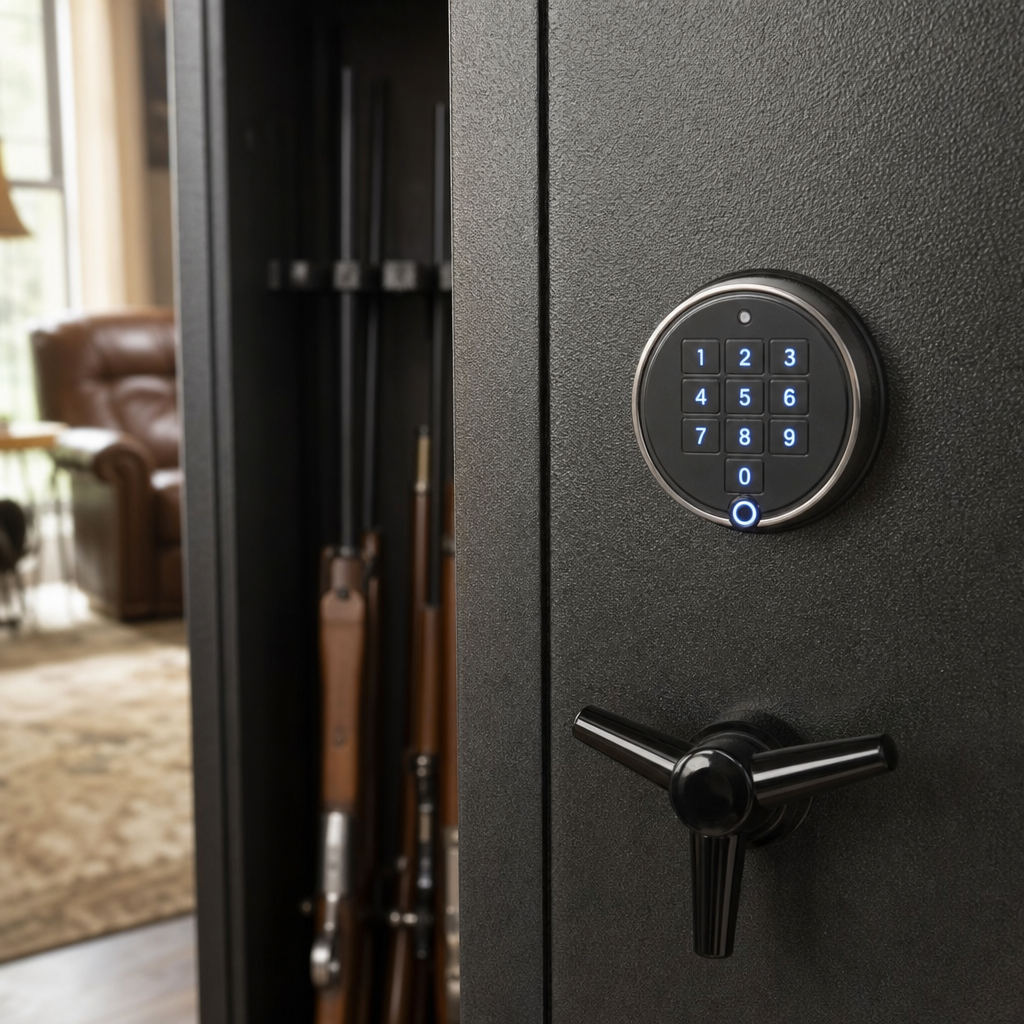
Choosing between a digital gun safe lock and a mechanical lock sounds simple, but the answer depends on what “more secure” means in real use. In the gun safes and safety category, lock type is one of the most misunderstood subjects because buyers often reduce security to speed, electronics, or price instead of evaluating failure modes, attack resistance, maintenance needs, and access reliability. A digital gun safe lock uses an electronic keypad, biometric reader, or smart interface to release the safe’s boltwork, while a mechanical lock usually relies on a dial combination or a key-operated mechanism with no battery-powered circuitry. Both systems can protect firearms effectively, yet both are surrounded by persistent gun safe myths and misconceptions that lead owners toward the wrong purchase.
I have worked with residential security products long enough to see the same pattern repeatedly: people assume newer means safer, older means tougher, and any lock advertised as “military grade” must be superior. In practice, security is determined by the entire safe system, including steel thickness, hard plate protection, relockers, bolt design, hinge configuration, anchoring, fire seals, and whether the owner follows basic gun storage discipline. The lock matters, but it is not the only thing that matters. A weak cabinet with a premium keypad is still weak. A robust safe with a dependable mechanical lock can outperform a feature-heavy electronic model if the environment, access pattern, and maintenance habits favor it.
This article serves as a hub for gun safe myths and misconceptions by answering the core question directly and then widening the lens. Are digital gun safe locks more secure than mechanical locks? Sometimes, but not automatically. Digital locks usually deliver faster access and more user convenience. Mechanical locks usually deliver simplicity and long-term independence from batteries and circuit boards. Real security depends on resistance to manipulation, reliability under stress, tolerance for user error, and how well the lock matches the owner’s use case. Understanding these tradeoffs helps buyers avoid expensive mistakes and build a safer firearm storage plan overall.
What Security Really Means in a Gun Safe
When people ask whether digital gun safe locks are more secure than mechanical locks, they often mean one of four different things: harder to break into, less likely to fail, faster in an emergency, or safer around children and unauthorized users. Those are related but separate questions. A lock can be excellent in one area and average in another. For example, an electronic keypad may provide much faster access in darkness than a mechanical dial, yet a mechanical lock may inspire more confidence for owners who store guns in a remote cabin where battery maintenance is inconsistent.
Professional safe evaluation starts with attack surfaces. The first is covert entry, which includes manipulation, code compromise, key bypass, or electronic exploitation. The second is forced entry, such as prying, drilling, peeling, grinding, or attacking the door frame. The third is operational failure, including dead batteries, worn keypads, failed solenoids, misdialing, lockout due to user error, or poor installation. If a buyer looks only at lock style and ignores these categories, they miss the full picture. The lock is one control inside a broader defensive system, not the whole system.
Industry standards help separate marketing from reality. Many quality gun safes use locks listed to UL 768 for combination lock standards, and better residential security containers may also incorporate anti-drill plates, relockers, and tested boltwork. These details matter because a lock mounted behind thin steel on an unanchored cabinet can be defeated by tipping, prying, or carrying the entire unit away. One of the biggest gun safe myths is that lock technology alone determines security. It does not. Construction quality and installation often matter more than whether the interface is digital or mechanical.
How Digital Gun Safe Locks Work and Where They Excel
Digital gun safe locks typically use an electronic keypad connected to a lock body that controls a motor or solenoid. When the correct code is entered, the locking mechanism retracts or releases the handle so the bolts can move. Some models add biometric fingerprint readers, time delay features, audit trails, duress codes, or temporary user codes. In households that need quick authorized access, especially for defensive firearms, this can be a major advantage. I have seen many owners move from mechanical dials to keypads for one reason alone: under adrenaline, entering a short code is easier than dialing a precise left-right-left sequence.
Electronic locks also solve practical access problems. They are easier to use in low light, simpler for multiple authorized adults to share, and less frustrating for older users with reduced dexterity or vision. Good digital systems can lock automatically after a short interval and can be reprogrammed without a locksmith visit. In a family setting, being able to change a code after a houseguest, contractor, or former partner has had access is a real security benefit. That flexibility is one reason digital gun safe locks have become common on modern long-gun safes and handgun vaults.
However, the phrase “digital lock” covers a wide quality range. A commercial-grade UL-listed electronic lock from Sargent and Greenleaf, SecuRam, or La Gard is not equivalent to a bargain keypad on a thin imported cabinet. Cheap electronics fail more often, use weaker membranes, and may have less robust lock bodies. Some biometric readers also struggle with dirty fingers, worn prints, moisture, or inconsistent placement. That does not make all biometrics unreliable, but it does mean the implementation matters more than the feature list.
| Factor | Digital Lock | Mechanical Lock |
|---|---|---|
| Access speed | Usually faster, especially in darkness or stress | Usually slower due to dialing sequence |
| Power source | Requires battery or external power backup | No battery required |
| User code changes | Easy on most models | Often requires locksmith or door panel access |
| Long-term simplicity | More parts and electronics to maintain | Fewer failure points in normal use |
| Shared household access | Convenient for multiple authorized users | Less convenient for frequent shared use |
How Mechanical Locks Work and Why They Remain Relevant
Mechanical gun safe locks usually rely on a dial combination connected to a wheel pack and fence. When the correct sequence aligns the wheels, the fence drops into place and allows the bolt to retract. This design has remained relevant for decades because it is durable, self-contained, and immune to battery issues. In stable indoor conditions, a quality mechanical lock can operate reliably for many years with minimal intervention. That predictability is why many experienced safe owners still prefer a dial for long-term storage of hunting rifles, collectibles, or guns that do not need immediate defensive access.
Mechanical locks also appeal to buyers who want fewer electronic dependencies. There is no keypad membrane to wear out, no battery to corrode, and no circuit board to fail after voltage problems or age. If a safe is stored in a garage, seasonal cabin, or low-maintenance environment, this simplicity can be an advantage. I have recommended mechanical locks in situations where owners were honest about their habits and admitted they would not replace batteries on schedule or test an electronic keypad monthly. Security planning has to match actual behavior, not ideal behavior.
That said, mechanical does not mean invincible. Dials can drift, combinations can be misrecorded, and poor-quality locks can wear or go out of tolerance. Mechanical access is also slower and more error-prone under stress. A user who can enter a six-digit keypad code in two seconds may take much longer to open a dial lock when half awake or under adrenaline. For some households, that practical delay is not a minor issue; it is the deciding factor. The right conclusion is not that mechanical locks are outdated, but that they fit different priorities.
Common Gun Safe Myths and Misconceptions About Lock Security
The most common myth is that digital always means less secure because electronics can be hacked. In reality, most stand-alone gun safe keypads are not internet-connected devices waiting for remote attack. Their more realistic risks are component failure, poor manufacturing quality, shoulder-surfed codes, or code sharing inside the home. Another myth is the reverse: that a digital lock is automatically safer because it is newer. Newer interfaces can improve convenience, but convenience and resistance are not identical. A high-end mechanical lock on a better-built safe can absolutely outperform a low-end digital unit.
Another misconception is that burglars spend time expertly manipulating safe locks the way they do in movies. Residential break-ins are usually quick, noisy, and opportunistic. Attackers often use pry bars, grinders, blunt force, or simply remove an unanchored safe from the property. That is why steel thickness, anchoring to concrete, closet placement, and reducing leverage around the door matter so much. Lock type affects authorized access and some forms of tampering, but many residential thefts are won or lost before lock manipulation even enters the picture.
A third myth is that a backup key makes a digital safe more secure. In many inexpensive handgun vaults, the override keyway can become the weakest point because it introduces another bypass path. Better units shield or minimize that vulnerability, but the buyer should inspect it closely. Similarly, some owners believe any biometric feature is childproof. It is not. Safe gun storage still requires code discipline, restricted enrollment, regular testing, and keeping the safe anchored and out of easy reach. Lock technology helps, but responsible process is what closes the gaps.
Which Lock Is More Secure in Real-World Scenarios
For a bedside handgun safe intended for rapid defensive access, a quality digital lock is often the more secure choice because access reliability for the authorized user is part of security. If the safe is so slow or finicky that the owner leaves it open or stores the handgun elsewhere, the system has failed. A dependable electronic keypad, especially one with tactile buttons and a low-battery warning, often supports better real-world compliance. This is one reason many quick-access vaults are sold with digital interfaces.
For long-term firearm storage where speed matters less than durability and low maintenance, a mechanical lock remains highly competitive. In a basement gun room, hunting lodge, or secondary residence, the ability to avoid power concerns can outweigh the convenience of a keypad. The owner may open the safe only occasionally, making the slower dial less burdensome. If the safe itself has robust anti-pry construction, relockers, and proper anchoring, the mechanical lock can be an excellent fit.
For families with multiple authorized users, electronic locks often win on practical control. Codes can be changed after life events, service visits, or household transitions. For owners who want audit features or temporary codes, digital options create accountability a dial lock cannot easily match. The best answer, then, is conditional: digital locks are often more secure for access management and emergency readiness, while mechanical locks are often more secure for simplicity and long-term independence from electronics. The safer choice is the one that reduces your most likely failure.
Buying Advice for This Gun Safe Myths Hub
If you are comparing gun safe lock types, start with the safe body, not the keypad. Look for thicker steel, a reinforced door frame, internal hinges or protected external hinges, hard plate protection, relockers, and clear lock certifications. Then match the lock to the role. Choose digital for frequent access, shared use, and easier code management. Choose mechanical for infrequent access, low-tech reliability, and environments where battery maintenance is unlikely. Avoid judging by marketing language alone, especially terms like “tactical,” “smart,” or “bank vault style,” which often reveal little about actual security performance.
Next, consider ownership habits. Test whichever lock you buy regularly. Replace batteries on a schedule, not after failure. Store combinations securely and never inside the safe. Anchor the unit to concrete or structural framing so attackers cannot tip or remove it. Keep the safe in a location that limits pry access and reduces visibility from visitors. These steps matter enough that they can outweigh the lock debate in many homes. They also connect this hub page to the broader gun safe myths and misconceptions topic: most security failures come from poor setup, weak construction, or inconsistent use, not from a simple digital-versus-mechanical binary.
Digital gun safe locks are not inherently more secure than mechanical locks, and mechanical locks are not automatically safer because they are old school. Each has strengths, weaknesses, and ideal use cases. The smart buyer evaluates attack resistance, reliability, speed, maintenance, and household needs together. If you are building a better firearm storage plan, use this hub as your starting point, compare lock quality alongside safe construction, and choose the system you will actually use correctly every time.
Frequently Asked Questions
Are digital gun safe locks actually more secure than mechanical locks?
Not automatically. A digital gun safe lock can be more secure in some situations, but it is not inherently better just because it uses electronics. Real security depends on the quality of the safe, the lock design, the way it is installed, and how it performs under normal use, attempted tampering, and long-term wear. A well-made electronic lock on a quality safe can provide strong protection, quick access, user code management, and in some cases audit features or multiple user permissions. However, a poorly built digital lock may introduce weak points such as low-quality keypads, unreliable internal components, battery dependency, or vulnerability to lockout issues.
Mechanical locks, especially proven dial combinations from reputable manufacturers, are often valued for simplicity and durability. They do not rely on batteries, software, or electronic circuits, which means they avoid some common failure modes that digital systems can face. On the other hand, they are typically slower to open and may be less convenient for users who need fast access under stress. So if “more secure” means resistance to electronic failure, a mechanical lock often has the advantage. If it means controlled access, faster entry, or easier code changes, a digital lock may be the better fit. The most accurate answer is that security comes from the total system, not just whether the lock is electronic or mechanical.
What are the biggest failure risks with digital gun safe locks compared with mechanical locks?
Digital gun safe locks usually fail in different ways than mechanical locks, and understanding those differences is one of the most important parts of making a good buying decision. The most discussed issue is battery failure. Many electronic safe locks rely on battery power for the keypad or locking mechanism, so if the battery dies and the lock was not maintained properly, access can become delayed or more complicated. Better models usually provide low-battery warnings and external battery contact points, but that still requires the owner to stay on top of maintenance.
Another concern is electronic component failure. Keypads, circuit boards, biometric sensors, and wiring can all wear out or malfunction over time. Environmental conditions also matter. Humidity, temperature swings, dust, and rough handling can affect electronic systems more than traditional mechanical dials. In contrast, mechanical locks tend to fail more gradually through wear, misalignment, or neglected servicing rather than sudden electronic shutdown. They can still malfunction, but many owners trust them because they have a long track record and fewer dependency points.
That said, mechanical locks are not failure-proof. They can drift out of alignment, become difficult to dial accurately, or require professional servicing after heavy use. They are also more prone to user error during entry, especially in stressful conditions or low light. So the key question is not which lock “never fails,” because neither type can make that promise. The better question is which failure mode you are more prepared to manage: battery and electronics-related issues with digital locks, or slower access and mechanical wear with dial locks.
Are digital gun safe locks easier for burglars to bypass or hack?
In most realistic residential break-in scenarios, the idea of a burglar “hacking” a digital gun safe lock is often overstated. Most thieves are not arriving with specialized tools, technical knowledge, and unlimited time to exploit an electronic lock at the code level. More often, they use blunt-force methods, attack the safe body, pry at weak doors, or try to remove the entire safe. That is why the overall build quality of the safe matters just as much as the lock style. A strong lock on a thin, poorly anchored safe still leaves serious vulnerabilities.
However, digital locks can present attack concerns if they are cheaply made or poorly designed. Low-end electronic locks may have weak construction, predictable keypads, inadequate relock protection, or emergency override systems that reduce security. Biometric models can also vary dramatically in quality. A fast fingerprint reader sounds appealing, but if it accepts poor scans, struggles with dirt or moisture, or has weak internal security, convenience may come at the expense of reliability or protection.
Mechanical locks are often perceived as safer because they are not exposed to electronic exploitation, but they can still be manipulated, attacked physically, or defeated if the safe itself is low quality. In practice, a reputable digital lock from a trusted manufacturer is not automatically easy to bypass, and a mechanical lock is not automatically superior. Buyers should focus on certification, manufacturer reputation, relocker features, hardplate protection, anti-tamper design, and the overall burglary resistance of the safe, not just the fear of “hacking.”
Which lock type is better for quick and reliable access in an emergency?
For speed, digital gun safe locks usually have the advantage. Entering a code on a keypad or using a high-quality biometric reader is generally faster than dialing a mechanical combination, especially in darkness, under stress, or when fine motor control is reduced. That matters for owners who prioritize rapid defensive access. A digital lock can also be easier for multiple authorized users, since codes are simpler to remember and can often be changed without a locksmith.
Reliability in an emergency, though, is more complicated. A digital lock can be extremely dependable if it is well-built, tested regularly, and maintained with fresh batteries. But if the battery is dead, the keypad fails, or the biometric scanner does not recognize a finger because of moisture, dirt, or pressure differences, speed disappears quickly. Mechanical locks are slower, but some owners trust them because they are not dependent on power or sensors. If you know the combination and practice opening the safe, a mechanical lock can be very reliable, just not as fast for most people.
The best choice depends on your priorities and habits. If you want the fastest likely access and are willing to maintain the system consistently, a quality digital lock may be the better option. If you place more value on long-term simplicity and independence from electronics, a mechanical lock may feel more trustworthy. In either case, emergency access is only truly reliable if the owner practices using the lock, stores the safe in a sensible location, and keeps the mechanism in proper working condition.
What should buyers look for when choosing between a digital and mechanical gun safe lock?
Start by defining what security and usability mean for your situation. If the safe is for long-term firearm storage with less frequent opening, a mechanical lock may be appealing because of its durability, simplicity, and lack of battery dependence. If the safe is intended for regular access or home-defense use, a digital lock may offer meaningful convenience and speed. From there, look beyond marketing claims and examine the actual quality of the lock and the safe as a whole.
For digital locks, pay attention to manufacturer reputation, lock certifications if available, keypad durability, battery access design, low-battery alerts, backup procedures, and whether the lock supports secure code management. Be especially cautious with bargain biometric systems that promise instant access but have inconsistent real-world performance. For mechanical locks, consider the reputation of the lock maker, the smoothness and precision of the dial, the quality of installation, and whether servicing is accessible if needed in the future.
No matter which type you choose, also evaluate the safe’s steel thickness, door construction, boltwork, pry resistance, internal relockers, fire protection, and anchoring capability. A lock is only one part of security. A great lock on a weak safe can still be a poor investment, while a strong safe with a dependable lock system is much harder to defeat. In the end, the best buyer decision usually comes from matching the lock type to the owner’s actual use case, maintenance habits, and tolerance for different failure modes rather than assuming one technology is always more secure than the other.