
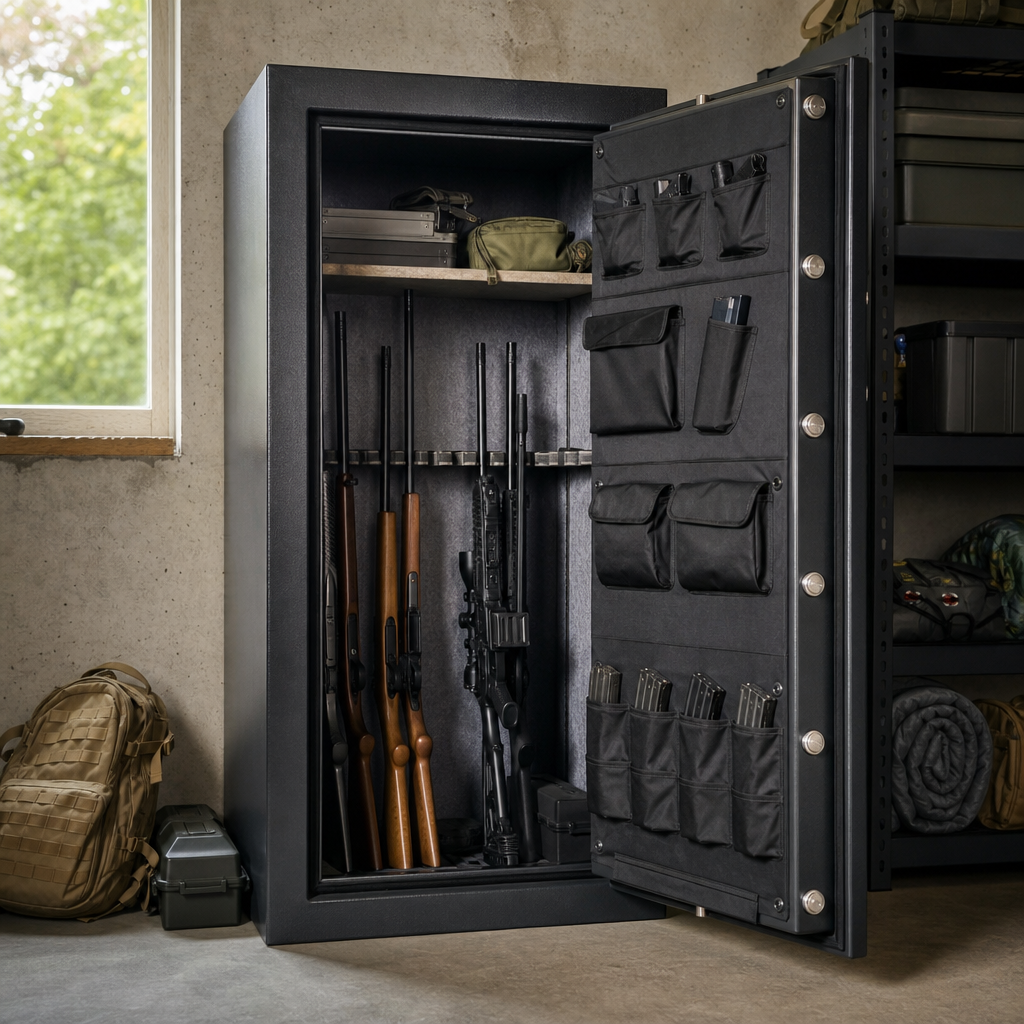
Fireproof gun safes belong in any serious emergency preparedness plan because disasters rarely arrive one at a time, and the same secure storage that prevents theft can also protect firearms, documents, ammunition records, and essential gear when fire, flood, storm damage, or evacuation disrupt normal life. In practical terms, a fireproof gun safe is a reinforced storage container built to resist unauthorized access while maintaining survivable internal temperatures during a tested fire exposure, usually for a stated time such as thirty, sixty, or one hundred twenty minutes. Disaster-resistant storage expands that idea to include smoke, water, impact, corrosion, and post-event recovery concerns. I have seen households focus on food, flashlights, and backup power while leaving firearms, passports, insurance papers, and medication lists scattered across closets and drawers; after a structure fire or severe storm, that disorganization becomes a second emergency. A comprehensive plan treats storage as infrastructure, not an accessory. The right safe helps preserve legal control of firearms, reduces the chance of heat-damaged ammunition creating hazards for firefighters, and protects the records needed for insurance claims and replacement. It also supports faster, calmer decision-making during evacuation because critical items are consolidated. For families who keep firearms for home defense, hunting, or duty use, the safe is the anchor point connecting security, safety, readiness, and recovery. Understanding how fire ratings work, which disaster threats matter most in your region, and how to position and maintain a safe will determine whether it becomes true emergency equipment or just heavy furniture.
Why fireproof gun safes matter in layered preparedness
Emergency preparedness works best in layers: prevention, protection, response, and recovery. A fireproof gun safe contributes to all four. Prevention starts with safe storage that limits unauthorized access by children, visitors, or burglars. Protection comes from steel construction, locking bolts, insulation, and door seals that delay heat transfer and smoke infiltration. Response improves because firearms, spare magazines, optics, and key documents are in one predictable location. Recovery becomes more manageable when serial number records, trust paperwork, tax files, and insurance documents survive. In my experience helping households audit preparedness gaps, storage failures are common. People may own extinguishers and smoke alarms but still keep titles, suppressor paperwork, cash, and backup hard drives in cardboard boxes near a furnace room.
Fire is the headline risk, but not the only one. A tornado can collapse framing onto a safe. A hurricane can flood the first floor with contaminated water. An earthquake can tip a poorly anchored cabinet and jam the door. Even after a wildfire is extinguished, corrosive smoke residue and moisture can damage blued steel, optics coatings, and electronics. That is why the best preparedness plans pair a fire-rated safe with anchoring, dehumidification, inventory management, and a room-by-room hazard assessment. If your county’s primary threats are wildfire and burglary, your choices may differ from someone in a coastal flood zone, yet the planning framework remains the same: identify what must survive, define how long it must survive, and match storage performance to that requirement.
Understanding fire ratings, insulation, and test standards
The phrase fireproof gun safe is widely used, but no safe is absolutely proof against every fire. What matters is tested performance under specified conditions. Manufacturers typically advertise a temperature threshold and duration, such as 60 minutes at 1,400 degrees Fahrenheit with interior temperatures below 350 degrees. That 350-degree benchmark matters because paper chars around 451 degrees Fahrenheit, while plastics, adhesives, lubricants, and electronic media can fail much earlier. Firearms themselves may survive heat that destroys stocks, optics, slings, and documents. Therefore, the rating should be read as a practical limit, not a guarantee.
Construction details drive real performance. Composite safes use layers of steel and proprietary fire insulation, often gypsum-based or cementitious materials, to slow thermal transfer. Expanding intumescent door seals help block smoke and hot gases as temperatures rise. Thicker steel improves security and structural rigidity, though steel also conducts heat, so insulation design is critical. Independent testing by organizations such as UL is more meaningful than an unverified factory claim, and buyers should read the fine print. Was the safe tested in a furnace from ambient temperature, or dropped after heating to simulate a floor collapse? Was the rating based on external temperature, internal temperature, or both? These details separate marketing from preparedness-grade performance.
Water resistance also deserves scrutiny. Many gun safes include door seals marketed against sprinkler runoff or firefighting water, but they are not diving vaults. If flood exposure is a realistic threat, ask whether the manufacturer specifies a tested water depth and duration. In several home losses I have reviewed, contents survived the heat event but were later ruined by standing water because the safe sat directly on a slab in a flooded garage. A modest riser, proper placement, and sealed document pouches inside the safe would have changed the outcome.
Choosing the right safe for your threat profile and inventory
The best fireproof gun safe for emergency preparedness is the one sized and specified for your actual risk profile, not the one with the loudest advertising. Start by listing what will go inside: long guns, handguns, suppressors, magazines, ammunition records, hard drives, passports, family photos, medical directives, and backup cash. Then estimate realistic growth. Most owners outgrow a safe faster than expected because optics, cases, and document bins consume more space than catalog capacities suggest. I generally recommend buying one size larger than the current collection requires and preserving upper shelves for non-firearm essentials.
Security ratings and fire ratings should be balanced, not traded blindly. A lightly built cabinet with an impressive fire claim may disappoint in a burglary. A thick steel safe with minimal insulation may excel against attack but offer poor thermal protection. Lock choice matters as well. Mechanical dial locks are durable and have no batteries, while electronic locks offer faster access and multiple user codes. In storm-prone areas where power disruptions are common, choose an electronic lock with a proven track record, external battery capability if available, and a disciplined battery replacement schedule. Avoid obscure brands that cannot provide parts or service information years later.
| Preparedness factor | What to look for | Why it matters in an emergency |
|---|---|---|
| Fire rating | Independent test data, stated duration, internal temperature limit | Determines whether documents, optics, and firearm components stay below damaging heat levels |
| Steel construction | Heavier body and door, reinforced frame, solid locking bolts | Improves burglary resistance and helps the safe remain intact after impact or debris load |
| Door seal | Intumescent or comparable heat-activated seal | Reduces smoke and hot gas intrusion during a structure fire |
| Water resistance | Specified seal performance or tested water exposure | Helps protect contents from sprinkler discharge and firefighting runoff |
| Anchoring system | Factory anchor holes and correct concrete or lag hardware | Prevents tipping, theft by removal, and movement during earthquakes or high winds |
| Interior climate control | Dehumidifier rod, desiccants, hygrometer | Limits rust, mold, and corrosion after humidity spikes or flood-related dampness |
Think in zones. A full-size safe in the main residence can serve as the primary storage hub, while a smaller document fire box inside it can protect passports, wills, and digital backups at lower temperatures. Some households also maintain a rapid-access bedside safe for a defensive handgun, but that should complement, not replace, the main disaster-resistant safe. The hub page for this topic should connect those related decisions because preparedness is a system, not a single purchase.
Placement, installation, and home hardening considerations
Where you put the safe affects survivability almost as much as the model you buy. Heat rises, upper floors fail first, and garages often combine theft visibility with chemical fuel loads. In many homes, a ground-floor interior location on a concrete slab is preferable to an attic-adjacent closet or an exposed garage corner. Basements can work well for fire protection, but they are poor choices in flood-prone areas unless the safe is elevated above expected water levels. Keep it away from obvious sightlines, windows, and rooms likely to contain accelerants such as paint, gasoline, or stacked cardboard.
Anchoring is not optional. A 700-pound safe can still be moved with appliance dollies, pry bars, and time. Bolting it to concrete or substantial framing reduces theft risk and helps the safe remain upright during earthquakes or collapse events. Follow manufacturer instructions on anchor type, spacing, and torque. Improvised hardware is a common failure point. I have also seen beautiful safes installed so tightly into alcoves that door swing, ventilation, and service access were compromised. Leave enough clearance to inspect seals, replace lock batteries, and route power for interior lighting or dehumidifiers.
Room hardening adds another layer. Smoke alarms, monitored security, residential sprinklers where feasible, and nearby fire extinguishers all support the safe’s mission. So does defensible space in wildfire regions, especially brush clearance and ember-resistant vents. In hurricane country, roof tie-downs and impact-rated openings reduce structural failure that can expose the safe to prolonged weather. The safe should be integrated into the house protection plan, not treated as a standalone fix.
Protecting documents, accessories, and firearms inside the safe
A fireproof gun safe becomes far more valuable when its contents are organized for survival and retrieval. Separate categories clearly. Firearms should be unloaded for storage unless a dedicated defensive setup is maintained under a specific household protocol. Use silicone-treated socks or soft covers cautiously; some trap moisture if the environment is not controlled. Optics, suppressors, and serialized parts deserve padded, labeled spaces. Documents should go inside sealed, water-resistant pouches or a secondary document box because the safe interior can still face humidity, condensation, and dirty water exposure after an incident.
Climate control is essential. Most gun safes are not airtight enough to stop moisture migration, and post-disaster humidity can surge for days. A low-watt dehumidifier rod combined with rechargeable desiccants and a small hygrometer gives you measurable control. For blued steel firearms, I aim to keep relative humidity around 45 to 50 percent inside the safe. Lower can dry wood stocks excessively; higher invites corrosion. Lubrication should be appropriate for storage duration and local temperature swings. Long-term storage grease on a hunting rifle may make sense; the same approach on a home-defense pistol can slow deployment if not managed carefully.
Inventory discipline saves enormous time later. Photograph each firearm, record make, model, serial number, and distinctive accessories, and keep copies both inside the safe and offsite in encrypted cloud storage. Include receipts, appraisals for high-value pieces, and National Firearms Act paperwork where applicable. After a fire or theft, insurers and law enforcement work faster when you can provide precise records immediately. This is one of the most overlooked preparedness tasks, yet it often determines whether recovery takes days or months.
Integrating the safe into evacuation, recovery, and family planning
A comprehensive emergency plan answers three questions: what stays, what goes, and who does what. The safe influences all three. In a fast-moving wildfire or house fire, the safe is the shelter-in-place solution for items too heavy or too regulated to grab quickly. In a planned evacuation ahead of a hurricane, some contents may travel, such as passports, medications, cash, and one locked defensive handgun if legally appropriate. Build a written checklist so the decision is not improvised under stress.
Family members should know the basics without compromising security. That means designating who can open the safe, where backup combinations are stored securely, and how to contact a locksmith or manufacturer if the lock fails after an event. If you maintain a trust or shared access arrangement, verify that your plan aligns with current law in your jurisdiction. I advise storing emergency contact numbers, policy numbers, and a laminated recovery checklist inside the safe door pocket if your model has one. After a disaster, cognitive overload is real; simple written prompts prevent missed steps.
Recovery planning should extend beyond the first 24 hours. Once authorities clear reentry, inspect the exterior before forcing the door. Heat can warp seals, and standing water may conceal contamination. Wear gloves, document everything with photos, and notify your insurer before extensive cleanup. Firearms exposed to smoke or water should be evaluated promptly by a qualified gunsmith because corrosion can begin quickly, and hidden damage to springs, optics, or ammunition can create safety risks. The safe’s purpose is not merely to preserve property; it is to preserve safe, lawful function after the emergency.
Fireproof and disaster-resistant gun storage is most effective when treated as a hub within a larger preparedness system. The safe protects more than firearms. It protects legal documents, identity records, digital backups, and the continuity of your household after a disruptive event. The core principles are straightforward: buy for your real risks, verify test claims, install the safe correctly, control interior humidity, organize contents intelligently, and connect safe use to evacuation and recovery procedures. Done well, this single piece of equipment reduces theft risk, limits fire loss, improves response under stress, and shortens the path back to normal operations. Done poorly, it becomes an expensive box that fails at the moment it is needed most.
If you are building out the Gun Safes and Safety section of your preparedness plan, use this page as the starting point for every related decision about fire ratings, flood exposure, placement, anchoring, climate control, and recordkeeping. Then audit your current setup this week. Measure your space, list what must be protected, verify your insurance documentation, and compare your safe’s specifications to the hazards common in your area. Emergency preparedness is not finished when supplies are purchased. It is finished only when critical assets are secured, accessible, and positioned to survive the worst day your household may face.
Frequently Asked Questions
Why is a fireproof gun safe important in a complete emergency preparedness plan?
A fireproof gun safe strengthens an emergency preparedness plan because it addresses multiple risks at once instead of solving only one problem. In a real-world emergency, theft, fire, smoke, water intrusion, structural damage, and forced evacuation can all happen together or in rapid sequence. A quality fireproof gun safe helps protect firearms from unauthorized access while also creating a more controlled environment for items that become critical during a crisis, such as passports, insurance records, property deeds, backup cash, medication lists, and inventory documents related to firearms and other valuables.
That matters because preparedness is not just about surviving the first event. It is also about recovering afterward. If a home fire, severe storm, or break-in disrupts daily life, having key items secured in one hardened location can reduce confusion and speed up next steps with law enforcement, insurers, emergency responders, and family members. In many households, the gun safe becomes a central continuity tool, not just a storage box. It can hold defensive firearms, spare keys, communication devices, battery packs, flashlights, and irreplaceable records that would be difficult or impossible to reconstruct after a disaster.
From a planning perspective, a fireproof gun safe supports the core preparedness principles of protection, redundancy, organization, and controlled access. It allows you to keep essential gear consolidated, reduces the chance that critical items are scattered during an emergency, and creates a secure layer between your family and dangerous or high-value contents. When integrated thoughtfully, it becomes part of a broader system that may also include evacuation planning, insurance documentation, backup power, first aid supplies, and off-site record storage.
What does “fireproof” really mean when it comes to gun safes?
In practical terms, “fireproof” does not mean a safe is indestructible or that its contents will survive every possible fire without damage. What it usually means is that the safe has been designed and tested to keep the internal temperature below a certain threshold for a stated period of time under specific fire conditions. Those ratings matter because heat, not just flame, is often what destroys sensitive contents. Paper documents, optics, electronics, lubricants, plastics, and ammunition packaging can all be compromised if internal temperatures rise too high, even if the exterior of the safe remains intact.
When evaluating a fireproof gun safe, look closely at the fire rating details rather than relying on a marketing label alone. Important factors include the tested temperature, the duration of exposure, whether the rating comes from an independent testing source, and whether the safe also accounts for heat transfer through door seams and body panels. A longer fire rating may provide more protection in a prolonged residential fire, but placement in the home, the structure’s construction, and the intensity of the fire also influence real performance.
It is also important to understand that fire events are often followed by water exposure from sprinklers, hoses, or weather after structural damage. For that reason, a good preparedness-minded purchase is not just a safe with a respectable fire rating, but one with solid door seals, durable construction, and interior moisture control strategies. Adding document sleeves, desiccants, dehumidifiers, and waterproof pouches for especially sensitive records can further improve survivability. The best mindset is to see the safe as a critical protective layer, but not as the only layer. Backups, digital copies, and off-site storage still belong in a complete emergency plan.
What items should be stored in a fireproof gun safe besides firearms?
A fireproof gun safe can do far more than store guns. In a comprehensive preparedness plan, it can serve as a secure hub for the items you would most need during a disaster and the items that would be hardest to replace afterward. That commonly includes legal and identity documents such as birth certificates, Social Security cards, passports, wills, trusts, titles, deeds, and insurance policies. It can also hold printed contact lists, emergency action plans, medical information, copies of prescriptions, and household inventories that help you make fast decisions under stress.
Many people also use the safe for firearm-related records, including serial number lists, purchase receipts, photographs for insurance purposes, training certifications, permits, and maintenance logs. These records become especially important if you ever need to report loss, theft, or damage after a fire or break-in. Sensitive digital backups stored on encrypted drives can also be useful, provided they are protected from heat and moisture inside suitable containers. Some households keep backup cash, precious metals, sentimental photos, or small heirlooms inside the safe for the same reason: they are compact, valuable, and difficult to replace.
If you plan to store defensive gear or emergency supplies inside the safe, think in terms of mission-critical access. A flashlight, spare batteries, a charged power bank, a compact first aid kit, communication device backups, and selected personal defense items may make sense depending on your household’s security needs and how quickly the safe can be opened. However, avoid overcrowding. A disorganized safe slows access and increases the chance of damage. Use shelves, labeled pouches, document bags, and inventory checklists so the safe stays functional under pressure. The goal is not to turn it into random storage, but into a secure, prioritized repository for what matters most.
How should a fireproof gun safe be set up and maintained for emergencies?
Proper setup is just as important as the safe itself. Start with placement. A safe should ideally be installed in a location that balances security, accessibility, and environmental protection. Ground-floor placement on a structurally sound surface is often preferred because large safes are heavy, and lower-level positioning may reduce the risk of collapse through weakened floors during a fire. Bolting the safe down is strongly recommended because even a heavy safe can be tipped, pried, or removed with enough time and tools. Anchoring also improves safety in earthquakes, severe storms, and impact events.
Environmental control matters too. Fireproof does not automatically mean moisture-proof. Humidity can damage firearms, paper documents, ammunition packaging, and electronics over time. Use desiccant packs, a dehumidifying rod if the safe supports one, and protective sleeves or waterproof pouches for sensitive paperwork. Review the seal condition periodically and inspect for rust, wear, or any sign that the locking mechanism is degrading. Batteries in electronic locks should be replaced on a schedule rather than waiting for failure, and backup entry methods should be understood by authorized adults in the household.
Maintenance should also include regular content reviews. Update your records, remove outdated paperwork, refresh emergency cash if needed, and verify that stored flashlights or power banks still function. Keep an inventory of what is inside, and store a duplicate of that inventory securely off-site or in encrypted digital form. If your preparedness plan includes evacuation, rehearse who can access the safe, what must be retrieved first, and under what circumstances retrieval should be skipped for safety reasons. In short, a fireproof gun safe should be treated like any other emergency system: installed correctly, inspected regularly, and integrated into a clear family plan.
Can a fireproof gun safe help during evacuation, storm damage, or long-term recovery after a disaster?
Yes, and this is one of the most overlooked benefits. A fireproof gun safe helps not only during the emergency itself, but during the chaotic hours and weeks that follow. During an evacuation, you may only have minutes to leave. A well-organized safe allows you to quickly access the most important items or, if there is no time, leave knowing that firearms, documents, and selected valuables are protected behind a hardened barrier rather than exposed throughout the home. That alone can reduce risk and uncertainty during a stressful departure.
After a storm, wildfire, or structure fire, homes are often left unsecured, partially open to the elements, or temporarily accessible to contractors, adjusters, or even opportunistic thieves. A bolted fireproof gun safe can continue to provide a controlled storage point when doors, windows, or roofing have been damaged. It may also protect critical records needed for insurance claims, identity verification, and replacement purchases at exactly the moment those documents become most important. If your recovery depends on proving ownership, showing policy details, or documenting firearm serial numbers, the safe can preserve the information that helps everything else move forward.
For long-term recovery, the safe supports continuity and order. Instead of trying to piece together scattered records from damaged drawers and cabinets, you have a central location for the documents and gear that matter most. That can shorten claim timelines, reduce administrative stress, and help restore a sense of control after a disruptive event. The key is to view the safe as part of a layered resilience strategy: use it alongside insurance, digital backups, evacuation kits, family communication plans, and home hardening measures. In that role, a fireproof gun safe is not just about secure storage. It is a practical recovery tool that helps protect both your assets and your ability to respond effectively when normal life is interrupted.