
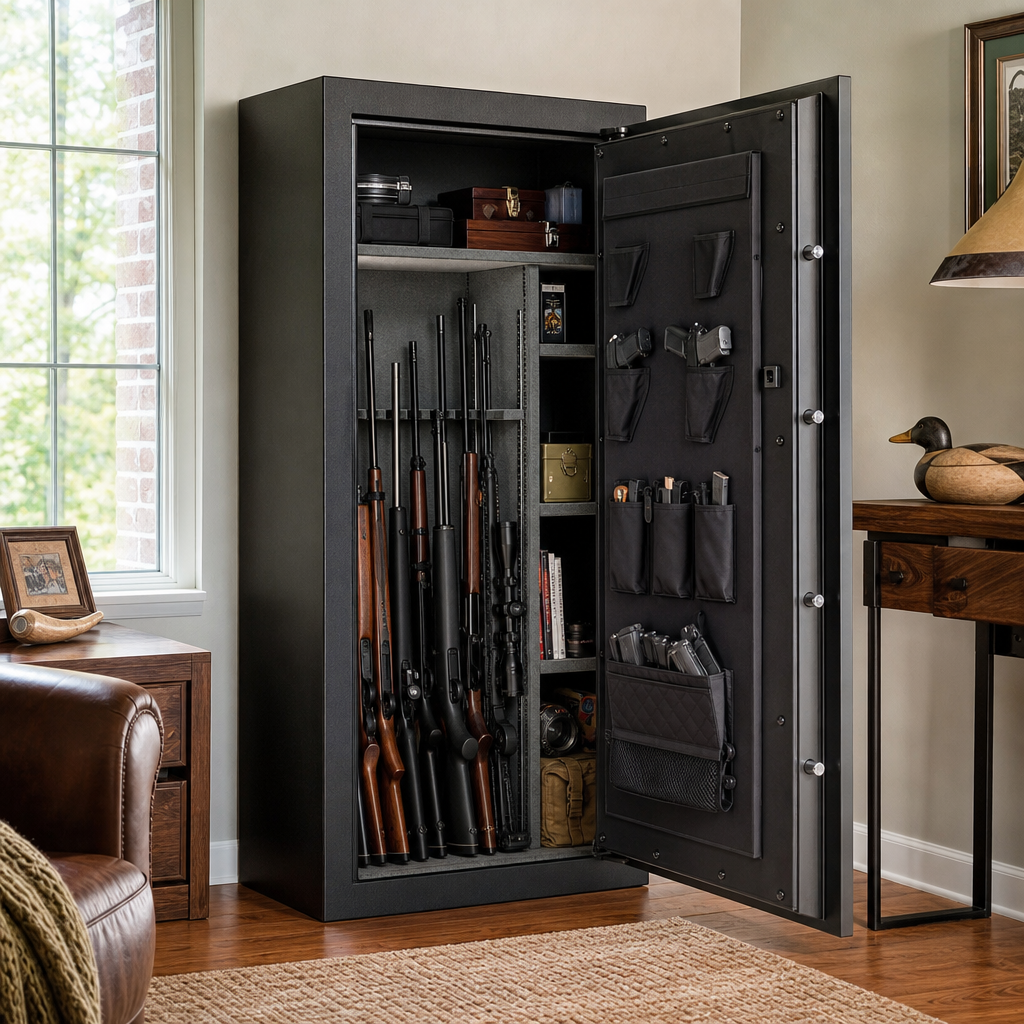
Choosing the best gun safes for homeowners looking for maximum security starts with understanding who is buying the safe, what risks they face, and how those needs shape the right purchase. In the gun safes and safety category, buyer personas are practical profiles that group homeowners by priorities such as burglary resistance, fire protection, quick access, storage capacity, budget, and family safety. I have helped homeowners compare safes for dedicated gun rooms, suburban family homes, rural properties, condos, and collector spaces, and the same lesson comes up every time: the “best” gun safe is never universal. It is the safe that matches the owner’s threat level, firearm mix, home layout, and daily routine.
This matters because a mismatch is expensive and dangerous. A large safe with thin steel and weak boltwork may look impressive but fail under attack. A compact bedside unit may offer speed but not enough protection for long guns or high-value optics. Fire ratings can be misunderstood, lock types can be chosen for convenience over reliability, and storage capacity is often overstated by manufacturers. For homeowners, maximum security means evaluating construction details like steel gauge, continuous welds, door gap tolerance, relockers, hard plates, anchor points, and third-party certifications, then lining those details up with the way the safe will actually be used. This hub article explains the main gun safe buyer personas, the features each persona should prioritize, and the tradeoffs that separate smart purchases from regrettable ones.
The family safety buyer: preventing unauthorized access without sacrificing usability
The most common homeowner persona is the family safety buyer. This owner may have children, teenagers, frequent visitors, or in-home staff and wants secure firearm storage that prevents unauthorized access while still allowing lawful ownership. For this buyer, the best gun safes usually combine strong mechanical protection with predictable daily use. In practice, that often means a full-size residential security container or true safe for long-term storage, paired with a smaller quick-access safe for a defensive handgun.
For family homes, internal organization matters more than marketing suggests. I consistently recommend adjustable shelving, barrel rests that do not waste width, and dedicated compartments for documents, jewelry, and ammunition only when local law and household policy allow co-storage. Many families discover too late that a “24-gun safe” comfortably fits closer to 12 to 16 scoped rifles. A household with AR-platform rifles, shotguns, and optics should buy at least one size larger than current needs. The lock choice is also important. Mechanical dial locks remain durable and simple, while quality electronic locks from brands such as SecuRam or S&G offer faster access. Biometric locks can be useful on handgun safes, but they should be tested extensively under realistic conditions, not trusted blindly out of the box.
The family safety buyer should focus on anchored installation, because even a well-built safe can be defeated if thieves can tip it and attack weak points or remove it entirely. Concrete anchoring in a closet corner or basement utility area usually improves both security and discretion. If you are comparing options, this is the persona that often benefits from reading deeper guides on handgun safes, child-safe storage practices, and the difference between electronic and mechanical locks.
The burglary-focused buyer: prioritizing steel thickness, boltwork, and installation
The burglary-focused buyer wants the highest resistance to forced entry within a residential setting. This persona is common among homeowners in areas with higher break-in rates, people storing multiple firearms, and owners with expensive optics, suppressors where legal, or collectible handguns. For this buyer, maximum security starts with steel, not upholstery, interior lighting, or branding. A safe body made with 10-gauge steel is meaningfully stronger than many entry-level units built from 14- or 12-gauge steel, and stepping into plate steel construction or composite designs changes the security equation further.
Door construction deserves close inspection. Effective safes use substantial boltwork, reinforced door edges, anti-pry tabs, hard plates that protect the lock from drilling, and relockers that trigger if the lock is attacked. External hinges are not inherently insecure if the door has dead bars or full bolt coverage, but bargain safes often cut corners in areas buyers cannot see. UL ratings also matter. A UL Residential Security Container rating is a baseline, not a peak standard. Buyers seeking maximum burglary resistance should look beyond marketing phrases like “military style” or “drill resistant” and ask exact questions about body thickness, door thickness, lock certification, and relocker count.
Placement is part of burglary resistance. In my experience, homeowners get better outcomes when the safe is installed where pry attacks are physically constrained, such as a closet corner with minimal side clearance. A monitored alarm, cameras, reinforced doors, and longer police response times in rural areas all influence what level of safe is appropriate. This persona should explore more detailed comparisons of steel gauge, pry resistance, anchoring methods, and true safe versus RSC construction.
The fire-protection buyer: balancing heat resistance with real security
Some homeowners first shop for a safe after a nearby house fire, wildfire warning, or insurance review. The fire-protection buyer wants to preserve firearms, paper records, heirlooms, and digital media from high heat and smoke damage. This is a legitimate concern, but it is also where marketing is often most confusing. Fire ratings vary widely by test method, temperature, duration, and whether the test came from an independent lab or the manufacturer. A “60 minutes at 1400 degrees” label is not automatically equal across brands.
For this persona, the key is understanding that fire protection and burglary resistance are related but not identical goals. Many gun safes achieve fire ratings with gypsum-based liners or similar insulation materials, yet still use thinner steel than a burglary-focused buyer would prefer. Fire seals that expand under heat are valuable, but they do not compensate for weak anti-theft design. Homeowners storing paper documents should also remember that media like hard drives, flash storage, and photographs have lower heat tolerance than paper. In some cases, the better solution is a gun safe for firearms plus a separate media-rated document safe.
Where the safe sits in the home affects fire performance too. A garage may seem convenient, but it can expose the safe to faster heat buildup, moisture, and easier visibility during theft. Interior ground-floor placement on a concrete slab often improves both security and survivability. Buyers in wildfire regions should also look at defensible space, home hardening, and insurance documentation. This persona is well served by more focused content on fire ratings, safe insulation methods, and where to install a gun safe for the best mix of theft and fire protection.
The quick-access defender: securing a ready firearm for emergency use
The quick-access defender is less concerned with storing a large collection and more concerned with accessing one or two firearms under stress. This homeowner may keep a defensive handgun near the bed, in a home office, or in a primary living area. For this persona, the best gun safe is typically a dedicated handgun safe designed for rapid opening, tamper resistance, and discreet mounting. Speed matters, but repeatability matters more. A lock that opens in two seconds in a product demo but fails under sweaty hands, poor finger placement, or low batteries is not a security upgrade.
Construction standards still matter here. A quality quick-access safe should have thicker steel than bargain lockboxes, protected hinges, anti-pry design, and secure mounting to furniture or structure. Push-button simplex-style mechanical locks remain popular because they do not depend on batteries and can be operated by feel in darkness. Electronic and biometric models can also work well, but only from brands with solid reliability records and after regular household testing. This is especially true if multiple authorized adults need access.
The quick-access defender should think in layers. A handgun safe by the bed does not replace a larger anchored safe for the rest of the collection. It complements it. In homes with children, this persona should adopt strict habit discipline: the firearm is either on the owner’s person, in the hand, or secured in the safe. If you are building internal links across a gun safes and safety content hub, this section naturally leads to deeper articles on bedside safes, biometric reliability, and best practices for staging a defensive firearm responsibly.
The collector and enthusiast: protecting value, capacity, and long-term organization
The collector persona often outgrows entry-level safes quickly. This homeowner may own vintage revolvers, commemorative rifles, custom 1911s, scoped precision rifles, or NFA-regulated accessories where legal. Maximum security for collectors includes theft protection, but it also extends to humidity control, finish preservation, inventory management, and realistic capacity planning. In my experience, collectors regret buying for current count rather than future growth more than almost any other safe decision.
Interior layout drives daily satisfaction. Door organizers, adjustable racks, pistol pegs, archival sleeves, and dehumidification systems such as GoldenRod heaters or rechargeable desiccants make a difference over time. Collectors should also document serial numbers, appraisals, and photographs and store duplicates offsite or in encrypted cloud storage. Insurance riders may require proof of ownership and value, and a safe alone is not an insurance policy.
Because collector safes often contain high-value contents, build quality should be higher than average. That can mean stepping into premium brands like AMSEC, Fort Knox, Graffunder, Brown Safe, or Hollon depending on the balance of burglary, fire, and budget priorities. Delivery and installation are also more complex. A 1,000-pound-plus safe affects flooring, stairs, and access routes, so professional installation is usually worth the cost. Collectors should continue to specialized articles on humidity control, gun safe organization, and insurance documentation for firearms.
The budget-conscious first-time buyer: avoiding false economy
The first-time buyer on a budget is often tempted by big-box promotions, holiday bundles, and oversized capacity claims. This persona absolutely can buy a good gun safe, but maximum security on a limited budget requires disciplined prioritization. Spend on steel thickness, lock quality, and anchoring before paying extra for cosmetic door panels, elaborate interiors, or weakly tested fire labels. A smaller, stronger safe is usually a better purchase than a larger, thinner one at the same price.
| Buyer persona | Top priority | Best safe type | Main caution |
|---|---|---|---|
| Family safety buyer | Unauthorized access prevention | Anchored full-size safe plus handgun safe | Overestimating capacity |
| Burglary-focused buyer | Forced-entry resistance | Heavy-gauge or plate-steel safe | Falling for cosmetic features |
| Fire-protection buyer | Heat and smoke resistance | Independently rated fire-lined safe | Trusting vague fire claims |
| Quick-access defender | Fast, reliable access | Mounted handgun safe | Ignoring lock failure scenarios |
| Collector and enthusiast | Capacity and preservation | Premium large-capacity safe | Buying only for current collection size |
| Budget-conscious buyer | Best protection per dollar | Compact, stronger-entry model | Choosing size over build quality |
Good budget brands and product lines can serve homeowners well, especially when expectations are realistic. The key is to verify specifics: body steel gauge, door construction, lock brand, anchor holes, and actual weight. Heavier generally signals more steel, though insulation and composite layers also add mass. Delivery fees, installation costs, and possible humidity-control accessories should be included in the real budget. This persona should move next to articles about entry-level gun safe mistakes, how to read manufacturer specifications, and when used safes are worth considering.
How homeowners should choose the best gun safe for maximum security
The clearest way to choose among these buyer personas is to rank your threats, then buy accordingly. If unauthorized child access is the top concern, prioritize lock reliability, user habits, and layered storage. If burglary is the top concern, prioritize steel, boltwork, installation, and concealment. If wildfire or structure fire is the main concern, scrutinize fire test details and placement. If immediate defensive access matters most, use a dedicated rapid-access handgun safe and keep the rest of the collection in a larger anchored unit.
There are also universal buying rules. First, buy larger than you think you need. Second, anchor the safe properly. Third, place it where thieves cannot work comfortably. Fourth, verify lock quality and service support. Fifth, treat manufacturer capacity claims as optimistic. Sixth, control humidity if the safe is in a damp environment. Seventh, remember that no gun safe is a substitute for a broader home security plan that includes alarms, cameras, reinforced entries, insurance, and responsible firearm handling.
The best gun safes for homeowners looking for maximum security are the ones matched to real use, not showroom impressions. Start by identifying your buyer persona, then compare safes based on construction, fire testing, access method, installation, and growth capacity. From there, work through the supporting articles in this gun safes and safety hub so you can narrow the field with confidence, avoid costly mistakes, and choose a safe that protects your firearms, your family, and your peace of mind for years.
Frequently Asked Questions
What should homeowners look for first when choosing a maximum-security gun safe?
The first step is to match the safe to the homeowner’s real-world risks, not just shop by brand name or size. For maximum security, start with burglary protection. Look closely at steel thickness, door construction, locking bolt design, hinge protection, and whether the safe has a reinforced door frame that resists pry attacks. A safe with a heavy body and a strong door is generally more important for theft resistance than cosmetic features or interior accessories. Homeowners should also pay attention to the lock type, whether that is a high-quality mechanical dial, an electronic keypad, or a biometric system, and make sure it comes from a reputable manufacturer with a strong service record.
After burglary resistance, think about fire protection and installation. A safe can offer excellent security on paper, but if it is too light and not bolted down, a thief may simply remove it. Anchoring the safe to concrete or a structurally sound floor is one of the most important parts of the purchase. Fire ratings also matter, especially for homeowners storing documents, heirlooms, or multiple firearms. Instead of relying only on marketing claims, compare the stated fire duration, temperature rating, and build quality. The best choice usually comes from balancing security level, capacity, location in the home, and how fast the owner may need access in an emergency.
Is a heavier gun safe always more secure?
Weight is an important factor, but it is not the only measure of security. In general, a heavier safe is harder to carry away, tip over, or force open quickly, which makes weight a real advantage for homeowners concerned about burglary. Heavier safes often use thicker steel, stronger doors, and more internal reinforcement, all of which contribute to better protection. That said, not every heavy safe is built equally well. Some models gain weight from added fireboard or interior materials rather than stronger steel construction, so homeowners should look beyond total pounds and review the actual body and door specifications.
A better way to think about safe security is to view weight as one part of a larger system. A moderately heavy safe made with strong steel, quality locking components, hard plate protection, relockers, and proper anchoring can outperform a heavier safe with weaker construction. Placement matters too. A safe installed in a concealed area, fitted tightly into a closet or corner, and bolted down securely is much harder to attack than one sitting exposed in a garage. For homeowners seeking maximum security, the best approach is to combine substantial weight with robust construction, smart placement, and professional installation whenever possible.
How important is fire protection in a gun safe for homeowners?
Fire protection is extremely important for many homeowners, especially those who are not only storing firearms but also important papers, jewelry, optics, ammunition accessories, and family valuables. In a house fire, heat and smoke can destroy contents long before the safe itself visibly fails, so a meaningful fire rating can make a major difference. When comparing safes, homeowners should look at both the advertised fire duration and the temperature threshold. A safe rated for a longer period at a realistic internal temperature is generally more useful than a vague claim that sounds impressive but lacks detail. It is also wise to consider whether the safe uses a true expanding door seal, as this can help reduce smoke and heat intrusion.
That said, fire protection should not come at the expense of core burglary resistance. Many homeowners assume a safe with a long fire rating must also be highly secure against theft, but those are separate design priorities. A safe that survives heat well may still use thinner steel than ideal for maximum break-in resistance. For homeowners focused on maximum security, the right strategy is to prioritize strong anti-theft construction first, then choose the best fire protection available within that level of build quality and budget. If the safe will hold irreplaceable documents or media, some owners also add a secondary document box or fire-rated container inside the gun safe for layered protection.
Which lock type is best for a high-security gun safe: mechanical, electronic, or biometric?
Each lock type has advantages, and the best option depends on the homeowner’s priorities. Mechanical dial locks are widely respected for long-term reliability and simplicity. They do not rely on batteries or electronics, and many homeowners trust them for a dedicated security setup where speed is less important than durability. They can, however, be slower to open, especially under stress or in low-light conditions. Electronic keypad locks are popular because they provide faster access and allow easy code changes. For many homeowners, a quality electronic lock offers the best balance of convenience and security, provided it comes from a trusted lock manufacturer and is maintained properly.
Biometric locks can be useful for quick access, particularly in situations where a homeowner wants immediate entry without remembering a code. However, performance varies widely by model, and not all biometric systems are equally dependable in everyday use. Finger placement, moisture, dirt, or sensor quality can affect reliability. For maximum security, many experienced buyers prefer a proven mechanical or high-end electronic lock on the main safe, especially for long-gun storage and large-capacity models. In some households, the best solution is not choosing one category as universally superior, but selecting a lock based on use case: a larger anchored safe for primary storage and, if needed, a separate quick-access safe for defensive firearms.
How much gun safe capacity should a homeowner really buy?
Most homeowners should buy more capacity than they think they need. Manufacturer capacity numbers are often optimistic and based on tightly packed firearms without optics, slings, magazines, shelves, or other accessories. In practice, a safe advertised for a certain number of guns usually holds fewer in a comfortable, organized layout. If a homeowner already owns scoped rifles, shotguns, handguns, ammunition gear, important documents, or family valuables, the interior fills up quickly. For maximum security, overcrowding is not ideal because it can make access harder, increase the chance of damage to firearms, and reduce the usefulness of the safe over time.
The better approach is to buy based on current inventory plus future growth. A suburban family homeowner may need room for long guns, handguns, legal documents, passports, and other valuables. A rural homeowner may require larger long-gun storage and space for hunting gear. Someone building a dedicated gun room may want a premium safe as one layer in a broader security plan. In all cases, extra interior space improves organization and usability. If budget allows, choosing the next size up is often one of the smartest long-term decisions because it helps the safe remain useful for years instead of becoming undersized almost immediately.