
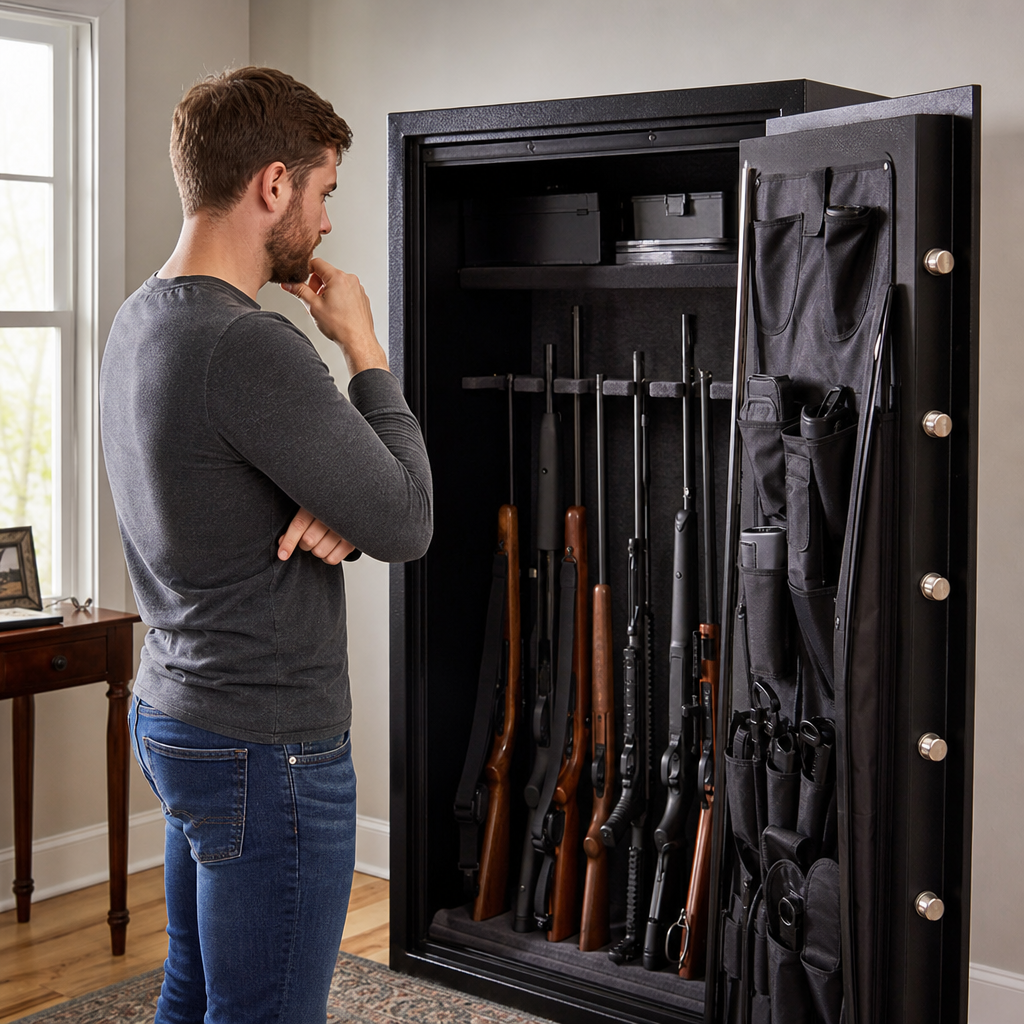
Buying a first gun safe is not simply a shopping decision; it is a safety decision that affects secure storage, legal compliance, theft prevention, and daily access for years. For a first-time gun owner, the market can feel crowded with terms such as fire rating, Residential Security Container, quick-access lock, long-gun capacity, and modular interior. A useful way to cut through the noise is to think in buyer personas: clear profiles that match living situation, firearm type, risk level, and budget to the right style of safe. I have helped new owners compare safes in apartments, suburban homes, ranch properties, and shared households, and the right choice almost always comes from understanding the user before comparing steel thickness or lock type.
A gun safe is a locked storage unit designed to restrict unauthorized access to firearms while also offering varying levels of protection against theft, fire, humidity, and accidental handling. Not every product sold as a safe provides the same protection. Many entry-level units are technically lockable cabinets, while heavier models may carry a UL-listed Residential Security Container rating. That distinction matters because a first-time buyer often assumes all safes stop burglars equally. They do not. Construction quality, door design, locking bolts, anchoring method, and where the safe is installed all determine real-world performance.
This guide focuses on gun safe buyer personas because different owners need different solutions. A single person with one handgun and a studio apartment does not need the same safe as a parent storing hunting rifles and home-defense pistols. A collector planning future purchases should buy differently than a seasonal sportsman. By organizing the decision around personas, this article acts as a hub for the broader gun safes and safety topic: storage size, lock types, placement, humidity control, childproofing, fire protection, and upgrade paths all flow from who will use the safe and why. If you start with the right persona, you can avoid overspending on features you will never use or, more dangerously, underspending on protection you actually need.
The apartment handgun owner persona
The most common first-time buyer I see is the apartment resident with one or two handguns, limited floor space, and concern about unauthorized access more than large-scale collection storage. This owner usually needs a compact handgun safe rather than a full-size gun safe. Key priorities are quick access, a small footprint, and secure anchoring to a floor, nightstand, bed frame, or closet shelf structure. In this scenario, a quality quick-access safe from brands such as Fort Knox, Vaultek, Hornady, or V-Line often makes more sense than an oversized cabinet taking up precious square footage.
For this persona, lock choice matters. Mechanical simplex locks are highly reliable and avoid battery dependence. Electronic keypad safes provide speed, but buyers should check for tamper resistance, backup entry method, and battery access from outside the locked compartment. Biometric handgun safes can be convenient, yet fingerprint readers vary widely in consistency. I advise first-time owners to test any biometric model repeatedly under dry hands, sweaty hands, and low-light conditions before trusting it for defensive use. A compact handgun safe should also have sufficient internal padding, a sturdy steel body, and pre-drilled anchor holes. In an apartment, portability is a theft risk, so a small safe must be physically secured.
The family household persona
When children, teenagers, frequent guests, or in-home service workers are part of the picture, storage decisions change immediately. The family household persona needs layered security: inaccessible firearms, controlled ammunition storage, predictable lock operation, and enough room for both current guns and future additions. In practice, that usually means a larger upright safe with long-gun capacity, adjustable shelving, and a lock system every responsible adult in the household can use correctly under stress.
Capacity is where many new buyers make a mistake. A safe marketed for twelve guns rarely stores twelve real-world firearms once optics, slings, bipods, and wider stocks are involved. A more realistic rule is to buy at least double your current collection size. If the household owns two rifles, one shotgun, and two handguns today, a nominal sixteen- to twenty-four-gun safe is often the true starting point. Families should also look for door organizers for pistols and documents, interior lighting, and dehumidification support. Fire protection deserves more weight here because passports, insurance papers, family records, and valuables often end up in the same safe. Brands like Liberty, Browning, Winchester, and American Security offer models that fit this profile, but model-level construction details matter more than logo recognition.
The budget-conscious new owner persona
Some first-time gun owners simply need the safest realistic option within a tight budget. That is a legitimate persona, but the decision should still be disciplined. A low-cost lockable cabinet from Stack-On or a basic entry-level safe can be better than unsecured storage, especially when anchored properly and placed discreetly. However, buyers should understand the tradeoff: thinner steel, simpler locks, fewer relockers, lower fire ratings, and less resistance to pry attacks. Price alone should never create false confidence.
The smart approach for this persona is to rank threats. If the primary concern is preventing child access or casual handling, a cabinet or entry-level safe may be adequate when combined with separate ammunition storage and household access controls. If the concern includes burglary during long work hours, the buyer should spend less on cosmetic features and more on steel, lock quality, and anchoring hardware. I have seen inexpensive safes perform reasonably well when bolted into concrete in a hidden closet, and expensive safes fail expectations because they were left freestanding in a garage. For entry buyers, installation quality can matter as much as the product tier.
The long-gun sportsman persona
The hunter, target shooter, or rural property owner usually starts with rifles and shotguns rather than handguns. This persona needs barrel height clearance, rack spacing that accommodates scopes, and interior flexibility for ammunition, cleaning rods, slings, hearing protection, and documents. Weight and placement are also major factors. Full-size long-gun safes can exceed several hundred pounds before loading, so upstairs placement, stair access, and flooring capacity must be considered early.
Firearm dimensions should guide the purchase. A scoped bolt-action rifle occupies much more usable width than a plain synthetic-stock shotgun. AR-platform rifles with optics, lights, and foregrips require even more room. For this buyer, interior layout often determines satisfaction more than the advertised gun count. Adjustable shelving systems from Browning’s Axis-style layouts or modular interiors from SecureIt can make a meaningful difference. The sportsman persona also benefits from humidity management, particularly in humid climates or unconditioned rooms. A GoldenRod dehumidifier, rechargeable desiccants, and a hygrometer are not optional accessories in many regions; they are core parts of safe ownership.
The defensive-access persona
Another distinct persona is the owner whose primary concern is balancing unauthorized access prevention with fast retrieval for home defense. This buyer often owns a bedside handgun and perhaps a defensive carbine or shotgun. The central question is simple: how fast can the authorized user access the firearm while still keeping it secured from children, visitors, and thieves? The answer is rarely one safe for everything. In many homes, the best setup is a larger anchored main safe plus a dedicated quick-access handgun safe in the bedroom.
For this persona, speed must be measured realistically. Mechanical simplex locks offer strong reliability and intuitive operation in darkness. Quality electronic keypads can be equally effective if the owner practices regularly and replaces batteries on schedule. Biometric entry can work, but it should never be trusted untested. Safe placement matters too. A bedside safe mounted out of casual view but reachable from bed is very different from a pistol buried in a closet safe under boxes. New owners should run timed access drills, unloaded and safely, to evaluate whether the chosen system truly supports defensive use. Good storage is not only about stopping access; it is about enabling the right access.
How to match persona to safe features
Once the buyer persona is clear, the shopping process becomes more objective. Instead of asking which brand is best, ask which features solve the owner’s actual storage problem. The table below summarizes the practical fit.
| Buyer persona | Best safe type | Top priorities | Common mistake |
|---|---|---|---|
| Apartment handgun owner | Compact quick-access handgun safe | Fast entry, anchoring, small footprint | Choosing a portable safe without bolting it down |
| Family household | Mid- to full-size upright safe | Child prevention, extra capacity, fire protection | Buying only for current guns |
| Budget-conscious new owner | Anchored cabinet or entry-level safe | Basic security, value, discreet placement | Assuming low price still means high burglary resistance |
| Long-gun sportsman | Tall long-gun safe with flexible interior | Scope clearance, rack layout, humidity control | Trusting advertised gun counts |
| Defensive-access owner | Main safe plus quick-access secondary safe | Reliable entry, bedroom placement, practice | Relying on untested biometrics alone |
Beyond persona matching, compare build quality with a critical eye. Look at steel gauge, door edge design, continuous welds versus spot welds, hard plate protection for the lock, and whether the safe includes relockers that activate during attack. Ask whether the fire rating is based on an independent test or a manufacturer claim. Confirm external dimensions, internal dimensions, and door swing clearance. If the safe will store documents, note that paper chars at lower temperatures than many buyers assume. If theft protection is your top concern, anchoring and concealment often outperform inflated fire claims as decision factors.
Installation, compliance, and planning for growth
Choosing the right gun safe does not end at checkout. Installation determines whether the safe performs as intended. A safe should be anchored whenever possible, ideally into concrete or substantial structural framing using manufacturer-approved hardware. Closets, corners, and low-visibility rooms reduce attack angles and keep the safe less obvious to visitors. Garages are tempting because of space, but they often introduce moisture swings and easier visibility. If garage placement is unavoidable, use dehumidification and consider a raised platform to reduce floor moisture exposure.
First-time owners should also check state and local storage laws, especially where child access prevention standards exist. Legal requirements vary, but responsible storage should exceed the minimum wherever practical. Plan for growth as well. Most gun owners acquire more accessories, more documents, and often more firearms than expected within a few years. Buying a safe is expensive enough that replacing it too soon is frustrating and avoidable. The right buyer-persona approach solves that problem by selecting for likely future use, not just today’s inventory. If you are comparing options now, list your persona, count your firearms realistically, measure your space, and choose a safe that protects your household without compromise.
Frequently Asked Questions
What size gun safe should a first-time gun owner buy?
The best rule for first-time buyers is simple: buy slightly larger than your current collection requires. Many new gun owners shop based on what they own today, then quickly realize they also need space for accessories, important documents, extra magazines, optics, ammunition stored separately where appropriate, and future firearm purchases. A safe advertised for a certain number of long guns often fits fewer once scopes, slings, and modern stock shapes are taken into account. In real-world use, a “10-gun” safe may comfortably hold much less if the firearms are scoped or have wider profiles.
A smart approach is to match safe size to your living situation and likely use pattern. If you live in an apartment and own one handgun for home defense, a compact quick-access handgun safe may be the right immediate choice. If you own a shotgun or rifle, or expect to add more firearms, a taller cabinet-style safe or full-size gun safe may make more sense. Think not only about storage volume, but also about where the safe will go, whether it can fit through doors and stairwells, and whether the floor can support the weight. For many first-time owners, the right answer is a safe that feels one step bigger than necessary but still practical for the home. That balance helps avoid outgrowing it too quickly while keeping installation realistic.
What do fire ratings and Residential Security Container ratings actually mean?
These terms matter because they address two different risks: fire damage and unauthorized access. A fire rating refers to how long the safe is designed to withstand heat exposure at a specified temperature. This can help protect firearms, documents, or valuables during a house fire, but buyers should read the rating carefully. Not all fire tests are identical, and some ratings come from the manufacturer rather than an independent testing body. A longer fire rating is generally better, but it should be viewed in context with your location, housing type, and overall risk. For example, someone in a detached home may weigh fire resistance differently than someone in a multi-unit building with different fire response realities.
A Residential Security Container, often abbreviated as RSC, is a classification that indicates the unit meets a recognized baseline standard for resisting forced entry attacks using common hand tools for a limited period. This is important because many products are marketed as “safes” even when they are really just light security cabinets. An RSC rating does not mean the container is impenetrable, but it does mean it offers a higher level of burglary resistance than the cheapest options on the market. For a first-time gun owner, the practical takeaway is this: if your concern is keeping children, guests, and opportunistic thieves out, look for a secure locking system, solid construction, and preferably an RSC-rated container. If your concern includes determined theft attempts, you should pay even closer attention to steel thickness, bolt design, hinge protection, and whether the unit can be anchored properly.
Which lock type is best for a first gun safe: keypad, biometric, or mechanical?
The right lock depends on how you prioritize speed, simplicity, and long-term confidence. Electronic keypads are popular because they are easy to use, fast to open, and convenient for people who want quick access without dealing with a dial. Many first-time buyers find them the best blend of security and usability. They also allow code changes without replacing hardware. The tradeoff is that electronic locks rely on battery power and quality electronics, so it is important to choose a reputable brand and understand the backup access method, battery replacement schedule, and lockout features.
Biometric locks appeal to buyers who want very fast access, especially for bedside handgun safes. When well made, they can be convenient, but quality varies widely. Fingerprint readers may perform differently depending on finger placement, moisture, dirt, or minor skin changes. That does not mean biometric safes are bad, but they should be tested thoroughly and should ideally include a secondary access method such as a keypad or backup key. Mechanical dial locks are valued for durability and independence from batteries, and many owners trust them for long-term reliability. Their downside is slower access, which may matter for defensive-use scenarios. For a first-time gun owner, the best lock is usually the one that matches how the firearm will be used: quick-access electronic or biometric for defensive access, and a high-quality electronic or mechanical lock for broader secure storage. Reliability and practice matter more than features alone.
Is a gun safe legally required, and how does safe storage help with compliance?
Legal requirements vary by state, locality, and the presence of children or prohibited persons in the home, so no first-time gun owner should assume the rules are the same everywhere. Some jurisdictions impose specific secure-storage requirements, especially when minors could gain access. Others tie criminal or civil liability to negligent storage if an unsecured firearm is used improperly. Even where a safe is not explicitly required in every circumstance, secure storage is one of the clearest ways to demonstrate responsible ownership and reduce legal risk. It can also help with insurance documentation, theft reporting, and proving that reasonable safety measures were taken.
Beyond strict legal compliance, a gun safe supports the broader responsibilities that come with ownership. It helps prevent unauthorized access by children, visitors, roommates, household workers, or anyone else who should not handle the firearm. It also creates a consistent routine: store the firearm secured when not under your direct control, keep access limited to authorized users, and manage keys, codes, or credentials responsibly. For first-time buyers, that consistency is often just as important as the safe itself. A well-chosen safe makes it easier to follow safe-storage laws, household rules, and best practices every day rather than relying on memory or improvisation.
What features matter most for a first-time buyer besides price?
Price matters, but it should not be the only filter because the cheapest option can become the most expensive mistake if it fails in the areas that matter most: security, access, and fit for your life. Start with construction quality, including steel thickness, door strength, locking bolts, pry resistance, and the ability to anchor the safe to the floor or wall as recommended by the manufacturer. Anchoring is especially important because even a heavy safe is more secure when it cannot simply be removed and opened elsewhere. Interior layout is another major factor. Adjustable shelves, long-gun racks, door organizers, and modular interiors can make a safe far more useful over time, especially if your firearm mix changes.
You should also think about daily usability. If the safe is difficult to reach, slow to open, or poorly located, you may be tempted to cut corners with storage habits. For that reason, placement, door swing, interior lighting, dehumidification options, and noise level during opening can all matter. Quick-access needs are especially important for handgun owners using the firearm for home defense, while larger-capacity organization matters more for owners with rifles or shotguns. Finally, consider the seller and manufacturer reputation. Warranty support, lock replacement policies, customer service, and independent reviews can tell you a lot about whether the product will perform well beyond the day it is delivered. For a first-time gun owner, the right safe is not just the one with the best price tag; it is the one that supports safe, lawful, secure ownership with the fewest compromises.