
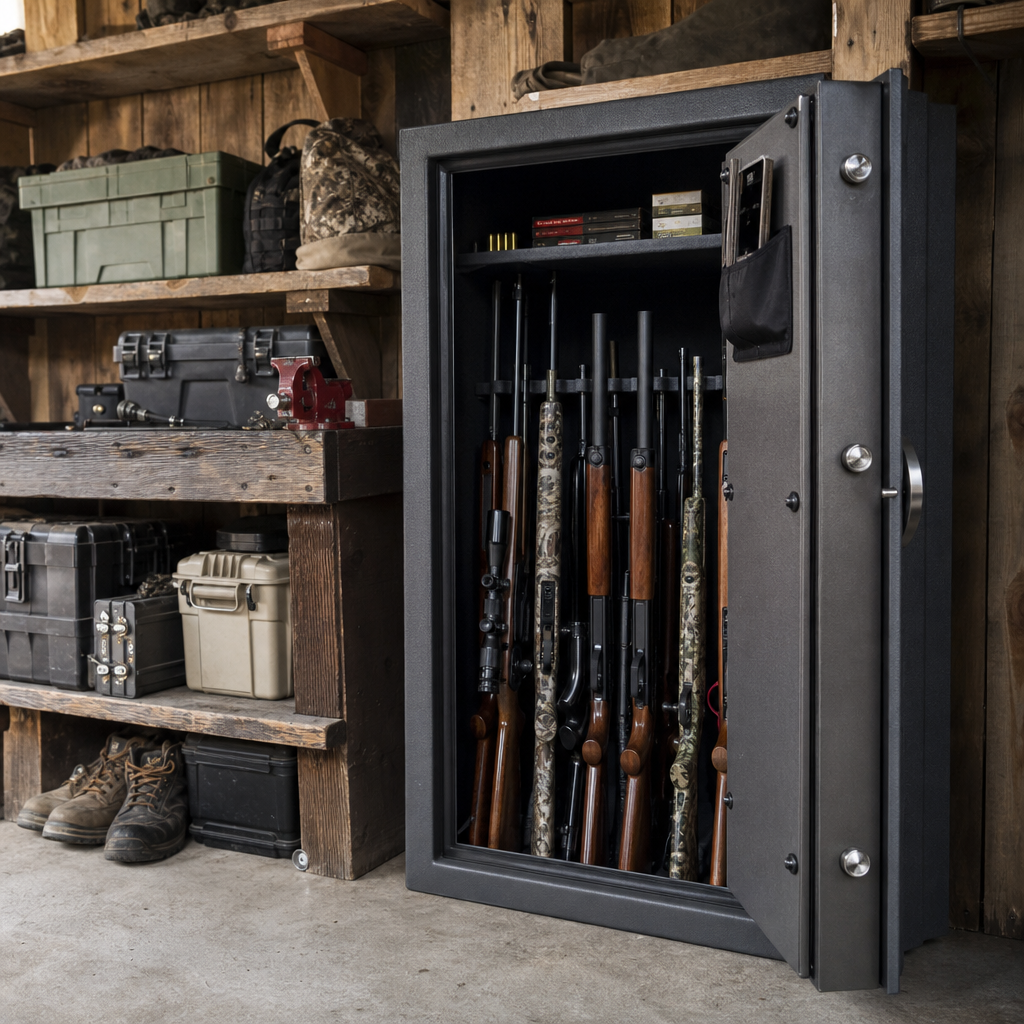
Choosing the right gun safe starts with understanding who will use it, what threats it must resist, and how it fits into a larger preparedness plan. For DIY preppers and survivalists, a gun safe is not just a steel box for firearms. It is part security device, part fire-protection tool, part organization system, and part risk-management decision that affects daily readiness. When I help people compare safes, the mistake I see most often is shopping by headline features alone, usually price, steel gauge, or a dramatic fire rating, without matching the safe to the buyer’s real-world habits. That is why gun safe buyer personas matter.
A buyer persona is a practical profile that groups people by needs, constraints, and likely use patterns. In the gun safe category, personas help answer the questions that actually drive a good purchase: How many long guns and handguns need secure storage today? How fast does access need to be in a home-defense scenario? Is theft resistance more important than fire protection? Will the safe live in a garage, closet, basement, cabin, or vehicle? Are you storing optics, suppressors, passports, cash, radios, or hard drives alongside firearms? For preppers and survivalists, those questions matter even more because gear is often decentralized, redundant, and intended to stay functional during outages, storms, or evacuations.
Gun safe recommendations for DIY preppers and survivalists should therefore begin with clear personas instead of one-size-fits-all rankings. A suburban parent with two defensive pistols needs a different solution than a rural hunter with twelve long guns, and both differ from the off-grid homesteader protecting documents, precious metals, night vision, and ammunition. Local laws, insurance requirements, humidity control needs, floor load limits, and anchoring options also shape the best choice. This hub article explains the major gun safe buyer personas, the features each should prioritize, and the tradeoffs worth accepting so you can choose a safe that fits both your firearms and your preparedness strategy.
The quick-access defender persona
The quick-access defender is usually focused on home protection first and collection storage second. This buyer often owns one to four handguns, possibly a defensive shotgun or carbine, and wants immediate access during a break-in while still preventing unauthorized access by children, guests, or service workers. In my experience, this persona benefits least from an oversized traditional gun cabinet and most from a layered setup: a bedside handgun safe, a closet or utility-room safe for the long gun, and clear staging rules for loaded versus staged-but-secured firearms.
For this buyer, lock type matters more than glossy interiors. A dependable mechanical simplex lock or a quality electronic lock with a proven keypad can be faster under stress than a biometric reader alone. Fingerprint access has improved, especially from brands like Vaultek, Fort Knox, and Hornady, but biometrics still work best as a secondary method rather than the only method. Batteries fail, dirty hands reduce scan quality, and panic changes fine motor performance. A quick-access defender should prioritize one-handed opening, interior lighting, tamper alerts if desired, and a fixed mounting position bolted to framing or concrete.
The best recommendation for this persona is usually a dedicated handgun safe paired with a separate long-gun solution if needed. Small safes hidden in drawers but not anchored are routinely stolen whole. A ten-gauge or thicker body is useful, but secure mounting is often the real difference between deterrence and loss. If the household includes children, this buyer should also favor models with visual and tactile feedback that confirm lock engagement every single time.
The growing collection persona
The growing collection buyer starts with a few guns but expects that number to increase steadily. This is one of the most common personas because many owners underestimate future capacity. A safe marketed for twenty-four guns may realistically hold twelve to sixteen once scopes, bipods, slings, and modern sporting rifles enter the picture. I generally tell buyers to double the capacity they think they need if they plan to train, hunt, collect, or pass guns down through the family. That advice prevents the expensive mistake of replacing a safe after only a few years.
This persona should emphasize modular interiors, adjustable shelving, and door storage systems. A door panel that holds handguns, magazines, and documents can dramatically improve usable space. Brands such as Liberty, Browning, Champion, and American Security offer models with configurable interiors that work better for mixed collections than fixed barrel-rest layouts. Fire ratings also begin to matter more here because the safe often becomes the central storage point for irreplaceable items such as paper records, tax stamps, jewelry, or family photos.
For the growing collection owner, width can matter more than depth. Wide safes with flexible rack systems are easier to live with than narrow safes that turn every retrieval into a domino effect. Anchoring remains essential. Most residential security containers can be defeated with time and tools, but a heavier safe anchored to a slab significantly increases attack time and noise, which is exactly what home security should do.
The rural homesteader and off-grid prepper persona
The rural homesteader stores firearms as tools as much as defensive assets. This buyer may own hunting rifles, predator-control guns, a farm shotgun, sidearms, and gear that supports self-reliance, including cash, land records, radios, batteries, maps, and backup medicine. The safe is often placed in a detached shop, mudroom, basement, or utility area rather than a climate-controlled bedroom closet. That changes the recommendation substantially because environmental control becomes a first-tier priority.
Humidity is the persistent enemy for this persona. In garages and outbuildings, daily temperature swings create condensation, especially on blued steel and optics. A safe for a rural property should have room for a dehumidifier rod, desiccant maintenance, and enough circulation around stored items to avoid dead moisture pockets. If the safe sits on concrete, a moisture barrier underneath is wise. I have seen good guns develop rust in a year because buyers spent heavily on fire ratings but ignored ambient moisture.
The off-grid prepper should also think beyond the safe itself. If grid outages are common, avoid dependence on a lock that becomes problematic without battery maintenance or backup procedures. A redundant entry method is valuable. So is a practical balance between concealment and convenience. In some rural burglaries, thieves use farm tools, chains, and vehicles, so anchoring to a solid slab and limiting visibility through delivery placement and room selection can matter as much as adding another layer of steel.
| Buyer persona | Best safe type | Top priorities | Common mistake |
|---|---|---|---|
| Quick-access defender | Handgun bedside safe plus separate long-gun storage | Fast entry, child safety, anchoring, reliable lock | Relying only on biometrics or leaving unit unbolted |
| Growing collection | Modular full-size safe with oversized capacity | Expandability, shelving, door storage, fire protection | Buying to current count instead of future count |
| Rural homesteader | Heavy anchored safe with humidity control | Corrosion prevention, theft delay, outage resilience | Ignoring moisture and placement conditions |
| Budget-first buyer | Entry-level cabinet or RSC with layered security | Value, legal compliance, anchoring, alarms | Expecting premium burglary protection at cabinet pricing |
| High-value gear owner | Premium composite or TL-rated safe where feasible | Steel, lock quality, insurance support, inventory control | Focusing on cosmetics over burglary construction |
The budget-first and first-time owner persona
The budget-first buyer wants responsible storage without overspending, and that goal is legitimate. Not every owner needs a premium American-made safe with a half-inch plate door and luxury interior. What this persona needs is honesty about risk levels. Lightweight gun cabinets and entry-level residential security containers can prevent casual access and meet basic storage expectations, but they are not equivalent to true burglary safes. Thin steel, exposed seams, and minimal locking bolts limit resistance to pry attacks. Still, when anchored correctly and paired with alarms, cameras, reinforced doors, and discreet placement, even modest storage can be a meaningful improvement over a closet.
This buyer should spend first on proper sizing, anchoring hardware, and room security. A Stack-On or similar cabinet in a locked interior space may be more practical than an ornamental “safe” with weak construction and inflated marketing claims. UL Residential Security Container labeling, while not the highest burglary benchmark, is still a useful baseline because it indicates at least some standardized testing. Fire claims require equal skepticism. Many brands advertise long durations at temperatures that do not reflect full-house fire conditions or internal paper survival thresholds.
For a first-time owner, the recommendation is simple: buy the most robust anchored storage you can afford from a reputable maker, then harden the environment around it. Security is cumulative. Better hinges on the room door, monitored sensors, lower visibility, and good inventory documentation all increase real protection.
The high-value collector and document protector persona
This persona owns firearms with significant monetary, legal, or sentimental value and often stores other critical assets in the same unit. Think NFA items, custom rifles, engraved shotguns, inherited revolvers, precious metals, external hard drives, and estate documents. Here, the safe shifts from basic storage to asset protection. The recommendation moves toward heavier construction, higher-end lock options, more precise fire sealing, and often an insurance conversation before purchase.
For these buyers, steel thickness and body design deserve close reading. Many large consumer safes use relatively thin outer shells with gypsum-based fire lining. That can be acceptable at moderate price points, but high-value owners should look at composite construction, plate steel doors, hard plates protecting the lock, relockers, continuous welds, and independent verification of burglary resistance where available. American Security BF series safes are often discussed because they balance residential usability with stronger-than-average construction. Buyers with especially valuable holdings may even look at TL-15 or TL-30 commercial safes, though cost, weight, and installation complexity rise sharply.
This persona also benefits from disciplined cataloging. A safe does not replace records. Photograph serial numbers, retain appraisals, store digital copies off-site, and separate the most irreplaceable documents into proper media or document containers when necessary. Fire protection for paper does not automatically protect digital media, which fails at much lower temperatures.
Features that matter more than marketing
Across all buyer personas, a few features consistently matter more than brochure language. First is lock reliability. The safe industry commonly uses electronic locks from Sargent and Greenleaf, SecuRam, and La Gard. These are recognizable names for a reason. A reputable lock with a service record is more important than novelty access methods. Second is steel and construction quality. Door thickness alone can mislead because advertised numbers sometimes include cladding, insulation, or panel layers rather than net steel thickness. Ask about body gauge, door edge protection, boltwork design, and hard plate placement.
Third is anchoring. Even an excellent safe loses much of its practical value if thieves can tip it, pry at leverage points, or remove it for later attack. Fourth is fit for the installation site. Measure hallways, stairs, and floor loads. Full-size safes can exceed eight hundred pounds before contents, and that affects second-floor placement. Fifth is environmental control. Dehumidifiers, desiccants, and room conditions protect firearms better than any velvet interior ever will.
Finally, evaluate fire ratings carefully. Real fire outcomes vary by fuel load, ventilation, response time, and where the safe sits in the structure. A basement may protect from heat but introduce moisture after suppression. A garage may limit theft visibility or increase it depending on the property. The right recommendation comes from the whole context, not the sticker on the door.
How DIY preppers should choose a safe as part of a layered plan
Preparedness-minded buyers get the best results when they treat safe selection as one layer in a broader security system. Start with a written inventory of firearms, magazines, optics, documents, and other contents. Assign each item a purpose: daily defensive access, long-term storage, legal protection, barter reserve, or legacy preservation. Then map threats: unauthorized access by children, smash-and-grab burglary, extended tool attack, house fire, humidity, and forced evacuation. Once those threats are named, the right persona usually becomes obvious.
Next, decide whether one safe should do everything. Often it should not. A decentralized approach works better: quick-access handgun storage near the bedroom, a primary long-gun safe anchored in a low-visibility location, and separate fire-resistant storage for sensitive records. That arrangement reduces compromise from any single failure and supports the practical routines that real households follow.
As you compare models, insist on specifics. Ask for net steel thickness, lock brand, bolt count, anchoring hole pattern, interior dimensions, and how the fire rating was derived. Read owner reports about lock longevity and customer service, not just delivery reviews. Then install the safe correctly, document contents, manage humidity, and revisit capacity once a year. The main benefit of persona-based shopping is clarity. Instead of buying the loudest advertised safe, you buy the right safe for your risks, your gear, and your preparedness goals. Use this hub to identify your buyer type, then narrow your shortlist and build a storage plan that will still make sense five years from now.
Frequently Asked Questions
1. What should DIY preppers and survivalists prioritize first when choosing a gun safe?
The first priority is not brand, paint color, or even advertised gun count. It is defining the job the safe must actually do in your preparedness plan. For most DIY preppers and survivalists, that means balancing four core functions: burglary resistance, fire protection, fast but controlled access, and organized storage for firearms, ammunition, documents, and critical gear. Start by asking who will use the safe, where it will be installed, what items need protection, and what realistic threats you are planning against. A safe intended to secure a defensive rifle and handgun for quick access in a primary residence is a different tool than one meant to protect a larger collection, backup optics, cash, radios, hard drives, and legal paperwork during both theft attempts and house fires.
Burglary resistance should usually come before flashy convenience features. Many buyers get distracted by electronic locks, interior lighting, and high stated gun capacities while overlooking steel thickness, door construction, bolt design, hinge protection, and anchoring options. In practical terms, a heavier safe with better steel and a solid installation will usually outperform a larger but thinner cabinet with a nicer feature list. Fire protection matters too, but it should be evaluated realistically. Manufacturer fire ratings vary widely, and not all ratings are tested to the same standards. A prepper should treat fire resistance as an important layer of delay, not a guarantee that everything inside will survive any structure fire intact.
Organization and accessibility also matter more than many people expect. A safe that is overcrowded, poorly laid out, or hard to reach can slow response time and create bad habits, such as leaving firearms unsecured because putting them away is inconvenient. Think in terms of actual usable capacity, shelving flexibility, power access for dehumidifiers or charging devices, and room for non-firearm essentials. In short, choose a safe based on mission, threat model, and installation quality. The best recommendation is the one that fits your home, your household, your risk level, and your broader self-reliance strategy.
2. How much burglary protection does a typical residential gun safe really provide?
A typical residential gun safe provides deterrence and delay, not absolute protection. That distinction is important. Most consumer gun safes are designed to resist smash-and-grab theft, slow down common hand tools, and force criminals to spend more time, make more noise, and take greater risks. They are valuable for that purpose, especially when properly anchored in a discreet location. However, many entry-level and mid-range safes are not true high-security vaults, and determined thieves with time, privacy, and the right tools may eventually defeat them.
The real-world performance of a gun safe depends heavily on steel thickness, door design, bolt support, lock quality, relocking mechanisms, body reinforcement, and whether the unit is anchored to concrete. Thin steel bodies can be pried, peeled, or cut more easily than buyers expect, especially if the safe is left freestanding in an open garage or accessible room. A safe that can be tipped over is often easier to attack because thieves can work on weaker sides or use leverage against the door. That is why installation is just as important as the safe itself. Bolting the safe down, limiting tool access, tucking it into a corner or closet, and surrounding it with framing or cabinetry can meaningfully increase the time and effort required to break in.
For preparedness-minded owners, the best approach is layered security. Use the safe as one layer, then strengthen the environment around it with alarm systems, cameras, reinforced entry points, good lighting, and discretion about what you own. If your concern includes targeted theft, valuable optics, NFA items, large quantities of ammunition, or extended absence from the property, it may be worth stepping up from a standard residential gun safe to a heavier model with better steel and more serious anti-pry features. In other words, do not ask whether a safe is “burglar proof.” Ask how much time, noise, and effort it adds for a likely threat, and whether that delay fits your security plan.
3. Are fire ratings on gun safes trustworthy, and how should preppers interpret them?
Fire ratings can be useful, but they should be interpreted cautiously. The biggest issue is that not all fire ratings are created equal. Some safes are tested by independent laboratories under recognized protocols, while others rely on manufacturer-run tests with limited published details. A sticker that says “60 minutes at 1,200 degrees” sounds reassuring, but it may not tell you enough about how the test was conducted, whether the internal temperature was monitored to a specific threshold, whether the safe was heated from all sides, or whether it was tested for structural impact during collapse conditions. That does not automatically make the rating meaningless, but it does mean buyers should avoid treating all fire numbers as equal.
For a prepper or survivalist, the most useful mindset is to treat fire protection as a delay window that may preserve contents in many house-fire scenarios, not as an absolute promise. Fire duration, fuel load, room location, ventilation, and collapse can all affect outcome. Paper documents, electronics, hard drives, photos, medications, and loaded magazines may each tolerate heat differently. Fireboard-lined gun safes can help, but sensitive items often need additional protection inside the safe, such as document pouches, media-rated containers, or separate insulated lockboxes. If critical records or digital backups are central to your preparedness plan, consider redundancy rather than relying on one safe alone.
Placement matters too. A safe installed on a concrete slab in a lower-risk area of the home may fare better than one placed in a garage with high fuel loads or on an upper floor vulnerable to collapse. Humidity control is another overlooked issue, because a fire-resistant safe that traps moisture can still damage firearms over time if not managed properly. The bottom line is that fire ratings are one data point. Look for transparent testing information, compare construction quality, think about what you are protecting, and build redundancy into your plan. A good safe can improve survival odds for your gear and documents, but smart preparedness means never depending entirely on a single number on a brochure.
4. What size and type of gun safe makes the most sense for a preparedness-focused household?
For most preparedness-focused households, the best choice is usually larger than you think and more purpose-specific than the marketing suggests. The stated gun capacity on many safes is optimistic, often based on slim long guns without optics, slings, bipods, lights, or other accessories. In real use, modern defensive rifles and scoped hunting rifles take up more room, and shelves or door organizers quickly reduce available rack space. A safe advertised for 24 guns may function much more comfortably as a 10- to 14-gun safe once realistic spacing and accessory storage are considered. That is why many experienced owners recommend buying one size class larger than your current needs.
The right type depends on your mission. A full-size safe works well for main storage of long guns, handguns, documents, spare magazines, and related gear. A quick-access handgun safe or dedicated bedside unit can complement it for immediate defensive access while keeping daily-use firearms secured. Some preppers benefit from a distributed system: one main anchored safe for long-term storage and one or two smaller, hidden lockboxes for critical-use items. This approach can improve readiness and reduce the chance that a single point of failure compromises everything at once. It also helps households with different access levels, where one adult needs fast access to a carry pistol but not every family member should have access to the full inventory.
Interior flexibility is a major factor. Adjustable shelving, door panels, handgun racks, document bins, and power ports can make a safe much more useful over time. A preparedness-minded buyer should also think beyond firearms. Many people eventually store passports, cash, radios, night vision accessories, backup drives, suppressor paperwork, medical supplies, and small trade goods in the same safe. Weight and floor load matter as well, particularly for upstairs installations. In practical terms, the best recommendation is a safe with realistic excess capacity, solid steel construction, anchor capability, and an interior layout that supports both security and fast, organized access under stress.
5. What installation and maintenance mistakes do people make with gun safes, and how can they avoid them?
The most common installation mistake is treating the purchase as the end of the security decision instead of the beginning. Even a good safe can underperform badly if it is placed in a poor location, left unanchored, or installed where thieves can work comfortably with tools. A freestanding safe in an open garage, visible from the street, is far more vulnerable than one bolted to concrete in a concealed interior location with limited pry access around the sides. Whenever possible, place the safe where humidity is manageable, access can be controlled, and the structure around it helps restrict attacks. Corner placement, closet installations, and built-in surrounds can all make forced entry harder.
Another frequent mistake is underestimating moisture management. Fire-lined safes can hold humidity, and many owners discover rust issues only after firearms have already been affected. Use a hygrometer, add a dehumidifier or desiccant solution, and check conditions periodically rather than assuming the interior stays stable year-round. Lock choice and upkeep matter too. Electronic locks are convenient, but they need fresh batteries and occasional