
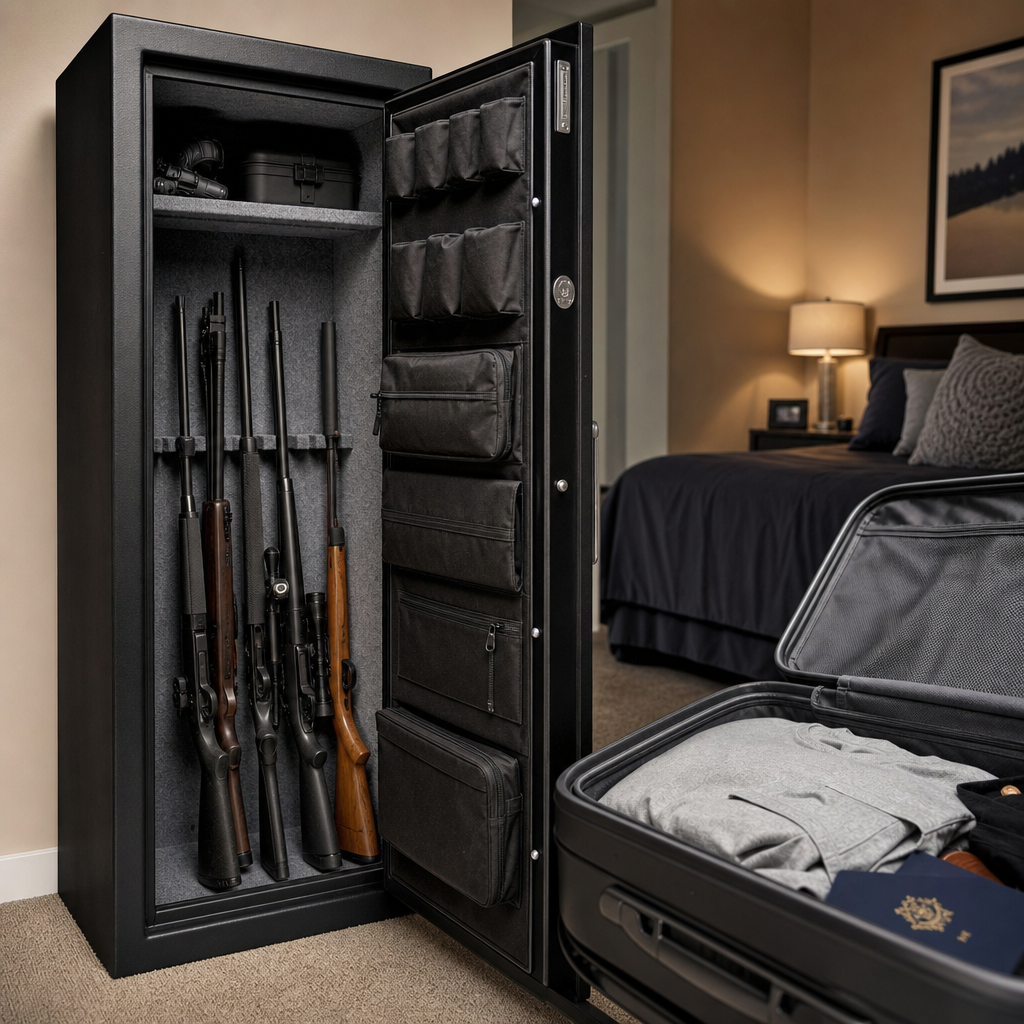
Choosing a gun safe when you travel frequently is less about buying the biggest steel box you can afford and more about matching security, access, portability, and compliance to the way you actually live. Frequent travelers face a different risk profile than stay-at-home owners: longer periods away from home, more hotel stops, more vehicles, more temporary storage decisions, and often a wider mix of firearms, documents, and valuables that need protection. In practical terms, a good travel-friendly gun safe must deter theft, control unauthorized access, resist tampering, fit your routine, and support lawful transport and storage.
In my experience helping buyers compare safes, the mistake that causes the most regret is shopping by marketing label alone. “Biometric,” “tactical,” “fireproof,” and “portable” sound helpful, but they do not tell you enough. You need to look at steel thickness, lock type, bolt design, anchoring method, interior capacity, battery backup, pry resistance, and whether the safe is intended for a bedside handgun, a vehicle, an apartment closet, or a long-term home base. For people who travel often, the buyer persona matters even more because one design rarely serves every use case. The best choice for a road-tripping sales manager is not the best choice for a military family, a competitive shooter, or an RV owner. This guide explains the main gun safe buyer personas in this category and shows how to choose a gun safe that fits frequent travel without compromising security or convenience.
Why frequent travelers need a different gun safe strategy
If you spend nights away from home, your storage plan needs layers. A home safe protects firearms at your primary residence, but travelers usually need at least one secondary solution for transit or temporary lodging. That can mean a compact lockbox cable-secured inside a vehicle, a quick-access safe near a temporary sleeping area, or a modular setup where a full-size safe handles long-term storage and a smaller unit covers the road. The goal is not to carry every firearm everywhere; the goal is to control access at every handoff point, including your house, your car, and any place you legally store a firearm overnight.
Theft patterns support this approach. The FBI’s Uniform Crime Reporting framework and insurer loss data have long shown that vehicles and residences are common targets of opportunity theft. A firearm left unsecured in a car console or hotel bag is far easier to steal than one in a tethered steel lockbox hidden under a seat. At home, a lightweight cabinet that is not anchored can be removed entirely, especially during vacations when burglars have time. For frequent travelers, delay matters. Even a few extra minutes of resistance from thicker steel, anti-pry construction, and proper anchoring can be enough to make thieves abandon the attempt.
Legal considerations also change the equation. Storage and transport laws vary by state, and some jurisdictions impose specific requirements for locked containers, unloaded firearms, ammunition separation, or child-access prevention. Buyers should always verify current state and local rules, plus any property-specific restrictions, before traveling. A responsible safe choice supports compliance by making the lawful action the easy action. If the container is too heavy, too awkward, or too slow to open, owners often stop using it consistently. Consistency is a critical part of safe storage.
The four core safe types travelers actually use
Travelers generally choose among four categories: full-size home safes, residential security containers, handgun vaults, and portable lockboxes. Full-size home safes offer the best long-term storage, especially for rifles, optics, documents, and multiple handguns. Many include fire insulation, relockers, hardened steel plates around the lock, and multi-point bolt systems. Their weakness is obvious: they are not portable. They work best as the home anchor in a layered plan.
Residential security containers, often tested to standards used by recognized certification bodies such as UL for locking components or California DOJ listings for firearm safety devices, sit below commercial burglary safes but above thin gun cabinets. They are common because they balance capacity and cost. For a frequent traveler with several firearms at home, this is often the practical baseline. A properly anchored RSC in the 500 to 900 pound range is dramatically more protective than an unanchored cabinet.
Handgun vaults are compact safes designed for quick access in nightstands, closets, desks, or vehicles. Good models use a Simplex mechanical pushbutton lock, an electronic keypad with backup key, or a biometric reader paired with another opening method. I generally recommend avoiding biometric-only designs for primary defensive access because fingerprints can fail with dirt, sweat, cuts, or low batteries. A tested keypad or mechanical lock is more predictable.
Portable lockboxes are the travel specialist’s tool. These are smaller steel containers, often using a key or combo lock, with a security cable to attach to a vehicle seat frame or other fixed point. They are not substitutes for a real home safe, but they are far better than a glove box. Their job is temporary denial of access during errands, road stops, and overnight transitions where lawful storage is required and immediate control is not possible.
Gun safe buyer personas: which one are you?
Buyer personas help narrow features that matter most. The business traveler usually carries a handgun occasionally, flies or drives regularly, and needs discreet, compact, repeatable storage. This buyer should prioritize a portable lockbox for the vehicle and a home safe for the rest of the collection. Capacity is less important than ease of concealment, cable strength, and reliable opening in low light.
The family traveler has children in the home or often visits relatives with children. For this persona, unauthorized access prevention outranks speed. A full-size anchored safe at home and a tamper-resistant handgun vault for temporary lodging make sense. Interior organization matters here too. Door organizers, pistol racks, and labeled shelves reduce the chance of loose firearms being left out during packing and unpacking.
The competitive shooter or instructor travels with multiple handguns, accessories, and sometimes long guns. This persona needs capacity, modularity, and inventory control. A larger home safe with adjustable shelving and dehumidification is essential, along with portable cases that can be locked and tracked. These buyers should think beyond firearm dimensions and account for optics, spare magazines, suppressor paperwork, and training gear.
The apartment renter travels often and cannot always bolt a massive safe into concrete. This buyer should focus on a heavier compact safe that can be anchored to approved framing or substantial furniture where permitted, plus a secondary travel vault. Weight still matters, but concealment and landlord-friendly installation can matter more than ultimate capacity.
The RV or overlanding traveler is a special case. Constant movement, vibration, moisture, and limited space demand a compact steel safe with corrosion resistance, secure mounting, and a lock that tolerates temperature swings. Electronic locks can work well, but battery discipline is nonnegotiable. Mechanical backup is valuable in this persona.
Key buying criteria that separate good safes from regrettable ones
Steel thickness is one of the clearest quality markers. Manufacturers may advertise 14-gauge, 12-gauge, or 10-gauge steel bodies; lower gauge numbers mean thicker steel. Many big-box entry cabinets use relatively thin steel that folds quickly under pry attacks. For a home base safe, I prefer buyers to start with heavier construction and an anchored installation rather than chasing glossy paint and oversized capacity claims. Door construction matters as much as the body because thieves usually attack the opening side first.
Lock selection deserves careful thought. Mechanical dial locks are durable and battery-free, but they are slower. Electronic keypads are fast and common, and quality units from established lock makers can be dependable when maintained. Biometric locks are convenient for some users, but they should be tested repeatedly under realistic conditions before being trusted as the only access method. Look for lockout protection, tamper alerts, and backup entry options.
Fire ratings are often misunderstood. A “30-minute” or “60-minute” rating may come from internal company testing rather than an independent test lab, and temperature thresholds differ. Fire protection can matter for paper documents and some valuables, but burglary resistance should still be the first filter for most firearm owners. If you need both, buy enough safe for both rather than assuming every insulated gun safe delivers equal performance.
| Persona | Best primary safe | Best secondary safe | Top priority |
|---|---|---|---|
| Business traveler | Anchored compact home safe | Cable-secured vehicle lockbox | Discreet temporary storage |
| Family traveler | Anchored full-size safe | Quick-access handgun vault | Child access prevention |
| Competitive shooter | Large modular safe | Lockable transport cases | Capacity and organization |
| Apartment renter | Heavy compact RSC | Portable travel safe | Security with limited installation |
| RV traveler | Mounted compact steel safe | Small bedside vault | Space and vibration resistance |
Anchoring is not optional for any home safe that thieves can move. Even a decent safe becomes a poor security device if burglars can tip it over and open it later with better tools and more time. In houses, anchoring to concrete is ideal. In wood-frame settings, follow manufacturer guidance and use proper hardware into structural members where allowed. For travelers, also check the interior layout before buying. Advertised gun counts are usually optimistic and assume unscoped long guns packed tightly. Real usable capacity is often 50 to 70 percent of the headline number once optics and accessories are involved.
Best setup recommendations by travel pattern
If you take short road trips and mostly need safe in-car storage during stops, a two-safe approach is usually best: one anchored safe at home and one compact lockbox in the vehicle. Good examples in this category typically include a 16-gauge or thicker steel shell, a reinforced lid, and a coated steel cable. The lockbox should never sit in plain sight. Mount or tether it under a seat or in a concealed cargo area.
If you travel for weeks at a time, home security should become more robust. Add an alarm system, visible deterrents, and humidity control inside the safe. In many climates, a goldenrod-style dehumidifier or desiccant canister helps prevent rust, especially on blued firearms stored for long periods. I have seen more long-trip storage damage come from moisture neglect than from lock failures.
If you split time across multiple residences, buy for redundancy instead of compromise. A substantial safe at the primary home and a smaller, anchored safe at the second location is usually smarter than moving firearms constantly. Repeated handling increases the odds of administrative mistakes, forgotten ammunition, and temporary unsecured storage. Stable systems reduce those risks.
For air travelers, the transport case becomes part of your storage strategy. Use a hard-sided, lockable case that secures the firearm as required by applicable airline and federal transportation rules, then pair that with secure storage at your destination. Not every travel case is a good theft deterrent once you arrive. That is why destination storage still matters.
Common mistakes and how to avoid them
The first common mistake is buying too little safe because of advertised gun counts. A “24-gun safe” may fit far fewer firearms if you own modern sporting rifles, scoped hunting rifles, or pistols in soft sleeves. Measure your actual collection and allow room for growth. The second mistake is trusting low-cost biometric safes without live testing. Enroll fingerprints multiple times, test them with wet and dry hands, and confirm the backup entry works.
The third mistake is ignoring placement. A safe in a visible room invites attack. A closet corner, alarmed room, or basement area with limited pry space is better. The fourth mistake is using a vehicle console as storage. Factory consoles are convenience compartments, not security containers. The fifth mistake is forgetting maintenance. Replace keypad batteries on a schedule, inspect mounting hardware, and control humidity. A safe is not a set-and-forget purchase.
Finally, do not confuse secrecy with security. Hidden storage helps, but concealment alone is fragile. Real protection comes from layered delay: thicker steel, stronger locks, proper anchoring, restricted visibility, and habits you can follow every time. If you travel often, the best gun safe is the one that fits your exact routine closely enough that you will use it consistently at home, in transit, and at your destination.
Frequent travel changes what “best gun safe” means. Instead of chasing a one-size-fits-all solution, build a system around your buyer persona, your collection, and your travel pattern. Most owners are best served by a layered setup: an anchored home safe for primary storage, plus a compact secondary safe for vehicle or temporary use. From there, refine the details that matter most to your situation, whether that is child access prevention, fast defensive access, compact apartment installation, or organized storage for a larger collection.
The central buying lesson is simple: prioritize real construction quality and real-world usability over labels and hype. Check steel thickness, anchoring options, lock reliability, true interior capacity, and how the safe performs under the exact conditions you face when traveling. A safe that is slightly less flashy but easier to mount, easier to conceal, and easier to operate correctly is often the smarter investment. Good firearm storage is not a single product decision; it is a routine supported by the right hardware.
Use this hub as your starting point for the broader Gun Safes & Safety topic, then compare the persona-specific options most relevant to your lifestyle before you buy. Make a shortlist, verify current legal requirements for the places you travel, and choose a setup you can use consistently every day. That is how you protect your firearms, reduce theft risk, and travel with confidence.
Frequently Asked Questions
What features matter most in a gun safe if I travel frequently?
If you travel often, the most important features are security during long periods of absence, reliable access when you return, and a design that fits the places you actually use it. That usually means focusing on pry resistance, a solid locking system, secure anchoring options, and a size that matches your firearm count without leaving excessive unused space. A safe that is too small quickly becomes frustrating, but one that is too large for your room, closet, vehicle setup, or temporary lodging habits may end up being impractical and underused.
Look closely at steel thickness, door construction, and the strength of the locking bolts. A safe that can be easily tipped, pried, or carried away creates a serious weakness for travelers, especially if the home is unoccupied for days or weeks at a time. For many frequent travelers, a layered approach works best: a full-size anchored safe at home for long-term storage and one or more smaller lockboxes or portable safes for vehicle or hotel use. That combination addresses both primary residence security and the realities of being on the road.
You should also consider access speed and reliability. Biometric locks can be convenient, but they should not be your only concern. Fingerprint readers vary in quality, and travel can expose equipment to dirt, dry skin, humidity, and temperature shifts. A dependable electronic keypad with a backup key or an upgraded mechanical option often provides a better balance of convenience and consistency. Interior organization matters too. If you store firearms along with passports, cash, legal paperwork, or other valuables while traveling, adjustable shelving, separate compartments, and moisture control features can make a major difference in everyday use.
Is a portable gun safe enough, or do I still need a full-size safe at home?
For most people who travel frequently, a portable gun safe is not a complete substitute for a full-size home safe. A portable safe is useful for temporary storage in a vehicle, hotel room, rental property, or office, but it is usually designed to slow unauthorized access rather than deliver the same theft resistance as a properly anchored residential safe. If your travel pattern includes being away from home for extended periods, your primary concern should be what happens to the firearms left behind while the house is empty. That is where a larger, better-secured home safe becomes essential.
A portable safe is still extremely valuable, especially if you regularly drive between destinations or stay overnight away from home. It gives you a controlled storage option for a handgun or compact firearm when carrying is not allowed or practical. The key is understanding its role. In most cases, portable safes are ideal for short-term, mobile security, while a home safe handles long-term storage, theft deterrence, and organization for the majority of your collection.
If budget is limited, many travelers get the best results by buying a modest but well-built home safe first, then adding a quality portable lockbox for travel-specific situations. That setup is often more effective than spending the same amount on a single oversized unit that does not solve the problem of secure storage in a car or hotel. The best choice depends on how often you travel, how many firearms you own, and whether you need protection mainly at your residence, in transit, or both. In real-world use, frequent travelers typically benefit from having both.
How important are anchoring and placement for a gun safe when I am away from home a lot?
Anchoring and placement are absolutely critical if you travel often. One of the biggest risks for frequent travelers is not just unauthorized access, but the possibility that thieves have more time to work because the home is vacant. Even a heavy safe can be attacked more easily if it is exposed, unbolted, or positioned in a way that allows leverage tools to be used around the door. Proper anchoring to concrete or structural framing helps prevent thieves from simply removing the safe and opening it elsewhere, which is a very common failure point with smaller or mid-sized units.
Placement matters just as much. A safe in a visible bedroom corner may be convenient, but it also tends to be one of the first places burglars look. More discreet locations, such as a closet, utility area, or other low-traffic part of the home, can reduce attention while also making pry attacks harder if surrounding walls or built-ins limit access to the sides. At the same time, placement should not make the safe so difficult to reach that you avoid using it. Security only works when the safe is consistently part of your routine before every trip.
Travelers should think in terms of delaying discovery, increasing effort, and reducing opportunity. If possible, pair safe placement with home alarm systems, cameras, smart monitoring, and lighting. These do not replace the safe, but they improve the overall security environment while you are away. In practical terms, a moderately sized safe that is well concealed and firmly anchored is often a better solution than a larger premium safe that is left exposed and unbolted. Installation quality is just as important as the product itself.
What type of lock is best for a travel-friendly gun safe: biometric, keypad, or mechanical?
The best lock type depends on how you balance speed, reliability, battery dependence, and where the safe will be used. For frequent travelers, electronic keypads are often the most practical choice because they provide relatively fast access, are easy to use in low light, and generally offer consistent performance when you choose a reputable brand. They also avoid some of the drawbacks of lower-end biometric systems, which can become less dependable if your fingers are wet, dirty, worn, or affected by changing weather conditions during travel.
Biometric locks can be very convenient, especially for rapid access to a bedside safe or a portable unit used on the road. However, quality varies significantly. A strong biometric safe should recognize stored users quickly, include backup entry methods, and have a proven reputation for dependable operation over time. For travelers, that backup matters. You do not want to be locked out of a safe in a hotel room, rental cabin, or during a vehicle stop because of sensor issues or dead batteries.
Mechanical locks are appreciated for durability and the fact that they do not rely on electronics, but they are slower and less convenient for many users. They can be an excellent option for a main home safe that is opened less frequently, particularly if long-term reliability is your top priority. In many cases, the best answer is not that one lock type is universally superior, but that the lock should match the safe’s role. A home safe may do well with a high-quality electronic or mechanical lock, while a travel lockbox should emphasize simplicity, quick access, and a dependable backup system. Whatever you choose, avoid no-name locking systems with poor support, and test your access method regularly before and after trips.
Do I need to consider legal compliance and travel habits when choosing a gun safe?
Yes, absolutely. Legal compliance should be part of the selection process from the beginning, especially if your travel involves crossing state lines, staying in hotels, leaving firearms in vehicles, or storing them in temporary residences. Safe storage laws, transportation rules, and access-prevention requirements can vary depending on where you live and where you travel. A gun safe that works well at home may not fully address the legal and practical demands of transport, vehicle storage, or child access prevention when you are on the road.
That is why frequent travelers should think beyond the product label and evaluate actual use cases. For example, if you routinely leave a firearm in a vehicle during restricted-entry stops, a portable safe with a reinforced cable and compact footprint may be more relevant than extra rifle capacity. If you stay in hotels often, discreet size, tethering options, and ease of placement inside luggage or furniture may matter more than decorative finishes or oversized interiors. If you travel for long stretches, you may also need a home safe that protects not only firearms, but supporting documents, suppressor paperwork where applicable, valuables, and backups of important records.
Compliance is also about responsible access control. If family members, house sitters, or guests may be near the safe while you are away, you need a locking system and storage setup that reduce the chance of unauthorized handling. In short, the right safe for a frequent traveler supports secure storage, fits your transportation routine, and helps you stay aligned with applicable laws and best practices. Because regulations can change and vary by jurisdiction, it is wise to verify current requirements in every area where you store or transport firearms, then choose a safe setup that supports those obligations rather than forcing workarounds later.