
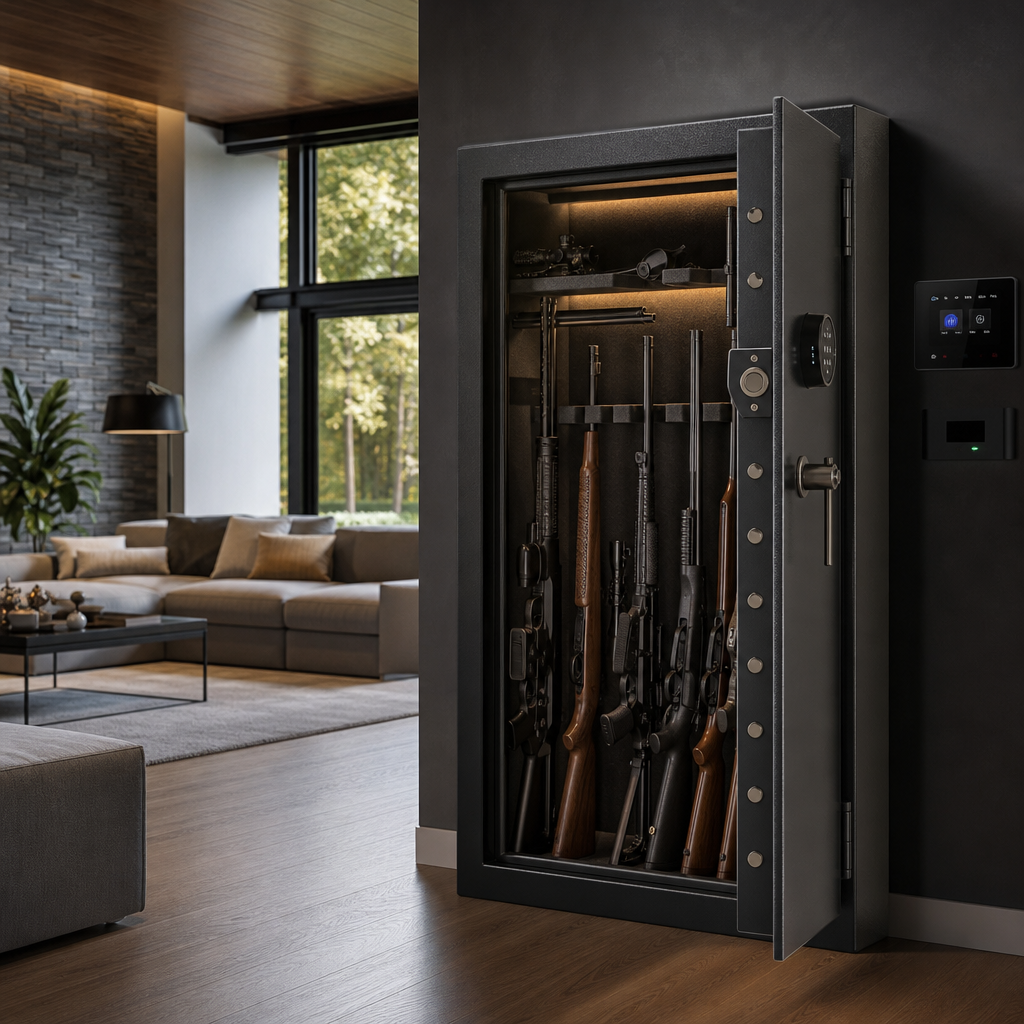
Choosing a gun safe for firearm owners with a high-tech home starts with understanding that the best safe is not simply the biggest box of steel, but a security system matched to the owner’s habits, risk level, and connected environment. A gun safe protects firearms from unauthorized access, burglary, fire, moisture, and careless handling, yet those benefits only appear when the model fits the buyer. In practice, I have seen homeowners overspend on features they never use while neglecting the lock type, anchoring method, or interior layout that matters every day. That is why buyer personas are useful. A buyer persona is a practical profile built around a person’s storage needs, household makeup, technical preferences, and threat exposure. For firearm owners in smart homes, those factors include app expectations, backup power, network reliability, privacy concerns, and how the safe integrates with cameras, alarms, and environmental monitoring. This topic matters because connected homes create both opportunity and complexity. A well-chosen safe can work alongside monitored security, discreet room design, and fast access controls. A poorly chosen one can introduce false confidence, unreliable electronics, or unsafe delays. This hub article maps the major gun safe buyer personas, explains what each should prioritize, and gives clear selection criteria you can use before comparing brands, dimensions, and prices.
The tech-forward homeowner who wants integration without losing physical security
The first common persona is the homeowner who already runs a high-tech home with devices such as Ring, Arlo, Google Nest, Abode, SimpliSafe, Hubitat, Home Assistant, or Alarm.com. This buyer usually wants the gun safe to fit into a broader security architecture. They ask whether the safe can provide access logs, tamper alerts, humidity reporting, or sensor-based notifications. The key point is that a gun safe should integrate around the edges of security, not replace core mechanical protection. The body steel, door construction, boltwork, hard plate, relocker, and anchoring points still matter more than an app.
For this persona, I recommend starting with Underwriters Laboratories lock ratings and verified fire testing rather than marketing language like “smart safe ready.” A useful setup may include a traditional safe with an electronic lock from SecuRam, Sargent and Greenleaf, or La Gard, plus independent contact sensors, a tilt sensor, and a room camera covering the exterior but never exposing access codes. Smart plugs and cloud dashboards are secondary. If your home network fails during a storm, the safe must still open reliably with a keypad, biometric reader, key override where appropriate, or redundant battery access. The rule is simple: choose proven physical protection first, then layer smart monitoring around it.
The parent in a connected household focused on child access prevention
The second persona is the parent or guardian living in a home full of connected devices, guests, and changing routines. This buyer’s top priority is preventing unauthorized access by children, teenagers, visiting friends, contractors, or house sitters. In these homes, convenience can become the enemy of discipline. Owners may assume that because they have cameras, geofencing, and door alerts, firearms are adequately controlled. They are not. The gun safe remains the primary barrier, and the ideal model for this persona combines fast adult access with strict access control and clear storage procedures.
For families, a dedicated quick-access pistol safe in the bedroom may need to work alongside a larger long-gun safe in a separate room. Biometric entry can be valuable, but only when it is tested repeatedly under realistic conditions, including dry hands, sweaty hands, nighttime use, and backup code entry. FBI and DOJ safety messaging consistently emphasize secure storage when children may be present, and that guidance aligns with real-world loss prevention. A family buyer should also look for interior organization that separates loaded defensive firearms from unloaded hunting rifles, ammunition bins, documents, and suppressor accessories. Smart-home tie-ins are helpful if they support reminders, audit trails, or room alerts, but they should never tempt the owner to leave the safe open because the house is “already monitored.”
The collector protecting multiple firearms, optics, and records
The third persona is the collector who owns a broad mix of handguns, AR-platform rifles, shotguns, heirloom firearms, tax stamps, optics, and purchase records. In my experience, collectors often outgrow a safe faster than any other buyer group because modern firearms consume more interior space than capacity labels suggest. A “24-gun safe” rarely stores twenty-four scoped long guns in practical use. For this persona, capacity inflation is a serious buying trap. Interior depth, shelving flexibility, door panel storage, and long-gun barrel spacing are more important than the number printed on a brochure.
Collectors in high-tech homes often benefit from environmental monitoring. A hygrometer, dehumidifier rod, desiccant management, and leak sensor can protect wood stocks, blued finishes, optics coatings, and paper records. If the safe sits in a garage, basement, or exterior wall closet, temperature swings and moisture become a major issue. This buyer should consider fireboard thickness, door seals, and a dedicated inventory workflow. The best system is boring but effective: serial number records, dated photographs, insurance riders, and encrypted off-site backups. Smart cameras cannot replace documentation after a theft or fire. A collector’s safe should also have enough interior adaptability to support future purchases, not just current inventory.
The bedside defender who needs rapid access under stress
The fourth persona is the owner primarily concerned with immediate defensive access, usually for a single handgun and spare magazine. This buyer may live in an automated home but needs the safe to work in darkness, under adrenaline, and possibly one-handed. Here, speed matters, but reliability matters more. A fast safe that fails one out of twenty times is inferior to a slightly slower safe that works every time. In product testing and client installations, the strongest performers are units with tactile buttons, consistent lid or door action, and low failure rates after repeated battery cycles.
For this persona, placement is part of the purchase decision. A bedside safe bolted to furniture or structure is safer than a portable unit tucked in a drawer. If the owner uses home automation scenes for nighttime security, the safe should remain functionally independent. Motion-triggered bedroom lights, alarm mode changes, and camera privacy zones can support access, but no handgun safe should depend on Wi-Fi, Bluetooth pairing, or voice assistant commands to open. Voice unlocking is a bad fit for firearms. The better approach is a locally controlled quick-access safe with illuminated keypad features, silent mode options, and a practiced opening routine repeated enough times to become muscle memory.
The frequent traveler or part-time resident balancing portability and theft resistance
The fifth persona is the owner who splits time between primary residence, vacation property, or work travel. This buyer often wants a compact safe for temporary storage, vehicle transitions, or use in a condo with limited installation options. The challenge is that portability reduces resistance to attack. A lightweight safe is easier to hide and easier to steal. For travelers, the best answer is usually a layered strategy: a real anchored safe at the main residence and a secondary travel-safe solution for short-term control.
Because this persona often relies on remote cameras and app alerts, expectations need to be realistic. A push notification that your safe moved is useful only if the safe cannot be carried away in seconds. That is why cable boxes and ultra-light lockboxes should be treated as minimal-delay devices, not substitutes for residential security containers. If a traveler stores firearms in different jurisdictions, they should also confirm state and local transport and storage requirements. Technology helps with visibility, but legal compliance and anchoring still decide whether a storage plan is sound.
| Buyer persona | Primary priority | Best safe type | Key feature to verify |
|---|---|---|---|
| Tech-forward homeowner | Monitoring and layered security | Full-size anchored safe | UL-rated lock and strong boltwork |
| Parent in connected household | Child access prevention | Large safe plus quick-access pistol safe | Reliable lock with tested backup entry |
| Collector | Capacity and preservation | High-capacity modular interior safe | True interior dimensions and humidity control |
| Bedside defender | Fast access under stress | Quick-access handgun safe | Consistent opening speed in darkness |
| Traveler or second-home owner | Secure temporary control | Anchored home safe plus travel lockbox | Anchoring method and transport compliance |
The privacy-conscious owner wary of cloud dependence
The sixth persona is the privacy-focused firearm owner who enjoys a high-tech home but draws a clear line around sensitive storage data. This buyer may use VLANs, local video storage, PoE cameras, and self-hosted automation, yet they do not want firearm access events routed through unnecessary cloud services. Their concern is justified. Every connected feature creates another data point, another firmware dependency, and another possible vulnerability. For them, the ideal gun safe is digitally minimal and operationally robust.
This does not mean avoiding electronics entirely. It means choosing local-first tools. A keypad lock with no cloud requirement, door contact sensors tied to a local hub, and offline audit practices often provide enough visibility. This persona should ask direct questions: Does the lock store biometrics locally? Are firmware updates signed and necessary? Can alerts be confined to the home network? If a vendor cannot answer basic security architecture questions, that is a red flag. In a high-tech home, the most secure design is often selective integration rather than maximum integration.
How to match construction, fire rating, and installation to the right persona
Once the persona is clear, the final buying decision comes down to construction, fire resistance, and installation. Residential Security Container classifications, TL ratings, steel gauge, continuous welds, composite doors, and anchor hole placement are more predictive than glossy branding. A collector in a low-crime area may reasonably prioritize interior flexibility and fire protection. A bedside defender may care more about repeatable access and secure mounting. A parent should prefer simple, enforceable routines over novelty features. A traveler needs realistic expectations about what compact storage can and cannot do.
Fire ratings deserve particular caution. Manufacturers often test under different conditions, so equal numbers do not always mean equal performance. Look for details about test duration, peak temperature, and whether the rating includes paper survivability or just cabinet temperature claims. Installation is equally important. A good safe placed in an exposed garage corner without anchors, camera coverage, or alarm protection is easier to attack than a modest safe properly installed in a low-visibility interior location. In many homes, the smartest upgrade is not buying the next model up, but improving anchoring, concealment, lighting, and moisture control around the safe.
Choosing a gun safe for firearm owners with a high-tech home is ultimately a matter of fit. The right safe matches the owner’s persona, the household’s access risk, the firearm collection, and the role technology should play. Tech-forward homeowners need strong physical security before app features. Parents need strict child access prevention and routines that hold up during busy days. Collectors need realistic capacity, environmental protection, and documentation discipline. Defensive owners need dependable rapid access without cloud dependence. Travelers need layered storage and honest expectations about portability. Privacy-focused buyers need local control and minimal data exposure. Across every persona, the same principles apply: verified lock quality, sensible fire protection, proper anchoring, and a setup tested in real life rather than imagined in a product listing. If you are building out your gun safes and safety plan, start by identifying your buyer persona, then compare safes against the use case that actually defines your home. That step will save money, reduce risk, and lead you to a safe you will trust and use correctly for years.
Frequently Asked Questions
What should firearm owners in a high-tech home prioritize when choosing a gun safe?
Start with fit, not flash. The right gun safe should match how you live, how many firearms you own, who else is in the home, and how your broader smart-home setup actually functions day to day. For many owners, the first priorities should be unauthorized access prevention, burglary resistance, fire protection, moisture control, and practical ease of use. A safe that is difficult to access when needed, too small for your collection, or poorly integrated into your home layout can become more frustrating than protective.
In a high-tech home, it is also important to think beyond basic locking hardware. Many buyers are attracted to biometric locks, app connectivity, remote alerts, and audit trails, but those features only add value if they are reliable and appropriate for the environment. For example, a biometric scanner may be useful for quick access, but it should be backed by a mechanical override or dependable keypad entry in case of power issues, dirty fingers, or sensor failure. Smart features should support security, not replace sound physical protection.
Pay close attention to steel thickness, door construction, lock quality, pry resistance, internal organization, anchoring options, and rated protection rather than marketing terms alone. Also consider whether the safe will be placed in a climate-controlled room, garage, basement, or master closet, because placement affects fire exposure, humidity management, and vulnerability to theft. The best choice is usually a balanced one: strong enough to deter forced entry, sized for future growth, accessible enough for your routine, and technologically advanced only where those features genuinely improve safety and accountability.
Are smart gun safes and connected features actually worth it for a modern home?
They can be, but only when selected carefully. Connected features such as mobile alerts, tamper notifications, access logs, remote status checks, and integration with a broader home security system can provide meaningful advantages. If a safe door is opened unexpectedly, if repeated failed entry attempts occur, or if the safe is moved or disturbed, immediate alerts can help the owner respond faster. In a well-designed smart home, these notifications can add an extra layer of awareness that a traditional standalone safe does not provide.
That said, connectivity should never be treated as the main source of protection. Every smart feature introduces another point of failure, whether through battery loss, Wi-Fi interruptions, software bugs, weak app security, or outdated firmware. Firearm owners should evaluate whether the manufacturer has a strong reputation for security updates, encrypted communication, and dependable support. A safe connected to a home network should be viewed like any other security-sensitive device: it must be maintained, updated, and protected with strong passwords and account controls.
The most practical approach is to treat smart functionality as a supplement to physical security. Choose a safe that would still be a solid purchase even if all connected features stopped working. If the steel body, locking bolts, fire rating, and mounting design are weak, app alerts will not compensate for that. However, if the safe is already physically sound, smart features can improve monitoring, convenience, and recordkeeping, especially for owners who want greater visibility into access events in a busy household.
How important are fire protection and moisture control in a gun safe for a connected home?
They are extremely important and often underestimated. Many buyers focus almost entirely on theft prevention, but firearm protection is broader than stopping unauthorized access. A quality gun safe should also help shield firearms, optics, important documents, and electronics from fire and long-term humidity damage. In many modern homes, especially those filled with expensive accessories, digital optics, suppressor paperwork, batteries, and connected gear, environmental protection becomes just as important as the lock itself.
Fire ratings should be interpreted carefully. Look for clear testing information, including temperature thresholds and duration, rather than relying on vague claims. A safe rated for a specific number of minutes at a stated temperature gives you a more useful benchmark than broad marketing language. Placement matters too. A safe in a garage may face different temperature swings and fire loads than one in an interior closet. In some homes, a slightly smaller safe with stronger fire protection and better placement is a smarter investment than a larger model placed in a more vulnerable area.
Moisture control is just as critical, especially in basements, garages, humid climates, or homes with variable HVAC performance. Firearms can rust, wood stocks can warp, and optics or electronics can suffer from condensation over time. Look for safes that support dehumidifiers, desiccant systems, or internal power access for climate-control accessories. In a high-tech home, where owners may monitor temperature and humidity in multiple rooms, it makes sense to apply the same thinking to safe placement and maintenance. A good gun safe does not just lock firearms away; it preserves them in stable conditions for the long term.
What size and type of gun safe works best for homeowners who may expand their collection or use accessories?
Most firearm owners should buy larger than they think they need. Manufacturer capacity numbers are often optimistic and usually based on tightly packed long guns without optics, slings, lights, chargers, documents, handguns, magazines, or shelf accessories. In reality, modern firearms take up more room than advertised, particularly in a high-tech household where owners may store night-vision equipment, suppressor paperwork, batteries, range electronics, and other valuables in the same safe.
The right type of safe depends on the intended role. A large, heavy safe is usually best for primary storage and collection protection, especially when anchored properly in a discreet location. A quick-access safe may be a better option for a bedside handgun or defensive firearm that needs to be secured but rapidly available. Many firearm owners in smart homes benefit from a layered approach: one main safe for long-term storage and one or more smaller access-controlled units for specific defensive needs. This setup can be more practical than trying to make one safe do everything.
Think through interior flexibility as well. Adjustable shelves, door organizers, handgun racks, modular rifle supports, and dedicated storage zones can make a major difference over time. If you anticipate collecting more firearms or adding optics and accessories, extra space is not wasted space; it preserves organization, reduces the chance of damage, and makes safe use more consistent. Choosing a safe with room to grow is usually far more cost-effective than replacing an undersized model a few years later.
Where should a gun safe be installed in a high-tech home, and does placement affect security?
Placement has a major impact on both security and usability. A safe should be located where it is difficult for an intruder to access, hard to remove, and practical for the owner to use consistently. In most cases, the ideal location is out of plain sight, on a structurally sound floor, and near points where it can be anchored securely. Closets, interior rooms, reinforced corners, and areas with limited visibility are often better choices than obvious garage or office placements, especially if delivery and installation can be handled discreetly.
For high-tech homes, placement should also account for power, connectivity, humidity, and environmental stability. If the safe includes interior lighting, dehumidification, or connected features, you may want proximity to power or a planned pass-through solution. At the same time, avoid choosing a location solely for Wi-Fi strength if that means placing the safe in a more theft-prone or moisture-prone area. Security should lead, and technology should adapt to the security plan, not the other way around.
Anchoring is critical regardless of size. Even a heavy safe can be attacked more easily if thieves can tip it over or move it to another location. Proper installation into concrete or suitable structural framing significantly improves real-world protection. Also consider household traffic patterns. A safe that is easy for authorized adults to access but difficult for children, guests, contractors, or casual observers to notice is usually the best balance. In short, placement is not just a convenience decision; it is a core part of how well the safe will actually perform in your home.