
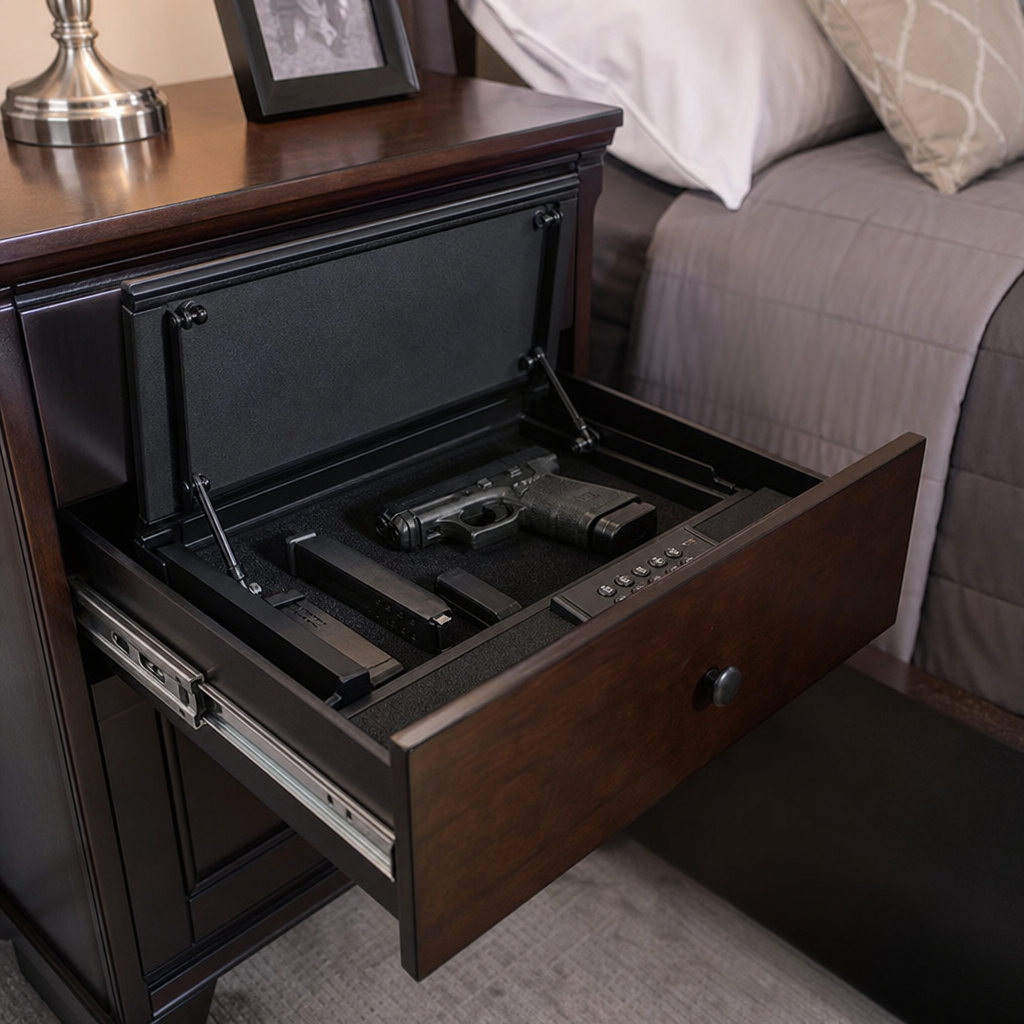
Gun safes for those who need quick access in emergency situations sit at the intersection of security, speed, and responsible firearm ownership. A quick-access gun safe is designed to keep a firearm locked away from unauthorized users while allowing the owner to retrieve it in seconds under stress. In practice, that means balancing access methods such as biometric readers, electronic keypads, RFID tags, and mechanical push-button locks against reliability, battery dependence, and resistance to tampering. This matters because the wrong safe for the wrong person creates two failures at once: delayed access when seconds matter, or weak protection when children, guests, caregivers, or burglars are present. Over years of evaluating safes for bedrooms, closets, vehicles, and home offices, I have seen buyer mistakes repeat with remarkable consistency. People shop by size or price first, when the more useful starting point is the buyer persona: who you are, where the safe will live, what threat you are managing, how often you need access, and who else enters the space. This hub article organizes gun safe buyer personas for the quick-access category so you can identify your needs before comparing models, mounting options, and lock types. If you want a bedside pistol safe, a discreet office vault, a child-resistant option for a growing family, or a travel-ready lockbox for a vehicle, the right answer begins with an honest assessment of routine, risk, and response time.
What quick-access buyers actually need
The first rule of buying a quick-access gun safe is that speed alone is not the product. The product is secure access under predictable real-world conditions: darkness, fatigue, adrenaline, one-handed operation, and imperfect hand placement. Most buyers underestimate how much those conditions change performance. A biometric scanner that opens in 0.8 seconds on a clean finger at noon may struggle after yard work, lotion, sweat, or a minor cut. A keypad that feels simple at a showroom counter can become frustrating beside a bed at 3 a.m. A mechanical Simplex-style push-button lock is slower to learn but often more consistent over time because it does not rely on batteries or fingerprint quality. The right safe therefore depends less on marketing claims than on the context in which you will use it.
For this subtopic, the most useful personas usually fall into six groups: the bedside defender, the parent of young children, the apartment or shared-space resident, the elder or limited-mobility owner, the vehicle commuter, and the concealed-carry practitioner who stages firearms in multiple controlled locations. Each persona has a different priority stack. The bedside defender values silent operation, intuitive opening, and anchored placement. Parents emphasize child resistance, tamper alerts, and controlled storage habits. Shared-space residents need discreet form factors and stronger theft resistance because more adults may know the safe exists. Older buyers often need larger controls, better lighting, and lower hand-strength requirements. Vehicle users care about cable security, legal compliance, and heat tolerance. Multi-location owners need standardization so every access routine feels identical under stress.
Safe construction still matters across every persona. Look for thicker steel, pry-resistant door design, internal hinges or protected external hinges, and pre-drilled mounting points. Certifications help, but buyers should understand what they measure. California Department of Justice roster inclusion, where applicable, indicates a tested standard for firearm safety devices, while UL 1037 and related lock evaluations can indicate attack resistance for specific components. None of these standards makes a compact handgun safe equivalent to a full burglary-rated vault, but they do separate serious products from decorative boxes with electronics. The hub question is simple: which tradeoffs are acceptable for your lifestyle, and which are not?
The major buyer personas and their best-fit features
When I map quick-access gun safe buyer personas, I focus on behavior rather than demographics. A 30-year-old parent and a 70-year-old retiree can share the same needs if both store a defensive handgun near the bed and need one-handed access. The better framework is use case, room, users, and threat profile. That approach also helps readers move into related subtopic articles, such as bedside gun safe reviews, biometric vs keypad comparisons, child-resistant storage guides, and vehicle gun safe recommendations.
| Buyer persona | Primary concern | Best access type | Key buying features |
|---|---|---|---|
| Bedside defender | Fast retrieval at night | Mechanical push-button or proven keypad | Silent entry, interior light, anchor kit, one-handed lid |
| Parent with children | Unauthorized access prevention | Keypad with backup key or dual-entry design | Tamper alert, auto lock, hidden placement, sturdy steel |
| Shared apartment resident | Theft and privacy | Keypad or RFID plus backup | Compact footprint, bolt-down capability, pry resistance |
| Older or limited-mobility owner | Ease of operation | Large-button keypad or RFID | Accessible height, low opening force, clear feedback |
| Vehicle commuter | Legal transport and smash-and-grab protection | Mechanical or keypad | Cable or bolted mount, heat-tolerant design, low profile |
| Multi-location carrier | Consistent routine across locations | Standardized lock type | Same code logic, repeatable ergonomics, battery schedule |
The bedside defender is the persona most manufacturers target, but it is also where weak products get exposed fastest. A gas strut that slams loudly, a bright keypad that ruins night vision, or a lid that requires two hands can all become operational problems. In testing, I have found that interior lighting, tactile button spacing, and a safe’s ability to stay put when the lid springs open matter almost as much as lock speed. Models from Vaultek, Fort Knox, V-Line, and Hornady often appear in this category because they address different definitions of readiness. Vaultek leans into electronics and app-connected features on some models. Fort Knox and V-Line are often favored by buyers who want mechanical reliability through Simplex locks. Hornady’s RAPiD line introduced RFID access for users who prioritize intuitive activation with a wristband or fob.
Parents need a stricter margin for error. If children are in the home, quick access must never mean casual access. That means mounting the safe, storing backup keys separately, rehearsing opening without leaving the unit unsecured afterward, and avoiding predictable codes such as birthdays. It also means understanding developmental reality: children observe routines, imitate adults, and investigate containers. A parent persona often benefits from deeper concealment and from choosing a safe that does not advertise itself as a gun safe when placed in a drawer, closet shelf, or nightstand cavity.
How to choose the right lock for your persona
Every lock type solves one problem and introduces another. Biometric locks are fast and convenient, especially when multiple authorized adults need access without memorizing a code. However, they require careful enrollment of prints, regular battery checks, and realistic testing with dry fingers, damp fingers, and partial finger placement. High-quality biometric systems have improved significantly, but buyers should still treat them as a convenience layer rather than magic. If you choose biometric access, insist on backup entry and test failure rates before trusting the safe for emergency use.
Electronic keypads are often the broad middle ground. They provide repeatable access, support multiple code lengths, and are easier to audit as a household routine. The weakness is battery dependence and possible electronic failure over long service life, especially in humid garages or hot vehicles. Mechanical push-button locks remain the benchmark for buyers who want long-term reliability with no battery anxiety. Their drawbacks are size, combination length limits, and a learning curve. Once practiced, though, they are highly effective for bedside and office use. RFID systems can be excellent for older adults or users who struggle with fine motor tasks, but they require disciplined control of tags and fobs. If a tag is lost or left too close to the safe, the security model weakens immediately.
For most personas, the best answer is not the fastest advertised lock but the lock you can operate correctly every single time. Run timed drills in darkness. Try opening the safe from your normal sleeping position. Use your non-dominant hand. Simulate a low-battery warning. If your chosen method fails those tests, it is the wrong lock regardless of review scores.
Placement, mounting, and household risk
Placement decisions often determine whether a quick-access gun safe works as intended. A safe loose in a drawer may stop casual access but will not stop theft. A safe mounted too low may be difficult for an older user to reach. A unit fixed inside a closet can be excellent for discretion, yet frustrating if clothing blocks the lid path. The best locations support a consistent draw path, concealed visibility, and secure anchoring into wood, steel, or masonry. Under-bed mounts, nightstand bolting plates, dresser cavity installations, and closet shelf bolts are all common solutions, but each must be tested in the exact room where the safe will live.
Household traffic matters just as much as room layout. Homes with cleaning crews, visiting relatives, teenagers’ friends, or in-home healthcare workers have more exposure points than owners admit. In those homes, visual discretion becomes a security feature. I strongly prefer safes that fit ordinary furniture or hidden compartments without sacrificing a proper opening angle. Noise also matters. Some electronic safes emit beeps by default; disable them if the design allows. Silent entry is not a gimmick when you are trying to access a firearm without broadcasting your movement inside the home.
Climate and maintenance are easy to overlook. Vehicle users deal with heat cycling, condensation, and vibration. Coastal homes face humidity and corrosion. Bedrooms with carpet may collect dust that fouls hinges and sensors over time. The practical solution is a maintenance schedule: inspect mounting bolts quarterly, replace batteries on a fixed calendar rather than waiting for alerts, clean biometric sensors, and verify backup keys still work. A quick-access safe is a mechanical and electronic system, not a set-it-and-forget-it box.
Buying mistakes, tradeoffs, and how this hub helps
The most common buying mistake is purchasing for a hypothetical emergency instead of a daily routine. If the gun is staged every night in a master bedroom, evaluate bedroom ergonomics first. If the firearm spends most time locked during commuting, vehicle constraints come first. Another mistake is confusing concealment with security. A hidden lockbox that is not anchored can still be stolen in seconds. A third is relying on smartphone features that add little during an emergency. Remote monitoring, app logs, and Bluetooth management can be useful for household oversight, but they do not replace steel gauge, reliable locking, and repeatable access.
Tradeoffs are unavoidable. The smallest safe is easiest to hide but often gives up steel thickness and mounting flexibility. The fastest biometric unit may be less predictable than a mechanical lock. The strongest box may be bulkier than a minimalist apartment resident wants beside the bed. Good buying decisions come from ranking priorities honestly: emergency speed, child resistance, theft deterrence, portability, or accessibility. This hub exists to help readers sort those priorities before diving into more specific guides on bedside safes, under-bed storage, biometric reliability, handgun lockboxes for cars, and options for seniors or shared households.
Choose your persona first, then choose your lock type, then choose placement and mounting. That sequence prevents expensive mistakes and leads to a safe you will actually trust and use. The best quick-access gun safe is not the one with the flashiest features; it is the one that matches your household, opens reliably under stress, and keeps unauthorized hands off the firearm. Use this hub as your starting point, then compare the deeper articles in the Gun Safes & Safety section to narrow your shortlist and buy with confidence.
Frequently Asked Questions
What is a quick-access gun safe, and how is it different from a traditional gun safe?
A quick-access gun safe is a firearm storage solution specifically designed to open fast in high-stress situations while still preventing unauthorized access. Unlike large traditional gun safes, which often prioritize maximum storage capacity, thick steel construction, and long-term protection for multiple firearms, quick-access models are built around speed and convenience. They are commonly used for bedside storage, closets, vehicles, or other locations where a firearm may need to be retrieved in seconds during a home defense emergency. Their designs typically focus on holding one handgun or a small number of firearms in a compact footprint.
The biggest difference is the access system. Traditional safes often use combination dials, large electronic locks, or keys that are secure but not always ideal when every second matters. Quick-access gun safes typically use biometric fingerprint scanners, electronic keypads, RFID-enabled entry, or mechanical simplex-style push-button locks to reduce opening time. That said, fast access should never come at the expense of secure storage. A well-made quick-access safe should still be resistant to tampering, pry attacks, and unauthorized use by children, guests, or intruders.
In practical terms, these safes sit at the intersection of security, speed, and responsible firearm ownership. The goal is not simply to open quickly, but to open quickly for the right person under stress, in the dark, and with minimal chance of failure. That is why evaluating reliability, backup access methods, battery requirements, and real-world usability is just as important as comparing advertised opening speed.
Which access method is best for emergency situations: biometric, keypad, RFID, or mechanical push-button?
There is no one-size-fits-all answer, because the best access method depends on your priorities, environment, and tolerance for tradeoffs. Biometric safes are popular because they offer very fast access without requiring you to remember a code or manipulate a key. In a true emergency, placing a registered finger on a scanner can feel intuitive and efficient. However, biometric systems vary widely in quality. Low-end readers may struggle with wet fingers, dirty sensors, worn fingerprints, or awkward hand positioning. That means a biometric safe can be excellent when well-engineered, but it should always be tested extensively before being trusted for defensive use.
Electronic keypads are another strong option because they are usually straightforward, fast with practice, and less sensitive to skin condition than fingerprint readers. Many owners appreciate the consistency of entering a code under pressure, especially if the keypad has tactile buttons that are easy to find in the dark. The downside is that keypad safes rely on batteries or external power, and users must be careful to choose a code they can reliably enter when half-awake or under adrenaline.
RFID access systems allow a safe to open using a wristband, card, sticker, or fob. These can be extremely fast and simple, particularly for bedside applications, because the motion is minimal and the safe can open with a quick tap. The concern is that RFID depends on keeping the tag secure and available at all times. If the tag is misplaced, damaged, or discovered by someone unauthorized, access control is compromised. Mechanical push-button locks, often simplex-style designs, are widely respected for their reliability because they do not depend on batteries, electronics, or fingerprint recognition. They may take slightly more deliberate input than an RFID or biometric system, but many experienced gun owners trust them precisely because they continue to function when electronics fail.
For many people, the best quick-access safe is one that combines a preferred primary method with a dependable backup. For example, a biometric safe with a keypad backup, or an electronic model with a mechanical override, can offer a better balance of speed and redundancy. The ideal choice is the one you can open correctly every time, under stress, in darkness, and without hesitation.
Are biometric gun safes reliable enough for home defense use?
Biometric gun safes can be reliable enough for home defense, but only when the hardware, scanner quality, and user setup are genuinely good. This is an area where marketing claims often sound more impressive than real-world performance. A quality biometric safe can provide very fast access and can be particularly useful when you want to avoid fumbling with keys or trying to remember a code while under stress. For many owners, that speed and simplicity are exactly what make biometric safes attractive for emergency use.
However, reliability depends on several factors. The fingerprint reader must be responsive and consistent, the programming process must be done correctly, and the user should enroll the same finger multiple times from slightly different angles if the manufacturer recommends it. It is also smart to register more than one finger, such as the index finger and thumb on both hands, to improve the odds of a successful read if your position is awkward. Environmental and human factors matter too. Moisture, dirt, cuts, skin dryness, and hurried placement can affect performance, especially on lower-quality sensors.
The safest approach is to treat biometrics as one layer of access, not the only layer you trust blindly. Look for a biometric safe with a secondary entry method, such as a keypad or key override, and test the unit repeatedly in realistic conditions. Practice opening it when you are tired, in low light, and from the position in which you would actually retrieve the firearm. Also check how quickly the scanner wakes up, whether the lid or door opens smoothly, and how the unit behaves as the battery gets weaker. A biometric safe can absolutely be a good home defense tool, but only after real testing proves that it works for you consistently rather than just looking good in product descriptions.
What features matter most when choosing a quick-access gun safe for emergencies?
The most important feature is dependable access under pressure. In an emergency, a safe that opens in one second on paper but fails intermittently is worse than a slightly slower model that works every time. Start by evaluating the lock type and the consistency of the opening process. The controls should be intuitive, easy to locate by touch, and usable in darkness or while half-awake. If it is biometric, the scanner should read quickly and accurately. If it is a keypad or mechanical lock, the buttons should have enough tactile feedback to reduce input errors.
Construction quality matters as well. Even compact handgun safes should have solid steel construction, reinforced locking points, and a design that resists prying and tampering. The door or lid should not flex excessively, and the hinges and latch should inspire confidence. A quick-access safe is not meant to be an impenetrable vault, but it should create a meaningful barrier against children, smash-and-grab theft, and casual unauthorized handling. Many quality units also allow bolting the safe to furniture, framing, or a vehicle structure, which is extremely important because a portable safe is only secure if it cannot simply be carried away.
Power and backup access are equally important. Electronic and biometric models should provide clear low-battery warnings and an easy battery replacement process. Some include external jump power options so the safe can still be opened if internal batteries die. Others include mechanical override keys, though those keys must be stored carefully and never left in an obvious nearby location. Interior layout is another practical factor. The firearm should fit properly, present in a consistent orientation, and allow a clean draw without snagging on the safe’s lip, foam, light, or spare magazine compartment.
Finally, consider placement and daily usability. The best safe for emergency access is one that fits your actual routine and home layout. A bedside unit may need silent entry, interior lighting, and one-handed access. A closet or desk unit may benefit from a stronger mounting option and a slightly larger capacity. The right safe is not just secure and fast in theory; it is secure, fast, and repeatable in the exact environment where you may need it most.
How can I make sure my quick-access gun safe is both secure and ready when I need it?
Start with proper installation. Even an excellent quick-access safe loses much of its security value if it is left loose in a drawer or on a shelf where it can be stolen outright. Whenever possible, bolt the safe to a solid surface according to the manufacturer’s instructions. Choose a location that gives you rapid access but limits visibility to visitors, children, and anyone else who should not know exactly where the firearm is stored. The placement should also allow the lid or door to open fully and let you establish a clean, consistent grip on the firearm during retrieval.
Next, build a routine around maintenance and testing. If the safe uses batteries, replace them on a schedule rather than waiting for failure. Check low-battery indicators regularly, clean the biometric sensor if applicable, and test all programmed access methods often. Do not assume that because the safe worked last month, it will work perfectly tonight under stress. Practice opening it safely in low light, from your actual sleeping or resting position, and with either hand if relevant. Repetition builds speed and helps identify problems before they matter.
Security also depends on controlling the backup methods. If your safe includes a key override, store the key in a secure separate location, not taped under the safe or hidden in the same nightstand. If it uses RFID tags, account for every tag and protect them just as carefully as you would protect a key. If it uses a keypad, choose a code that you can enter reliably but that is not