
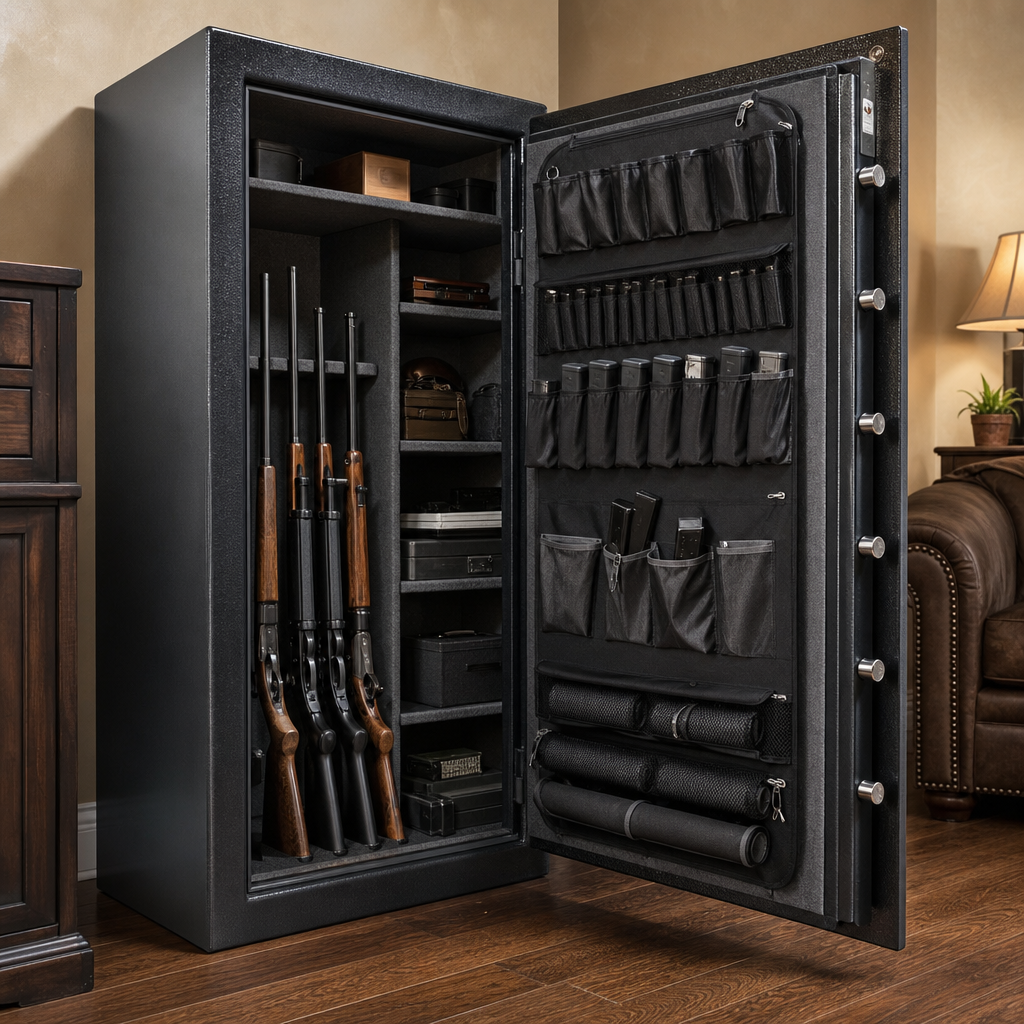
High-security buyers do not shop for a gun safe the same way casual owners do, because their risk profile, storage volume, and performance expectations are different from the start. In my experience evaluating residential security products, the people who care most about premium safes ask better questions: not just “How big is it?” or “What does it cost?” but “What attack tools is it designed to resist,” “How does the lock fail,” and “Which construction details actually matter after a break-in attempt or a house fire?” That mindset is what separates a basic storage cabinet from a true high-security gun safe. Understanding gun safe buyer personas helps match the right safe to the right owner, especially when stakes include theft prevention, liability reduction, legal compliance, and preserving valuable firearms for decades.
A gun safe buyer persona is a practical profile of a type of customer defined by goals, threat level, firearm collection, household situation, and budget tolerance. A first-time handgun owner living in an apartment needs different features than a collector with transferable machine guns, a competitive shooter with optics-heavy rifles, or a rural homeowner storing long guns far from immediate police response. High-security enthusiasts usually overlap with several personas at once. They may be collectors, parents, preparedness-minded homeowners, or business owners who store firearms, documents, jewelry, and cash in one hardened enclosure. The more precise the persona, the easier it is to choose among steel thickness, locking systems, fire insulation, anchoring strategy, interior layout, and monitoring options.
This matters because the market is crowded with vague claims. Terms like “10-gun safe,” “fireproof,” and even “heavy duty” are often marketing shorthand, not reliable indicators of real protection. A listed external dimension tells you little about usable interior space once door organizers, fireboard, and shelf systems are installed. A glossy paint finish says nothing about pry resistance. Even an expensive safe can underperform if it uses thin sheet metal, weak boltwork, poor relocker design, or an electronic lock with a bad service record. High-security buyers need a hub view of the major personas and the features each should prioritize, so they can filter products quickly and avoid paying for specifications that sound impressive but do not address their actual risks.
At the center of nearly every buying decision are six feature categories: burglary resistance, lock quality, fire performance, capacity and layout, installation, and long-term reliability. Those categories are not equal for every person. A suburban parent may prioritize fast but controlled access and child prevention. A serious collector may focus on body construction, hardplate, glass relockers, and insurance documentation. Someone in a wildfire zone may care about heat duration, door seals, and placement on a slab. The best gun safe is not the one with the most advertising; it is the one whose engineering and installation align with the owner’s specific threat model. The buyer personas below explain exactly how to make that match.
The first-time defensive owner persona: simple access, real security, no false confidence
The first-time defensive owner is often buying a handgun or a small long-gun setup for home protection. This buyer usually wants secure storage that prevents unauthorized access, keeps firearms away from children or visitors, and still allows reasonable speed in an emergency. For this persona, the common mistake is buying too little safe or relying on a bedside lock box that offers convenience but minimal burglary protection. A portable handgun box has a role, especially for temporary staging, but it is not a substitute for a properly anchored safe made from meaningful steel.
Features that matter most here are lock reliability, straightforward operation in low light, and resistance to smash-and-grab theft. I generally tell first-time buyers to favor UL-listed locks from established brands such as Sargent and Greenleaf or SecuRam, and to learn the difference between a lock and a safe body. A good lock on a thin cabinet does not create security. At minimum, this persona benefits from continuous welds, a formed door with anti-pry features, and anchor holes that are actually used. If the safe is not bolted down to concrete or substantial framing, thieves may remove it and attack it elsewhere with better tools and more time.
This buyer also needs honest expectations about “quick access.” Mechanical simplex-style pistol safes can be dependable and battery-free, while quality electronic locks provide speed and multiple user codes, but cheap biometric readers remain inconsistent under dry skin, dirty sensors, or rushed placement. For a first defensive safe, consistency beats novelty. Interior lighting, a door organizer, and enough room for future growth matter too, because many first-time owners add another handgun, a suppressor host, spare magazines, and important documents within a year.
The family safety persona: child resistance, controlled access, and household routines
The family safety buyer often owns several firearms and measures success by one outcome above all others: preventing unauthorized access inside the home. This includes children, teenagers, guests, contractors, and sometimes an at-risk adult. For this persona, the safe is part of a broader household protocol, not an isolated purchase. Features matter, but so do habits such as code control, lockout procedures, and keeping backup keys secured separately. I have seen good safes undermined by poor routines more often than by mechanical failure.
The most important features are dependable locking, user management, and interior organization that supports safe handling. A crowded interior invites unsafe muzzle movement and accidental drops when family members retrieve one item from a tightly packed rack. Adjustable shelving, barrel supports, and dedicated handgun storage reduce that problem. Soft interiors protect finishes, but layout efficiency is more important than upholstery. If the owner keeps both defensive and hunting firearms, separate zones inside the safe help avoid rushed searching under stress.
For families, fire protection also deserves more attention than many buyers give it. House fires are statistically more common than sophisticated safe attacks, and contents such as passports, wills, tax records, and digital media often end up stored with firearms. Buyers should look for tested time-and-temperature ratings and ask how the manufacturer achieved them. Expanding door seals, multiple layers of Type X gypsum board, and body construction that limits heat transfer all matter. Placement matters as well. A safe in a garage may face different thermal conditions than one on a ground-floor slab inside conditioned space.
The collector and investor persona: burglary resistance, documentation, and preservation
Collectors and firearm investors usually understand value better than manufacturers understand marketing. They know a rare Colt Python, pre-64 Winchester, Holland and Holland shotgun, transferable machine gun, or custom 2011 with premium glass deserves more than generic “fire safe” treatment. This persona should prioritize true burglary resistance first, because collectible firearms are attractive, portable assets with established resale markets. A safe for this buyer should emphasize thicker steel, reinforced door edges, robust boltwork, hardplate protection over the lock, and relockers that trigger when someone punches or drills the lock area.
Collectors should also think beyond storage to documentation and preservation. Interior humidity control is mandatory for blued steel, fine wood, and long-term optics protection. A GoldenRod-style dehumidifier, desiccant rotation, and a hygrometer provide a workable baseline. Better safes also accommodate archival records, serial number inventories, appraisal files, and insurance schedules. For high-value collections, owners should photograph each firearm, record distinguishing marks, and store copies of records offsite or in encrypted cloud storage. If a loss occurs, vague memory is not evidence.
For this persona, fit and finish are not vanity issues. Adjustable interiors, rifle spacing that accounts for large optics, and protection against stock compression all affect preservation. Many advertised capacities are unrealistic because they assume iron-sighted rifles packed tightly together. A “36-gun” safe may hold closer to 18 to 24 scoped long guns in real use.
| Buyer persona | Top priority features | Common mistake | Best upgrade |
|---|---|---|---|
| First-time defensive owner | Reliable lock, anchor points, anti-pry door | Choosing convenience over steel quality | Bolting down a larger safe than initially planned |
| Family safety buyer | User control, organized interior, fire protection | Ignoring household access routines | Adding separate zones for defensive and sporting firearms |
| Collector or investor | Thicker steel, relockers, humidity control, inventory records | Believing advertised gun counts | Insurance documentation and climate management |
| Preparedness-focused rural owner | Attack resistance, long fire rating, heavy anchoring | Underestimating response-time risk | Layered monitoring and concealed placement |
| Competitive shooter or trainer | Fast organization, accessory space, durable interior | Buying long-gun space without gear storage | Modular racks for optics, ammo, and support equipment |
The preparedness and rural homeowner persona: delay, concealment, and layered protection
Preparedness-focused buyers and rural homeowners often live farther from law enforcement and may store a broader mix of firearms, ammunition, medical gear, cash, and emergency documents. Their realistic concern is not just opportunistic burglary but extended attack time. If a thief can work undisturbed for twenty or thirty minutes, weak safes fail quickly under prying, grinding, and drilling. This persona should focus on body thickness, door construction, total weight, and installation strategy more than cosmetic features or brand prestige alone.
For these buyers, safe placement is a security feature. Concealment behind cabinetry, in a closet corner that limits pry bar access, or in a basement location with concrete anchoring can materially improve resistance. Alarm contacts on the safe door, room motion detectors, and camera coverage add critical layers. A safe is a delay device, not an impenetrable vault. Its job is to consume time, make noise, and increase the chance that a response arrives before contents are reached. Heavy composite or plate-door models from respected makers often make more sense here than lighter big-box options with inflated fire ratings.
Fire risk should also be evaluated realistically. Rural properties may face longer fire response times and, in some regions, wildfire exposure. A safe rated for longer heat duration, installed away from fuel loads and ideally on concrete, offers a better survival profile. Owners in damp outbuildings or unconditioned spaces should be careful: detached shop installation can be convenient but may worsen humidity and theft exposure unless the structure itself is secured to a high standard.
The competitive shooter and high-volume user persona: capacity, organization, and daily durability
Competitive shooters, instructors, and high-volume enthusiasts use their firearms constantly. Their safe is less a deep archive and more an operational hub. This persona may store AR-platform rifles with lights and LPVOs, PCCs, handguns in rotation, suppressors, magazines, belts, chronographs, tripods, and maintenance supplies. The critical feature set is organized accessibility without sacrificing security. A cramped interior that requires unloading half the safe to reach one match rifle becomes a daily frustration and increases the chance of dings, dropped optics, or unsafe handling.
Real capacity and modularity matter most. Look for rack systems that accept scoped rifles, shelves that can be reconfigured without tools, and door panels built for pistols and magazines without overloading hinges. Some buyers in this group are better served by two safes: one heavier long-term storage unit and one smaller fast-access unit for current rotation gear. That split reduces clutter and keeps defensive firearms distinct from competition equipment. It also helps with maintenance control, because cleaning supplies and spare parts no longer occupy the same space needed for secure rifle storage.
Durability is another factor. Frequent opening cycles expose weak interiors, flimsy shelf pins, poor paint, and unreliable keypad membranes. This persona should prioritize a track record for service parts and lock replacement support. The best ownership experience comes from a manufacturer with stable warranty practices, accessible technicians, and clear documentation, not from a brand that disappears after a model-year refresh.
How high-security enthusiasts should evaluate specs before buying
Across all gun safe buyer personas, the smartest buyers treat specifications as claims to verify, not truths to repeat. Steel thickness should be stated clearly for both door and body. Lock types should identify listing status and manufacturer. Fire ratings should describe test method, duration, and peak temperature, not just a number on a sales tag. Weight is informative because heavier safes are generally harder to remove and often reflect more material, but weight alone does not guarantee strong design. Interior dimensions, not exterior dimensions, determine whether your collection actually fits.
Brand research should include service history, not just showroom impressions. Read lock failure reports carefully, noting whether issues involve the lock brand, the safe maker’s installation, or user error such as dead batteries left too long. Ask dealers how warranty labor works in your area. A lifetime warranty sounds strong until you learn that opening a failed lock on an upstairs safe requires costly local service. If possible, inspect hinge-side construction, door gap consistency, bolt engagement, and weld quality in person. Good safes look deliberate in every detail.
The best buying process is simple: define your persona, map your threats, buy larger and heavier than you first planned, and install the safe properly. High-security enthusiasts are right to focus on details, because details determine performance when everything goes wrong. Choose a safe that matches your real risks, maintain it like serious equipment, and review your setup as your collection and household change. That approach protects firearms, supports safety, and turns a one-time purchase into a durable part of your overall security plan.
Frequently Asked Questions
What construction details matter most in a gun safe for high-security buyers?
For high-security enthusiasts, steel thickness and overall body design matter far more than cosmetic features or interior accessories. One of the first things to evaluate is the actual steel used in the door and body, not just marketing language like “reinforced” or “heavy-duty.” A thicker steel body slows down pry attacks, cutting attempts, and aggressive tool use in ways thinner cabinets simply cannot. The door is especially important because it is the primary attack surface, so a robust plate-style door or a heavily reinforced composite door usually deserves closer attention than decorative trim, fabric lining, or shelving upgrades.
Beyond raw thickness, buyers should look closely at how the safe is built. Door-to-frame fit, internal reinforcements, weld quality, hinge-side protection, and the presence of hard plate or other drill-resistant barriers around the lock area all contribute to real-world resistance. A safe can look massive and still have weak points if the door flexes, the frame can be peeled, or the lock area is insufficiently protected. Bolt size alone is also often overstated in advertising. What matters more is the strength of the boltwork system, how the bolts are supported, whether there are anti-pry features, and whether relockers engage if the lock is attacked.
High-security buyers should also prioritize anchoring provisions and the safe’s ability to remain stable during an attack. Even a well-built safe becomes far more vulnerable if it can be tipped, repositioned, or removed for later forced entry. In practical terms, the most important construction details are thick steel, a rigid door and frame design, strong lock protection, relocking mechanisms, quality welds, and secure anchoring. Those are the features that continue to matter after an attempted break-in, when appearance and brochure claims no longer mean much.
Which lock type is better for a high-security gun safe: mechanical or electronic?
There is no one-size-fits-all answer, but high-security buyers should judge lock types based on failure modes, attack resistance, serviceability, and long-term reliability rather than convenience alone. Mechanical dial locks have a strong reputation because they are simple, proven, and not dependent on batteries or circuit boards. When properly made and correctly installed, they can provide decades of dependable service. Many experienced safe owners value them because their failure patterns are relatively well understood, and there is less concern about power-related issues or electronic component degradation over time.
Electronic locks, however, can also be excellent when sourced from reputable manufacturers and paired with a high-quality safe. Their biggest advantage is fast access, user code management, and in some cases advanced features like time delay, multiple user profiles, or audit capability. For some high-security owners, especially those balancing defensive access with secure storage, that speed is a meaningful benefit. The downside is that electronics introduce more variables. Battery maintenance, keypad wear, environmental exposure, and long-term component durability all need to be considered. A poor-quality electronic lock can undermine an otherwise good safe.
The better question is not simply “mechanical or electronic,” but “How does this specific lock behave when something goes wrong?” High-security shoppers should ask whether the lock has been independently tested, what protections exist against manipulation or drilling, whether relockers are present, and how failures are handled in the field. They should also ask who services the lock locally and whether replacement parts are readily available. A premium mechanical lock from a trusted brand is often a conservative, confidence-inspiring choice. A premium electronic lock from a proven manufacturer can be equally valid if rapid access and modern control features are important. The real mistake is choosing a lock based on trend, not on quality and failure planning.
How important are independent ratings and certifications when comparing premium gun safes?
Independent ratings are extremely important because they help separate engineered security from marketing-driven claims. High-security buyers should be skeptical of broad statements like “pry resistant,” “drill resistant,” or “commercial grade” unless those claims are supported by recognized testing standards. A safe that has been evaluated under a meaningful burglary or fire standard gives the buyer a more objective baseline for comparison. Without that, it is often difficult to know whether the product was designed to resist serious attack or merely to look substantial on a showroom floor.
In the security world, testing matters because it evaluates performance under defined conditions rather than relying on assumptions. A rating does not mean a safe is invincible, but it does indicate that the unit was built to withstand certain attack methods for a specified period or according to a specific protocol. That is especially valuable for high-security buyers who are thinking in terms of delay time, tool resistance, and layered defense. It also helps them compare products that may appear similar in size or price but are actually very different in protective capability.
That said, certifications should be interpreted intelligently. Buyers should understand what was tested, who performed the testing, and whether the rating applies to burglary resistance, fire performance, lock quality, or all of the above. A fire label does not automatically mean superior burglary protection, and a residential security label may not satisfy someone facing elevated theft risk. In short, independent ratings are one of the most reliable shortcuts to identifying serious products, but they should be read carefully and in context. For high-security enthusiasts, certifications are not a bonus feature; they are part of the due diligence process.
Does fire protection still matter if burglary resistance is the main priority?
Yes, fire protection still matters, even for buyers whose main concern is forced entry. High-security owners often store more than firearms alone. Important documents, optics, suppressor paperwork, heirlooms, cash, media, and other valuables may end up in the same safe. A burglary-resistant safe that performs poorly in a house fire can still produce a devastating loss. That is why serious buyers usually treat burglary resistance and fire protection as complementary functions rather than competing ones.
The key is understanding that not all fire claims are equal. High-security buyers should ask how the fire rating was established, what internal temperature threshold was used, how long the safe was tested, and whether the test included realistic post-fire conditions such as structural collapse or steam exposure. Fireboard layers, door seals, body seams, and overall construction all influence how the safe performs in a real event. As with burglary claims, vague marketing language is not enough. Meaningful fire protection should be documented and explained clearly.
It is also worth remembering that adding fire protection can affect other aspects of the safe, including weight, interior space, and in some models even the balance of security features. The best choice depends on the owner’s threat profile. If burglary is the top concern, the buyer should not sacrifice serious steel and lock protection just to get an inflated fire number. But ignoring fire entirely is usually shortsighted. A well-chosen premium safe should provide strong burglary resistance first and credible fire protection second, because in residential use both risks are real and both can be financially and emotionally costly.
What features actually improve real-world security after the safe is installed?
Some of the most important security features are the ones buyers stop thinking about once the safe is in place. Proper anchoring is at the top of that list. A safe that is not securely anchored can be tipped to exploit door weaknesses, moved to a more convenient attack location, or removed entirely. High-security buyers should evaluate not just whether anchor holes exist, but whether the installation site can support strong anchoring and whether the safe’s placement limits access to pry points and attack surfaces. Location inside the home matters as much as the hardware itself.
Layered security features also make a major difference in real-world use. Alarm integration, surveillance coverage, controlled room access, low-visibility placement, and environmental monitoring all improve the odds that an attacker is interrupted or deterred before the safe can be defeated. The most security-conscious owners understand that a gun safe is one layer in a broader defensive system. Even the best residential safe is more effective when it is difficult to find, hard to access with tools, and protected by detection measures that shorten the time available for an attack.
Inside the safe, practical organization matters more than many people realize. Overcrowding can damage firearms, complicate access, and encourage unsafe storage habits. High-security buyers often own larger collections, so capacity should be evaluated realistically rather than according to optimistic manufacturer counts. Door storage, adjustable interiors, dedicated compartments, dehumidification support, and protected storage for documents or accessories can all improve daily use without compromising security. In the end, real-world security comes from a combination of strong construction, secure installation, smart placement, and disciplined use. The safe is the centerpiece, but the outcome depends on the entire setup.